中药

Search documents
科学与健康|八部门联合“开方”,中药工业如何高质量发展?
Xin Hua Wang· 2026-02-10 03:59
Core Viewpoint - The implementation plan for the high-quality development of the traditional Chinese medicine (TCM) industry from 2026 to 2030 aims to establish a collaborative development system for the entire TCM industry chain by 2030 [1] Group 1: Quality Improvement - The plan emphasizes the importance of improving the quality of raw materials by establishing high-standard production bases in major production areas [2] - Factors such as origin, climate, soil, and cultivation techniques significantly affect the quality of medicinal materials, which in turn impacts the therapeutic effects of TCM [2] - As of June 2025, China has supported artificial breeding of 14 endangered medicinal materials and has achieved industrial production of substitutes for rare materials [2] Group 2: Innovation and Collaboration - The plan proposes collaborative innovation initiatives to enhance the transformation of TCM preparations in medical institutions, focusing on overcoming technological bottlenecks [3] - A cooperative model involving renowned doctors, hospitals, schools, and enterprises is encouraged to integrate resources effectively [3] - The Beijing Daxing District's Guang'anmen Hospital has successfully transformed over 20 TCM varieties, with 4 of them becoming innovative TCM drugs [3] Group 3: Digital Transformation - The plan outlines actions to enhance manufacturing capabilities, including the establishment of 20 smart factories and the cultivation of 10 green factories [4] - The application of smart devices in the TCM industry is expected to facilitate the transition from traditional experience-based practices to precision-based methods [4] - The use of artificial intelligence and big data is aimed at constructing knowledge graphs for classic formulas and experiences from renowned TCM practitioners [4] Group 4: Future Outlook - The next five years are deemed critical for the transformation and upgrading of the TCM industry, with expectations for further modernization and high-quality development as the plan's measures are implemented [5]
湖北省药品监督管理局关于中药材生产质量管理规范延伸检查结果公告
Zhong Guo Zhi Liang Xin Wen Wang· 2026-02-10 03:13
Core Insights - The announcement by the Hubei Provincial Drug Administration indicates that two companies, Jianmin Group Yekaitai Pharmaceutical (Suizhou) Co., Ltd. and Hubei Tianji Pharmaceutical Co., Ltd., have passed the GAP (Good Agricultural Practices) extension inspection for traditional Chinese medicine materials [3][4] Group 1: Company Information - Jianmin Group Yekaitai Pharmaceutical (Suizhou) Co., Ltd. is involved in the production of traditional Chinese medicine materials, specifically for the herb "Lianqiao" (Forsythia) with a cultivation area of 3,200 mu [3] - Hubei Tianji Pharmaceutical Co., Ltd. specializes in traditional Chinese medicine pieces, particularly "Chaihu" (Bupleurum) with a cultivation area of 3,500 mu [4] Group 2: Inspection Results - Both companies have been evaluated and found to meet the required standards for GAP, which is essential for ensuring the quality of traditional Chinese medicine production [3][4] - The inspection results include specific geographic coordinates for the cultivation bases, indicating precise locations for compliance verification [3][4]


开盘:三大指数涨跌不一 影视院线板块涨幅居前
Xin Lang Cai Jing· 2026-02-10 02:12
Group 1 - The three major indices showed mixed performance, with the film and theater sector leading in gains [1] - As of the market opening, the Shanghai Composite Index was at 4127.77, up 0.11%; the Shenzhen Component Index was at 14200.76, down 0.05%; and the ChiNext Index was at 3321.88, down 0.33% [1] Group 2 - Financial institutions noted a recovery in A-share market sentiment, with the market showing an upward trend throughout the day [2] - The technology sector, particularly in computing hardware, AI applications, and space photovoltaic, performed well, while dividend sectors lagged [2] - There is an expectation for a "Spring Festival red envelope" market rally due to reduced overseas disturbances and increased risk appetite among investors [2] - Mid-term outlook suggests a focus on structural opportunities in the A-share market, with a recommendation to capitalize on the bullish window until early March [2] - The semiconductor, communication equipment, photovoltaic equipment, and internet services sectors showed strong performance, while mining, gas, traditional Chinese medicine, and liquor sectors underperformed [2] - The effects of growth-stabilizing policies are expected to gradually manifest in the first quarter, which is typically a period of ample liquidity [2] - The market is experiencing a "high-low switch" in capital flow, moving from previously high-performing technology and resource sectors to lower-valued and domestic demand recovery sectors [2] - Optimistic expectations for the post-holiday market are supported by policy catalysts, improved liquidity, and risk release from prior adjustments [2]
国海证券晨会纪要-20260210
Guohai Securities· 2026-02-10 01:46
Group 1: REITs Market Overview - The regulatory standards for REITs have been raised, with all asset types experiencing an increase in January 2026 [3] - The total market value of public REITs reached 228.709 billion yuan, an increase of 10.246 billion yuan from the previous month, indicating heightened market activity [4] - The water conservancy facilities sector saw the highest increase in REITs, with a monthly growth rate of 9.70% [4] Group 2: Chemical Industry Insights - The global chemical industry is entering a new demand cycle driven by anti-involution and AI, with a focus on the upcoming chemical peak season and price increases [6] - The National Chemical Industry Prosperity Index rose to 94.19, reflecting a slight increase of 0.15 from the previous week [6] - Key investment opportunities in the chemical sector include companies in coal chemical, oil refining, polyurethane, and fertilizers, among others [7] Group 3: Traditional Chinese Medicine (TCM) Sector - The TCM sector is expected to benefit from a new development plan aimed at enhancing the resilience and stability of the TCM industrial chain [32] - The plan emphasizes quality improvement and stable supply of raw materials, which is crucial for the efficacy of TCM products [33] - Companies like China Traditional Chinese Medicine, Yunnan Baiyao, and others are highlighted as potential beneficiaries of this policy shift [33] Group 4: Company-Specific Developments - Zhaowei Electric has entered the hearing stage for its Hong Kong listing, with a focus on its "1+1+1" strategy integrating micro-drives, precision drives, and control systems [38] - The company has successfully launched multiple series of dexterous hands, showcasing its technological advancements in micro-drive systems [39] - Revenue projections for Zhaowei Electric are optimistic, with expected revenues of 1.867 billion yuan in 2025, growing to 2.810 billion yuan by 2027 [41]
科学与健康丨八部门联合“开方”,中药工业如何高质量发展?
Xin Hua Wang· 2026-02-10 00:31
Core Viewpoint - The implementation plan for the high-quality development of the traditional Chinese medicine (TCM) industry has been jointly issued by eight departments, aiming to establish a collaborative development system for the entire TCM industry chain by 2030 [1]. Group 1: Quality Improvement of Raw Materials - The plan emphasizes the importance of improving the quality of raw materials, proposing the establishment of high-standard production bases for TCM raw materials in major production areas [2]. - Factors such as origin, climate, soil, and cultivation techniques significantly influence the quality of medicinal materials, which directly affects the therapeutic effects of TCM [2]. - As of June 2025, China has supported the artificial breeding of 14 endangered medicinal materials, with over 300 out of 600 commonly used TCM materials already achieving artificial cultivation [2]. Group 2: Innovation and Transformation - The plan calls for collaborative innovation to promote the transformation of TCM preparations in medical institutions, addressing technological bottlenecks through cooperation among renowned doctors, hospitals, schools, and enterprises [3]. - Modern production lines in TCM facilities are being utilized for the mass production of hospital preparations, indicating a shift towards industrialized TCM [3]. Group 3: Digital and Intelligent Transformation - The plan proposes actions to enhance manufacturing capabilities, including the establishment of 20 smart factories and the cultivation of 10 green factories, alongside the revision of 10 industry standards related to digital technology in TCM [4]. - The application of smart devices in the TCM industry is expected to facilitate the transition from traditional experience-based practices to precision-based methods [4]. - The integration of artificial intelligence and big data is set to create knowledge graphs for classic formulas and experiences from renowned TCM practitioners, enhancing research and resource distribution in the field [4]. Group 4: Future Outlook - The next five years are identified as a critical period for the transformation and upgrading of the TCM industry, with expectations for further modernization and high-quality development as the proposed measures are implemented [5].
新浪财经资讯AI速递:昨夜今晨财经热点一览 丨2026年2月10日
Xin Lang Cai Jing· 2026-02-09 23:43
Group 1 - US stock market indices collectively rose, with the Dow Jones reaching a new historical high, and the Nasdaq increasing by nearly 1% driven by strong performance from AI-related stocks like Nvidia and Oracle [1][18] - Jiangxi province is the only region to raise its GDP growth target from around 5% to 5%-5.5%, attributed to a 5.2% growth in 2025, marking a four-year high, and strong industrial value-added growth [1][19] - The gold market is experiencing a surge in consumption and investment, but also facing issues such as fraud and high-leverage speculation, prompting regulatory challenges [1][20] Group 2 - Hongming Co. has appointed a young chairman, Jin Xi, who lacks extensive business experience, amid concerns over the company's declining performance and potential delisting risks [1][21] - Eight departments in China have issued a plan for the high-quality development of the traditional Chinese medicine industry, aiming for coordinated development across the entire industry chain by 2030 [1][22][23] - The competition among China's top economic cities is intensifying, with Beijing surpassing 5 trillion yuan in GDP and cities like Chengdu leading in growth rates [1][24] Group 3 - Chinese pig farming giant Muyuan Foods is aggressively expanding into the Vietnamese market, offering high salaries for project talent focused on building pig farms [1][25][26] - Hong Kong's small and medium-sized banks are facing severe liquidity issues, with many trading days seeing zero transactions, highlighting a cycle of low trading volume and low attention [1][26] - The Chinese regulatory stance on RWA tokenization is strict domestically while allowing regulated activities abroad, aiming to prevent risks to the financial system [1][27] Group 4 - Anhui state-owned assets are poised to become the final winner in the restructuring of Suning Holdings, with a proposed acquisition of a significant stake to stabilize governance [1][28] - A report has revealed systemic insurance fraud in mental health hospitals in Hubei, with connections to local medical networks and multiple instances of regulatory violations [1][29] - Seventeen provinces in China have announced their GDP growth targets for the 14th Five-Year Plan, with most set around 5%, while some provinces are aiming higher [1][30][31] Group 5 - Jiangsu province leads the country with 23 counties achieving over 100 billion yuan in GDP, with Kunshan being the top performer for 22 consecutive years [1][31] - The price of Chilean cherries has dropped to a five-year low due to increased supply and market saturation, leading to a phenomenon referred to as "cherry freedom" [1][32] - Ark Invest's space ETF has made its first purchase of Tesla stock, sparking speculation about a potential merger between Tesla and SpaceX [1][32]
山东沃华医药科技股份有限公司 2025年度股东会决议公告
Zhong Guo Zheng Quan Bao - Zhong Zheng Wang· 2026-02-09 22:41
Meeting Overview - The shareholders' meeting was convened by the company's board of directors, combining on-site voting and online voting [2][3] - The meeting took place on February 9, 2026, with the on-site meeting starting at 14:00 and online voting available from 9:15 to 15:00 [2][3] Attendance - A total of 244 shareholders attended the meeting, representing 300,230,158 shares, which is 52.0141% of the total voting shares [4] - Among them, 4 shareholders attended on-site, representing 297,938,963 shares (51.6171%), while 240 shareholders participated via online voting, representing 2,291,195 shares (0.3969%) [5][6] Proposals Reviewed and Approved - The following proposals were reviewed and approved during the meeting: - The 2025 Board of Directors' Work Report was approved with 99.9150% of votes in favor [11] - The 2025 Financial Settlement Report was approved with 99.9073% of votes in favor [12] - The 2025 Profit Distribution Plan was approved with 99.9093% of votes in favor, with 89.0420% of small investors voting in favor [13] - The 2025 Annual Report and its summary were approved with 99.9086% of votes in favor [14] - The proposal to reappoint the accounting firm Zhongxi CPA for the 2026 financial audit was approved with 99.8843% of votes in favor, with 86.0147% of small investors voting in favor [15] - The proposal regarding the restructuring of production operations and related transactions was approved with 97.1021% of votes in favor [16][18] Independent Directors' Report - Independent directors submitted their annual performance report, detailing their attendance at board meetings, independent opinions, and suggestions for the company's development [19] Legal Opinions - The meeting was witnessed by lawyers from Beijing Xinghe Law Firm, confirming that the meeting's procedures complied with relevant laws and regulations [19]

八部门发文!中药工业迎黄金发展期 培育60个高标准中药原料生产基地 推动一批中药创新药获批上市
Mei Ri Jing Ji Xin Wen· 2026-02-09 15:14
Core Viewpoint - The "Implementation Plan for High-Quality Development of Traditional Chinese Medicine Industry (2026-2030)" aims to establish a collaborative development system for the entire TCM industry chain by 2030, enhancing supply capabilities, digitalization, and green development, while fostering leading enterprises and high-standard raw material production bases [1] Group 1: Industry Development Goals - By 2030, the TCM industry is expected to see a significant improvement in collaborative innovation, with the establishment of 60 high-standard raw material production bases and the construction of 5 innovation centers [1] - The plan emphasizes the need for continuous innovation in TCM products, aiming to launch a number of innovative TCM drugs and cultivate 10 major varieties of traditional Chinese medicine [2] Group 2: Innovation and Market Strategy - TCM enterprises are encouraged to shift from "sales-driven" to "innovation-driven" strategies to overcome homogenization in the market, focusing on clinical value and differentiated academic evidence [2][3] - Companies should conduct high-level evidence-based medical research, target unmet medical needs, and establish a comprehensive digital quality control system to ensure product reliability [2] Group 3: Digitalization as a Strategic Choice - The plan highlights the importance of digitalization in transforming the TCM industry from traditional practices to modern scientific management, addressing internal pain points and regulatory requirements [4][5] - Emphasizing digitalization aims to standardize production processes, enhance quality control, and improve industry competitiveness through cost reduction and efficiency gains [6] Group 4: Support for Enterprises - The plan includes actions to cultivate outstanding enterprises, support leading TCM companies in establishing development funds, and encourage financial institutions to provide services to TCM enterprises [6] - There is a focus on nurturing high-quality small and medium-sized enterprises in the TCM sector to enhance their competitive advantages and modernize the industry [6]
八部门重磅发文!中药工业迎黄金发展期
Mei Ri Jing Ji Xin Wen· 2026-02-09 14:55
Core Viewpoint - The implementation plan for the high-quality development of traditional Chinese medicine (TCM) industry aims to establish a collaborative development system by 2030, enhancing the supply capacity of key TCM raw materials and promoting innovation in TCM products [1][2] Group 1: Development Goals - By 2030, the TCM industry is expected to form a collaborative development system across the entire industry chain, with a focus on enhancing the stable supply of key TCM raw materials and improving digital and green levels [1] - The plan includes the cultivation of 60 high-standard TCM raw material production bases and the establishment of five TCM industrial innovation centers [1] Group 2: Innovation and Market Trends - The plan emphasizes the need for continuous innovation in TCM products, aiming to approve a batch of innovative TCM drugs and cultivate 10 major varieties of traditional Chinese medicine [2] - Companies are encouraged to shift from "sales-driven" to "innovation-driven" strategies to enhance their core competitiveness in a market characterized by homogenization [2] Group 3: Research and Development Requirements - TCM companies are required to conduct high-level evidence-based medical research to provide clear efficacy and safety data, targeting unmet medical needs for precise treatment [2] - Establishing a comprehensive digital quality control system from raw materials to finished products is essential for ensuring product reliability [2] Group 4: Digital Transformation - The plan highlights the importance of "digital intelligence" in transforming the TCM industry from traditional practices to modern scientific management [4][5] - Emphasizing digital intelligence aims to standardize and optimize production processes, ensuring consistent product quality and meeting regulatory requirements [6] Group 5: Support for Industry Leaders - The plan proposes actions to cultivate outstanding enterprises in the TCM industry, supporting leading companies in establishing development funds and providing financial services [6] - It encourages the formation of innovation consortia to drive technological advancements and improve the overall modernization level of the TCM industry [6]
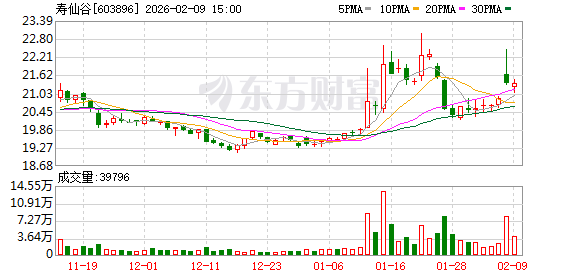
寿仙谷:公司去壁灵芝孢子粉的去壁技术已获得了国家发明专利和日本、美国、欧洲、韩国、南非发明专利
Zheng Quan Ri Bao· 2026-02-09 14:09
Core Viewpoint - Shouxiangu has developed a proprietary wall-breaking technology for Ganoderma lucidum spore powder, which has received multiple international patents and is recognized as an internationally leading technology [2] Group 1: Technology and Intellectual Property - The wall-breaking technology for Ganoderma lucidum spore powder is a unique core technology of the company [2] - The technology has been granted national invention patents as well as patents in Japan, the United States, Europe, South Korea, and South Africa, establishing a comprehensive independent intellectual property protection system [2] Group 2: Health Benefits and Efficacy - Research results indicate that the triterpenes in the wall-broken Ganoderma lucidum spore powder can directly inhibit the growth and metastasis of tumor cells [2] - Ganoderma polysaccharides can regulate the immune system, enhance the body's defense capabilities, alleviate excessive inflammatory responses, and balance immune checkpoints [2] - The product helps reduce common adverse reactions caused by tumor surgeries, chemotherapy, and targeted therapies, such as fatigue, bone marrow suppression, emotional distress, and sleep disorders, thereby improving patients' quality of life and creating a synergistic effect with conventional anti-tumor treatments [2]