人工智能产业

Search documents
国家发改委:着力指导推动人工智能、生物制造等新增长引擎!
合成生物学与绿色生物制造· 2025-09-23 03:52
Core Viewpoint - The bio-manufacturing industry is entering a new phase of accelerated development characterized by clear policies, specific support, and close integration with the real economy [7]. Policy Developments - The National Development and Reform Commission (NDRC) has emphasized the importance of bio-manufacturing as a key part of light industry upgrades, particularly in sectors such as plastic products, textiles, food and beverages, household chemicals, cosmetics, leather, and paper industries [6]. - The recent announcement from the Ministry of Industry and Information Technology highlights support for bio-based, biodegradable materials, and bio-manufacturing industries as part of the "Light Industry Growth Stabilization Work Plan (2025-2026)" [6]. Industry Transformation - Bio-technology is driving a systematic transformation of the light industry from a "resource-consuming" and "cost-competitive" model to a new paradigm focused on green, intelligent, and high-end development through raw material revolution, process innovation, functional upgrades, and supply chain security [6]. Economic Integration - The government is guiding localities to develop new growth engines such as artificial intelligence and bio-manufacturing, focusing on the integration of these technologies into traditional industries to enhance productivity and innovation [4].


在文化与科技相融共生中激发创新活力
Bei Jing Qing Nian Bao· 2025-09-22 17:58
Group 1 - The integration of digital technologies such as big data and artificial intelligence is empowering cultural development, breaking temporal and spatial boundaries, and enhancing the engagement of cultural venues, intangible cultural heritage, and artifacts [1][3] - The emergence of new dissemination methods like digital publishing and digital performing arts provides audiences with more convenient and fashionable audiovisual experiences, while new cultural products and services such as animation, gaming, and digital cultural creativity are expanding the forms and business models of cultural products [1][3] - The 2025 Beijing Cultural Forum, with around 800 domestic and international guests, focuses on the integration of culture and technology, discussing topics like how technology can stimulate cultural originality and enhance the quality of public culture [1][3] Group 2 - The quality and level of cultural industry development should be measured not just by economic benefits but by the ability to provide cultural products that meet people's needs and enhance their spiritual strength [2] - Technologies like big data, artificial intelligence, and cloud computing can effectively excavate and integrate quality cultural resources, transforming them into high-quality cultural products that encompass various values [2] - Culture not only benefits from technological advancements but also serves as a source of inspiration for technological innovation, influencing its direction and application [2] Group 3 - Beijing is strategically positioned as a national cultural and technological innovation center, with a strong trend of cultural and technological integration, supported by a concentration of technological resources and an optimized cultural industry structure [3][4] - In 2024, the core industry scale of artificial intelligence in Beijing is expected to exceed 300 billion yuan, with approximately 2,400 related enterprises, indicating a robust support system for the development of new cultural business models [4] - In the first half of this year, the revenue of large-scale cultural enterprises in Beijing reached 1.22 trillion yuan, a year-on-year increase of 13.3%, with new cultural business models accounting for 72.1% of the total revenue [4] Group 4 - The current cultural forum features parallel discussions on themes such as digital empowerment of cultural heritage, technology stimulating cultural originality, and the integration of audiovisual industries, highlighting the importance of these topics in the context of building a culturally strong nation [5]
姚期智:我国量子产业刚起步,五到十年后将看到应用落地
Di Yi Cai Jing· 2025-09-22 12:15
Group 1 - The core viewpoint is that many industries will emerge from quantum technology in the next five to ten years, despite the current limitations of the quantum industry in China, which is still in its infancy with a limited market size focused mainly on research instruments and basic experiments [1] - Quantum technology applications are not limited to quantum computers; potential applications such as quantum navigation are gradually emerging [1] - The Turing Award winner, Yao Qizhi, emphasizes the importance of original innovation in scientific progress, suggesting that curiosity-driven exploration should not be solely directed by market demands [5] Group 2 - Yao Qizhi highlights that the research institute he established has focused on quantum computing, artificial intelligence, and cryptography over the past fifteen years, achieving significant international impact [4] - He notes that while China leads in AI applications, there is a shortage of top-tier scientists for foundational research and breakthroughs, which is a critical gap that needs to be addressed [4] - The need for a supportive cultural environment for original innovation is stressed, which includes providing funding and platforms for researchers to explore freely without the pressure of immediate commercial outcomes [5]

第三届数字生态与治理论坛暨数字生态指数2025发布会举行
Xin Hua Cai Jing· 2025-09-22 08:08
新华财经北京9月22日电近日,第三届数字生态与治理论坛暨数字生态指数2025发布会在山东省济南市 举行。会议由济南市大数据局指导,北京大学大数据分析与应用技术国家工程实验室(以下简称实验 室)、北京大学重庆大数据研究院和北京大学长沙计算与数字经济研究院联合主办,山东国家应用数学 中心承办。 在会上,《数字生态指数2025》报告正式发布,该系列报告已连续六年发布。报告重点剖析了人工智能 产业发展的规律,为国家对外积极调整全球数字治理战略定位,地方出台相关政策法规,以及行业实现 数智化转型提供决策依据。 北京大学先进制造与机器人学院教授、北京大学长沙计算与数字经济研究院副院长宋洁认为,随着人工 智能技术与产业的快速发展,人机共生正日益成为数字生态的显著特征。目前,我国人工智能产业迎来 爆发式增长,发展潜力巨大,这得益于数字基础设施、数字能力与数字应用三大支柱的长期稳健发展。 当前,"人工智能+"已上升为国家战略,各大城市积极抢占人工智能新赛道,呈现出争先恐后、竞相发 展的局面。在这一过程中,数字能力发挥着关键作用,科技创新与产业创新的协同尤为关键。然而,数 字能力往往需经过长期持续培育,这也是各地区推动数字生态迈 ...
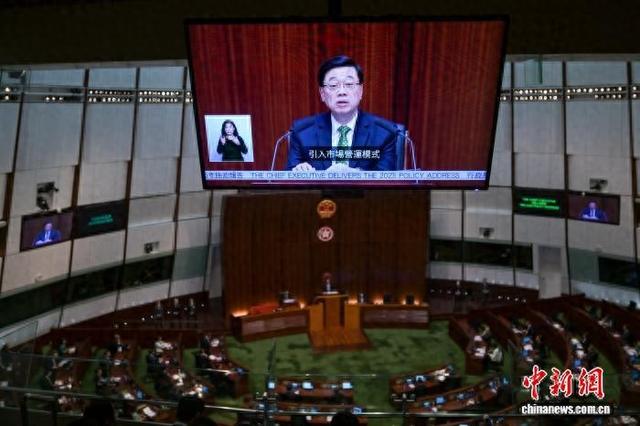
香港创科界:施政报告措施务实 展现打造全球AI枢纽决心
Zhong Guo Xin Wen Wang· 2025-09-18 07:53
Group 1 - The Hong Kong government aims to accelerate the development of emerging industries, particularly artificial intelligence (AI), as highlighted in the Chief Executive's policy address [1][3] - The policy address emphasizes the introduction of AI applications in various sectors, including healthcare, with specific examples such as digital pathology technology to enhance accuracy in analysis [3][5] - The report indicates a shift in Hong Kong's innovation landscape, moving from a "strong science, weak technology" state to a more balanced approach that encourages AI enterprise aggregation and industry adoption [3][5] Group 2 - A funding initiative of HKD 3 billion for a "Frontier Technology Research Support Scheme" and a planned establishment of a "Hong Kong AI Research Institute" with HKD 1 billion reserved for 2026 is announced [5] - The report also highlights the importance of talent acquisition in driving AI innovation, with over 500 AI companies and 5,000 technical professionals already present in the Hong Kong Science Park [5][6] - The focus on aerospace technology and support for the space economy is expected to open new opportunities for Hong Kong [5]
苏州市发布加快建设“人工智能+”城市行动方案
Su Zhou Ri Bao· 2025-09-18 00:20
Group 1: AI Industry Development Plan - The "Artificial Intelligence+" city action plan aims to gather over 3,000 AI companies in Suzhou by the end of 2026, with an annual growth rate of over 20% in the core scale of the smart economy [1] - The plan includes the establishment of 20 municipal AI industrial parks and the cultivation of 350 vertical large models and 200 typical application scenarios, with a total intelligent computing scale reaching 17,000 PFLOPS by 2026 [1] - A fund cluster exceeding 50 billion yuan will be formed to support development, with over 120 AI service algorithms registered nationally and the establishment of 5 national open-source platforms [1] Group 2: Data Resource Utilization - Suzhou will enhance the value of data elements by promoting the open sharing of public data and incentivizing enterprise data sharing, aiming to create a multi-layered data resource supply system [2] - By the end of 2026, the city plans to have over 6,000 public data open directories and develop 300 high-quality industry data sets and corpora [2] - The focus will be on building high-quality data sets in manufacturing, leveraging market application scenarios [2] Group 3: Talent Acquisition and Development - By 2026, Suzhou aims to cultivate 240 leading talents in the AI field and establish 15 various talent training platforms and bases [4] - The city will enhance mechanisms for talent introduction, training, evaluation, and incentives, promoting collaboration with top institutions to attract high-level talents [4][5] - Efforts will be made to align educational institutions with industry needs, fostering interdisciplinary training and international cooperation [5] Group 4: Core Technology Advancement - Suzhou plans to establish 5 provincial-level key laboratories in AI by 2026, focusing on foundational research in AI and supporting the development of intelligent medical devices [3] - The city aims to achieve 50 new key core technology breakthroughs and accumulate over 13,000 high-value patents in the AI sector [3] - Emphasis will be placed on encouraging enterprises to take the lead in innovation and undertake significant national and provincial projects [3] Group 5: Industry Strengthening and Innovation - Suzhou will support the cultivation of 50 intelligent native enterprises and 15 unicorn companies in the AI sector by 2026, focusing on emerging business models [6] - The city aims to develop 490 provincial-level specialized and innovative enterprises and 1,200 high-tech enterprises in AI by 2026 [6] - Efforts will be made to attract leading enterprises to Suzhou through capital investment and scenario opening, enhancing industrial clustering effects [6]
布鲁金斯学会报告:《描绘AI经济地图:哪些地区为下一次技术飞跃做好了准备?》
欧米伽未来研究所2025· 2025-09-11 12:46
Core Viewpoint - Artificial intelligence is transforming the U.S. economy at an unprecedented pace, with a report from the Brookings Institution analyzing the capabilities of various metropolitan areas to absorb, create, and apply AI technology [1][2]. Geographic Distribution of AI - The AI industry in the U.S. is highly concentrated, with San Francisco and San Jose accounting for 13% of national AI job postings, dominating high-end talent and innovation [4]. - A total of 30 core regions, including Seattle, Boston, Austin, and Washington D.C., represent 67% of the AI job demand in the country [4]. Emerging AI Centers - There are signs of AI spreading to non-traditional tech hubs, with cities like Pittsburgh, Detroit, Madison, and Huntsville showing potential in talent and innovation [7]. - Over half of U.S. metropolitan areas remain at a low level of AI development, lacking sufficient talent pipelines and research infrastructure [7]. Three Pillars of AI Competitiveness - The report identifies three key dimensions determining regional AI competitiveness: talent, innovation, and application [8]. - Talent is reflected in the supply of computer science degrees and AI skill profiles, with 14% of AI skill profiles concentrated in the Bay Area [11]. - Innovation is measured by the number of top academic papers, AI patents, and federal funding, with San Francisco and San Jose holding 34% of AI patents [11]. - Application is assessed through the number of AI startups and their funding, with 31% of AI startups since 2014 originating from San Francisco and San Jose [11]. Dual Strategic Choices for Regions - The report emphasizes the need for a "dual strategy" to prevent AI development from being concentrated in a few areas, which could limit national innovation potential [12]. - A national AI support platform should be established, increasing non-defense AI research funding and enhancing data infrastructure [15]. - Regions should develop strategic clusters based on their strengths and weaknesses, as exemplified by Massachusetts' AI strategic working group [15]. Future Outlook - AI's potential as a "general-purpose technology" hinges on its ability to permeate various industries and regions [16]. - The future balance of the U.S. AI economy will depend on national strategies to enhance research and talent investment, as well as regional policies to promote AI applications [16].

湖南省委书记沈晓明专题调研人工智能产业发展
Zheng Quan Shi Bao Wang· 2025-09-02 12:25
Core Insights - The article discusses the development of the artificial intelligence (AI) industry in Hunan, emphasizing the need for strategic direction and leveraging local advantages [1] - It highlights the importance of fostering a number of competitive AI enterprises and planning for future application scenarios to enhance Hunan's core competitiveness in the AI sector [1] - The article outlines specific goals related to AI foundational research, industry development, application scenario cultivation, and talent training to ensure safe, stable, and sustainable growth in the AI field [1] Group 1 - The Hunan provincial government is focusing on integrating AI with advanced manufacturing, culture, modern agriculture, and medicine [1] - There is a call for clear development priorities to support the cultivation of leading AI companies [1] - The government aims to establish detailed objectives and action plans across various aspects of AI development [1]
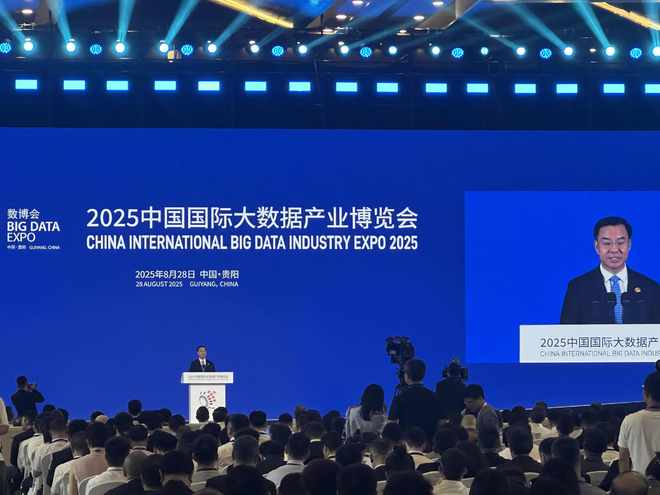
2025数博会开幕 贵州建成全球首条400G全光网算力通道 数博会
Zhong Guo Jing Ying Bao· 2025-08-28 05:16
Group 1 - The 2025 China International Big Data Industry Expo (Big Data Expo) opened in Guiyang, Guizhou, with the theme "Data Gathering Industrial Momentum, Smartly Initiating New Development Chapters" [2] - The event attracted over 16,000 registered guests and featured 375 domestic and foreign enterprises [2] - Guizhou's digital economy has developed significantly under the guidance of national leadership, with a focus on data center construction and enhancing computational power to seize new opportunities [2][3] Group 2 - Guizhou aims to leverage the rapid development of artificial intelligence as a strategic opportunity, focusing on key areas such as intelligent computing, high-quality data set construction, industry models, and digital information industries [3] - The Big Data Expo includes six themed exhibition halls showcasing new technologies, products, solutions, and applications in the digital economy [3]
13家企业和机构获颁“广州会展合伙人”证书
Guang Zhou Ri Bao· 2025-08-28 02:08
Core Insights - Guangzhou's exhibition industry has evolved from a single prominent event to a diverse array of exhibitions, becoming a crucial engine for economic development and a platform for industrial upgrades [2][4][5] Industry Overview - Guangzhou is recognized as an international trade center and a national advanced manufacturing base, with a complete ecological chain formed by 35 industrial categories and six trillion-level advanced manufacturing clusters [2][4] - The exhibition industry in Guangzhou ranks second nationally and has maintained its competitive edge as the top among provincial capital cities for several years [5] Recent Developments - From January to August this year, Guangzhou's key exhibition venues hosted 195 exhibitions, attracting over 8.36 million participants [4][5] - The "Exhibition-Industry Integration and Global Synergy" event held on August 27 featured major domestic and foreign exhibition companies, fostering collaboration and innovation in the exhibition industry [4][6] Future Prospects - The Guangzhou government plans to enhance the exhibition industry's high-quality development by establishing legislative frameworks, improving logistics and customs services, and nurturing globally influential industry benchmark exhibitions [6][8] - The city aims to explore a new development path that promotes industrial growth through exhibitions, aligning with the "12218" modern industrial system [6][7] Strategic Initiatives - The establishment of a "one industry, one exhibition" brand system is intended to create a collaborative ecosystem involving government, partners, industry entities, and service organizations [4][6] - The integration of artificial intelligence into the exhibition sector is being pursued to develop "smart exhibitions" and support policies to boost the exhibition economy [8]