冰淇淋

Search documents
冰淇淋产业向“休闲食品+健康零食”复合赛道升级
Zhong Guo Chan Ye Jing Ji Xin Xi Wang· 2025-09-04 01:04
Core Insights - The Chinese ice cream market is projected to reach a scale of 183.5 billion yuan in 2024, with an expected growth to 233.4 billion yuan by 2030, indicating a stable growth trajectory and significant untapped potential [1] - The industry is witnessing a trend towards increased concentration, necessitating traditional companies to accelerate digital transformation and innovation, while new brands should focus on differentiated positioning and niche demands [1] Market Growth and Consumer Behavior - Since 2017, per capita ice cream consumption in China has been steadily increasing, reaching 3.3 kg in 2024, although it still lags behind the global average of approximately 4.8 kg [2] - The market size of the ice cream industry has consistently grown, with a forecast to surpass 200 billion yuan by 2027, driven by rising demand for leisure foods, product innovation, and improved purchasing channels [3] Regional Characteristics and Consumer Preferences - As of May 2025, there are 41,203 existing ice cream-related enterprises in China, predominantly located in East China (7,401), South China (6,646), Northeast (6,298), and Southwest (6,248), reflecting regional consumer characteristics and historical factors [3] - Over 60% of consumers prioritize reasonable pricing and brand recognition when purchasing ice cream, while 40% are influenced by attractive packaging and flavor [4] Sales Channels and Market Trends - Ice cream sales are heavily concentrated in offline channels, accounting for approximately 74.6%, with traditional supermarkets (43.1%) and convenience stores (37.3%) being the dominant sales venues [5] - The industry is evolving from a "traditional summer beverage" to a "leisure food + healthy snack" composite track, driven by deep iterations in consumer demand for health, personalization, and situational consumption [5]
伊利、蒙牛、和路雪…一支全是“料”,冰淇淋更“重工”了?
东京烘焙职业人· 2025-09-02 08:58
Core Viewpoint - The Chinese ice cream market is increasingly characterized by innovative and multi-layered products, with brands striving to enhance consumer experience through diverse flavors and textures [16][19][60]. Group 1: Product Innovations - New products such as the seven-layer ice cream from Unilever's "可爱多" and the six-layer "巧乐兹" from Yili showcase the trend of adding more layers and ingredients to ice cream [8][9][28]. - The "醇巧筒" from Unilever's "梦龙" features a rich chocolate flavor and a unique cone design, indicating a shift towards more sophisticated offerings [22]. - Domestic brands like 德华 are also capitalizing on this trend, with products that combine various flavors and textures, such as the "烤瓜子雪糕" [27]. Group 2: Consumer Trends - The "心" consumer group, particularly those born between 1995 and 2007, prioritize emotional satisfaction and diverse sensory experiences in their purchases [50][51]. - The demand for rich, multi-layered ice cream has surged, with the flow heart ice cream experiencing a 333% growth in 2022 [52]. - Social media plays a significant role in promoting ice cream products, with visually appealing designs driving consumer interest and repeat purchases [54][57]. Group 3: Industry Dynamics - The ice cream industry is undergoing significant advancements in production techniques, leading to innovative product designs and flavors [58]. - Increased competition among brands is pushing for higher quality and better value, benefiting consumers through improved product offerings [60]. - The ice cream category is evolving beyond seasonal consumption, becoming a staple in social settings and everyday life, as evidenced by sales during traditionally off-peak seasons [68][69].


创新滞后20年,哈根达斯究竟怎么了?
Hu Xiu· 2025-09-01 23:04
Core Insights - The article discusses the decline of Häagen-Dazs, a once-premium ice cream brand, which is now struggling to survive by selling low-priced coffee at 9.9 yuan [1] Group 1 - Häagen-Dazs was previously known for selling high-end ice cream at prices around several dozen yuan per unit [1] - The brand's current strategy involves offering low-priced coffee as a means to attract customers and generate revenue [1] - The article raises questions about the reasons behind Häagen-Dazs' fall from industry leader to a struggling brand [1]
蒙牛冰淇淋:产品升级、营销破圈 增收又增利
Zhong Jin Zai Xian· 2025-08-29 01:25
Core Viewpoint - Mengniu Dairy's ice cream business has achieved positive growth in the first half of 2025, driven by healthy inventory levels, effective marketing strategies, and strong sales of new products [1][10]. Product Performance - In the first half of 2025, Mengniu launched 20 new ice cream products, focusing on health, premium quality, and personalization, which led to a 2.7 percentage point increase in the sales proportion of new products compared to the previous year [3][10]. - Key products such as "Sui Bian Zhuan," "Green Mood Double Skin Milk," and "Green Mood Black Sesame" have become bestsellers, significantly boosting sales and brand reputation [4][10]. Market Trends - The domestic ice cream market has faced challenges in 2025, including decreased sales per store and overall industry stagnation due to consumer confidence issues and market saturation [4][10]. - Despite these challenges, Mengniu's strong R&D capabilities and market insights have allowed it to outperform competitors and maintain a leading position in the market [4][10]. Marketing Strategies - Mengniu has effectively targeted the Z generation, positioning ice cream as a year-round snack rather than just a summer treat, which aligns with changing consumer preferences [13]. - Innovative marketing campaigns, such as collaborations with popular events and interactive experiences, have successfully engaged younger consumers and enhanced brand visibility [12][14]. Channel Development - The company has strengthened its sales channels, focusing on traditional, modern, and new retail avenues, resulting in significant growth in sales, particularly in fresh e-commerce and instant retail [14][16]. - The implementation of a differentiated strategy for various cities and the enhancement of marketing capabilities are expected to further drive growth in the second half of 2025 [16].

蒙牛冰淇淋:产品升级、营销破圈、增收又增利
Zheng Quan Ri Bao Wang· 2025-08-28 11:45
Core Viewpoint - Mengniu Dairy's ice cream business has achieved positive revenue growth in the first half of 2025, driven by healthy inventory levels, effective marketing strategies, and strong sales of new products [1] Group 1: Financial Performance - In the first half of 2025, Mengniu's ice cream revenue showed a counter-cyclical growth despite challenging industry competition and weakened offline sales capabilities [1] - The sales proportion of new products increased by 2.7 percentage points year-on-year, with nine new products achieving sales exceeding ten million [1] Group 2: Product Development - Mengniu launched 20 new ice cream products in the first half of 2025, focusing on health, premium quality, and personalization, effectively addressing consumer demands for quality and experience [2] - Notable new products such as "随变转," "随变MINI," "绿色心情双皮奶," and "绿色心情黑芝麻" exceeded sales expectations [1] Group 3: Channel Strategy - The company has strengthened its four major channels: traditional, modern, special, and new retail channels, with significant improvements in sales and market presence [2] - The fresh e-commerce sales grew over 40%, and the instant retail segment saw explosive growth in customer transaction values [2] Group 4: Future Plans - In the second half of 2025, Mengniu plans to enhance marketing capabilities through targeted strategies, channel restructuring, and efficiency upgrades [3] - The company aims to implement a "one city, one policy" approach to create city-specific marketing strategies and establish urban accounting units [3]

小瓶酒饮和迷你冰激淋受热捧,“以小切大”占领市场
Qi Lu Wan Bao Wang· 2025-08-28 06:19
Core Insights - The emergence of the "Mini Economy" is reshaping consumer preferences, with a focus on smaller, more convenient product sizes across various sectors, particularly in beverages, ice cream, and alcoholic drinks [1][8] Beverage Industry - The beverage industry has been a pioneer in miniaturization, with Coca-Cola and Pepsi leading the way by introducing portable, smaller-sized products that cater to consumer demand for "small capacity, light burden" [2] - Coca-Cola launched a 200ml pocket-sized cola in China, achieving over 2 million cases in sales within the first month [2] - Other brands like Sprite and Fanta quickly followed suit, establishing a mini product lineup that resonates with consumers who prefer smaller portions [2] Ice Cream Sector - Mini ice creams have emerged as a solution for consumers who want to indulge without overconsumption, with brands like Hema introducing mini ice cream options that have seen significant sales [3] - Hema's mini ice cream products, priced at 24.9 yuan and 29.9 yuan for 18 sticks, have achieved over 15,000 online orders in a single store within a month [3] - The trend is supported by predictions from Euromonitor, which estimates a 7% compound annual growth rate for ice creams sized 50ml and below over the next four years [3] Alcoholic Beverages - The miniaturization trend is also evident in the alcoholic beverage sector, with small-sized bottles (30-50ml) gaining popularity in retail settings [5] - A report from Taobao indicates that sales of alcoholic beverages under 330ml have increased by over 40% since June 2023, highlighting a shift towards smaller, more affordable options [5] - The small bottle market is projected to capture 25% of the light bottle market, with a value of approximately 15 billion yuan, and is expected to maintain a growth rate of 15%-20% [6] Consumer Demand Transformation - The rise of single-person households in China, exceeding 240 million, is driving the growth of the "one-person meal" market, projected to reach 800 billion yuan by 2024 [7] - The Z generation, as the main consumer force, values personalized, diverse, and visually appealing products, which aligns with the offerings of mini-sized products [7] - Increased health consciousness among consumers is also fueling the demand for smaller packaging, allowing for better control over calorie intake [7] Strategic Business Implications - Companies are not only responding to consumer demand but are also strategically positioning themselves in the market by offering smaller packaging, which lowers the economic barrier for trying new products [8] - The mini economy is extending its influence across various sectors, fundamentally altering consumer choices and reshaping the competitive landscape of the fast-moving consumer goods industry [8]
1300亿,皮爷咖啡母公司要卖了
3 6 Ke· 2025-08-28 03:26
Group 1: Acquisition Overview - Keurig Dr Pepper (KDP) announced a cash acquisition of JDE Peet's for a total equity value of €15.7 billion (approximately ¥130 billion) [1] - KDP is a beverage giant in North America, while JDE Peet's specializes in coffee and tea, known for its Peet's Coffee brand [1] - The acquisition is seen as a strategic move for KDP to enhance its coffee business, which has historically underperformed [10] Group 2: Historical Context of Peet's Coffee - Peet's Coffee was founded in 1966 by Alfred Peet, who initiated a revolution in specialty coffee in the U.S. [2] - Peet's Coffee is often referred to as the "father of Starbucks," as it provided coffee beans to Starbucks' founders [2] - In 2012, JAB Holdings acquired Peet's Coffee for $977 million, leading to its privatization and subsequent global expansion [3] Group 3: Performance in China - Peet's Coffee entered the Chinese market in 2017, establishing a joint venture and currently operates over 270 stores primarily in first-tier and new first-tier cities [4] - JDE Peet's reported a strong organic sales growth of 23.8% in China, contributing to a global sales increase of €8.837 billion (7.9% year-over-year) [7] Group 4: JAB Holdings' Role - JAB Holdings, a significant player in the transaction, increased its stake in JDE Peet's to 68% prior to the acquisition, making it the largest shareholder [9] - JAB's investment strategy focuses on high-growth consumer brands, and it stands to gain over $12.3 billion (approximately ¥88 billion) from this acquisition [9] Group 5: Future Prospects - Post-acquisition, KDP plans to split into two independent publicly traded companies: Beverage Co. and Global Coffee Co., with the latter expected to become the largest pure coffee company globally [10] - KDP's CEO emphasized the acquisition as an opportunity to create a global coffee giant amid a challenging market for coffee brands [11] Group 6: Broader M&A Trends - The acquisition of JDE Peet's is part of a larger trend of significant mergers and acquisitions in the consumer sector, with companies seeking to adjust their strategic positions [12] - The consumer sector is witnessing a resurgence in M&A activity, as companies look to overcome growth challenges through consolidation [14]

哈萨克斯坦冰淇淋日益走俏国际市场
Ren Min Ri Bao· 2025-08-26 22:22
Group 1 - Kazakhstan's ice cream export market has seen significant growth, with an export volume of 4,300 tons in the first four months of 2025, representing a year-on-year increase of 41.6% [1] - The main export destinations for Kazakhstan's ice cream are neighboring Central Asian countries, Russia, and China, indicating a strong regional demand [1] - The Shin-Line Group, a leading local ice cream producer, holds a 49% market share in Kazakhstan and is focusing on reducing trans fats in its products to align with global health trends [1] Group 2 - The Balmuzdak Company, established in 1987, has evolved from a cooperative to a significant player in the southern Kazakhstan ice cream market, emphasizing international collaboration to enhance production techniques [2] - The Kazakh government is supporting the ice cream industry through a national development plan aimed at doubling agricultural output by 2028, with an expected investment of 200 billion tenge (approximately $373 million) in the dairy sector by 2025 [2] - The global ice cream market is projected to grow at a compound annual growth rate of 12.5% from 2022 to 2027, highlighting the potential for Kazakhstan's ice cream industry to capitalize on this trend [2]
哈萨克斯坦冰淇淋日益走俏国际市场 今年前四个月出口量同比增长逾百分之四十
Ren Min Ri Bao· 2025-08-26 21:52
Core Insights - Kazakhstan's ice cream export market has seen significant growth, with an export volume of 4,300 tons in the first four months of 2025, representing a year-on-year increase of 41.6% [1] - The improvement in international competitiveness of Kazakhstan's ice cream is attributed to enhanced product quality and ongoing brand development by local companies [1] - Shin-Line Group, a leading local ice cream producer, holds a 49% market share in Kazakhstan and is focusing on reducing trans fats and developing new products to cater to diverse consumer preferences [1] - The government of Kazakhstan is supporting the ice cream industry through substantial investments and strategic planning aimed at doubling agricultural output by 2028 [2] Company Insights - Shin-Line Group has evolved from a small family business to one of the largest ice cream producers in Central Asia, emphasizing health-conscious product development [1] - Balmuzdak Company, established in 1987, has improved its production processes by learning from international peers and investing in new equipment [2] - Both companies are benefiting from government initiatives that aim to enhance the competitiveness of the dairy sector and improve cold chain logistics for better export capabilities [2] Industry Insights - The global ice cream market is projected to grow at a compound annual growth rate (CAGR) of 12.5% from 2022 to 2027, indicating a favorable environment for Kazakhstan's ice cream exports [2] - The Kazakh government is investing 200 billion tenge (approximately $373 million) in the dairy industry by 2025, which includes funding for 141 dairy farm projects [2] - Efficient cold chain management is identified as a critical factor for expanding exports, with ongoing investments in logistics and storage to reduce transportation costs [2]
2025夏季雪糕/冰淇淋发展趋势及竞争观察
3 6 Ke· 2025-08-26 02:24
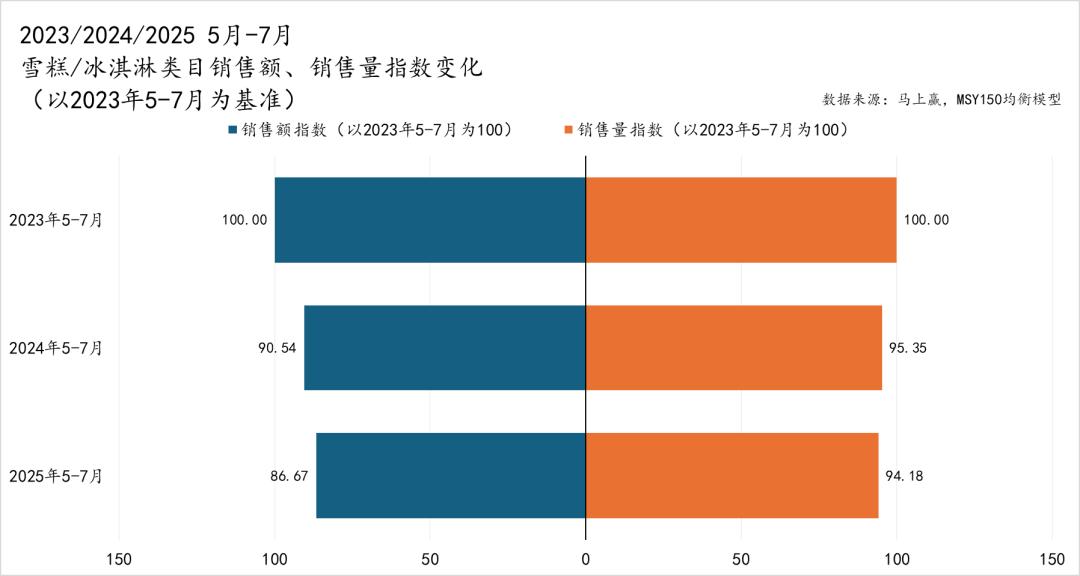
Market Overview - The ice cream category has shown a downward trend in both sales and volume from 2023 to 2025, with sales index dropping from 100 in 2023 to 86.67 in 2025, and volume index decreasing from 100 to 94.18 [4][6] - The decline in sales is attributed to consumers shifting from high-priced products to lower-priced options, rather than fluctuations in price levels [4][6] Price Level and Consumer Behavior - The price index for ice cream has remained above 100 since September 2024, indicating a year-on-year increase in price levels, contrasting with the previous two years of significant price drops [6] - Despite the price recovery, the overall sales scale remains under pressure due to changes in consumer preferences and budget constraints [6][19] Brand and Market Concentration - The market concentration for ice cream has remained stable, with the top 10 groups (CR10) holding a market share of 65.5% in 2025, slightly down from 66.5% in 2023 [9] - The number of brands and groups in the ice cream category has continued to grow, indicating increased competition without significantly altering the overall market structure [11][9] Product Packaging Trends - Non-combination packs dominate the market, maintaining a share of around 95%, while combination packs account for less than 5% [13][15] - The average specifications for non-combination products have remained stable, while combination products have shown more variability, reflecting changing consumer preferences for value [17] Pricing Trends by Segment - The market is shifting towards lower-priced products, with the share of the 0-1 yuan price segment increasing from 7.67% to 9.60% from 2023 to 2025 [24] - The number of SKUs in lower price segments has expanded significantly, while high-priced segments have seen limited growth, indicating a consumer preference for value-oriented products [26] New Product Development - The number of new SKUs in the ice cream category has been declining, with non-combination products still dominating but decreasing from 309 to 225, while combination products dropped from 47 to 21 [33] - New product launches are increasingly occurring earlier in the year, allowing brands to better prepare for peak seasons [33] Competitive Landscape - The top 10 groups in the ice cream market have experienced slight declines in market share and sales, with Yili maintaining the largest share at approximately 33% despite a small decrease in sales [38][36] - The competitive dynamics among brands show that while some brands like Yili and Ice Factory are growing, others like Mengniu and Dream Dragon are facing declines in both market share and sales [41][36] Future Outlook - The ice cream category is expected to see new entrants from various sectors, as brands from other categories are increasingly launching ice cream products to capture market share [63][65] - The overall market is anticipated to continue evolving, with a focus on value and affordability as key consumer trends [61][65]