存储设备

Search documents
2025年《财富》中国500强峰会圆满落幕,精彩观点连连看
财富FORTUNE· 2025-11-12 13:04
Core Insights - The 2025 Fortune China 500 Summit held in Shanghai focused on the theme "Harnessing Momentum, Expanding Frontiers: The Next 25 Years of the 21st Century," bringing together leaders from top companies to discuss how to navigate the new order shaped by intelligence, resilience, and sustainability [1][3]. Group 1: Key Themes and Discussions - Five parallel sessions were held, covering topics such as the next phase of the global energy revolution, the new maritime era of Chinese manufacturing, the path to building high-end brands, AI-enabled digital innovation for long-term growth, and the technology and capital driving high-quality future living [3][43][53]. - The summit included discussions on the importance of adapting to efficiency in logistics, emphasizing flexibility and rapid resource allocation to create value and achieve sustainability [9]. - The banking sector's digital transformation over the past two decades has created opportunities and challenges, particularly with the rise of generative AI, which banks must leverage through organizational restructuring [11]. Group 2: Globalization and Localization - Globalization presents new opportunities for Chinese companies, allowing them to showcase their brand, management, and social value on the world stage despite challenges [12]. - Effective globalization requires extreme localization, ensuring that companies adapt to local markets while maintaining their global strategies [17]. - The future of Chinese enterprises going global involves deeper participation in global value chains rather than merely exporting products [20]. Group 3: Industry Innovations and Trends - The automotive industry is highly competitive, with Chinese companies excelling in scale, speed, and cost, while European firms offer deep expertise in quality and safety [25]. - The demand for smarter products necessitates a focus on material innovation and collaboration across the supply chain to achieve integrated solutions [26]. - The consumer goods sector is evolving, with brands needing to balance rational spending with emotional value, reflecting consumers' increasing expectations [36][39]. Group 4: Technology and Sustainability - The integration of AI in industries is seen as a means to overcome challenges and drive new value, with a focus on combining technology with specific applications to ensure return on investment [77][83]. - The healthcare sector is embracing technology to create a comprehensive ecosystem that addresses health and wellness needs, emphasizing the importance of data and compliance [89][92]. - The energy sector is shifting towards quality over quantity, with a focus on sustainable practices and the assetization of distributed solar power to create a win-win scenario for stakeholders [96].


深夜全线狂飙!纳指涨超2%,中国资产大爆发;闪迪NAND涨价50%!国务院办公厅:引导民间资本有序参与商业航天等建设——《投资早参》
Mei Ri Jing Ji Xin Wen· 2025-11-10 23:55
Market News - The three major US stock indices closed higher, with the Dow Jones up 0.81%, S&P 500 up 1.54%, and Nasdaq up 2.27% [1] - Major tech stocks saw significant gains, with Nvidia rising 5.8%, adding approximately $26.487 billion (about 188.57 billion RMB) to its market value [1] - International gold prices surged, with spot gold up 2.81% at $4,113.26 per ounce, and WTI crude oil futures rising 0.67% to $60.15 per barrel [1] - European stock indices also closed higher, with the Euro Stoxx 50 up 1.72% and the FTSE 100 up 1.09% [1] Industry Insights - The State Council issued measures to promote private investment, encouraging private capital participation in key sectors like railways and nuclear power, and supporting private enterprises in major technological tasks [2] - The global space economy is projected to exceed $1 trillion by 2030, with increasing participation from private capital in areas like satellite communication and space tourism [2] - The National Development and Reform Commission and the National Energy Administration released guidelines to enhance renewable energy consumption, emphasizing the integration of AI, big data, and cloud computing in energy management [3] - The storage industry is experiencing a price surge, with SanDisk raising NAND flash contract prices by 50%, driven by AI data center demand and limited wafer supply [4][5] - The demand for storage solutions is expected to rise significantly, benefiting companies in the NAND flash supply chain as major cloud providers increase orders [5]


美股异动丨闪迪盘前大涨超9%,季度营收、毛利率超预期,预计供不应求持续至2026年底
Ge Long Hui· 2025-11-09 03:54
Core Viewpoint - SanDisk (SNDK.US) shares rose over 9% to $226.9 in pre-market trading following the release of its quarterly earnings report, which showed strong revenue growth and positive trends in NAND product demand [1] Financial Performance - For the quarter ending October 3, 2025, SanDisk reported a Non-GAAP revenue of $2.308 billion, representing a 21% increase quarter-over-quarter and a 23% increase year-over-year [1] - The gross profit margin was 29.9%, up 3.5 percentage points from the previous quarter but down 9 percentage points compared to the same quarter last year [1] - Operating profit reached $245 million, a 145% increase quarter-over-quarter but a 31% decrease year-over-year [1] - Net profit was $181 million, a significant quarter-over-quarter increase of 331%, though it also reflected a 31% decrease year-over-year [1] Market Dynamics - SanDisk experienced a 15% increase in NAND bit shipments during the quarter, with average selling prices showing a mid-single-digit percentage increase, contributing to revenue and gross margin exceeding expectations [1] - The company noted that NAND product demand outstripped supply, leading to a reduction in inventory turnover days from 135 days to 115 days, with expectations for this trend to continue until the end of 2026 [1] - SanDisk's CEO, David, indicated that by 2026, the data center market is expected to become the largest market for NAND flash memory for the first time [1]
道指开盘跌0.4%,标普500跌0.5%,纳指跌0.7%
Xin Lang Cai Jing· 2025-11-07 14:35
Group 1 - Lucid's stock fell by 2.6% due to Q3 performance falling short of expectations [1] - Block, a major player in mobile payments, saw a 12.5% drop in stock as Q3 revenue and earnings per share missed forecasts [1] - Opendoor's stock declined by 18.8% with quarterly sales dropping over 30% [1] Group 2 - Airbnb's stock increased by 4.9% after Q3 revenue exceeded expectations, and the company raised its Q4 revenue forecast [1] - Sandisk's stock rose by 2.5% as quarterly revenue and gross margin surpassed expectations, with a supply-demand imbalance expected to last until the end of 2026 [1]




江波龙:公司RDIMM产品已批量出货,规模稳步扩大
Zheng Quan Shi Bao Wang· 2025-11-06 08:53
Core Viewpoint - Jiangbolong (301308) has successfully begun mass shipments of its RDIMM products, indicating a steady expansion in scale [1] Group 1: Product Development - The company’s RDIMM products are now being shipped in bulk, showcasing the growth in production capacity [1] - Other types of enterprise-level storage products are being systematically introduced to leading domestic enterprises [1]
一次南大校友会的启发
老徐抓AI趋势· 2025-11-02 12:25
Core Insights - The article emphasizes the importance of "circle" or community in enhancing efficiency and fostering deep, meaningful exchanges among professionals [4][6][17] - It highlights the shift in value from material wealth and information to time, suggesting that effective communication can lead to time compounding [6][22] - The author discusses the significance of high-quality interactions in understanding complex industries, particularly in the context of AI and storage technology [9][19] Group 1: Industry Insights - The storage industry, represented by companies like Western Digital and Seagate, is identified as a critical sector in the AI era, with its cyclical nature being essential for investment considerations [9][10] - The article mentions the need for deeper understanding rather than just faster access to information, indicating that insights from industry veterans can provide significant advantages in investment decisions [10][12] Group 2: AI Applications - The company Reportify aims to leverage AI to simplify the understanding of complex financial documents, positioning itself as a research engine that enhances comprehension rather than just generating content [19] - Another initiative, Xiaobang Planning, focuses on using AI to manage personal finances, addressing both asset management and cognitive challenges in investment [21] Group 3: Time Management - The narrative stresses that as individuals reach middle age, the fear of wasting time becomes more pronounced, making AI a valuable tool for enhancing efficiency and decision-making [22] - The article concludes that the ultimate goal is to find a community that prioritizes efficiency and meaningful engagement, rather than merely increasing choices or returns [22]

美股飘红 亚马逊、西部数据大涨
Zheng Quan Shi Bao Wang· 2025-10-31 15:27
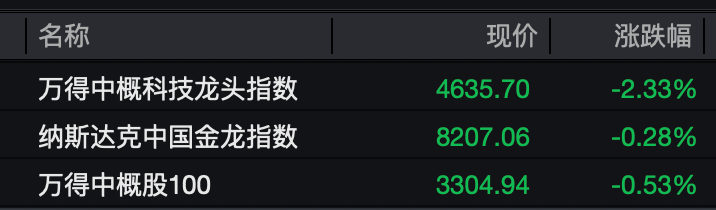
Group 1: Market Overview - The U.S. stock market opened higher on October 31, with major indices showing positive movement [1] - Chinese concept stocks performed weakly, with the Nasdaq China Golden Dragon Index down 0.28% and the Wind China Technology Leaders Index down over 2% [1][2] Group 2: Amazon's Performance - Amazon's stock surged by 11% on October 31, increasing its market capitalization by nearly $300 billion to over $2.6 trillion [3] - For Q3 2025, Amazon reported a 12% increase in net sales to $180.2 billion and a net profit of $21.2 billion, up 38.6% year-over-year [4][5] - North American sales grew by 11%, while international sales increased by 10%. Amazon Web Services (AWS) achieved $30.9 billion in net sales, a 20% year-over-year growth [4][5] Group 3: Amazon's Strategic Moves - Amazon's CEO, Andy Jassy, highlighted strong growth driven by artificial intelligence across the company's operations, with AWS growth reaching its highest level since 2022 [5] - The company announced a workforce reduction of 14,000 employees to streamline operations and focus resources on critical projects [5] - Amazon is entering the retail peak season, with global paid item sales increasing by 11% year-over-year [5] Group 4: Western Digital's Performance - Western Digital's stock rose nearly 8% following the release of its Q1 FY2026 earnings report, which showed a 27.4% year-over-year revenue increase to $2.82 billion, exceeding market expectations [6][7] - The company raised its revenue forecast for Q2 FY2026 to approximately $2.9 billion and adjusted its earnings per share estimate to $1.88, both above analyst expectations [8] - Western Digital attributed its strong performance to the growing demand for artificial intelligence and cloud data, and plans to increase hard drive prices to meet this demand [8]
希捷科技:因营收增长目标及开局强劲,美股早盘股价大涨16.6%
Xin Lang Cai Jing· 2025-10-29 14:18
Core Viewpoint - Seagate Technology's stock surged by 16.6% following the announcement of a revenue growth target of 16% for Q2 of fiscal year 2026, supported by the promotion of its HAMR drives [1] Financial Performance - The company reported a strong start to fiscal year 2026, with a year-over-year revenue increase of 21% [1]

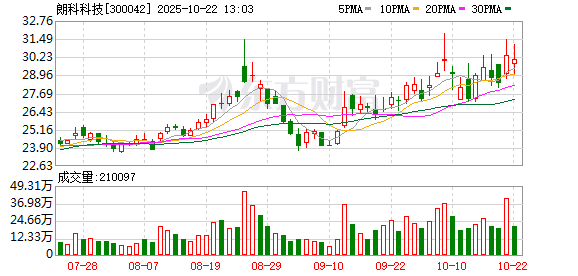
朗科科技(300042.SZ)暂无涉及AISSD业务
Ge Long Hui· 2025-10-22 06:32
Core Viewpoint - The company, Langke Technology, currently does not engage in the AISSD business and focuses on various storage products and consumer electronics [1] Group 1: Company Products - The main products of the company include SSD solid-state drives, DRAM memory modules, embedded storage, mobile storage, wearable devices, and computer peripherals [1] - The company is committed to continuous innovation and optimization of its storage product lines based on market trends and customer demands [1]

朗科科技:暂无涉及AISSD业务
Mei Ri Jing Ji Xin Wen· 2025-10-22 05:02
Group 1 - The company confirmed that it does not currently engage in AISSD business despite inquiries about a collaboration with Huawei in this area [2] - The main products of the company include SSD solid-state drives, DRAM memory modules, embedded storage, mobile storage, and consumer electronics such as wearable devices and computer peripherals [2] - The company is continuously innovating and optimizing various storage product lines in response to market conditions and customer demands [2]