
血液制品

Search documents
上海莱士: 关于召开2025年第二次临时股东大会的通知
Zheng Quan Zhi Xing· 2025-07-16 00:10
Meeting Information - The company will hold its second extraordinary general meeting of shareholders on July 31, 2025, at 14:00 [1][2] - The meeting will be conducted both in-person and via online voting platforms provided by the Shenzhen Stock Exchange [2][4] - The record date for shareholders eligible to attend the meeting is July 28, 2025, at 15:00 [2][3] Voting Procedures - Shareholders can vote through either the Shenzhen Stock Exchange trading system or the internet voting system, but must choose one method for each voting right [2][5] - The voting code for the meeting is "362252" and the voting abbreviation is "莱士投票" [4][5] - Specific procedures for online voting are detailed in the attachments provided [4][5] Attendance Requirements - Legal representatives of corporate shareholders must present identification and relevant documentation to attend the meeting [3][4] - Individual shareholders must bring their identification and shareholder account card for registration [4] - Remote shareholders can register via email or mail, with a deadline of July 30, 2025, at 16:00 [4] Proposal Details - The meeting will review non-cumulative voting proposals, with the requirement that more than 75% of the voting rights present must agree for proposals to pass [3][5] - If shareholders vote on both the total proposal and specific proposals, the first valid vote will take precedence [5]

华兰生物:强化市值管理 进一步巩固行业龙头地位
Zheng Quan Shi Bao Wang· 2025-07-15 13:28
Group 1 - Regulatory authorities have set clear requirements for listed companies' market value management, prompting companies like Hualan Biological to implement a market value management system [1] - Hualan Biological plans to conduct mergers and acquisitions to enhance its core competitiveness and expand its business scope [1] Group 2 - The blood products industry in China has evolved due to the strategic layout of state-owned enterprises, flexible adjustments by private enterprises, and the exit of foreign capital, leading to a competitive landscape dominated by major players like China National Biological Group, Taibang Biological, Hualan Biological, and Shanghai Raas [2] - Hualan Biological became the only blood product company in China to achieve a thousand-ton plasma volume through internal operations, significantly increasing its market position through a series of acquisitions from 2004 to 2007 [2] Group 3 - Hualan Biological has implemented various measures to enhance plasma collection, achieving a record plasma collection volume of 1586.37 tons in 2024, ranking third among blood product companies [3] Group 4 - The blood products industry has high entry barriers, with stringent regulations on plasma collection and production, which necessitates a higher level of technical and financial capability [4] - The consolidation of the industry is expected to improve regulatory compliance and overall safety, aligning with government policies promoting mergers and acquisitions [4] Group 5 - The number of single plasma collection stations and their collection volume are critical indicators of management efficiency in blood product companies, with future mergers likely to focus on quality rather than mere expansion [5] - The blood products industry is anticipated to undergo a restructuring phase, with a shift from expansion to quality improvement, emphasizing innovation and operational efficiency as key competitive factors [5]

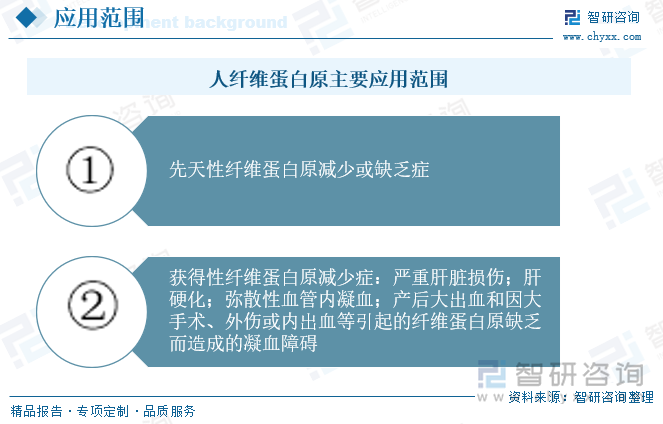
2025年中国人纤维蛋白原行业主要应用范围、产业链、市场规模、企业分析及发展趋势研判:生物医药应用需求的增长,推动人纤维蛋白原规模上涨[图]
Chan Ye Xin Xi Wang· 2025-07-10 01:25
Core Insights - Human fibrinogen is recognized globally for its clinical application value in regulating coagulation function, with increasing demand driven by aging populations and rising living standards [1][13] - The market size for human fibrinogen in China is projected to grow from 1.529 billion yuan in 2021 to 2.15 billion yuan in 2024, reflecting a compound annual growth rate (CAGR) of 12.0% [1][13] - The production process of human fibrinogen is expected to improve with technological advancements, leading to enhanced product quality and continuous market growth [1][13] Industry Overview - Fibrinogen is a key substrate in the coagulation and hemostasis process, essential for maintaining normal coagulation and promoting platelet aggregation [3] - Human fibrinogen is derived from healthy human plasma, processed to remove viruses, and is used as an effective replacement therapy for fibrinogen deficiency [3] - The normal concentration of fibrinogen in the human body is maintained at 2-4 g/L, and it is crucial for correcting hypofibrinogenemia and improving coagulation disorders [3] Market Dynamics - The number of blood collection stations and plasmapheresis stations in China is increasing, with 3 new stations approved and 17 new operational stations in 2024, leading to a steady rise in plasma collection [8] - The total plasma collection volume in 2024 is expected to reach 13,400 tons, a year-on-year increase of 10.94%, with major companies like Tian Tan Biological, Taibang Biological, and Shanghai Raist accounting for approximately 80% of the domestic plasma collection [8] - The growth in the number of medical institutions, driven by an aging population and increased health awareness, is expected to boost the demand for human fibrinogen [11] Competitive Landscape - The human fibrinogen industry is attracting significant attention from capital markets, with increasing competition as more companies enter the field [17] - Key players in the industry include Huaren Boya Biological Pharmaceutical Group, Shanghai Raist Blood Products, and Beijing Tiantan Biological Products, among others [17][18] Future Trends - Continuous government policy support is expected to benefit the human fibrinogen market, with initiatives aimed at improving the quality and safety of blood products [22] - Companies are focusing on optimizing production processes and enhancing plasma utilization rates, which will drive overall industry progress [23] - The expansion of medical insurance coverage and rising consumer spending on healthcare are anticipated to gradually increase the market demand for human fibrinogen [24]


再次易主,国药系能制服派林生物这匹悍马吗?
Guo Ji Jin Rong Bao· 2025-06-19 07:39
Core Viewpoint - The blood products industry is experiencing significant consolidation, highlighted by China National Pharmaceutical Group's acquisition of a 21.03% stake in Palin Bio for 4.6 billion yuan, which is a high premium acquisition that will reshape the industry landscape [1][5]. Company Summary - China National Pharmaceutical Group's acquisition will increase its control over the blood products market, consolidating its position as the leading player with a total of 154 plasma stations across its subsidiaries, including Tian Tan Biological and Wei Guang Biological [6][9]. - Palin Bio has undergone multiple ownership changes, with its history marked by internal conflicts that have hindered its growth. The company has changed hands six times, with the latest acquisition by China National Pharmaceutical Group marking a potential end to its tumultuous ownership history [3][4]. Industry Summary - The blood products industry is characterized by a high degree of concentration, with major players like Tian Tan Biological, Shanghai Laishi, and Palin Bio dominating the market. The industry is moving towards an oligopolistic structure, with the number of companies decreasing significantly over the years [8][11]. - The global blood products market is projected to exceed $50 billion in 2024 and reach over $90 billion by 2030, indicating substantial growth potential driven by increasing demand for blood products due to aging populations and the need for critical medical supplies [8][10]. - China's blood products market is expected to grow significantly, with projections of reaching 60 billion yuan in 2024 and 95 billion yuan by 2030. The industry faces challenges such as limited raw material supply and strict regulations on blood plasma collection [11][12].

医药生物行业报告(2025.06.09-2025.06.13):创新药主题热度仍在升温,关注中药创新药研发企业的投资机会
China Post Securities· 2025-06-16 05:31
Investment Rating - The industry investment rating is "Outperform the Market" and is maintained [2] Core Viewpoints - The innovation drug theme continues to gain momentum, with investment opportunities in traditional Chinese medicine innovation drug development companies [5][14] - The innovation drug sector has seen a significant recovery in stock prices due to accumulated industry advancements and improved funding conditions, leading to increased public fund allocations [5][14] - Short-term fluctuations are expected, but a positive outlook for the innovation drug market is maintained over the next 2-3 years, driven by overseas expansion and favorable funding conditions [6][14] Weekly Performance Summary - The pharmaceutical and biotechnology sector rose by 1.4%, outperforming the CSI 300 index by 1.66 percentage points, ranking 5th among 31 sub-industries [7][22] - The medical research outsourcing sector had the highest increase at 4.76%, while the vaccine sector saw the largest decline at 3.34% [7][22] Recommended and Beneficiary Stocks - Recommended stocks include: Yingke Medical, Maipu Medical, Yihe Jiaye, Weidian Shengli, Gongdong Medical, Pilin Bio, Yifeng Pharmacy, Daclin Pharmacy, Kangchen Pharmaceutical, Zoli Pharmaceutical, Guilin Sanjin, Tianshi Li, Xinlicheng, Meinian Health, and International Medicine [8][30] - Beneficiary stocks include: Shanwaishan, Yirui Technology, United Imaging, MicroPort, Junzheng Technology, BGI Genomics, Mindray Medical, Aohua Endoscopy, Linuo Pharmaceutical, Xinmai Medical, Kefu Medical, Zhonghong Medical, Runda Medical, Shengxiang Bio, BGI Genomics, Berry Genomics, Kingmed Diagnostics, Jiuan Medical, Wanfu Biology, Tiantan Biology, Aier Eye Hospital, Gushengtang, Jinxin Reproductive, Global Medical, Fangsheng Pharmaceutical, Guizhou Sanli, WuXi AppTec, Kanglong Chemical, Kylin Biopharma, and Nuotai Bio [8][30] Subsector Insights - The medical device sector is expected to benefit from the "old-for-new" policy and is projected to see significant growth starting in Q2 2025 [26] - The IVD sector is under pressure but has potential for recovery through AI-assisted diagnostics and new data services [31] - The blood products sector is experiencing a stable demand for albumin and immunoglobulin, with a focus on companies with strong operational efficiency [32] - The offline pharmacy sector is undergoing consolidation, with leading pharmacies expected to benefit from improved customer flow and profitability [35] - The traditional Chinese medicine sector is anticipated to recover as the impact of previous policies diminishes, with a focus on high-quality OTC products [39]
派林生物易主中国生物接盘 胜帮英豪38亿转手纯赚超亿元
Chang Jiang Shang Bao· 2025-06-11 23:43
Core Viewpoint - The acquisition of 21.03% of shares in Palin Biotech by China National Pharmaceutical Group (Sinopharm) marks a significant shift in control, with the company expected to become part of the national team in the blood products industry [1][4][12]. Group 1: Acquisition Details - Palin Biotech's controlling shareholder will change from Shengbang Yinghao to China National Pharmaceutical Group, with the actual controller shifting from the Shaanxi Provincial State-owned Assets Supervision and Administration Commission to Sinopharm [1][4]. - The transaction price for the share transfer is approximately 38.44 billion yuan, which includes interest calculated at an annual rate of 9% from March 20, 2023, until the signing of the transaction documents [8][10]. - The share transfer price represents a premium of about 47.40% over the closing price of 16.96 yuan per share on the day before the agreement was signed [6][8]. Group 2: Financial Performance and Growth - Palin Biotech has shown steady revenue growth, with reported revenues of 19.72 billion yuan, 24.05 billion yuan, 23.29 billion yuan, and 26.55 billion yuan from 2021 to 2024, respectively [14]. - The net profit attributable to the parent company has also increased, with figures of 3.91 billion yuan, 5.87 billion yuan, 6.12 billion yuan, and 7.45 billion yuan for the same years [14]. - The company is expected to distribute a total of 5.12 billion yuan in cash dividends in 2023 and 2024, with Shengbang Yinghao projected to receive over 1 billion yuan in dividends [10]. Group 3: Industry Context and Competition - The acquisition raises potential concerns regarding competition, as both Palin Biotech and Tian Tan Biological Products, a subsidiary of Sinopharm, operate in the same blood products sector [2][15]. - The integration of Palin Biotech into Sinopharm's portfolio will increase the number of listed companies under the Sinopharm umbrella to eight, enhancing its presence in the healthcare market [11][12]. - The strategic focus of Palin Biotech remains on blood products, with ongoing efforts to expand production capacity and improve operational efficiency [14][15].
派林生物控股股东或变更为中国生物,曾因内控缺陷被整改
Xin Jing Bao· 2025-06-11 08:53
Core Viewpoint - The acquisition framework agreement between China Biotechnology Co., Ltd. and the controlling shareholder of Pailin Biopharmaceuticals marks a significant change in the company's ownership structure, with China Biotechnology set to become the new controlling shareholder, transitioning control from the Shaanxi Provincial State-owned Assets Supervision and Administration Commission to China National Pharmaceutical Group Co., Ltd. [2][3] Group 1: Acquisition Details - The agreement involves China Biotechnology acquiring a 21.03% stake from Shengbang Yinghao Investment Partnership, with the transfer price based on the original acquisition cost of 3.844 billion yuan, plus interest calculated at an annualized simple interest rate of 9% from March 20, 2023, until the signing of the formal transaction documents [3][4] - The transaction is subject to due diligence by China Biotechnology and requires compliance confirmation from the Shenzhen Stock Exchange, as well as other necessary approvals, indicating potential uncertainties in the completion of the deal [4] Group 2: Company Background - Pailin Biopharmaceuticals has undergone multiple ownership changes since its establishment, with its current controlling shareholder, Shengbang Yinghao, having acquired the company in March 2023 for 3.844 billion yuan [5][6] - The company, which focuses on blood products, has a total share capital of 731 million shares, with Shengbang Yinghao holding 154 million shares, representing 21.03% of the total [5] Group 3: Operational Challenges - Pailin Biopharmaceuticals faced regulatory scrutiny due to internal control deficiencies, leading to corrective measures mandated by the Shanxi Securities Regulatory Bureau [7] - The company reported a revenue decline of 14% year-on-year in Q1 2025, attributed to production halts during capacity expansion at its subsidiary, although capacity upgrades are expected to enhance production in the near future [8]
派林生物三年两易主:国药系或坐拥154个浆站,重构血制品格局丨并购一线
Tai Mei Ti A P P· 2025-06-11 08:43
Core Viewpoint - The blood products industry is undergoing significant consolidation, with the leading player, China National Pharmaceutical Group (Sinopharm), acquiring the third-ranked company, Pailin Biotech, which will further solidify its market position [2][3]. Group 1: Acquisition Details - Pailin Biotech's controlling shareholder, Shengbang Yinghao, signed an acquisition framework agreement with China National Pharmaceutical, intending to transfer 21.03% of its shares [2]. - The estimated transaction price for the share transfer is approximately 4.612 billion yuan, translating to a per-share price of about 29.99 yuan, representing a premium of approximately 76.83% compared to the last closing price before suspension [2]. - The acquisition is still subject to due diligence and final agreement on transaction terms, with the final payment arrangements yet to be clarified [2]. Group 2: Market Impact - The acquisition will reshape the competitive landscape of the blood products sector, with Sinopharm's market dominance being reinforced by its ownership of three major blood product companies, including Tian Tan Biological and Wei Guang Biological, totaling 154 plasma collection stations [3][10]. - Following the announcement, Pailin Biotech's stock rose by 1.06%, while Tian Tan Biological and Wei Guang Biological experienced slight declines [3]. Group 3: Historical Context - Pailin Biotech has undergone multiple ownership changes, with its focus shifting to the blood products sector since 2007, culminating in its rebranding after acquiring another company in 2021 [4][5]. - The company has faced internal conflicts and governance issues, particularly during its transition to new shareholders, which have impacted its operational stability [5][9]. Group 4: Industry Dynamics - The blood products market is characterized by a "three-legged" competitive structure, with Sinopharm, China Resources, and Haier Group as the main players, but Sinopharm has established a significant lead in both the number of plasma stations and collection volume [10][15]. - As of 2024, Sinopharm's total plasma collection volume is 4,743 tons, accounting for approximately 35.4% of the industry, with further growth expected as additional stations become operational [10][16].

派林生物易主:国药系拟再收千吨级血企竞逐百亿市场
2 1 Shi Ji Jing Ji Bao Dao· 2025-06-11 06:18
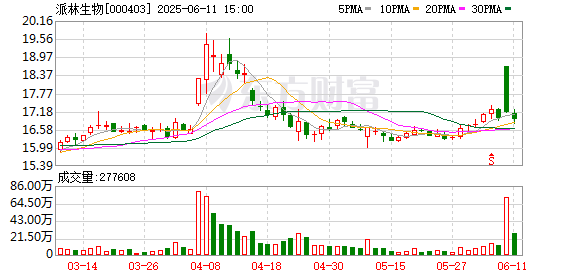
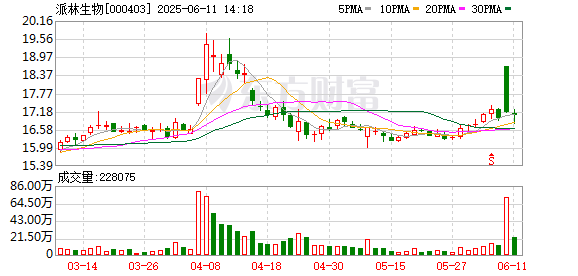
Core Viewpoint - The control of Palin Biotech (000403.SZ) is set to change hands as its major shareholder, Shengbang Yinghao, has signed a framework agreement with China Biotech to transfer 21.03% of its shares, potentially enhancing China Biotech's position in the blood products industry [2][3] Company Summary - The transaction will be completed in cash, but there are risks associated with the due diligence process and the uncertainty of finalizing the agreement [2] - If the deal is successful, the controlling shareholder will shift from the Shaanxi Provincial Government's State-owned Assets Supervision and Administration Commission to China National Pharmaceutical Group (Sinopharm) [2] - Following the acquisition, Sinopharm will strengthen its presence in the blood products sector, joining its existing holdings in Tian Tan Biological (600161.SH) and Weigao Biotech (002880.SZ) [2] - In 2024, the combined plasma collection volume of these three companies is projected to reach 4,743 tons, significantly surpassing competitors like Shanghai Raist (002252.SZ) and Hualan Biological (002007.SZ) [2] Industry Summary - The change in ownership of Palin Biotech may reshape its future development and could lead to a reconfiguration of competition within the blood products industry [3] - The market response has been lukewarm, with Palin Biotech's stock showing minimal fluctuations following the announcement [3] - The blood products industry in China is expected to undergo consolidation, driven by government policies and the need for industry growth, favoring companies with strong plasma collection resources and R&D capabilities [3][7] - The global blood products industry has seen a significant reduction in the number of major players, with the top five companies controlling 80%-85% of the market share [7] - In China, the number of operational blood product companies is under 30, with strict regulations on the establishment of new plasma collection stations [8] - The industry is projected to grow, with the blood products market expected to reach 600 billion yuan in 2024 and 780 billion yuan by 2027, reflecting a compound annual growth rate of 11.6% from 2022 to 2027 [10]
国药集团拟入主派林生物,加码血制品
Huan Qiu Lao Hu Cai Jing· 2025-06-10 04:08
Core Viewpoint - The acquisition framework agreement between the controlling shareholder of Pailin Biopharmaceuticals and China National Pharmaceutical Group marks a significant shift in ownership, with implications for the blood products industry in China [1][2]. Company Summary - Pailin Biopharmaceuticals' controlling shareholder, Shengbang Yinghao Investment Partnership, plans to transfer 21.03% of its shares to China National Pharmaceutical Group for a price based on the principal of 3.844 billion yuan plus annual simple interest of 9% [1]. - If the transaction is completed, the controlling shareholder will change to China National Pharmaceutical Group, with the actual controller shifting from the Shaanxi Provincial Government's State-owned Assets Supervision and Administration Commission to China National Pharmaceutical Group [1]. - Pailin Biopharmaceuticals specializes in the research, development, production, and sales of blood products, with a total of 38 plasma collection stations expected by 2024, ranking among the top three in the industry, and a plasma collection volume exceeding 1,400 tons [1]. Performance Summary - In 2024, Pailin Biopharmaceuticals achieved a revenue of 2.655 billion yuan, representing a year-on-year growth of 14.0%, and a net profit attributable to shareholders of 745 million yuan, reflecting a year-on-year increase of 21.76% [2]. - Prior to the suspension of trading, Pailin Biopharmaceuticals' closing price was 16.96 yuan per share, with a total market capitalization of 16.1 billion yuan [2]. Industry Summary - The blood products industry in China is characterized by strict regulations, with no new production enterprises approved since 2001, leading to a long-term tight supply of plasma and a significant market gap [2]. - The market size for blood products in China is projected to reach 60 billion yuan in 2024, with expectations to grow to 95 billion yuan by 2030, indicating substantial future growth potential [2]. - China National Pharmaceutical Group already owns another blood products company, Tian Tan Biological Products, and will control two leading companies in the blood products sector following the acquisition [2].