养老服务

Search documents
让家门口养老更幸福(人民时评)
Ren Min Ri Bao· 2025-08-20 22:23
Core Viewpoint - The article emphasizes the importance of transforming planning visions for elderly care into practical, accessible services in local communities, addressing the growing demand for elderly care in both urban and rural settings [1][2][3] Group 1: Current Situation and Demand - As of the end of last year, the elderly population aged 60 and above in China reached 310 million, with projections indicating it will exceed 400 million by around 2035, highlighting a massive demand for elderly care services [1] - The current elderly care service facilities are insufficient and poorly distributed, failing to meet the actual needs of the elderly population [1] Group 2: Policy and Planning - The Ministry of Civil Affairs and the Ministry of Natural Resources recently issued a notice to enhance the planning of elderly care service facilities, aiming to establish a three-tiered service network covering urban and rural areas [1][2] - The focus is on scientifically planning the layout of elderly care facilities to better align supply with demand, responding to the aging trend [1][2] Group 3: Implementation Strategies - The article discusses the need for a detailed understanding of elderly needs to prioritize the placement of care facilities in densely populated areas, ensuring that resources are allocated effectively [2] - It highlights the importance of integrating elderly care service planning with other urban planning aspects such as healthcare, education, and transportation to enhance accessibility [2][3] Group 4: Future Directions - The article outlines the ongoing efforts to expand elderly care services and promote innovative, multi-faceted service models, aiming to create an age-friendly society during the "14th Five-Year Plan" period [3] - Future strategies will focus on better meeting the living and health care needs of the elderly, linking elderly care initiatives with broader national strategies such as rural revitalization and digital development [3]
决胜“十四五” 打好收官战丨深化养老服务改革,推动实现老有所养老有所为
Xin Hua She· 2025-08-20 14:37
Core Viewpoint - The deepening of elderly care service reform is a pressing requirement for implementing a national strategy to actively respond to population aging, significantly impacting people's well-being and social stability [1] Group 1: Service Development and Infrastructure - Since the "14th Five-Year Plan," a profound transformation benefiting millions of elderly people has been steadily advancing, focusing on institutional innovation, service implementation, resource expansion, and structural optimization [1] - As of the end of 2023, approximately 86,000 elderly meal assistance points have been established nationwide, with annual meal assistance services reaching 11.96 million person-times [3][4] - By the end of 2024, the elderly population aged 60 and above in China is expected to exceed 310 million, accounting for 22% of the total population, emphasizing the importance of developing home and community elderly care services [3][4] Group 2: Support for Vulnerable Groups - In August 2023, a subsidy coupon was issued in Qingdao for elderly individuals with moderate to severe disabilities, covering 40% of their personal out-of-pocket expenses for elderly care services [5][6] - The long-term care insurance system, initiated in 2016, has seen over 180 million people insured by the end of last year, with nursing beds in elderly care institutions accounting for 65.7% [6] Group 3: Rural Elderly Care Services - The government has emphasized the development of rural elderly care services, with plans to establish a three-tiered elderly care service network at the county, township, and village levels [7][8] - Central financial support of 296 million yuan has been allocated to 59 regions to innovate county-level elderly care service systems, improving overall rural elderly care service levels [8] Group 4: Empowering the Elderly - The initiative to support elderly individuals in continuing to contribute to society is highlighted, with policies aimed at enhancing their social participation and self-worth [9] - The "Silver Age Action" program has seen over 7 million elderly volunteers participating in various aid projects, benefiting over 400 million people since its inception in 2003 [9] Group 5: Quality of Elderly Education and Cultural Services - By the end of 2024, the national elderly education public service platform is expected to offer 441,000 course resources, providing learning support services to 170 million person-times [10] - Policies have been introduced to enhance elderly reading initiatives and improve the accessibility of tourism services for the elderly, leading to a more efficient supply of educational and cultural services [10]
广阔银发市场释放巨大就业新空间 养老服务“十八般武艺”这样练就……
Yang Shi Wang· 2025-08-20 07:21
Core Viewpoint - The establishment of the "Elderly Care Service Specialist" as a new profession reflects the growing demand for specialized elderly care services in China, with the elderly population expected to reach 310 million by the end of 2024 [1][24]. Group 1: Overview of the Elderly Care Service Specialist - The role of the Elderly Care Service Specialist goes beyond basic caregiving, acting as a "life architect" to design a fulfilling second half of life for the elderly [3][16]. - Specialists conduct a comprehensive three-party assessment involving daily activity capabilities, cognitive levels, health conditions, and social support [5][8]. - The focus includes caring for specific groups, such as those with cognitive impairments, requiring knowledge of related diseases and communication skills [7][21]. Group 2: Professional Development and Training - The profession requires a diverse skill set, combining health care, social participation, and lifelong learning to meet the needs of the elderly [24][26]. - Educational institutions are increasingly offering programs in elderly services, with a significant portion of the workforce being young and educated [23][26]. - The profession is expected to grow significantly, with projections indicating a potential workforce of millions to meet the demands of an aging population [24][26]. Group 3: Market Demand and Future Prospects - By 2035, the elderly population in China is projected to exceed 400 million, creating vast employment opportunities in the elderly care sector [24]. - Current staffing levels in elderly care are insufficient, with only 1.338 million professionals available, highlighting a significant gap in meeting the growing service demands [24]. - The establishment of the Elderly Care Service Specialist is part of broader social measures to enhance elderly services, indicating a shift towards professionalization in the sector [24][26].


沈阳中度以上失能老年人可领养老服务消费补贴
Liao Ning Ri Bao· 2025-08-20 04:46
Core Points - Shenyang City has launched a "Senior Care Service Consumption Season" with the theme of "Caring for the Elderly, Quality Life" [1] - The city has introduced a subsidy policy for elderly individuals with moderate to severe disabilities, providing financial support for various senior care services [1] Group 1: Subsidy Policy - The subsidy is aimed at elderly residents aged 60 and above who are assessed as having moderate, severe, or complete disabilities [1] - The subsidy covers home, community, and institutional care services, including meal assistance, bathing, medical aid, cleaning, mobility support, emergency services, rehabilitation care, day care, and both long-term and short-term institutional care [1] - The subsidy is provided in the form of electronic vouchers through the "Minzheng Tong" app, with a deduction rate of 40% on eligible service expenses [1] Group 2: Financial Details - For long-term, short-term, and day care services, the maximum subsidy is 800 yuan per person per month, while home service has a maximum subsidy of 500 yuan per person per month [1] - The assessment fee for elderly individuals determined to have moderate or severe disabilities can be fully deducted, with a cap of 100 yuan [1] Group 3: Application Process - The application process includes online submission, capability assessment, and the use of consumption vouchers [2] - Elderly individuals can select service providers through the "Minzheng Tong" app and schedule services, with the requirement that service providers must see the elderly person in person to ensure accurate policy implementation [2]
科技如何重塑“在家养老”一场与时间、误解和尊严的赛跑
Jin Rong Shi Bao· 2025-08-20 03:17
Group 1 - The aging population in China is projected to exceed 310 million by the end of 2024, accounting for 22% of the total population, with over 90% of families opting for home-based elderly care [1][15] - Home-based care presents challenges, including risks associated with isolation and lack of immediate assistance, as illustrated by the experiences of elderly individuals like Zhang and Feng [1][3] - The integration of technology and professional services is being explored to address these challenges, with initiatives like the "Home Care Center" launched by Dajia Insurance in Beijing [3][14] Group 2 - Technology is being utilized to enhance home care, providing features such as emergency alerts and health monitoring, which can alleviate concerns of elderly individuals [2][12] - The shift from passive waiting for help to proactive monitoring and assistance is crucial for making home environments safer for the elderly [4][13] - Trust issues arise as many elderly individuals resist the adoption of technology, often due to concerns about privacy and the perception of being monitored [6][7] Group 3 - The industry is witnessing a growing interest from insurance companies in home care services, with over 20 companies, including Ping An and China Life, actively participating in this sector [15][16] - Challenges such as insufficient supply capacity and the need for standardized services are prevalent, with many service providers lacking the necessary training and resources [16][17] - Balancing quality and affordability remains a significant challenge, as many elderly individuals have limited financial means, complicating the delivery of effective home care services [17][18] Group 4 - Localized service teams are essential for effective home care, as the diverse needs of elderly individuals across different regions require tailored solutions [18][19] - The industry is exploring innovative models to enhance service delivery, such as integrating medical services with home care to meet the essential needs of the elderly [20] - The evolution of home care services is ongoing, with a focus on creating a supportive ecosystem that combines technology and human interaction to improve the quality of life for the elderly [19][20]

“一府两院”工作报告会上详解“两新”融合与民生发展关键事
Hang Zhou Ri Bao· 2025-08-20 03:09
Group 1: Economic and Social Development - The city government is focusing on the deep integration of technological innovation and industrial innovation to enhance the city's innovative vitality [2] - The government aims to build a "strong city" in technology, talent, and education, and to improve the mechanism for significant investment in technological innovation [2] - The "3+N" industrial fund cluster has invested in over 1,600 projects in Hangzhou, with a total investment exceeding 60 billion yuan, supporting high-quality development [3] Group 2: Social Welfare and Elderly Care - The city has established over 35,000 beds in elderly care institutions and more than 2,900 home care service centers, enhancing the elderly care network [4] - The government is focusing on improving elderly care services by addressing urgent needs and expanding the "happiness elderly care service circle" [4] Group 3: Agricultural Development - The city is promoting the development of new agricultural productivity through the "Five Good and One New" strategy, which includes high-standard farmland and modern farmers [5] - Efforts are being made to accelerate agricultural modernization and promote green and efficient farming techniques [5]
智库要览丨解码“老龄群体”需求新趋势
Sou Hu Cai Jing· 2025-08-19 08:06
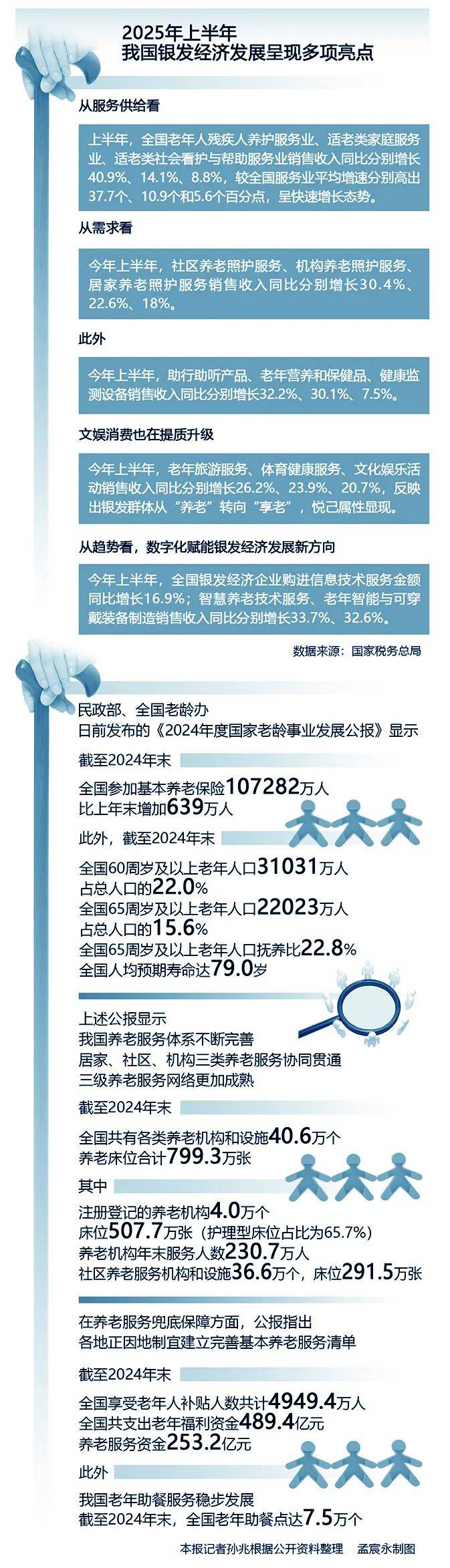
Group 1: Global Aging Population and Economic Impact - The United Nations projects that by the end of the 2070s, the global population aged 65 and older will reach 2.2 billion, driving the "silver economy" to focus on the needs of the elderly through innovative services and products [1][33] - The "silver economy" is expected to stimulate various industries to actively cater to the demands of older adults, enhancing the vitality of the elderly care market [1][33] Group 2: High-Net-Worth Elderly Population in China - Goldman Sachs reports that the high-net-worth elderly group (aged 50 and above with net assets over 3 million yuan) is becoming a core driver of the healthcare market, with approximately 15 million individuals expected in 2024, contributing 221 billion yuan to medical expenditures [2][3][29] - This group, representing only 3% of the population aged 50 and above, is projected to increase to 29 million by 2035, with medical spending soaring to 963 billion yuan, reflecting a compound annual growth rate of 14.3% [3][4][29] Group 3: Evolving Elderly Housing Needs - The "China Silver Housing Development Report" indicates that the demand for elderly housing is shifting from basic care to a "silver living ecosystem" that integrates health management and smart interaction [5][31] - The elderly population is segmented into three age groups, each with distinct needs: younger seniors (55-64) seek quality living improvements, middle seniors (65-79) require aging-friendly modifications, and older seniors (80+) need personalized smart monitoring solutions [5][31] Group 4: Market Size and Growth Projections - The "2025 China Silver Economy Development Research Report" forecasts that the silver economy market in China will reach 25 trillion yuan by 2030, with the market size in 2024 estimated at 8.3 trillion yuan, accounting for 6% of the national GDP [7][32] - The report highlights the potential for cross-industry integration, with new business models emerging from the combination of healthcare, real estate, and technology sectors [7][32] Group 5: Trends in Elderly Care Services - In the first half of 2024, revenues from elderly care services, including disability care and home services, grew significantly, with increases of 40.9% and 14.1% respectively, outpacing the average growth of the service industry [12][34] - The demand for community and institutional elderly care services also saw substantial growth, with increases of 30.4% and 22.6% respectively [13][34] Group 6: Digital Transformation in Elderly Care - The adoption of digital technologies in the silver economy is on the rise, with a 16.9% increase in IT service purchases by elderly care enterprises and significant growth in smart elderly care technology sales [16][34] - The trend indicates a shift towards more sophisticated and personalized care solutions for the elderly population [16][34] Group 7: Cross-Border Elderly Care in the Greater Bay Area - The Greater Bay Area is witnessing a trend towards cross-border elderly care, with collaboration among Guangdong, Hong Kong, and Macau to create a connected elderly care ecosystem [24][38] - Challenges remain, including regulatory issues and the need for better integration of services across regions [25][39]
让皱纹慢点长进心里(中国道路中国梦·青春为中国式现代化挺膺担当⑭)
Ren Min Ri Bao· 2025-08-18 22:31
Core Insights - The article emphasizes the importance of emotional support and psychological well-being in elderly care, highlighting that companionship is as crucial as physical care [2][3] - The evolution of elderly care services in Sichuan is noted, with modern facilities and community-based services becoming more prevalent, indicating a shift towards improved quality of life for the elderly [3] Summary by Sections Elderly Care Approach - Elderly care involves not just physical assistance but also emotional engagement, with activities like art classes and group events being organized to enhance the quality of life for residents [2] - The role of caregivers is described as multifaceted, requiring both practical skills and emotional intelligence to connect with the elderly [2] Community and Policy Engagement - The article discusses the broader societal responsibility towards elderly care, with the author taking on a role as a national representative to advocate for better policies and support for elderly services [2] - Engagement with local government and community feedback is emphasized as essential for improving elderly care services [2][3] Infrastructure and Service Development - Significant improvements in elderly care facilities are highlighted, including the transition from outdated buildings to modern care centers equipped with various amenities [3] - The establishment of community-based elderly care services, such as the "15-minute elderly service circle," reflects a commitment to making care more accessible and integrated into daily life [3]
“城心养老”破题老龄化困局:中国式养老体系如何筑牢安全网?
Zhong Guo Neng Yuan Wang· 2025-08-18 06:59
Core Viewpoint - The article highlights the urgent need for a comprehensive solution to the challenges posed by China's aging population and declining birth rates, emphasizing the importance of a new ecological framework for elder care that is policy-driven, service-oriented, and multi-faceted [1][4]. Population Structure Changes - China's population structure is undergoing a historic shift, transitioning from positive to negative growth in 2022, marking a significant demographic change [2]. - The "second elderly wave" is expected to see 330 million people aged 60 and above enter this demographic between 2022 and 2036, which is 2.32 times larger than the first elderly wave [2]. - By 2065, the proportion of individuals aged 80 and above is projected to exceed that of those aged 60-69 for the first time, indicating a deepening aging trend [2]. Dual Pressure on Younger Generations - The younger generations (those born in the 70s, 80s, and 90s) face a dual pressure of preparing for their own retirement while also caring for aging parents, leading to increased anxiety about elder care [3]. - Societal challenges include ensuring the sustainability of social security systems and addressing the inadequacies in socialized elder care services [3]. Chinese Elder Care Pathways - The Chinese government is working to establish a unique elder care service system characterized by home-based care, community support, and professional institutional backing [4]. - A three-tiered service network is proposed, focusing on county-level resource coordination, professional care at town levels, and basic services at village levels to ensure comprehensive coverage [4]. - The "15-minute elder care service circle" aims to provide accessible services within urban communities, enhancing convenience for the elderly [4]. Technological Integration and Resource Optimization - The integration of smart technology is crucial for improving service precision and efficiency, including real-time health monitoring systems for the elderly [4]. - A cloud platform is suggested to optimize the matching of elder care resources, ensuring timely service responses and efficient resource allocation [4]. Multi-Stakeholder Engagement - Encouraging diverse participation from social capital through tax incentives and operational subsidies is essential for expanding the scale of professional elder care services [5]. - The establishment of a national elderly capability assessment system and legislative improvements in service standards are necessary to stabilize retirement expectations for younger generations [5]. - The "urban core elder care" model is identified as a key pathway to alleviate elder care anxiety, promoting urban-rural integration for high-quality elder care services [5].
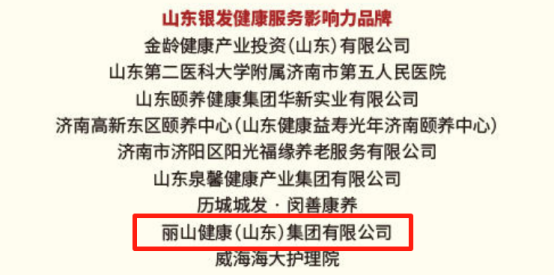
丽山健康集团荣获“2025山东银发健康服务影响力品牌”称号
Qi Lu Wan Bao· 2025-08-18 02:14
为助力山东银发经济发展,增进老年人福祉,由齐鲁晚报·齐鲁壹点发起的"2025山东银发经济品牌推选 活动"于7月启动,省内覆盖养老产业、养老服务、智能科技、老年用品、养老金融等多领域企业单位积 极参与,助力构建"产品供给—服务创新—消费升级"的银发经济生态链。丽山健康(山东)集团有限公 司(以下简称"丽山健康集团")凭借卓越的服务体系及深远的市场影响力,荣获"2025山东银发健康服 务影响力品牌"称号。此项荣誉是对丽山健康集团在康养产业深耕细作的高度肯定,标志着其已成为推 动区域银发经济高质量发展的核心力量。 此次荣获"2025山东银发健康服务影响力品牌",是丽山健康集团品牌价值与社会认可度持续攀升的又一 力证。近年来,公司先后荣获"2024山东企业社会责任卓越实践"称号、2025世界品牌莫干山大会"大健 康品牌典型案例"、"2025山东最具影响力品牌"等多项殊荣。这一系列荣誉,共同构筑了丽山健康集团 在行业内坚实的品牌壁垒与广泛的社会影响力。 未来,丽山健康集团将持续深化服务创新,整合优质产业资源,积极为山东乃至全国的银发健康服务事 业贡献丽山力量,让每一位长者在鎏金岁月中安享健康与喜乐,共同谱写"老有所养、 ...