网络安全

Search documents
【网络安全宣传周】坚持筑牢国家网络安全屏障!
天天基金网· 2025-09-04 11:26
网络安全为何重要? 当今时代,网络安全和信息化对一个国家很多领域都是牵一发而动全身的, 网络安全已是国家安全的重要组成部分。没有网络安全就没有国家安全,就没有 经济社会稳定运行,广大人民群众利益也难以得到保障。从世界范围看,网络安 全威胁和风险日益突出,并向政治、经济、文化、社会、生态、国防等领域传导 渗透。网络安全已经成为我国面临的最复杂、最现实、最严峻的非传统安全问题 之一。 如何树立正确网络安全观? 正确树立网络安全观,必须认清网络安全的主要特点: 随着社会信息化深入发展 互联网对人类文明进步将发挥更大促进作用 但与此同时,互联网领域的问题也日益凸显 网络犯罪、网络监听、网络攻击等时有发生 网络安全与每个人都息息相关 下面 一起来了解网络安全知识吧 网络安全是什么? 网络安全,是指通过采取必要措施,防范对网络的攻击、侵入、干扰、破坏 和非法使用以及意外事故,使网络处于稳定可靠运行的状态,以及保障网络数据 的完整性、保密性、可用性的能力。其实简单来看网络安全就是如何在虚拟的互 联网当中保证自己的信息或财产不受到非法侵害。 一是网络安全是整体的而不是割裂的。 在信息时代,网络安全对国家安全牵 一发而动全身, ...


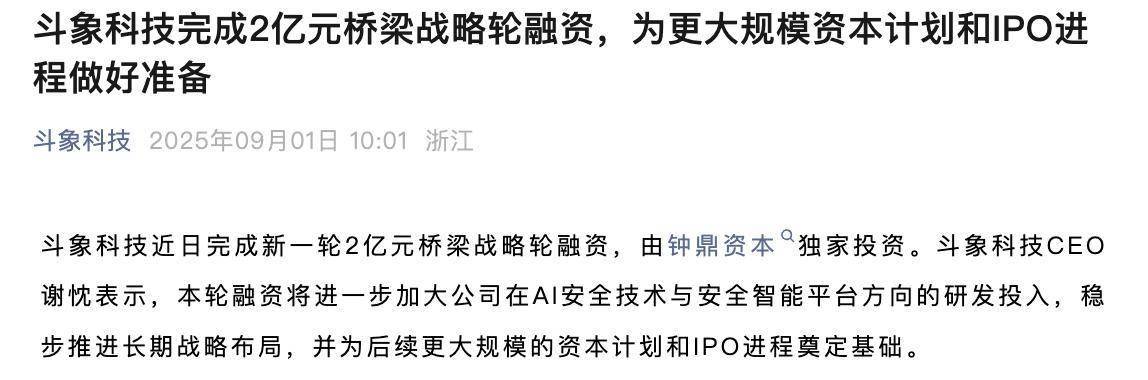
斗象科技完成2亿元桥梁战略轮融资:聚焦安全数据分析,钟鼎资本独家投资
Sou Hu Cai Jing· 2025-09-04 09:50
Core Insights - Douxiang Technology has completed a new round of bridge strategic financing amounting to 200 million yuan, exclusively invested by Zhongding Capital [2] - The financing will enhance the company's R&D investment in AI security technology and platform security intelligence, supporting its long-term strategic layout and future capital plans, including an IPO [2] Company Overview - Douxiang Technology was established in 2014, with a registered capital of 12.0054 million yuan, and is a platform-based cybersecurity provider driven by intelligent technology [2] - The company focuses on security data analysis and online security operations, operating under brands such as Douxiang Intelligent Security, Vulnerability Box, and FreeBuf [2] - The actual controller of Douxiang Technology is Xie Chen, who holds 36.31% of the voting rights and serves as the chairman and general manager [2]
天融信:公司在“AI+安全”方面已有技术研究和应用
Zheng Quan Ri Bao· 2025-09-04 09:08
Group 1 - The company has developed technology and applications in the "AI + security" sector, addressing key risks such as data leakage and malicious injection [2] - A new product, the large model security gateway, has been launched, which includes a multi-modal pre-trained security detection model and integrates core technologies for comprehensive intelligent defense from network to application layers [2] - The company's network data leakage prevention system utilizes deep content recognition technologies, including fingerprint databases, data identifiers, weighted dictionaries, and machine clustering, to accurately monitor network data transmission behaviors and content characteristics [2]

“十四五”期间 我国在航空航天等领域牵头制定国际标准532项
Yang Shi Xin Wen· 2025-09-04 08:19
Core Insights - During the "14th Five-Year Plan" period, China has taken on 26 technical secretariats in international standard organizations in key areas such as high-end equipment and intelligent manufacturing [1] - Chinese experts have assumed the chairmanship of 30 technical institutions and led 486 working groups for the formulation and revision of international standards [1] - A total of 880 proposals for international standards have been put forward in fields like new energy vehicles, new power systems, and aerospace, with 532 international standards being actively developed [1] - The conversion rate of advanced applicable international standards into Chinese standards exceeds 90% in key areas, with 4,210 international standards being transformed [1] Industry Development - The State Administration for Market Regulation emphasizes the integration of Chinese wisdom into international standards in critical and emerging technology fields such as artificial intelligence, cybersecurity, and brain-computer interfaces [1] - In the brain-computer interface sector, Chinese experts are leading the development of international standards that will unify terminology and data formats, promoting innovation and large-scale industrial development [1]
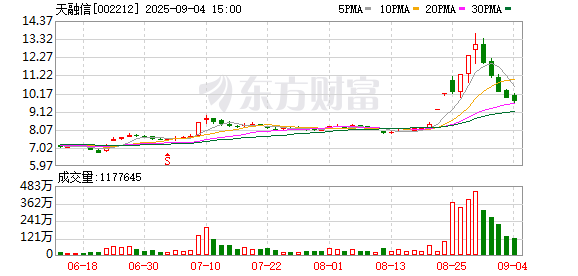
天融信大股东减持套现9900万元 上半年亏损6469万元
Zhong Guo Jing Ji Wang· 2025-09-04 06:01
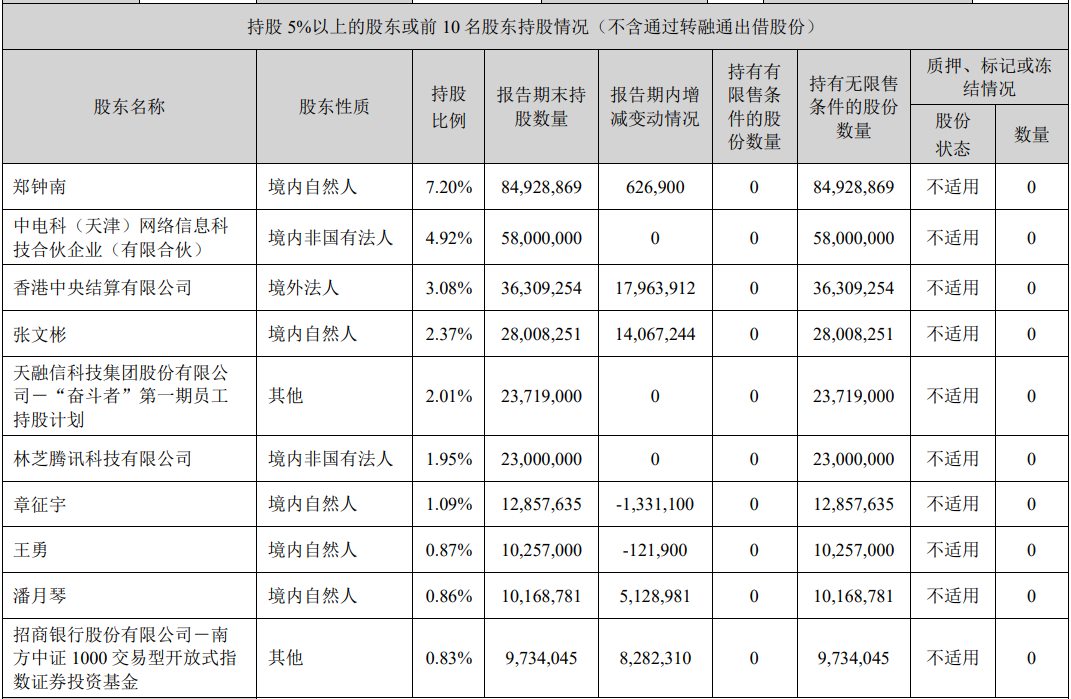
Core Viewpoint - Tianrongxin (002212.SZ) announced that major shareholder Zheng Zhongnan reduced his stake by 10 million shares on September 3, 2025, cashing out approximately 9.9 million yuan at a closing price of 9.90 yuan per share. This reduction is part of previously disclosed share reduction plans [1]. Group 1: Shareholder Actions - Zheng Zhongnan, holding over 5% of shares, notified the company of his share reduction, which aligns with two previously disclosed reduction plans from May 2021 and August 2025 [1]. - After this reduction, Zheng Zhongnan's share reduction plan remains incomplete, and he will continue to disclose progress in accordance with legal requirements [1]. Group 2: Company Ownership Structure - As of October 26, 2020, Tianrongxin has no controlling shareholder or actual controller, following a careful review of its ownership structure and board member nominations [2]. Group 3: Shareholding Structure - Zheng Zhongnan is the largest shareholder with a 7.20% stake, holding 84,928,869 shares. Other significant shareholders include Zhongshenke (Tianjin) Network Information Technology with 4.92% and Hong Kong Central Clearing Limited with 3.08% [3]. Group 4: Financial Performance - In the first half of 2025, Tianrongxin reported revenue of 826.25 million yuan, a decrease of 5.38% year-on-year. The net profit attributable to shareholders was -64.69 million yuan, improving by 68.56% compared to the previous year [4]. - The net cash flow from operating activities was -271.35 million yuan, slightly worse than -253.39 million yuan in the same period last year [4].
【私募调研记录】睿郡资产调研澜起科技、山石网科等3只个股(附名单)
Zheng Quan Zhi Xing· 2025-09-04 00:09
Group 1: Company Highlights - Lanqi Technology's main products include memory interface chips, server platforms, and consumer electronics chips, primarily used in data centers and servers [1] - Shanshi Network Technology plans to conduct its first ASIC chip technology tape-out, aiming to launch firewall products with ASIC technology in 2024; the company has established strong partnerships with major cloud service providers [1] - Zoomlion's market outlook is cautiously optimistic, with a focus on equipment replacement and growth in overseas revenue, particularly in Africa and the Middle East, which saw a year-on-year increase of approximately 15% [1] Group 2: Investment Insights - Lanqi Technology's products are positioned in high-demand sectors, indicating potential growth opportunities in the data center market [1] - Shanshi Network Technology's development of a comprehensive solution combining computing power and security applications may enhance its competitive edge in the cybersecurity market [1] - Zoomlion's commitment to increasing resource investment in Latin America, Africa, and Europe, along with a strong dividend policy, reflects a strategy aimed at long-term stability and growth [1]



【私募调研记录】泓澄投资调研山石网科
Zheng Quan Zhi Xing· 2025-09-04 00:09
Core Viewpoint - The recent research conducted by Hongcheng Investment on a listed company highlights significant developments in the company's technology and partnerships, indicating potential growth opportunities in the market [1] Group 1: Company Developments - The company, Shanshi Network Technology, is set to conduct its first tape-out of ASIC chip technology, with a successful outcome potentially leading to the launch of a firewall product featuring this technology in 2024 [1] - The company has released the DeepSeek large model application integrated machine solution, aiming to provide users with a one-stop service capability of "computing power + large model + security applications" [1] - Shanshi Network Technology has established strong partnerships with major domestic cloud service providers, including Huawei Cloud, Tianyi Cloud, Alibaba Cloud, and Inspur Cloud [1] Group 2: Institutional Overview - Hongcheng Investment was founded in April 2015 by Zhang Tao and several peers, with a complementary work experience and knowledge structure among the founders [1] - The long-term vision of the company is to create an attractive platform for excellent fund managers through a substantial partnership culture, aiming to generate long-term stable returns for the general public investors [1] - The company culture emphasizes openness, equality, sharing, and inclusiveness [1]
致敬伟大胜利 九三大阅兵举行
第一财经· 2025-09-03 15:03
Core Viewpoint - The article discusses the grand military parade held on September 3rd to commemorate the 80th anniversary of China's victory in the Anti-Japanese War and the World Anti-Fascist War, highlighting China's military modernization and commitment to peace and justice [2][3]. Summary by Sections Military Display - The parade featured over 10,000 troops, hundreds of ground equipment, and more than a hundred aircraft, showcasing a new layout of military strength [4]. - The aerial display included 9 helicopters forming the number "80" and banners proclaiming "Justice Prevails," "Peace Prevails," and "People Prevail" [3][11]. - All showcased military equipment was domestically produced, with many models making their public debut [7][10]. Aerial Forces - The air force segment included advanced aircraft such as the Airborne Early Warning and Control (AEW&C) aircraft, fighter jets, and bombers, demonstrating a comprehensive range of capabilities [10][14]. - Notable aircraft included the Airborne Early Warning 600, J-20A, J-20S, and J-35, which were all presented for the first time [10][11]. - The transport aircraft segment featured the Y-20A and Y-20B, highlighting their long-range strategic delivery capabilities [14]. Ground Forces - The parade included various ground equipment, with 115 Dongfeng military vehicles participating, showcasing their role in modern military operations [15][16]. - The Dongfeng military vehicles have been a regular feature in parades since 1984, indicating their significance in China's military history [16]. Nuclear Capabilities - The Dongfeng-5C intercontinental ballistic missile was displayed, emphasizing China's global strike capabilities and deterrence strategy [20][23]. Observers and Participants - The event was attended by representatives from various sectors, including logistics and technology, who expressed pride in the nation's military advancements and commitment to peace [21][29]. - Notable attendees included leaders from major companies and academic institutions, who emphasized the importance of national security and technological advancement in the context of military strength [31][32].

专家:你的病情隐私能否成为大数据的一部分?|数博会
Zhong Guo Jing Ying Bao· 2025-09-03 14:44
Core Viewpoint - The ownership of patient medical records is a contentious issue, with hospitals, doctors, and patients each claiming rights over the data generated during medical treatment [1][2]. Group 1: Data Ownership and Privacy - Data is recognized as a new production factor, but its ownership remains disputed, particularly regarding patient medical records [1]. - Patients consider their medical records as personal privacy, while doctors argue that their expertise is necessary for data generation, and hospitals claim that without their equipment, data cannot exist [1]. - Ordinary outpatient medical records are typically owned or managed by patients, while inpatient records are managed or owned by hospitals [1]. Group 2: Challenges in Data Utilization - The complexity of data ownership leads to difficulties in data circulation and utilization, with concerns about data leakage and privacy infringement [2]. - The concept of "privacy computing" is proposed as a potential solution, allowing data value extraction without accessing original data, thus addressing ownership ambiguities [2]. - Privacy computing enables collaborative data use without transferring data outside its original domain, mitigating security and privacy risks [2]. Group 3: Technical Aspects of Privacy Computing - Privacy computing faces performance limitations, particularly in distributed models that rely on complex algorithms and frequent data transmission [3]. - New centralized privacy computing models have emerged to alleviate performance issues by encrypting data within a trusted execution environment [3]. - A hybrid approach combining centralized and distributed privacy computing is recommended based on specific needs, balancing data security and performance [3].
【网络安全宣传周】没有网络安全,就没有国家安全!这些网络安全知识要牢记!
天天基金网· 2025-09-03 10:34
Core Viewpoint - The article emphasizes the importance of cybersecurity in the digital age, highlighting the potential risks and the need for a robust legal framework to protect against cyber threats [3][12]. Legal Framework - The "Cybersecurity Law of the People's Republic of China" was enacted on June 1, 2017, as the first comprehensive law regulating cybersecurity management in China [5]. - The "Regulations on the Security Protection of Critical Information Infrastructure" came into effect on September 1, 2021, focusing on the protection of critical information infrastructure [6]. - The "Data Security Law" was passed on June 10, 2021, and is a foundational law in the field of data security [7]. - The "Automotive Data Security Management Regulations (Trial)" were implemented on October 1, 2021, to regulate data processing in the automotive sector [8]. - The "Personal Information Protection Law" took effect on November 1, 2021, aimed at protecting personal information rights [9]. - The "Cybersecurity Review Measures" were revised and came into effect on February 15, 2022, to enhance cybersecurity and data security [10]. - The "Interim Measures for the Management of Generative Artificial Intelligence Services" were enacted on August 15, 2023, to regulate AI services [11]. Critical Information Infrastructure - Critical information infrastructure includes essential sectors such as energy, transportation, water resources, finance, and national defense, where damage could severely impact national security and public interest [15]. - The identification of critical information infrastructure is managed by relevant governmental departments, which develop rules based on industry-specific conditions [16]. Security Incidents - Notable cybersecurity incidents include the 2015 Ukraine power grid attack, the 2016 Dyn DNS attack, and the 2021 Colonial Pipeline ransomware attack, all of which highlight the vulnerabilities in critical infrastructure [19]. Security Measures - The "Regulations on the Security Protection of Critical Information Infrastructure" were published on August 17, 2021, to establish a national security protection system [20]. - The national standard for critical information infrastructure security protection was released on November 7, 2022, and implemented on May 1, 2023, providing guidance for security measures [20]. Data Security - Data is categorized into general, important, and core data levels based on the potential harm caused by unauthorized access or breaches [25]. - Organizations are encouraged to implement data security measures such as backup, encryption, and access control to protect sensitive information [26][28]. Cybercrime Prevention - The article discusses various types of cybercrimes, including phishing attacks and telecom fraud, and emphasizes the need for individuals and organizations to adopt preventive measures [21][30]. - Recommendations include protecting personal information, using official channels for transactions, and verifying requests for financial transactions [30][32]. Collective Responsibility - Cybersecurity is portrayed as a collective responsibility, urging society to work together to strengthen defenses and protect the digital environment [34].