养老服务

Search documents
养老金融周报(2025.08.04-2025.08.10)-20250811
Ping An Securities· 2025-08-11 09:17
Key Points Summary Group 1: U.S. Pension Policy Changes - The Trump administration signed an executive order on August 7 to ease restrictions on alternative investments in 401(k) accounts, including private equity, real estate, and cryptocurrencies. This move aims to enhance retirement savings opportunities for individuals [1][5][6] - The order directs the Secretary of Labor to review guidelines regarding fiduciary responsibilities related to alternative asset investments in 401(k) plans, indicating a potential shift in regulatory stance [5][6] - There are concerns that relaxing investment restrictions may lead to increased management fees, reduced transparency, and liquidity issues, despite the potential for greater investment flexibility [1][5] Group 2: Argentina's Pension Policy - On August 4, Argentine President Milei vetoed a law aimed at increasing pensions for the elderly and disabled, citing fiscal sustainability as the reason for the decision. This move affects a significant portion of the population, as over 40% of jobs in Argentina are informal and many are excluded from the national pension system [2][6][7] - The government argues that increasing pensions would jeopardize efforts to achieve fiscal balance, with projected additional costs of $5 million this year and $12 million by 2026 [7] Group 3: China's Social Security Policy - On August 1, the Supreme People's Court of China clarified that social insurance contributions are mandatory, reinforcing the legal framework around labor disputes and social security compliance [8][10] Group 4: International Pension Developments - Germany is considering comprehensive reforms to strengthen its occupational pension system, which may include expanding the applicability of the "social partner model" to non-collectively bargained employers [11][12] - Norway's sovereign wealth fund, GPFG, is reviewing its investments in Israel following public outcry over its holdings in a military-related company, indicating a focus on ethical investment practices [12][13] - Harvard and Brown University endowment funds have increased their exposure to Bitcoin ETFs, reflecting a growing interest among traditional institutions in cryptocurrency investments [15][16] Group 5: U.S. Independent Contractor Retirement Benefits - Republican senators have proposed the "Independent Retirement Fairness Act" to establish a portable benefits system for independent contractors, allowing employers to voluntarily contribute to retirement accounts, which could enhance retirement security for this growing workforce [17][20] - The proposal aims to balance flexibility and basic welfare protections for independent contractors, amidst ongoing debates about their classification and benefits [18][20] Group 6: U.K. Sustainability Reporting - The U.K. Financial Conduct Authority (FCA) plans to simplify sustainability reporting requirements for asset managers and insurers, aiming to reduce compliance burdens while enhancing transparency [20][21] Group 7: New York City Pension System Performance - New York City's pension systems achieved a 10.3% investment return for the fiscal year 2024, exceeding the actuarial target of 7%, which is expected to save approximately $2.18 billion in pension contributions over the next five years [22][23]
打击整治养老领域非法集资犯罪 公安部公布5起典型案例
Yang Shi Xin Wen Ke Hu Duan· 2025-08-11 08:47
Core Viewpoint - The article highlights the ongoing efforts by public security agencies in China to combat illegal fundraising activities targeting the elderly in the pension sector, resulting in the successful investigation and prosecution of several major cases [1]. Group 1: Case Summaries - Inner Mongolia's Wang et al. case involved illegal fundraising under the guise of selling burial plots, accumulating over 70 million yuan from more than 800 participants, with 80% being seniors [2]. - Liaoning's Li et al. case utilized a "medical and nursing integration" model to illegally raise 1.2 billion yuan from over 5,000 participants, with 95% being seniors [3]. - Jiangsu's Ren et al. case raised over 3.4 million yuan by promoting a health product investment scheme, with 80% of the 90 participants being seniors [4]. - Hubei's Liao et al. case involved selling prepaid cards for elderly care services, raising approximately 400 million yuan from over 3,000 participants, with 80% being seniors [6][7]. - Hunan's Gong et al. case raised over 600 million yuan through low-cost travel packages, involving over 8,000 participants, with 83% being seniors [8]. Group 2: Trends and Warnings - The article notes a rise in illegal fundraising activities in the pension sector, with increasingly deceptive tactics being employed to lure elderly individuals [9]. - Common fraudulent strategies include promises of high returns, leveraging personal relationships, and creating a false sense of authority through expert endorsements [10][11][12][13].
产教融合再突破:远洋椿萱茂与西南交通大学共建养老人才新高地
Xin Lang Zheng Quan· 2025-08-11 03:09
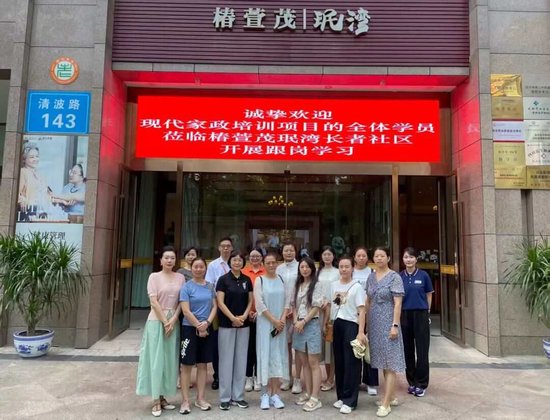
令多位参训学员难忘的是这样一个温暖场景:在日常的乐享活动中,一位平日寡言的长辈随着熟悉旋律 轻声哼唱,脸上绽放出久违的笑容。"这个瞬间让我深刻体会到,养老服务不仅是专业技能,更是情感 连接的艺术。"一位学员动情地分享。这正是椿萱茂始终践行的服务理念——以专业保障服务品质,用 真心传递照护温度。 8月3日至6日,由西南交通大学联合行业企业共同主办的"现代家政教师专业能力提升项目"在远洋椿萱 茂·珉湾长者社区圆满举行。 来自四川省10所职业院校的10名骨干教师圆满完成了在远洋椿萱茂·珉湾长者社区为期3天的沉浸式跟岗 学习,并于8月6日在西南交通大学举行总结汇报会。作为本次培训的实践基地,远洋椿萱茂·珉湾长者 社区凭借其专业的养老服务体系与创新管理模式,为参训教师提供了零距离接触行业前沿的实践平台。 本次培训以"新技术、新材料、新工艺、新方法"为核心,聚焦养老服务行业的一线需求。学员们通过深 入养老机构一线,以参观、跟岗、案例研讨等形式,在提升参培学员理论水平的同时促进解决实际问题 的能力,切实做到让参训学员学有所获、学以致用。 在远洋椿萱茂·珉湾长者社区的跟岗实践中,参训学员通过沉浸式学习,系统掌握了失能老人照护 ...

上城将“急难愁盼”清单变“满意答卷”
Hang Zhou Ri Bao· 2025-08-11 02:28
Group 1: Business Support Initiatives - The "Space Worry-Free" project in Hangzhou's Shangcheng District provides 100 free business activity spaces to small and micro enterprises, addressing the high venue rental costs that 76% of these businesses face [1][2] - The project integrates idle spaces from community service centers, industrial parks, and business buildings, offering one-stop services including projectors and refreshments [1] - The Qianjiang New City Central Business District has become a popular venue, hosting over 50 events monthly, showcasing the effectiveness of the initiative [1] Group 2: Elderly Care Services - Shangcheng District has implemented a high-quality elderly care talent system, with a focus on training and competitions for caregivers, resulting in a steady increase in certified caregivers [2][3] - The district has established 20 home care service centers and 172 community care centers, enhancing the elderly care service network [3] - New initiatives include the addition of 80 beds in cognitive impairment care areas and the expansion of meal service points, benefiting over 800,000 elderly individuals [3] Group 3: Community Engagement and Feedback - The district has actively collected 170 public opinions on livelihood issues, leading to the implementation of 37 projects that have exceeded 77% progress [3] - A "for the people" service mechanism has been established to address community concerns, successfully resolving 205 issues related to road management and housing coordination [3]
山东政商要情(8.4—8.10)
Jing Ji Guan Cha Wang· 2025-08-10 13:11
Group 1: Private Enterprises in Shandong - Shandong Provincial Government held a symposium with 37 private entrepreneurs to address issues such as private investment, debt collection, and market expansion [2][3] - The provincial government emphasized the need for targeted actions to support private enterprises, including enhancing project construction and investment guidance [3] - In the first half of the year, private investment in Shandong increased by 0.9% year-on-year, outperforming the overall investment growth rate by 1.1 percentage points, accounting for 61.6% of total investment [3] Group 2: Renewable Energy Pricing Reform - Shandong Province issued a market-oriented reform plan for renewable energy pricing, aiming to have all wind and solar power projects enter the electricity market [4][5] - A price difference settlement mechanism was established to ensure sustainable development of renewable energy, with the average market transaction price being settled by grid companies [5] - By April 2025, Shandong's renewable energy installed capacity reached 125 million kilowatts, exceeding 51% of the total installed capacity [5] Group 3: Elderly Care Subsidy Program - Shandong is implementing a subsidy program for elderly care services, available to residents aged 60 and above with moderate to severe disabilities, regardless of their household registration [6] - The program includes 17 types of subsidies for various elderly care services, aiming to enhance the quality of care for approximately 600,000 elderly individuals in need [6] Group 4: Qingdao Health Industry Development - Qingdao's government introduced a three-year action plan to develop the "China Health Bay," targeting a health industry scale of 100 billion yuan by 2027 [7] - The plan focuses on integrating real estate, healthcare, and tourism to create a comprehensive health ecosystem [7] Group 5: Jining Inland Waterway Shipping Center - A symposium was held in Jining to discuss the establishment of a northern inland waterway shipping center, aiming for a cargo throughput of 150 million tons by 2027 [8][9] - The strategic direction for this development is outlined in the Shandong Province Port and Waterway Layout Plan (2025-2035) [8]

银发经济规模已超10万亿元 养老服务供给有很大完善空间|首席对策
Di Yi Cai Jing Zi Xun· 2025-08-10 07:54
Core Insights - The "14th Five-Year Plan" emphasizes the development of the silver economy in response to the aging population, with projections indicating that by 2024, the elderly population (aged 65 and above) will reach 220 million, accounting for 15.6% of the total population [1][3] - The aging process in China is accelerating, with significant disparities between regions and urban-rural areas, necessitating a comprehensive approach to elder care and services [1][5] Group 1: Aging Population and Economic Impact - The silver economy has surpassed 10 trillion yuan, with its share of the national economy continuously increasing, projected to reach 20% by 2035 [8][3] - The traditional perception underestimates the consumption potential of the elderly, indicating a need for better understanding of their demands [6][7] Group 2: Systematic Development of Elderly Care - The past five years have seen a shift from isolated breakthroughs in elderly services to a more integrated system approach, focusing on the construction of a comprehensive elderly care service system [3][4] - The government is enhancing the policy and institutional framework for elderly care, promoting a coordinated service system from community to institutional levels [4][5] Group 3: Challenges in Supply and Demand - There is a structural imbalance in the supply of elderly services, primarily provided by small and medium enterprises that lack sufficient policy support [7][8] - The demand for elderly services is growing, but the current supply does not adequately meet the needs of the elderly population [10][11] Group 4: Technological Integration - The application of AI and robotics in elderly care can alleviate the shortage of caregivers and improve service efficiency, although ethical concerns regarding technology use must be addressed [9][10] - The integration of technology in elderly care presents both opportunities and challenges, particularly in identifying suitable applications for robots in this sector [9][10] Group 5: Financial and Policy Support - The development of a multi-pillar pension system is essential for addressing the challenges of the current pension model, which relies heavily on a pay-as-you-go system [14][15] - Macro policies, including structural monetary tools, are being implemented to support the development of the elderly care industry, emphasizing the need for financial security alongside returns [17][18]
结业即上岗 养老护理员成热门职业
Yang Shi Wang· 2025-08-08 23:17
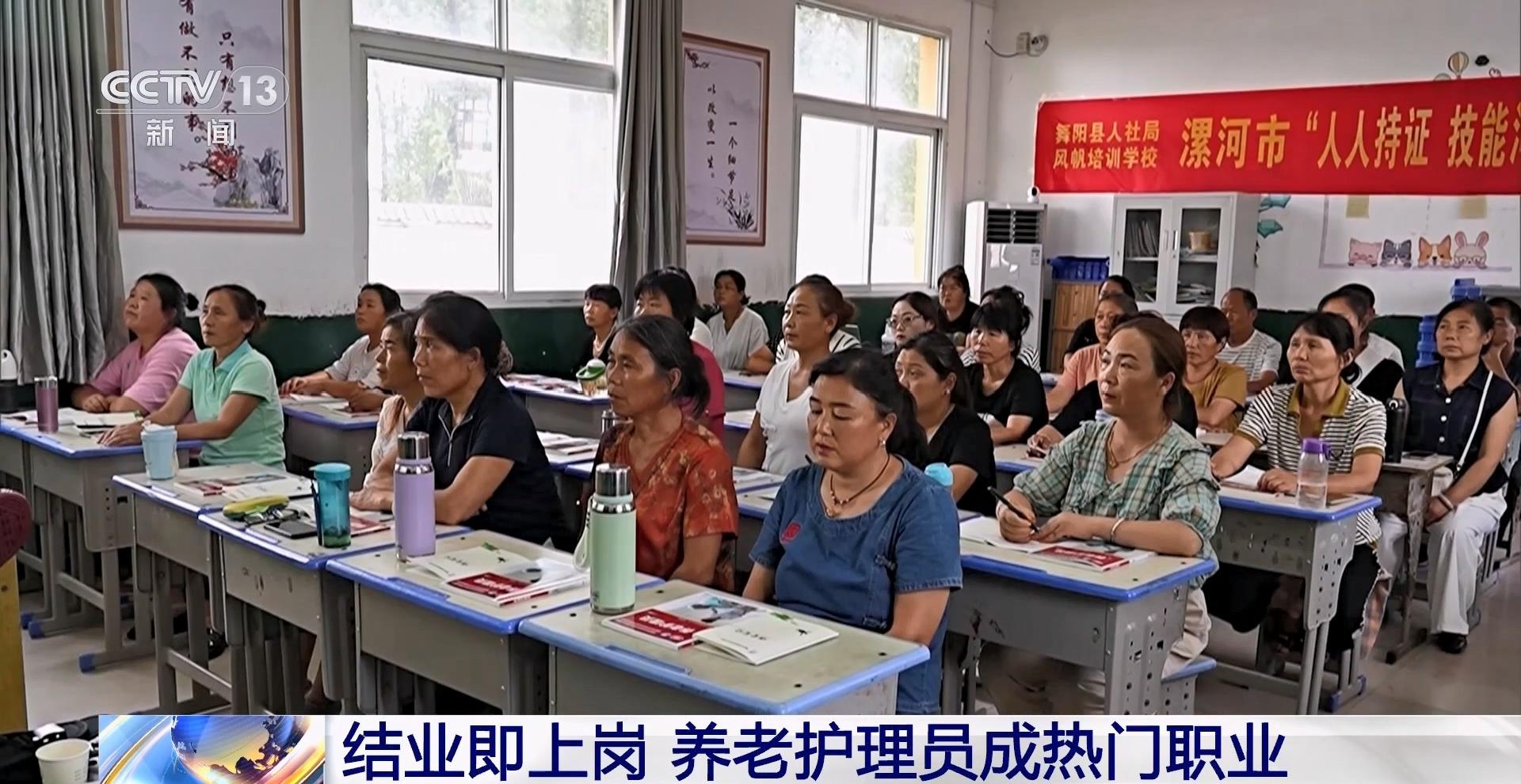
Core Insights - The government has initiated specialized training programs for long-term care, creating new job opportunities in the elder care sector, making elder care workers a popular profession [1] Group 1: Training Programs - A new training class for elder care workers has commenced in Wujia Town, Henan Province, consisting of 13 days of theoretical and practical lessons, attracting over 30 local villagers [1] - The training is designed based on market demand, with a noticeable increase in younger participants and male involvement in the elder care industry [5] Group 2: Employment Opportunities - The employment rate for trained elder care workers is very high, with some institutions pre-booking outstanding trainees for future employment [5] - In the first half of the year, over 700 elder care workers have been trained in Luoyang City, with graduates finding jobs in hospitals, elder care facilities, and providing in-home services [7] Group 3: Industry Demand - There is a significant shortage of elder care workers in facilities, with training institutions supplying well-prepared candidates to meet this demand [7] - The local human resources department emphasizes a "two proximity" principle in training, ensuring that training locations and job opportunities are close to each other, addressing both employment needs and staffing shortages in elder care institutions [7]
可抵扣40%!山东养老服务消费券已就位
Qi Lu Wan Bao· 2025-08-08 21:12
Core Points - Shandong Province has officially launched a subsidy program for elderly individuals with moderate to severe disabilities, aimed at enhancing support for their care services [1][2] - The program is expected to alleviate family financial burdens while promoting the consumption of elderly care services and driving industry development [2] Group 1: Subsidy Program Details - Approximately 4.2 million elderly individuals in Shandong are estimated to be disabled, with around 600,000 classified as having moderate to severe disabilities [2] - The subsidy is available to residents aged 60 and above who have been assessed as having moderate or severe disabilities, regardless of their registered household address [2] - The program will last for 12 months and includes 17 types of subsidy projects, covering various care services such as rehabilitation, nursing assistance, and health management [2] Group 2: Consumption Voucher Mechanism - The subsidy will be distributed through the "Minzheng Tong" app in the form of electronic consumption vouchers [3] - There are two types of vouchers: one for institutional care and day care with a maximum monthly deduction of 800 yuan, and another for home care services with a maximum monthly deduction of 500 yuan [3] - The vouchers can cover 40% of the personal out-of-pocket expenses for eligible elderly care services [3] Group 3: Implementation in Qingdao - Qingdao has issued the first consumption voucher in Shandong on July 25, with a commitment to increase the subsidy rate for home care services from 40% to 50% [4] - The city has established a vetting process for care institutions to ensure safety and compliance, with 183 institutions currently qualified to provide services [4] - As of now, 264 elderly individuals in Qingdao have applied for the consumption vouchers [4]
宁夏积极构建完善三级养老服务网络
Ren Min Ri Bao· 2025-08-08 20:07
Core Points - The Ningxia Hui Autonomous Region has issued the "Implementation Plan for the Optimization of Elderly Care Service Resources" aimed at enhancing elderly care services across the region [1] Group 1: Implementation Details - Each of the five prefecture-level cities in the region will establish 1-2 standardized elderly care institutions to provide specialized services such as disability care and rehabilitation nursing [1] - The plan includes the addition of no less than 140 community elderly care service facilities to create a "15-minute elderly care service circle" [1] - Approximately 60 regional comprehensive elderly care service centers will be established using idle school buildings and township health clinics, focusing on full-day care, daytime care, and home-based services to address rural elderly care gaps [1] Group 2: Future Goals - By 2027, a three-tier elderly care service network (county, township, village) is expected to be initially formed, with community daytime care institutions and elderly care facilities achieving full coverage [1] - The coverage rate of comprehensive elderly care service centers in townships is targeted to reach 70%, with the occupancy rate of elderly care institutions increasing to 45% [1] - By 2030, the three-tier elderly care service network will be further improved, aiming for an 80% coverage rate of comprehensive elderly care service centers in townships and a 50% occupancy rate in elderly care institutions [1]
筑牢防线 补齐短板 推动构建中国特色养老服务体系
Jin Rong Shi Bao· 2025-08-08 07:59
Group 1: Core Perspectives - The central viewpoint emphasizes the importance of addressing the aging population by ensuring adequate support and care for the elderly, as outlined in the recent government document on improving social welfare [1][2]. Group 2: Pension System Optimization - The basic pension insurance is identified as the first pillar of the pension system, with a focus on enhancing fairness and sustainability through systematic optimization [2]. - The government plans to eliminate barriers to participation in social insurance, particularly for flexible workers and migrant workers, potentially increasing coverage for around 200 million individuals [2]. - There will be an increase in the participation rate of urban employees in basic pension and medical insurance, aiming to broaden and deepen the system's coverage [2]. Group 3: Contribution Flexibility and Support for Vulnerable Groups - The document proposes optimizing the contribution levels for urban and rural residents' basic pension insurance, with an emphasis on flexible payment options and incentives for higher contributions [3]. - Policies will be implemented to ensure that vulnerable groups, such as low-income individuals and those in special circumstances, receive necessary social insurance coverage [3]. Group 4: Enhancing Inclusive Elderly Care Services - Addressing the high costs of elderly care is a key focus, with plans to improve the pricing mechanism for inclusive elderly care services and support quality, affordable services [4]. - The document highlights the need for specialized care for the elderly, particularly those with disabilities or dementia, and mandates that at least 80% of new nursing home beds be dedicated to care services [4]. - There is a significant gap in the supply of professional nursing beds for the approximately 44 million disabled elderly individuals in China, necessitating a shift towards professional care services [4]. Group 5: Rural Elderly Care Development - The government aims to develop mutual assistance elderly care services in rural areas, leveraging local social capital to meet the needs of vulnerable elderly populations [5]. - This approach is designed to utilize traditional community support systems to create a warm and harmonious environment for elderly care in rural settings [5]. Group 6: Community-Based Elderly Care Services - The current elderly care model in China is characterized by a "9073" pattern, with 90% of elderly individuals relying on home care [6]. - The government emphasizes the importance of community-based services to enhance accessibility and convenience for elderly care, advocating for integrated service facilities and one-stop services [7]. - Innovations in community care models, such as those developed by insurance companies, are being explored to address the challenges of providing elderly care services effectively [8]. Group 7: Future Directions - The overarching goal is to create a fair, balanced, inclusive, and accessible elderly care system, ensuring that every elderly individual can enjoy a fulfilling and secure life in their later years [8].