啤酒

Search documents
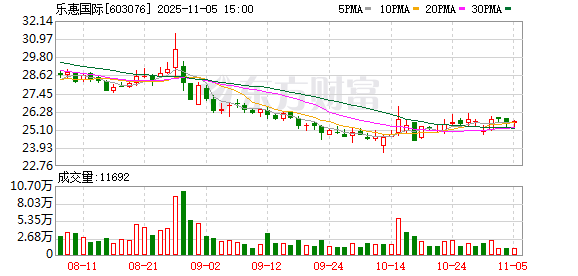
乐惠国际:持续深耕轻资产加盟模式布局
Zheng Quan Ri Bao· 2025-11-05 13:38
Group 1 - The company is focusing on offline expansion by leveraging its fresh beer supply chain advantages and continuing to develop a light-asset franchise model [2] - In terms of brand promotion, the company emphasizes online advertising to continuously enhance brand awareness [2]


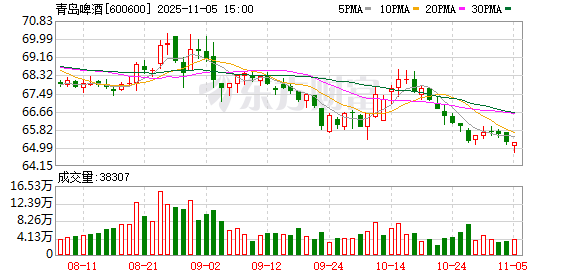
贝莱德减持青岛啤酒股份120.6万股 每股均价约52.85港元
智通财经网· 2025-11-05 12:41
智通财经APP获悉,香港联交所最新资料显示,10月31日,贝莱德减持青岛啤酒股份(00168)120.6万股,每股均价52.8526港元,总金额约为6374.02万港元。 减持后最新持股数目约为3819.29万股,最新持股比例为5.83%。 ...



贝莱德减持青岛啤酒股份(00168)120.6万股 每股均价约52.85港元
智通财经网· 2025-11-05 12:36
智通财经APP获悉,香港联交所最新资料显示,10月31日,贝莱德减持青岛啤酒股份(00168)120.6万 股,每股均价52.8526港元,总金额约为6374.02万港元。减持后最新持股数目约为3819.29万股,最新持 股比例为5.83%。 ...
青岛啤酒携国潮新味亮相进博会 百年老字号演绎品质消费新内涵
Zhong Guo Xin Wen Wang· 2025-11-05 12:28
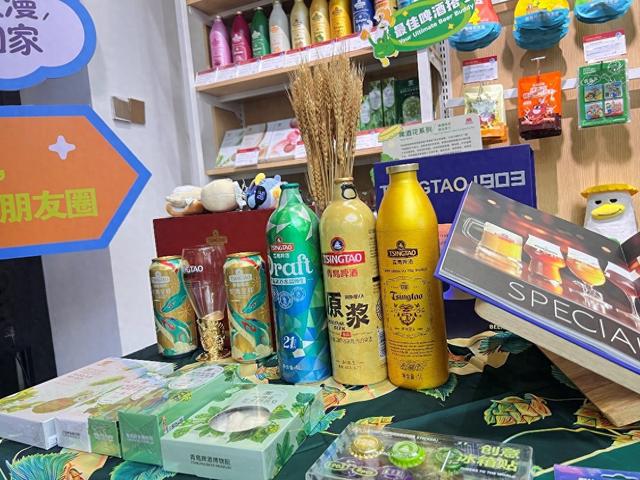
Core Insights - The 8th China International Import Expo (CIIE) commenced on November 5, showcasing its role as a global platform for international procurement, investment promotion, cultural exchange, and open cooperation [1] Company Highlights - Qingdao Beer presented a variety of products at the expo, including its popular premium raw beer and crystal pure draft, adhering to the "three no's" principle: unfiltered, undiluted, and unpasteurized [2] - The company introduced over ten styles of craft beers, providing consumers with a diverse tasting experience, alongside unique gift box products catering to both consumption and gifting needs [2][4] - Qingdao Beer is embracing a younger image through innovative cultural products, such as beer-flavored snacks and collaborations with trendy brands, reflecting a shift from product-centric to consumer experience-focused strategies [4] Industry Trends - The expo highlighted the increasing demand for high-quality, personalized, and diverse consumer products, with Qingdao Beer adapting its offerings to meet these evolving market trends [4] - The integration of traditional brand heritage with contemporary trends is evident in Qingdao Beer's approach, showcasing a blend of historical significance and modern consumer preferences [4]
啤酒2025年三季报总结:2024需求韧性仍在,2025关注场景修复
Soochow Securities· 2025-11-05 11:04
Investment Rating - The report maintains an "Overweight" rating for the beer sector, indicating a positive outlook for investment opportunities in this industry [2]. Core Insights - The beer sector is currently at a bottoming phase, with potential recovery driven by macro policy changes and improved fundamentals in the coming year [2][63]. - Demand resilience is expected to continue into 2024, with a focus on scene recovery in 2025 [5][46]. Summary by Sections 1. Revenue and Profit Trends - For the first three quarters of 2025, the beer sector reported revenues of 61.726 billion yuan, a year-on-year increase of 1.99%, and a net profit of 9.339 billion yuan, up 10.43% year-on-year [10]. - Quarterly revenues for 2025 were 20.043 billion yuan, 21.491 billion yuan, and 20.192 billion yuan, with year-on-year growth rates of 3.68%, 1.90%, and 0.45% respectively [10]. 2. Margins and Cost Dynamics - Despite weak sales volume and price performance, the overall gross margin has been improving due to cost elasticity, with major brands like Qingdao Beer and Yanjing Beer showing strong performance [18][19]. - Gross margins for major brands in Q3 2025 were as follows: Qingdao Beer at 43.66%, Chongqing Beer at 50.17%, Yanjing Beer at 47.19%, and Zhujiang Beer at 51.51% [19][22]. 3. Demand Resilience and Market Dynamics - The report highlights that middle-income households are experiencing faster disposable income growth, which supports beer demand at mainstream price points [46][51]. - The overall beer production is showing a recovery trend, with high-end products like Qingdao White Beer and Yanjing U8 continuing to perform well [49][54]. 4. Cash Flow and Dividend Outlook - The free cash flow of leading beer companies is expected to remain high, with steady improvements in dividend rates and payout ratios anticipated [58][59]. - The report notes that capital expenditures related to high-end beer production are expected to stabilize, further supporting cash flow sustainability [58]. 5. Investment Recommendations - The report suggests focusing on companies with strong fundamentals such as Qingdao Beer, Yanjing Beer, and China Resources Beer, which are expected to benefit from improved market conditions in 2025 [2][63].


果啤火了,他们都想成为年轻人的微醺首选
3 6 Ke· 2025-11-05 10:40
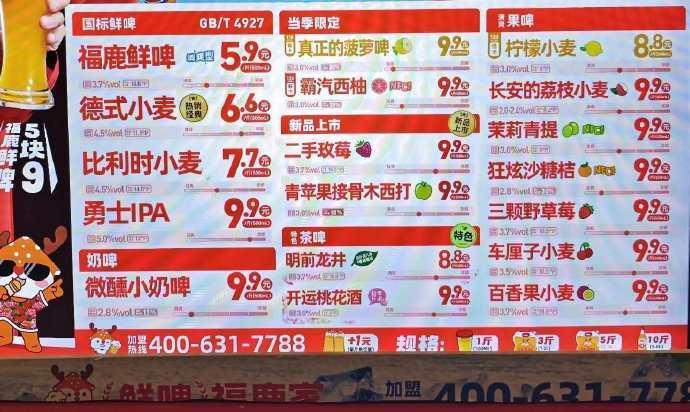
Core Insights - The investment by Xuewang in Fulu Family signifies a renewed interest in the craft beer and fruit-flavored beer market, which is gaining traction among younger consumers [1][2][20] - The acquisition involves Xuewang obtaining a 53% stake in Fulu Family for approximately RMB 297 million, expanding its portfolio into the fresh beer sector [2][3] - The trend of "light drinking" is becoming mainstream, with over 80% of young people preferring lighter alcoholic beverages, indicating a shift in consumer preferences [20][22] Market Dynamics - Fulu Family has become the leading brand in China for fresh beer chain stores by store count, highlighting the competitive landscape in this segment [3] - The entry of various brands into the fruit beer market, such as Guozi Shule and Xinling, reflects a broader trend of diversification and innovation in alcoholic beverages [5][15] - The fruit beer market is projected to grow significantly, with global market size expected to reach USD 318.6 billion by 2024 and approximately USD 435.7 billion by 2030, indicating a robust growth trajectory [18] Consumer Behavior - Young consumers are redefining their relationship with alcohol, focusing more on emotional experiences and taste rather than alcohol content [23][26] - The appeal of fruit beer lies in its ability to be consumed in various social settings, including daytime events, making it more accessible and relatable to younger audiences [24][25] - The pricing strategy for fruit beer, typically ranging from RMB 5 to 10 per can, positions it competitively against other non-alcoholic beverages, facilitating broader market penetration [25] Cultural Shift - The cultural narrative around drinking is shifting from "drinking to socialize" to "drinking for personal enjoyment," with fruit beer symbolizing a more relaxed and enjoyable drinking experience [26][27] - Fruit beer is becoming a symbol of a lifestyle that emphasizes relaxation and social media sharing, appealing to the younger demographic's desire for visually appealing and enjoyable products [27] Future Considerations - While fruit beer is positioned as an evolution of the previous "sweet liquor" trend, it benefits from a more stable production and supply chain, reducing the risk of rapid decline seen in past trends [28][29] - The increasing number of brands entering the fruit beer market may lead to potential homogenization, necessitating continuous innovation to maintain distinctiveness [28][29]

青岛啤酒:公司定期报告中所列示在建工程范围主要包括工厂建设项目、搬迁项目、生产线建设及改造项目等
Mei Ri Jing Ji Xin Wen· 2025-11-05 10:10
Core Viewpoint - The company has provided details regarding its ongoing construction projects and their financial implications as of June 30, 2025, indicating a total value of ongoing projects amounting to 1.043 billion yuan [1] Group 1: Ongoing Projects - The ongoing construction projects primarily include factory construction, relocation projects, and production line construction and renovation [1] - As of June 30, 2025, the book value of ongoing projects is reported to be 1.043 billion yuan [1]
国潮涌动进博会 青啤好品共举杯
Xin Lang Cai Jing· 2025-11-05 07:55
Core Insights - The China International Import Expo (CIIE) is enhancing its role as a platform for international procurement, investment promotion, cultural exchange, and open cooperation, showcasing its attributes as a global public product [1] Group 1: Event Overview - The eighth CIIE is being held at the National Exhibition and Convention Center in Shanghai, marking it as the world's first national-level exhibition focused on imports [1] - The event features renowned domestic brands like Qingdao Beer, which presents a variety of products to both domestic and international consumers [1] Group 2: Qingdao Beer Highlights - Qingdao Beer showcases its premium unfiltered and unpasteurized products, adhering to the "three no's" principle, which allows consumers to enjoy fresh beer that was previously only available to brewers [3] - The brand offers a diverse range of craft beers, including styles like wheat bock, Belgian double, and various IPAs, all brewed at its 1903 Craft Workshop [3][4] - Qingdao Beer also presents creative beer-related products, such as beer-flavored snacks and unique gift boxes, enhancing the consumer experience [6] Group 3: Brand Innovation and Consumer Experience - Qingdao Beer is evolving from a product-centric approach to a consumer experience-focused model, emphasizing high-quality, differentiated products that cater to modern consumer trends [4][6] - The brand's integration of cultural and creative elements reflects its commitment to innovation while maintaining its historical legacy [4][6]
食品饮料板块 2025 年三季报总结:成长为先,白酒探底
Haitong Securities International· 2025-11-05 07:22
Investment Rating - The report suggests a focus on growth-oriented sectors such as beverages, snacks, and food ingredients, while indicating a need to monitor the white liquor sector for potential recovery points [4]. Core Insights - The food and beverage sector experienced a decline in revenue and net profit in Q3 2025, with revenues down 6% year-on-year and net profits down 13%. The white liquor segment showed significant deceleration, while consumer staples exhibited structural growth [2][6]. - The report highlights that the white liquor sector is undergoing a deep adjustment phase, with a notable decline in both revenue and profit margins. However, there are signs of potential recovery as companies innovate and adapt to market conditions [12][15]. Summary by Sections Food and Beverage Sector Overview - In Q3 2025, the food and beverage sector reported revenues of 243 billion, a 6% decrease year-on-year, and a net profit of 44.6 billion, down 13%. The gross margin fell by 2.4 percentage points to 46.5% [6][9]. - The white liquor segment saw a revenue decline of 18% and a net profit drop of 22% in Q3 2025, indicating a significant downturn in performance [6][12]. White Liquor Segment - The white liquor sector is in a deep adjustment phase, with companies actively reducing inventory levels. The report notes that the adjustment may continue for several quarters, but the capital market might have already priced in the downturn [15][48]. - Major brands like Guizhou Moutai and Wuliangye are experiencing substantial revenue declines, with some companies reporting losses for the first time in years [13][16]. Consumer Staples and Other Segments - The report indicates that consumer staples are showing structural growth, with segments like soft drinks and snacks performing well. For instance, soft drinks reported a 15% revenue increase year-on-year in Q3 2025 [7][12]. - The beer segment showed resilience with a 1% revenue increase and an 11% profit increase, despite a weakening demand environment [7][12]. Investment Recommendations - The report recommends focusing on growth stocks in beverages, snacks, and food ingredients while keeping an eye on the white liquor sector for signs of recovery. Specific companies to watch include Dongpeng Beverage, Nongfu Spring, and Kweichow Moutai [4][6].
中哈贸易增超5%:青岛啤酒在哈畅销,中国汽车占比近1/4
Nan Fang Du Shi Bao· 2025-11-05 03:24
Core Insights - The "Belt and Road" initiative, proposed by China in 2013, aims to create an open world economy through policy communication, infrastructure connectivity, trade facilitation, financial integration, and people-to-people ties [3] Group 1: Benefits of the Belt and Road Initiative - The initiative has brought tangible benefits to Kazakhstan and its citizens, with examples including the popularity of Qingdao beer in Kazakhstan [3] - Chinese automobiles have gained significant market share in Kazakhstan, accounting for 20%-23% of the automotive market, while sales of Japanese, German, and South Korean cars have declined [3] - The trade volume between China and Kazakhstan reached $30.68 billion in the first eight months of this year, reflecting a year-on-year growth of 5.7% [3] Group 2: Trade and Tourism Opportunities - The mutual visa exemption policy allows citizens of both countries to travel easily, exemplified by a direct tourist train from Xi'an to Almaty [3] - The Central Asian region, including Kazakhstan, represents a significant consumer market for China [3]