
医疗器械

Search documents
国产创新器械两倍增长,为何仍难迎“创新药时刻”?
3 6 Ke· 2026-02-11 02:46
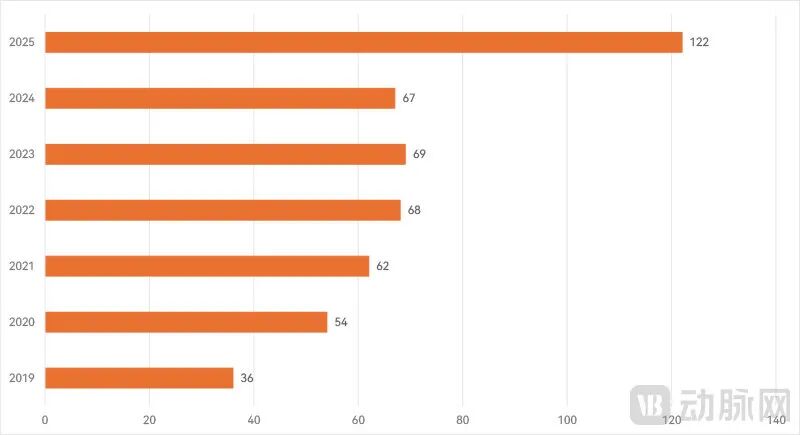
Core Insights - The National Medical Products Administration (NMPA) has approved several innovative medical devices, including a first-of-its-kind disposable peripheral vascular thrombectomy catheter, which meets international advanced standards [1] - In 2025, the NMPA announced that 122 products entered the special approval process for innovative medical devices, nearly doubling from 2024 [1][8] - The Chinese innovative medical device sector is poised for a significant breakthrough, similar to the rise of innovative pharmaceuticals in recent years [2] Group 1: Innovative Medical Device Market Trends - The trend of innovative medical device business development (BD) in China is gaining momentum, with domestic companies increasingly collaborating with local innovative device firms and multinational corporations [3] - Major Chinese companies like Yuan Da Pharmaceutical have formed partnerships with various innovative device firms to expand their product lines [4] - Global giants such as Edwards Lifesciences and Johnson & Johnson are collaborating with Chinese innovative device companies, indicating a narrowing gap in innovation and quality [4] Group 2: Approval Statistics and Comparisons - In 2025, 72 innovative medical devices were approved through the special review process, marking a historical high and a continuous growth trend since 2019 [6] - The number of innovative medical devices entering the special review process in 2025 reached 122, a significant increase compared to previous years [8] - The number of second-class innovative medical devices approved by provincial regulatory bodies also saw a substantial increase, with 131 products entering the special approval process in 2025, up over 30% from 2024 [10] Group 3: Challenges and Future Outlook - Despite the progress, the innovative medical device sector faces challenges in replicating the success of innovative pharmaceuticals due to differences in commercialization and development logic [15][16] - The commercialization of innovative devices is more complex and requires ongoing validation in clinical settings, making it harder to achieve rapid market penetration [17] - To enhance the development of innovative medical devices, systemic adjustments are needed, including faster approval processes, supportive payment structures, and international standard recognition [18][19]

当AI进入医院,“手术失误、错认器官”等风险也随之而来
Hua Er Jie Jian Wen· 2026-02-11 01:54
Core Viewpoint - The integration of AI into surgical and diagnostic devices by medical device companies is presenting growth opportunities, but it also introduces new fault patterns and liability risks, as evidenced by a rise in injury and malfunction reports to regulatory bodies like the FDA [1][2]. Group 1: AI Integration and Incident Reports - The introduction of machine learning algorithms into the TruDi Navigation System by Acclarent has led to a significant increase in malfunction reports, with at least 100 reports received post-AI integration compared to only 7 prior [2]. - Reports indicate that at least 10 patients were injured between late 2021 and November 2025, primarily due to the system's incorrect positioning guidance [2]. - The FDA has received a total of 1,401 reports related to 1,357 AI-enabled products from 2021 to October 2025, with at least 115 reports citing software or algorithm issues [3]. Group 2: Recall Rates and Regulatory Concerns - AI-enabled devices have a recall rate that is twice that of overall medical device recalls, with 43% of recalls occurring within the first year of approval [5]. - A study highlighted that 60 AI medical devices were associated with 182 recalls, indicating a concerning trend in post-market safety [5]. Group 3: Regulatory Challenges and Workforce Issues - The FDA's traditional regulatory framework is being challenged by the rapid influx of AI-enabled devices, many of which do not require patient trials for approval [6]. - The number of FDA-authorized AI medical devices has doubled since 2022, but staffing reductions have led to increased workloads for remaining evaluators, raising concerns about oversight [7]. - Key teams within the FDA have faced significant cuts, with reports suggesting that the reduction in staff has made it more difficult to identify potential issues in AI devices [7].


21股获推荐,科华数据目标价涨幅超19%丨券商评级观察
2 1 Shi Ji Jing Ji Bao Dao· 2026-02-11 01:36
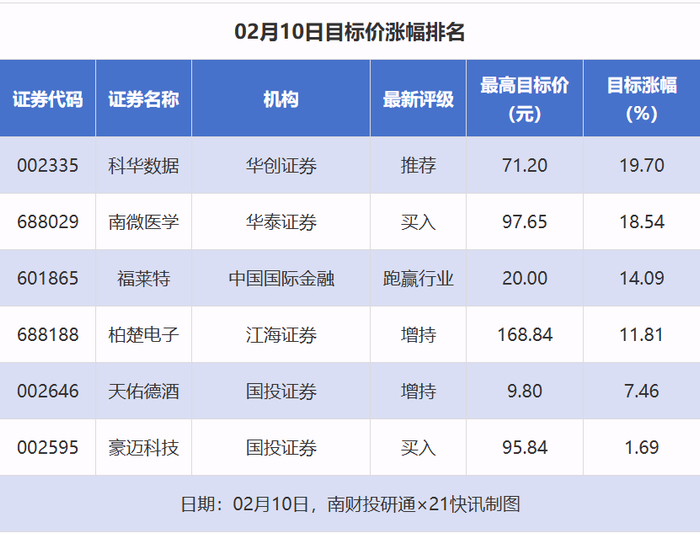
Group 1 - On February 10, brokerages set target prices for listed companies with notable increases for Kehua Data, Nanwei Medical, and Fulete, with target price increases of 19.70%, 18.54%, and 14.09% respectively, belonging to the other power equipment, medical devices, and photovoltaic equipment industries [1][3] - A total of 21 listed companies received brokerage recommendations on February 10, with companies like Bailong Oriental, Chiplink Integration, and Tianrun Industrial each receiving one recommendation [3] - One company, Haomai Technology, had its rating upgraded from "Hold" to "Buy" by Guotou Securities on February 10 [4][5] Group 2 - Three companies received initial coverage on February 10, including Xin'ao Co., which was rated "Buy" by Shenda Securities, Bichu Electronics rated "Increase" by Jianghai Securities, and Huitai Medical rated "Buy" by Huayuan Securities [5][6] - The companies receiving initial coverage are in the textile manufacturing, computer equipment, and medical device industries [6]


4股目标价涨幅超10%,科华数据超19%
2 1 Shi Ji Jing Ji Bao Dao· 2026-02-11 01:33
Group 1 - The core viewpoint of the article highlights that brokerage firms have set target prices for listed companies, with significant potential price increases for certain stocks [2] - Four stocks have target price increases exceeding 10% based on the latest closing prices, indicating strong market confidence [2] - The companies with the highest target price increases are Kehua Data, Nanwei Medical, and Fulete, with target price increases of 19.70%, 18.54%, and 14.09% respectively [2] Group 2 - Kehua Data belongs to the other power equipment industry, indicating a positive outlook for this sector [2] - Nanwei Medical is categorized under the medical device industry, reflecting growth potential in healthcare technology [2] - Fulete operates in the photovoltaic equipment industry, suggesting optimism in renewable energy investments [2]
山西证券研究早观点-20260211
Shanxi Securities· 2026-02-11 01:32
Market Trends - The domestic market indices showed slight fluctuations, with the Shanghai Composite Index closing at 4,128.37, up by 0.13% [4] - During the period from February 2 to February 8, major indices experienced declines, with the Shanghai Composite Index down by 1.27% and the ChiNext Index down by 3.28% [7] Industry Insights - The non-bank financial sector is seeing a revision in underwriting regulatory guidelines, which is expected to enhance investment value in the sector [5] - The media industry is projected to continue its upward trend, driven by AI applications and IP ecosystems, with a 27.17% increase in the media index for 2025 [6] - The power equipment and new energy sector is focusing on the AIDC power revolution, with expectations for a significant increase in photovoltaic power utilization rates [8][19] - The agricultural sector is facing potential price adjustments in pig farming after a peak season, with current prices showing a downward trend [15][17] Company Analysis - Aide Technology is recognized as a leader in domestic spinal vertebral body shaping systems, benefiting from an aging population [22] - Tianfu Communication's 2025 performance forecast indicates a net profit of 1.88 to 2.15 billion yuan, driven by stable demand for optical devices [26] - Wolong Nuclear Materials anticipates a net profit of 1.1 to 1.18 billion yuan for 2025, with strong market demand across various business segments [28] Investment Recommendations - The report suggests focusing on companies that leverage AI applications and IP development, such as Kunlun Wanwei and Shanghai Film [9] - In the photovoltaic sector, companies like Aishuo and Longji Green Energy are recommended due to their technological advancements and market positioning [16][23] - For the copper connection market, companies like Wolong Nuclear Materials are highlighted for their strong growth potential in the telecommunications sector [28]
研判2026!中国光谱治疗仪行业概述、产业链上下游及市场现状分析:非药物无创技术优势驱动场景渗透,行业从专业机构向家庭健康管理加速延伸[图]
Chan Ye Xin Xi Wang· 2026-02-11 01:21
Core Insights - The core viewpoint of the article highlights the growing popularity of spectral therapy technology due to its non-drug, non-invasive, and low side-effect characteristics, leading to increased market penetration from professional medical institutions to home and personal consumption scenarios [1] Industry Overview - Spectral therapy devices utilize specific wavelengths (0.4-3.6μm) to irradiate the human body, achieving therapeutic purposes through photothermal effects, photochemical actions, and biological stimulation [2] - Common product names include visible light therapy devices, photon therapy devices, and red/blue light therapy devices [2] Market Size - The market size of China's spectral therapy device industry is projected to reach 244 million yuan in 2024, with a year-on-year growth of 3.83%, driven by the expansion of medical beauty demand, grassroots medical equipment upgrade policies, and consumption upgrades [8][9] Key Companies - Shenzhen Pumen Technology Co., Ltd. has obtained Class II medical device registration for its spectral therapy devices, covering multiple wavelengths [9] - Ningbo David Medical Co., Ltd. specializes in neonatal jaundice treatment devices using patented spectral technology [10] Industry Development Trends 1. **Technological Integration and Innovation**: The industry is transitioning from single-wavelength output to multi-spectral dynamic combinations, integrating AI for personalized treatment plans [11] 2. **Application Scenario Extension**: The use of spectral therapy devices is expanding from cosmetic applications to serious medical treatments, including tumor adjuvant therapy and chronic pain management [12] 3. **Industry Structure Reconstruction**: The industry is experiencing consolidation, with stricter regulations leading to increased market share for leading companies, while smaller brands may exit due to insufficient technological investment [13]


创新药企业扭亏节点或加速到来,港股通医疗ETF工银(159167)将于2月12日在深交所上市交易
Sou Hu Cai Jing· 2026-02-11 01:20
Group 1 - The core viewpoint of the news highlights the positive performance of innovative pharmaceutical companies, with many showing improved operations and reduced losses or even turning profitable in their 2025 reports, signaling a favorable outlook for the sector [1] - The ICBC Credit Suisse CSI Hong Kong Stock Connect Medical Theme ETF (code: 159167) is set to be listed on the Shenzhen Stock Exchange on February 12, 2026, aiming to track the CSI Hong Kong Stock Connect Medical Theme Index, which covers key sectors in healthcare innovation [1][2] - The CSI Hong Kong Stock Connect Medical Theme Index currently has a price-to-earnings ratio (TTM) of 32.85, which is at the 48.16% percentile since its inception, indicating that the index may not be overvalued and could still present attractive investment opportunities [1] Group 2 - In 2025, the number of new drug License-out transactions in China reached 158, with a total scale of $135.7 billion, marking a ten-year high, which significantly boosts short-term performance expectations and promotes the international development of domestic new drugs [2] - The CXO, innovative drugs, and high-value consumables sectors have shown significant growth in 2025, driven by the ongoing favorable conditions in the global innovative pharmaceutical industry and the recovery of domestic surgical demand [2] - The ICBC Credit Suisse Medical ETF (159167) aims to leverage the trends in the Hong Kong medical sector to provide beta returns for investors, capitalizing on investment opportunities within the sector [2]
乐心医疗(300562.SZ):目前产品矩阵可为老年群体提供血压等多维度体征健康监测
Ge Long Hui A P P· 2026-02-11 01:13
Core Viewpoint - The aging population is driving the growth of the silver economy, and the company aims to leverage its product matrix to provide comprehensive health monitoring for the elderly [1] Group 1: Company Strategy - The company currently offers a range of health monitoring products, including blood pressure, blood sugar, body fat, and heart rate monitoring for the elderly [1] - The company plans to actively seek relevant partnerships to capitalize on its existing business advantages and explore new emerging cooperation models [1] Group 2: Market Outlook - The company is unable to predict the impact of future business developments, indicating uncertainty in the market environment [1]

乐心医疗:将努力做好经营管理,加强对外交流沟通,使市场进一步了解公司投资价值
Sou Hu Cai Jing· 2026-02-11 00:55
Group 1 - The core viewpoint of the article highlights that despite the significant contribution of overseas markets to the company's revenue and rapid profit growth, the stock price of the company has remained stagnant for several years [1] - The company acknowledges the impact of macroeconomic factors and market sentiment on its stock price performance, indicating that it is committed to improving operational management and enhancing communication with the market to better convey its investment value [1] - The company has achieved steady profit growth through strategic upgrades and optimization of its business structure, reflecting its efforts to adapt and thrive in the competitive medical industry [1]
国泰海通晨报-20260211
国泰海通· 2026-02-11 00:47
Fixed Income Research - The "multiple price bidding" in both reverse repos and MLF only affects the transparency and signal effect of tool interest rates, not the central bank's ability to dynamically adjust the pricing of liquidity tools [2][4][40] Biopharmaceutical Research - The medical device procurement level is expected to be driven by the long-term implementation of equipment update policies, with recommendations for companies likely to benefit from this policy, such as Mindray Medical, United Imaging, and others [8][9] - In January 2026, the procurement scale for new medical devices showed a decline, with MRI down 22.6%, CT down 25.6%, and surgical robots down 20.1% [8][9] Industry Insights - The equipment update policy aims for a 25% increase in medical equipment investment by 2027 compared to 2023, enhancing high-end equipment configuration to match middle-income countries [9] - The release of the "Guidelines for the Establishment of Medical Service Price Projects" for surgical robots is expected to accelerate their penetration and promote the commercialization of innovative medical equipment [10]