
教育

Search documents
关于出售全资子公司股权的公告
Shang Hai Zheng Quan Bao· 2025-09-16 20:18
Core Viewpoint - The company plans to sell 100% equity of Kensington Park School Limited (KPS) for £80,000 (approximately ¥760,100) to Hong Kong KS Education Group Limited (KSE), which has been approved by the board of directors and does not constitute a related party transaction or a major asset restructuring [1][9][11]. Group 1: Transaction Overview - The sale of KPS is part of the company's strategy to optimize its asset structure and resource allocation, aiming to improve asset operation efficiency [29]. - The company has received a deposit of $27,880 (approximately ¥199,300) from KSE for the transaction [9]. - The board of directors approved the sale with 10 votes in favor and 1 abstention, with no opposing votes [10][32]. Group 2: Background and Financial Context - KPS has faced significant operational challenges due to various factors, including the global pandemic, geopolitical crises, and changes in UK education policies, leading to substantial cumulative losses [17][18]. - The company acquired KPS in 2022 and attempted to improve its operations, but continued pressures have resulted in projected EBITDA losses from 2025 to 2027 [29]. - The decision to sell KPS is expected to generate approximately ¥20 million in investment income and increase the company's net assets by about ¥27 million [29]. Group 3: Valuation and Pricing - The valuation of KPS was assessed at £50,000 (approximately ¥480,000) based on an evaluation report, with a significant increase in value of £20,314.3 (102.42% increase) [11][21]. - The agreed transaction price of £80,000 reflects a negotiated amount above the assessed value, indicating a strategic decision to divest from a non-core asset [11][22]. Group 4: Impact on Company - The sale aligns with the company's strategic transformation post "double reduction" policy, focusing on core business areas such as quality education and international education [29]. - Following the sale, the company will no longer hold any shares in KPS, leading to changes in its consolidated financial statements [29].

积极培育服务消费新的增长点
Qi Huo Ri Bao Wang· 2025-09-16 20:00
Group 1 - The core viewpoint of the news is the issuance of a set of policies aimed at expanding service consumption to boost economic growth and improve living standards [1][2] - The measures include 19 specific tasks across five main areas, focusing on enhancing service consumption platforms and promoting new consumption models [1] - The initiative aims to enrich high-quality service supply in sectors such as culture, entertainment, and elderly care, while also expanding the openness of the service industry [1][2] Group 2 - The policies encourage the attraction of foreign consumers and the expansion of digital service consumption [1] - Financial support is emphasized, with plans to utilize various funding channels to enhance service infrastructure and provide credit support for service consumption [1][2] - The measures also call for the development of innovative financial products tailored to the needs of service consumption businesses [2]
九部门联合发布扩大服务消费“19条” 放宽中高端医疗等领域市场准入,拓展数字服务消费,探索设置中小学春秋假
Zheng Quan Shi Bao· 2025-09-16 18:08
Core Insights - The Ministry of Commerce and nine other departments released measures to expand service consumption, focusing on 19 specific initiatives to enhance service supply and stimulate demand [1][2] Group 1: Service Consumption Growth - Service retail sales increased by 5.1% year-on-year in the first eight months of the year, outpacing the 0.3 percentage point growth of goods retail sales [1] - The growth in service consumption is hindered by a shortage of high-quality service supply, which the Ministry aims to address through both domestic and international openings [1][2] Group 2: Specific Measures - Initiatives include promoting orderly openings in internet, culture, telecommunications, healthcare, and education sectors, and supporting the inclusion of more service areas in the encouraged foreign investment directory [2] - The measures also encourage the introduction of high-quality sports events and the development of a diversified education and training market [2] Group 3: Financial Support and Risk Mitigation - The measures emphasize strengthening financial support, including the establishment of funds to invest in qualifying service consumption enterprises and increasing credit support for service sectors [2][3] - A combination of government subsidies, financial support, and merchant discounts is proposed to mitigate consumer credit risks [3] Group 4: Stimulating New Consumption - Strategies to attract more foreign consumers, expand digital service consumption, and optimize student holiday arrangements are outlined to stimulate new service consumption [3] - The proposal includes exploring adjustments to school holiday schedules to increase opportunities for tourism and service consumption [3]
19条举措扩大服务消费 加强财政金融支持
Sou Hu Cai Jing· 2025-09-16 17:17
Core Viewpoint - The Chinese government is enhancing policy support for service consumption as a key measure to expand domestic demand, with 19 specific initiatives outlined in the recent policy measures [1][2]. Group 1: Policy Measures - The policy measures focus on five areas: cultivating service consumption promotion platforms, enriching high-quality service supply, and stimulating new service consumption growth [1][2]. - Specific initiatives include the implementation of a service consumption quality improvement action plan and the establishment of pilot cities for new consumption formats and models [2][3]. Group 2: Financial Support - The measures emphasize strengthening financial support through various funding channels, including central budget investments and local government bonds, to support the construction of cultural, tourism, and other service facilities [5]. - The People's Bank of China has set up a 500 billion yuan re-lending program to guide financial institutions in increasing support for high-quality service supply in sectors like accommodation, tourism, and education [4][5]. Group 3: Market Expansion - The policy encourages the opening up of sectors such as telecommunications, healthcare, and education to attract more foreign investment and enhance service supply [2][3]. - The government aims to optimize the supply of services by reducing restrictions in high-end medical and leisure sectors, thereby increasing the quality of service offerings [2][3].
城市24小时 | 直达湾区,又一条“能源大动脉”来了
Mei Ri Jing Ji Xin Wen· 2025-09-16 16:04
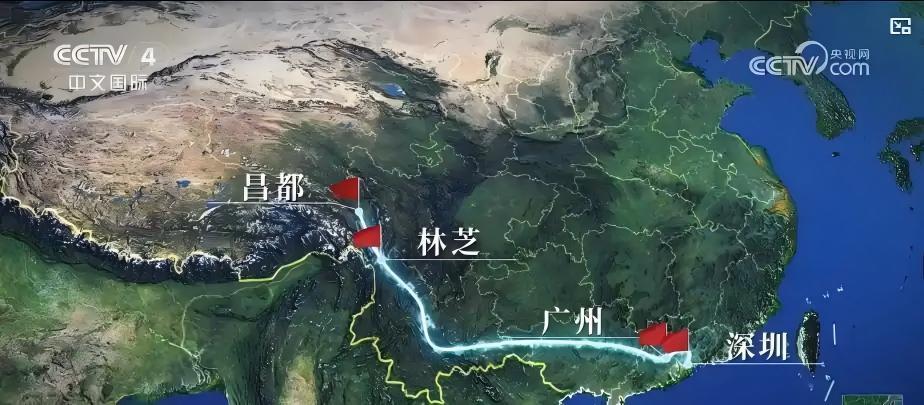
Core Points - The construction mobilization meeting for the ±800 kV UHVDC project from Tibet to the Guangdong-Hong Kong-Macao Greater Bay Area was held on September 16, marking the start of the world's largest flexible DC transmission project [1][4] - The project will connect four converter stations in Tibet and Guangdong, aggregating over 20 million kW of clean energy, providing a strong green low-carbon energy guarantee for the region [1][4] - The total investment for the project is approximately 53.2 billion yuan, with an additional investment of over 150 billion yuan for supporting clean energy infrastructure [4] Energy Demand and Supply - In July, Guangdong's electricity consumption reached 531.52 billion kWh, a year-on-year increase of 4.3%, with the highest load reaching 165 million kW, accounting for 11% of the national load [2][4] - The total electricity consumption in China for the year reached 1.02 trillion kWh in July, marking an 8.6% year-on-year increase [1][2] Economic Impact - The project is expected to create over 100,000 direct jobs during peak construction and significantly boost the upstream and downstream equipment industries [4] - Since 2015, the cumulative electricity export from Tibet has reached 15.79 billion kWh, generating over 4.2 billion yuan in economic benefits for the region [2] Strategic Importance - The UHVDC project is seen as a key move in optimizing national energy resource allocation, breaking regional barriers, and achieving precise alignment between resources and markets [4] - The project will enable the delivery of over 43 billion kWh of clean energy annually to the Greater Bay Area, equivalent to half the annual output of the Three Gorges Dam [4]

《关于扩大服务消费的若干政策措施》中蕴含的投资机会
Xinda Securities· 2025-09-16 14:44
Investment Rating - The industry investment rating is "Positive" [2] Core Insights - The report highlights the release of policies aimed at boosting service consumption and expanding domestic demand, with a focus on various sectors including education, tourism, IP, sports, exhibitions, and nursing [3] Summary by Relevant Sections Education - Focus on K12 education and vocational training, with expectations for smoother approval processes for non-academic training licenses and increased market opportunities for employment-oriented vocational education. Recommended companies include DouShen Education, Angli Education, and China Oriental Education [3] Tourism - Emphasis on attracting more foreign visitors and enhancing travel services. Investment opportunities are identified in OTA (Online Travel Agencies) such as Ctrip Group, scenic spots like Xiyu Tourism, hotels like ShouLi Hotel, and tourism retail companies like China Duty Free Group [3] Intellectual Property (IP) - Recommendations to explore traditional cultural IP markets and develop new service consumption scenarios. Companies to watch include Songcheng Performance and Pop Mart [3] Sports - Encouragement for introducing foreign sports events and supporting local sports competitions. Investment opportunities include event operations firms like Lisheng Sports and Lansheng Co [3] Exhibitions - Focus on cultivating international markets for medical and exhibition services, with recommended companies including Lansheng Co and Miao Exhibition [3] Nursing - Highlighting the importance of training personnel in elderly care and long-term care services, with a focus on Saint Bella [3]
利好来了!9部门发文
Shang Hai Zheng Quan Bao· 2025-09-16 14:33
Core Viewpoint - The announcement by nine departments aims to expand service consumption as a crucial support for improving people's livelihoods and upgrading consumption, thereby playing a significant role in promoting high-quality economic development [7][4]. Group 1: Policy Measures - The document outlines five areas with 19 specific measures to stimulate service consumption, including the launch of "service consumption seasons" and support for high-quality consumption resources collaborating with well-known IPs [5][6]. - It emphasizes the need to extend operating hours for popular cultural and tourist venues, optimize reservation methods, and encourage no-reservation policies [5][8]. - The policy encourages the introduction of high-quality sports events and leagues, as well as the development of sports competition brands with independent intellectual property rights [5][9]. Group 2: Enhancing Service Supply - The initiative includes expanding high-level openness in the service industry, particularly in internet, culture, telecommunications, and healthcare sectors [8][10]. - It aims to utilize existing funding channels to support the creation of high-quality cultural products and services, enhancing the supply of cultural offerings [8][10]. - The policy encourages localities to innovate exhibition methods in cultural venues and collaborate with social forces to develop cultural and digital products [8][10]. Group 3: Stimulating New Consumption - The measures propose attracting more foreign visitors for consumption by optimizing visa policies and promoting China's cultural resources [9][10]. - It encourages the expansion of digital service consumption and supports e-commerce platforms in creating integrated online and offline service scenarios [9][10]. - The policy suggests optimizing school holiday arrangements to increase travel and service consumption opportunities [9][10]. Group 4: Financial Support - The plan includes utilizing various funding sources to support the construction of service facilities in culture, tourism, and healthcare [10][11]. - It aims to enhance financial support for service consumption sectors, encouraging financial institutions to develop tailored financial products [10][11]. - The initiative focuses on providing fiscal interest subsidies to stimulate service consumption and reduce financing costs for service providers [10][11]. Group 5: Monitoring and Implementation - The document calls for optimizing service consumption statistics and innovating monitoring methods to reflect regional service consumption development accurately [11][12]. - It emphasizes the need for all relevant departments to implement the policies effectively and coordinate efforts to enhance service consumption [11][12].
巴西7月失业率降至5.6% 创有记录以来新低
Xin Hua Cai Jing· 2025-09-16 14:14
Group 1 - The unemployment rate in Brazil decreased to 5.6% in July, down from 5.8%, marking the lowest level since records began in 2012 [1] - The number of unemployed individuals fell to 6.1 million, the lowest since the end of 2013, while the employment population reached a record 102.4 million [1] - The employment-to-population ratio remained stable at a historical high of 58.8%, indicating consistent labor force participation [1] Group 2 - The agriculture sector added 206,000 jobs, the information and professional services sector added 260,000 jobs, and public administration, education, healthcare, and social services added 522,000 jobs, driving the employment growth [1] - The average real income in July increased by 1.3% year-on-year, reaching 3,484 Brazilian Reais, indicating improvements in the quality of the labor market [1]
9部门发文扩大服务消费
Xin Hua She· 2025-09-16 13:50
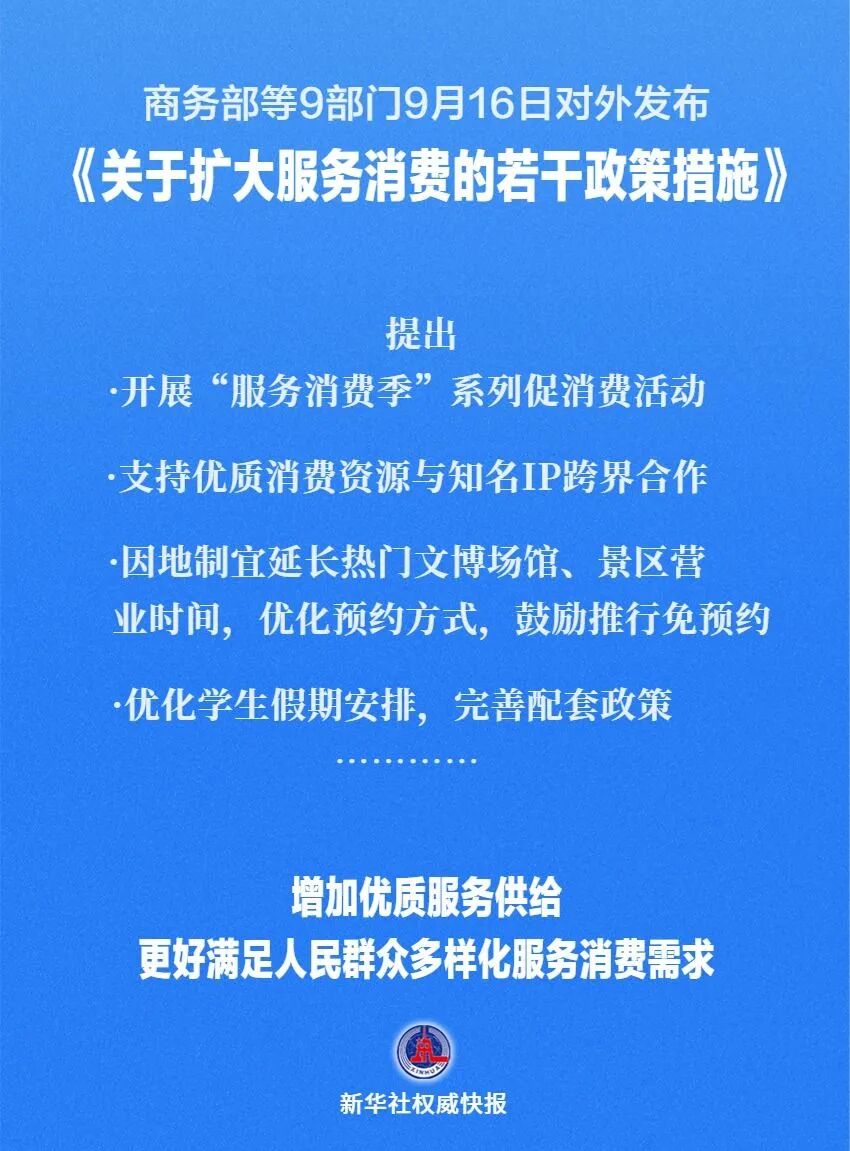
新华社北京9月16日电 商务部等9部门16日对外发布《关于扩大服务消费的若干政策措施》,提出五方 面19条举措进一步扩大服务消费。 文件提出,实施服务消费提质惠民行动,持续深化"购在中国"品牌打造,开展"服务消费季"系列促消费 活动。开展消费新业态新模式新场景试点城市建设。积极发展首发经济,推动创新和丰富服务消费场 景,支持优质消费资源与知名IP跨界合作,打造一批商旅文体健融合的消费新场景,培育一批新型消费 龙头企业。 此外,扩大服务业高水平对外开放。推动互联网、文化等领域有序开放,扩大电信、医疗、教育等领域 开放试点。支持将更多服务消费领域纳入《鼓励外商投资产业目录》,提供差异化服务供给。 文件还明确,优化学生假期安排,完善配套政策。在放假总天数和教学时间总量保持不变的情况下,鼓 励有条件的地方结合气候条件、生产安排、职工带薪休假制度落实等因素,科学调整每学年的教学和放 假时间,探索设置中小学春秋假,相应缩短寒暑假时间,增加旅游出行等服务消费时间。(记者王雨萧 魏弘毅) 文件要求,结合实际、因地制宜延长热门文博场馆、景区营业时间,优化预约方式,鼓励推行免预约。 鼓励引进国外优秀体育赛事,支持地方举办大众体育 ...
9部门:扩大电信、医疗、教育等领域开放试点
Zhong Zheng Wang· 2025-09-16 12:31
Core Viewpoint - The Ministry of Commerce and nine other departments have released policies aimed at expanding service consumption and promoting high-level opening of the service industry [1] Group 1: Policy Measures - The policies emphasize the expansion of high-level openness in the service industry [1] - There is a focus on orderly opening in sectors such as the internet and culture, as well as expanding pilot programs in telecommunications, healthcare, and education [1] - The initiative includes accelerating the comprehensive pilot demonstration for expanding service industry openness [1] Group 2: Foreign Investment - The policies support the inclusion of more service consumption areas in the "Encouraged Foreign Investment Industry Directory" [1] - There is a commitment to providing differentiated service supply to attract foreign investment [1]