保险

Search documents
保险行业周报(20260209-20260213):25Q4险资运用:权益配置维持历史高位-20260225
Huachuang Securities· 2026-02-25 03:42
Investment Rating - The industry investment rating is "Recommended," indicating an expected increase in the industry index exceeding the benchmark index by more than 5% in the next 3-6 months [21]. Core Insights - The insurance sector's total asset allocation reached approximately 38.5 trillion yuan by the end of Q4 2025, reflecting a year-to-date growth of 15.7%, with a net increase of over 5 trillion yuan throughout the year [2][4]. - The average comprehensive solvency adequacy ratio for insurance companies stands at 181.1%, with life insurance companies at 169.3% and property insurance companies at 243.5% [2]. - The industry is experiencing a shift in dividend insurance products, with a notable decrease in the preset interest rate to 1.25%, down from the previous cap of 1.75% [2]. - The overall premium income for the industry in 2025 is projected to be 6.12 trillion yuan, with a high fund conversion rate of 85% [4]. Summary by Sections Market Performance - The insurance index decreased by 2.52%, underperforming the market by 2.88 percentage points, with significant variations in individual stock performances [1]. Asset Allocation - The allocation of equity and fund assets in the insurance sector reached 5.70 trillion yuan, accounting for approximately 15.4% of total assets, maintaining a historical high [5]. - The stock assets alone amounted to 3.73 trillion yuan, representing 10.1% of total assets, with a year-on-year increase of 2.5% [5]. Company Performance and Valuation - The estimated PEV (Price to Embedded Value) for major life insurance companies is as follows: China Life at 0.89x, New China Life at 0.85x, Ping An at 0.78x, and China Pacific at 0.69x [6]. - The recommended order for investment in major companies is China Pacific, Ping An, China Life H, and China Property Insurance [6]. Future Outlook - The report anticipates that dividend insurance will attract household savings during the interest rate decline cycle, supporting growth in new premium income and net profit value (NBV) for life insurance [5]. - The long-term interest rates are expected to stabilize and rise, which may positively influence the PEV towards 1x [5].




潍坊监管分局同意撤销平安养老潍坊中心支公司
Jin Tou Wang· 2026-02-25 03:29
2026年2月12日,国家金融监督管理总局潍坊监管分局发布批复称,《平安养老保险股份有限公司山东 分公司关于撤销潍坊中心支公司的请示》(平保养鲁分发〔2026〕4号)收悉。经审核,现批复如下: 二、接此批复文件后,平安养老保险股份有限公司潍坊中心支公司应立即停止一切经营活动,于15个工 作日内向国家金融监督管理总局潍坊监管分局缴回许可证,并按照有关法律法规要求办理相关手续。 一、同意撤销平安养老保险股份有限公司潍坊中心支公司。 ...

国金证券:25全年股票+基金+长股投增长近2万亿 Q4单季增长千亿
智通财经网· 2026-02-25 03:08
Core Viewpoint - The report from Guojin Securities indicates a positive trend in the fundamentals of the asset-liability sides for the insurance industry by 2026 and in the medium to long term, with a focus on the benefits from market upturns and stable long-term interest rates, suggesting room for valuation increases and a positive outlook for leading insurance companies with strong performance and low liability costs [1] Group 1: Industry Overview - As of the end of 2025, the total scale of funds utilized by the insurance industry reached 38.48 trillion yuan, reflecting a year-on-year growth of 15.7% and a quarter-on-quarter increase of 2.7%, indicating steady growth [2] - The proportion of bonds and bank deposits has increased, while the share of equity assets, including stocks, remained stable, with a slight decrease in funds and long-term stock investments [2] - By the end of Q4 2025, the combined proportion of stocks, funds, and long-term stocks reached 23.0%, an increase of 2.6 percentage points year-on-year, with a total scale increase of 1.97 trillion yuan [2] Group 2: Investment Trends - It is estimated that 650 billion yuan of incremental funds will enter the market in 2026, with varying levels of stockpiling among companies, such as Ping An, which is expected to invest 20% of new premiums in the A-share market [3] - Major state-owned enterprises like China Life, Taiping, Xinhua, and PICC are expected to continue investing 30% of their new premiums in A-shares, with some companies potentially increasing this to 40% [3] - Non-listed companies are anticipated to have low overall positions but limited incremental funds, with an assumption that 40% of the incremental funds will enter the stock market [3]

险企加速布局 低空保险
Jin Rong Shi Bao· 2026-02-25 02:57
Group 1 - The national government has been continuously releasing policy dividends, providing a clear development framework for the low-altitude economy, with low-altitude insurance being included in the government work report for the first time in 2024 [1] - Over 30 insurance companies in China are currently engaged in low-altitude insurance, offering more than 100 products that cover various types of risks, including aircraft property loss, third-party liability, and personal accidents [1] - The industry is accelerating the establishment of systems and standards, with the first national drone application insurance standard introduced in 2022 and the first regional demonstration clauses for unmanned aerial vehicle third-party liability insurance released in 2024 [1] Group 2 - The first low-altitude economic co-insurance body in China was established in Chongqing in August 2025, with 19 member units signing cooperation agreements and launching four exclusive products covering various fields [2] - Major insurance institutions are upgrading their product systems to extend from single-issue coverage to full lifecycle services, with new insurance products being developed to address diverse risks in low-altitude economic scenarios [2] - The insurance service system launched by PICC in Guangdong in May 2025 includes comprehensive coverage for cargo transportation, parking losses during downtime, and extended warranty responsibilities, enhancing the risk protection framework for the low-altitude economy [2] Group 3 - Ping An Property & Casualty is exploring the "insurance + service + technology" model, creating an insurance matrix with over 20 products that comprehensively cover personnel safety, property loss, and third-party liability risks across the low-altitude economy [3] - As of now, Ping An Property & Casualty has insured over 150,000 drones, providing risk coverage exceeding 90 billion yuan, with claims for low-altitude aircraft amounting to over 1.17 billion yuan [3] - The low-altitude insurance system in China still faces challenges, including the need for richer product offerings and deeper collaboration between insurance companies and the industry, but the insurance sector is expected to continue exploring and improving its service capabilities [3]
三部门给低空经济上保险
Jin Rong Shi Bao· 2026-02-25 02:57
Core Viewpoint - The low-altitude economy in China is transitioning from "taking off" to "utilizing," with the market expected to reach 1.5 trillion yuan by 2025 and potentially exceed 2 trillion yuan by 2030. The traditional insurance model is inadequate for the complex demands of low-altitude flight activities, prompting the release of the "Implementation Opinions" to establish a systematic approach to low-altitude insurance development [1][2]. Group 1: Policy Framework and Development Goals - The "Implementation Opinions" outlines a phased development goal for low-altitude insurance, aiming to establish a mandatory insurance system for unmanned aerial vehicles (UAVs) by 2027 and a comprehensive policy framework by 2030 [2][3]. - The document emphasizes the importance of low-altitude insurance in building a safety management system and supporting the high-quality development of the low-altitude economy [2]. Group 2: Mandatory Insurance for UAVs - A key highlight of the "Implementation Opinions" is the establishment of a mandatory insurance system for UAVs, akin to compulsory traffic insurance, which will be integrated into flight activity approval processes [3][4]. - This mandatory insurance aims to enhance public safety and compel operators to improve safety management practices [3]. Group 3: Comprehensive Risk Coverage - The low-altitude economy's diverse applications necessitate a broad and precise risk coverage approach, prompting the "Implementation Opinions" to advocate for a comprehensive insurance service system that extends across the entire industry chain [5][6]. - The document calls for the development of insurance products that address new types of risks associated with low-altitude operations, including safety in technology, data, and environmental aspects [5][6]. Group 4: Service Enhancement and Application Scenarios - The "Implementation Opinions" stresses the need for tailored insurance solutions based on various application scenarios such as agriculture, logistics, emergency management, and tourism, ensuring that insurance services evolve from mere product supply to proactive empowerment [6]. - The establishment of a robust service guarantee system is seen as a critical measure to integrate insurance into the low-altitude economy, providing a safety net for industry development [6].
闽南语专窗、台胞证畅行,中国人寿打通惠台服务“最后一公里”
Jin Rong Jie· 2026-02-25 02:56
Core Viewpoint - The article emphasizes the role of financial services in bridging the emotional and physical distance between Taiwan and the mainland, highlighting the importance of deepening cross-strait integration and development through financial support and innovative insurance solutions [1][2][3]. Group 1: Financial Services and Policies - China Life Insurance Company is actively implementing policies that align with the central government's directives to enhance the welfare of Taiwanese compatriots and promote cross-strait integration [2][3]. - The company has introduced 12 key measures to optimize the financial environment for Taiwanese enterprises and improve their financial needs, as outlined in the 2025 initiatives by the People's Bank of China and the State Administration of Foreign Exchange [3]. - By 2025, China Life has served 104 Taiwanese enterprises, providing insurance coverage for 10,000 Taiwanese individuals with a total risk coverage amounting to 3.699 billion yuan [4]. Group 2: Innovative Insurance Solutions - China Life has launched the "Taiwan Family Worry-Free Insurance" program, which offers comprehensive coverage for Taiwanese entrepreneurs, including accident, health, and critical illness insurance [6][7]. - The company has developed various insurance products tailored to the needs of Taiwanese individuals and enterprises, providing over 414 million yuan in coverage for students and 384 million yuan for Taiwanese village officials in Pingtan [9]. Group 3: Service Optimization and Technology - China Life has established dedicated service windows for Taiwanese clients, offering services in traditional Chinese and local dialects, and has implemented a "one-day compensation" green channel for claims [10][11]. - The company has set up 24 dedicated service counters in Fujian, enhancing service accessibility and efficiency for Taiwanese clients [11]. Group 4: Community Engagement and Emotional Connection - China Life has organized community activities to foster emotional connections between Taiwanese enterprises and the mainland, such as the "Winter Warmth, Friendship Across the Strait" event, which included financial education and free accident insurance for workers [15][16]. - The company aims to create a supportive environment for Taiwanese enterprises, enhancing their sense of security and belonging through various initiatives [16].


奋力写好金融“五篇大文章” 开拓高质量发展新局面
2 1 Shi Ji Jing Ji Bao Dao· 2026-02-25 02:52
Core Insights - The financial system in Maoming is actively supporting high-quality development through various monetary policy initiatives, resulting in significant growth in loans and insurance premiums by 2025 [1] Group 1: Manufacturing Sector Support - The financial sector is focusing on enhancing the manufacturing industry by implementing a "multi-chain construction" strategy, with a total of 72.69 billion yuan in central bank policy funds allocated, a 2.5 times increase from the previous year [2] - Banks provided 86 billion yuan in credit to technology and transformation projects, with 46.3 billion yuan in project loans disbursed, ranking high in the province [2] - Direct financing channels have been expanded, with state-owned enterprises issuing 4.5 billion yuan in bonds [2] Group 2: Rural Revitalization and Inclusive Finance - Maoming was selected as a national pilot city for deepening inclusive finance reforms, focusing on agricultural financial products and services [3] - The city issued 18.02 billion yuan in loans for agricultural and small enterprises, a 10.3% increase year-on-year [3] - Policy-based agricultural insurance reached 6.71 billion yuan, providing risk coverage of 96.28 billion yuan [3] Group 3: Green Finance Initiatives - Maoming is actively promoting green finance in line with national carbon reduction strategies, with 11.27 billion yuan in loans for carbon reduction support tools, a 1.5 times increase from the previous year [4] - The total green loan balance reached 30.5 billion yuan, with a year-on-year growth of 28%, ranking fifth in the province [4] Group 4: Consumer and Elderly Care Finance - The financial sector is enhancing consumer finance and elderly care services, with 1.1 billion yuan in loans reported under consumer and elderly care refinancing policies [5] - This initiative has led to a total of 9.76 billion yuan in related loans, promoting consumption and the silver economy [5] Group 5: Future Financial Strategies - The financial system aims to continue supporting Maoming's "132" development goals by implementing moderately loose monetary policies and enhancing financial service quality [6]
未知机构:险资连续7个季度增持股票金监局披露去年四季度险资资金运用余额情况-20260225
未知机构· 2026-02-25 02:50
大类资产方面,25Q4险资持有债券和股票的比例小幅提升,持有基金和长期股权的比例下滑。 权益资产方面,25Q4险资持有股票+基金的比例由25Q3的15.49%小幅下滑至15.38%,主因基金持有规模有所回 落。 股票方面,25Q4险资连续7个季度增持,估算四季度加仓706 险资连续7个季度增持股票 金监局披露去年四季度险资资金运用余额情况。 险资连续7个季度增持股票 金监局披露去年四季度险资资金运用余额情况。 大类资产方面,25Q4险资持有债券和股票的比例小幅提升,持有基金和长期股权的比例下滑。 权益资产方面,25Q4险资持有股票+基金的比例由25Q3的15.49%小幅下滑至15.38%,主因基金持有规模有所回 落。 股票方面,25Q4险资连续7个季度增持,估算四季度加仓706亿元。 但经历此前大幅、集中增配后,加仓斜率较前三季度有所放缓。 展望后续,按照预测2026年新增保费的30%进行计算,险资全年预计将为市场带来接近1.2万亿元增量资金。 考虑到保险销售年初开门红的特征,节奏上险资全年增配股票时间或将前置。 ...
一份保单暖人心 乡村旅居有“底气”
Jin Rong Shi Bao· 2026-02-25 02:46
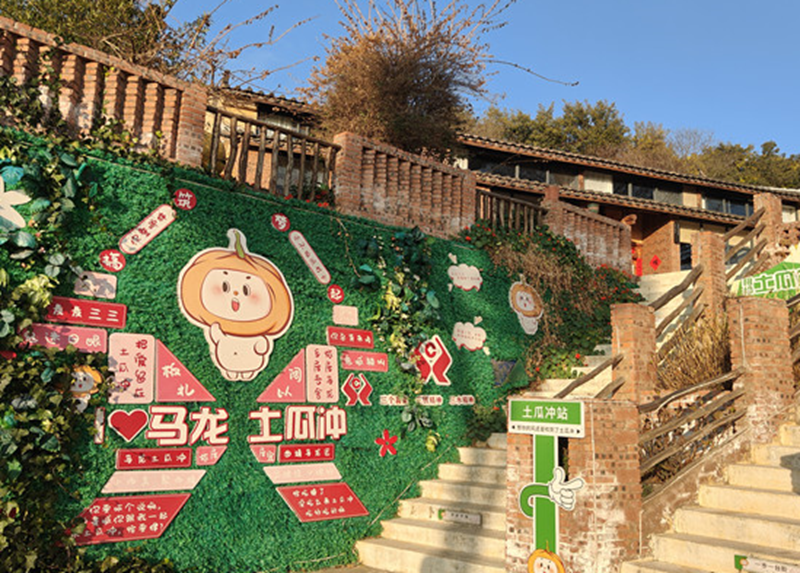
图为云南省曲靖市马龙区土瓜村的民宿院落。 钟仁 摄 大寒节气刚过,寒意尚未完全褪去,滇东高原的阳光却格外眷顾云南省曲靖市马龙区土瓜村。青瓦白墙的民 宿院落里,蜡梅悄然吐蕊,几位来自成都的旅居老人正围坐品茶,悠然享受着"猫冬"时光。最近,村里迎来一桩 喜事:云南省首单"美丽乡村旅居保险"在这里正式落地。 "这下心里踏实多了!"当地民宿管家小杨捧着刚签好的保单感慨道。这张涵盖公众责任、食品安全、财产险 等多重保障的保单,如同给正在兴起的乡村旅居业装上了"安全阀"。 在土瓜村,旅居业态的蓬勃发展让这个曾经静谧的村庄焕发新生。自2024年启动"政府+企业+村民"联动模式 以来,近30万人次游客的到来,既给土瓜村带来了活力,也带来了新的挑战。游客安全如何保障?经营风险如何 规避? "我们在走访时发现,游客最关心安全,农户最担心意外,企业最怕经营风险。这份保单就是要打通全链条保 障,让各方都能安心。"人保财险曲靖分公司负责人道出了设计这份保险的初衷。基于三方需求,保险公司精准发 力,打通全链条保障环节,让游客住得安心、农户经营放心、企业发展顺心,让每一份乡村旅居的美好,都有坚 实的保障兜底。 土瓜村的变化是云南乡村文旅融 ...