
渝低空保

Search documents
险企加速布局 低空保险
Jin Rong Shi Bao· 2026-02-25 02:57
Group 1 - The national government has been continuously releasing policy dividends, providing a clear development framework for the low-altitude economy, with low-altitude insurance being included in the government work report for the first time in 2024 [1] - Over 30 insurance companies in China are currently engaged in low-altitude insurance, offering more than 100 products that cover various types of risks, including aircraft property loss, third-party liability, and personal accidents [1] - The industry is accelerating the establishment of systems and standards, with the first national drone application insurance standard introduced in 2022 and the first regional demonstration clauses for unmanned aerial vehicle third-party liability insurance released in 2024 [1] Group 2 - The first low-altitude economic co-insurance body in China was established in Chongqing in August 2025, with 19 member units signing cooperation agreements and launching four exclusive products covering various fields [2] - Major insurance institutions are upgrading their product systems to extend from single-issue coverage to full lifecycle services, with new insurance products being developed to address diverse risks in low-altitude economic scenarios [2] - The insurance service system launched by PICC in Guangdong in May 2025 includes comprehensive coverage for cargo transportation, parking losses during downtime, and extended warranty responsibilities, enhancing the risk protection framework for the low-altitude economy [2] Group 3 - Ping An Property & Casualty is exploring the "insurance + service + technology" model, creating an insurance matrix with over 20 products that comprehensively cover personnel safety, property loss, and third-party liability risks across the low-altitude economy [3] - As of now, Ping An Property & Casualty has insured over 150,000 drones, providing risk coverage exceeding 90 billion yuan, with claims for low-altitude aircraft amounting to over 1.17 billion yuan [3] - The low-altitude insurance system in China still faces challenges, including the need for richer product offerings and deeper collaboration between insurance companies and the industry, but the insurance sector is expected to continue exploring and improving its service capabilities [3]
“低供体”模式合力护航低空经济“飞得稳”
Jin Rong Shi Bao· 2025-09-03 00:50
Core Insights - The low-altitude economy is rapidly integrating into various sectors, becoming a new driver for economic growth, but it also faces challenges such as technical risks and operational disputes [1][2] - The establishment of the first low-altitude economic mutual insurance body in Chongqing aims to address the insurance supply-demand mismatch in this emerging industry [1][5] Group 1: Low-Altitude Economy Overview - The low-altitude economy involves activities below 1,000 meters, including drone logistics, agricultural protection, and urban air traffic, with the drone industry accounting for approximately 85% of this market [2] - China's low-altitude economy market is projected to reach 1.5 trillion yuan by 2025 and 3.5 trillion yuan by 2035, supported by favorable government policies [2][3] Group 2: Insurance Demand and Development - The safety of low-altitude operations is critical, as risks such as signal interference and network attacks are more complex than ground activities [2] - Insurance companies are actively developing products tailored to the low-altitude economy, with over 30% of property insurance firms already engaged in related business [3][5] Group 3: Chongqing's Initiatives - Chongqing has launched a comprehensive action plan to promote the high-quality development of the low-altitude economy, with 147 related enterprises established and 40 key projects planned, amounting to an investment of 28.84 billion yuan [4][5] Group 4: Insurance Product Development - The mutual insurance body has developed the "Yudikongbao" insurance products, focusing on key risk areas such as drone liability and network security, providing coverage for 16 low-altitude economy enterprises [5] - The core goal of the mutual insurance body is to address the insurance supply-demand mismatch in the low-altitude economy [5] Group 5: Challenges in Insurance Sector - The insurance sector faces challenges in product pricing and standardization, as current pricing models are based on historical data, which is insufficient for the diverse applications of drones [6][7] - There is a lack of standardized risk definitions and industry norms, complicating the formulation of insurance terms and claims processes [6][7] Group 6: Talent Development - The low-altitude economy requires professionals with expertise in aviation technology, insurance actuarial models, and risk management, but there is a shortage of such talent [7] - Educational institutions are encouraged to develop courses related to low-altitude economy insurance to foster a skilled workforce [7]



为低空经济插上金融之翼
Jing Ji Ri Bao· 2025-09-01 22:27
Group 1 - The establishment of the first low-altitude economy mutual insurance body in China took place in Chongqing, with 19 member units signing cooperation agreements and providing risk protection worth 61.15 million yuan [1] - The mutual insurance body aims to address issues such as insufficient supply in the low-altitude insurance market, limited underwriting capacity, and lagging product innovation by integrating domestic insurance resources and capabilities [1][2] - The "Yukebao" product system was launched, featuring four specialized insurance products focusing on areas such as drone third-party liability and cybersecurity, creating a comprehensive risk protection network [2] Group 2 - The mutual insurance body plans to establish a regular working mechanism for healthy development and create a low-altitude economic risk laboratory to enhance risk reduction services through big data analysis [2][3] - There is an emphasis on cross-professional collaboration to strengthen the synergy between finance and technology, aiming to enhance the safety resilience of the low-altitude economy [3] - The mutual insurance body is expected to promote the integration of insurance, credit, and investment sectors, leveraging financial resources to support the development of the low-altitude economy [3]
科股早知道:机构称到2030年全球半导体营收将突破1万亿美元
Sou Hu Cai Jing· 2025-09-01 00:30
Group 1: Semiconductor Industry - The global semiconductor revenue is projected to exceed $1 trillion by 2030, nearly doubling from 2024 to 2030, driven by generative AI infrastructure in cloud and edge devices [1] - In the short term, the growth is fueled by the optimistic outlook for AI-driven downstream growth in 2025, with significant performance forecasts for various semiconductor segments [1] - The establishment of domestic supply chains and ongoing policy upgrades to address supply chain disruptions are expected to enhance the industry's resilience [1] Group 2: Low-altitude Economy - The first low-altitude economic mutual insurance body in China has been established in Chongqing, with the launch of the exclusive product "Yucheng Low-altitude Insurance" and a total risk coverage of 61.15 million yuan [2] - The low-altitude economy is expected to exceed 1 trillion yuan by 2026, reaching 1,064.46 billion yuan, with projections of 2.5 trillion yuan by 2030 and 3.5 trillion yuan by 2035 [2] - The national strategy is focusing on the low-altitude economy, with local policies and resources being aligned to support the development of low-altitude logistics and tourism applications [2]


【早报】美国撤销三星等三家在华半导体企业“经验证最终用户”授权,商务部回应;中央汇金大举加仓股票ETF,持仓市值达1.28万亿元
财联社· 2025-08-31 23:11
Macroeconomic News - The State Council, led by Premier Li Qiang, is advancing comprehensive reform pilot work for market-oriented allocation of factors in certain regions, emphasizing the decisive role of the market in resource allocation [1] - The State Council approved the "Strengthening Basic Medical and Health Services Implementation Plan," focusing on enhancing grassroots medical institutions and improving insurance payment policies [2] - Chinese manufacturing PMI for August stands at 49.4%, a slight increase of 0.1 percentage points from the previous month [3] Industry News - The Ministry of Commerce criticized the U.S. for revoking the "validated end-user" authorization for three semiconductor companies in China, stating it could negatively impact the global semiconductor supply chain [4] - In the first half of 2025, total revenue for listed companies is projected to reach 35.01 trillion yuan, a year-on-year increase of 0.16% [5] - The Central Huijin Investment Company increased its holdings in stock ETFs to a market value of 1.28 trillion yuan, a nearly 23% increase from the end of last year [7] - The Ministry of Industry and Information Technology has set a target for the steel industry to achieve an average annual growth of around 4% in value added from 2025 to 2026 [7] Company News - SMIC announced plans to issue A-shares to acquire minority stakes in its subsidiary, with trading suspended [9] - Huahong Semiconductor plans to acquire 97.5% of Huali Micro through a share issuance and cash payment, with trading resuming [9] - BYD reported a net profit of 15.51 billion yuan for the first half of the year, a year-on-year increase of 13.79% [11] - Huawei's revenue for the first half reached 427 billion yuan, a 3.94% year-on-year increase, while net profit fell by 32% to 37.1 billion yuan [12] - Tianqi Lithium reported a net profit of 84.41 million yuan for the first half, marking a return to profitability [13] Global Market - U.S. stock indices collectively fell last Friday, with the Nasdaq down 1.15% and the S&P 500 down 0.64%, while the Dow Jones fell 0.2% [17] - A U.S. appeals court ruled that most of the global tariff policies implemented by former President Trump were illegal, exceeding his authority [18]





股市周评:8月完美收官,9月迎来政策和事件双轮驱动
Sou Hu Cai Jing· 2025-08-31 17:51
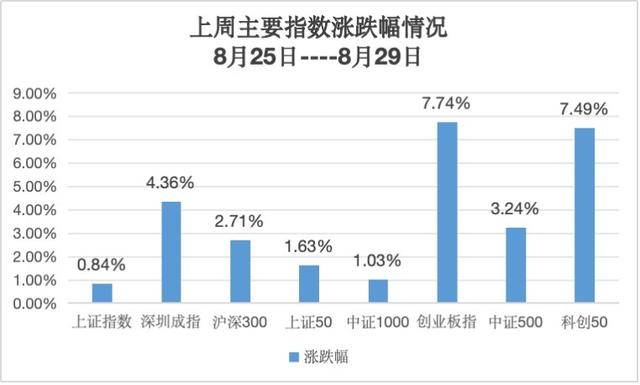
Market Performance - The A-share market experienced an upward trend last week, with major indices rising, particularly the ChiNext Index and the Sci-Tech Innovation 50, which increased by 7.74% and 7.49% respectively, indicating a strong focus on the technology sector [1] - The CSI 500 outperformed the CSI 1000 and the Shanghai and Shenzhen 300, suggesting that mid-cap stocks performed better than large-cap and small-cap stocks [1] Sector Analysis - In terms of sector performance, semiconductors, hardware equipment, non-ferrous metals, software services, and military industry saw significant gains, while coal, banking, and transportation sectors experienced declines [3] - The non-ferrous metals sector is expected to continue its strong performance, with 72 out of 116 listed companies reporting year-on-year profit growth in the first half of 2025, and 18 companies seeing profit growth exceeding 100% [4] - The average domestic copper price was 77,600 yuan/ton, up 4.2% year-on-year, while aluminum and gold prices also saw increases of 2.6% and 46.8% respectively [4] Future Outlook - The market is expected to maintain a volatile upward trend, with the Shanghai Composite Index recently closing at a 10-year high of around 3,888 points, and potential movement towards the 4,000-point mark if trading volume remains around 3 trillion yuan [5] - Economic indicators show a slight recovery in manufacturing and non-manufacturing sectors, with the manufacturing PMI at 49.4% and the non-manufacturing PMI at 50.3% for August [5] - Central Huijin's significant increase in ETF holdings, reaching a market value of 1.28 trillion yuan, has bolstered market confidence [8] Investment Opportunities - Focus on technology sectors such as robotics, semiconductors, and AI applications, which are becoming more cost-effective [8] - Consider cyclical industries like non-ferrous metals, which are showing signs of profit improvement [8]
重庆成立全国首个低空经济共保体
Jing Ji Guan Cha Bao· 2025-08-31 05:07
Core Insights - The first low-altitude economy mutual insurance body in China has been established in Chongqing, with 19 member units signing cooperation agreements and completing project contracts with 16 enterprises, resulting in a risk coverage amount of 61.15 million yuan [1] Group 1: Industry Development - The low-altitude economy mutual insurance body consolidates the expertise of 19 insurance companies to address challenges such as insufficient underwriting capacity of single institutions and reluctance to insure new risks through a "risk-sharing, win-win cooperation" mechanism [1] - The inaugural meeting introduced the first batch of exclusive products, "Yucheng Low-altitude Insurance," covering four key areas: drone liability, aviation product liability, technology transformation, and cybersecurity, thereby establishing a comprehensive risk protection network for the entire industry chain [1] Group 2: Market Growth - The low-altitude economy is recognized as a national strategic emerging industry, with Chongqing leveraging its industrial and situational advantages to accelerate development [1] - In the first half of this year, Chongqing recorded 1.157 million low-altitude flights and 190,000 flight hours, representing year-on-year increases of 67.3% and 109.2%, respectively [1]
多维数据释放“稳中向好”发展积极信号 为推动高质量发展积蓄充沛动能
Yang Shi Wang· 2025-08-30 12:24
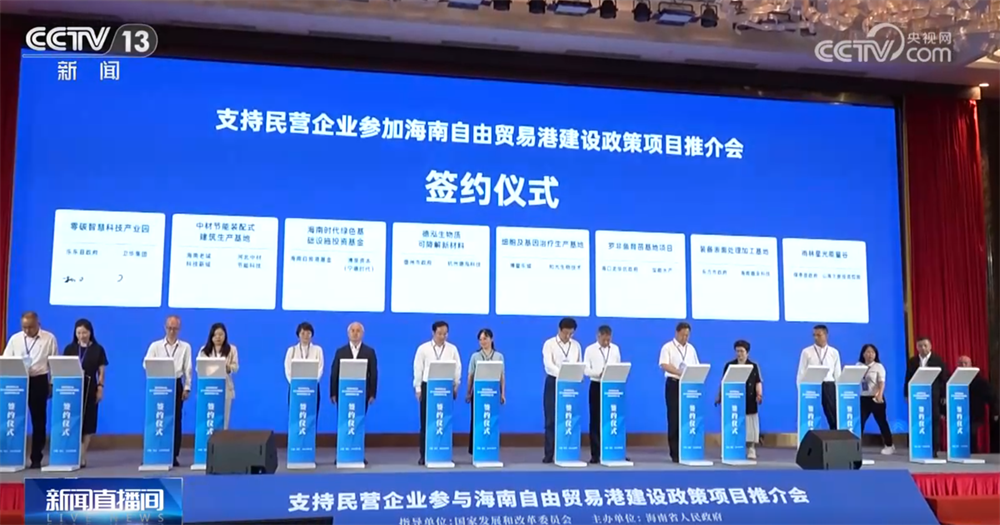
Group 1: State-Owned Enterprises Performance - In the first seven months of this year, the total operating revenue of state-owned and state-controlled enterprises reached 4,731.1 billion yuan, remaining flat compared to the same period last year [1] - The total profit for these enterprises was 247.9 billion yuan [1] Group 2: Trade and Logistics at Alashankou Port - The import and export cargo volume at Alashankou Port reached 17.3 million tons from January to July, marking a year-on-year increase of 6.3% [2] - Initiatives such as the establishment of a "problem clearing, direct service" window and 24-hour appointment customs clearance services have been implemented to enhance logistics efficiency [2] Group 3: Hainan Free Trade Port Development - The Hainan Free Trade Port is set to officially commence operations on December 18, with over 100 enterprises participating in a project promotion meeting to explore opportunities [3][5] - A total of 42 projects were signed during the event, covering sectors such as clean energy, modern agriculture, and digital economy [5] Group 4: Xiamen Xiang'an International Airport Development - The dual runways of Xiamen Xiang'an International Airport have been connected, marking a significant milestone in the airport's construction [6] - The airport is expected to handle 45 million passengers annually and 750,000 tons of cargo after its completion in 2026 [8] Group 5: Low Altitude Economy in Chongqing - Chongqing has established the first low-altitude economy mutual insurance body in the country, with 19 member units signing cooperation agreements [9] - The low-altitude economy is identified as a national strategic emerging industry, with significant growth in flight operations and flight hours in the first half of the year [11]
城市24小时 | 中部省会“米”字形枢纽最后一笔,动了?
Mei Ri Jing Ji Xin Wen· 2025-08-29 16:42
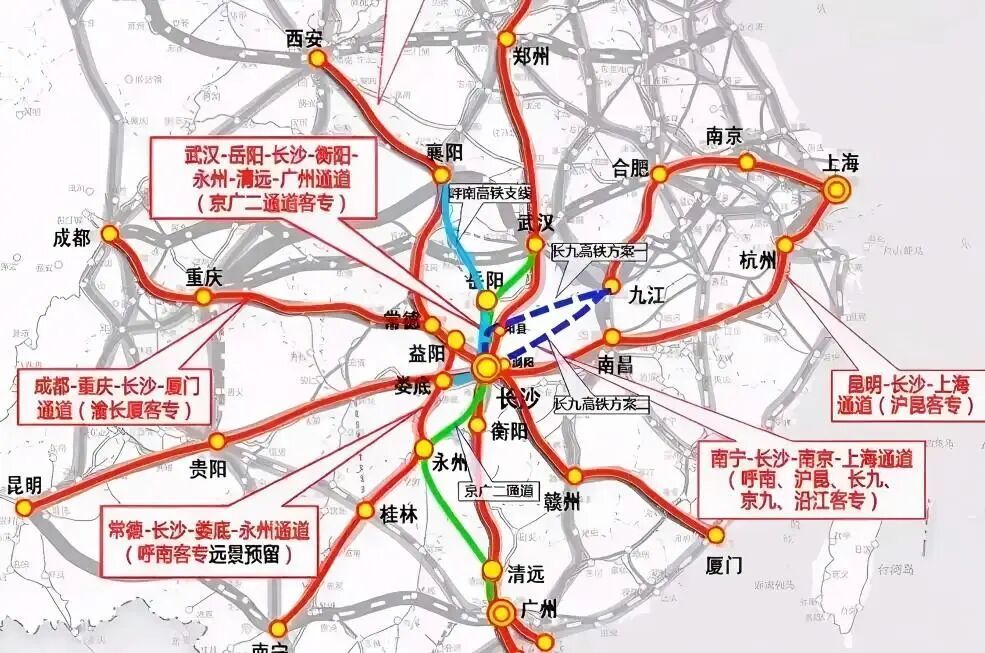
Group 1 - The Hunan Provincial Development and Reform Commission has announced support for six major railway projects, including the Changsha to Jiujiang high-speed railway, which is crucial for establishing a "cross" high-speed rail hub in Changsha [1][2] - The Changsha to Jiujiang high-speed railway is part of a larger network aimed at enhancing connectivity between the Yangtze River Delta and the central and southern regions of China, addressing existing gaps in high-speed rail coverage [2][3] - The Changsha West to Hukun high-speed railway connection line is expected to fill the southwest high-speed rail gap, further solidifying Changsha's position as a key transportation hub [2][3] Group 2 - The construction of the Changsha to Jiujiang high-speed railway has been advocated by representatives from Hunan province during the National People's Congress for several years, emphasizing its importance for regional economic development [3] - The proposed railway is seen as a vital link for the Yangtze River Economic Belt, aiming to enhance transportation efficiency and support national strategies for regional economic coordination [3] - Hunan's representatives are actively seeking to include the Changsha to Jiujiang high-speed railway in the national railway development plan, highlighting its significance for future infrastructure development [3]
全国首个低空经济共保体在渝成立,汇聚19家险企
Di Yi Cai Jing· 2025-08-29 11:47
Core Viewpoint - The establishment of China's first low-altitude economy mutual insurance body in Chongqing aims to provide risk protection of 61.15 million yuan for insured parties, addressing the unique risks faced by the low-altitude economy sector [1][2]. Group 1: Formation and Objectives - The mutual insurance body was formed by the Chongqing Development and Reform Commission, the National Financial Supervision Administration's Chongqing Financial Regulatory Bureau, and People's Insurance Company of China (PICC) [1]. - The initiative involved research on 10 key enterprises in the low-altitude economy industry chain and discussions with major insurance companies, culminating in the participation of 19 insurance firms [1][2]. Group 2: Risk Coverage and Product Innovation - The mutual insurance body signed cooperation agreements and project contracts with 16 entities, providing a total risk coverage of 61.15 million yuan [1]. - The body introduced innovative underwriting mechanisms and launched four exclusive products under the "Yucheng Low-altitude Insurance" brand, covering areas such as drone third-party liability and cybersecurity [1][2]. Group 3: Service and Collaboration - The initiative includes the establishment of a risk laboratory in collaboration with government, enterprises, and universities to explore data modeling and service standards [2]. - The insurance sector plans to enhance communication and cooperation with government departments and low-altitude economy enterprises, aiming to implement mandatory liability insurance for civil unmanned aerial vehicles [2][3]. Group 4: Future Development and Standards - The mutual insurance body will establish a regular working mechanism to promote healthy development and create a comprehensive risk reduction service model using big data analysis [3]. - There are plans to participate in the formulation and promotion of industry standards and demonstration clauses related to low-altitude economy insurance [3].