
数字产业

Search documents
华检医疗(01931.HK)拟更名为"华检数字产业集团有限公司"
Ge Long Hui· 2025-09-14 10:28
Core Viewpoint - The company proposes to change its English name from "IVD Medical Holding Limited" to "ETHK Labs Inc." and its Chinese name to "华检数字产业集团有限公司" to better reflect its strategic direction and focus on digital industries and blockchain financial ecosystems [1] Group 1 - The company aims to consolidate its existing business while actively exploring and positioning itself in cutting-edge fields such as digital industries and blockchain finance [1] - The name change is part of a broader strategy to establish a joint venture and deepen the global blockchain financial ecosystem under the "ETHK" core brand [1] - The board believes that the new name will better represent the company's ambition to become a key technology and infrastructure provider within the "ETHK" blockchain financial ecosystem [1]
云南省省长王予波:壮大数字经济核心产业 扎实推进数字产业园建设
Zheng Quan Shi Bao Wang· 2025-09-12 01:40
人民财讯9月12日电,据云南日报消息,9月11日,云南省委副书记、省长王予波主持召开数字经济工作 专题会。王予波强调,要以大通道建设为先导,加强数字基础设施、数据规则标准、数字经济人才、数 智技术"四个联通",建好用好昆明国际通信业务出入口局,打造"数字两亚",不断拓展发展新空间。要 以产业发展为支撑,壮大数字经济核心产业,扎实推进数字产业园建设,推动企业"多、活、大、强", 积极拓展应用场景,加快建设数字政府,激发转型升级新动能。算力的尽头是电力,要发挥绿色能源、 独特区位等优势,优化发展环境,提升发展能级,打造经济增长新引擎。发展数字经济,昆明有基础、 有条件、有潜力,要主动作为,当好全省领头羊。 ...
把脉数字产业发展风向标,2025智博会数字产业生态大会在渝召开
Guo Ji Jin Rong Bao· 2025-09-08 02:44
Group 1 - The 2025 World Intelligent Industry Expo in Chongqing focuses on the new opportunities in the digital industry driven by artificial intelligence and aims to provide direction and intellectual support for the future development of China's digital industry [1] - The integration of digital economy and real economy is accelerating, with a shift in global industrial competition focusing on innovation capability, technological strength, and ecological dominance rather than just cost and scale [3] - The importance of ecological dominance in industry is highlighted, indicating that companies that gain this power in niche areas will enhance their global competitiveness [3] Group 2 - The financial industry is undergoing profound productivity changes driven by new technologies like AI large models, which present challenges such as the digital divide for the elderly and data security [3] - Digital financial innovation should adhere to the principle of "high, medium, initial, small," focusing on occupying technological high ground while minimizing risks and costs [4] - The concept of human-machine collaboration is defining a new paradigm for financial intelligence, aiming to awaken dormant data assets and integrate AI capabilities into workflows for more efficient and personalized financial services [4]

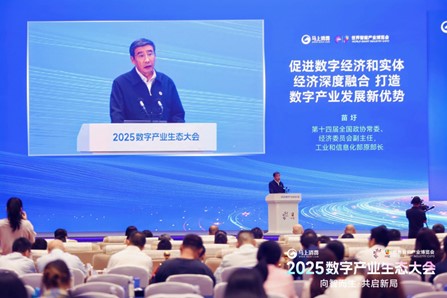
2025中新(重庆)国际数字合作论坛举办
Zhong Guo Xin Wen Wang· 2025-09-06 15:13
Group 1 - The 2025 China-Singapore International Digital Cooperation Forum was held in Chongqing, focusing on new opportunities for digital cooperation between China and Singapore [1] - The forum celebrated the 35th anniversary of diplomatic relations between China and Singapore and the 10th anniversary of the China-Singapore (Chongqing) Connectivity Initiative [1] - A total of 15 projects were signed during the forum, including a cross-border data compliance and security service platform, joint development of medical technology, and an AI application demonstration international cooperation center [1] Group 2 - The forum also released the "Data Exit Management List" for the China (Chongqing) Free Trade Pilot Zone, which focuses on building a world-class intelligent connected new energy vehicle industry cluster [2] - Experts and scholars from both countries discussed international digital cooperation, particularly in the field of artificial intelligence data collaboration, exploring topics such as cross-border data transmission and compliance [2] - The projects awarded during the forum reflect the innovative and intelligent characteristics of China-Singapore cooperation, setting new benchmarks for industry innovation [1][2]
上合组织天津峰会丨中国—上海合作组织数字经济合作平台揭牌成立
Xin Hua Wang· 2025-09-02 10:52
Core Points - The China-Shanghai Cooperation Organization Digital Economy Cooperation Platform was inaugurated in Tianjin, aiming to implement the declaration on enhancing digital economic development among SCO member states [1][2] - The platform focuses on serving national strategic deployments, promoting digital cooperation among SCO countries, and facilitating high-quality regional digital economic development [1] Group 1 - The platform will establish a cooperation framework that includes a mechanism, a forum, and a pilot zone, targeting key areas such as digital industry cooperation, data infrastructure connectivity, data standard recognition, digital talent cultivation, and digital technology research and development [1][2] - It aims to strengthen supply-demand matching and deepen ecological cooperation among SCO countries, attracting diverse participants to engage in platform construction [2] - The platform will promote "hard connectivity" of digital infrastructure, "soft connectivity" of data rules and standards, and "heart connectivity" of digital economy talent among SCO countries [2] Group 2 - Tianjin has been actively advancing digital industrialization and digitalization of industries, having been approved as a national digital economy innovation development pilot zone, with a platform economy scale reaching 600 billion yuan [2] - The city is positioned to leverage its geographical and industrial advantages to enhance digital economic cooperation with SCO countries [2] - Tianjin aims to create an optimal environment and practical measures to establish the platform as a key base for technology exchange, industry cooperation, talent training, and experience sharing in the digital economy among SCO countries [2]
东北又一座“空城”诞生?房价从1万跌至6千,本地人却大量“逃离”
Sou Hu Cai Jing· 2025-08-31 02:20
Core Insights - The article discusses the decline of a resource-dependent city in Northeast China, highlighting the significant drop in property prices and population outflow as indicators of its economic struggles [1][2]. Group 1: Economic Decline - The city's property prices have plummeted from over 10,000 yuan per square meter to around 6,000 yuan, representing a decline of over 40% [1]. - The local population has decreased from approximately 1 million in 2015 to about 750,000 in 2025, indicating a loss of nearly 25% in just ten years [1]. Group 2: Resource Depletion - The city's economy was heavily reliant on coal, with peak annual production reaching 20 million tons, providing over 100,000 jobs [3]. - By 2024, the available coal reserves had dwindled to less than 20% of their peak, leading to the closure of numerous mines and significant job losses [3]. Group 3: Industrial Transition Challenges - The local economy is overly dependent on resource-based industries, which account for 65% of the secondary sector, while high-tech industries only make up 5% [4]. - The transition to new industries is hindered by a lack of technology, talent, and market access, despite government support [4]. Group 4: Employment Issues - In 2024, the city created only 35,000 new jobs, while the number of new labor entrants, including graduates, was 62,000, highlighting a significant employment gap [5]. - High-paying job opportunities are scarce, prompting local talent to seek better prospects in southern cities [5]. Group 5: Housing Market Dynamics - The city's real estate market is experiencing a downturn, with a 38% year-on-year decrease in property transactions in the first half of 2025, marking a ten-year low [6]. - High vacancy rates are evident, with some residential complexes having less than 40% occupancy [6]. Group 6: Demographic Shifts - The aging population is becoming a pressing issue, with 23% of residents aged 65 and older, significantly above the national average [6]. - The outflow of young people exacerbates the demographic imbalance, leading to a decline in the city's vitality [6]. Group 7: Climate and Environmental Factors - Harsh winter conditions, with an average annual temperature of 4.3°C and winter lows reaching -30°C, contribute to the migration towards warmer southern regions [7]. Group 8: Public Service Deficiencies - The city faces significant gaps in healthcare and education services, with a low number of doctors per capita and a lack of prestigious universities, driving families to relocate for better opportunities [8]. Group 9: Digital Economy Lag - The city ranks low in digital economy development, with less than 15% of its GDP coming from this sector, compared to over 30% in developed cities [9]. Group 10: Business Environment Challenges - Administrative inefficiencies and high operational costs deter businesses, with low scores in service efficiency and bureaucratic processes [9]. Group 11: Cultural and Lifestyle Factors - The lack of diverse cultural and recreational activities in the city compared to larger urban areas diminishes its attractiveness to younger generations [10]. Group 12: Impact of Falling Property Prices - The decline in property values has led to a significant reduction in residents' wealth, with an estimated loss of 400,000 yuan in value for a typical 100-square-meter home from 2020 to 2025 [10]. - This decline in wealth is likely to suppress consumer spending, contributing to a downward economic spiral, as evidenced by a 5.8% drop in retail sales in 2024 [10]. Group 13: Path to Recovery - The article suggests that the city must undergo a transformation to diversify its economy and reduce reliance on single-resource industries [11]. - Successful case studies indicate that cities should focus on their unique strengths and develop suitable industries rather than chasing high-profile sectors [11]. Group 14: Urban Quality Improvement - Enhancing urban quality through better infrastructure, cultural offerings, and environmental improvements is essential for attracting residents and businesses [13]. Group 15: Digital Transformation Opportunities - Embracing digital transformation and developing smart city initiatives can provide new growth avenues for the city [13]. Group 16: Community Involvement - The article emphasizes the need for collaborative efforts among government, businesses, and citizens to facilitate the city's long-term recovery and transformation [14].

以提升产业发展质量维护产业安全(专题深思)
Ren Min Ri Bao· 2025-08-28 22:38
Core Viewpoint - Industrial security is emphasized as a core component of economic security, with a focus on enhancing resilience, technological self-reliance, and high-level openness to improve industrial development quality [1] Group 1: Industrial Scale Expansion - Steady expansion of industrial scale is crucial for industrial security, serving as a stabilizing factor during the transition from middle-income to high-income status [2] - China's manufacturing sector has maintained the largest global scale for 15 consecutive years, showcasing unique advantages in scale and system [2] - Achievements in various sectors, such as high-speed trains and advanced manufacturing, are linked to these scale and system advantages [2] Group 2: Industrial Quality Upgrade - Promoting quality upgrades in industries is essential to avoid low-level repetitive investments that can harm industrial security [3] - Digital transformation is highlighted as a key area, with Shenzhen's manufacturing value added projected to account for about one-third of its GDP in 2024 [3] - The focus on green low-carbon development and advanced industrial clusters is aimed at enhancing industrial safety and creating new growth sectors [3] Group 3: Enhancing Industrial Resilience - Strengthening industrial resilience is necessary for building a modern industrial system and ensuring industrial security [4] - Despite improvements, there are still vulnerabilities in the industrial chain that need to be addressed through technological advancements and diversified supply systems [4] - Monitoring and early warning systems for various risks are essential for enhancing governance resilience [4] Group 4: Expanding High-Level Openness - Expanding high-level openness is vital for improving industrial development quality in the context of deepening economic globalization [5] - China's foreign investment and global capacity layout have accelerated, particularly in relation to the Belt and Road Initiative [5] - Active engagement with international high-standard trade rules and international industrial cooperation is necessary for building a new type of collaborative framework [5]
BOI联手泰国证交所加速吸引高科技产业落地泰国
Shang Wu Bu Wang Zhan· 2025-08-28 15:33
Core Insights - The Thai Board of Investment (BOI) and the Stock Exchange of Thailand (SET) have announced a strategic partnership to attract foreign high-tech companies to the Thai capital market and support existing listed companies in their transformation towards a technology-driven "new economy" [1] Group 1: Strategic Focus - The collaboration will focus on two main areas: attracting foreign high-tech companies to list in Thailand and supporting existing listed companies in their transformation and upgrading [1] - The initiative aims to encourage companies to invest in improving production efficiency and increasing added value while achieving long-term growth through sustainable development [1] Group 2: Target Industries - The partnership will initially target three high-tech industries: smart electronics and appliances, electric vehicles, and the digital industry [1] - These industries have seen significant foreign investment in Thailand, with successful listing cases such as Delta Electronics (Thailand) PCL and Cal-Comp Electronics (Thailand) PCL [1] Group 3: Support Mechanisms - The SET will provide support through the "JUMP+ Program," which includes growth planning, investor communication, and enhancing corporate visibility [2] - The BOI will offer tax incentives through the "Smart and Sustainable Industry Plan" [2] - A Fast-Track service will be established to facilitate companies in obtaining both types of support simultaneously [2]
工业和信息化部:推动构建上合组织工业和信息通信业合作发展新格局
Sou Hu Cai Jing· 2025-08-28 13:50
Group 1 - In the first half of the year, China's industrial and information economy demonstrated strong resilience, with industrial added value above designated size growing by 6.4% year-on-year, and manufacturing investment increasing by 7.5% [3] - The telecommunications sector reported a revenue of 905.5 billion yuan, with a year-on-year growth of 9.3%, and the number of 5G base stations reached 4.55 million, with 1.118 billion 5G mobile phone users [3] - The software business also showed robust growth, with total revenue reaching 7.0585 trillion yuan, a profit increase of 12%, and exports growing by 5.3% [3] Group 2 - The Shanghai Cooperation Organization (SCO) has become a significant regional cooperation organization, with a trade volume exceeding 8 trillion dollars in 2024, accounting for one-fourth of global trade [4] - The SCO aims to promote sustainable development and modernization, with 2025 designated as the "Year of Sustainable Development" [4] Group 3 - The Ministry of Industry and Information Technology (MIIT) has actively engaged in international cooperation with SCO countries, focusing on building an open and inclusive global digital industry ecosystem [9] - MIIT has conducted training for over 830 digital technology talents through the China-SCO Big Data Cooperation Center, facilitating digital transformation [7][9] - The MIIT has also initiated pilot projects to expand foreign investment in value-added telecommunications services, with over 40 foreign enterprises receiving pilot approvals [9][10] Group 4 - The MIIT emphasizes high-level opening up in the industrial sector, removing foreign investment restrictions in manufacturing, and promoting trade liberalization through bilateral cooperation [10] - The MIIT plans to enhance cooperation in energy industries, promote industrial transformation, and build innovative cooperation platforms with SCO countries [10]
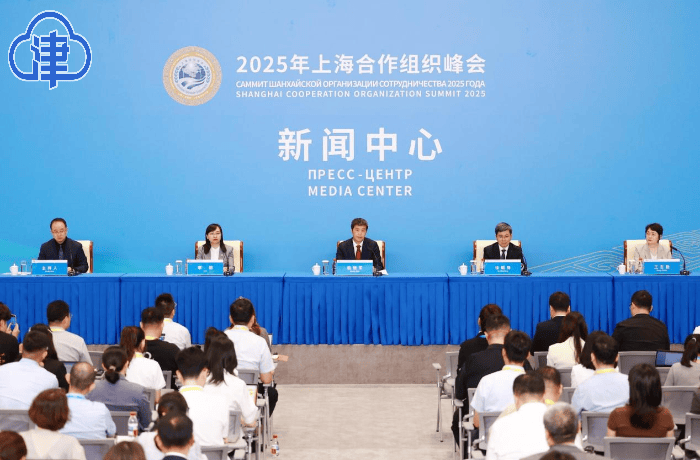
携手开放合作 同筑共赢之路——中国携手各方为全球经济发展贡献“上合力量”
Xin Hua She· 2025-08-27 15:50
Core Viewpoint - The Shanghai Cooperation Organization (SCO) has become a significant international entity contributing to global economic development through enhanced trade and cooperation among its member states since its establishment in 2001 [1][3]. Economic Cooperation Achievements - The Horgos International Border Cooperation Center between China and Kazakhstan has seen a daily average of over 30,000 people crossing, with a year-on-year increase of 58.9% in 2023 [2]. - In the first seven months of this year, China's total import and export volume with other SCO member countries reached 2.11 trillion yuan, marking a 3% increase year-on-year [3]. - The China-Belarus Industrial Park has reported an industrial production growth rate exceeding 40%, with expectations of over 140 resident enterprises by the end of 2025 [3]. Infrastructure and Trade Growth - The China-Europe Railway Express has surpassed 110,000 trips, facilitating trade worth over 2 billion yuan in a single shipment of smart home appliances to Moscow [4]. - By 2024, trade volume between China and SCO member states is projected to reach a record 890 billion USD, accounting for 14.4% of China's total foreign trade [4]. Innovation and Sustainable Development - China is promoting technological innovation and sustainable development through projects like smart agriculture in Pakistan and renewable energy initiatives in Uzbekistan [5][6]. - The SCO's focus on green energy projects, such as a 500 MW solar power station in Uzbekistan, aims to provide over 1 billion kWh of stable green electricity annually [5]. Digital Economy and E-commerce - The e-commerce market among SCO member states is expected to exceed 3.2 trillion USD in 2024, with a 34% year-on-year increase in cross-border e-commerce imports from these countries to China [6]. - Chinese companies are actively participating in building digital infrastructure, such as 5G networks in Kyrgyzstan, enhancing internet access from 43% to 70% [6]. Collaborative Events and Future Outlook - Recent SCO economic exchange activities, including investment trade fairs and forums, have attracted significant participation, indicating a commitment to deeper regional cooperation [7]. - The SCO continues to evolve, expanding from 6 to 10 member states, and is seen as a platform for promoting a more equitable regional governance vision [8][9]. - The organization is expected to enhance its economic cooperation's value and influence, contributing to global economic stability and prosperity [10].