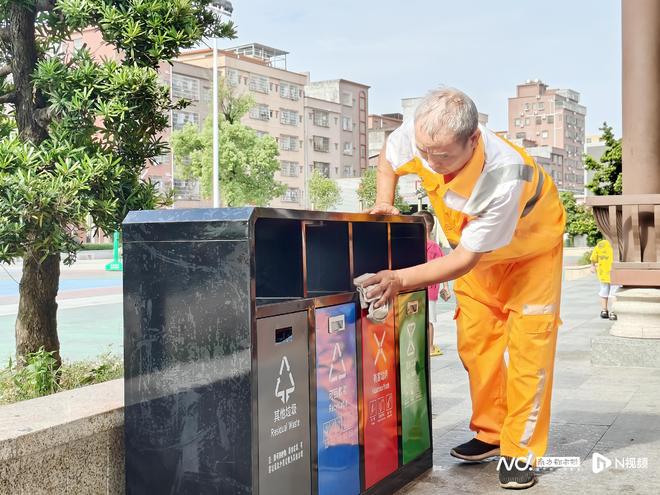
环卫

Search documents
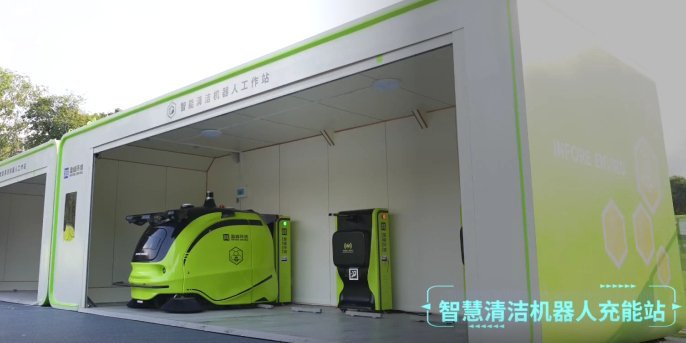
深圳“蜂巢”落地:盈峰环境助力智慧环卫
Jing Ji Guan Cha Wang· 2025-08-08 08:19
Core Insights - The launch of the "Sanitation Robot Home (Hive)" in Longgang District, Shenzhen marks a significant advancement in the sanitation industry, transitioning from "mechanical replacement of labor" to an "intelligent collaborative ecosystem" [2][4] - The "Hive" system developed by Yingfeng Environment enables five "Little Bee" sanitation robots to autonomously charge and operate in a coordinated manner, addressing traditional issues such as short battery life and inefficient scheduling [2][9] Company Overview - Yingfeng Environment has evolved from a traditional sanitation service provider to a comprehensive environmental operation service provider since its establishment in 1993, with a diverse portfolio including monitoring, water services, waste incineration, sanitation equipment, and sanitation services [5][6] - The company has achieved a market share of 19.3% in the environmental equipment sector, leading the industry in both sales volume and market share [6] Technology and Innovation - The "Hive" system employs a "central brain + terminal matrix" architecture, achieving breakthroughs in dynamic energy management, AI cluster scheduling, and multi-model collaboration, significantly enhancing operational efficiency [5][9] - The "Little Bee" sanitation robot integrates advanced technologies such as 5G, AI, machine vision, and deep self-learning, capable of replacing four laborers and operating over 12 hours daily [3][9] Market Trends - The sanitation robot industry in China is experiencing rapid growth, with the country becoming a major player in the global robotics market, particularly in service robots, where Chinese manufacturers accounted for 84.7% of global shipments in 2024 [7][8] - Government policies are actively promoting the intelligent transformation of the sanitation sector, with initiatives encouraging the purchase of smart, unmanned sanitation equipment [8][9] Future Outlook - Yingfeng Environment plans to expand its sanitation robot projects across multiple cities, focusing on product success, efficiency-driven operations, and smart management to become a global leader in cleaning maintenance equipment and services [6][9] - The "Hive" system is set to be fully launched in the market by 2025, aiming to reshape traditional sanitation operations and contribute to the development of smart cities [9]


小吨位环卫无人设备经济性渐近,订单呈散点放量趋势 | 投研报告
Zhong Guo Neng Yuan Wang· 2025-08-08 02:59
Core Viewpoint - The report highlights the accelerating growth of orders for automated sanitation equipment, indicating a trend of scattered volume increase in the market for unmanned sanitation solutions [1][4]. Investment Highlights - The automation and intelligence of urban sanitation operations are achieved through unmanned equipment, categorized into small-tonnage and large-tonnage devices, as well as humanoid robots for closed-loop scenarios [2]. - Small-tonnage unmanned devices are expected to be more economical, with one unit plus one operator potentially replacing 3-4 workers, leading to significant cost savings [2]. - The market for unmanned sanitation equipment is projected to reach a scale of hundreds of billions, with varying estimates based on the adoption rate of unmanned operations [3]. Market Space Estimation - The market space for small and large-tonnage unmanned devices is estimated at 575 billion to 1,522 billion yuan, depending on the adoption rate of 20%, 30%, or 40% [3]. - The report emphasizes the need for active participation and strategic positioning by various stakeholders in the unmanned sanitation sector to address labor shortages and enhance mechanization rates [4]. Order Growth and Trends - The number of awarded projects for automated sanitation is expected to increase significantly, with 82 projects worth 4.87 billion yuan in 2024 and over 90 projects worth 5.58 billion yuan in the first half of 2025 [1][4]. - The estimated total for awarded projects in 2025 is projected to exceed 180, with a total value of approximately 11.16 billion yuan, reflecting a year-on-year growth of about 129% [1][4]. Economic Analysis - The economic viability of small-tonnage unmanned devices is highlighted, with a price point of 300,000 yuan per unit, which could become economically advantageous as prices decrease to 200,000 yuan [2]. - Large-tonnage unmanned vehicles currently lack economic feasibility but could become viable if prices drop to 600,000 yuan [2]. Company Participation - Various companies are actively developing and deploying unmanned sanitation solutions, including 盈峰环境, 宇通重工, 福龙马, and others, indicating a robust competitive landscape [4]. - The report suggests that the transition to unmanned sanitation will help companies reduce costs and increase profitability, with projected performance elasticity for several companies ranging from 76% to 296% [5].


环卫无人化系列深度1:小吨位环卫无人设备经济性渐近,订单呈散点放量趋势
Soochow Securities· 2025-08-08 01:32
Investment Rating - The report maintains an "Accumulate" rating for the environmental protection industry [1] Core Viewpoints - The automation and intelligence of urban sanitation operations are being achieved through unmanned sanitation equipment, which can be categorized into small-tonnage, large-tonnage, and humanoid robots [4][10] - Small-tonnage unmanned equipment is expected to be more economical and will likely see earlier market adoption [4][13] - The market potential for unmanned sanitation and driving equipment is estimated to reach a trillion yuan level, with various scenarios predicting market sizes ranging from 575 billion to 1,522 billion yuan depending on the adoption rates [4][15] - The industry is actively engaging in the layout of intelligent and unmanned solutions, addressing labor shortages and aging workforce issues in the sanitation sector [4][18] - Orders for unmanned sanitation equipment are accelerating, showing a trend of scattered volume growth, with significant government contracts [4][40] Summary by Sections 1. Automation and Intelligence in Sanitation - Unmanned sanitation equipment utilizes advanced technologies for automation and intelligence, categorized into small-tonnage, large-tonnage, and humanoid robots [10] - Small-tonnage equipment serves semi-enclosed areas, while large-tonnage equipment is designed for open environments [12] 1.2 Economic Analysis - Small-tonnage unmanned equipment can replace 3-4 workers, with a current price of around 300,000 yuan, becoming economically viable as prices drop to 200,000 yuan [13] - Large-tonnage unmanned vehicles currently lack economic viability but could become competitive if prices decrease to 600,000 yuan [13] 1.3 Market Potential - The market for unmanned sanitation equipment is projected to be substantial, with estimates of 575 billion yuan under conservative assumptions and up to 1,522 billion yuan under optimistic scenarios [15] 2. Active Participation in Unmanned Solutions - Various companies are actively developing and deploying unmanned sanitation solutions, addressing labor challenges and enhancing mechanization rates [18][19] 3. Order Growth Trends - The number of contracts for unmanned sanitation projects is increasing, with projections indicating a 129% year-on-year growth in total contract value for 2025 [40][41]
高温津贴如何贴心发放
He Nan Ri Bao· 2025-08-05 23:48
Core Points - The article discusses the challenges in implementing high-temperature allowances for outdoor workers during extreme heat conditions, highlighting disparities in enforcement across different industries [2][6][9] - It emphasizes the importance of protecting workers' rights and health, particularly in sectors like construction and delivery services, where compliance with high-temperature policies is inconsistent [3][4][5][8] Industry Insights - In the sanitation sector, some workers receive high-temperature allowances, with one worker reporting a payment of 150 yuan for June, reflecting a proactive approach by their employer [3][4] - However, in the construction industry, many workers have not received any high-temperature allowances despite working under extreme conditions, indicating a gap in policy enforcement [5][8] - Delivery workers, such as those from platforms like Ele.me, may not clearly perceive the high-temperature allowances due to the way they are integrated into their earnings, which complicates awareness and enforcement [7][9] Policy Implementation - The article outlines that the high-temperature allowance is mandated under national regulations, which require employers to provide compensation when outdoor temperatures exceed certain thresholds [6][9] - It highlights the need for better oversight and enforcement of these policies, as many workers are unaware of their rights or fear repercussions for asserting them [9][11] - The article calls for increased efforts from labor protection agencies to ensure compliance and educate both employers and workers about their rights and responsibilities regarding high-temperature allowances [9][11]
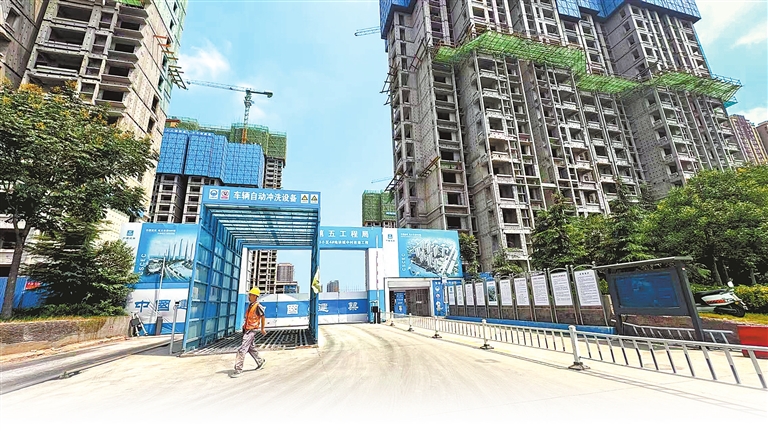
侨银股份:暂无外卖无人配送业务,仍集中于对无人环卫设备的研发
Mei Ri Jing Ji Xin Wen· 2025-08-05 08:34
Group 1 - The company has received inquiries about the application of its unmanned delivery machines in the food delivery sector [2] - The company stated that it currently does not have any business related to unmanned food delivery and is primarily focused on the research and development of unmanned sanitation equipment [2]
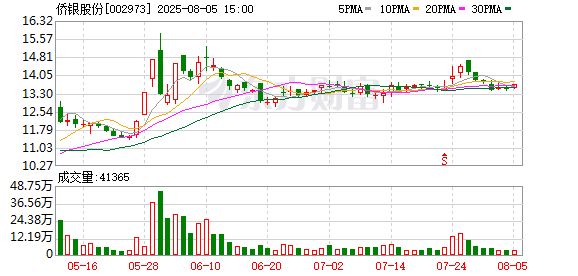
侨银股份(002973.SZ):暂无外卖无人配送业务
Ge Long Hui· 2025-08-05 07:04
Group 1 - The company, Qiaoyin Co., Ltd. (002973.SZ), has stated that it currently does not have any business related to food delivery via unmanned vehicles [1] - The company's primary focus remains on the research and development of unmanned sanitation equipment [1]
首次上榜《财富》中国500强,盈峰集团的产业赋能牛在哪?
Zheng Quan Shi Bao Wang· 2025-08-01 03:13
Core Insights - The article highlights the successful entry of Yingfeng Group into the 2025 Fortune China 500 list, ranking 409th, showcasing its growth through a dual-driven model of "industry + investment" [1] - Yingfeng Group has built a diverse industrial ecosystem covering consumption, environment, and culture, leveraging capital to empower industry and drive transformation [1][2] Group 1: Corporate Venture Capital (CVC) Model - CVC is defined as non-financial enterprises investing in innovative projects for strategic or financial goals, becoming a crucial force in driving industrial upgrades and innovation [2] - In 2024, global CVC investment exceeded $100 billion, marking a 30% year-on-year increase, with green technology, smart manufacturing, and new energy as key investment areas [2] - Yingfeng Group's growth trajectory illustrates the practical logic of the CVC model, transitioning from a single manufacturing focus to strategic acquisitions and targeted investments across multiple sectors [2][3] Group 2: Strategic Acquisitions - Strategic acquisitions are pivotal for Yingfeng Group to penetrate key sectors, such as the acquisition of Zhonglian Environment in 2018, transforming from a traditional wind turbine manufacturer to a comprehensive environmental operator [3] - In the cultural sector, the involvement in Hualu Baina's mixed reform led to the establishment of a successful cultural tourism project, attracting over 10 million visitors annually [3] - The acquisition of controlling interest in Gujia Home Furnishing in 2024 aims to enhance capabilities in product development and global expansion during a critical industry transition [3] Group 3: Innovation and Investment - Yingfeng Group focuses on "hard technology" investments in advanced manufacturing and new energy, identifying promising companies like SenseTime and Yunji Intelligent [4] - The investment in Yunji Intelligent exemplifies the dual return of investment gains and industrial synergy, driven by the anticipated growth of the household service robot market [4] Group 4: Deep Capital Empowerment - Yingfeng's capital is rooted in its own accumulation, providing a deeper understanding of the industry and stronger empowerment capabilities compared to pure financial capital [5] - The company emphasizes a long-term patient capital approach, focusing on deep industry engagement rather than short-term gains [5] - The empowerment process involves technology integration, resource collaboration, and management enhancement, creating a virtuous cycle of investment and industrial nourishment [5] Group 5: Governance and Long-term Strategy - Yingfeng Group's governance structure emphasizes long-termism, allowing professional management teams to drive transformation while maintaining oversight on strategic direction [6] - The company optimizes its portfolio by exiting non-core industries, concentrating resources on areas where it has operational advantages [6] - The inclusion in the Fortune China 500 list validates the effectiveness of Yingfeng's business model, which integrates upstream and downstream connections to foster a collaborative investment chain [6]
通辽市多部门联动做好防汛应对工作
Nei Meng Gu Ri Bao· 2025-07-31 02:40
Group 1 - The city of Tongliao has been facing severe rainfall since July 24, prompting various departments to take proactive measures for flood prevention and response [1] - Tongliao's Water Resources Bureau collaborated with the Meteorological Bureau and Hydrology Center to issue early warnings for small rivers and mountain flood disasters, establishing an efficient warning information network [1] - A total of 94 reservoirs in the city have designated responsibility personnel to ensure the safety and operation of water conservancy projects through continuous inspections [1] Group 2 - The city utilized technological methods to build two-dimensional hydrodynamic models for river sections, allowing for precise simulation of flood scenarios and risk assessment [1] - The Emergency Guarantee Center has enhanced material support for the current heavy rainfall, ensuring that emergency supplies are readily available for deployment [1] - Over 1,000 traffic police personnel have been mobilized, rescuing 37 stranded individuals, while sanitation workers and road maintenance personnel are actively clearing water and debris [2]
劲旅环境20250729
2025-07-30 02:32
Summary of Key Points from the Conference Call Industry Overview - The market for unmanned sanitation vehicles is rapidly growing, with sales expected to exceed 50,000 units by 2025. The annualized total transaction amount in the sanitation sector reached nearly 3 billion yuan in the first half of the year, with a total contract amount of approximately 7 billion yuan, reflecting a year-on-year growth of over 10 times, indicating strong market demand [2][3][4]. Core Insights and Arguments - **Policy Developments**: Local policies have been intensively introduced, particularly in regions like Shenzhen, Suzhou, and Guangdong, which are home to leading sanitation companies. Shanghai has also issued road licenses, enhancing policy openness. The push from first-tier cities is driving the development of pilot projects in second and third-tier cities, accelerating the commercialization of unmanned sanitation vehicles [2][3]. - **Economic Benefits**: The commercial path for unmanned sanitation vehicles is becoming clearer, with projects increasing year by year. The company plans to launch multiple classic projects in the second half of the year, with rapid increases in deployment volume, including projects with over 100 units planned. The company has two to three years of scenario validation experience, which has resolved stability issues [2][4]. - **Comparison with Unmanned Logistics Vehicles**: Unmanned sanitation vehicles require chassis modifications to meet cleaning needs and are equipped with a remote control system, making them more powerful and safer, with operational speeds of 5-8 km/h compared to 30-40 km/h for unmanned logistics vehicles. This safety aspect makes them more appealing to governments and property owners [5][6]. - **Government Demand**: The demand for unmanned sanitation vehicles from the government is driven not only by cost savings but also by addressing issues such as worker aging, rising employment costs, and safety incident liabilities. The trend towards automation or mechanization is seen as essential for improving efficiency and reducing costs [7][9]. Additional Important Content - **Market Size and Future Projections**: The market for marketized sanitation service projects is estimated at 300 to 400 billion yuan, with public bidding making up the majority. The company aims to replace one-third of urban sanitation workers, which translates to a significant market potential, with annual demand for new equipment expected to be around 80,000 to 100,000 units [16][32]. - **Operational Areas**: The company currently operates projects in Hefei, including New District, High-tech Zone, and Economic Development Zone, and plans to expand to Jiangsu and southwestern regions in the future [13]. - **Product Development**: The company plans to release a sanitation robot in the first quarter of 2026, utilizing a wheeled design to reduce costs and promote a combined sales model of unmanned street sweepers and sanitation robots to enhance overall operational efficiency [3][31]. - **Cost Reduction Strategies**: The company has successfully reduced the hardware costs of its third-generation intelligent driving system by 20% to 50% through collaboration with the logistics vehicle industry, optimizing components and adjusting battery capacities [3][22]. - **Challenges and Future Directions**: The unmanned vehicle technology faces challenges in large-scale application and labor replacement. The company is developing a third-generation intelligent driving system that does not rely on high-definition maps, aiming to improve deployment efficiency and reduce costs [20][21]. - **Management Background**: The founders of the company have backgrounds in hardware equipment, which has significantly contributed to the company's technological development. The current management also has experience in environmental service operations [36]. - **Contract and Profitability Outlook**: The company expects a slight increase in gross margin for its operational services in 2025, driven by low-cost operations and project asset inputs, although overall profit growth may slow due to increased R&D investments [35][37]. This summary encapsulates the key points discussed in the conference call, highlighting the growth potential and strategic direction of the unmanned sanitation vehicle industry and the company's role within it.
东莞2家环卫企业拟获“差评”,或被列入重点监管名单
Nan Fang Du Shi Bao· 2025-07-25 08:58
Core Viewpoint - The Dongguan Municipal Urban Management and Comprehensive Law Enforcement Bureau announced the results of the 2024 credit evaluation for sanitation companies, with 84 companies participating, and 21 rated as "excellent," 61 as "good," and 2 as "poor" [1][3]. Group 1: Evaluation Results - A total of 84 sanitation companies participated in the 2024 credit evaluation in Dongguan [3]. - 21 companies are proposed to be rated as "excellent," accounting for 25% of the total [3]. - 61 companies are proposed to be rated as "good," making up approximately 72.6% [3]. - 2 companies, Guangdong Tianyu Environmental Development Co., Ltd. and Dongguan Zhenyi Property Management Co., Ltd., are proposed to be rated as "poor," which is about 2.4% [3]. Group 2: Evaluation Criteria - The credit evaluation is based on three main criteria: performance capability, service quality, and compliance with laws, comprising a total of 61 sub-indicators [6][8]. - The credit scoring system assigns an initial score of 1000 points, with ratings categorized as "excellent" for scores of 1200 and above, "good" for scores between 1000 and 1200 (exclusive), and "poor" for scores below 1000 [6]. Group 3: Regulatory Implications - Companies rated as "poor" will be placed on a key regulatory list and subjected to stricter supervision [1][8]. - The evaluation results will influence the level of regulatory oversight, with "excellent" companies receiving dynamic supervision and priority in government bidding projects, while "good" companies will undergo regular supervision [8].