通信技术

Search documents
从高交会到金博会 “深圳创新四姐妹”各握AI“王牌”
2 1 Shi Ji Jing Ji Bao Dao· 2025-11-23 00:37
Core Insights - The Shenzhen High-Tech Fair and the Shenzhen Financial Expo showcased significant advancements in AI, with total intended transactions and investment amounts exceeding 1.7 trillion yuan and 10.55 billion yuan respectively [1] - The "Shenzhen Innovation Four Sisters" (Huawei, Tencent, Ping An, BYD) presented their latest AI developments, highlighting their differentiated strategies in AI integration across various industries [1][2] Group 1: AI Strategies of the "Four Sisters" - Huawei aims to provide a "super base" for various industries, focusing on intelligent transformation through advancements in core technologies like chips and operating systems [2][3] - Tencent is developing an AI "super entrance" through its WeChat platform, intending to create an AI entity that facilitates user interactions and transactions within its ecosystem [4][5] - Ping An is launching three major AI services, including a "super customer service" that integrates various service sectors, enhancing user experience through a unified AI interface [12][13] - BYD is leveraging AI to transform smart mobility, showcasing innovations in autonomous driving and smart cockpit technologies, contributing to a significant increase in vehicle sales [15][16] Group 2: Market Impact and Future Projections - Shenzhen's AI industry is expected to grow significantly, with plans to exceed 3,000 AI companies and over 10 unicorns by 2026, with an annual growth rate of over 20% [2] - The AI applications in finance, healthcare, and automotive sectors are projected to enhance operational efficiencies and customer engagement, reflecting a broader trend of AI integration into everyday business practices [17]




阿维塔1001号员工姚安娜:非常期待未来华为和阿维塔的合作
Bei Ke Cai Jing· 2025-11-21 19:55
11月21日,第二十三届广州国际车展在中国进出口商品交易会展馆举办,展会规模达22万平方米,展出 1085台展车(含629台新能源车)。阿维塔1001号员工姚安娜在车展上表示:"关于(阿维塔)与华为进 一步加强合作,也是感到非常开心。相信阿维塔一定会迎来全新的发展阶段,我也非常好奇和期待,想 要看看未来阿维塔和华为,能拿出什么新的产品、新的体验给大家。" ...
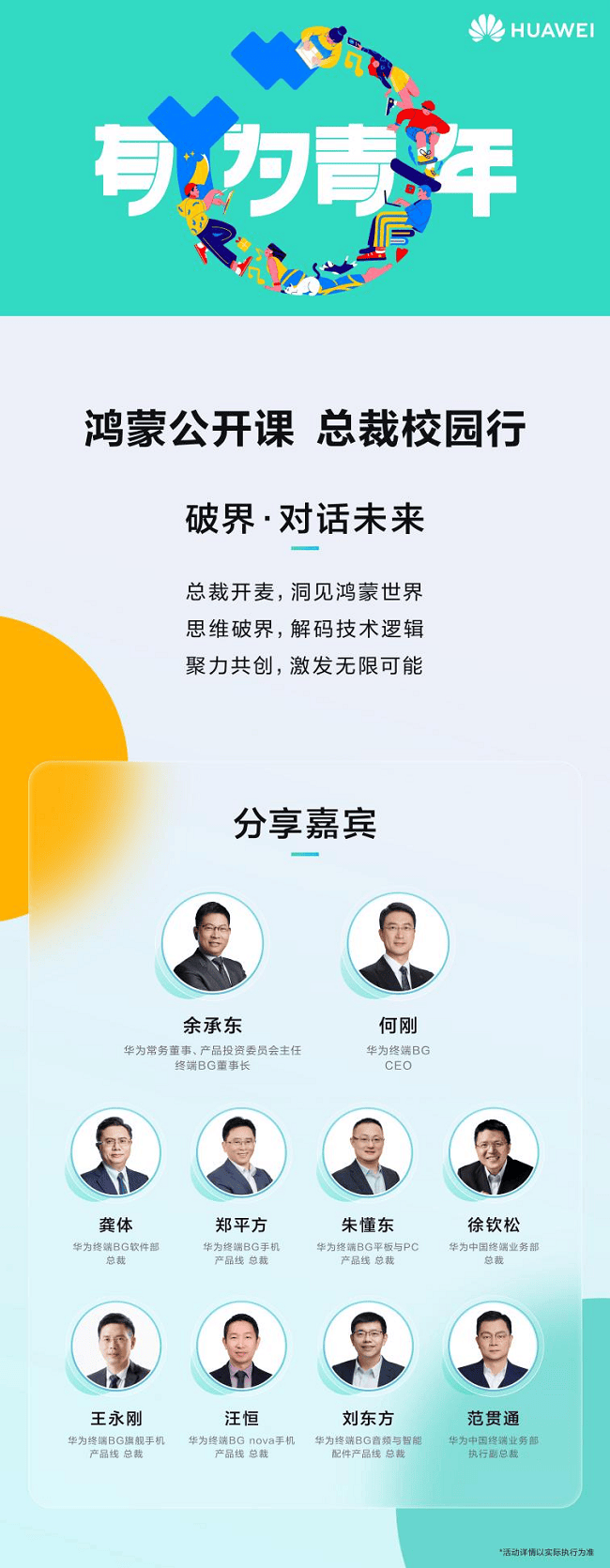
华为各领域总裁对话高校师生:破界科技创新魅力
Sou Hu Cai Jing· 2025-11-21 16:05
Group 1 - The core idea of the news is the launch of the HarmonyOS public lecture series, which aims to enhance understanding of smart technology innovation among university students and showcase the capabilities of the HarmonyOS ecosystem [1][5][11] - The HarmonyOS, launched in 2019, serves as a unified digital foundation for various devices, providing a seamless and secure smart experience [5][14] - The upcoming HarmonyOS 5 upgrade is described as the most significant in its history, featuring comprehensive enhancements in kernel architecture, system experience, and application ecosystem [5][16] Group 2 - The HarmonyOS public lecture series facilitates direct interaction between students and Huawei executives, allowing students to experience real-time collaboration among devices [11][13] - The initiative aims to transform technical knowledge into accessible case studies, breaking down the perception of technology as a "black box" and fostering value co-creation [13] - The HarmonyOS ecosystem has made significant progress, with over 23 million devices equipped with HarmonyOS 5, indicating a shift from "usable" to "well-used" [16][18] Group 3 - The public lecture series has been conducted in over 450 universities across China, with more than 1,100 sessions held, emphasizing the importance of nurturing a technology innovation environment [18] - The initiative not only shares technology but also explores future opportunities, allowing companies to listen to young voices while students gain insights into market demands for talent [18]
华为发布AI新技术
Zheng Quan Shi Bao· 2025-11-21 12:05
Core Insights - Huawei officially launched the AI container technology Flex:ai, aimed at addressing the low utilization of computing resources in the AI industry, which is facing a surge in demand for computational power [1] Group 1: Technology Innovations - The Flex:ai technology includes XPU pooling and scheduling software built on the Kubernetes platform, enabling precise management and intelligent scheduling of GPU and NPU resources to significantly enhance computing resource utilization [1] - The XPU pooling framework allows a single GPU or NPU card to be divided into multiple virtual computing units, improving average utilization by 30% in scenarios where one card runs one task [2] - The cross-node virtualization technology aggregates idle XPU resources from various nodes into a shared computing pool, allowing general servers to forward AI workloads to remote GPU/NPU cards, thus integrating general and intelligent computing resources [2] Group 2: Intelligent Scheduling - The Hi Scheduler, developed in collaboration with Xi'an Jiaotong University, enables optimal scheduling of heterogeneous computing resources by automatically sensing cluster loads and resource states, ensuring stable operation of AI workloads even under fluctuating loads [3] - The comprehensive open-sourcing of Flex:ai will provide access to core technological capabilities for developers across academia and industry, promoting the establishment of standardized solutions for efficient computing resource utilization in the global AI industry [3]
华为发布AI新技术
证券时报· 2025-11-21 12:03
Core Viewpoint - Huawei officially launched the AI container technology Flex:ai, aimed at addressing the low utilization of computing resources in the AI industry, which is critical for its development [1][2]. Group 1: Technology Development - Flex:ai is a pooling and scheduling software based on the Kubernetes platform, designed to optimize the management and scheduling of GPU and NPU resources, significantly improving computing resource utilization [2]. - The technology integrates research from three universities and Huawei, achieving breakthroughs in three core areas: resource partitioning, cross-node resource aggregation, and multi-level intelligent scheduling [2][3]. Group 2: Key Innovations - Resource partitioning allows a single GPU or NPU to be divided into multiple virtual computing units, improving average utilization by 30% in scenarios where small AI models are trained [2]. - Cross-node resource aggregation creates a "shared computing pool" from idle computing resources across nodes, enabling general servers to forward AI workloads to remote GPU/NPU resources [3]. - The Hi Scheduler intelligently matches AI workloads with computing resources, ensuring optimal resource allocation even under fluctuating loads [3]. Group 3: Open Source Initiative - The comprehensive open-sourcing of Flex:ai will provide developers from academia and industry access to all core technological capabilities, fostering global innovation and standardization in heterogeneous computing virtualization [4].

【中国制造新观察】6G发展不是一步到位
Jing Ji Ri Bao· 2025-11-21 00:30
Core Viewpoint - The consensus in the industry is that the development of 6G is a gradual process rather than an immediate leap, correcting some overly ambitious perspectives on the technology race [2][3] Group 1: Development Process - The industry recognizes that 6G will not simply be an enhancement of 5G but will achieve data transmission speeds 10 to 100 times faster than 5G, with latency reduced to one-tenth of 5G [3] - The development of 6G is structured in three phases: the first phase identifies key technical directions, the second focuses on typical scenarios and performance indicators, and the third involves the development of pre-commercial devices [3] - The current stage of 6G development is the second phase, emphasizing the importance of leveraging existing 5G capabilities as a foundation for future advancements [3] Group 2: Standardization and Innovation - The first version of 6G standards should not aim for perfection but should significantly improve upon existing 5G/5G-A standards, allowing for future iterations [4] - The integration of artificial intelligence with 6G is expected to transform mobile terminals, but the evolution from traditional devices to intelligent, multi-form wearable technology will require time and adaptation [4][5] - Over 300 key technologies related to 6G are being developed in China, focusing on terminal innovation through iterative technological advancements [5] Group 3: Industry Implications - 6G is anticipated to drive the development of upstream and downstream industries, including chips, devices, application development, and system integration, creating a new trillion-dollar industry ecosystem [3] - The gradual evolution of communication technology is essential to avoid resource misallocation and to ensure that both 5G and 6G can progress in a complementary manner [2][3] - Maintaining a realistic perspective on the timeline for 6G development is crucial, as significant innovations typically result from continuous optimization rather than sudden breakthroughs [5]

中经评论:6G发展不是一步到位
Jing Ji Ri Bao· 2025-11-21 00:04
Core Viewpoint - The consensus in the industry is that the development of 6G is a gradual process rather than an immediate leap, correcting some overly ambitious perspectives on the technology race for the future [1][4] Group 1: Development Process - There are views that suggest skipping the 5G-A phase to achieve 6G directly, which could disrupt the technological evolution chain and weaken the foundation for 6G [1] - The development of 6G is structured in three phases: the first phase identifies key technical directions, the second focuses on typical scenarios and performance indicators, and the third involves the development of pre-commercial devices and testing of key products [2] - The current stage of 6G development is the second phase, emphasizing the importance of leveraging the existing capabilities of 5G as a foundational element for 6G [2] Group 2: Technical and Industrial Implications - 6G is expected to achieve data transmission speeds 10 to 100 times faster than 5G, with latency reduced to one-tenth of that of 5G, significantly enhancing performance metrics [2] - The integration of communication, perception, computation, and intelligence in 6G will support applications like digital twins and large-scale connectivity, driving the development of upstream and downstream industries such as chips, devices, and system integration [2] - The establishment of the first version of 6G standards does not need to be perfect but should show significant improvements over existing 5G standards, allowing for future iterations and refinements [3] Group 3: Innovation and Collaboration - The innovation of terminals in 6G will not happen overnight; it will require deep integration between the automotive and communication industries, as well as a lengthy process of technological adaptation and cost optimization [3] - Over 300 key technologies related to 6G are being developed in China, focusing on terminal innovation through iterative technological advancements [3] - The industry must maintain a clear understanding that significant innovations are the result of continuous optimization rather than sudden breakthroughs, emphasizing the importance of standard-setting and technology integration [4]
6G发展不是一步到位
Jing Ji Ri Bao· 2025-11-20 22:14
Core Viewpoint - The consensus in the industry is that the development of 6G is a gradual process rather than an immediate leap, correcting some overly ambitious perspectives on the technology race for the future [1][4] Group 1: Development Process - 6G is expected to achieve data transmission speeds 10 to 100 times faster than 5G, with latency reduced to one-tenth of that of 5G, indicating significant advancements in peak speed and latency [2] - The development of 6G will involve three phases: identifying key technical directions, developing prototype models for typical scenarios and performance indicators, and testing key products for pre-commercialization [2][3] - The current phase of 6G development has entered the second stage, emphasizing the importance of leveraging the existing capabilities of 5G as a foundation for future advancements [2] Group 2: Standardization and Innovation - The first version of the 6G standard should not aim for perfection but should achieve significant improvements over existing 5G standards, allowing for future iterations and enhancements [3] - The integration of artificial intelligence with 6G is expected to transform mobile terminals, leading to a shift from traditional smartphones to intelligent and multi-form wearable devices [3] - Over 300 key technologies related to 6G are being developed in China, focusing on terminal innovation through iterative technological advancements [3]
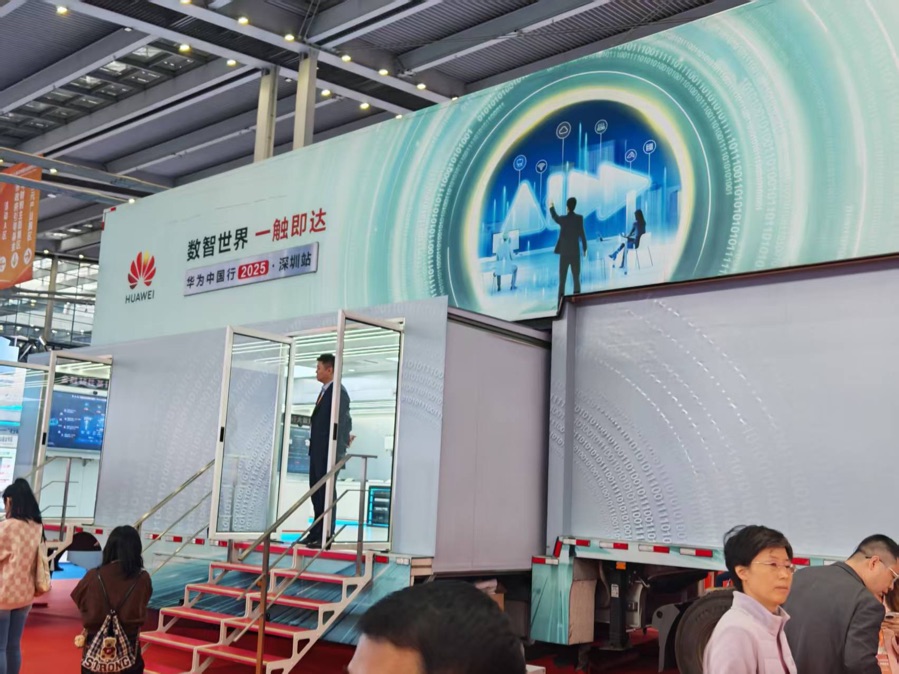
深圳金博会召开 华为联合12家生态伙伴亮相
Zheng Quan Shi Bao Wang· 2025-11-20 12:19
Core Insights - The 19th Shenzhen International Financial Expo showcased Huawei and 12 ecosystem partners focusing on core system transformation and AI development in the financial sector, aiming to create a digital foundation for high-quality development in digital finance [1] - AI large models are widely applied in Shenzhen's financial institutions, significantly enhancing efficiency in tasks like auditing and risk control, transitioning from manual checks to comprehensive coverage [1] - Huawei has developed a set of AI application implementation methodologies that emphasize engineering capabilities, which account for 90% of the innovation process, while model capabilities only account for 10% [1] Industry Developments - AI is expected to profoundly change the business models, operational processes, and risk control mechanisms of financial institutions, with a penetration rate of 70% in these key areas, making it a core competitive advantage [2] - Huawei has collaborated with financial industry clients on over 300 innovative application scenarios based on its Ascend computing platform [2]
当开放成为共识,创新的边界正在被重新定义
Sou Hu Cai Jing· 2025-11-19 13:05
Core Insights - The core theme of the forum is "Open Drives Innovation," emphasizing the shift from competition to collaboration in the realm of intellectual property and innovation [1][10][12] Group 1: Forum Overview - The sixth Huawei Innovation and Intellectual Property Forum gathered representatives from various international organizations and companies to discuss the role of intellectual property in fostering collaborative innovation [1][2] - Huawei's Chief Legal Officer, Song Liuping, highlighted that the essence of intellectual property is not exclusivity but rather the orderly and efficient dissemination of innovative results [2][4] Group 2: Huawei's Contributions - As of the end of 2024, Huawei has obtained over 150,000 valid patents globally, with R&D investment exceeding 20% of annual revenue, totaling over 1.2 trillion yuan in the past decade [4][7] - The forum showcased Huawei's "Top Ten Inventions" for 2024, which include significant technological advancements such as the Scale Up ultra-large-scale computing platform and the HarmonyOS full-stack architecture [4][6] Group 3: Knowledge Sharing and Collaboration - The upgraded "Chasi Patents" platform was introduced, enhancing patent search and analysis capabilities, thereby accelerating knowledge flow and innovation [6][9] - Huawei's commitment to open innovation is reflected in its extensive participation in global ICT standards and its collaboration with international licensing platforms, generating over $630 million in patent licensing revenue in 2024 [8][9] Group 4: Open Innovation Strategy - Huawei's strategy emphasizes that knowledge sharing enhances social value rather than diminishing rights, promoting a cycle where patent protection leads to commercial returns that fund further R&D [9][10] - The forum underscored the importance of establishing standardized interfaces and shared platforms to make innovation more efficient and inclusive [10][12] Group 5: Future Implications - The discussions at the forum suggest that open innovation is becoming a dominant theme in global technological collaboration, with the potential to significantly enhance cross-industry integration [10][12] - The evolving landscape of technology, including AI and quantum computing, presents challenges in establishing sustainable cooperation mechanisms, highlighting the need for intellectual property to serve as a bridge rather than a barrier [10][12]