
种植业

Search documents
棉花白、油茶红、玉米黄……广袤田野收获忙绘就一派好“丰”光
Yang Shi Wang· 2025-10-17 06:47
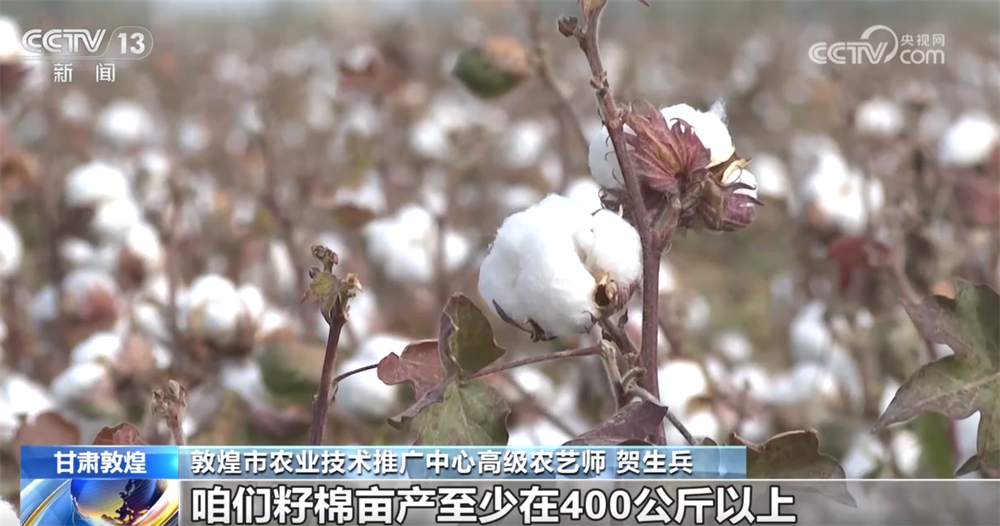
Group 1: Cotton Production in Dunhuang - Dunhuang has successfully improved cotton production through the comprehensive management of saline-alkali land, resulting in better growth and increased yields [1][5] - The average yield of cotton in the saline-alkali land has increased by 10% to 20%, with specific fields showing a yield of at least 400 kilograms per mu, an increase of 40-50 kilograms [1][5] - The agricultural department is testing various cotton varieties to identify those with stronger salt-alkali resistance and higher adaptability for broader promotion [3] Group 2: Cotton Production in Xinjiang - Xinjiang has reported record cotton yields, with an average yield of 774.3 kilograms per mu and a maximum yield of 862.99 kilograms per mu, setting a new record for single-point yield [7][11] - The high-yield cotton field in Aral City, covering 200 mu, is a collaboration between the Xinjiang Academy of Agricultural Sciences and a seed company, focusing on a new high-quality cotton variety [9][11] - The breakthrough in single plant yield, achieving over 10 bolls per plant, is seen as a significant advancement for cotton production in the region [11] Group 3: Oil Tea Production in Guizhou - In Guizhou, over 60,000 mu of oil tea trees have entered the harvesting period, with the highest oil yield occurring now [13][17] - The oil tea industry in Shiqian County is thriving, with an annual production of 8,000 tons of oil tea fruit, generating over 20 million yuan in value and benefiting over 4,000 people [17][18] - The county is optimizing low-efficiency wild oil tea forests and planting high-yield varieties to ensure steady growth in the oil tea sector [18] Group 4: Corn Production in Gansu - Gansu's corn production is flourishing, with over 80,000 mu dedicated to seed corn, contributing to a total planting area of 453,700 mu [19][21] - The corn seed industry in Yongchang County is expected to reach a total industrial chain output value of 860 million yuan this year [23] Group 5: Rice Production in Hunan - Hunan's rice harvest is in full swing, with farmers actively working to ensure a successful yield [24][26] - The county has implemented a "early specialized and late optimized" planting model, completing a grain sowing area of 1.265 million mu [26]

丰富轮作方式,为秸秆利用提供新思路
Zhong Guo Huan Jing Bao· 2025-10-17 06:44
Core Viewpoint - The article emphasizes the need for innovative practices in crop rotation to address the issue of straw burning and air pollution in southern China, while also enhancing the economic benefits of crop rotation [1] Group 1: Crop Rotation Practices - In Hunan Province, a "rice-mushroom rotation" model is being implemented, where rice straw is used to cultivate matsutake mushrooms after the late rice harvest, which reduces reliance on chemical fertilizers [1] - In Jiangxi Province, straw is utilized in outdoor settings to cultivate edible fungi, with the substrate being returned to the soil after cultivation [1] - The "rice + winter special cultivation" model has been practiced in Guangdong and Sichuan provinces, with some areas achieving higher income during the winter fallow period than from rice cultivation [1] Group 2: Management of Fallow Land - The article suggests that management of fallow farmland should not rely on a single approach but should encourage diversified operations through crop rotation, ensuring that farmland yields throughout different seasons while maintaining soil fertility [1] - Exploring solutions for straw disposal through innovative agricultural practices is highlighted as a valuable direction for future development [1]
阴雨天气带来严峻考验 各地如何打好秋粮“保卫战”?
Yang Shi Wang· 2025-10-17 03:32
Core Insights - The article discusses the impact of continuous rainy weather on the autumn grain harvest in China, highlighting the measures taken by various regions to mitigate the effects and ensure timely harvesting and drying of crops [1][5][30] Group 1: Harvesting Challenges - Autumn grain accounts for three-quarters of China's total grain production, with over 60% of the harvest completed [1] - Continuous rainy weather since September has posed significant challenges for harvesting, particularly in Henan, where the use of tracked harvesters has been implemented to address soil moisture issues [3][12] - In regions like Shanxi, local authorities have mobilized large tracked harvesters to facilitate the harvesting process in waterlogged fields [12][14] Group 2: Drying Equipment and Measures - The introduction of special subsidies has led to a significant increase in the availability of drying equipment, with the number of drying machines in some areas rising from under 100 to around 300 [5][6] - In Henan, a special fund of 340 million yuan has been allocated for the construction of new drying facilities, which has proven effective in managing the impact of adverse weather [5][6] - The drying capacity in various regions has been ramped up, with some areas reporting daily drying capabilities of over 70,000 tons [30] Group 3: Regional Responses - In Yancheng County, Henan, local officials organized efforts to drain water from fields to facilitate harvesting, successfully completing the harvest of 1,520 acres before the next round of rain [11][9] - In Shandong, farmers utilized drones to assist in harvesting during brief periods of favorable weather, with over 1,600 drones deployed [18] - Jiangsu has mobilized over 3,150 agricultural machines to ensure timely harvesting, with significant progress reported in the collection of corn and soybeans [26] Group 4: Overall Progress - As of mid-October, the overall progress of autumn grain harvesting in various provinces has reached approximately 75% to 100%, with ongoing efforts to maximize efficiency and minimize losses due to weather [30][11][24]

烟台|与雨争时与民同心,打响秋粮保卫战
Da Zhong Ri Bao· 2025-10-17 01:39
Core Viewpoint - The article highlights the severe impact of unprecedented rainfall on autumn grain harvesting in Yantai, prompting a coordinated response from local authorities to mitigate losses and ensure timely agricultural operations [2][3][4]. Group 1: Rainfall Impact - Yantai experienced record rainfall in October, with an average of 151.4 mm, the highest since records began in 1951, leading to significant challenges in harvesting corn and planting winter wheat [2][3]. - As of October 13, Yantai had a total autumn grain area of 2.9268 million acres, with 1.5295 million acres harvested, representing a progress rate of 52.26% [2]. Group 2: Response Measures - The local government initiated a level I emergency response on October 7, with leaders coordinating efforts to address the crisis, including the formation of 237 "party member assault teams" at the village level [3][4]. - Yantai established 51 emergency agricultural machinery service teams and mobilized 4,500 corn harvesters, including 287 tracked harvesters, to support harvesting efforts [3]. Group 3: Agricultural Support - The city set up 130 grain drying centers and reserved approximately 140 drying devices to assist in post-harvest processing [3]. - A total of 3,180 agricultural technicians were dispatched to provide on-site support, conducting 524 field workshops and directly assisting 41,000 people [4]. Group 4: Preparations for Wheat Planting - Soil saturation has delayed planting by 7 to 10 days, but Yantai has entered a "preparation mode" for autumn sowing, with 14,000 tractors and 1,100 wheat seeders ready for operation [5]. - Sufficient reserves of seeds, fertilizers, and pesticides are available to meet the needs of 2.516 million acres, with plans to complete suitable sowing within 7 days once conditions improve [5].
农业强基 中原沃野绘“丰”景
Zheng Zhou Ri Bao· 2025-10-17 00:53
Core Insights - Zhengzhou is focusing on building a modern agricultural city during the "14th Five-Year Plan" period, emphasizing food security, technological innovation, and industrial upgrades [1][2][3] Food Security - Zhengzhou has implemented multiple measures to ensure food security during challenging weather conditions, maintaining a stable grain planting area of approximately 4.46 million acres and a total output of over 2.9 billion pounds [2] - The city has constructed 1.28 million acres of high-standard farmland and improved drainage systems, enhancing flood and drought resistance [2] - The Central Plains Modern Food Industry Park has boosted the pig industry, with a year-on-year increase of over 24% in pig output in the first half of the year [2] Modern Agricultural System - Zhengzhou is expanding agriculture from traditional production to a full industrial chain, with significant growth in new industries and business models [3] - The city has launched nine provincial-level agricultural seed projects and established a high-quality seed development plan, promoting modern seed industry development [3] - The number of key leading agricultural enterprises has reached 161, with 14 at the national level, fostering a robust agricultural service system [3] Rural Development - Zhengzhou has made progress in building a brand for specialty agricultural products, with 133 green food products and 10 geographical indication products recognized [4] - The city has developed 18 new rural tourism routes and cultivated several national-level leisure agriculture key counties and beautiful rural areas [4] Beautiful and Livable Villages - Zhengzhou has invested over 1.4 billion yuan in constructing beautiful and livable villages, with 80 projects completed and 12 leisure tourism routes established [6] - The city is promoting a comprehensive rural revitalization strategy, with a focus on creating pilot areas for rural development [6] Governance and Community Engagement - The city has enhanced rural governance through community engagement and innovative management models, integrating agricultural work into a broader governance framework [7] - Efforts to improve farmers' income through skill training and support for entrepreneurship have led to stable income growth for rural residents [7]
降温降雨对秋收有何影响?各地保秋粮有困难也有办法
Yang Shi Xin Wen Ke Hu Duan· 2025-10-17 00:34
Group 1 - The core viewpoint of the articles highlights the challenges faced in the autumn grain harvest due to continuous rainy weather, prompting various regions to implement measures for rapid harvesting and drying of crops [1][27][32] - In Henan, the use of tracked harvesters has been introduced to address soil moisture issues, with nearly 8,000 machines mobilized for corn harvesting [3][5] - A special fund of 340 million yuan has been allocated for the establishment of drying facilities in Henan, resulting in a significant increase in the number of drying machines from under 100 to around 300 [5][12] Group 2 - In Shandong, farmers are utilizing drones to assist in corn harvesting, with over 1,600 drones deployed to improve efficiency during wet conditions [12][10] - The city of Qingdao has invested in 195 drying machines with a daily drying capacity of 25,000 tons, while 204.95 million mu of autumn grain has been harvested out of a total of 382.5 million mu [12][10] - In Jiangsu, over 3,150 agricultural machines have been mobilized for harvesting, with 50 million mu of autumn grain harvested so far [20][18] Group 3 - Anhui province has organized over 300 drying machines to operate continuously, achieving a daily drying capacity of 9,000 tons, with 95% of the harvested rice already dried [23][25] - The province has also deployed 753 emergency agricultural teams to facilitate rapid harvesting, with the overall harvest progress exceeding 75% [25][27] - The impact of recent cold air and rainfall is expected to affect the harvest in various regions, with recommendations for timely harvesting and drying to prevent crop spoilage [27][29][32]

黑龙江:创新农业技术手段 把中国饭碗端得更牢
Zhong Guo Qing Nian Bao· 2025-10-17 00:26
Core Insights - Heilongjiang Province is actively engaged in the autumn harvest, with over 11.1 million acres of crops harvested by October 10, accounting for more than 50% of the total area [2] - The province is implementing the "storing grain in the land and technology" strategy during the 14th Five-Year Plan, focusing on the protection and utilization of black soil to ensure food security [3] - The average organic matter content in the soil has increased to 40.3 grams per kilogram, up by 4.1 grams since 2016, indicating improvements in soil quality [3] Agricultural Practices - The province has established a standardized technical system for black soil protection, covering all soil types related to black soil [4] - Various technical measures are being employed to address issues such as soil thinning, nutrient depletion, and soil hardening [4][5] - The Beidahuang Agricultural Group has implemented three main types of technology for black soil protection, including integrated demonstration engineering technology and modern agronomic practices [5] Research and Development - Continuous sampling and research on soil conditions are being conducted, with a focus on increasing organic matter content and improving soil health [2][3] - The establishment of a collaborative innovation and promotion system for black soil protection has brought together experts from various institutions [3] Technological Innovations - New agricultural technologies, such as water-fertilizer integration, are being tested to enhance crop yields while reducing fertilizer usage [6] - Sensors are being utilized to monitor soil data, aiding in precise fertilization and improving overall agricultural efficiency [6] Challenges and Future Outlook - The promotion of agricultural technology faces challenges, particularly in smallholder farming, where access to machinery and resources is limited [6] - There is a growing involvement of younger individuals in agricultural technology promotion, indicating a positive trend for future black soil protection efforts [7]

苏州市秋收秋种工作现场会部署重点工作
Su Zhou Ri Bao· 2025-10-17 00:17
Core Viewpoint - The meeting held on October 16 focused on the autumn harvest and planting work in Zhangjiagang, emphasizing the importance of timely harvesting and sowing for both the current year's grain production and future yields [1] Summary by Relevant Sections Harvesting and Planting Situation - This year, rice was planted on 1.2149 million acres, with an expected yield of 622 kilograms per acre, indicating a potential increase in area, yield, and total production [1] - The overall growth of rice has reached maturity, characterized by sufficient panicle numbers, large panicle types, and heavy grains, suggesting an imminent harvest [1] Harvesting Schedule - Most rice is currently in the late grain-filling stage, with large-scale harvesting expected to begin around October 22, which is 2 to 3 days earlier than previous years, and the harvest is projected to be completed by late November [1] Agricultural Production Focus - The meeting highlighted the dual importance of autumn harvest and planting, marking the conclusion of the year's grain production and the beginning of future harvests [1] - It was emphasized that local departments should ensure agricultural machinery support for timely and efficient harvesting, and that wheat and oilseed crops should be planted adequately during their high-yield periods [1] - Guidance was provided for grain storage and processing enterprises to enter the market for timely purchases, establish reasonable purchase prices, and ensure farmers' confidence in selling their grain, thereby stabilizing their income from grain production [1]
雨歇“夺”粮忙
Shan Xi Ri Bao· 2025-10-16 23:07
Core Insights - The article highlights the urgency and efforts of farmers in Shaanxi Province to harvest corn before adverse weather conditions worsen, emphasizing the collaboration between farmers and local authorities to mitigate the impact of recent rainfall on crop yields [2][5][6]. Group 1: Harvesting Efforts - Farmers are actively working to harvest corn, with a focus on timely collection to prevent crop loss due to waterlogged fields [2][3]. - A total of 650 acres of corn are being harvested, with the crop showing good growth despite earlier drought conditions [3]. - The use of specialized machinery, such as tracked harvesters, is being employed to navigate wet and soft soil effectively [4][6]. Group 2: Local Government Support - Local authorities are mobilizing resources, including organizing teams to assist farmers in the harvesting process [5][6]. - The government is coordinating the use of agricultural machinery to optimize harvesting efficiency, particularly in challenging weather conditions [6]. - As of October 15, the province has harvested 14.53 million acres of autumn grain, accounting for 48.6% of the total area expected to be harvested [7].
全国秋粮收获过六成
Ren Min Ri Bao· 2025-10-16 21:57
Core Insights - As of October 14, over 60% of the autumn grain harvest has been completed nationwide in China [1] Crop Breakdown - For specific crops, nearly 70% of the mid-season rice has been harvested, 55% of corn, and almost 80% of soybeans [1] Regional Analysis - In terms of regions, the Huang-Huai-Hai area has completed about 65% of its harvest, Northeast China nearly 60%, Southwest China close to 80%, the Yangtze River middle and lower reaches over 50%, and Northwest China over 60% [1]