智能手机

Search documents
“豆包AI手机”卖断货!深圳知名公司与字节跳动共同开发
Shen Zhen Shang Bao· 2025-12-02 23:17
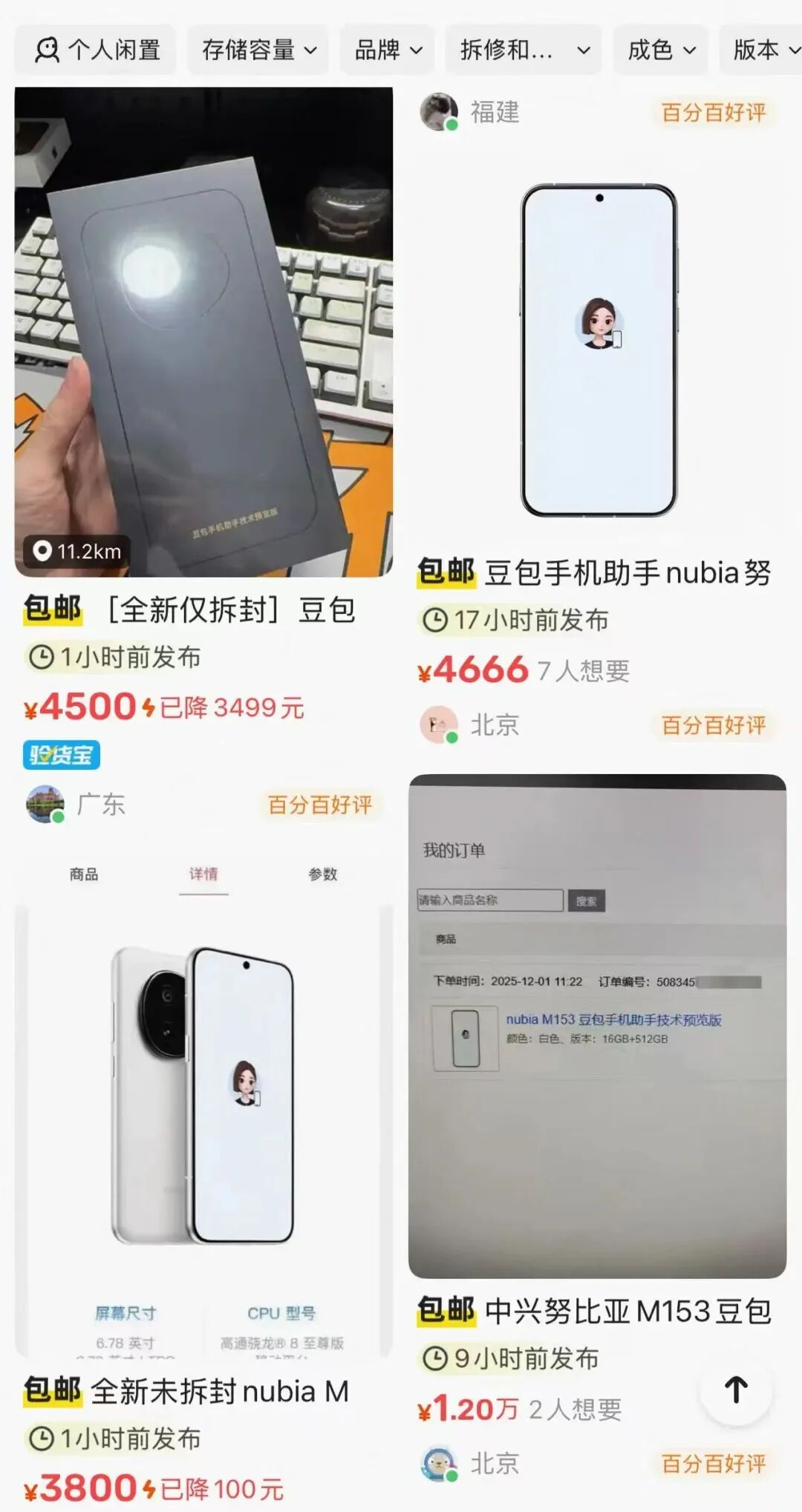
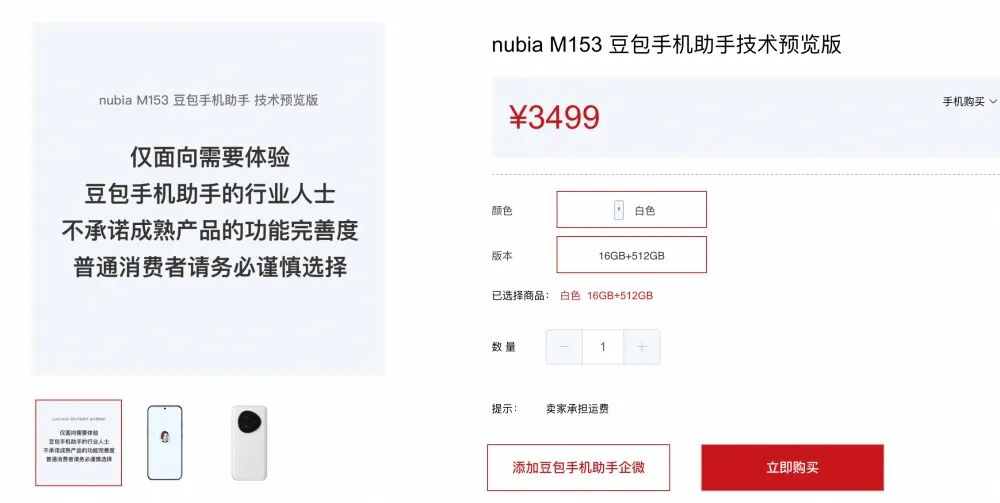
Core Insights - The Nubia M153, equipped with the Doubao AI assistant, has sold out on ZTE's online store, indicating strong consumer interest despite being a technical preview model [1][4] - The phone's resale value on second-hand platforms has surged, with prices stabilizing around a premium of 1,000 yuan after initial fluctuations [1][7] - The collaboration between ZTE and ByteDance represents a shift in the smartphone industry towards integrating AI deeply into the operating system rather than as a standalone app [8][10] Product Features - The Doubao AI phone features a 6.78-inch display and is powered by the Snapdragon 8 Gen 2 processor, with a camera setup of three 5000W pixel sensors [2] - Key functionalities include system interaction, global memory, and intelligent operations, allowing users to perform tasks like price comparisons and online ordering through voice commands [2][3] - The phone is currently available only in a single configuration (16GB+512GB) priced at 3,499 yuan, with limited availability of 30,000 units [4] Market Dynamics - The second-hand market shows a range of premiums from 300 to several thousand yuan, but actual transaction volumes remain low, with many users still inquiring rather than purchasing [7] - The phone's purchase process requires an "F code," limiting access to a select group of users, which may contribute to the high resale prices [4][7] Industry Trends - The rise of AI-integrated smartphones is part of a broader trend, with major companies like Google, Apple, and Samsung also launching AI-focused devices [8] - The partnership between ZTE and ByteDance is indicative of a new ecosystem approach, where AI capabilities are embedded across various smartphone brands rather than being tied to a single manufacturer [8][10] - Future competition in the smartphone market is expected to center around the effectiveness of AI in understanding and executing user commands, potentially transforming the user experience [10]


苹果抵制印度政府安全应用强制安装令
Xin Lang Cai Jing· 2025-12-02 20:51
Core Viewpoint - Apple Inc. is set to reject the Indian government's mandate to pre-install a security application on iPhones, citing security and privacy risks as the primary reasons for non-compliance [1][2]. Group 1: Government Mandate - The Indian Ministry of Telecommunications issued an administrative order requiring smartphone manufacturers, including Apple, Samsung, and Xiaomi, to pre-install the government’s network security app "Sanchar Saathi" on all new devices within 90 days [1][2]. - The directive also mandates that manufacturers push the app to existing devices through software updates, extending the requirement beyond newly launched phones to those already sold in the market [1][2]. Group 2: Company Response - Apple will inform the Indian government that it will not comply with such mandates in any of its markets due to concerns over security and privacy risks [1][2]. - Following the news, Apple's stock price rose by 1.2% in the U.S. market [1][2].

小米集团-W(1810.HK)Q3业绩点评:汽车实现单季度盈利 手机成本端短期或承压
Ge Long Hui· 2025-12-02 19:55
Core Viewpoint - Xiaomi reported Q3 2025 performance with total revenue of 113.1 billion yuan (+0.5% vs consensus), year-on-year growth of 22%; adjusted net profit reached 11.3 billion yuan (+12.6% vs consensus of 10 billion yuan), year-on-year growth of 81%, corresponding to a net profit margin of 10.0% [1] Group 1: Smartphone Business - Smartphone shipments in Q3 were 43.3 million units, a year-on-year increase of 0.5%, with a market share of 13.6%; market share in China was 16.7% [2] - Average Selling Price (ASP) was 1,062 yuan, down 4% year-on-year; smartphone revenue was 46 billion yuan (+0.3% vs consensus), year-on-year decline of 3.1% [2] - The increase in storage prices has led to a decline in gross margin, with Q3 smartphone gross margin at 11.1%; Q4 smartphone gross margin is expected to be 10% [2] Group 2: IoT and Internet Business - In Q3, IoT revenue was 27.6 billion yuan (-1.9% vs consensus), year-on-year growth of 5.5%; gross margin improved by 1.4 percentage points to 23.9% [3] - Major appliances faced pressure with a year-on-year revenue decline of 15% due to competition and subsidy reductions; attention is advised on overseas expansion and market share changes [3] - Internet business revenue for Q3 was 9.4 billion yuan (+2.2% vs consensus), year-on-year growth of 10.8% [3] Group 3: Automotive Business - The automotive segment achieved profitability for the first time, with Q3 deliveries of 108,800 units and an ASP of 260,000 yuan; gross margin decreased by 0.9 percentage points to 25.5% [3] - November deliveries exceeded 48,000 units, with expectations of nearing full production by year-end; total annual deliveries are projected to exceed 400,000 units [3] - Q3 automotive revenue was 29 billion yuan, with other related businesses contributing 700 million yuan [3] Group 4: Financial Forecast and Valuation - Projected revenues for Xiaomi Group in 2025 and 2026 are 471.7 billion yuan and 545 billion yuan (year-on-year growth of 29% and 16% respectively); adjusted net profits are forecasted at 43.3 billion yuan and 44.9 billion yuan (year-on-year growth of 59% and 4%) [3] - The company is assigned a 20x PE for its main business in 2026 and a 2.5x PS for the automotive segment, with a target price of 51.1 HKD and a "buy" rating [3]

从尝鲜到实用 折叠屏手机竞速
Bei Jing Shang Bao· 2025-12-02 14:58
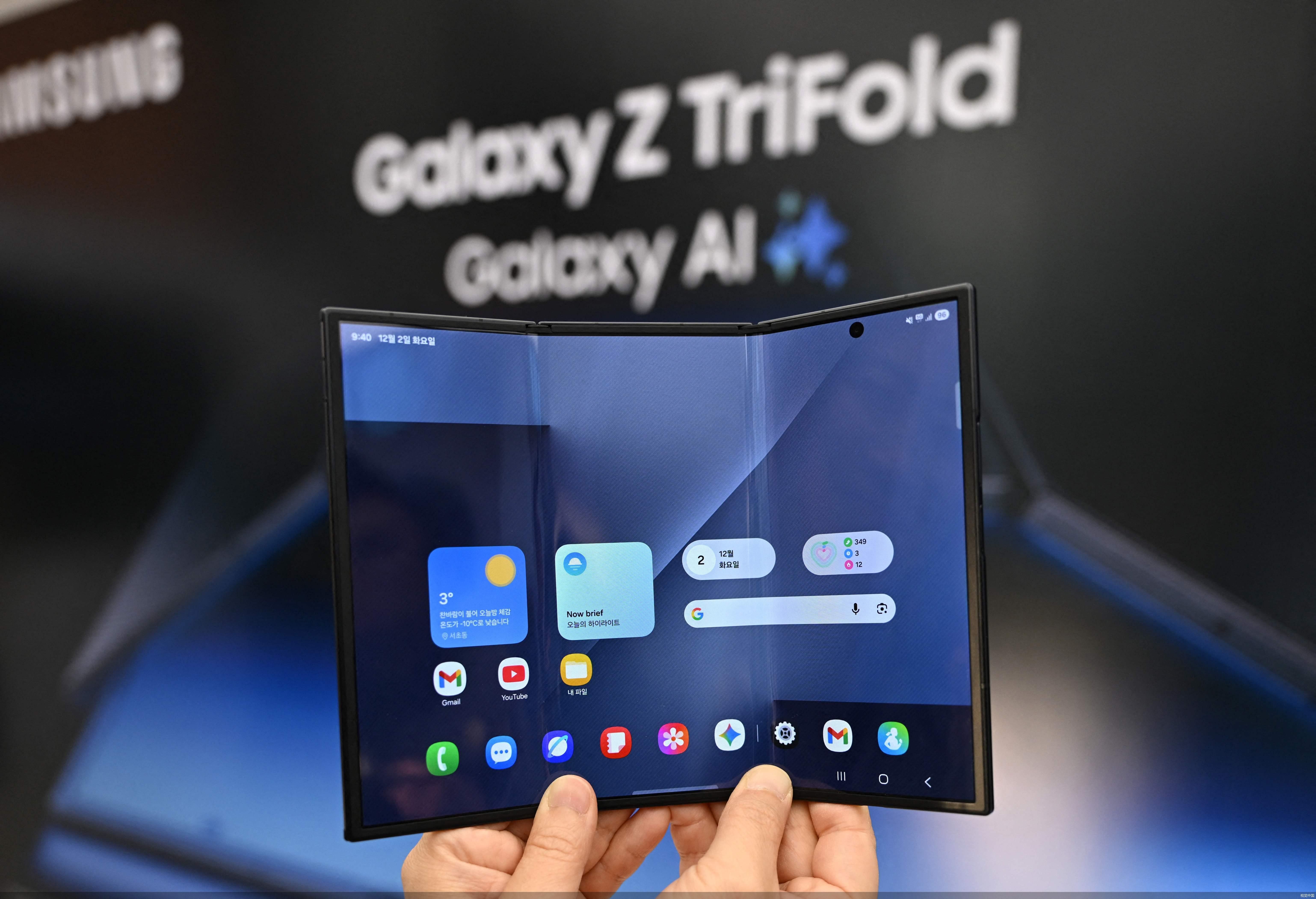
Group 1: Samsung's Launch of Galaxy Z TriFold - Samsung Electronics officially launched its first tri-fold smartphone, the Galaxy Z TriFold, on December 2, with a starting price of 3.5904 million KRW (approximately 17,302 CNY) [5] - The device features an inward folding design, providing a screen space equivalent to three 6.5-inch smartphones side by side, surpassing the previous Galaxy Z Fold 7 [5] - The Galaxy Z TriFold is equipped with a customized Snapdragon 8 Elite for Galaxy chip, 16GB of RAM, and offers storage options of 512GB and 1TB, along with a 5600mAh battery [6] Group 2: Apple's Advancements in Foldable Technology - Apple has made significant progress in developing its first foldable smartphone, the iPhone Fold, achieving a "no crease" design, which could make it the world's first truly crease-free foldable phone [7] - The expected price for the iPhone Fold is projected at $2399, with lifecycle sales estimated at 15.4 million units, despite the overall smartphone market facing a decline [8][9] - Apple has innovated in the integration of the screen and hinge system to eliminate permanent creases, collaborating with key suppliers to develop critical components [9] Group 3: Market Trends and Challenges - The global smartphone market is expected to continue shrinking, with a projected decline of 4% in 2026, while the Chinese market is anticipated to decrease by 3% [9][10] - Despite challenges such as high prices, durability issues, and software adaptation, analysts remain optimistic about the future of foldable smartphones, predicting that improvements in technology will attract a broader consumer base [10][11] - The ongoing optimization of fundamental features by various manufacturers is seen as essential for the future development of foldable smartphones [11]
三星发布三折叠手机,10英寸内屏完全包裹
Di Yi Cai Jing· 2025-12-02 14:58
Group 1 - Samsung Electronics has launched its first tri-fold smartphone, the Galaxy Z TriFold, featuring a 10-inch display when fully opened and a dual-side inward folding design, differing from Huawei's Z-shaped folding scheme [2] - The Galaxy Z TriFold is equipped with a 5600mAh battery, the largest capacity used in Samsung's foldable phones to date, and includes the Samsung Galaxy AI feature suite [2] - CINNO Research's chief analyst, Zhou Hua, notes that while the dual-side inward folding design offers a larger screen area and reduced scratch risk, it also presents more complex mechanical design challenges and potential durability concerns [2] Group 2 - The tri-fold smartphone market is currently niche, and Samsung's new release is not expected to significantly impact global or Chinese foldable phone sales, but it may enhance the technology's appeal to consumers [3] - According to CINNO Research, global foldable smartphone shipments are projected to increase by 2% year-on-year to approximately 18 million units in 2025, with China's shipments expected to grow by 6% to 12.5 million units [3] - By 2026, driven by new product iterations from Huawei and Samsung, as well as potential entry from Apple, global foldable smartphone shipments are forecasted to grow by 38%-65% to between 25 million and 30 million units, with China's shipments projected to rise by 20%-44% to between 15 million and 18 million units [3] Group 3 - The Galaxy Z TriFold is expected to launch in South Korea on December 12, 2025, followed by releases in other markets including China, Taiwan, Singapore, the UAE, and the USA [4]

首款豆包AI手机售罄 二手最高溢价3500元
Ju Chao Zi Xun· 2025-12-02 14:35
Core Insights - The Nubia M153, the first model equipped with the Doubao mobile assistant, has sold out on ZTE's official store, indicating strong market interest and demand for this product [1] - The Doubao mobile assistant is designed for developers and tech enthusiasts, with a focus on enhancing mobile operation capabilities and integrating AI features [1][2] - The stock performance of related companies, particularly ZTE, has been robust, reflecting investor optimism surrounding the AI mobile phone concept [2] Group 1: Product Overview - The Nubia M153 is priced at 3499 yuan and features a 6.78-inch LTPO screen and Qualcomm Snapdragon 8 Gen 2 mobile platform [1] - The device is marketed specifically for industry professionals needing to experience the Doubao mobile assistant, with a cautionary note for regular consumers regarding its capabilities [1] - Software updates for the device are planned approximately every two weeks until the end of Q1 2026 [1] Group 2: Market Response - Users who secured the Nubia M153 are reselling it at a premium, with prices ranging from 4000 to 7000 yuan, indicating a willingness to pay above the official price [1] - The resale market shows significant interest, with multiple listings and high view counts, although actual transaction volumes remain uncertain [1] Group 3: Industry Trends - The AI mobile phone concept is gaining traction, with ZTE's stock experiencing a surge and related companies like Daoming Optics and Fulong Technology also seeing strong performance [2] - AI phones, equipped with large model assistants, are expected to differentiate themselves from traditional smartphones through enhanced operational capabilities and personalized services [2] - Challenges such as software-hardware synergy, privacy and data security, and computational costs need to be addressed as the Doubao mobile assistant is still in the technical preview stage [2]
30款产品入选,WISE2025年度「焦点」产品重磅发布
36氪· 2025-12-02 14:16
Core Insights - The article emphasizes the importance of innovative consumer products that go beyond mere functionality, focusing on user experience and addressing pain points in daily life [1][2] - The 2025 Annual Focus Product Plan aims to showcase a diverse range of products across various categories, highlighting their role in enhancing quality of life and driving industry innovation [1][2] Group 1: Consumer Electronics - The iPhone AIR and Honor Magic8 series are highlighted as key mobile products, showcasing advancements in technology and user experience [3][15] - The Honor Magic8 series features a self-evolving AI system and impressive battery life, appealing to users who prioritize performance and convenience [15][16] Group 2: Home Appliances - The Angel Space Master series water purifier is noted for its compact design and high performance, achieving top sales in its category [20][22] - The Lenovo Zhaoyang X7 laptop is recognized for its powerful processing capabilities and reliability, making it suitable for high-demand professional environments [25][26] Group 3: Health and Wellness - The Mounjaro peptide and MitoQ + turmeric capsules are mentioned as innovative health products that address specific consumer needs [7] - The DeRUCCI AI smart mattress is highlighted for its advanced sleep management features and significant sales achievements, appealing to health-conscious consumers [30][33] Group 4: Beauty and Personal Care - The Color Repair Whitening Toothpaste is presented as a product that caters to the growing demand for effective personal care solutions [9] Group 5: Food and Beverage - The article mentions popular food products like the spicy rice noodles from Ma Liu Ji and bottled tea from Let Tea, reflecting consumer preferences in the food and beverage sector [10] Group 6: Automotive - The Aion M9 and Zeekr ES8 are noted for their innovative features and strong market performance, appealing to high-end consumers [5][76] - The Aion M9 has achieved significant sales milestones, establishing itself as a benchmark in the luxury vehicle segment [76] Group 7: Digital and Smart Devices - The Shokz OpenDots ONE earphones are recognized for their lightweight design and advanced sound technology, leading the open-ear headphone market [54][57] - The Baidu AI glasses Pro are highlighted for their stylish design and practical AI features, enhancing user experience in daily activities [60][61] Group 8: AI and Technology - The Lenovo ThinkStation PGX AI workstation is noted for its ability to run large AI models locally, significantly improving efficiency and reducing costs [28][29] - The iFlytek mobile digital human is recognized for its advanced interaction capabilities, enhancing user experience in various applications [72][73]



老登被干掉了
表舅是养基大户· 2025-12-02 13:34
Group 1 - The article discusses the potential impact of AI mobile assistants like Doubao on the application ecosystem and the competitive landscape for companies like Apple, which has struggled to innovate its AI assistant Siri [1][2] - The retirement of Apple's AI head, John Giannandrea, is highlighted as a significant change, indicating a shift in the company's AI strategy [1][3] - The article critiques Apple's decision not to enter the automotive industry, suggesting that the company is missing out on a major market opportunity despite having a loyal customer base that values integration with Apple products [2][3] Group 2 - The global market is experiencing volatility, with Japan's bond yields reaching historical highs, impacting risk assets worldwide [8][9] - A-share market saw a correction after a previous period of stability, with notable declines in stocks like Chip Original and ZTE, indicating a cooling off in previously hot sectors [14][16] - The article notes that the Hong Kong stock market is facing challenges in the automotive sector due to the impending withdrawal of government subsidies, which may lead to increased sales pressure for car manufacturers [18][19] Group 3 - The article discusses the recent performance of Hong Kong dividend stocks, which have shown resilience and are expected to remain a foundational asset for institutional investors [23][31] - A significant change in ETF naming conventions is mentioned, which could enhance brand recognition and marketing for fund managers, potentially impacting investment flows [26][28] - The article highlights a peculiar corporate governance issue where a chairman voted against his own compensation proposal, raising questions about board dynamics [35]

华为Pura 80 Pro 12GB+256GB 到手低至4899元
Xin Lang Cai Jing· 2025-12-02 12:11
现在下单 1 件,实付低至 4899 元,原价 6499 元,现在能以更实惠的价格把这款优质手机带回家。 现在下单 1 件,实付低至 4899 元,原价 6499 元,现在 能以更实惠的价格把这款优质手机带回家。 天猫精选正在售卖华为 HUAWEI Pura 80 Pro 手机 12GB + 256GB 版本,这款手机拥有大容量运行内存 和存储空间,能轻松应对多任务处理和大量数据存储需求。目前活动售价 6499 元,参与晒单还可返 100 元,并且有国家补贴,补贴 15%起还能减 500 元。 天猫精选正在售卖华为 HUAWEI Pura 80 Pro 手机 12GB + 256GB 版本,这款手机拥有大容量运行内存和存储空 间,能轻松应对多任务处理和大量数据存储需求。目前 活动售价 6499 元,参与晒单还可返 100 元,并且有国家 补贴,补贴 15%起还能减 500 元。 ...
50%的安卓税,网易带头抵制:比苹果还高,全球最高了
Sou Hu Cai Jing· 2025-12-02 10:57
Core Viewpoint - The article discusses the significant impact of the high "Android tax" imposed by domestic smartphone manufacturers on game developers, leading to a shift in distribution strategies towards more cost-effective platforms like short video and social media channels [1][3][10]. Group 1: Android Tax and Its Implications - The "Android tax" in China is notably high at 50%, which is criticized by game developers as the highest globally compared to Apple's and Google's 30% cut [1][5]. - Major game companies like NetEase, Tencent, and Alibaba are moving away from traditional app stores to avoid the high fees, opting for platforms like Douyin and WeChat for distribution [3][5][10]. Group 2: Changes in Distribution Strategies - The formation of the "Hardcore Alliance" by major smartphone manufacturers in 2014 has historically enforced the 50% cut, making it difficult for game developers to bypass this fee [7][8]. - The rise of short video and social media platforms has provided game developers with alternative, lower-cost distribution channels, allowing them to reach users directly without incurring the high fees [8][10]. Group 3: Future Outlook - The shift in distribution strategies is seen as a "burden reduction" for game developers, potentially leading to a more competitive environment for users, with lower prices and more promotional activities [12]. - Smartphone manufacturers may respond by adjusting their commission rates or enhancing services to attract game developers back to their platforms, indicating a potential evolution in the market dynamics [12].