
中药

Search documents
云南白药:穿越行业周期谋新局,云南白药前三季度净利润逆势增长10.41%
21世纪经济报道· 2025-11-04 12:31
Core Viewpoint - Yunnan Baiyao's Q3 2025 report highlights its strong performance and the overall trends in the traditional Chinese medicine (TCM) industry, showcasing its competitive strength and market position amidst a complex market environment [1] Financial Performance - Yunnan Baiyao achieved a revenue of 30.65 billion yuan in the first three quarters of 2025, representing a year-on-year growth of 2.47% [1] - The net profit attributable to shareholders reached 4.78 billion yuan, with a year-on-year increase of 10.41%, indicating robust growth in both revenue and profit [1] - The company ranked first in net profit among 69 listed TCM companies, with 34 companies reporting profit growth [3] Operational Efficiency - The weighted average return on equity reached 11.92%, the highest level in nearly seven years, reflecting improved profitability [4] - Operating cash flow netted 4.45 billion yuan, a 9.40% increase from the previous year, indicating strong cash inflow and a healthy financial status [4] - Inventory turnover days decreased to 76 days, and the operating cycle shortened to 165 days, demonstrating enhanced operational efficiency [4] Business Strategy - Yunnan Baiyao focused on its pharmaceutical core, optimizing its business structure, with industrial revenue of 11.58 billion yuan, an increase of 9.06% year-on-year [6] - The company continues to implement its "big single product" strategy, increasing R&D investment to enhance product quality and brand influence [6] - R&D expenses rose to 235 million yuan, up 8.7%, underscoring the company's commitment to innovation [6] Innovation and Development - Yunnan Baiyao is advancing 16 major TCM projects and has initiated clinical trials for nuclear medicine projects, reflecting a diversified R&D strategy [7] - The company has made significant strides in digital transformation, with its toothpaste smart factory recognized as a "global manufacturing lighthouse" [7] Industry Trends - The TCM industry is experiencing growth due to increased health awareness and government support, with policies enhancing the accessibility of quality TCM products [9] - However, the industry faces challenges such as intensified competition and quality control issues, necessitating a focus on product safety and standardization [9] Competitive Positioning - Yunnan Baiyao leverages its strong brand, comprehensive supply chain, and continuous innovation to navigate industry challenges [10] - The company aims to strengthen its market position through enhanced brand image, improved product quality, and increased R&D collaboration [10] - Despite competitive pressures, Yunnan Baiyao is well-positioned to lead the TCM industry and achieve sustainable growth [11]



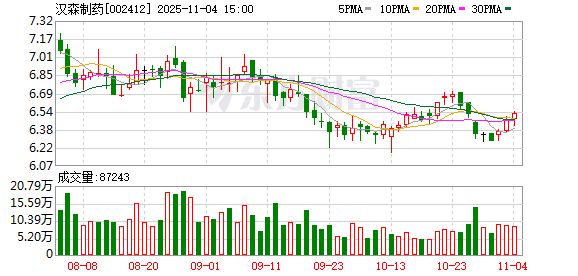
汉森制药:截至2025年10月31日公司含信用账户合并股东名册的股东总数为23941户
Zheng Quan Ri Bao· 2025-11-04 11:11
Group 1 - The core point of the article is that Hansen Pharmaceutical reported a total of 23,941 shareholders as of October 31, 2025, including those in credit accounts [2]

云南白药:穿越行业周期谋新局,云南白药前三季度净利润逆势增长10.41%
2 1 Shi Ji Jing Ji Bao Dao· 2025-11-04 10:59
Core Insights - Yunnan Baiyao reported a revenue of 30.654 billion yuan for the first three quarters of 2025, representing a year-on-year growth of 2.47%, with a net profit of 4.777 billion yuan, up 10.41% year-on-year, indicating strong competitive positioning in the industry [1][2] Financial Performance - The company achieved a weighted average return on equity of 11.92%, the highest in nearly seven years, reflecting improved efficiency in generating returns for shareholders [2] - Operating cash flow net amount reached 4.456 billion yuan, a 9.40% increase from the previous year, indicating healthy financial stability [2] - The inventory turnover days decreased to 76 days, and the operating cycle shortened to 165 days, showcasing enhanced operational efficiency [2] Debt and Solvency - As of Q3 2025, Yunnan Baiyao's debt-to-asset ratio was 25.36%, lower than the previous year's 27.10% and below the industry average of 32.81%, indicating a strong ability to meet debt obligations [3] Business Strategy and Growth - The company focused on its pharmaceutical core, optimizing its business structure, with industrial revenue reaching 11.582 billion yuan, an increase of 9.06% year-on-year [4] - Yunnan Baiyao's R&D expenses amounted to 235 million yuan, up 8.7% year-on-year, highlighting its commitment to innovation and product development [5] - The company is advancing multiple R&D projects across traditional Chinese medicine, innovative drugs, and nuclear medicine, demonstrating a diversified research strategy [5] Industry Context - The Chinese medicine industry is experiencing growth due to increased health awareness and government support, with policies enhancing the accessibility of quality traditional medicine products [7] - However, the industry faces challenges such as intensified competition and quality control issues, necessitating robust strategies for companies to maintain market position [7][8] Competitive Positioning - Yunnan Baiyao leverages its strong brand, comprehensive supply chain, and continuous innovation to navigate industry challenges and capitalize on growth opportunities [8][9] - The company aims to deepen its "big product" strategy, enhancing R&D and market promotion for core products to solidify its market share [8]
医药BD旺季来临,机构资金或悄然布局,医药相关ETF值得关注
Zhi Tong Cai Jing· 2025-11-04 10:48
Core Insights - The pharmaceutical sector has been experiencing fluctuations since September, following a strong rally, and is currently undergoing a rotation adjustment. The question arises whether the sector is worth attention after a valuation decline and if there is still growth logic in the pharmaceutical sector [1] Group 1: Policy Environment - The policy environment for the pharmaceutical industry is improving, with the National Healthcare Security Administration and the National Health Commission jointly releasing measures to support high-quality development of innovative drugs, providing comprehensive support across five key areas [2][4] - The implementation of ICH guidelines in China is promoting more efficient and scientific drug evaluation processes, enhancing regulatory frameworks [2] Group 2: Market Activity - October and November are traditionally high-frequency periods for business development (BD) transactions, with significant activity expected as companies aim to finalize annual procurement plans before the Christmas holidays. Notable transactions include a $100 million upfront deal by Innovent Biologics [5] - A record-breaking global strategic collaboration worth up to $11.4 billion was established between Innovent Biologics and Takeda Pharmaceutical, reflecting a robust trend in BD transactions for Chinese innovative drugs [6] Group 3: Valuation and Investment Opportunities - The Shenyin Wanguo Pharmaceutical Index is approximately 50% below its recent five-year price peak, indicating potential for valuation recovery [9] - The proportion of stock-type public funds heavily invested in the pharmaceutical sector has increased to 12.2%, showing a recovery trend, yet still below the historical average of 13.7%, suggesting room for further capital inflow [9][14] - For ordinary investors, investing in individual innovative drug stocks poses challenges due to the need for specialized tracking capabilities. Therefore, considering ETFs that cover industry leaders may be a more viable investment strategy [12] Group 4: Summary of Insights - The pharmaceutical industry is experiencing a favorable policy environment, with increasing BD transaction activity and potential for valuation recovery, indicating a supportive backdrop for future growth [14]
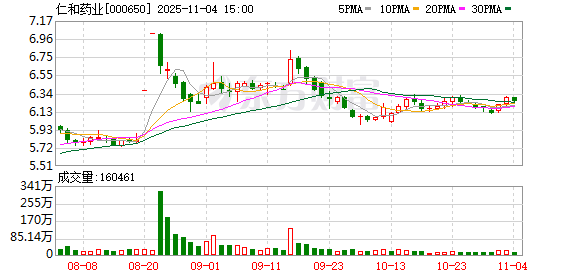
仁和药业:公司目前不在互动易平台公布股东人数
Zheng Quan Ri Bao· 2025-11-04 09:13
Group 1 - The company, Renhe Pharmaceutical, stated on November 4 that it is currently not disclosing the number of shareholders on the interactive platform [2]

莱茵生物公布8·21事故调查结果,员工违规操作致闪爆
Zhong Guo Jing Ying Bao· 2025-11-04 05:49
Core Viewpoint - The investigation into the "8·21" safety incident at Rhine Biotech revealed that the accident was caused by employee misconduct during operations, leading to a flash explosion due to improper equipment handling [1][2]. Group 1: Incident Details - The direct cause of the incident was identified as the operator failing to follow operational procedures, specifically not opening the vacuum pump valve and not securing all head clamps before starting the vacuum pump and hot water pump [1]. - The failure to create a negative pressure environment in the drying machine led to the expansion of steam and ethanol vapor, resulting in a high-pressure situation that caused the head to be ejected and ignited by static electricity, leading to a flash explosion [1]. Group 2: Regulatory Actions - The Guilin Emergency Management Bureau imposed a fine of 600,000 yuan on Rhine Biotech as a result of the incident [1]. - Recommendations were made for legal penalties against responsible personnel, including the workshop supervisor, team leader, EHS specialist, and production director, while the deceased operator was exempt from accountability [1]. Group 3: Company Response and Future Actions - In response to the incident, Rhine Biotech has implemented several corrective measures, including a comprehensive safety hazard inspection, hiring external experts for diagnostic evaluations, and enhancing safety training for all employees [2]. - The company has established a dual verification mechanism for key equipment and initiated special governance for safety production [2]. - The affected drying workshop area is undergoing accelerated reconstruction, expected to be operational by early 2026, while other drying workshops will ensure production continuity, indicating that the incident and penalties will not significantly impact normal operations [2].


昆药集团深挖“银发”蓝海,三七产业链赋能高质量发展
Quan Jing Wang· 2025-11-04 04:43
Core Viewpoint - The biopharmaceutical industry in China is poised for new growth opportunities as the "14th Five-Year Plan" approaches, particularly in the context of an aging population and increasing demand for chronic disease management [1][2] Group 1: Market Opportunities - The demand for chronic disease management is experiencing rigid growth due to an aging population and the rising prevalence of cardiovascular diseases [1] - The traditional Chinese medicine industry, particularly the market for Sanqi (Panax notoginseng), is expanding rapidly, creating new growth opportunities [1] - The integration of the Sanqi industry chain by Kunming Pharmaceutical Group is a strategic move to capture the silver economy [1][2] Group 2: Strategic Developments - Kunming Pharmaceutical Group completed the acquisition of 51% of China Resources Shenghuo, enhancing its core competitiveness in the Sanqi industry chain [2] - The collaboration between Kunming Pharmaceutical Group and China Resources Shenghuo is expected to yield synergistic effects between their respective products, Lota and Lixu Wang [2] - The company is focusing on a three-pronged approach to elderly chronic disease management, targeting patients, consumers, and proactive health seekers [2] Group 3: Industry Growth Projections - The comprehensive output value of the Sanqi industry in Wenshan, Yunnan, is projected to reach 45.6 billion yuan by 2025, representing a 107.3% increase compared to the end of the "13th Five-Year Plan" [2] Group 4: R&D and Brand Development - Kunming Pharmaceutical Group has established a full industry chain system for Sanqi, from GAP planting to marketing, aiming to become a benchmark for high-quality development in the Sanqi industry [3] - The establishment of the Yunnan Sanqi Research Institute is expected to further integrate R&D resources and promote the development of the Sanqi industry [3] - The company is enhancing its brand recognition through campaigns and a strong brand philosophy centered around "Sanqi is 777" [3] Group 5: Global Expansion - Kunming Pharmaceutical Group is actively expanding its international market presence, with its Sanqi products already in 15 countries, including Vietnam and Uzbekistan [4] - The successful entry of the blood stasis soft capsule into Indonesia marks a significant step in expanding into the ASEAN market [4] - The company is leveraging the global demand for traditional Chinese medicine to drive growth in the Sanqi industry [4]

市值蒸发2000亿!从加价难求到销量遇冷,“药中茅台”彻底凉透?
Sou Hu Cai Jing· 2025-11-04 01:23
Core Insights - The consumer market in 2025 is experiencing a significant downturn, with previously popular products like Pian Zai Huang and Moutai facing severe declines in both sales and market perception [1][10] - The decline of these products reflects a broader shift in consumer behavior, particularly among younger generations who are less interested in traditional high-priced items [10][15] Company Performance - Pian Zai Huang reported a revenue of 7.442 billion yuan, a year-on-year decrease of 11.93%, and a net profit of 2.129 billion yuan, down 20.74% [3] - The stock price of Pian Zai Huang plummeted from a peak of 473 yuan in 2021 to 181 yuan, representing a decline of over 60% and a market capitalization loss of nearly 200 billion yuan [3] - Moutai's wholesale price for its 53-degree Flying Moutai has dropped to below 1,700 yuan, nearly halving from its peak of 3,000 yuan [7] Market Dynamics - The market for Pian Zai Huang has seen a drastic reduction in resale value, with prices dropping from 1,600 yuan to 500 yuan, indicating a significant loss of consumer interest [3][5] - The white liquor industry, including Moutai, is facing an oversupply issue, with 400 million tons of inventory and a drastic reduction in production from 2016 to the present [7][10] - Young consumers are shifting their spending away from traditional products like Moutai and Pian Zai Huang towards modern alternatives such as trendy beverages and gaming [10][12] Innovation and Adaptation - Both Pian Zai Huang and Moutai have shown a lack of innovation, with Pian Zai Huang's R&D expenditure below 3%, and Moutai relying heavily on its brand without introducing new products [13][15] - The failure to adapt to changing consumer preferences has led to a decline in market relevance for both companies, as younger consumers reject the traditional marketing tactics that once worked [10][15] Conclusion - The decline of Pian Zai Huang and Moutai is indicative of a larger trend where traditional high-value products are losing their appeal in a rapidly changing market [15] - The shift in consumer behavior, particularly among younger generations, suggests that companies must innovate and align with modern consumer values to survive [10][15]



同仁堂:以数智化擦亮百年老店金字招牌
Zheng Quan Ri Bao· 2025-11-03 15:51
Core Viewpoint - The transformation of Beijing Tongrentang's Daxing Plant into a digital intelligent manufacturing facility represents a significant step towards modernizing traditional Chinese medicine production, enhancing efficiency and quality through advanced technology [1][6][8] Group 1: Digital Transformation - The Daxing Plant has completed the digitalization of its production lines, enabling real-time monitoring and management of production processes [2][4] - The plant's intelligent monitoring platform allows for integrated management of production data, addressing issues of data fragmentation and improving overall production efficiency [2][3] - The transition from single production line digitalization to a comprehensive digital intelligent workshop is underway, aiming to connect and utilize data across the entire facility [4][5] Group 2: Production Efficiency - The Daxing Plant's digital upgrades do not directly increase the capacity of individual machines but optimize the overall production path through coordinated operations [3][5] - Real-time data collection and analysis are being implemented to enhance product quality and standardization, contributing to higher overall yield rates [2][5] - The plant's management can now make more informed decisions through access to multi-dimensional production reports and visual analysis models [3][7] Group 3: Future Plans and Goals - The Daxing Plant aims to establish a model for digital intelligent transformation in traditional Chinese medicine manufacturing, with plans for further data integration and system upgrades across all production bases [6][7] - The company has set higher expectations for its digital transformation, focusing on the standardization of production data and the integration of technology with industry [7][8] - The long-term vision includes optimizing production processes through accumulated data, ultimately achieving the goal of an intelligent factory [5][6]

莱茵生物容器爆炸事故,罚款60万元
Shen Zhen Shang Bao· 2025-11-03 15:46
Core Viewpoint - The company faced a production safety incident leading to a fine of 600,000 yuan, but it claims that this will not significantly impact its operations [1]. Group 1: Incident Details - On August 21, 2025, the company experienced a general production safety responsibility accident due to an operator's failure to follow procedures, resulting in an explosion caused by high-pressure gas [1]. - The company received an administrative penalty from the Guilin City Emergency Management Bureau, imposing a fine of 600,000 yuan [1]. - Key personnel, including the workshop supervisor and safety management committee members, were held responsible and penalized according to regulations [1]. Group 2: Operational Impact - The company stated that the incident and the related penalty would not have a major impact on its normal production operations [1]. - The affected equipment and area are undergoing accelerated updates and reconstruction, expected to be operational by early 2026 [1]. - The company has other drying workshops that ensure continuity in production operations [1]. Group 3: Financial Performance - For the first three quarters of 2025, the company reported revenue of 1.272 billion yuan, an increase of 8.73% year-on-year [2]. - The net profit attributable to shareholders was 70.4 million yuan, a decrease of 30.73% year-on-year [2]. - The decline in profit is attributed to various factors, including increased depreciation costs from new capacity and a slight improvement in gross margins of core products that have not yet returned to previous levels [2].