
集成电路

Search documents
天普股份成立新公司 含AI及集成电路芯片业务
Zheng Quan Shi Bao Wang· 2025-12-30 10:15
Group 1 - A new company, Hangzhou Tianpu Xincai Technology Co., Ltd., has been established with a registered capital of 30 million yuan [1] - The company's business scope includes integrated circuit chip design and services, artificial intelligence theory and algorithm software development, artificial intelligence application software development, artificial intelligence basic software development, and sales of semiconductor device specialized equipment [1] - Tianpu Xincai Technology Co., Ltd. is wholly owned by Tianpu Co., Ltd. (stock code: 605255) [1]

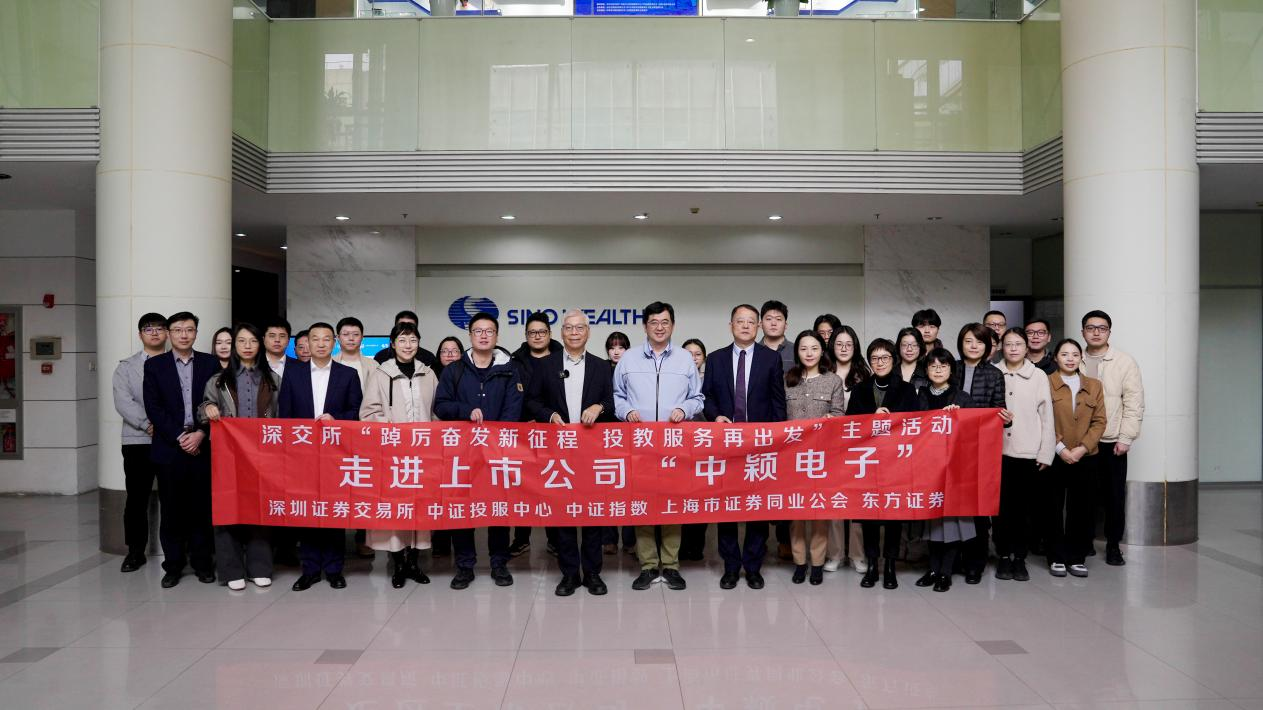
东方证券联合深交所、中证投服中心走进上市公司中颖电子开展“踔厉奋发新征程 投教服务再出发”主题活动
Jin Rong Jie· 2025-12-30 10:11
Core Viewpoint - The event "Striving for a New Journey, Investor Education Services Restart" held by Dongfang Securities at Zhongying Electronics provided a platform for investors to understand the company's strategies and future directions amidst a complex market environment [1][10]. Company Overview - Zhongying Electronics, established in 1994 and listed on the Shenzhen Stock Exchange in 2012, operates under a Fabless business model and specializes in industrial control microcontroller chips (MCU), lithium battery management chips (BMIC), and AMOLED display driver chips [3]. - The company ranks among the top manufacturers in the Greater China region for smart home appliance MCUs and is the first domestic company to achieve mass production of AMOLED display driver chips [3]. Financial Performance - The company anticipates a decline in net profit for 2023-2024 due to falling product prices and high wafer costs, with the integrated circuit industry entering a cyclical reversal since the second half of 2022 [4]. - Despite revenue decline, the company has seen a continuous increase in sales volume, projected to grow from 713 million units in 2022 to 885 million units in 2024, reflecting a compound annual growth rate of over 10% [4]. Research and Development - In 2024, the company plans to invest 300 million yuan in R&D, accounting for 22.35% of its revenue, which is considered high within the IC industry [5]. - The company is focusing on optimizing its product structure and plans to deepen collaboration with mainland wafer manufacturers to reduce costs [5]. Product Innovation - Zhongying Electronics is developing new products, including a robot joint MCU, Wi-Fi MCU, and lithium battery management chips for laptops, as well as automotive-grade AFE chips and higher resolution AMOLED display driver chips [7]. - The company has begun supplying its white goods MCU to international brands, with expected shipments nearing 10 million units this year [5]. ESG Initiatives - The company has integrated ESG principles into its operations and product design, aiming to reduce power consumption in home appliances and mobile devices, contributing to significant indirect carbon reductions [7]. - Zhongying Electronics has completed a digital upgrade and plans to achieve smart upgrades by 2026, incorporating AI technology to enhance operational efficiency [7]. - The company emphasizes social responsibility by fostering employee engagement in community projects rather than focusing solely on monetary donations [7]. Investor Engagement - The event facilitated direct communication between the company's leadership and investors, addressing concerns about performance fluctuations and sharing insights on strategic planning and future growth [4][10]. - Investors were able to experience the company's technological capabilities and innovative achievements through product demonstrations and exhibitions [8].



利扬芯片(688135.SH):近两年无直接出口至欧盟国家
Ge Long Hui· 2025-12-30 09:41
格隆汇12月30日丨利扬芯片(688135.SH)公布,公司测试/磨切主要服务于国内集成电路设计公司,近两 年无直接出口至欧盟国家。 ...

七大领域挑大梁,上海当好2025领跑者
Sou Hu Cai Jing· 2025-12-30 08:02
Economic Growth and Development - In 2024, Shanghai's GDP surpassed 5 trillion yuan, marking a new stage in its economic and social development [1] - In the first three quarters of this year, Shanghai's GDP exceeded 4 trillion yuan, with a year-on-year growth of 5.5%, outpacing the national average [1] - Shanghai has made significant progress in seven key areas: technological innovation, business environment, openness, consumption stimulation, foreign trade stability, investment promotion, and regional collaboration [1] Leading Industries - Shanghai's three leading industries—integrated circuits, biomedicine, and artificial intelligence—have shown remarkable growth, with manufacturing output increasing by 8.5% year-on-year [3] - The biomedicine sector is expected to exceed 1 trillion yuan this year, with nine innovative drugs and nine innovative medical devices approved for market [3] - The artificial intelligence sector grew by 12.8%, while integrated circuits grew by 11.3% [3] Business Environment Improvement - Shanghai has implemented an "8.0 version" action plan with 58 measures to optimize the business environment, continuing its annual tradition since 2018 [5] - The city has introduced a "check code" system for administrative inspections, achieving a near-complete implementation of "no code, no inspection" [5] - The "Shen Dui" platform for precise service policies has been launched, allowing businesses to access benefits without application [5] Foreign Trade and Investment - Shanghai's foreign trade policies have been bolstered by tax support, customs facilitation, and financial guarantees, leading to a 5.4% year-on-year increase in total foreign trade to 3.34 trillion yuan [10] - The city has seen a steady increase in exports, reaching 1.48 trillion yuan in the first three quarters, with a growth rate of 11.3% [10] - Shanghai has become a hub for foreign investment, with 1,066 regional headquarters and 633 foreign R&D centers established [11] Consumption Recovery - Shanghai's social retail sales have turned positive, with a year-on-year growth of 5% in the first eleven months [8] - The city has implemented a series of policies to stimulate consumption, including subsidies for replacing old appliances and expanding the scope of automobile trade-in subsidies [8] - A total of 1 billion yuan has been allocated for consumption vouchers, focusing on sectors like dining, tourism, and culture [9] Technological Innovation and Collaboration - The construction of the Shanghai (Yangtze River Delta) International Technology Innovation Center has been prioritized, enhancing collaboration with neighboring provinces [12] - The release of 23 supporting policies for the G60 Science and Technology Innovation Corridor aims to foster regional cooperation and resource sharing [13] - Shanghai's initiatives include the establishment of innovation parks and the formation of a patent alliance to support emerging industries [13]

中国制造业技术路线图:机器人等产业2035年有望步入世界领先行列
Zhong Guo Xin Wen Wang· 2025-12-30 06:19
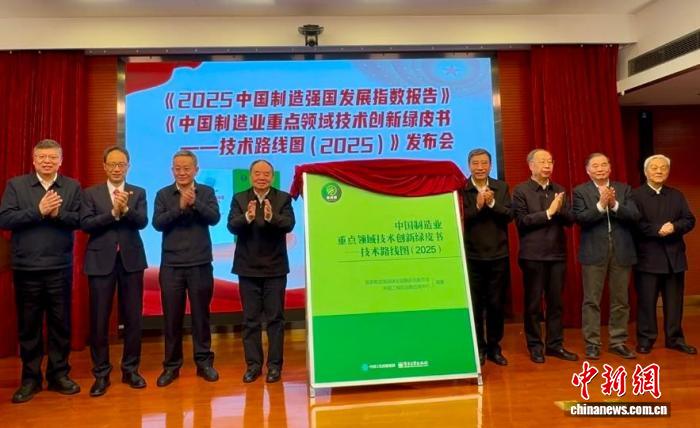
《中国制造业重点领域技术创新绿皮书——技术路线图(2025)》在北京发布。中新网记者 孙自法 摄 中国制造业技术路线图:机器人等产业2035年有望步入世界领先行列 中新网北京12月30日电 (记者 孙自法)中国工程院12月30日在北京发布的《中国制造业重点领域技术创 新绿皮书——技术路线图(2025)》预计,到2035年,中国的机器人等6个产业有望步入世界领先行列, 航天装备、集成电路、飞机等产业将整体步入世界先进行列。 中国制造业重点领域技术路线图自2015年开始编制,此前已先后发布2015、2017、2019和2023年四版, 最新发布的2025版路线图由国家制造强国建设战略咨询委员会、中国工程院战略咨询中心编著,70余位 院士、上千位专家及相关企业高层管理人员共同参与。他们期望2025版技术路线图,能为中国建成现代 化产业体系,构建自主可控、安全高效的产业链供应链,推进新型工业化,加快建设制造强国发挥积极 作用。(完) 来源:中国新闻网 编辑:熊思怡 广告等商务合作,请点击这里 本文为转载内容,授权事宜请联系原著作权人 中新经纬版权所有,未经书面授权,任何单位及个人不得转载、摘编或以其它方式使用。 关注 ...

18个专班攻坚,推动立园满园新成效
Xin Lang Cai Jing· 2025-12-30 04:38
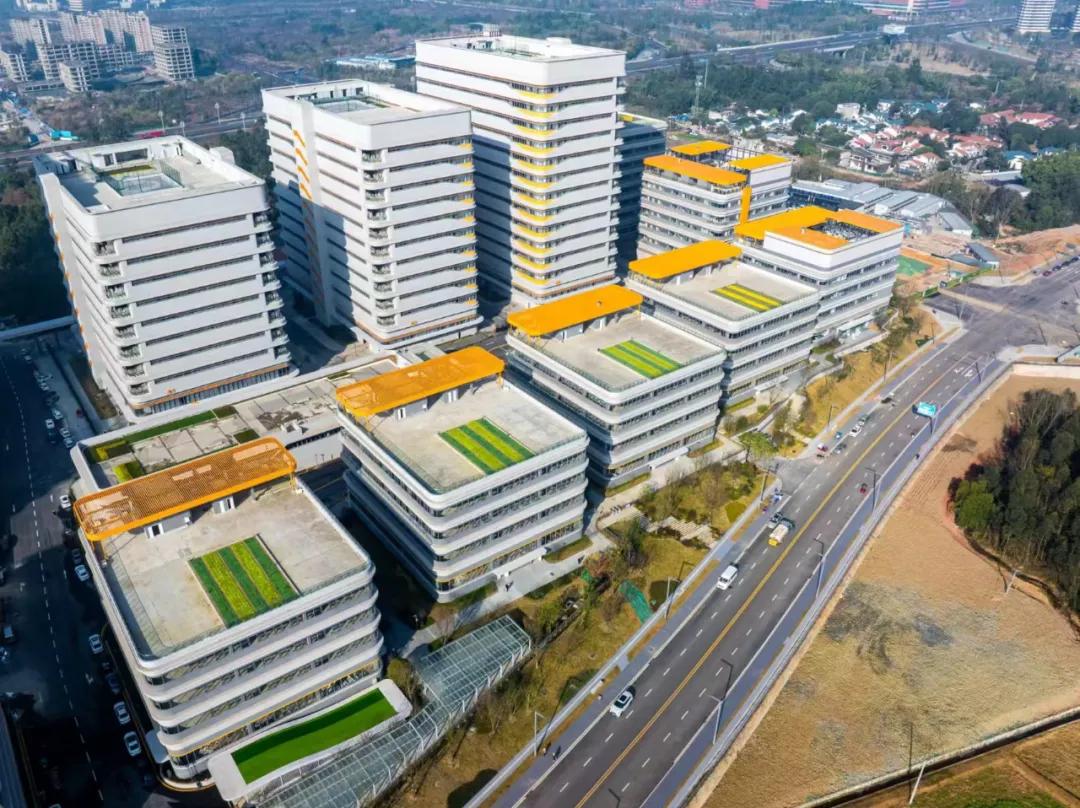
Core Viewpoint - The article highlights the successful collaboration between Chengdu Tian Investment Group and various enterprises, particularly focusing on the integration of the semiconductor industry in the Sichuan Tianfu New Area, showcasing effective strategies for attracting and supporting businesses [1][4][19]. Group 1: Project Development and Investment Attraction - Chengdu Tian Investment Group is actively promoting the Fengqi Valley Technology Innovation Industrial Park, which has attracted Jiangsu-based semiconductor company Jia Zhao Electronics, leading to significant industrial growth in the region [1][3]. - The first phase of the Fengqi Valley Technology Innovation Industrial Park has commenced production, with an expected annual output value exceeding 2 billion yuan (approximately 0.3 billion USD) upon full completion [3]. - The group employs a "six ones" working method, establishing a four-level linkage mechanism to enhance collaboration and efficiency in attracting quality enterprises [4][6]. Group 2: Trust and Communication with Enterprises - The investment team from Chengdu Tian Investment Group emphasizes sincerity and problem-solving capabilities during site visits to potential enterprises, which has been crucial in building trust [6][10]. - The team has been responsive to enterprise needs, facilitating 120 million yuan (approximately 17 million USD) in investments and addressing concerns related to supply chain and employee welfare [6][10]. Group 3: Comprehensive Enterprise Support - Chengdu Tian Investment Group has transitioned from a "recruiter" to an "operator," focusing on the entire lifecycle of enterprise support, including regular visits to understand and address their challenges [7][12]. - The group has implemented a dual service model, providing tailored support to meet various enterprise needs, including housing and transportation solutions for employees [10][12]. Group 4: Industrial Ecosystem and Policy Innovation - The industrial park strategy focuses on specific sectors, creating a strong magnetic effect that attracts related businesses and talent, enhancing the overall ecosystem [13][19]. - Chengdu Tian Investment Group has introduced dynamic pricing mechanisms for rent and has provided over 68 million yuan (approximately 9.5 million USD) in rental discounts to 41 recognized enterprises, encouraging new business signings [13][19]. Group 5: Future Development Goals - The ultimate goal is to achieve "full park" and "full production" status, with ongoing efforts to enhance industrial development and collaboration within the Sichuan Tianfu New Area [15][17]. - The group is exploring innovative funding models and talent development strategies to ensure sustainable growth and competitiveness in key industries such as artificial intelligence and aerospace [17][19].
国家大基金等新投资中芯南方78亿美元,中芯控股仍是第一大股东
Guan Cha Zhe Wang· 2025-12-30 03:47
Core Viewpoint - SMIC is progressing with the acquisition of 49% equity in SMIC North from five shareholders for a total transaction price of 40.601 billion RMB, which will make SMIC North a wholly-owned subsidiary of SMIC [1][4] Group 1: Acquisition Details - SMIC plans to issue 547 million shares to acquire the 49% stake in SMIC North, with a share price of 74.20 RMB, representing a discount of over 39% compared to the closing price of 122.50 RMB on December 29 [1][2] - The valuation of SMIC North is assessed at 82.8 billion RMB, with an increase in value of 41 billion RMB, resulting in a premium rate of 98.19% [1][2] Group 2: Financial Performance - In 2024, SMIC North achieved a revenue of 12.979 billion RMB and a net profit of 1.682 billion RMB, reflecting year-on-year growth of 12% and 187% respectively [4] - The net asset value of SMIC South is reported to be 57.462 billion RMB as of September 30, 2025 [6] Group 3: Capital Increase and Shareholding Structure - SMIC South will receive a total cash injection of approximately 77.78 billion USD, with 35.773 billion USD allocated to registered capital and the remainder to capital reserves [5] - After the capital increase, SMIC's holding in SMIC South will rise from 38.515% to 41.561%, maintaining its position as the largest shareholder [5][6] Group 4: Market Performance - As of December 29, SMIC's A-shares have increased nearly 30% year-to-date, with a market capitalization of 622.6 billion RMB, while its Hong Kong shares have surged nearly 120% [7]

国家大基金等新投资中芯南方78亿美元
Sou Hu Cai Jing· 2025-12-30 03:37
Core Viewpoint - Semiconductor Manufacturing International Corporation (SMIC) is progressing with the acquisition of a 49% stake in SMIC North from five shareholders for a total transaction price of 40.601 billion RMB, which will make SMIC North a wholly-owned subsidiary of SMIC [1][4]. Group 1: Acquisition Details - SMIC plans to issue 547 million shares to acquire the 49% stake in SMIC North, with a share price of 74.20 RMB, representing a discount of over 39% compared to the closing price of 122.50 RMB on December 29 [1][4]. - The valuation of SMIC North, as of the assessment date of August 31, 2025, is 82.9 billion RMB, with an increase in value of 41 billion RMB, resulting in a premium rate of 98.19% [1][2]. Group 2: Financial Performance - In 2024, SMIC North achieved a revenue of 12.979 billion RMB and a net profit of 1.682 billion RMB, reflecting year-on-year growth of 12% and 187%, respectively [4]. Group 3: Capital Increase for SMIC South - SMIC also announced a capital increase for SMIC South, amounting to 7.778 billion USD (over 50 billion RMB), which will significantly raise its registered capital from 6.5 billion USD to 10.077 billion USD [5][6]. - The new investors include the third phase of the National Integrated Circuit Fund, which will hold an 8.361% stake in SMIC South after the capital increase [5][6]. Group 4: Market Performance - As of December 29, SMIC's A-shares have increased nearly 30% year-to-date, with a market capitalization of 622.6 billion RMB, while its Hong Kong shares have surged nearly 120%, reaching a market cap of 688 billion HKD [7].

《江苏省上市公司发展报告(2025)》发布
Zheng Quan Shi Bao Wang· 2025-12-30 03:23
Core Insights - The release of the "Jiangsu Province Listed Companies Development Report (2025)" highlights the role of technological innovation in driving industrial innovation and promoting high-quality economic development in Jiangsu [1][2] Group 1: Overview of Jiangsu Listed Companies - The report showcases the comprehensive strength and new development of Jiangsu's listed companies, aligning with the strategic tasks of the 20th National Congress focusing on high-quality development and technological innovation [2] - It analyzes 696 listed companies in Jiangsu, employing a four-dimensional structural analysis framework that includes overall, capital market empowerment, industrial development empowerment, and regional development empowerment [2][3] Group 2: In-depth Analysis of Four Key Areas - The overall section provides a multi-dimensional view of the basic situation, operational performance, ESG practices, corporate governance, and social contributions of listed companies [3] - The capital market empowerment section focuses on financing channels, mergers and acquisitions, equity incentives, and the innovation performance of technology enterprises [3] - The industrial development empowerment section reviews contributions, opportunities, challenges, and forward-looking development suggestions for key sectors such as pharmaceuticals, integrated circuits, high-end intelligent equipment, and automotive parts [3] - The regional development section summarizes government initiatives and achievements across Jiangsu's 13 cities in promoting high-quality development of listed companies [3] Group 3: Achievements of Jiangsu Capital Market - Jiangsu's listed companies have shown sustained scale advantages and improved comprehensive strength, covering a "1650" industrial system with solid operational performance [4] - Innovation momentum has significantly increased, with Jiangsu's companies leading in the number of listed firms on the Sci-Tech Innovation Board and the Beijing Stock Exchange, as well as in the number of national-level specialized and innovative "little giant" enterprises [4] - Governance capabilities have improved, with a notable increase in the diligence of independent directors and a high level of financial reporting quality [4] - Efficient use of capital tools has been demonstrated, with over 200 billion yuan in combined equity and bond financing and nearly 200 mergers and acquisitions totaling over 60 billion yuan [4] Group 4: Industrial and Regional Development - The industrial system is continuously upgrading, with innovations in high-end manufacturing, biomedicine, integrated circuits, and automotive parts, alongside emerging sectors like artificial intelligence and low-altitude economy [5] - The regional layout is becoming more coordinated, with a development pattern of "Southern Jiangsu leading, Northern Jiangsu advancing," showcasing complementary functions and collaborative development [6] - In 2025, 28 companies in Jiangsu are set to go public on the A-share market, with 26 belonging to strategic emerging industries, indicating a significant increase in merger and acquisition activities [6]
《江苏省上市公司发展报告》发布
Zheng Quan Shi Bao Wang· 2025-12-30 03:12
Core Insights - The "Jiangsu Province Listed Companies Development Report (2025)" was officially released, showcasing the strength and new developments of Jiangsu's listed companies, emphasizing the role of technological innovation in driving industrial innovation and promoting high-quality economic development in Jiangsu [1][2] Group 1: Overview of Jiangsu Listed Companies - The report presents a comprehensive view of Jiangsu's listed companies, focusing on 696 companies as the core sample for 2024, and employs a four-dimensional analytical framework: "overall-market-industry-region" [2][3] - The report highlights the overall status, regulatory framework, and governance effectiveness of listed companies, indicating that the "Jiangsu sector" remains a national leader in scale, innovation momentum, and governance improvement [2][3] Group 2: Detailed Analysis of Four Key Sections - The general section provides a multidimensional overview of listed companies, covering basic conditions, operational performance, ESG practices, corporate governance, and social contributions [3] - The capital market empowerment section focuses on financing channels, mergers and acquisitions, equity incentives, and the performance of technology-driven enterprises, analyzing how capital aggregates innovation elements to empower high-quality development [3] - The industry development empowerment section examines contributions, opportunities, challenges, and forward-looking development suggestions for key sectors such as pharmaceuticals, integrated circuits, high-end intelligent equipment, and automotive parts [3] - The regional development section summarizes major initiatives and achievements by local governments across Jiangsu's 13 cities to support the high-quality development of listed companies and local economies [3] Group 3: Achievements of Jiangsu Capital Market - The report summarizes the achievements of Jiangsu's listed companies in 2024, demonstrating the capital market's role in empowering high-quality economic and social development [4] - Jiangsu's listed companies maintain a solid industrial foundation, covering the "1650" industrial system, with steady operational performance and a reinforced role as a pillar of the real economy [4] - Innovation momentum has significantly increased, with Jiangsu's companies leading in the number of listings on the Science and Technology Innovation Board and the Beijing Stock Exchange, as well as in the number of national-level specialized and innovative "little giant" enterprises [4] - Governance capabilities have improved, with enhanced board operations and a notable increase in the number of companies rated A for information disclosure, which rose by over 20% year-on-year [4] - Efficient use of capital tools is evident, with over 200 billion yuan in combined equity and bond financing, and nearly 200 mergers and acquisitions totaling over 60 billion yuan [4] Group 4: Industry and Regional Developments - The industrial system is continuously upgrading, with innovations in high-end manufacturing, biomedicine, integrated circuits, and automotive parts, showcasing strong market vitality among leading enterprises [5] - The regional layout is becoming more coordinated, with a development pattern characterized by "Southern Jiangsu leading, Northern Jiangsu advancing," indicating a complementary and collaborative development among regions [6] - In 2025, 28 companies in Jiangsu went public on the A-share market, with 26 belonging to strategic emerging industries, and the province's mergers and acquisitions activity significantly increased, completing 211 transactions, accounting for one-fifth of the national total [6]