
科技创新

Search documents
民生支出5392.35亿元再创历史新高
Sou Hu Cai Jing· 2026-01-11 03:00
Core Viewpoint - In 2025, Guangxi's general public budget revenue is projected to reach 192.205 billion yuan, marking a year-on-year growth of 4.6%, while expenditures are expected to total 674.218 billion yuan, with a growth of 4.2%, indicating a solid foundation for the "14th Five-Year Plan" with continuous growth in fiscal revenue and expenditure for 12 months [1] Group 1: Fiscal Performance - The general public budget revenue for 2025 is expected to be 192.205 billion yuan, a 4.6% increase year-on-year [1] - General public budget expenditure is projected at 674.218 billion yuan, reflecting a 4.2% year-on-year growth [1] - The fiscal revenue and expenditure growth rate has achieved continuous growth for 12 months, a first in nearly six years [1] Group 2: Investment in Major Projects - Guangxi plans to allocate over 37.3 billion yuan to major projects such as the Pinglu Canal and Beibu Gulf International Gateway Port [1] - More than 200.75 billion yuan will be used to support a new round of industrial revitalization and the development of industrial parks [1] - A total of 296.46 billion yuan will be coordinated to support the implementation of "two new" policies and accelerate the landing of "two heavy" projects [1] Group 3: Support for Enterprises - In 2025, tax reductions and refunds for technology innovation and manufacturing development are estimated to exceed 26 billion yuan [2] - Administrative and institutional fee income has decreased by 13.9% year-on-year, enhancing market vitality [2] - Over 1.151 billion yuan in preferential loans have been issued to benefit more than 44,000 business entities, reducing financing costs by over 1.2 billion yuan [2] Group 4: Technological Innovation and Development - Guangxi has established 11 policy measures aimed at allocating 15 billion yuan annually, totaling nearly 45 billion yuan over three years to support the development of new productive forces [3] - Funding for digital construction in Guangxi is set at 700 million yuan, a 133.3% increase year-on-year, to support AI infrastructure and international cooperation [3] - 30 billion yuan is allocated for innovation-driven development and technology development, promoting the integration of technological and industrial innovation [3] Group 5: Social Welfare Investment - In 2025, social welfare expenditure is projected to reach 539.235 billion yuan, accounting for 80% of general public budget expenditure, marking a historical high [3] - Expenditures in key areas such as transportation, energy conservation, social security, and cultural tourism have all seen double-digit growth [3] - Education spending is expected to be 131.71 billion yuan, a 7.4% increase, while social security and employment spending is projected at 125.144 billion yuan, growing by 10.7% [3]
园区“握手” 创新奔涌(微言)
Ren Min Ri Bao· 2026-01-10 22:06
Core Insights - The opening of the Hong Kong park marks a significant achievement in the implementation of the Guangdong-Hong Kong-Macao Greater Bay Area development plan and exemplifies the advantages of the "One Country, Two Systems" framework [1][2] Group 1: Development Directions - The Hong Kong park aims to establish a world-class platform for industry-academia-research collaboration, create an internationally competitive industrial pilot transformation base, gather global innovation and technology resources, and serve as a testing ground for institutional and policy innovations [1] - The park adopts a "research + pilot" model, focusing on cutting-edge sectors such as life and health technology, artificial intelligence and robotics, new energy, and high-end intelligent manufacturing, with over 60 companies already signed and moving in [1] Group 2: Collaborative Advantages - The collaboration between Hong Kong and Shenzhen leverages their respective strengths: Hong Kong's global talent pool and strong foundational research capabilities, and Shenzhen's vibrant innovation and entrepreneurship environment with a complete industrial system [1] - The "Shenzhen-Hong Kong-Guangzhou" innovation cluster ranks first globally according to the World Intellectual Property Organization's 2025 Global Innovation Index, highlighting the potential of cross-border collaboration [1] Group 3: Institutional Innovations - The launch of the cross-river bridge project will facilitate the movement of researchers between the Hong Kong and Shenzhen parks, while innovations in the management of research goods and cross-border funding will help eliminate institutional barriers [2] - The cooperation zone serves as a crucial platform for enhancing the practical implications of "One Country, Two Systems," supporting Hong Kong's integration into and service of the national development agenda [2]
通北示范区加速转化为生动“实景”
Xin Lang Cai Jing· 2026-01-10 03:00
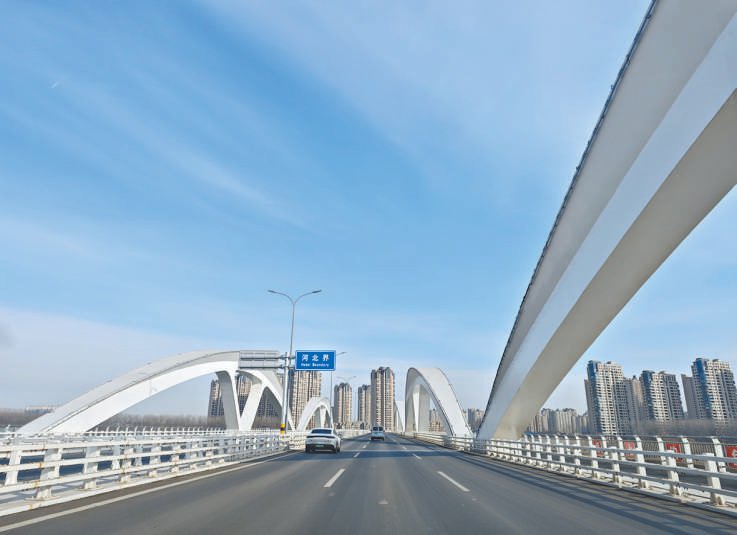
Core Viewpoint - The Tongbei Demonstration Zone has made significant progress in transportation connectivity, industrial collaboration, and public services over the past two years, transforming from a grand blueprint into a tangible reality [3][4][5] Transportation Connectivity - The demonstration zone has focused on enhancing transportation networks, with the completion of the Hebei section of the Pinggu Line and the construction of the Changtong Road, set to open on September 29, 2024, facilitating integration between Tongzhou District and the northern counties of Langfang [3] - A new rapid commuting bus line from Dachang to the Lucheng subway station in Tongzhou has been launched, improving cross-regional commuting efficiency and achieving "minute-level" travel times [3] Industrial Collaboration - The zone has emphasized the integration of innovation, industry, and supply chains, aiming to create a distinctive industrial development pattern that complements the functions of Beijing's urban sub-center [4] - The region has hosted six project promotion meetings, resulting in 273 signed projects, and is accelerating the construction of the Yanjiao Collaborative Innovation Base to attract technology enterprises [4] Ecological Initiatives - Efforts to combat air pollution have been strengthened, with a joint emergency response mechanism for heavy pollution established between the northern counties and Tongzhou [4][5] - The planning of the Chaobai River National Forest Park and the implementation of the Chaobai River Ecological Green Belt Plan are underway, aiming to create an ecological landscape corridor in the eastern capital region [5] Public Services and Resource Sharing - The integration of public services is advancing, with over 3,600 government service items from Beijing and 453 local services from Langfang included in a regional service platform, enhancing the administrative experience for businesses and residents [5] - Educational and medical resources are being expanded, with strategic partnerships established between local schools and Beijing institutions, and the opening of new healthcare facilities to better serve the community [5]

苏州实施科技企业“成林计划” 三年要新增3万个科创项目
Su Zhou Ri Bao· 2026-01-10 00:22
近日,《关于实施"成林计划"构建科技企业全生命周期扶持体系的若干措施》正式印发,旨在构建 覆盖企业"初创—成长—成熟—领军"全阶段的梯度培育与赋能体系,推动形成"中小科技企业铺天盖 地、科技领军企业顶天立地"的发展格局,为苏州建设具有全球影响力的产业科技创新中心主承载区提 供坚实支撑。苏州的目标是,到2028年,累计新增3万个科创项目,科技型企业总量超10万家。 "生态涵养"则从科技金融、平台支撑、知识产权、人才服务、数据与空间保障等五大维度,构建优 越的创新生态,让各类科技企业"蔚然成林"。 "成林计划"通过五大行动,精准护航企业成长。其中,"选种育苗"聚焦项目发掘与初创扶持,通过 布局海外离岸创新中心、城市协同创新中心及高校成果转化办公室(SOTT),构建全球项目发现网 络,并对领军人才、天使投资、孵化载体给予强力支持,助力创新种子"破土而出"。 据了解,该计划设定到2028年的量化目标:累计新增3万个科创项目,科技型企业总量超10万家; 培育国家科技型中小企业3万家、高新技术企业2.2万家、国家级专精特新"小巨人"企业1200家;孵化瞪 羚企业4000家、独角兽培育企业800家、科技领军培育企业150家 ...
超5.2万㎡!闵行这里是如何被唤醒,“破茧成蝶”的?
Sou Hu Cai Jing· 2026-01-09 10:46
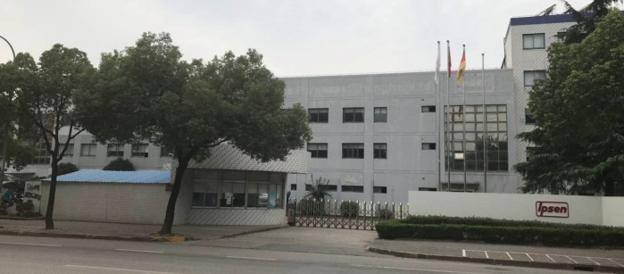
双塔并立、裙楼相连,简洁大气的"H"形立面勾勒出城市天际线轮廓,通透的玻璃幕墙在阳光下折射出 璀璨光芒……在沧源路1300号,一处亮眼的科创地标已崭新亮相。 这片曾长期闲置的工业用地,如今华丽变身为总高60米、建筑面积超5.2万平方米的标志性建筑——大 零号湾科创成果转化中心,整合市级人才工作品牌资源的"海聚英才"创业城也在此正式揭牌启用,不仅 实现了从"沉睡资源"到"科创高地"的精彩蝶变,更作为闵行"一南一北"战略布局的关键落子,以"工业 用地转型科创载体"的实践,为城市更新与科创生态建设树立了标杆。 而这,也正是"大零号湾"科技创新策源功能区加速崛起的生动缩影。深度对接中央经济工作会议关于上 海(长三角)国际科技创新中心建设的部署,全面落实"世界级科创湾区"建设的总目标,以"源创之 芯,未来智湾"为发展愿景,"大零号湾"正朝着上海科创中心重要策源地与孵化地、引领未来前沿技术 的新质生产力样板区、人才安居乐业的高品质魅力湾区稳步迈进。 闲置地块的"转型之道" 时间回溯至2020年,沧源路1300号(易普森工业地块)仍处"沉睡"状态。这块与上海交大一墙之隔、位 于"大零号湾"核心区域的土地,面积13171.7 ...
今日视点:债市“科技板”要加力看未来看技术
Zheng Quan Ri Bao· 2026-01-07 22:37
Group 1 - The core viewpoint of the article emphasizes the importance of high-quality construction and development of the bond market's "Technology Board" to support innovation-driven enterprises, particularly startups facing financing challenges [1][2] - Since its launch in May 2025, the "Technology Board" has seen significant market response, with 1,690 entities issuing over 1.9 trillion yuan in technology innovation bonds by January 7, 2026, indicating a growing participation from private enterprises alongside state-owned enterprises [1][2] - The article highlights the need for further exploration and improvement in areas such as the coverage of issuing entities, normalization of bond issuance mechanisms, secondary market liquidity, and synergy with other financial instruments [1][2] Group 2 - To enhance the quality of the "Technology Board," the article suggests three key areas of focus: improving specialized and market-oriented technology risk assessment and pricing capabilities, which are essential due to the rapid technological iterations in innovation enterprises [1][2] - Strengthening risk-sharing and credit enhancement mechanisms is crucial, with the central bank proposing tools to mitigate investor default risks through low-cost relending and guarantees, aiming to create a multi-layered risk dispersion structure [2] - The article calls for the deepening of supporting mechanisms and ecosystem development, including simplifying information disclosure requirements and promoting innovative products like convertible bonds and ETFs to enhance secondary market liquidity [2][3] Group 3 - The high-quality development of the "Technology Board" requires a shift in focus from historical asset evaluation to future technology potential, aligning financial services with the needs of the real economy [3] - As relevant systems mature, the bond market is expected to integrate more deeply into the technology innovation ecosystem, fostering the emergence of internationally competitive innovation enterprises [3]
评论:主动对接“十五五” 香江再启新航程
Xin Lang Cai Jing· 2026-01-07 13:07
Core Viewpoint - The article emphasizes the importance of Hong Kong's integration into the national development framework, highlighting the central government's support for Hong Kong's prosperity and stability, as well as the city's resilience and vitality in its economy [1][2]. Group 1: Economic Development - Hong Kong's economy has shown strong resilience and vitality over the past year, with its status as an international financial center being reinforced [1]. - The scale of IPOs in Hong Kong has returned to a leading position globally, and the number of companies based overseas or in mainland China operating in Hong Kong has reached a historical high [1]. - The establishment of international organizations, such as the International Mediation Centre and the Asian Infrastructure Investment Bank, in Hong Kong reflects confidence in the city's future [1]. Group 2: Governance and Social Welfare - The Hong Kong government has implemented practical measures to improve the livelihood of its citizens, including the introduction of "simple public housing," annual reviews of the minimum wage, and the cancellation of the MPF offset mechanism [2]. - The governance approach focuses on achieving results and responding to public concerns, which has led to improvements in the quality of life for residents [2]. Group 3: Strategic Integration - The 20th Central Committee's decisions provide a strategic framework for Hong Kong to further integrate into the national development agenda, creating broader opportunities for the city [2]. - Hong Kong is positioned to leverage its unique advantages of being connected to the mainland while maintaining global links, facilitating its role in China's modernization process [2].
“超常规”举措推动高端仪器发展,不愧是“苏大强”
仪器信息网· 2026-01-07 03:55
Core Viewpoint - The article emphasizes the importance of Jiangsu's role in advancing Chinese-style modernization and outlines the strategic goals and initiatives for the "15th Five-Year Plan" period, focusing on high-quality development, reform, and social equity. Group 1: Achievements During the "14th Five-Year Plan" - Jiangsu has made significant progress during the "14th Five-Year Plan," with GDP expected to exceed 14 trillion yuan, innovation capabilities ranking second nationally, and high-tech industries accounting for over 50% of industrial output [2][4]. - The province has maintained its top position in manufacturing quality development for five consecutive years and has achieved comprehensive reforms and high levels of foreign trade [2][4]. - Environmental quality has improved, with the Yangtze River's water quality stabilizing at Class II, and the overall quality of life for residents has increased, with life expectancy surpassing 80 years [2][4]. Group 2: Opportunities and Challenges for the "15th Five-Year Plan" - Jiangsu faces a complex development environment with both opportunities and challenges, including geopolitical tensions, economic uncertainties, and structural imbalances within the province [4][5]. - The province must address issues such as insufficient effective demand, challenges in transitioning old and new growth drivers, and pressures on employment and income growth [4][5]. - However, there are opportunities from the global technological revolution, the advantages of China's socialist system, and Jiangsu's strong material and technological foundation [4][5]. Group 3: Guiding Principles for Economic and Social Development - The guiding ideology for the "15th Five-Year Plan" includes adherence to Marxism, Mao Zedong Thought, Deng Xiaoping Theory, and Xi Jinping's thoughts on socialism with Chinese characteristics [5][6]. - The focus will be on achieving a modern socialist country and the second centenary goal, emphasizing high-quality development and comprehensive reforms [5][6]. Group 4: Main Goals for the "15th Five-Year Plan" - The province aims to maintain high-quality economic growth, enhance technological innovation, and promote deep reforms and high-level openness [9][10]. - Specific targets include improving the quality of life for residents, achieving common prosperity, and enhancing ecological sustainability [9][10]. Group 5: Modernizing the Industrial System - Jiangsu will focus on building a modern industrial system with a strong emphasis on advanced manufacturing, green technology, and digital transformation [12][13]. - The province aims to enhance the competitiveness of traditional industries while fostering strategic emerging industries and future industries [12][13]. Group 6: Promoting Technological Innovation - The plan emphasizes the importance of technological self-reliance and innovation, aiming to establish Jiangsu as a leading center for industrial technology innovation [15][16]. - Key initiatives include strengthening original research, enhancing the integration of technology and industry, and fostering a collaborative innovation ecosystem [15][16]. Group 7: Expanding Domestic Demand - Jiangsu will prioritize expanding domestic demand as a strategic initiative, focusing on boosting consumption and effective investment [21][22]. - The province plans to enhance consumer spending through targeted actions and improve investment efficiency in major projects [21][22]. Group 8: High-Level Opening Up - The province aims to enhance its international cooperation and trade, focusing on expanding its role in the Belt and Road Initiative and improving its global economic integration [28][29]. - Jiangsu will work on institutional opening-up, promoting trade innovation, and attracting foreign investment [28][29]. Group 9: Agricultural Modernization - Jiangsu will prioritize agricultural modernization, focusing on building a strong agricultural province and improving rural living conditions [31][32]. - The province aims to develop a modern agricultural industry system and enhance rural infrastructure and public services [31][32]. Group 10: Regional Coordination and Development - The plan emphasizes the importance of regional coordination, linking Jiangsu's development with national strategies such as the Yangtze River Economic Belt and the integration of the Yangtze River Delta [36]. - Jiangsu will work on optimizing the layout of productive forces and enhancing regional economic cooperation [36].

河南出台一揽子措施推动2026年经济实现良好开局 打好组合拳,一季度这样干
He Nan Ri Bao· 2026-01-06 23:30
Group 1 - The provincial government has introduced a series of policy measures aimed at economic development for the first quarter of 2026, focusing on expanding demand, optimizing supply, increasing momentum, benefiting people's livelihoods, and preventing risks [1] - The development goals for 2025 include stabilizing employment, enterprises, markets, and expectations, with an emphasis on a stable and improving economic environment characterized by resilience [1] - The first quarter is seen as a critical indicator for the entire year's economic performance, with a commitment to implement effective policies and measures to drive economic growth [1] Group 2 - The province plans to focus on major project construction, aiming to start around 1,500 significant projects in 2026, and will streamline funding processes for project construction [2] - To stimulate consumption, the province will issue 200 million yuan in consumption vouchers and support over 200 housing promotion events, while also fostering new growth points in the service sector [2] - The province aims to enhance industrial strength by integrating technological innovation with industry, targeting a technical contract transaction volume of 65 billion yuan and launching over 200 key R&D projects [3] Group 3 - The province will implement initiatives to support over 11 million business entities, focusing on resolving operational challenges and enhancing financial support to boost business confidence and vitality [3] - Efforts will be made to address urgent public concerns, including employment initiatives and safety measures, with plans to train 600,000 individuals in vocational skills [4] - A comprehensive approach to safety will be adopted, including a three-year action plan for safety production and risk assessment for natural disasters and extreme weather [4]

锚定“十五五”开局 实干践诺谋发展
Zheng Zhou Ri Bao· 2026-01-06 00:49
Core Points - The Zhengzhou Municipal Economic Work Conference emphasizes high-quality economic development goals and practical paths, aligning with the "14th Five-Year Plan" and central government directives [1][10][19] Group 1: Economic Development Strategies - Various districts are implementing the conference's spirit by establishing specific measures tailored to local conditions, aiming for practical outcomes [2][19] - The focus is on innovation-driven development, enhancing modern industrial systems, and fostering new business models and consumption patterns [2][3][6] - The conference outlines a framework for urban development, aiming to optimize city functions and create core growth areas within metropolitan circles [4][10] Group 2: Project and Infrastructure Development - Key projects are being accelerated, including the establishment of industrial parks and logistics centers to boost local economies [5][10][14] - The development of specific areas, such as the cold chain logistics and modern food industries, is prioritized to enhance regional economic strength [5][10] - Urban renewal initiatives are being implemented to improve living conditions and infrastructure, focusing on enhancing the quality of urban environments [5][15] Group 3: Innovation and Technology - The establishment of research institutions, such as the Zhongke Big Data Research Institute, aims to integrate industry, academia, and research to drive innovation [7][11] - Emphasis is placed on developing new production capabilities and fostering a culture of innovation within local enterprises [6][7][13] Group 4: Consumer Market Activation - The conference highlights the importance of creating an international consumer center to stimulate market vitality and develop new consumption scenarios [8][13] - Local initiatives are being launched to enhance consumer experiences and promote strategic projects in technology and green industries [8][13] Group 5: Social Welfare and Governance - The focus on improving public services and ensuring social welfare is a key aspect of the economic strategy, aiming to enhance the quality of life for residents [15][16][18] - Governance models are being refined to ensure effective community engagement and responsiveness to public needs [15][16][18]