
超导材料

Search documents
可控核聚变系列 - 高温超导
2025-06-19 09:46
Summary of Key Points from the Conference Call Industry Overview - The conference call discusses the **high-temperature superconductors (HTS)** industry, focusing on the classification, applications, and advancements in superconducting materials [1][2][3]. Core Insights and Arguments - **Superconducting Materials Classification**: Superconductors are divided into two categories: Type I and Type II, with Type II being more practical due to its ability to form mixed states. They are further classified into low-temperature superconductors (LTS) and high-temperature superconductors (HTS) [1][3]. - **HTS Materials**: HTS materials can operate under liquid nitrogen conditions, making them more advantageous compared to LTS, which require liquid helium. HTS materials include copper-based (e.g., bismuth and yttrium barium copper oxide) and iron-based superconductors [1][5]. - **Performance Metrics**: The critical current density (JC) for HTS can reach the order of megaamperes per square centimeter, allowing for more compact magnet designs and higher magnetic field strengths [1][10]. - **Market Dynamics**: Shanghai Superconductor Company holds an 80% market share due to completed equipment depreciation, government support, and early expansion. However, increased competition may lead to price pressures [3][30][31]. Important but Overlooked Content - **Technological Advancements**: China has made significant breakthroughs in iron-based superconductors, achieving important applications such as full iron-based magnets and producing 100-meter-long iron-based tapes [7][8]. - **Cost Reduction Potential**: The cost of second-generation HTS tape has decreased from 260 RMB per meter in 2022 to 92 RMB per meter in 2024, indicating potential for further cost reductions depending on specifications and market demand [29]. - **Applications in Fusion Energy**: HTS materials are crucial in fusion energy applications, including current leads and magnetic coils, allowing for higher magnetic field strengths and reduced equipment sizes [24][25]. - **Future Price Stability**: The future price levels of HTS materials may be influenced by performance, pricing competition, and urgent project demands, with a potential downward trend due to low-price competition in the Chinese market [32]. This summary encapsulates the essential points discussed in the conference call, providing insights into the HTS industry, its current state, and future prospects.
拟募资12亿!上海科创集团投资的上海超导科创板IPO获受理,国内市占率第一!
Sou Hu Cai Jing· 2025-06-18 12:30
Core Viewpoint - Shanghai Superconductor Technology Co., Ltd. (Shanghai Superconductor) has successfully submitted its IPO application on the STAR Market, backed by Shanghai Kechuang Group, which has played a crucial role in its development and growth since 2014 [1][3]. Company Development - Shanghai Kechuang Group has been a significant shareholder of Shanghai Superconductor, providing strategic investment and support during critical phases of its development, particularly during its technological challenges in 2014 [3]. - The company has achieved a leading position in the global high-temperature superconducting materials market, with its products being utilized in various advanced applications, including controlled nuclear fusion and high-end manufacturing [4]. Market Position - Shanghai Superconductor is recognized as one of the world's leading manufacturers of high-temperature superconducting materials, with a domestic market share exceeding 80% for its second-generation high-temperature superconducting tapes, ranking first for three consecutive years from 2022 to 2024 [4]. - The company has established strong partnerships with numerous well-known domestic and international enterprises and research institutions, enhancing its market presence and technological capabilities [4].

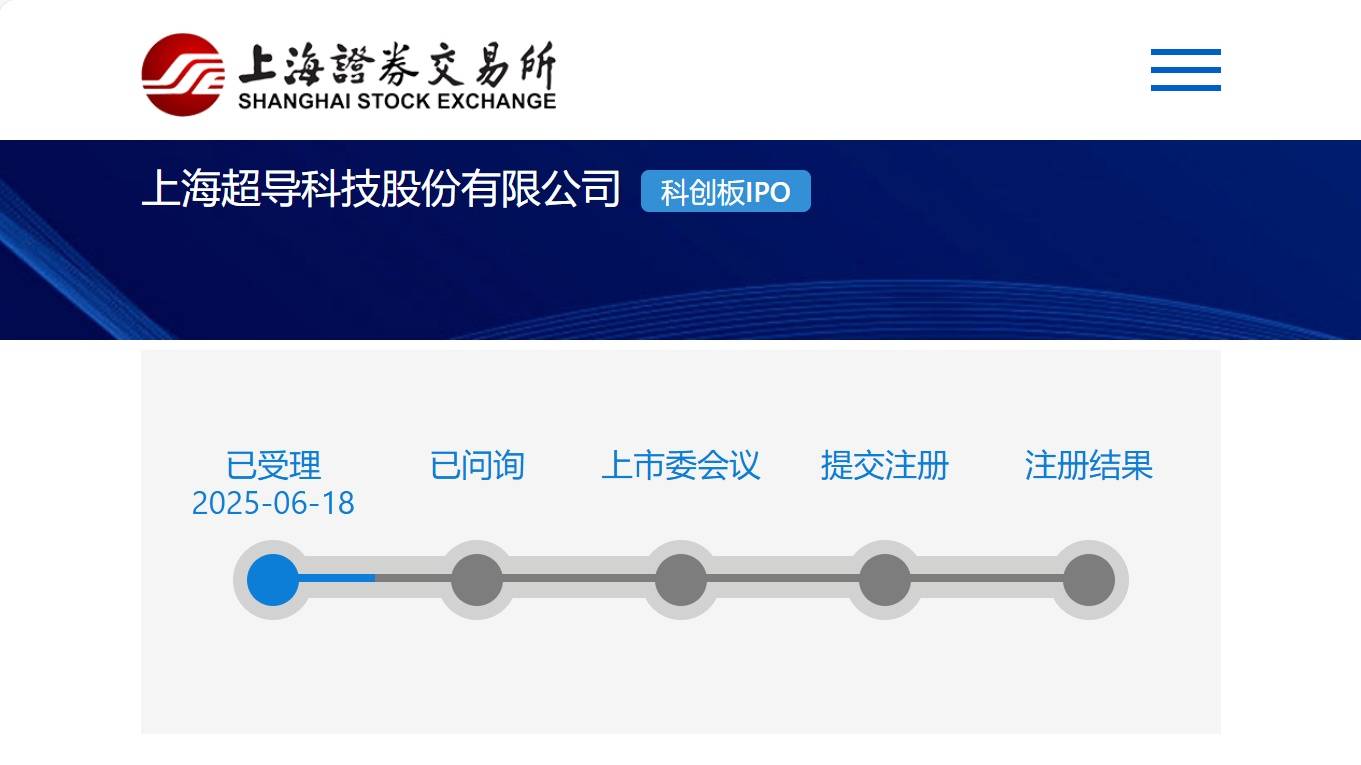
精达股份:参股公司上海超导科创板上市申请获受理
news flash· 2025-06-18 11:35
Core Viewpoint - The company Jingda Co., Ltd. (600577) announced that its associate Shanghai Superconductor Technology Co., Ltd. has received acceptance for its initial public offering (IPO) application on the Sci-Tech Innovation Board as of June 18, 2025 [1] Company Summary - Shanghai Superconductor focuses on the research, production, and sales of high-temperature superconducting materials [1] - It is one of only two manufacturers globally that have achieved mass production of second-generation high-temperature superconducting tapes exceeding 1,000 kilometers annually (12mm wide) [1] - Jingda Co., Ltd. holds 94.5875 million shares of Shanghai Superconductor, representing an 18.15% ownership stake [1]

超导材料:供需紧张,核聚变加速的重要驱动
2025-06-16 15:20
Summary of Superconducting Materials and Nuclear Fusion Industry Conference Call Industry Overview - The superconducting materials industry is divided into low-temperature and high-temperature superconductors, with low-temperature superconductors already commercialized for applications like MRI, but reliant on expensive liquid helium. High-temperature superconductors are used in magnetic levitation, quantum computing, and nuclear fusion, but face challenges in large-scale production, requiring cost reduction and performance enhancement [1][4][5]. Key Points and Arguments - **Production Techniques**: High-temperature superconducting tapes are multi-layered structures, with common production methods including IBAD, PVD, and CVD. PVD is noted for producing smooth films, while other methods like PLD, MOCVD, and MOD each have their advantages and disadvantages affecting conductor performance [1][7][10]. - **Market Demand**: Domestic high-temperature superconducting material production capacity is approximately 7,000 kilometers, but actual output is limited by yield. The demand for the Xinghuo No. 1 project is estimated to be between 15,000 to 20,000 kilometers, indicating a tight supply-demand situation. Shanghai Superconductor plans significant capacity expansion in the coming years [3][15][16]. - **Nuclear Fusion Applications**: Superconducting materials are widely used in Tokamak devices, with the ITER project’s magnet investment accounting for about 28% of total investment. Domestic projects like EAST have substantial magnet investments, indicating a growing application of superconductors in nuclear fusion [11][12]. - **Industry Growth**: The nuclear fusion industry is accelerating, supported by policy and technological advancements. The planning and initiation of experimental and engineering demonstration reactors are expected to lead to increased capital expenditures. The superconducting materials segment is under pressure due to tight processing steps and rising demand [12][14]. Additional Important Insights - **Technological Routes**: Different companies adopt various high-temperature superconducting technologies, leading to differences in tape yield, length, and width. For instance, Shanghai Superconductor and Shengchi Technology use PLD, while Yongding Holdings' Dongbu Superconductor and Superpower use MOCVD [10][17]. - **Future Trends**: High-temperature superconductors are expected to significantly impact nuclear fusion devices by enabling higher current and stronger magnetic fields, thus enhancing power output and reducing construction costs. Projects like Spark in the U.S. and domestic initiatives are moving towards full high-temperature superconducting technology [13][19]. - **Key Players**: Major domestic companies include Shanghai Superconductor, which holds a significant market share and plans to quadruple its production capacity by 2027-2028. Other notable companies include Dongbu Superconductor and West Superconductor, which are also expanding their capabilities in the superconducting materials market [16][18]. - **Investment Opportunities**: Investors should focus on companies with strong order potential and development space, such as Jinda Co., Yonglin Co., and West Superconductor, as well as related firms like Guoguang Electric and Antai Technology, which play crucial roles in equipment and components [19].
核创纪元系列:超导材料:供需紧张,核聚变加速的重要驱动
Changjiang Securities· 2025-06-16 14:26
Investment Rating - The report maintains a "Positive" investment rating for the superconducting materials industry [3]. Core Insights - The superconducting materials industry is experiencing a tight supply-demand situation, driven by the acceleration of nuclear fusion projects, which significantly increases the demand for superconducting materials [7][85]. - Superconductors are critical for generating strong magnetic fields necessary for maintaining and controlling high-temperature plasma in nuclear fusion devices, thus enhancing energy efficiency and reducing energy consumption [44][59]. Summary by Sections Section 1: Superconducting Materials - Diverse Types and Wide Applications - Superconducting materials are categorized into low-temperature superconductors (LTS) and high-temperature superconductors (HTS) based on their critical temperature [16]. - LTS materials include NbTi and Nb3Sn, while HTS materials include YBCO and BSCCO, which have practical applications in various fields [22][24]. - The report highlights the unique properties of superconductors, such as zero electrical resistance and complete diamagnetism, which are essential for their applications in advanced technologies [11][12]. Section 2: Superconductors as Key Technologies in Accelerating Nuclear Fusion - Superconducting magnets are essential components of Tokamak devices, used to create the strong magnetic fields required for plasma confinement [38][44]. - The ITER project exemplifies the application of LTS materials in its magnet systems, which account for approximately 28% of the total cost of the device [44]. - The report discusses the potential of HTS materials to improve efficiency and reduce operational costs in next-generation fusion devices like SPARC [59][62]. Section 3: Tight Supply-Demand Dynamics in the Industry Chain - The supply of superconducting materials, particularly in the form of wires and tapes, is currently tight due to the increasing demand from nuclear fusion projects [85]. - Key companies in the superconducting materials sector include Shanghai Superconductor Technology Co., Ltd., which specializes in the production of high-temperature superconducting tapes, and other firms like YD and Lianchuang Optoelectronics, which are involved in various aspects of superconducting technology [85].


认可制度助力中小企业走出国门
Ren Min Ri Bao· 2025-06-11 22:49
Core Viewpoint - The recognition system plays a crucial role in building trust in global trade, facilitating international mutual recognition of testing, inspection, and certification results, which helps small and medium-sized enterprises (SMEs) confidently enter global markets [1] Group 1: Recognition System and Market Impact - The number of recognized qualified assessment institutions in China has surpassed 20,000, with over 20 government and industry authorities accepting recognition results, and 16 international mutual recognition agreements signed, covering 133 economies that account for over 96% of the global economy [1] - The recognition system supports industry development and enhances supply chain efficiency, particularly in the automotive sector, where recognized institutions help improve the credibility of testing data and boost the competitiveness of products in international markets [2] Group 2: Empowering SMEs and Industry Growth - The recognition system empowers manufacturing enterprises to expand their global market share, as evidenced by a valve company that increased its foreign trade order proportion from 40% to 50% over three years due to CNAS recognition [3] - The recognition of testing laboratories has facilitated the export of domestic zirconium alloy products to over 10 countries, enhancing the credibility of domestic materials in international nuclear power projects [3] - A recognized assessment institution in the superconducting materials sector has achieved a 50% global market share for MRI superconducting wire, supplying major international companies like General Electric and Siemens [3] Group 3: Quality Management and International Competitiveness - The recognition system helps SMEs establish efficient quality management systems and continuous improvement mechanisms, which are essential for integrating into global supply chains [4] - Initiatives such as the collaboration between the Hong Kong Quality Assurance Agency and the Fujian Provincial Market Supervision Administration have successfully promoted high-quality geographical indication products to international markets, demonstrating the strong role of recognition in supporting enterprises' international expansion [4]
永鼎股份20250610
2025-06-10 15:26
Summary of Yongding Co., Ltd. Conference Call Company Overview - **Company**: Yongding Co., Ltd. - **Date**: June 10, 2025 Industry Focus - **Key Industries**: Superconducting wire materials, optical chips, traditional optical products, and overseas power engineering projects Core Insights and Arguments 1. **Expansion in Superconducting Wire Materials**: Yongding is actively expanding its superconducting wire materials business, establishing partnerships with various enterprises and research institutions. The market demand is rapidly increasing, particularly in the controlled nuclear fusion sector, with plans to expand production capacity to 20,000 kilometers to meet this demand [2][7][13] 2. **Optical Chip Factory Completion**: The optical chip factory was completed in June 2023, and the company has established connections with leading domestic manufacturers. Sales are expected to see breakthroughs in the second half of this year and next year [4][2] 3. **Stable Traditional Business**: The traditional business segments, including optical rods, fibers, and cables, are maintaining stability. Overseas projects, such as the Bangladesh power grid renovation project valued at $1.14 billion, are expected to contribute to sales [6][2] 4. **Broad Market Prospects for Superconducting Materials**: The superconducting wire market has vast potential, with applications in controlled nuclear fusion, maglev transportation, MRI medical technology, and military sectors. However, domestic production capacity is currently insufficient [7][2] 5. **High Technical Barriers**: The technical barriers in superconducting materials are significant, primarily due to R&D investment and intellectual property accumulation. Yongding has invested heavily and developed core processes, making it one of the few manufacturers capable of large-scale production globally [10][2] 6. **Future Development Strategy**: The company plans to accelerate capacity expansion to meet growing market demand while continuing to push for technological advancements. The focus will be on developing optical chips and superconducting wire materials [8][9][2] Additional Important Points 1. **Market Demand Growth**: The demand for superconducting wire materials in the controlled nuclear fusion field has significantly increased, with requirements growing from several kilometers to potentially hundreds of kilometers in the coming years [3][2] 2. **Challenges in Material Development**: The compact design of devices poses challenges for internal materials, and while the issue of quenching has not been fully resolved, existing superconducting materials meet current design requirements [12][2] 3. **Production Capacity and Profitability**: Yongding aims to achieve a production capacity of 5,000 kilometers by the end of 2025, with current capacity exceeding 2,000 kilometers. The company plans to rapidly expand to 18,000 to 20,000 kilometers by 2026 [13][2] 4. **Diverse Applications Beyond Fusion**: The company is also making significant progress in various superconducting applications, including magnetic levitation technology and military applications, while also planning to promote superconducting cables and power applications [14][2] 5. **Strategic Layout in Optical and Electrical Fields**: Yongding's strategic layout focuses on enhancing its supply chain in both optical and electrical fields, with an integrated solution in the optical sector and increased investment in electric vehicle wiring and superconducting power [15][2]
完成自主创新的关键跨越,中国散裂中子源速调管技术突破
Xuan Gu Bao· 2025-06-08 14:43
Group 1: Industry Developments - The successful testing and acceptance of China's first compact P-band high-power metamaterial traveling wave tube marks a significant breakthrough in the field of neutron sources, showcasing China's core capabilities in high-end RF device development [1] - The market share of high-temperature superconducting materials is expected to gradually expand due to ongoing developments in applications such as superconducting cables and controlled nuclear fusion [1] - REBCO tape, compared to first-generation high-temperature superconductors, is anticipated to significantly reduce production costs and has vast commercial prospects, especially in the development of 16T@4.2K superconducting magnet systems [1] Group 2: Company Highlights - Dongfang Tantalum Industry focuses on the localization of superconducting niobium materials, leveraging its full industry chain advantages and technological innovations to become a leading enterprise in the superconducting materials sector [2] - Western Superconducting Technologies utilizes its comprehensive superconducting material technology and major engineering experience to break international monopolies in fields such as nuclear fusion, medical imaging, and quantum computing [2] - Guoli Co., Ltd. is a platform enterprise for high-end electronic vacuum devices, entering the large scientific engineering and nuclear fusion fields with superconducting supporting devices (traveling wave tubes, cooling systems), characterized by high technical barriers and clear self-control determinacy [2]
未来产业:超导材料在可控核聚变的应用及相关企业(附19页PPT)
材料汇· 2025-05-28 14:23
Core Viewpoint - The article emphasizes the significant potential and applications of superconducting materials in various fields, particularly in controlled nuclear fusion, highlighting the advancements in high-temperature superconductors and their role in future energy solutions [2][4][17]. Group 1: Superconducting Materials Overview - Superconducting materials exhibit unique properties such as zero electrical resistance and complete diamagnetism, making them valuable in energy, medical equipment, transportation, quantum computing, defense, and scientific research [2][17]. - The global market for low-temperature superconducting materials currently dominates, accounting for over 90% of the superconducting materials market, while high-temperature superconductors are expected to gain market share as applications like superconducting cables and controlled nuclear fusion develop [2][3]. Group 2: Applications in Controlled Nuclear Fusion - In the ITER project, superconducting magnets account for 28% of the total cost, indicating their critical role in tokamak devices [2][4]. - High-temperature superconductors, such as ReBCO, are anticipated to significantly reduce production costs and have vast commercial prospects, especially in the development of superconducting magnet systems operating above 16T at 4.2K [3][22]. Group 3: Investment Recommendations - The article suggests focusing on companies involved in the supply chain for tokamak devices, including leading firms like Guoguang Electric, Hezhong Intelligent, and Lianchuang Optoelectronics, which are engaged in various components and systems for fusion reactors [4][44]. - Key players in superconducting materials include Yongding Co., Dongfang Tantalum, and Xibu Superconductor, which specialize in high-temperature and low-temperature superconducting materials [4][44]. Group 4: Technological Advancements - The article discusses the advancements in superconducting materials, particularly the transition from low-temperature superconductors to high-temperature superconductors, which can operate in more complex environments and are expected to expand the application range significantly [3][17]. - The SPARC project in the U.S. is highlighted as a leading initiative utilizing high-temperature superconductors to enhance operational efficiency and reduce costs in nuclear fusion applications [35][36]. Group 5: Future Prospects - The article outlines the ongoing development of domestic projects like the "Xinghuo No. 1" hybrid fusion-fission reactor, which aims to achieve continuous power generation and is expected to significantly contribute to sustainable energy development [43][44]. - The BEST project, a compact fusion energy experiment, is also mentioned as a significant step forward in demonstrating fusion energy generation capabilities [42][43].
方正证券:商业化进程有望加速 关注可控核聚变超导材料/磁体的投资机会
智通财经网· 2025-05-28 06:36
Core Viewpoint - The market share of high-temperature superconducting materials is expected to gradually expand due to the ongoing development and application of superconducting cables and controllable nuclear fusion, with ReBCO tape promising significant cost reductions and broad commercial prospects [1][2]. Group 1: Superconducting Materials - Superconducting materials exhibit zero resistance and complete diamagnetism, making them valuable in various applications including power energy, medical equipment, transportation, quantum information computing, defense industry, and scientific research [2]. - Currently, low-temperature superconducting materials account for over 90% of the global superconducting materials market, while high-temperature superconducting materials have limited market application due to technological constraints [2][3]. - The ITER project indicates that superconducting magnets constitute 28% of the total cost, highlighting their critical role in Tokamak devices [2]. Group 2: High-Temperature Superconductors - ReBCO tape is expected to significantly reduce production costs compared to first-generation high-temperature superconductors, showing great potential in the development of superconducting magnet systems operating above 16T@4.2K [1][2]. - High-temperature superconductors can operate at higher temperatures and possess greater thermal inertia, making them more robust and suitable for complex and harsh environments, thus expanding their application range [3]. Group 3: Related Companies and Opportunities - Key companies involved in the nuclear fusion supply chain include Guoguang Electric, Hezhong Intelligent, and Lianchuang Optoelectronics, focusing on various components and systems [4]. - Companies specializing in superconducting magnets include Yongding Co., Dongfang Tantalum, and Xibu Superconductor, which produce high-temperature and low-temperature superconducting materials [4]. - The power supply sector includes companies like Yingjie Electric and Xu Guang Electronics, which provide essential components for nuclear fusion projects [4].
