
集装箱制造

Search documents
中国东盟新贸易通道涌现,亟待物流制造业产能出海
2 1 Shi Ji Jing Ji Bao Dao· 2025-07-01 12:10
Core Viewpoint - The article discusses the transformation of global logistics systems in response to economic globalization and trade tensions, emphasizing China's efforts to establish diversified international logistics channels amid challenges posed by traditional logistics routes controlled by certain countries [1][7]. Group 1: Trade and Economic Data - In the first five months of the year, China's total import and export value reached 17.94 trillion yuan, with exports growing by 7.2% and imports declining by 3.8% [1]. - ASEAN has become China's largest trading partner, accounting for 16.8% of foreign trade [1]. - The value orientation of industrial transfer to ASEAN has shifted from labor and land cost to tariff considerations, marking a new phase in China's industrial layout towards ASEAN [2]. Group 2: Industry Cooperation and Investment - Asian developing countries are now the main destinations for global foreign direct investment (FDI), with China and ASEAN accounting for 40% and 30% of Asia's FDI, respectively [2]. - Vietnam has transitioned to being a major market for Chinese exports, with Chinese enterprises dominating investments in the country [2]. - China has maintained its position as ASEAN's largest trading partner for 16 consecutive years, with significant cooperation in electronics, apparel, and automotive sectors [3]. Group 3: Logistics and Supply Chain Development - The complexity of logistics is increasing due to the growing distance between production enterprises and their supply chains, necessitating improvements in cross-border logistics capabilities [4]. - The container throughput at Vietnamese ports has surged, with a volume exceeding 21 million standard containers, highlighting the rapid growth of logistics in the region [5]. - The Chinese container industry is focusing on expanding production capacity in Southeast Asia, responding to the rising demand for logistics services [4][6]. Group 4: New Logistics Channels - China is accelerating the diversification of logistics channels to counteract trade barriers and control over key maritime routes by other nations [7]. - New logistics corridors, such as the China-Kyrgyzstan-Uzbekistan railway and the China-Iran railway, are being developed to enhance international supply chain dynamics [7]. - The construction of new logistics channels is expected to reshape the industrial layout and open up inland regions, promoting mutual benefits between logistics and industry [7].
A股公司境外并购活动频频有两大驱动因素
Zheng Quan Ri Bao· 2025-06-27 16:25
Group 1 - The number of A-share listed companies participating in overseas mergers and acquisitions has increased by nearly 70% year-on-year [1] - Policies have been implemented to support Chinese enterprises in expanding internationally, including the "Six Merger Guidelines" which provide more flexible options for mergers and acquisitions [1] - Financial support measures have been introduced, allowing banks to offer loans for overseas acquisitions, covering up to 80% of the transaction price [1] Group 2 - A-share listed companies are enhancing their internal capabilities, focusing on innovation and industrial upgrades, which boosts their confidence to expand internationally [2] - In the last year, the total revenue of listed companies reached 71.98 trillion yuan, with a year-on-year revenue growth of 1.46% in Q4 [2] - Nearly 60% of companies reported positive revenue growth, indicating strong resilience and financial health [2] Group 3 - Companies are seeking broader market space, advanced technologies, and enhanced brand influence through overseas mergers and acquisitions [3] - Mergers and acquisitions allow companies to quickly enter international markets and leverage existing sales channels and customer resources [3] - The case of China International Marine Containers (Group) Co., Ltd. illustrates successful international expansion through strategic acquisitions [3] Group 4 - Overseas mergers and acquisitions are crucial for companies to overcome development bottlenecks and enhance international competitiveness [4] - Each cross-border merger transaction contributes to reshaping the global industrial landscape and elevating Chinese enterprises within the global value chain [4] - This trend supports China's transition from a "manufacturing powerhouse" to a "global capital circulation hub" [4]
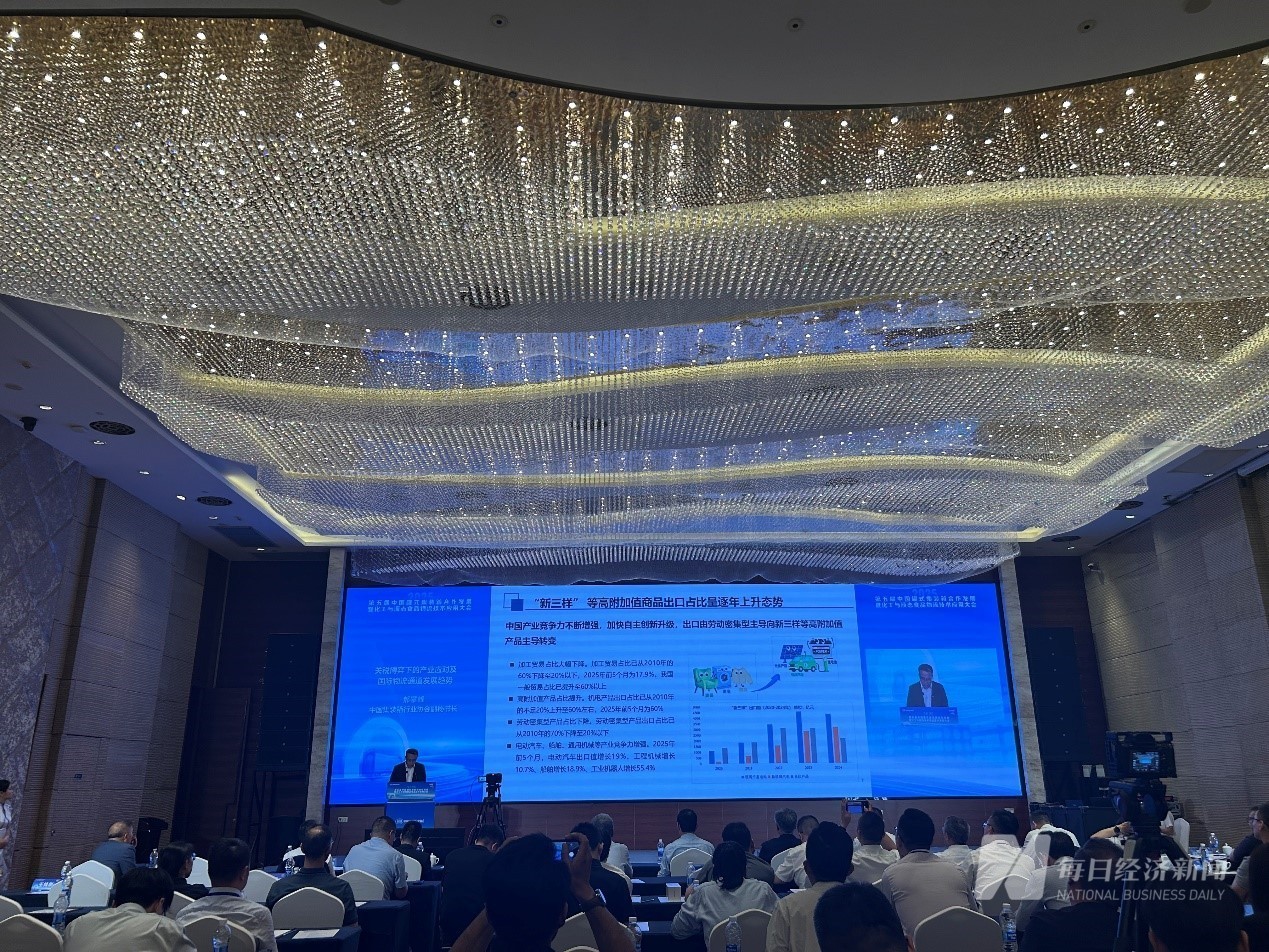
中国集装箱行业协会郝攀峰:全球供应链向区域化、短链化、多元化转变
Mei Ri Jing Ji Xin Wen· 2025-06-27 15:05
Group 1 - The current global industrial transfer is largely a passive response to trade protectionism and geopolitical factors, emphasizing the importance of stable supply chains for adapting to new global trends [1] - The "2024 China Tank Container Industry Development Report" highlights three main characteristics: the rise of high-value liquid raw materials as new cargo sources, continuous expansion of tank container transport scale with major operators exceeding 600,000 TEU in shipment volume, and the evolution of tank container operators into comprehensive third-party logistics service providers [1][4] - The trend of smart containers and intelligent logistics is emerging, with customs enhancing logistics control through technologies like electronic tags and smart locks, although real-time monitoring of container transport remains a challenge [3] Group 2 - The tank container industry is experiencing significant growth, driven by the increasing demand for specialized liquid cargo transport, particularly in the context of China's industrial upgrades and the shift towards clean energy [5][6] - The global supply chain is shifting towards regionalization, short-chain, and diversification, with China optimizing its export structure and enhancing competitiveness, particularly in high-value products [6][7] - The Belt and Road Initiative is facilitating the diversification of logistics channels, transforming international logistics from a single transport mode to a multi-modal network, which is crucial for maintaining efficient supply chains [7]

中集集团: 中国国际海运集装箱(集团)股份有限公司关于子公司深圳中集创新购买松山湖中集智荟园物业暨关联交易的公告
Zheng Quan Zhi Xing· 2025-06-23 14:39
Core Viewpoint - The company plans to acquire 188 residential units in Dongguan for a total price of RMB 163,813,500 to meet employee housing needs and retain core talent in the region [1][9]. Summary by Sections Related Transactions Overview - The acquisition involves Shenzhen CIMC Innovation, a wholly-owned subsidiary of the company, purchasing the residential units from Dongguan Elite Company, which is an affiliate [2][5]. - The transaction is classified as a related party transaction under the Shenzhen Stock Exchange rules but does not fall under the Hong Kong Stock Exchange rules [2][5]. Basic Information of the Parties - Shenzhen CIMC Innovation has a registered capital of RMB 10,000 million and focuses on land use rights leasing and housing leasing [3]. - Dongguan Elite Company, established in November 2016, specializes in apartment management and has a registered capital of RMB 1,000 million [4]. Transaction Details - The total area of the acquired property is 9,100.75 square meters, with a unit price of RMB 18,000 per square meter [5][6]. - The payment structure includes an initial payment of RMB 85,000,000 and the remaining amount contingent upon certain conditions being met [7][8]. Pricing Basis for the Transaction - The transaction price is based on an asset valuation report that estimated the market value of the property at RMB 202,132,400, with a negotiated discount of approximately 20% [8]. Purpose and Impact of the Transaction - The acquisition aims to support the company's operational layout in Dongguan and will not adversely affect the company's financial condition or independence [9].

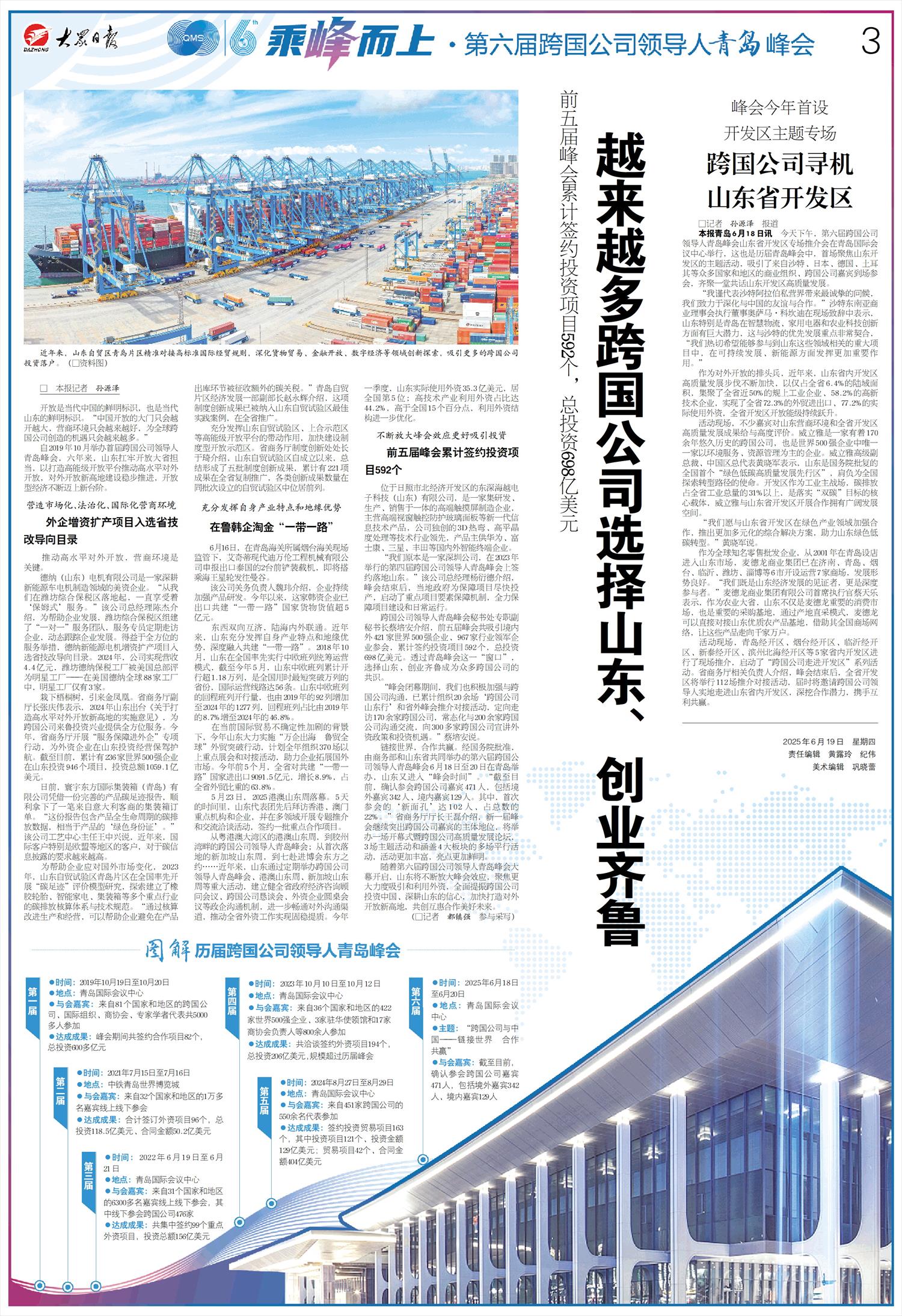
越来越多跨国公司选择山东、创业齐鲁
Qi Lu Wan Bao· 2025-06-20 02:51
Core Viewpoint - Shandong province is enhancing its open economy by creating a high-level open platform to attract multinational companies, with a focus on improving the business environment and facilitating foreign investment [3][13]. Group 1: Investment Environment - Shandong has implemented high-standard international trade rules in the Qingdao Free Trade Zone, promoting innovation in goods trade, financial openness, and the digital economy to attract multinational companies [10][13]. - The province has seen significant foreign investment, with 236 Fortune 500 companies investing in 946 projects, totaling $105.91 billion [4][14]. - The government is providing comprehensive services to foreign enterprises, including a "one-on-one" service team to support their development [14]. Group 2: Carbon Footprint and Sustainability - Companies in Shandong are increasingly focusing on carbon footprint reporting to meet international client demands, particularly from the EU [15]. - The Qingdao Free Trade Zone has pioneered a carbon footprint evaluation model, establishing a carbon emission accounting system for key industries [15][16]. Group 3: Trade and Export Growth - Shandong has actively engaged in the Belt and Road Initiative, with exports to participating countries exceeding $500 million this year [18]. - The province has launched the "Ten Thousand Enterprises Going Global" initiative, planning over 370 trade fairs and matchmaking events to help companies expand into international markets [18]. Group 4: Multinational Company Engagement - The sixth Qingdao Summit for Multinational Company Leaders is set to take place, with 471 confirmed attendees, including 342 international guests [21]. - Previous summits have successfully attracted 421 Fortune 500 companies and resulted in 592 signed investment projects worth $69.8 billion [20][21].

【私募调研记录】久铭投资调研中集集团
Zheng Quan Zhi Xing· 2025-06-11 00:13
Group 1 - The core viewpoint is that the demand for container orders is increasing due to the easing of US-China tariffs, leading to a full order book in the industry [1] - The long-term demand for containers is linked to global trade volume, with growth in global trade expected to drive an increase in container inventory [1] - Trends such as slower green shipping and supply chain diversification are expected to reduce turnover speed, further supporting demand [1] Group 2 - CIMC Yangshan has been undergoing intelligent transformation since 2019 to reduce reliance on manual labor and enhance production efficiency [1] - The company aims to capitalize on industry peaks by significantly improving manufacturing capacity and generating more revenue [1] - CIMC Yangshan is focusing on energy transition and low-carbon industries, developing modular integrated equipment and new energy equipment, including autonomous design and integration capabilities for battery swap stations and modular green hydrogen equipment solutions [1]
中集集团接待8家机构调研,包括广发证券策略会(杭州)、中信证券策略会(上海)、高盛等
Jin Rong Jie· 2025-06-10 03:48
Core Viewpoint - The company reported a strong performance in Q1 2025, with a revenue increase of 11% year-on-year to 36 billion yuan and a significant net profit growth of 550% to 544 million yuan, driven by various business segments [1][2]. Group 1: Q1 Business Performance - The company achieved a revenue of 36 billion yuan in Q1 2025, reflecting an 11% year-on-year growth, attributed to improvements in container, logistics services, energy, and airport sectors [1]. - The gross margin increased by 1.92 percentage points to 12.10%, indicating enhanced operational efficiency [1]. - The net profit attributable to shareholders surged by 550% to 544 million yuan, showcasing a dual improvement in performance and operations [1]. Group 2: H-share Buyback Plan - The company plans to utilize up to 500 million HKD for the repurchase of H-shares, aiming to respond positively to national policy and boost shareholder confidence [2]. - The buyback initiative reflects the company's commitment to enhancing governance and capital operation efficiency, ultimately creating sustainable value for shareholders [2]. Group 3: Impact of US-China Tariffs - The direct impact of US-China tariffs on the company's business is minimal, as the revenue from products exported to the US constitutes a small portion of total sales [3]. - Indirectly, the progress in US-China tariff negotiations has led to increased inquiries and orders for containers, indicating a positive outlook for medium to long-term demand [3]. - The company anticipates a rebound in energy equipment demand due to improved energy needs stemming from the easing of trade tensions [3]. Group 4: Long-term Container Demand - The demand for containers is closely linked to global trade volume, which is expected to grow in the long term, supporting an increase in global container inventory [4]. - Current global container inventory exceeds 53 million TEU, creating a stable demand for replacement due to aging containers [4]. - Factors such as slower turnover rates and the trend towards diversified supply chains are expected to further support container demand [4].

中集集团接待23家机构调研,包括中金公司、瑞银证券、申万宏源等
Jin Rong Jie· 2025-06-10 02:44
Group 1 - The core viewpoint of the article highlights that CIMC Group is experiencing increased demand for container orders due to the easing of US-China tariffs, with a positive outlook for the industry driven by global trade growth and container turnover rates [1][3][4] - CIMC Group's smart transformation initiatives, which began in 2019, have significantly reduced reliance on manual labor and improved production efficiency, allowing the company to capitalize on industry peaks and enhance manufacturing capabilities [1][6][8] Group 2 - CIMC Yangshan is actively developing new business areas, focusing on energy transition and low-carbon industries, and has established capabilities in integrated equipment and customized services [2][8] - The company has reported that the current global container fleet exceeds 53 million TEU, which supports stable replacement demand annually [5]

中集集团(000039) - 000039中集集团投资者关系管理信息20250610(1)
2025-06-10 01:26
Group 1: Business Performance - In Q1 2025, the company's revenue increased by 11% year-on-year to 36 billion RMB, driven by growth in containers, logistics services, energy, and airport sectors [3] - Gross margin improved by 1.92 percentage points to 12.10% [3] - Net profit attributable to shareholders surged by 550% to 544 million RMB, reflecting both performance and operational enhancements [3] Group 2: Share Buyback Plan - The company plans to utilize up to HKD 500 million for the repurchase of H shares in the open market, aiming to boost shareholder confidence and align with national policy [4] Group 3: Impact of US-China Tariffs - Direct revenue from exports to the US is minimal, thus short-term policy changes have limited direct impact on the company [5] - Indirectly, progress in US-China tariff negotiations is expected to release demand for container shipping, leading to increased inquiries and actual orders for containers [5] - Long-term demand for containers is linked to global trade volume, benefiting from China's export resilience and the diversification of supply chains [5][6] Group 4: Global Container Market Insights - Current global container fleet exceeds 53 million TEU, creating stable replacement demand annually [7] - Trends such as green shipping and diversified supply chains are slowing container turnover rates, further supporting container demand [8]
中集集团(000039) - 000039中集集团投资者关系管理信息20250610(2)
2025-06-10 01:26
Group 1: Market Demand and Trends - The easing of US-China tariffs has led to an increase in container order demand, with the industry showing optimism as current orders are relatively full [3]. - Long-term container demand is closely linked to global trade volume, which is expected to grow, resulting in a gradual increase in global container inventory [3]. - As of now, the global container inventory exceeds 53 million TEU, creating a stable demand for replacement each year [3]. Group 2: Impact of Smart Transformation - Since 2019, the company has invested in smart transformation, focusing on upgrading smart equipment, energy-saving modifications, and information technology [3]. - Smart transformation has significantly reduced reliance on manual labor, with labor in the assembly process reduced by one-third and over half in the chassis process, mitigating risks during peak order periods [3]. - The implementation of smart upgrades has greatly enhanced production efficiency, allowing the company to capitalize on historical opportunities during the industry peak from 2021 to 2022 [3]. Group 3: New Business Development - The company is actively pursuing new business avenues beyond traditional container operations, focusing on energy transition and low-carbon industries [4]. - Recent developments include the design and integration capabilities for battery swap stations and hydrogen energy solutions, establishing a comprehensive system integration capability in the "container+" sector [4]. - The company aims to provide customized services across the entire value chain, leveraging its past capabilities and industry brand effect [4].