
高新技术产业

Search documents
南阳市城乡一体化示范区税务局:精准施策 赋能科创企业高质量发展
Sou Hu Cai Jing· 2025-08-15 10:02
Core Viewpoint - The establishment of the "High-tech Enterprise Service Team" by the Nanyang Urban-Rural Integration Demonstration Zone Taxation Bureau aims to provide tailored tax services to high-tech enterprises, enhancing their innovation capabilities and supporting regional economic development [1][2]. Group 1: Service Team Formation and Objectives - The "High-tech Enterprise Service Team" is composed of experts from various key departments, including tax policy, revenue management, and taxpayer services, ensuring comprehensive support for high-tech enterprises [1]. - The team's goal is to accurately address the development needs of high-tech enterprises and inject strong "tax motivation" into their innovation processes [1]. Group 2: Innovative Service System - The service team has introduced a "three-style service" system, which includes menu-based guidance, embedded services, and tracking management to assist high-tech enterprises with complex R&D tax policies [1]. - The menu-based guidance allows enterprises to select from a detailed list of high-frequency policies, while embedded services involve proactive support during critical project phases [1]. - Tracking management establishes a dedicated service ledger for each high-tech enterprise, ensuring they fully benefit from tax incentives [1]. Group 3: Training and Future Plans - Since its establishment, the service team has conducted multiple training sessions on R&D expense deductions, effectively reaching a wide range of high-tech enterprises [2]. - The team actively visits enterprises to understand their needs and resolve issues related to policy application and reporting, thereby alleviating financial pressures on R&D [2]. - Future plans include enhancing the team's professional capabilities and deepening inter-departmental cooperation to integrate tax services into all stages of technological innovation and achievement transformation [2].
2025年中国城区经济高质量发展研究报告
Sou Hu Cai Jing· 2025-08-14 14:20
Core Insights - The report focuses on the high-quality development of urban economies in China during the "14th Five-Year Plan" period, analyzing 904 urban districts and highlighting significant growth trends and structural changes in urban economies [1][6][10]. Economic Growth - From 2020 to 2024, the GDP of urban districts in China increased from 45.2 trillion yuan to 57.2 trillion yuan, with an average annual compound growth rate of approximately 6.1% [1][22]. - The number of "billion-yuan urban districts" rose from 111 to 171, with 16 new additions in 2024, indicating a significant enhancement in the scale of urban economies [1][22]. Regional Disparities - The report notes a slight alleviation of the "East Strong, West Weak" pattern, with 58 districts in the East, 19 in the West, 22 in the Central region, and 1 in Northeast China. However, the "South Strong, North Weak" trend remains pronounced, with 84 districts in the South and 16 in the North [1][10]. Development Trends - Six major trends are expected for the top 100 urban districts during the "14th Five-Year Plan": 1. Innovation will shift from technology catching up to original leadership 2. Industry will transition from scale expansion to high-end value chain refinement 3. Spatial development will evolve from single-point growth to networked collaboration 4. Ecology will transform from emission reduction constraints to zero-carbon industries 5. Openness will change from foreign trade dependence to rule-based leadership 6. Society will progress from basic security to quality living [1][11][10]. Policy Recommendations - The report suggests promoting the integration of "science and technology + industry," advancing the "strong foundation leap chain" in advanced manufacturing, and enhancing the "people-city integration" for spatial reconstruction [1][11][19]. Innovation and Investment - As of 2024, there are 299,764 high-tech enterprises located in urban districts, with 8,424 specialized and innovative "little giant" enterprises, primarily concentrated in Guangdong, Jiangsu, and Zhejiang provinces [27][29]. - Fixed asset investment in urban districts showed a recovery trend, with an average growth rate rebounding from 1.9% in 2023 to 3.5% in 2024 [30][31]. Consumer Market - The total retail sales of consumer goods in urban districts increased from 18.57 trillion yuan in 2020 to 23.10 trillion yuan in 2024, reflecting strong consumer resilience and potential [30][31]. Industrial Clusters - Nearly 50% of the 100 small and medium-sized enterprise characteristic industrial clusters identified by the Ministry of Industry and Information Technology are located in urban districts, indicating a robust industrial cluster development [31][33]. Conclusion - The report emphasizes that urban districts will continue to play a crucial role in driving high-quality economic development in China, serving as a vital force in building a more resilient and dynamic modern economic system [25][29].


两个“2万亿元”透露出什么信号
Zheng Quan Ri Bao· 2025-08-13 16:14
Core Viewpoint - The recent milestones in the A-share market, including a total trading volume exceeding 2 trillion yuan and the Shanghai Composite Index reaching a new high, reflect a significant recovery in market confidence and risk appetite, driven by resilient macroeconomic fundamentals, proactive policies, and liquidity easing [1][2][3][4][5] Economic Resilience - China's strong economic resilience and vitality provide solid confidence support for the capital market, with GDP growing by 5.3% year-on-year in the first half of the year, surpassing both last year's level and the previous year's growth [2] - The development of new productive forces and technological innovation continues to accelerate, with high-tech industries' added value increasing by 9.5% year-on-year [2] Policy Impact - The implementation of the new "National Nine Articles" has effectively stabilized market expectations and improved the quality of listed companies, with 299 out of 334 companies reporting profits and 218 showing year-on-year net profit growth [3] - The recent Central Political Bureau meeting emphasized the importance of consolidating the upward trend in the capital market, signaling strong policy support [3] Liquidity and Market Dynamics - The central bank's measures, including reserve requirement ratio cuts and MLF, have maintained reasonable liquidity in the banking system, with M2 growth accelerating to 8.8% year-on-year [4] - The substantial increase in household savings, with new deposits reaching 4.88 trillion yuan from 2022 to 2024, enhances the market's potential, making the stock market increasingly attractive as the earning effect improves [4] Market Sentiment - The dual "2 trillion yuan" figures signify a responsive market to economic dynamics and policy support, indicating a robust embrace of quality assets in a liquidity-rich environment [5] - The future vitality of the market hinges on a return to fundamental value, emphasizing the need for a balanced perspective on risks and confidence [5]
江苏推进高新区和高校协同创新发展
Zhong Guo Hua Gong Bao· 2025-08-04 05:44
Core Viewpoint - The Jiangsu Provincial Government has issued the "Implementation Opinions on Promoting Collaborative Innovation Development between High-tech Zones and Higher Education Institutions," aiming to enhance the synergy between high-tech zones and universities to create a unique system of technological and industrial innovation integration in Jiangsu [1][2]. Group 1: Objectives and Goals - The strategic goal is to cultivate new quality productivity, focusing on the two main entities: high-tech zones and universities, and exploring a model of "organized research + organized transformation" [1]. - By 2027, the plan aims for full coverage of collaborative innovation development models across the province, establishing a deep collaboration framework among provincial, municipal, district, and university levels [2]. Group 2: Implementation Phases - The implementation of "dual high collaboration" will occur in two phases: a pilot phase from 2025 to 2026, and a comprehensive coverage phase in 2027 [2]. - During the pilot phase, 1 to 2 high-tech zones and universities will be selected in each district city to explore a "five-in-one" integrated development system [2]. Group 3: Key Tasks and Support Measures - The six main tasks outlined include promoting the new quality transformation of high-tech zones, advancing comprehensive reforms in higher education, tackling key core technology challenges, facilitating high-level technology achievement transformations, deepening industry-education integration, and promoting shared innovation resources [3]. - To ensure successful task completion, five support measures are proposed, including strengthening innovation platform construction, enhancing talent training incentives, increasing financial support, promoting landmark achievements, and fostering new industries [3].
海南:到2027年四大主导产业增加值占GDP比重70%左右
Zheng Quan Shi Bao Wang· 2025-08-04 01:50
Core Viewpoint - The Hainan Provincial Government has issued a three-year action plan (2025-2027) aimed at establishing a modern industrial system with distinctive advantages, targeting a GDP contribution of 70% from four leading industries by 2027 [1] Group 1: Economic Development Goals - By 2027, the contribution of four leading industries to GDP is expected to reach approximately 70% [1] - The construction of an international tourism consumption center is advancing, with continuous release of tourism consumption potential [1] Group 2: Service and Manufacturing Integration - The integration of productive services and advanced manufacturing is accelerating, while the life service industry is optimizing towards high quality and diversification [1] - The value added of modern services is projected to approach 30% of GDP [1] Group 3: Innovation and R&D Investment - There is a deep integration of technological innovation and industrial innovation, with a target R&D expenditure intensity of 1.8% by 2027 [1] - The value added of high-tech industries is expected to exceed 17% of GDP by 2027 [1] Group 4: Agricultural Development - A collaborative development pattern is forming in tropical characteristic high-efficiency agriculture, with an annual growth rate of over 5% in the value added of the entire industrial chain of leading agricultural industries [1]
广东制造业和高新技术企业贷款可享财政贴息
Sou Hu Cai Jing· 2025-08-04 00:46
Core Points - Guangdong Province has introduced a loan interest subsidy policy aimed at manufacturing and high-tech enterprises, effective from May 1, 2025, to December 31, 2027, with a maximum annual subsidy of 20 million yuan per enterprise [1][2] - The policy aims to enhance the accessibility of subsidy funds to enterprises, encouraging banks to approve loans quickly and efficiently, thereby boosting enterprise confidence and investment in innovation [1][2] Summary by Category Policy Details - The subsidy applies to loans issued to eligible manufacturing and high-tech enterprises, with a total loan scale capped at 200 billion yuan per year, amounting to a total of 600 billion yuan over three years [2] - Each loan contract can receive a subsidy for a maximum of one year, and the total subsidy cannot exceed the total interest of the loan [2] Eligible Entities - The policy specifically targets manufacturing enterprises registered in Guangdong under the national economic industry classification and high-tech enterprises recognized according to relevant policies [1][2] - A total of 21 national banks, 5 local city commercial banks, and various rural commercial banks in Guangdong are authorized to process these loans [2] Usage Restrictions - The loans must be used for specific purposes such as building factories, purchasing equipment, technological transformation, and R&D, and cannot be used for debt repayment, land purchases, or other non-productive investments [2]
中国人民银行:二季度末我国科技型中小企业获贷率为50%
Zhong Guo Chan Ye Jing Ji Xin Xi Wang· 2025-08-03 00:38
Group 1 - The People's Bank of China reported that by the end of Q2 2025, 274,000 technology-based SMEs received loan support, with a loan approval rate of 50%, an increase of 3.2 percentage points year-on-year [1] - The loan balance for technology-based SMEs reached 3.46 trillion yuan, representing a year-on-year growth of 22.9%, which is 16.1 percentage points higher than the growth rate of all loans [1] - The report indicated significant support for innovative enterprises, with 266,800 high-tech enterprises receiving loans by the end of Q2, achieving a loan approval rate of 57.6%, up by 1 percentage point from the previous year [1] Group 2 - The loan balance for high-tech enterprises was 18.78 trillion yuan, showing a year-on-year increase of 8.2%, which is 1.4 percentage points higher than the overall loan growth rate [1] - In terms of green loans, the balance of domestic and foreign currency green loans reached 42.39 trillion yuan, growing by 14.4% since the beginning of the year, with an increase of 535 billion yuan in the first half of the year [1] - Specific categories of green loans included 18.75 trillion yuan for infrastructure green upgrades, 8.25 trillion yuan for energy green low-carbon transitions, and 4.95 trillion yuan for ecological protection and restoration [1] Group 3 - By the end of Q2, the balance of real estate loans was 53.33 trillion yuan, reflecting a year-on-year growth of 0.4%, which is 0.6 percentage points higher than the growth rate at the end of the previous year [1] - In the first half of the year, real estate loans increased by 416.6 billion yuan [1]
两类企业贷款最高补贴2000万!广东出台利息“省补”政策
Sou Hu Cai Jing· 2025-08-02 17:05
Core Viewpoint - Guangdong Province has introduced a loan interest subsidy policy aimed at reducing financing costs for manufacturing and high-tech enterprises, with a maximum annual subsidy of 20 million yuan per enterprise from May 1, 2025, to December 31, 2027 [1][4]. Group 1: Policy Implementation - The policy is designed to facilitate direct access to subsidy funds for enterprises, ensuring banks can efficiently process loans and subsidies [1][6]. - The maximum annual subsidy per enterprise is set at 20 million yuan, with a total loan scale of 600 billion yuan over three years, capped at 200 billion yuan per year [4][6]. Group 2: Eligibility and Restrictions - Eligible enterprises include those registered in Guangdong under the "C Manufacturing" category and recognized high-tech enterprises according to relevant policies [4][7]. - The funds cannot be used for debt repayment, purchasing land, or non-productive investments, ensuring that the loans are directed towards productive uses such as facility construction and technological upgrades [7][8]. Group 3: Administrative Efficiency - The application process is streamlined, with banks handling the majority of the administrative burden, allowing for quarterly subsidy applications [6][7]. - The policy aims to enhance enterprise confidence and stimulate economic activity by making financial resources more accessible [7][8].
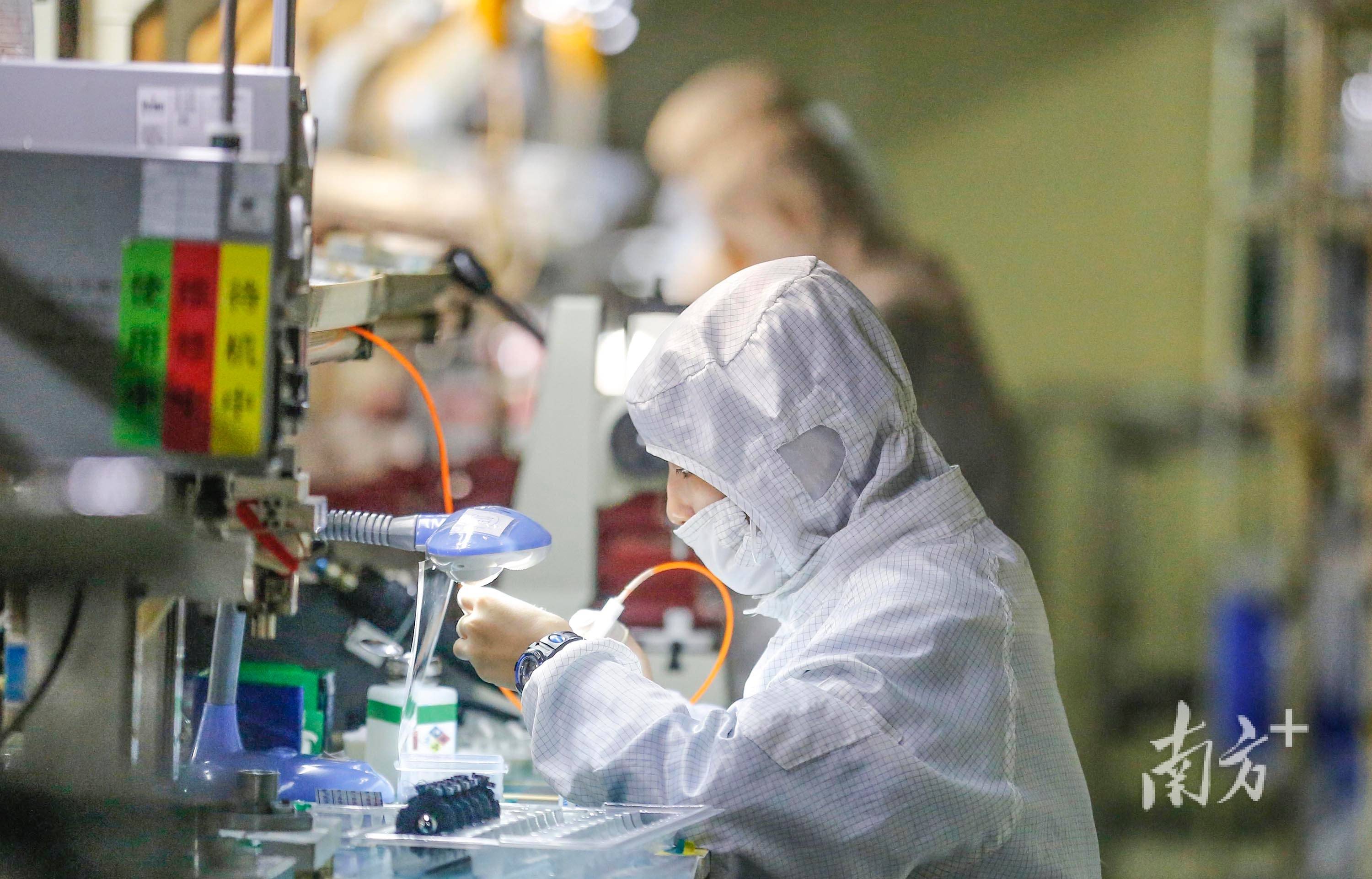
降低制造业和高新技术企业融资成本,广东:单个企业年度贴息金额最高2000万元
Sou Hu Cai Jing· 2025-08-02 10:56
Group 1 - The core objective of the "Implementation Rules" is to support innovation and development of market entities, leveraging fiscal funds to reduce financing costs for manufacturing and high-tech enterprises [1] - The fiscal interest subsidy will be available for eligible manufacturing and high-tech enterprises that obtain bank loans between May 1, 2025, and December 31, 2027 [1] - The maximum annual interest subsidy for a single enterprise is capped at 20 million yuan, with the total loan subsidy not exceeding the total interest paid on the loan during the subsidy year [1] Group 2 - The total scale of interest subsidies from the provincial finance is limited to 200 billion yuan per fiscal year, with a total of 600 billion yuan over three years, and applications will cease once the quota is exhausted [1] - Each loan contract can enjoy interest subsidies for a maximum of one year, and the same loan project cannot receive more than one subsidy within the subsidy year [1]
最高2000万元!广东制造业和高新技术企业贷款贴息实施细则公布
Sou Hu Cai Jing· 2025-08-02 05:36
Core Viewpoint - Guangdong Province has issued implementation details for loan interest subsidies aimed at supporting manufacturing and high-tech enterprises from May 1, 2025, to December 31, 2027, with a total loan scale capped at 600 billion yuan [1][2]. Group 1: Policy Overview - The policy aims to lower financing costs for eligible manufacturing and high-tech enterprises, aligning with the provincial government's initiative to stimulate market vitality and modernize the industrial system [2]. - The maximum annual subsidy per enterprise is set at 20 million yuan, with the total loan scale for the provincial fiscal year limited to 200 billion yuan [1][9]. Group 2: Eligibility and Restrictions - Eligible enterprises include those registered in Guangdong that fall under the manufacturing sector or are recognized as high-tech enterprises [6]. - Loans cannot be used for debt repayment, purchasing non-productive assets, or investments in prohibited sectors [8][9]. Group 3: Implementation and Management - The provincial financial management bureau will oversee the subsidy program, coordinating with various departments to ensure compliance and effective implementation [3][4]. - A negative list approach will be used to determine eligible loan purposes, ensuring funds are directed towards productive investments [8]. Group 4: Application Process - Banks will handle the application process, requiring enterprises to submit necessary documentation for subsidy claims [13]. - The subsidy application will be reviewed quarterly, with funds disbursed within ten working days after approval [14]. Group 5: Monitoring and Compliance - Strict measures will be in place to prevent misuse of funds, with regular audits and checks conducted by relevant authorities [15][16]. - Any fraudulent activities will be subject to penalties as per existing financial regulations [15].