
脑机接口

Search documents
数十队青年人才竞技“脑联世界” 2025脑机接口大会将开幕 通过一场竞技赛集中检阅脑机接口技术实力
Jie Fang Ri Bao· 2025-12-02 01:55
Core Insights - The 2025 Brain-Computer Interface (BCI) Conference will be held in Shanghai from December 4 to 5, focusing on technological breakthroughs and industry development in the BCI sector [1] Group 1: Event Overview - The conference theme is "Brain Link World · Wisdom Gathering Shanghai," aiming to establish Shanghai as a global hub for BCI innovation and industry [1] - The event will feature a comprehensive format including a main forum, developer conference, BCI competition, exhibition, eight sub-forums, and multiple product launches, creating an ecosystem for deep integration of technology, industry, and capital [1] Group 2: BCI Competition - A total of 63 teams registered for the competition, with 40 teams advancing to the finals, showcasing the active participation of young talent in the BCI field, with an average age of participants being 25 [2] - The competition includes four specific tracks: emotion perception, fatigue monitoring, brain-controlled robotic arms, and brain-controlled racing cars, testing the performance and stability of BCI systems in real-time [1][2] Group 3: Developer Conference and Investment Forum - The developer conference will gather developers and technical teams to share insights on development tools, datasets, and hardware customization [2] - The investment cooperation sub-forum aims to create a new paradigm for BCI industry development by integrating technology, capital, and clinical applications, facilitating connections between enterprises, clinical sectors, and investors [2] - A report titled "Brain Science Technology Map and Talent Map" will be released to guide overseas Chinese scientists in their return to China, along with early-stage project roadshows in six specific areas of BCI technology [2]
智通港股早知道 | 2025脑机接口大会本周将在上海开幕 国际银价续创历史新高
Jin Rong Jie· 2025-12-02 00:13
Group 1: Brain-Computer Interface Industry - The 2025 Brain-Computer Interface (BCI) Conference will be held in Shanghai from December 4-5, featuring various events including a main forum, developer conference, and BCI competition [1] - Domestic policies are actively promoting the BCI industry, with accelerated clinical and commercialization progress, indicating a positive outlook for the sector [1] - The BCI industry in China has developed a complete industrial chain covering upstream (materials, chips, electrodes), midstream (signal acquisition and processing), and downstream (medical health, consumer life, industrial production) [1] Group 2: Stock Market Performance - The U.S. stock market saw declines across major indices, with the Dow Jones down 427.09 points (0.9%), S&P 500 down 36.46 points (0.53%), and Nasdaq down 89.77 points (0.38%) [2] - Notable tech stocks experienced mixed results, with Broadcom down over 4% and companies like Nvidia and Apple gaining over 1% [2] - Chinese concept stocks mostly rose, with the Nasdaq Golden Dragon China Index up 0.87%, led by gains in companies like NetEase and Alibaba [2] Group 3: Precious Metals Market - COMEX gold futures increased by $10.10 (0.24%) to $4265.0 per ounce, while international silver prices reached a historical high, rising 2.8% to $57.99 per ounce [3] Group 4: Pharmaceutical Developments - The World Health Organization highlighted the potential of GLP-1 weight loss drugs, such as Mounjaro, in addressing the global obesity crisis, with an estimated 2 billion people affected by obesity by 2030 [4] Group 5: Corporate Investments - CATL announced its participation in the investment of the "Boyu New Intelligence New Industry Equity Investment Partnership," committing RMB 5 billion, representing a 12.497% stake in the fund [5] - China Mobile received approval to transfer 41,981,348 A-shares to China National Petroleum Corporation, which will not significantly impact its operations or change its controlling shareholder [6] Group 6: Technology Advancements - Apple is accelerating the development of its first foldable iPhone, expected to launch in fall 2026, featuring key technological advancements and a projected price of around $2400 [7] Group 7: Fundraising Activities - Three Life Pharmaceutical is seeking to raise approximately $400 million through a share placement, with a price range of HKD 29.46-30.10 per share, representing a discount of 5%-7% from the latest closing price [8] Group 8: Business Adjustments - Oriental Selection announced a normal operational adjustment by adding food delivery and catering services to its business scope, with no specific details disclosed yet [9] Group 9: Automotive Sales Data - BYD reported approximately 4.182 million electric vehicle sales in the first 11 months, a year-on-year increase of 11.3%, while Geely's total sales reached 2.78775 million units, up 42% [10] Group 10: Mining Exploration Results - Minmetals Resources reported positive results from resource expansion drilling at High Lake, confirming multiple mineralization occurrences and planning further exploration [11]
【关注“十五五”规划】前瞻布局未来产业 中国具备禀赋优势
Zheng Quan Shi Bao· 2025-12-01 18:12
Core Viewpoint - The Chinese government has outlined a strategic initiative to proactively layout future industries, focusing on six key areas: quantum technology, biomanufacturing, hydrogen energy and nuclear fusion, brain-computer interfaces, embodied intelligence, and sixth-generation mobile communication. This initiative aims to enhance the country's industrial structure and drive economic growth [1]. Group 1: Future Industry Layout - The strategic layout of future industries is expected to clarify the direction of China's industrial structure and serve as a new pillar for economic growth [1]. - The six core areas identified for future industry development are characterized by their strategic, leading, and disruptive features [1]. Group 2: Advantages of Development - China possesses three unique advantages for developing future industries: a new type of national system for resource concentration, a complete industrial system for technology commercialization, and a vast market for rapid application and iteration of new technologies [1]. - The country is also expected to leverage its technological innovation advantages to support these developments [1]. Group 3: Technological Advancements - In embodied intelligence, China is achieving breakthroughs in both "smart brains" and "strong bodies," with increasing levels of model generalization [2]. - The country has developed leading brain-computer interface technologies, including ultra-flexible, minimally invasive electrodes and dynamic electrodes that can navigate within animal brains [2]. - In biomanufacturing, China leads globally in CAR-T cell therapy and original drug production [2]. - Quantum technology advancements include the "Zuchongzhi No. 3" supercomputer, which is significantly faster than the world's fastest supercomputer, and the "Wukong" quantum computer, which has completed over 710,000 calculations globally [2]. Group 4: Innovation Rankings - According to the Global Innovation Index 2025, China has entered the top ten for the first time, achieving its highest ranking at fourth place [3]. - The Global Key and Emerging Technologies Index 2025 indicates that while the U.S. remains the leading technology power, China ranks second in key technology fields such as semiconductors and artificial intelligence [3]. - China has 24 of the world's top 100 innovation clusters, maintaining its position as the global leader for three consecutive years [3]. Group 5: Policy Initiatives - The National Development and Reform Commission and the Ministry of Industry and Information Technology have issued implementation opinions to promote innovation in future industries, including specific policies for brain-computer interfaces and biomanufacturing [4]. - The State Council has introduced measures to accelerate the cultivation of application scenarios across various fields, establishing a comprehensive ecosystem for future industries [4]. Group 6: Industry Growth - Approximately 350 companies related to brain-computer interfaces have emerged in China, creating a complete industrial chain from core components to end applications [5]. - China has established the largest solar panel and flat screen film production bases globally, along with 23 biomanufacturing bases [5]. - With over 300 billion yuan allocated to quantum technology and substantial local funding, major provinces are developing numerous quantum technology application scenarios [5]. - The country has built 4.55 million 5G base stations, indicating a strong push towards future industries characterized by national strategic guidance and large-scale market applications [5].
海南布局现代化产业体系 谋划五条新质生产力赛道
Zhong Guo Xin Wen Wang· 2025-12-01 13:22
Core Viewpoint - Hainan Province is planning to establish a modern industrial system with a "45432" framework, focusing on optimizing existing industries and fostering new productive forces to enhance economic development [1][2]. Group 1: Industrial Optimization - The four leading industries in Hainan, namely tourism, modern services, high-tech industries, and tropical efficient agriculture, currently account for over 67% of the province's GDP. The province aims to enhance these sectors through chain supplementation and optimization during the 14th Five-Year Plan period [2]. Group 2: New Productive Forces - Hainan will leverage its unique resources to develop five new productive force tracks, including creating a "Southern Seed Silicon Valley," establishing a core hub for deep-sea technology innovation, expanding aerospace-related industries, developing a low-altitude economy, and building a green and low-carbon industrial supply chain [2]. Group 3: Future Industries - The province will focus on four cutting-edge fields: biomanufacturing, hydrogen energy, brain-computer interfaces, and embodied intelligence, to cultivate new hotspots for future industries [2]. Group 4: Consumer Development - Hainan plans to enhance its duty-free shopping reputation, develop the Boao Lecheng Medical Special Zone, and strengthen the "Study in Hainan" brand to boost consumption [2]. Group 5: Talent and Innovation - The province will implement the "Million Talents to Prosper Hainan" initiative to create a hub for technological innovation, reform, and open cooperation [3].
读懂中国“十五五”规划,中国式现代化彰显共享发展机遇承诺
2 1 Shi Ji Jing Ji Bao Dao· 2025-12-01 12:00
Core Insights - The "Understanding China" International Conference is being held for the 12th year, focusing on the theme of "New Layout, New Development, New Choices - Chinese-style Modernization and the New Global Governance Pattern" [1] - The conference aims to discuss the significance of the 14th Five-Year Plan and its implications for global governance, emphasizing China's role in providing new opportunities for developing countries [2][3] Group 1: Conference Themes and Objectives - The conference introduces two new topics: understanding the 14th Five-Year Plan and the four global initiatives, including the Global Governance Initiative [2] - The 14th Five-Year Plan is seen as a departure from the notion that modernization equals Westernization, offering new choices for developing countries [2][6] - The conference serves as a platform for global South countries to learn from China's modernization experience and to promote the concept of a community with a shared future for mankind [3][7] Group 2: International Cooperation and China's Role - Former Italian Prime Minister Romano Prodi highlights China's increasing importance in international cooperation, contrasting it with the past U.S.-led initiatives [2] - The conference emphasizes the need for collaboration among nations, particularly in the context of global challenges [2][4] - The participation of representatives from 72 countries, with a significant portion from the global South, indicates the growing influence of the conference [3] Group 3: Economic Strategies and Development Plans - The 14th Five-Year Plan focuses on domestic demand and international cooperation as core components of China's modernization strategy [3][6] - The plan aims to integrate economic growth with global cooperation, emphasizing shared opportunities and mutual development [6][7] - The plan includes innovative strategies for technology and industry, aiming to establish new economic growth points [8][9] Group 4: Regional Development and Innovation - The conference discusses the development experiences of the Guangdong-Hong Kong-Macao Greater Bay Area and Hainan Free Trade Port, highlighting their roles in China's modernization [12][13] - The Greater Bay Area is viewed as a vibrant region with significant potential for economic development and innovation [12] - The Hainan Free Trade Port is set to enhance international trade and cooperation, marking a new phase of China's high-level opening up [13]
科幻照进现实!全国首例“医保价”手术完成,脑机接口未来已来
市值风云· 2025-12-01 10:10
Core Viewpoint - The article discusses the advancements in brain-computer interface (BCI) technology, highlighting its clinical applications and the support from national healthcare policies in China, particularly the first BCI surgery covered by insurance in the country [3][10][22]. Summary by Sections What is Brain-Computer Interface? - BCI is a cutting-edge system engineering that connects the brain with external devices, enabling bidirectional information exchange through neural signal acquisition and decoding [6]. Types of BCI Technologies - **Invasive Technology**: Involves surgical implantation of electrode arrays into the central nervous system, providing high-quality signals but with significant health risks [7]. - **Non-Invasive Technology**: Utilizes wearable devices to collect brain signals without surgery, dominating the market but with lower signal quality [8][9]. - **Semi-Invasive Technology**: Balances between invasive and non-invasive methods, implanting electrodes within the skull but not penetrating brain tissue, suitable for patients needing high signal quality without full surgery [11]. Domestic and International Technology Comparison - **China**: Dominates in non-invasive technology, with 70% market share in 2024, and is pushing for breakthroughs in implantable devices [13]. - **USA**: Leads in invasive technology, with companies like Neuralink advancing clinical applications for various medical conditions [14]. - **Other Countries**: Countries like Japan and Germany are exploring semi-invasive technologies to balance performance and clinical feasibility [16]. Market Growth - The BCI industry is rapidly expanding, particularly in medical rehabilitation and consumer electronics, with China's market expected to exceed 8 billion yuan by 2025 and reach 15 billion yuan by 2027, reflecting a compound annual growth rate of over 40% [17]. - Globally, the market is projected to grow from approximately $2.35 billion in 2023 to $10.89 billion by 2033, with medical applications accounting for over 50% [19]. Driving Factors Behind Growth - **Policy Support**: The establishment of BCI as an independent billing item by the National Healthcare Security Administration in 2025 has facilitated commercialization [22]. - **Technological Advancements**: Improvements in signal acquisition precision and processing efficiency are enhancing product performance and reducing costs [22]. - **Funding and Collaboration**: Local governments are fostering partnerships between academia and industry, accelerating innovation and increasing investment in the BCI sector [22]. Industry Chain Analysis - The BCI industry encompasses a complete ecosystem from core hardware to signal processing and application in medical and consumer sectors, forming a comprehensive technological framework [23].

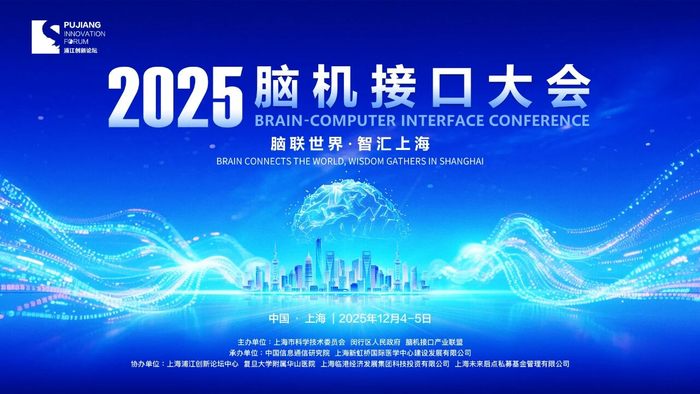
2025脑机接口大会即将开幕,这场新闻通气会详解大会亮点内容
第一财经网· 2025-12-01 09:27
Core Insights - Shanghai is leading the development of brain-computer interface (BCI) technology in China, with significant breakthroughs and a strategic plan for industry growth by 2025 [3][4][6] Industry Development - Shanghai has launched the "Brain-Computer Interface Future Industry Cultivation Action Plan (2025-2030)", focusing on medical-grade applications and strategic product development [3] - The city has achieved several milestones, including the initiation of clinical trials for the first domestic implantable BCI and the first real-time Chinese language decoding trial [4] - The establishment of the "Brain Intelligence World" industrial cluster in the Minhang District aims to create a comprehensive ecosystem for BCI innovation, integrating research, clinical resources, and industry collaboration [4][7] Upcoming Events - The 2025 BCI Conference will take place on December 4-5, featuring various activities such as developer forums, competitions, and investment conferences to enhance resource connectivity [5][10] - The conference will showcase new products from leading BCI companies and facilitate in-depth exchanges among global BCI professionals [6][11] Policy and Support - The Minhang District has introduced specific policies to support BCI industry growth, including substantial financial incentives for leading enterprises and startups [8][9] - A public service platform for BCI medical devices is being established to provide comprehensive support for testing, certification, and clinical trials [15][16] Clinical Collaboration - Fudan University Huashan Hospital is implementing a phased clinical cooperation strategy to ensure patient safety while accelerating technology validation and product deployment [17][18] - The hospital has set up a "BCI Clinic" to offer one-stop consulting services for innovative companies, streamlining the transition from laboratory to clinical application [18] Investment and Future Outlook - The investment forum during the BCI Conference aims to create a deep integration of technology, capital, and clinical applications, establishing a new paradigm for BCI industry development [20][21] - The forum will also focus on attracting overseas talent and fostering early-stage BCI startups through targeted project presentations and discussions [21]
招商局中国基金(00133)出资1500万元投资博睿康技术
智通财经网· 2025-12-01 08:57
Core Viewpoint - The company, China Merchants China Fund, has announced an investment of 15 million RMB in Boreas Technology (Shanghai) Co., Ltd. as part of its E-round financing, aiming to enhance its portfolio in the medical sector [1] Group 1: Investment Details - The investment agreement was signed on October 28, 2025, and the funding was completed on November 7, 2025 [1] - The investment amount is 15 million RMB, which is approximately 2.1 million USD [1] Group 2: Company Overview - Boreas Technology, established in November 2011, specializes in brain-machine interface technology and is recognized as a high-tech enterprise in mainland China [1] - The company focuses on the research, development, production, and sales of brain-machine interface systems and related technical services [1] Group 3: Market Applications - Boreas Technology's products are applicable in various fields, including neuroscience, psychology, human factors engineering, kinesiology, and management science [1] - The company's innovations also cater to clinical applications for diagnosing, treating, and rehabilitating neurological diseases, gaining recognition from experts in both domestic and international medical fields [1] Group 4: Strategic Implications - The investment in Boreas Technology is expected to increase the proportion of medical-related projects within the company's investment portfolio, optimizing its overall investment strategy [1]
招商局中国基金出资1500万元投资博睿康技术
Zhi Tong Cai Jing· 2025-12-01 08:45
Core Viewpoint - The company has announced an investment in BoRuiKang Technology (Shanghai) Co., Ltd., focusing on brain-machine interface technology, which is expected to enhance its medical-related project portfolio [1] Group 1: Investment Details - China Merchants China Fund's wholly-owned subsidiary, Shenzhen Tianzheng Investment Co., Ltd., signed a share purchase agreement with BoRuiKang Technology, agreeing to invest 15 million RMB in its E-round financing [1] - The investment was completed on November 7, 2025 [1] Group 2: Company Overview - BoRuiKang Technology, established in November 2011, specializes in the research, development, production, and sales of brain-machine interface systems and related equipment [1] - The company aims to provide comprehensive solutions for innovative research in neuroscience and clinical diagnosis, treatment, and rehabilitation of neurological diseases [1] Group 3: Market Position and Recognition - BoRuiKang Technology has accumulated significant technical reserves and development experience in the brain-machine interface field over the years [1] - Its products are applicable in various research fields, including neuroscience, psychology, human factors engineering, kinesiology, and management, as well as in clinical medicine for diagnosing and treating neurological diseases [1] - The company's research achievements and technical capabilities have been widely recognized by experts in the fields of neural engineering and clinical medicine both domestically and internationally [1] Group 4: Strategic Implications - The investment in BoRuiKang Technology is expected to increase the proportion of medical-related projects within the company's investment portfolio, optimizing its overall investment strategy [1]
招商局中国基金(00133.HK)斥资1500万元参与脑机接口企业博睿康技术E轮融资
Ge Long Hui· 2025-12-01 08:43
Core Viewpoint - China Merchants China Fund (00133.HK) announced that its wholly-owned subsidiary, Shenzhen Tianzheng Investment Co., Ltd., has signed a share purchase agreement with Boryeong Technology (Shanghai) Co., Ltd. to invest 15 million RMB in its E-round financing [1] Company Overview - Boryeong Technology, established in November 2011, focuses on the research, development, production, sales, and technical services of brain-machine interface systems, positioning itself as a high-tech enterprise in mainland China [1] - The company aims to provide comprehensive solutions for innovative research in neuroscience and clinical diagnosis, treatment, and rehabilitation of neurological diseases [1] Technological Expertise - Boryeong Technology has accumulated significant technical reserves and development experience in the brain-machine interface field over the years [1] - Its products are applicable in various research fields, including neuroscience, psychology, human factors engineering, kinesiology, and management science, as well as in clinical medicine for diagnosing, treating, and rehabilitating neurological diseases [1] - The company's research achievements and technical capabilities have gained recognition from experts in the fields of neuroengineering and clinical medicine both domestically and internationally [1]