AI

Search documents
Jim Cramer Can’t Believe The Multiple The Goldman Sachs Group, Inc. (GS) Is Trading At
Insider Monkey· 2025-09-10 06:46
Core Insights - Artificial intelligence (AI) is identified as the greatest investment opportunity of the current era, with a strong emphasis on the urgency to invest now [1][13] - The energy demands of AI technologies are highlighted, indicating a looming crisis in power supply as AI continues to grow [2][3] Investment Opportunity - A specific company is positioned as a critical player in the AI energy sector, owning essential energy infrastructure assets that will benefit from the increasing energy demands of AI data centers [3][7] - This company is not a chipmaker or cloud platform but is described as a "toll booth" operator in the AI energy boom, collecting fees from energy exports [5][6] Financial Position - The company is noted for being debt-free and holding a significant cash reserve, which is approximately one-third of its market capitalization [8] - It is trading at less than 7 times earnings, indicating a potentially undervalued investment opportunity compared to its peers [10] Market Trends - The company is well-positioned to capitalize on the onshoring trend driven by tariffs, as well as the surge in U.S. LNG exports under the current administration [14][7] - The infrastructure needs for energy are emphasized, with the company being capable of executing large-scale projects across various energy sectors [7][8] Future Outlook - The influx of talent into the AI sector is expected to drive continuous innovation and advancements, making investments in AI a strategic move for future growth [12] - The potential for significant returns is highlighted, with projections of over 100% returns within 12 to 24 months for investors who act now [15]


牛市中的主线轮动和切换
2025-09-09 14:53
Summary of Conference Call Records Industry or Company Involved - The discussion primarily revolves around the A-share market and its cyclical behavior, focusing on various sectors such as semiconductors, photovoltaics, lithium batteries, coal, and financial stocks. Core Points and Arguments 1. **Economic Cycle Impact on A-share Styles** The economic cycle influences A-share styles, with large-cap growth and value stocks performing well in an upturn, while small-cap growth or thematic growth performs better towards the end of a profit downturn [1][2][3] 2. **Investment Methodologies** The main methodologies for market style rotation are top-down and bottom-up approaches. The top-down approach categorizes macroeconomic scenarios to select investment directions, while the bottom-up approach focuses on the growth or value phase of different sectors based on ROE trends [2][4] 3. **Historical Performance of Leading Sectors** Historically, leading sectors during economic upturns include semiconductors, photovoltaics, lithium batteries, and coal. These sectors exhibit strong performance during their respective growth phases [2][5] 4. **Current Market Drivers** The primary drivers of the current market are the profit cycle and event-driven catalysts. The market is currently at the tail end of a profit downturn, favoring dividend or thematic investments, with small-cap stocks performing well [3][9] 5. **Market Environment Assessment** The current market environment can be assessed through macroeconomic scenarios. In an upturn, large-cap growth and value stocks yield excess returns, while small-cap growth performs well towards the end of a profit downturn [4][10] 6. **Lessons from Historical Market Trends** Key lessons from historical market trends indicate that sectors in a growth phase are more likely to lead the market. If a sector's financial data does not show significant improvement, any short-term market changes are likely thematic rather than systemic [5][6] 7. **Recent Style Rotations** Since 2025, the A-share market has experienced notable style rotations, shifting from growth stocks (robotics, AI) to financial stocks (banks), and then to large-cap value stocks [7][8] 8. **Indicators for Future Market Trends** Investors should monitor several key indicators, including the margin financing balance exceeding historical highs, low relative valuations of small-cap stocks, and the status of the PPI. These factors will influence the overall market style and potential investment opportunities [11][13][14] Other Important but Possibly Overlooked Content 1. **Systemic Style Change Likelihood** A systemic style change is unlikely in the short term, with the market remaining biased towards growth or technology styles until PPI turns positive [12] 2. **Sector-Specific Opportunities** Different sectors such as TMT, pharmaceuticals, and new energy may experience varying degrees of development, indicating potential investment opportunities within the growth framework [12][14]
林荣雄策略:水牛摆尾
2025-09-08 04:11
当前市场呈现"水牛摆尾"特征,即牛市中后期,指数快速拉升,强势 板块龙头股上涨后,低位二线公司开始补涨,个股回调至均线获支撑后 再次上涨。 创业板指自 7 月初以来涨幅超 35%,表现超预期,近期市场出现高切低 现象,资金从 AI、创新药等热门板块转向锂电、储能等低位品种。 市场对美国 9 月降息预期升温,关注是否进入持续降息周期。若进入, A 股科技品种和强贝塔品种或迎补涨机会,港股科技和中概互联将受益。 四中全会将讨论"十四五"规划,若能明确 A 股盈利预期,将推动市场 从水流向基本面流切换,可能促使指数突破 4,000 点,低位顺周期品种 或迎补涨。 反内卷政策利好锂电材料、光伏、化工、小金属等上游新周期板块。8 月制造业 PMI 显示外需偏强内需偏弱,关注 PPI 数据改善情况。 公募机构加仓幅度变小但未退出,两融资金活跃,提供长期流动性。量 能维持在 2 万亿至 2.3 万亿水平,回调有支撑,体现牛市思维和政策托 底。 四季度市场指数向下风险不大,关键在于基本面变化。关注 PPI 回升速 度和盈利传导,若无明显传导,市场可能保持强势震荡,关注科技低位 板块轮动。 Q&A 当前市场策略的主要观点是什么 ...
看多做多 私募信心与仓位齐升
Shang Hai Zheng Quan Bao· 2025-09-07 18:40
Group 1 - The private equity market is optimistic, with the confidence index for A-shares rising to 125.74, marking a two-month increase [1] - As of the end of August, the average position of subjective long-only private equity funds in stocks increased by 1 percentage point to 78%, with 92.8% of funds holding over 50% in positions [2] - A significant 24.3% of private equity funds are fully invested or using leverage, while 41% have positions exceeding 80% [2] Group 2 - There is a divergence in views regarding the technology sector, with some institutions expressing concerns about short-term pressures on AI-related stocks [3] - The founder of Renqiao Asset noted potential challenges for AI-related companies if overseas capital expenditures fall short of expectations, which could negatively impact performance [3] - Conversely, Yuanlesheng Asset believes that despite recent valuation increases, AI companies in China still have room for growth due to supply chain advantages [3] Group 3 - Leading private equity firms are adopting a "steady yet adaptive" approach, favoring sectors like real estate and liquor alongside AI and innovative pharmaceuticals [4] - A notable private equity founder indicated that as market risk appetite increases, structural opportunities may expand beyond technology to include sectors with improving fundamentals [4] - Strategies include maintaining overall positions while replacing high-valued assets with lower-valued ones to enhance portfolio safety [4]
北美AI投资加速,前瞻关注光博会
2025-09-07 16:19
Summary of Key Points from Conference Call Records Industry Overview - The optical communication industry is performing strongly, with many companies exceeding expectations and maintaining low valuation levels, projected to be within 20 times by 2026 [1][4] - New technologies such as CPO, OCS, OOL, silicon photonics, and thin-film filters are expected to drive industry growth [1][4] - The upcoming Shenzhen Optical Expo is anticipated to further stimulate market interest in the optical communication sector [1][4] Company Performance - Broadcom reported a 63% year-over-year increase in AI-related revenue, reaching $5.2 billion, and secured a $10 billion custom AI chip order from its fourth large-scale customer [1][6] - The leading company in the high-speed copper cable (AEC) sector, Crypto, reported Q1 FY26 revenue exceeding $220 million, with a quarter-over-quarter growth of over 30% and a year-over-year net profit increase of over 70% [3][14] Market Trends - North American capital expenditures are significantly increasing, particularly in AI infrastructure, with plans to invest $17 trillion over the next few years [1][7] - AI-related revenue growth is expected to surpass capital expenditure growth, with projections for 2025 indicating total revenue could reach between $100 billion and $200 billion [1][8] Competitive Landscape - The communication industry is characterized by a stable competitive landscape, with leading companies holding significant market shares and high information advantages [10] - Second-tier companies have opportunities for rapid growth by securing new customers or entering new markets, with some lesser-known companies potentially achieving significant progress [10][11] Future Outlook - The outlook for the optical communication market is optimistic, with companies actively expanding production and securing materials to meet explosive demand growth [5][9] - The AEC industry is expected to continue its rapid growth, with new hyper-scale customers anticipated to contribute significantly to revenue [14][16] Emerging Technologies - The application of silicon carbide (SiC) materials in the AI industry is gaining traction, with potential shifts in chip manufacturing processes expected by 2027 [15] - The optical fiber segment within the optical supply chain is particularly noteworthy, with increasing demand in the financial sector and AI applications [12] Conclusion - The overall sentiment in the optical communication and AI sectors is positive, with strong growth prospects driven by technological advancements and increasing capital investments. The upcoming events and market dynamics are likely to create further investment opportunities.
国泰海通|策略:主题结构切换,聚焦反内卷政策加码
国泰海通证券研究· 2025-09-07 14:33
Core Viewpoint - The article discusses the current high trading heat in thematic investments, with a shift from technology themes to new energy themes, highlighting the performance of sectors like lithium batteries and solid-state batteries while noting a pullback in military and AI-related themes [1]. Group 1: Thematic Trading Overview - The average daily trading volume of hot themes was 1.177 billion yuan, showing a week-on-week decline, while the average turnover rate reached a new high of 5.4% for the year [1]. - New energy themes such as lithium batteries, inverters, and energy storage saw significant increases, with overall net inflows into these sectors [1]. - Military-related themes experienced substantial pullbacks, particularly in ground armaments and commercial aerospace [1]. Group 2: Anti-Competition Measures - The government is accelerating the comprehensive rectification of "involution" competition, particularly in the photovoltaic sector, to promote high-quality development [2]. - The renewable energy sector is witnessing a significant increase in new installations, with the share of power generation reaching nearly 40% [2]. - Recommendations include focusing on industries facing issues with excessive capacity and chaotic price competition, such as photovoltaic, energy storage, and wind power [2]. Group 3: Solid-State Batteries - The industrialization process of solid-state batteries is accelerating, with new applications emerging in humanoid robots and low-altitude economies [3]. - The energy density of the newly launched "Longquan No. 2" solid-state battery by Yiwei Lithium Energy reaches 300 Wh/kg, targeting high-end applications [3]. - By 2030, the shipment volume of solid-state batteries in China is expected to exceed 65 GW, indicating a rapid acceleration in industrialization and large-scale deployment [3]. Group 4: AI Applications - China's AI industry is entering a phase of large-scale commercialization and value creation, with a government goal for over 70% penetration of new intelligent terminals by 2027 [4]. - The trend towards universal access and intelligent equity is driving significant infrastructure investment in computing power [4]. - Recommendations include focusing on application companies benefiting from model efficiency improvements and cost reductions across various sectors [4]. Group 5: Embodied Intelligence - The robotics industry is transitioning from "technical exploration" to "scale commercialization," with significant advancements in product launches and financing [4]. - The domestic robotics sector is poised for rapid development, supported by a comprehensive supply chain and application scenarios [4]. - Recommendations include focusing on core components benefiting from technological upgrades and manufacturers capable of large-scale production [4].

奇点国峰4.6亿港币收购AI公司
Xin Lang Cai Jing· 2025-09-07 13:41
Core Viewpoint - The acquisition of an AI technology company by Qidian Guofeng marks a strategic move to integrate technology and resources, aiming to enhance its OMO (Online-Merge-Offline) new consumption platform and internalize AI capabilities across its business operations [3][8]. Group 1: Business Ecosystem - Qidian Guofeng has established a three-pronged business ecosystem comprising liquor, education, and quality home appliances, creating strong synergies among these sectors [4]. - The liquor segment, represented by Guofeng Liquor, has received multiple awards, including the ISGC2023 International Spirits Competition Gold Medal, contributing to a brand value exceeding 8.1 billion yuan [4]. - The education segment, leveraging the Jiuwi Wealth Course System and the Shengshang Engine SaaS platform, generated revenue of 40.64 million yuan in the first half of 2025, reflecting a year-on-year increase of 119.3% [4]. - The home appliance segment accounted for the highest revenue share, with 124 million yuan in the first half of 2025, showing a year-on-year growth of 5.1% [4]. Group 2: AI Empowerment - The acquired AI company specializes in data analysis and live e-commerce services, with proprietary algorithms that enhance the efficiency of Qidian Guofeng's three main business areas [5][6]. - In the liquor business, AI capabilities enable precise marketing and production efficiency, utilizing consumer data to develop customized high-end liquor products [5]. - The education sector benefits from AI through personalized marketing and service enhancements, reducing customer acquisition costs and improving conversion rates [6]. - In the home appliance segment, AI-driven systems have increased online conversion rates by 50% and reduced return rates by 30% [7]. Group 3: Strategic Summary - The year 2025 marks the beginning of a new decade for Qidian Guofeng, with a strategic goal to transform into an AI-driven company and establish an AI-enabled OMO new consumption platform [8]. - The company's stock price has increased tenfold since July of the previous year, reflecting strong market confidence in its strategic direction [8]. - The acquisition is seen as a pivotal step in rewriting the company's strategic framework, integrating AI technology into its core operations and creating a reusable "capital engine" [8].
AI 创业,增长也是创始人的必修课
Founder Park· 2025-09-07 02:00
Core Viewpoint - The article emphasizes the challenges faced by founders in effectively managing growth, particularly when relying on experienced growth leaders without sufficient personal involvement in user acquisition and retention strategies [2][5][7]. Group 1: Growth Challenges - Founders often hire high-salaried growth leaders with impressive backgrounds, but this can lead to over-reliance on these individuals without adequate founder engagement in the growth process [2][5]. - The current state of AI-based products is still maturing, making it critical for founders to understand every aspect of user acquisition, retention, and conversion to avoid misattributing failures during reviews [5][7]. - The article highlights the importance of recognizing growth as a fundamental aspect of entrepreneurship, urging founders to actively participate in growth strategies [7]. Group 2: Workshop Insights - The article outlines a workshop designed to address real issues faced by startups, featuring five growth experts who have extensive experience with international ventures and successful projects [11][12]. - The workshop will focus on practical case studies and hands-on exercises, allowing participants to engage in discussions about specific growth challenges, such as SEO, influencer marketing, and community management [12][14]. - Participants will work in mixed-background groups to share experiences and tackle real-world problems, fostering collaboration and learning from both successes and failures [16][17]. Group 3: Special Events and Guest Speakers - An "Open Night" session is planned for participants to freely share their experiences and lessons learned from international expansion, with guest speakers from successful companies sharing their insights [19][21]. - Notable guest speakers include representatives from companies that have achieved significant success in international markets, providing valuable lessons on navigating challenges in different regions [21][22]. - The event aims to create a supportive environment for networking and collaboration among participants, potentially leading to future partnerships [17][29].

Anthropic突然封锁中国企业,我们该从中学到什么?
Hu Xiu· 2025-09-06 03:06
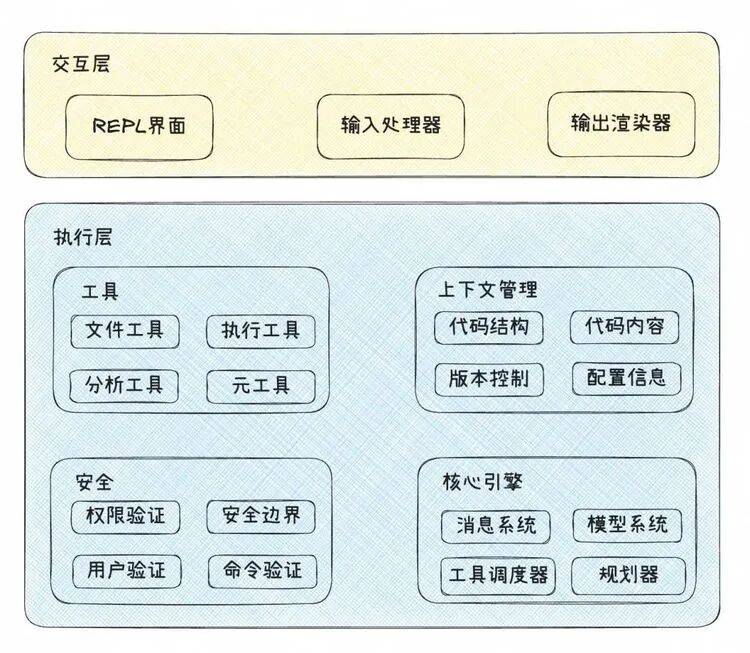
Core Insights - Anthropic has announced stricter regional restrictions on its services, prohibiting companies with over 51% ownership controlled by restricted regions, such as China, from using its services [1][2] - This marks the first instance of a U.S. AI company implementing such comprehensive restrictions on Chinese enterprises [2] Product and Market Analysis - Despite the restrictions, China's large model ecosystem has not fallen behind, with products like DeepSeek, Kimi, and Qwen showing competitive performance in certain metrics [3] - However, a significant gap remains in the area of programming agents, particularly with the introduction of Claude Code, which integrates deeply with development environments [4][5] - Claude Code has seen a rapid increase in active users, tripling in a short period, and generating an annual revenue of approximately $500 million [6] Competitive Landscape - The U.S. leads not only in technology but also in the commercialization and ecosystem surrounding programming agents, which poses a competitive threat to other countries [7] - Claude Code represents a potential new paradigm in development, emphasizing the need for Chinese companies to find alternative paths in light of service restrictions [8] Technical Differentiation - Claude Code operates as a complete automation pipeline rather than just a code-writing model, allowing users to input requirements and receive a structured plan and execution [12][13] - The architecture of Claude Code includes a scheduling engine and tool system that enables it to interact with the system environment effectively [15][16] SDK Development and Ecosystem - The release of the Claude Code SDK transforms it from a standalone tool into a foundational platform for developers to build their own agents [22][24] - The SDK allows for the creation of various industry-specific agents, showcasing its versatility and potential for widespread adoption [25] Cost Considerations - While Claude Code demonstrates unprecedented automation capabilities, the associated costs can be substantial, especially for complex projects [31][32] - Developers have reported high expenses related to token consumption, prompting Anthropic to implement usage limits to control costs [32][34] Opportunities for Domestic Alternatives - The high costs associated with current models present an opportunity for domestic alternatives to optimize inference frameworks and reduce token costs [34] - Initiatives like Qwen Code aim to explore domestic pathways for programming agents, indicating a shift towards self-reliance in coding solutions [34][35]
全球份额调查:日企在增长市场处于劣势
日经中文网· 2025-09-06 00:34
Core Viewpoint - Japanese companies dominate the global market in 9 categories but are struggling in rapidly growing markets, particularly in AI-related sectors, highlighting a significant challenge for the industry [2][4][5]. Market Share Analysis - A survey by Nikkei identified that Japanese firms hold the top position in 9 categories, a decrease of 1 from the previous year, ranking third globally behind the US (27 categories) and China (18 categories) [4]. - The categories where Japan leads include automotive, motorcycles, CMOS image sensors, lithium batteries for mobile phones, digital cameras, A3 laser copiers, silicon wafers, photoresists, and mask blanks [4]. Market Growth and Decline - Japanese companies are facing difficulties in both shrinking and growing markets, with 16 categories experiencing a decline in market size compared to the previous year [5]. - In expanding markets, Japanese firms account for only 14% of the top 266 companies, while they represent 23% of the 79 companies in shrinking markets [5]. Specific Product Performance - The A3 laser copier market shrank by 7.1% year-on-year, with Canon, Ricoh, Konica Minolta, and Kyocera all showing declines in shipment volumes [6]. - Despite Canon's market share increasing by 0.9 percentage points to 18.6%, its shipment volume fell by 2.3% to 590,000 units [6]. Emerging Market Trends - The fastest-growing market is for text-generating AI tools, which saw a staggering growth rate of 18,700% year-on-year, with OpenAI's market share increasing by 12.7 percentage points to 81.7% [6][7]. - In the semiconductor materials sector, Japanese companies are noted for their strong presence, which is crucial for advanced semiconductor manufacturing processes [7][9]. Investment and Future Outlook - Japanese companies are investing significantly in semiconductor-related equipment, with total investments from the top 10 global semiconductor firms expected to reach $135 billion (approximately 20 trillion yen), a 7% increase from the previous year [8]. - Companies like Tokyo Ohka Kogyo and Fujifilm Holdings are planning substantial investments to expand their production capabilities in the semiconductor sector [8].