
中医药

Search documents
“陇上小郎中”中医药AI辅助诊疗系统正式发布
Xin Lang Cai Jing· 2026-01-21 01:00
记者 田小东 责任编辑:任彩玲 该系统依托全国名中医张志明的数千份优质门诊舌象数据,深度挖掘两万余份临床病案,集成舌诊辅 助、导诊挂号、院内导航、智能问答四大核心模块。以"舌领四诊,以舌测证,数融中西,循证精准"为 核心理念,融合名老中医舌诊经验与人工智能技术,构建起精准高效的舌诊辨证模型,实现技术与临床 的深度融合,打破了传统技术简单叠加的局限。 系统兼具便民与助医双重价值:对群众,大幅优化就医流程,让中医药服务更便捷贴心,真正实现"数 据多跑路、群众少跑腿";对医师,尤其为青年医师提供"辨证、立法、选方、审方"全流程智能辅助, 助力中医诊疗规范化、标准化建设。 作为我省中医药传承创新的重要里程碑,"陇上小郎中"具备可复制性与可及性,可通过互联网医院、医 联体等渠道下沉优质资源。其不仅为甘肃中医药数字化转型提供了特色方案,更推动中医药从"经验主 导"迈向"数据赋能"新阶段,为中西医与人工智能深度融合探索了可行路径,对引领全省中医药数字 化、智能化转型具有重要示范意义。 "陇上小郎中"中医药AI辅助诊疗系统正式发布 每日甘肃网1月21日讯 据兰州晚报报道 日前,甘肃省中医药数字化平台核心成果"陇上小郎中"中医 ...
中医的精华在于“治未病”
Xin Lang Cai Jing· 2026-01-20 20:57
"问题在于,传统的养生方法要么过于复杂难以坚持,要么理论深奥让人望而却步。"董峰坦言,"我们 需要一种既符合中医精髓,又能融入现代生活节奏的保健方式。" 融合多年行医经验与医家经典论述,董峰独创了"五步"调心健身功。 "第一步,醒脑提神,通过缓慢的头部转侧,迅速缓解用脑过度;第二步,宽胸理气,配合呼吸扩张胸 腔,改善伏案导致的呼吸短浅;第三步,通利三焦,以涮腰方式疏导气机;第四步,调节脏腑,通过温 和扭转促进气血运行;第五步,舒筋通络,放松全身紧张肌群。"董峰边示范边讲解。 (来源:经济参考报) 近日,一位久坐办公室的程序员按照中国中医科学院针灸医院副主任医师董峰的指导,练习了简单 的"五步"调心健身功。几分钟后,他惊喜地发现,"肩颈的僵硬和头脑的昏沉,竟然同时缓解了。" 在董峰的诊室里,这样的"调心"无处不在。"中医的精华,在于'治未病'。"他常对患者解释说,"这并非 不治病,而是在身体失衡初期就进行干预,防止发展成疾病。" 2008年从部队转业后,董峰调入中国中医科学院针灸医院工作。他观察到,现代人尤其是上班族、学生 族,普遍面临工作学习压力大、久坐少动、作息紊乱等问题,导致亚健康状态蔓延。《黄帝内经》 ...
让中医药服务“触手可及”
Xin Lang Cai Jing· 2026-01-20 18:52
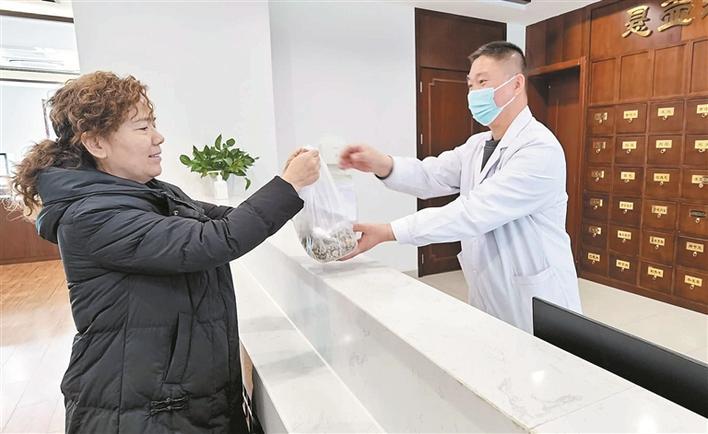
月14日,兵团奎屯中医院儿科、疼痛科主任王顺利为患者诊疗。薛博闻 摄 ●兵团日报全媒体记者 陈洋 常驻记者 郭雪雪 王晓燕 通讯员 王芳芳 黄磊 薛博闻 1月16日,一位新星市居民在十三师中医院取药。十三师中医院于2025年8月正式投入运营,标志着该师 市中医药服务体系得到进一步完善。王璇 摄 1月15日,一师十二团医院药房工作人员在按照药方抓药。 近年来,十二团医院加大对医务人员的培养 力度,医院服务能力不断提升,品牌效应愈发凸显。王芳芳 摄 2025年,兵团不断完善中医药服务体系,提升中医药服务能力,覆盖兵、师、团、连四级的中医药服务 体系让优质中医药服务"触手可及"。 兵团各师市着力推动中医药事业高质量发展,让源于中华文明宝库的岐黄之术,在天山南北深深扎根、 焕发生机。一缕缕艾草馨香,正从团场医院的中医馆、社区卫生室的中医阁里飘出,沁入职工群众心 田。 弘扬中医文化 健康理念根植基层 1月16日,在一师十二团医院中医康复科诊室里,台州援疆专家郭蕾正在为长期失眠的职工沙丽汗·塞提 尼亚孜把脉复诊。 之前,郭蕾诊断沙丽汗·塞提尼亚孜为"心脾两虚"症。经过3个疗程的治疗后,沙丽汗·塞提尼亚孜终于重 获整夜安眠 ...

中新健康|如何选择合适的中医养生保健功法?专家解答
Zhong Guo Xin Wen Wang· 2026-01-20 09:21
Core Viewpoint - The article discusses the importance of personalized traditional Chinese medicine (TCM) health preservation methods, emphasizing that different body types require different practices for optimal health benefits [1][2]. Group 1: TCM Health Preservation Methods - The National Administration of Traditional Chinese Medicine held a conference to introduce basic knowledge and precautions regarding TCM health preservation methods [1]. - Expert Jin Zhefeng highlighted that personalized practices based on individual body types significantly enhance training effectiveness [1]. Group 2: Recommendations for Different Body Types - For individuals with Yang deficiency, characterized by cold extremities and low energy, exercises such as "Two Hands Hold Up the Sky" and "Seven Bounces Behind the Back" from the Ba Duan Jin are recommended to "warm Yang and benefit Qi" [1]. - For those with damp-heat constitution, who may experience oily skin and irritability, exercises like "Single Lift to Regulate the Spleen and Stomach" and "Shake Head and Tail to Remove Heart Fire" are suggested to "clear heat, eliminate dampness, and smooth Qi" [1]. - Individuals with liver Qi stagnation, often feeling low and experiencing chest tightness, should practice "Two Hands Grasp Feet to Strengthen the Kidneys" and "Clench Fists and Gaze Fiercely to Increase Strength" to "soothe the liver and relieve stagnation" [2]. Group 3: Choosing Suitable Practices - To select appropriate practices, individuals are advised to consult professionals or use specialized assessment tools to evaluate their body type [2]. - Following the principle of "listening to the body," individuals can try established practices like Ba Duan Jin, Wu Qin Xi, and Yi Jin Jing, observing their physical responses to determine suitability [2]. - For those with chronic conditions or significant body imbalances, it is recommended to seek systematic evaluations from qualified medical professionals [2].
片仔癀:参投中金医疗基金完成备案 助力漳州“圆山计划”提速
Zhong Zheng Wang· 2026-01-20 07:17
Core Viewpoint - Pianzaihuang has established the Zhongjin Medical Fund, which has completed the private investment fund filing process, aiming to raise 1 billion yuan for investments in the healthcare sector, including traditional Chinese medicine and related industries [1][2]. Group 1: Fund Establishment and Structure - The Zhongjin Medical Fund is initiated by Pianzaihuang's wholly-owned subsidiary, Zhangzhou Pianzaihuang Investment Management Co., Ltd., in collaboration with Zhongjin Capital and other partners, with Pianzaihuang contributing 200 million yuan, representing 20% of the fund [1]. - The fund's primary focus will be on the healthcare sector, covering areas such as traditional Chinese medicine, biomedicine, medical devices, and wellness [1]. Group 2: Strategic Importance - This investment is part of the "Yuanshan Plan" initiated by the Zhangzhou government, which aims to promote the integration of medicine, healthcare, and tourism, with a total planned fund size of 5 billion yuan [2]. - Pianzaihuang has previously invested in three other funds under the "Yuanshan Plan," each contributing 200 million yuan, indicating a consistent strategy to enhance its presence in the healthcare industry [2]. Group 3: Industry Positioning - Pianzaihuang is actively pursuing a dual strategy of strengthening its core pharmaceutical business while also investing in related industries to extend its value chain and enhance its competitive edge in the healthcare ecosystem [3]. - The establishment of the Zhongjin Medical Fund is expected to further solidify Pianzaihuang's influence and competitiveness in the traditional Chinese medicine and broader healthcare sectors [3].

中医药“出海”亟须破解“有医缺药”难题
Zhong Guo Jing Ji Wang· 2026-01-20 00:30
Core Insights - The global expansion of Traditional Chinese Medicine (TCM) has accelerated, reaching over 190 countries, but the export of Chinese herbal products has been declining due to high registration barriers and translation issues [1][2][3] Group 1: Export Trends - The total export value of Chinese herbal products peaked at $5.69 billion in 2022 but has since decreased to $5.28 billion in 2024, with a further decline of 5.6% in the first half of 2025 [2] - Despite an increase in the export volume of plant extracts like menthol and citrus essential oils, the total export value has dropped by 7.7% in 2024 [2] - The export value of proprietary Chinese medicines has not exceeded 10% of the total herbal product exports in recent years [2] Group 2: Challenges in International Markets - The high costs associated with registering and selling TCM products overseas, along with the instability of global supply chains, have dampened companies' enthusiasm for entering foreign markets [3] - Regulatory requirements in foreign countries often necessitate the disclosure of proprietary formulations, leading to the abandonment of potentially lucrative markets [3] - The lack of available herbal products in overseas markets has resulted in a situation where TCM practitioners can only offer acupuncture and massage, limiting the full expression of TCM's benefits [3][4] Group 3: Regulatory and Translation Issues - Differences in the translation of herbal materials between Chinese and foreign pharmacopoeias create significant barriers to market entry, with about 20% of herbal materials having inconsistent translations [6] - Many herbal products are classified as dietary supplements in international markets, which diminishes their competitiveness as pharmaceuticals [7] - The lack of integration with local traditional medicine practices in foreign markets poses additional challenges for TCM's acceptance and effectiveness [7] Group 4: Strategies for Improvement - The Chinese government has been enhancing international cooperation frameworks to support TCM's global outreach, including signing agreements with over 40 foreign governments [5][8] - Experts suggest that TCM should adapt to local cultural contexts and market demands, emphasizing the need for collaboration with local institutions [8][9] - There is a call for the standardization of herbal material translations and the inclusion of more TCM products in international pharmacopoeias to facilitate smoother market entry [8]
“借澳出海”聚合力 全链赋能启新程
Xin Lang Cai Jing· 2026-01-19 22:17
Core Insights - The "Cold Land Dragon Medicine" initiative aims to promote the export of Siberian Ginseng from Jixi Hulin to international markets through a collaboration with various stakeholders, including the Macau and Fei International Investment Holding Group [6][7][10] Group 1: Collaboration and Agreements - A cooperation agreement was signed between the Hulin Municipal Government, Heilongjiang Quanele Pharmaceutical Co., and Macau and Fei International Investment Holding Group to establish a platform for the internationalization of Siberian Ginseng products [7][9] - The partnership aims to enhance the brand recognition of Siberian Ginseng products in Macau and facilitate evidence-based efficacy evaluations [7][9] Group 2: Scientific and Clinical Support - A comprehensive evaluation of the "Siberian Ginseng series products" was conducted, with significant clinical evidence presented regarding its benefits in cognitive improvement, anxiety reduction, and cancer recovery [6][8] - Experts from various prestigious institutions participated in the evaluation, reinforcing the scientific credibility of the products for international markets [6][8] Group 3: Development Strategy and Innovation - The initiative has set a three-year development blueprint, aiming to achieve Macau brand certification for Siberian Ginseng products and establish a top efficacy value list for international markets [11] - A public welfare fund named "Siberian Ginseng Macau Outbound Public Welfare Sub-Fund" will be established to support the international promotion and talent cultivation for the Siberian Ginseng industry [11][12] Group 4: Market Position and Future Prospects - Hulin City is recognized as a core area for Siberian Ginseng resources, with a complete industrial chain from resource protection to deep processing and innovation [10] - The collaboration is expected to leverage the strengths of both local resources and international platforms to create a synergistic effect, enhancing the global presence of traditional Chinese medicine [10][12]
节气养生正当时
Xin Lang Cai Jing· 2026-01-19 18:12
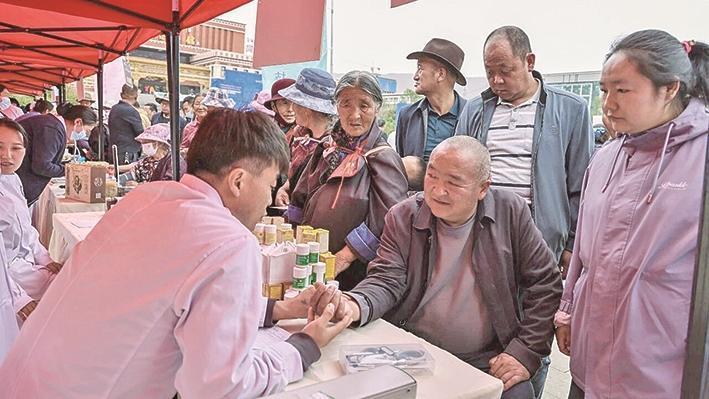
Core Viewpoint - The "Hundred Cities and Thousand Counties" Traditional Chinese Medicine (TCM) Cultural Benefit Activity aims to promote TCM culture and services to grassroots communities, enhancing public health and cultural awareness in Qinghai Province [4][7]. Group 1: Event Overview - The event is organized by the National Administration of Traditional Chinese Medicine from April to October 2025, focusing on delivering quality TCM resources to the public [4]. - Various activities such as free medical consultations, technical experiences, and herbal cuisine demonstrations are conducted to integrate traditional and modern health wisdom [4]. Group 2: Participation and Impact - In Hai Dong City, 82 medical staff provided services to 1,337 people through three offline consultations, addressing health needs in the community [4]. - The event in Hai Xi City featured a unique "TCM Cultural Night Market," allowing citizens to consult with doctors and experience TCM culture in a poetic atmosphere [5]. - In Hai Bei Prefecture, 40 medical personnel conducted seven themed activities, serving 3,042 people and distributing 2,065 boxes of herbal medicine [5]. Group 3: Cultural Integration - Activities in various counties, such as the one in Nangqian County, included drug identification and health exercises, showcasing the unique charm of Tibetan medicine [6]. - The integration of TCM culture with local festivals, such as the Dragon Boat Festival, attracted 600 participants, enhancing cultural appreciation and health awareness [6][7]. - The ongoing activities have significantly improved the public's sense of health and cultural identity, contributing to the "Healthy Qinghai" initiative [7].
现代中药集团(01643.HK)收购数智健康全球30%股份 作价4182万港元
Ge Long Hui A P P· 2026-01-19 15:22
诚如公司日期为2025年4月8日内容有关根据一般授权认股新股份(「认购事项」)的公告所披露,其中包 括公司拟将认购事项项下筹集之所得款项净额中的50%用于与中医药相关的新业务机会,包括投资中医 药制造厂商。 公司认为就位于香港并于香港设有生产线及销售点的传统中医药(TCM)制造厂商作出投资将令集团的销 售版图扩展至香港及海外。鉴于永盛为香港持牌中医药制造厂商,且其业务范围覆盖香港及澳门,董事 会认为收购事项符合集团发展战略。 格隆汇1月19日丨现代中药集团(01643.HK)宣布,于2026年1月19日,公司与卖方皇御控股有限公司订立 买卖协议,据此,公司有条件同意购买而卖方同意出售待售股份(300万股普通股,占目标公司数智健康 全球控股有限公司全部已发行股本的30%),代价为4182万港元。 ...
现代中药集团拟4182万港元收购数智健康全球30%股权
Zhi Tong Cai Jing· 2026-01-19 15:08
各目标公司及复兴均为投资控股有限公司。于本公告日期,永明由复兴全资拥有,而复兴由永盛全资拥 有,永盛由目标公司全资拥有。目标公司由卖方拥有89%及由大健康拥有11%。永盛主要从事注册传统 中药的生产,其中包括"神盾海狗丸"及"永明乌鸡白凤丸"等一系列特殊产品。永盛已根据香港法例第 549章中医药条例获发牌照以生产中成药,其于香港拥有制造设施。截至本公告日期,永盛已在香港注 册了184项中成药注册。永明主要从事永盛制造中成药的线上销售业务。目标集团已透过永明于各大电 商平台设立不同官方旗舰店。 公司拟将认购事项项下筹集的所得款项净额中的50%用于与中医药相关的新业务机会,包括投资中医药 制造厂商。公司认为就位于香港并于香港设有生产线及销售点的传统中医药(TCM)制造厂商作出投资将 令集团的销售版图扩展至香港及海外。鉴于永盛为香港持牌中医药制造厂商,且其业务范围覆盖香港及 澳门,董事会认为收购事项符合集团发展战略。 现代中药集团(01643)发布公告,于2026年1月19日,公司与卖方皇御控股有限公司订立买卖协议,据 此,公司有条件同意购买而卖方同意出售待售股份300万股普通股(占目标公司数智健康全球控股有限公 ...