蔬菜种植

Search documents
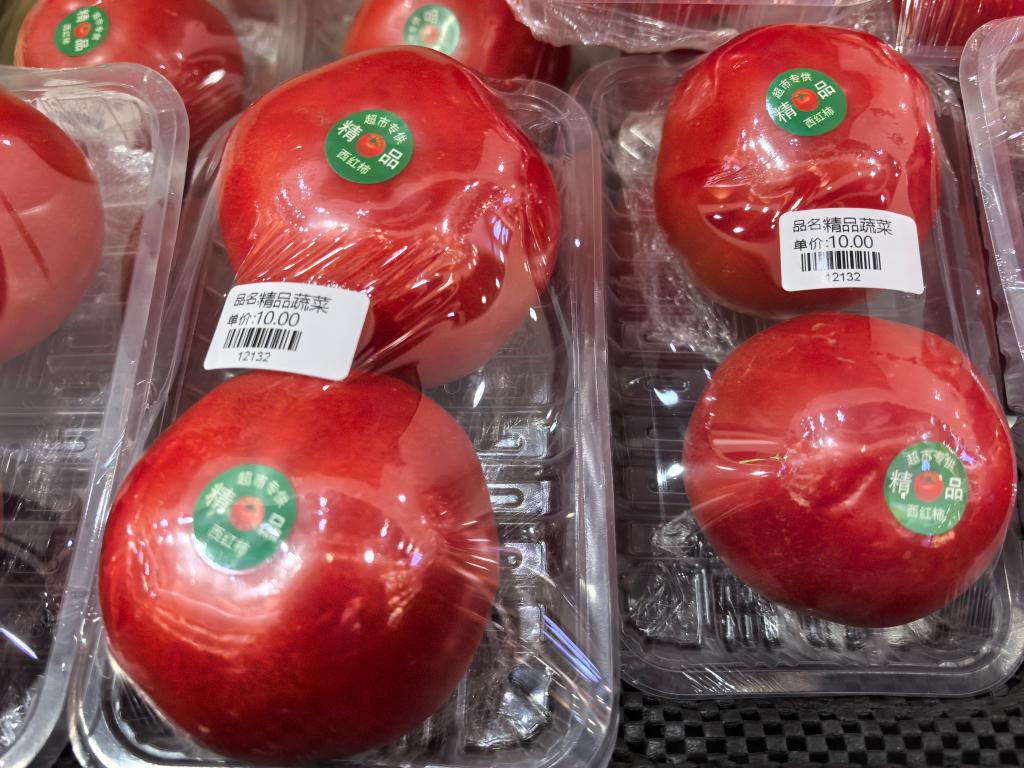
市场最前沿丨西红柿“身价暴涨”,背后原因几何?
Xin Hua Wang· 2026-01-16 14:03
Core Viewpoint - The recent significant increase in tomato prices across various regions in China has raised market concerns, with prices for tomatoes reaching as high as 10 to 18 yuan per kilogram in some areas [1][3]. Price Trends - The average wholesale price of tomatoes rose to 8.61 yuan per kilogram from 4.76 yuan per kilogram year-on-year, marking an 80.9% increase [3]. - Retail prices for bulk tomatoes are reported to be around 5 to 7 yuan per kilogram, while packaged tomatoes are priced between 10 to 18 yuan [1]. Supply Chain Dynamics - The price surge began in the second half of the previous year, influenced by a combination of factors including reduced planting areas due to previous low prices and adverse weather conditions affecting production [3][4]. - Continuous rainfall in northern production areas led to reduced yields and increased reliance on more expensive greenhouse vegetables and long-distance transportation, further driving up costs [4]. Future Price Expectations - Experts predict that high tomato prices will continue until late March, after which a seasonal decline is expected [6]. - The upcoming Spring Festival is anticipated to increase demand for premium tomatoes, while adverse weather conditions may keep production costs high, providing price support [6]. Broader Market Implications - The price increase in tomatoes is attributed primarily to climate factors rather than seasonal or cyclical fluctuations, with similar impacts expected on other vegetables like carrots and cabbages [6]. - The overall supply of vegetables in China remains stable, and consumers are advised not to panic regarding the price hikes [6].

平凉:“大棚经济”撑起冬春“双增收”
Xin Lang Cai Jing· 2026-01-16 09:52
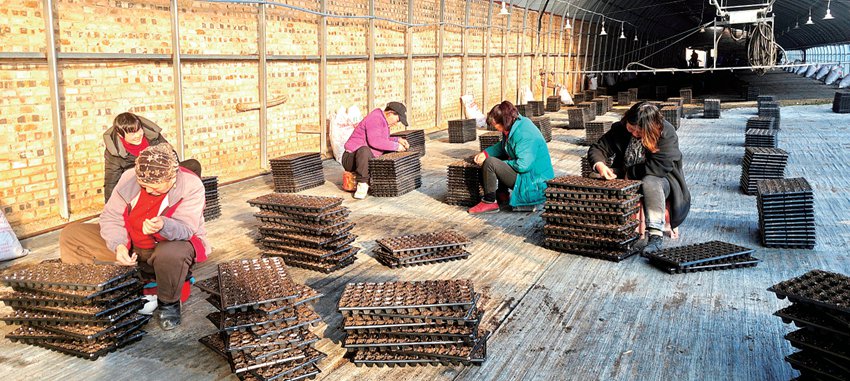
Core Viewpoint - The greenhouse economy is significantly contributing to the dual increase in income for local farmers during the winter and spring seasons, enhancing both vegetable supply for urban areas and income for rural households [1]. Group 1: Greenhouse Economy Impact - Greenhouses serve as a crucial support for urban vegetable supply, enriching local diets and acting as a tool for income generation for farmers [1]. - The winter and spring vegetable planting has become a win-win industry, ensuring a full "vegetable basket" for citizens while filling farmers' "money bags" [1]. Group 2: Seedling Cultivation in Kongtong District - In Kongtong District, eight intensive seedling bases are operational, ensuring a robust foundation for next year's vegetable yield [4]. - The district has invested in modern facilities, achieving an annual seedling capacity exceeding 100 million, meeting the needs of over 80,000 acres of vegetable cultivation [5]. - Advanced techniques such as soil-free seedling cultivation and grafting are being promoted to enhance seedling quality, addressing traditional challenges in seedling production [5]. Group 3: Agricultural Practices in Huating City - Huating City has adopted facility vegetable planting as a key strategy for rural industrial revitalization, focusing on short-growth, high-economic benefit crops like spinach and coriander [9]. - The government is facilitating market connections, ensuring smooth distribution channels from farm to table, which helps farmers feel secure in their production and sales [9]. - The innovative "company + base + farmer" model is reducing market risks for farmers while providing local employment opportunities [9]. Group 4: Overall Agricultural Development - The integration of technology and policy support in Huating City is leading to increased vegetable yield and quality, contributing to year-round supply [9]. - The establishment of specialized vegetable brands is enhancing the visibility of agricultural products, making them a hallmark of rural revitalization [10].
张掖:沃野织锦绣 征程再扬鞭
Xin Lang Cai Jing· 2026-01-16 04:41
Core Insights - The city is focusing on modernizing agriculture through technology, intelligence, and branding, aiming to establish itself as a national leader in modern seed industry development [1][2][3] Group 1: Technological Advancements - The city is enhancing its seed production capabilities, with continuous improvements in the "five modernizations" of corn seed production bases and expanding the coverage of integrated water and fertilizer management [1][2] - Collaboration with research institutions is deepening, strengthening agricultural technology support [1][2] Group 2: Smart Agriculture - The construction of smart agriculture is accelerating, with new smart seed industry bases and high-standard demonstration points for integrated water and fertilizer management being established [1][3] - The transition towards precision and digital management in agricultural production is being promoted [1][3] Group 3: Branding and Market Expansion - The cultivation of the "Guanwei" agricultural product brand is being strengthened, with "Zhangye corn seed" recognized as a regional public brand [1][2] - The influence of "Jin Zhangye Agricultural Quality Products" is expanding through promotional activities in major cities, successfully entering the national supply product list [1][2] Group 4: Rural Development and Poverty Alleviation - A dynamic monitoring and assistance mechanism for poverty alleviation is effectively operating, with early detection and intervention for new monitoring subjects [2][3] - The establishment of a low-income population monitoring platform and the promotion of special industries and employment opportunities are contributing to stable income growth for the impoverished [2][3] Group 5: Food Security and Agricultural Strategy - The city is implementing a comprehensive food security strategy, exceeding provincial targets for grain sowing area and maintaining stable total output [2][3] - High-standard farmland construction is progressing, with significant achievements in agricultural mechanization and saline-alkali land governance [2][3] Group 6: Future Plans and Goals - The city aims to build a modern agricultural industry system and expand the "six spaces" for modern agricultural development, focusing on integrating various agricultural sectors [4][6] - The commitment to enhancing rural living conditions and ensuring sustainable development is emphasized, with plans for comprehensive rural revitalization [7][8]
冀时评丨“菜园子”紧连“菜篮子”:京津冀协同的民生答卷
Xin Lang Cai Jing· 2026-01-16 04:41
Core Insights - In 2025, Hebei's vegetable market share in Beijing reached 43.04%, an increase of 0.54 percentage points from the previous year, marking a historical high [1] - This growth signifies that nearly half of the vegetables on Beijing's dining tables come from Hebei, showcasing effective regional collaboration and supply chain management [1] Group 1: Supply Stability - Hebei, as a major northern facility vegetable province, has established a comprehensive supply structure with five complementary production areas, ensuring year-round supply [2] - The region supports a stable supply capacity of nearly 100,000 to 200,000 tons daily, with a "1-hour supply circle" around Beijing, featuring 7.18 million acres of vegetable production areas and 183 emergency supply bases [2] Group 2: Collaborative Development - The collaboration between Hebei and Beijing is driven by mutual benefits, with Hebei leveraging its agricultural strengths to create the largest northern greenhouse leafy vegetable base and the largest summer mushroom base in the country [2] - The partnership enhances supply chain efficiency and quality control through joint base construction and contract farming, resulting in a more effective and shorter supply chain [2] Group 3: Quality Improvement - Hebei is advancing its vegetable industry by establishing three national research centers and a digital quality indicator system for high-quality vegetables, ensuring scientific standards for produce [5] - The integration of production and market demand through the Beijing-Tianjin-Hebei information coordination mechanism has improved market access for Hebei's "clean vegetables," benefiting both consumers and farmers [5]
深农赋能绿脉延,怀集蔬香满湾区
Nan Fang Nong Cun Bao· 2026-01-16 02:39
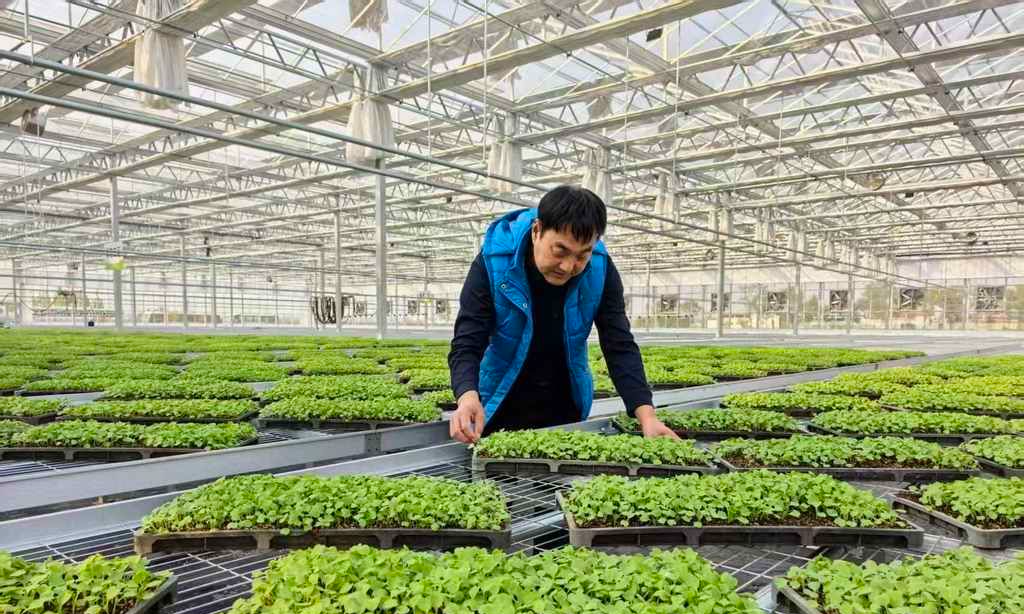
Core Viewpoint - The article highlights the growth and development of Huai Ji Shen Nong Modern Agricultural Development Co., Ltd., which is positioned as a key player in the vegetable industry of the Guangdong-Hong Kong-Macao Greater Bay Area, focusing on high-quality agricultural practices and standardization to meet market demands [2][3][4]. Group 1: Company Overview - Huai Ji Shen Nong was officially established in January 2023, aiming to create a "supply standard farm for Hong Kong" [17][19]. - The company has a cultivated area of 2,200 acres, implementing a scientific planting model of "grain-vegetable rotation" [21][22]. - The company has achieved annual vegetable sales exceeding 500 tons, distributing products to cities such as Dongguan, Shenzhen, Shanghai, and Nanning [23][26]. Group 2: Agricultural Practices - The company employs standardized planting, intelligent empowerment, and brand operation to enhance the vegetable industry [4][5]. - It has developed a full-process standardization system covering pre-production, production, and post-production stages, successfully passing the Hong Kong supply base registration in 2024 [24][26]. - The use of standard transfer boxes has reduced logistics costs to below 5 yuan per trip, decreasing losses by 10%-15% compared to traditional methods [34]. Group 3: Industry Impact - As a core engine of the Lingnan vegetable hometown demonstration area, the company aims to drive industry upgrades through its strategic layout [29][30]. - The company has established a modern cold chain logistics center to streamline the distribution process, addressing initial logistical challenges [38]. - The company integrates local specialty products into its offerings, enhancing brand value and achieving revenue in the million-level range in 2023 [41]. Group 4: Community Engagement - The company emphasizes the importance of rural development, ensuring that local farmers benefit from the industry growth [43][45]. - Through land transfer, the company has activated idle land resources, providing stable income for farmers and creating over 2,000 local jobs [46][48]. - The company has facilitated an average annual income increase of 3,044 yuan per household for participating farmers [48].

五指山南定村:龙须菜鼓了村民“钱袋子”
Hai Nan Ri Bao· 2026-01-16 02:02
自2018年规模化种植以来,南定村龙须菜种植规模持续扩大,最高达514亩,实现了家家户户参与 种植的良好格局。 得益于海南的气候优势,龙须菜全年可采收,产量可观,冬季虽产量略有下降但市场价格走高,再 叠加冬种瓜菜补贴政策,进一步激发了农户的种植积极性。2025年,南定村龙须菜收购价格稳定,农户 每亩种植收益可达8000元—12000元,特色种植成为村民稳定增收的"钱袋子"。 海南日报五指山1月15日电(海南日报全媒体记者 黄富国)近日,五指山市通什镇南定村的田间地 头龙须菜挂满藤蔓,农户们趁着晴好天气采收、分拣、打包,新鲜的瓜菜将通过产销渠道运往市场。 南定村距五指山市区26公里,海拔介于700米至1200米之间,紧邻海南热带雨林国家森林公园核心 区,优良的生态环境为特色作物生长提供了绝佳条件。 龙须菜作为佛手瓜的幼嫩卷须,因形似龙须得名,不仅易栽易管,更兼具高蛋白低脂肪、风味独特 的优势,深受市场欢迎。 ...
生态美 产业兴 百姓富
Xin Lang Cai Jing· 2026-01-15 23:36
▲一望无际的中国—东盟稻作文化园。(李嘉玮 摄) ▲广西青秀蔬菜科技小院欣欣向荣。 (李嘉玮 摄) ▲食用菌智能方舱内,食用菌长势良好。 (广西菌蓝天下创新农业科技有限公司供图) ▲刘圩镇晟发现代设施蔬菜基地宽敞明亮。 (李嘉玮 摄) ◀伶俐镇阳永蛋鸡养殖基地整洁卫生。 (陆小同 摄) 乡村之美,美在山水,亦美在人心;乡村之兴,兴于生态,更兴于文化。如今的青秀区乡村,生态画卷与人文底色交相辉映,正将这份"美"与"兴"转化为百 姓可感可及的幸福生活。 ▲古岳民族文化艺术村一隅。在这里,艺术工作室紧邻村民住宅,艺术创作融入日常生活,形成了独具特色的乡村文化空间。 (李嘉玮 摄) 水是乡村的灵气之源,亦是发展的命脉所系。漫步于青秀区刘圩镇的马安水库,但见碧波如镜,倒映着四周苍翠的山峦,勾勒出一幅静谧和谐的生态画卷。 晨光中,智能大棚内数据奔流,调控着蔬菜的成长节律;科技小院里,凝结了新技术的新苗破土,孕育丰收希望;暮色下,自动化生产线有序运转,产出优 质农产品;山水间,生态与文化交融,滋养着诗意的栖居……"十四五"以来,青秀区坚持农业农村优先发展,以科技赋能产业升级,以文化滋养乡村内涵, 以联农带农夯实共富根基,生 ...

从三群人,看福建农民如何念好“致富经”
Xin Lang Cai Jing· 2026-01-15 23:34
Core Viewpoint - The fundamental starting point and ultimate goal of rural revitalization is the improvement of living standards, as evidenced by the continuous growth in farmers' disposable income in Fujian province, which is projected to exceed 30,000 yuan for the first time in 2025 [1] Group 1: Economic Growth and Income - As of 2024, Fujian's farmers' per capita disposable income ranks sixth nationally, with a growth rate consistently surpassing that of urban residents for 14 consecutive years [1] - In the first three quarters of 2025, the per capita disposable income of farmers reached 22,245 yuan, marking a year-on-year increase of 5.9%, the highest growth rate among the seven provinces in East China [1] Group 2: Poverty Alleviation and Economic Models - The establishment of modern mushroom production bases in Tai Ning has positioned it as the largest grass mushroom production hub in the province, showcasing successful industrialization in agriculture [2] - The "leading enterprise + base + farmer" model has been implemented to support low-income groups in developing courtyard economies, integrating them into the grass mushroom industry chain [3] Group 3: Sustainable Development and Employment - Fujian has successfully eliminated absolute poverty, with all registered impoverished populations and villages having exited poverty, demonstrating effective poverty alleviation strategies [4] - The province allocated 2.06 billion yuan in funding to support production development for impoverished populations, emphasizing both immediate assistance and long-term capacity building [5] Group 4: New Farmers and Talent Development - The "New Farmers" initiative aims to cultivate a robust workforce in rural areas, with a target of adding over 60,000 new farmers annually by 2027 [9][10] - Various backgrounds, including returning migrant workers and young entrepreneurs, contribute to the new farmer matrix, becoming a vital force in rural revitalization [9] Group 5: Urban Integration and Employment - The integration of rural workers into urban settings has been facilitated by ensuring job availability and decent wages, with 90% of industrial enterprises located in urban areas of Dehua County [11][12] - The province has implemented policies to protect the rights of migrant workers, ensuring their access to housing and social services, which has led to increased satisfaction and stability among new urban residents [12][13]
晋宁逐渐成长为“高原蔬菜强区”
Xin Lang Cai Jing· 2026-01-15 22:31
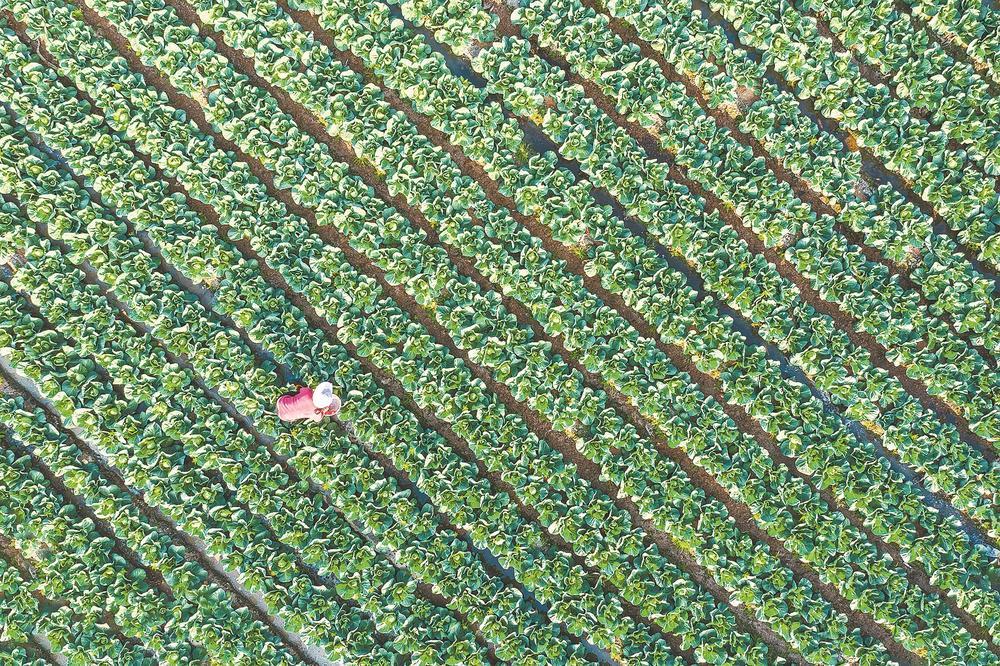
Core Insights - The core viewpoint of the article highlights the transformation of Jinning District's vegetable industry from a "highland vegetable region" to a "highland vegetable stronghold" through green, facility-based, and brand-oriented development strategies [1] Group 1: Production and Area - During the "14th Five-Year Plan" period, Jinning's vegetable planting area is expected to remain stable at 250,000 acres, with a production volume of 550,000 tons [1] - By 2025, the vegetable planting area in Jinning is projected to reach approximately 290,000 acres, with a production target of 600,000 tons and an agricultural output value of 1.85 billion yuan [1] Group 2: Market Impact - Over 97% of Jinning's vegetable output is expected to be sold externally, effectively filling the national vegetable supply gap and serving as a stabilizer and ballast in the national "south-to-north vegetable transport" and "west-to-east vegetable adjustment" systems [1] Group 3: Historical Development - Jinning has a long history of vegetable cultivation, which rapidly developed after the agricultural industrial structure adjustment in the 1990s, leading to a large-scale and commercial production model [1] - Over the past 30 years, Jinning's vegetable planting has expanded significantly, with increased specialization and enhanced efficiency, forming a comprehensive development pattern encompassing production, supply, and sales [1]
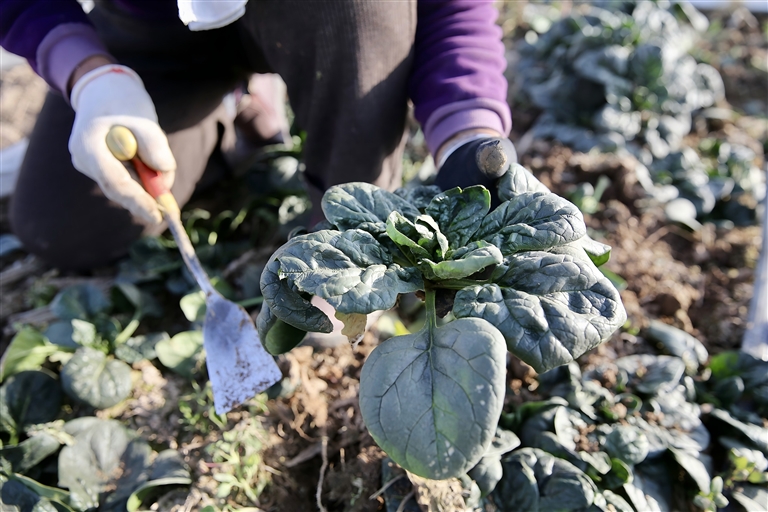
趴地菠菜“支棱”背后的品质逻辑
He Nan Ri Bao· 2026-01-14 23:25
Core Insights - The recent viral success of the "ground spinach" from Henan highlights the growing consumer demand for high-quality agricultural products and the effective use of social media in promoting local specialties [1][10][17] Group 1: Product Characteristics - Ground spinach, characterized by its short stems and flat leaves, has gained popularity due to its unique sweetness, which results from a longer growth cycle and specific climatic conditions [4][5][6] - The cultivation of ground spinach has been expanding over the past seven to eight years, although it remains a niche product with limited planting area compared to other types of spinach [7][10] Group 2: Market Dynamics - The demand for ground spinach has led to supply shortages, with producers unable to meet the increasing orders despite the product's popularity [9][10] - The cultivation model for ground spinach often involves direct sales to supermarkets and restaurants, which helps stabilize prices and ensures a consistent market for producers [9][11] Group 3: Agricultural Trends - The rise of ground spinach reflects a broader trend in the agricultural sector towards quality over quantity, with a focus on developing superior varieties that meet consumer preferences [11][12] - The agricultural landscape in Henan is evolving, with an emphasis on high-quality products and innovative marketing strategies that connect producers directly with consumers [11][13][18] Group 4: Regional Significance - Henan, as a major agricultural province, contributes significantly to China's food supply, with a diverse range of high-quality agricultural products gaining recognition both domestically and internationally [10][12][17] - The success of ground spinach serves as a case study for the potential of Henan's agricultural products to thrive in the market, driven by quality and effective branding [10][13][18]