金融监管

Search documents
南京扎实推进“阳光融资”专项监督工作 “削峰降本”防风险促发展
Nan Jing Ri Bao· 2025-12-22 02:26
Core Insights - The implementation of "Sunshine Financing" in Nanjing has led to significant reductions in financing costs, with interest rates dropping from 3.3% to 2.7%, saving approximately 15 million yuan in interest over five years [1] - The initiative aims to enhance transparency and competition in financing, addressing issues of high costs and corruption within the financial sector [1][2] Financing Cost Reduction - The Nanjing Municipal Commission for Discipline Inspection and Supervision has focused on reducing financing costs by establishing clear guidelines for interest rates and fees, resulting in a significant decrease in costs for enterprises [2][3] - The introduction of a "mandatory reduction line" for high-cost existing financing and a "guidance line" for new financing has been implemented to facilitate access to lower-cost funds [2] Fee Regulation - A new guideline for one-time financing fees has been released to address high costs associated with syndicate fees, underwriting fees, and other non-standard financing charges, aiming for marketization and transparency [3] - The initiative is expected to save approximately 40 million yuan in financing costs through negotiations with banks to lower fees and interest rates on existing projects [3] Data-Driven Supervision - The Nanjing government has upgraded its online regulatory system to include a "Sunshine Financing" module, allowing for real-time monitoring and analysis of financing projects, which helps in identifying risks such as excessive interest rates and fees [4] - The system has issued 288 alerts regarding abnormal interest rates and excessive fees, effectively reducing opportunities for corruption [4] Overall Impact - Since the launch of the "Sunshine Financing" initiative, the comprehensive cost of existing financing projects has decreased to 3.12%, while new financing projects have dropped to 2.75%, resulting in a total savings of 3.709 billion yuan [5] - The initiative is expected to foster a competitive financing environment and support the high-quality development of state-owned enterprises in the long term [5]
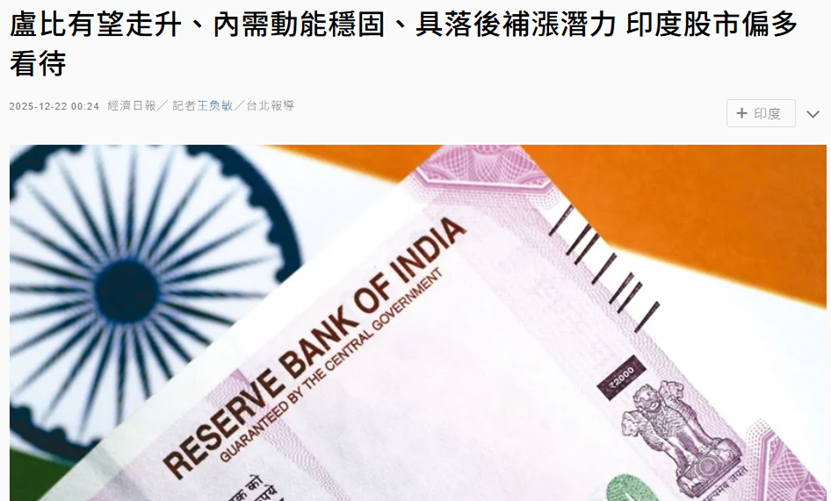
印度基金业资产规模达80.8万亿卢比,国际机构看好股市中期走势
Huan Qiu Wang· 2025-12-22 01:07
Core Viewpoint - The Indian stock market is gaining attention due to significant growth in mutual fund assets and remarkable stock performance, indicating a positive mid-term outlook despite short-term volatility [1][4]. Group 1: Market Performance - As of November 30, the total assets under management in Indian mutual funds reached 80.8 trillion rupees, showing substantial growth over the past five years [1]. - The stock RRP Semiconductor has surged over 55,000% in the last 20 months, highlighting extreme stock performance within the market [1]. Group 2: Future Outlook - The Indian stock market is expected to show improved performance compared to other emerging markets in the Asia-Pacific region by 2026, despite being the most lagging market in the past 30 years [4]. - There are limited downside risks currently, with opportunities for catch-up growth emerging [4]. - Investment in Indian funds through a systematic investment plan is recommended for investors looking to capitalize on the market's potential [4]. Group 3: Regulatory Developments - The Securities and Exchange Board of India (Sebi) is collaborating with the Reserve Bank of India (RBI) and insurance regulators to allow banks and insurance companies to participate in the commodity derivatives market [4]. - Sebi has established a working group to propose measures for deepening the agricultural derivatives ecosystem and will soon announce a review group for non-agricultural derivatives [4]. Group 4: Economic Fundamentals - India possesses a strong talent base and innovation capabilities, supported by significant government reforms over the past decade, including tax unification, technology promotion, and foreign investment attraction [4].

韩国金融委员会委员长:准备好以先发制人的措施稳定市场
Xin Lang Cai Jing· 2025-12-21 23:12
Core Viewpoint - The South Korean Financial Services Commission (FSC) is prepared to take preemptive measures to stabilize the financial market if necessary, indicating vigilance towards rising bond yields and currency fluctuations [1]. Group 1: Financial Stability - The FSC Chairman Lee Eog-weon stated that the robustness of the South Korean financial system and its ability to respond to crises is not in significant doubt [1]. Group 2: Currency and Inflation Concerns - The ongoing weakness of the Korean won has raised concerns about inflation, prompting the Bank of Korea to announce temporary measures aimed at increasing the supply of US dollars in the onshore foreign exchange market [1].
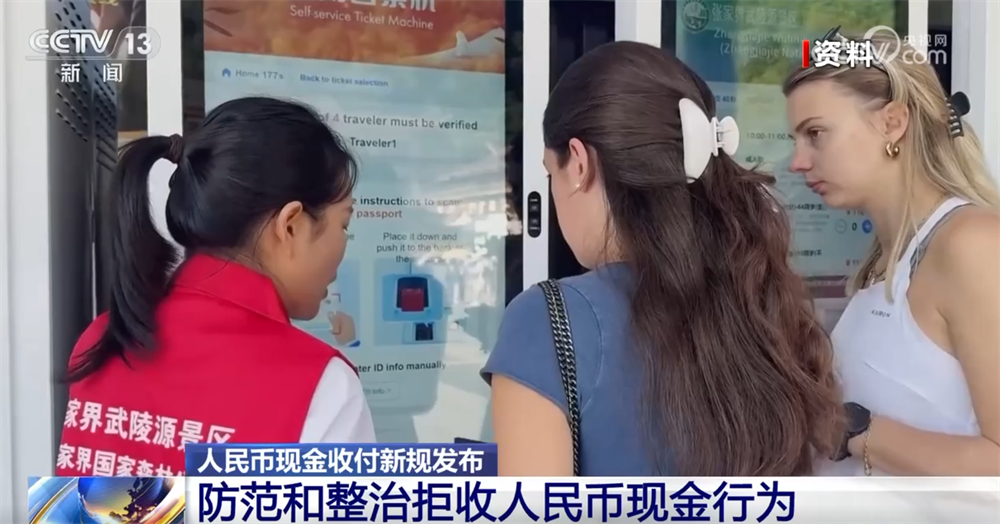
对拒收行为说“不”!三部门联合发布人民币现金收付新规
Yang Shi Wang· 2025-12-20 02:20
Core Viewpoint - The People's Bank of China, in collaboration with the National Development and Reform Commission and the Financial Regulatory Administration, has established regulations to uphold the legal status of the Renminbi and prevent the refusal of cash payments [1]. Group 1: Regulations on Cash Payments - The regulations specify that cash payments must be supported in face-to-face transactions and services, with reasonable cash change available [3]. - For self-service models and locations with unified management, operators must clearly indicate payment methods and cash acceptance policies [3]. - In fully online transactions, service providers must publicly disclose payment methods in advance, respecting the public's right to know and choose [3]. Group 2: Consumer Rights and Complaints - Consumers facing difficulties with cash payments should negotiate amicably with service providers and can seek legal recourse if cash is refused or discriminated against [5]. - Evidence of cash refusal or discriminatory practices should be retained, and complaints can be made through various channels, including consumer protection hotlines [5][6].
防范和整治拒收人民币现金行为打出“组合拳” 收付新规发布→
Yang Shi Wang· 2025-12-20 02:00
Core Viewpoint - The People's Bank of China, in collaboration with the National Development and Reform Commission and the Financial Regulatory Administration, has established regulations to uphold the legal status of the Renminbi and prevent the refusal of cash payments [1]. Group 1: Regulations on Cash Payments - The regulations specify that cash payments must be supported in scenarios where face-to-face services are provided, and reasonable change must be available [3]. - In self-service models, such as unattended payment systems, businesses must clearly indicate payment methods and provide contact information for cash services [3]. - For fully online transactions, businesses are required to publicly disclose payment methods in advance, respecting the public's right to know and choose [3]. Group 2: Consumer Rights and Complaints - Consumers who encounter refusal of cash payments or discriminatory practices should retain evidence and report through various channels, including consumer protection hotlines [5]. - The People's Bank of China will work with relevant departments to address complaints and ensure compliance with cash payment regulations [5].
三部门:经营主体应尊重社会公众对合法支付方式的自主选择权
Zheng Quan Shi Bao Wang· 2025-12-19 09:22
Core Viewpoint - The People's Bank of China, in collaboration with the National Development and Reform Commission and the Financial Regulatory Bureau, has issued regulations to uphold the legal status of the Renminbi and prevent the refusal of cash payments, ensuring a diverse payment service environment for the public [1] Group 1: Regulations on Cash Payments - The newly released regulations emphasize that businesses and service providers must respect the public's right to choose legal payment methods [1] - It is prohibited to refuse cash payments, induce others to refuse cash, or implement discriminatory measures against cash transactions [1] - The regulations aim to create a convenient cash circulation environment amidst the development of various payment methods [1]
FCA 启动加密新规公众咨询,拟于 2026 年底前敲定完整监管框架
Xin Lang Cai Jing· 2025-12-16 06:01
Core Viewpoint - The UK Financial Conduct Authority (FCA) has initiated a broad public consultation on proposed new regulations for the cryptocurrency industry, aiming to establish a comprehensive regulatory framework by the end of 2026 [1] Group 1: Proposed Regulations - The proposed regulations will cover various aspects including the listing regime for crypto assets, measures to prevent insider trading and market manipulation, operational standards for crypto trading platforms, and rules related to brokers [1] - The FCA is seeking feedback on these proposals until February 12, 2026, with plans to finalize the regulatory framework by the end of 2026 [1] Group 2: Market Trends - Recent survey data disclosed by the FCA indicates that the proportion of UK adults holding cryptocurrency has decreased from 12% to 8% over the past year [1]
伦敦金属交易所将于7月6日起对关键合约及相关合约实施持仓限制
Wen Hua Cai Jing· 2025-12-15 11:32
(文华综合) 该交易所补充称,将于2月就拟议规则变更发布咨询文件,以适应新规要求。 12月15日(周一),伦敦金属交易所(LME)宣布,为落实英国金融行为监管局(FCA)的新规,计 划自2026年7月6日起对关键合约及相关合约设定并实施持仓限制。 ...
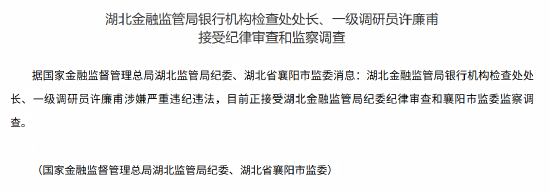
湖北金融监管局银行机构检查处处长、一级调研员许廉甫接受纪律审查和监察调查
Xin Lang Cai Jing· 2025-12-15 07:59
责任编辑:李琳琳 12月15日金融一线消息,日前,国家金融监督管理总局湖北监管局纪委、湖北省襄阳市监委发布消息: 湖北金融监管局银行机构检查处处长、一级调研员许廉甫涉嫌严重违纪违法,目前正接受湖北金融监管 局纪委纪律审查和襄阳市监委监察调查。 12月15日金融一线消息,日前,国家金融监督管理总局湖北监管局纪委、湖北省襄阳市监委发布消息: 湖北金融监管局银行机构检查处处长、一级调研员许廉甫涉嫌严重违纪违法,目前正接受湖北金融监管 局纪委纪律审查和襄阳市监委监察调查。 责任编辑:李琳琳 ...
12月13日投资早报|11月末广义货币M2同比增长8%,芯原股份终止购买芯来智融97%股权,中国高科控制权拟发生变更
Xin Lang Cai Jing· 2025-12-13 00:35
Market Performance - On December 12, 2025, the A-share market saw all three major indices close higher, with the Shanghai Composite Index at 3889.34 points, up 0.41%, the Shenzhen Component Index at 13258.33 points, up 0.84%, and the ChiNext Index at 3194.36 points, up 0.97%. Over 2600 stocks rose, with total trading volume reaching 2.09 trillion yuan, an increase of 230 billion yuan from the previous trading day [1] - The Hong Kong stock market also rebounded strongly, with the Hang Seng Index rising 1.75% or 446.28 points to close at 25976.79 points, and a total trading volume of 242.657 billion HKD. The Hang Seng China Enterprises Index increased by 1.62% to 9079.35 points, while the Hang Seng Tech Index rose by 1.87% to 5638.05 points. For the week, the Hang Seng Index fell by 0.42% [1] Monetary Policy - As of the end of November, the broad money supply (M2) in China was 336.99 trillion yuan, reflecting a year-on-year growth of 8%. The narrow money supply (M1) was 112.89 trillion yuan, up 4.9%, and the currency in circulation (M0) was 13.74 trillion yuan, increasing by 10.6%. In the first eleven months, a net cash injection of 917.5 billion yuan was recorded [2] State-Owned Enterprises - The State-owned Assets Supervision and Administration Commission (SASAC) emphasized that central enterprises should focus on "progress" by effectively nurturing new productive forces and enhancing technological innovation. The aim is to promote industrial upgrades and strategically advance emerging industries while resisting "involution" competition and pursuing value-driven development [2] Financial Regulation - The National Financial Regulatory Administration highlighted the importance of risk management, aiming to resolve existing risks and prevent new ones. The focus is on supporting the completion of economic and social development goals for 2026, while ensuring financial stability in key areas, particularly in the real estate market. The guidance for banks and insurance institutions is to manage local government financing platform debt risks in a market-oriented manner [4]