
保险业

Search documents
新华保险:上半年年化总投资收益率5.9%,同比提升1.1个百分点
Bei Jing Shang Bao· 2025-08-28 11:28
北京商报讯(记者 胡永新)8月28日,新华人寿保险股份有限公司(以下简称"新华保险")公布2025年 中期业绩。截至2025年6月30日,新华保险投资规模超1.7万亿元,较上年末增长5.1%,上半年年化总投 资收益率5.9%,同比提升1.1个百分点;年化综合投资收益率6.3%。 ...

新华保险:已在全国28个城市布局40个优质康养社区
Bei Jing Shang Bao· 2025-08-28 11:28
Core Viewpoint - Xinhua Life Insurance Co., Ltd. has announced its mid-term performance for 2025, focusing on enhancing its service brands and expanding its health management ecosystem to meet diverse customer needs [1] Group 1: Service Development - The company is continuously developing service brands such as "Xinhua Zun," "Xinhua An," "Xinhua Rui," and "Xinhua Yue" [1] - Xinhua Insurance has established a service ecosystem covering ten areas including health management, finance, taxation, and education [1] - The services have reached over 4 million customers [1] Group 2: Strategic Expansion - The company has laid out 40 quality health and wellness communities across 28 cities in China [1] - Additionally, it has developed 36 quality travel projects in 31 cities nationwide [1] - The national strategy is focused on deepening its presence across various regions in China [1] Group 3: Healthcare Resource Integration - The company is integrating high-quality medical resources to provide comprehensive health management services, including disease prevention and overseas medical assistance [1] - The overseas medical network has expanded to 40 international hospitals, supporting customer access to global healthcare resources [1]
新华保险:截至上半年个险代理人规模人力13.3万人,月均绩优率13.3%
Bei Jing Shang Bao· 2025-08-28 11:15
Core Viewpoint - Xinhua Life Insurance Co., Ltd. reported significant growth in its individual insurance channel for the first half of 2025, driven by strategic initiatives and workforce improvements [1] Group 1: Financial Performance - The company achieved a first-year premium of 14.506 billion yuan for long-term insurance, representing a year-on-year increase of 70.8% [1] - The first-year regular premium for long-term insurance reached 14.248 billion yuan, with a year-on-year growth of 72.5% [1] Group 2: Strategic Initiatives - The ongoing implementation of the "XIN Generation" plan has been pivotal in enhancing the professionalization and vocational transformation of the marketing team [1] - As of mid-2025, the individual insurance agent workforce has grown to 133,000, with an average monthly performance rate of 13.3%, showing a year-on-year improvement [1] Group 3: Workforce Development - The average monthly per capita productivity of agents increased by 74% year-on-year, indicating a solid enhancement in team quality [1] - The company added nearly 20,000 new agents in the first half of the year, marking a year-on-year growth of 182% and achieving a breakthrough in workforce development [1]
中央汇金新动向披露!加仓白酒ETF 机构关注白酒机会
Shang Hai Zheng Quan Bao· 2025-08-28 08:21
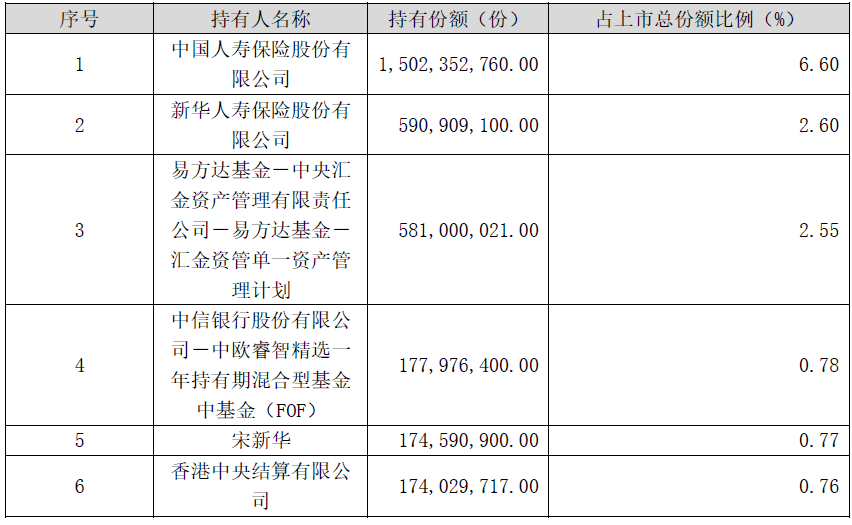
Core Viewpoint - Central Huijin has increased its holdings in various ETFs, particularly in the liquor and chemical sectors, demonstrating a strong commitment to stabilizing the market amid fluctuations in the second quarter of this year [1][2]. Group 1: Central Huijin's Investment Actions - In the first half of this year, Central Huijin significantly increased its investment in broad-based ETFs, purchasing approximately 150 billion yuan worth of ETFs, including four Hu-Shen 300 ETFs and the Huaxia Shanghai 50 ETF [1]. - Central Huijin's asset management plan has acquired 121 million shares of the Penghua Liquor ETF, bringing its total holdings to 581 million shares, making it the third-largest shareholder [2][3]. - The Penghua Liquor ETF saw a net subscription of 57.5 billion yuan this year, with a notable acceleration in the third quarter, where net subscriptions reached 45.47 billion yuan [9]. Group 2: Liquor Sector Insights - The liquor sector has experienced a significant valuation compression, attracting renewed investment interest after a period of decline [9]. - Institutional reports indicate that the liquor industry is at a bottoming phase, with expectations of a recovery as companies release their semi-annual reports, which may alleviate market concerns [12]. - The white liquor sector has seen a 72% decline in valuation since February 2021, with fund holdings in the sector dropping to levels not seen since 2017 [13]. Group 3: Market Dynamics and Future Outlook - The market is observing a gradual improvement in liquor sales, with expectations of a turning point as external positive factors increase [13]. - Central Huijin's strategy reflects a broader trend of institutional investors recognizing the long-term value in the liquor sector, particularly in leading companies with strong brand power and dividend yields [13].

【有本好书送给你】重拾金融美德:“人文棱镜”塑造金融行业价值创造
重阳投资· 2025-08-28 07:33
Core Viewpoint - The article emphasizes the importance of understanding finance through a humanistic lens, advocating for a return to the core values of finance as a tool for value creation rather than value extraction [24][25]. Group 1: Financial Industry Challenges - In the first half of 2025, 43 payment institutions were fined nearly 160 million yuan due to anti-money laundering issues, and Haier Consumer Finance was fined 2.3 million yuan for collection violations, highlighting risk management vulnerabilities [9]. - The non-performing loan ratio of commercial banks rose to 2.8%, and valuations of Hong Kong-listed banks hit a ten-year low, indicating a trend of international capital withdrawal [9]. - The cryptocurrency market faced turmoil, with Layer 2 projects collapsing and exchanges imposing bans, revealing governance issues within the industry [9][10]. Group 2: Humanistic Approach to Finance - The article discusses the need for financial professionals to better explain their work to regain public trust, emphasizing that finance should create value rather than extract it [10][11]. - Michal DeSai, a Harvard professor, suggests that integrating financial principles with literature, history, and philosophy can enhance practitioners' understanding and resistance to corruption [11][12]. - The narrative includes a parable illustrating the dual nature of finance, portraying it as both noble and deceitful, which reflects the complexities of human nature [12][13]. Group 3: Understanding Risk and Probability - The article highlights that finance provides tools to navigate a world filled with risks and uncertainties, emphasizing the importance of understanding probability [16][20]. - Historical perspectives on risk reveal that the understanding of probability evolved over time, transitioning from divine intervention to rational analysis [15][16]. - The concept of insurance is presented as a practical application of risk management, emphasizing the collective sharing of risk among individuals [19][20]. Group 4: Conclusion on Financial Wisdom - The essence of financial wisdom is rooted in human nature, navigating the tension between nobility and deceit, and is fundamentally about managing risk and creating value [24]. - The article concludes that the ultimate mission of finance is not merely numerical manipulation but empowering individuals to navigate their lives with dignity amidst uncertainty [24].

渤海人寿近5600万保额护航“上合之约•唱响心声”文艺演出活动
Cai Fu Zai Xian· 2025-08-28 05:17
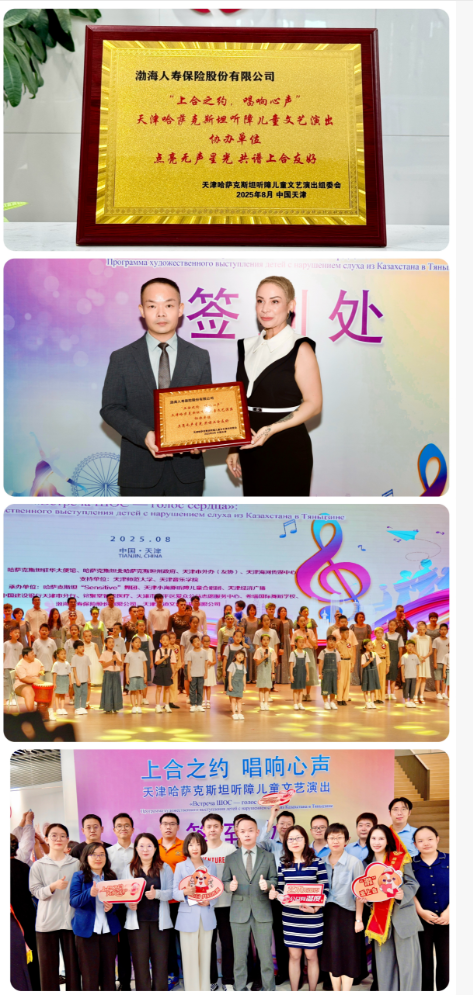
Group 1 - The event "SCO Commitment: Singing the Voice of the Heart" was held in Tianjin, showcasing a cultural exchange between Kazakhstan and China, particularly focusing on hearing-impaired children [1][2] - The Tianjin Dolphin Choir, composed entirely of hearing-impaired children, and the Kazakhstani dance troupe "Sensitive" participated in the event, highlighting their artistic talents and resilience [2] - The event aimed to deepen cultural exchanges and friendship between China and Kazakhstan while raising awareness for hearing-impaired children [2] Group 2 - Bohai Life Insurance provided insurance coverage totaling nearly 56 million yuan for over 100 performers during the event, ensuring their safety [3] - The company emphasized its commitment to social responsibility and community support, viewing insurance as a bridge for love and connection among people [3] - Bohai Life Insurance has donated over 7 billion yuan in insurance coverage over the years, actively participating in various public welfare initiatives [3]
中国人寿上半年权益投资增1500亿,将更关注高股息配置
Di Yi Cai Jing· 2025-08-28 05:16
Core Viewpoint - China Life Insurance is focusing on enhancing the stability and long-term return potential of its equity investments while actively supporting capital market development and shareholder returns [1][3]. Group 1: Investment Performance - As of June 30, 2025, China Life's investment assets reached 71,271.53 billion yuan, a 7.8% increase from the end of 2024 [1]. - The company achieved a net investment income of 960.67 billion yuan, with a net investment yield of 2.78% [1]. - Total investment income was 1,275.06 billion yuan, reflecting a year-on-year growth of 4.2%, with a total investment yield of 3.29% [1]. Group 2: Asset Allocation Strategy - China Life is adjusting its asset allocation strategy across various sectors, maintaining a solid base in fixed income while increasing equity investments by over 150 billion yuan since the beginning of the year [2]. - The company has invested a total of 35 billion yuan in private equity funds and is focusing on high-dividend assets and new productivity sectors [2]. - The overall asset allocation remains stable with high asset quality [2]. Group 3: Shareholder Returns - China Life continues to emphasize quality and efficiency in shareholder returns, maintaining a biannual dividend distribution for two consecutive years [3]. - Since its listing, the company has distributed a total of approximately 2,277 billion yuan in dividends [3].

中国人寿蔡希良:下半年将在推进营销体系改革、康养生态建设等方面下更大力气
Bei Jing Shang Bao· 2025-08-28 03:35
Core Viewpoint - The long-term economic fundamentals in China remain strong, providing a solid foundation for the sustainable development of the financial and insurance industry [1] Group 1: Strategic Focus for the Second Half - The company aims to align its operations and services with customer needs, focusing on potential growth areas in elderly health, wealth management, and optimizing product offerings [1] - The company emphasizes long-cycle and cross-cycle management, prioritizing reasonable growth in premium scale while focusing on value strategy for long-term stability [1] - The company plans to enhance its core competitiveness through cost reduction, marketing system reform, health and wellness ecosystem development, and technology empowerment [1] Group 2: Commitment to High-Quality Development - The company will actively seize opportunities and prioritize efficiency, long-term strategies, and risk prevention in its operations [1] - The company intends to deepen reforms and innovations, strengthen asset-liability management, and promote high-quality development to achieve new results [1]
中国太保获中国平安人寿保险增持503.3万股
Ge Long Hui· 2025-08-28 01:02
Group 1 - The core point of the article is that China Pacific Insurance (02601.HK) has seen an increase in shareholding by Ping An Life Insurance Company, which acquired 5.033 million shares at an average price of HKD 36.7019 per share, totaling approximately HKD 185 million [1] - Following this acquisition, Ping An Life's total shareholding in China Pacific Insurance rose to 167,858,600 shares, increasing its ownership percentage from 5.86% to 6.04% [1]


【环球财经】伦敦股市27日下跌 航空股领跌
Xin Hua Cai Jing· 2025-08-27 18:01
Market Overview - The FTSE 100 index in London closed at 9255.50 points, down by 10.30 points, representing a decline of 0.11% [1] - European major stock indices showed mixed results on the same day [1] Sector Performance - Service sector stocks led the gains in the London stock market, with notable performers including: - John David Sportswear Company, up by 3.55% - African Telecom Company, up by 3.05% - Sports Betting Company Entain, up by 1.84% - Restaurant and Hotel Group Whitbread, up by 1.72% - Beazley Insurance Company, up by 1.35% [1] - Conversely, airline stocks experienced the largest declines, with significant drops including: - easyJet, down by 3.12% - National Westminster Bank Group, down by 2.54% - International Airlines Group, down by 2.04% - Sainsbury's, down by 2.03% - Houghton Mifflin Harcourt Group, down by 1.79% [1] Other European Indices - The CAC40 index in Paris closed at 7743.93 points, up by 34.12 points, a rise of 0.44% [1] - The DAX index in Frankfurt closed at 24046.21 points, down by 106.66 points, a decline of 0.44% [1]