
养殖业

Search documents
养殖业板块1月8日跌0.31%,牧原股份领跌,主力资金净流出2.71亿元
Zheng Xing Xing Ye Ri Bao· 2026-01-08 08:56
证券之星消息,1月8日养殖业板块较上一交易日下跌0.31%,牧原股份领跌。当日上证指数报收于 4082.98,下跌0.07%。深证成指报收于13959.48,下跌0.51%。养殖业板块个股涨跌见下表: 从资金流向上来看,当日养殖业板块主力资金净流出2.71亿元,游资资金净流出635.37万元,散户资金净 流入2.77亿元。养殖业板块个股资金流向见下表: | 代码 | 名称 | 主力净流入(元) | 主力净占比 游资净流入 (元) | | 游资净占比 散户净流入 (元) | | 散户净占比 | | --- | --- | --- | --- | --- | --- | --- | --- | | 000048 京基智农 | | 1776.12万 | 7.61% | 85.66万 | 0.37% | -1861.78万 | -7.97% | | 600965 福成股份 | | 966.83万 | 6.78% | -397.55万 | -2.79% | -569.28万 | -3.99% | | 002458 益生股份 | | 596.81万 | 3.89% | -593.03万 | -3.86% | -3.78万 ...


行业景气观察:12月制造业PMI继续上行,有色金属价格普遍上涨
CMS· 2026-01-07 13:02
Core Insights - The manufacturing PMI for December rose to 50.1%, an increase of 0.9 percentage points, marking a return to the expansion zone for the first time since March 2025 [13][15] - The non-manufacturing PMI also improved to 50.2%, up by 0.7 percentage points, indicating a recovery in business activities [13][15] - The overall economic environment is supported by pre-holiday stocking demand, which has led to improvements in both manufacturing and non-manufacturing sectors [21][22] Industry Overview Manufacturing Sector - The production index increased to 51.7%, up by 1.7 percentage points, driven by pre-holiday stocking demand [15][21] - New orders index rose to 50.8%, reflecting a 1.6 percentage point increase, supported by resilient export growth and rising upstream raw material prices [15][21] - The purchasing price index decreased by 0.5 percentage points to 53.1%, indicating high historical levels due to rising prices of metals and new energy materials [15][21] Information Technology - The Philadelphia Semiconductor Index rose by 6.72% to 7650.93 points, while the Taiwan Semiconductor Industry Index increased by 11.28% to 1003.55 points [24] - DDR5 and DDR4 DRAM prices increased, with 8GB DDR4 DRAM rising by 5.64% to $25.09 and 16GB DDR5 DRAM up by 8.72% to $31.07 [26] - North American PCB shipments and order volumes showed a three-month rolling year-on-year increase, with shipments up by 25.83% [28] Consumer Demand - Prices for pork and chicken have risen, while the average wholesale price for live pigs has also increased [17][23] - The ten-day average box office revenue has increased by 36.95%, although movie ticket prices have decreased by 6.46% [17][23] Resource Sector - Industrial metal prices have generally risen, with copper, nickel, and aluminum prices increasing, while coal prices have shown mixed trends [23] - The national cement price index has decreased, although some regional prices have remained stable [23] Financial and Real Estate - The land transaction premium rate has decreased, and the area of commercial housing transactions has also declined [23] - The A-share turnover rate and daily transaction volume have increased, indicating a more active market [23]
牛脸能贷款,海域有“身份证”?广西这样唤醒“沉睡资产”→
Jin Rong Shi Bao· 2026-01-07 04:56
Core Insights - The article highlights the transformation of rural assets in Guangxi, China, through innovative financial practices that awaken dormant resources and stimulate economic growth [1] Group 1: Challenges Faced by Rural Industries - Rural industries in Guangxi face multiple challenges, including the difficulty of asset realization and the lack of standardized valuation systems for livestock, which limits access to financing [2][3] - Natural disasters and market volatility pose significant risks to agricultural production, making it difficult for farmers to sustain their livelihoods [4] Group 2: Financial Innovations and Solutions - Innovative financial practices, such as the issuance of property rights certificates for aquaculture, have enabled farmers to secure loans by transforming previously unrecognized assets into collateral [5][6] - The introduction of technology, such as AI-based identification systems for livestock, has improved the efficiency of insurance and financing processes, allowing for better risk management [6][12] Group 3: Integration of Financial Services - The development of supply chain finance and tailored credit products has facilitated better access to funding for rural enterprises, addressing issues of weak collateral and fragmented supply chains [7][8] - Collaborative efforts between banks, insurance companies, and local governments have created a supportive ecosystem for agricultural financing, enhancing the resilience and sustainability of rural economies [10][11] Group 4: Systematic Approach to Rural Development - Guangxi has shifted from targeted assistance to a more systematic approach in promoting rural development, with policies that encourage financial resources to flow into agriculture [10][12] - The establishment of digital credit profiles for farmers has enabled the provision of unsecured loans, fostering financial inclusion and supporting agricultural growth [11][13]

金融之力 破瘠成沃 八桂大地奏响乡村产业振兴进行曲
Jin Rong Shi Bao· 2026-01-07 02:10
Core Viewpoint - The article discusses the transformation of rural assets in Guangxi, China, through financial innovation and technology, addressing the challenges faced by the agricultural sector and enhancing the connection between finance and rural industries [1][6][12]. Group 1: Challenges in Rural Development - Rural industries in Guangxi face multiple challenges, including dormant assets that are difficult to monetize and a lack of standardized valuation systems for livestock and aquaculture [3][5]. - Natural and market risks significantly impact agricultural production, making it vulnerable to environmental changes and price fluctuations, which complicates traditional financing models [4][5]. - The local sugar industry, despite being a major contributor to national production, struggles with financing issues that hinder its competitiveness and growth [5]. Group 2: Financial Innovations and Solutions - To address these challenges, Guangxi has implemented innovative financial practices, such as issuing property rights certificates for aquaculture, which allows farmers to secure loans based on clearly defined assets [6][7]. - Advanced technologies, like AI facial recognition for livestock, have been introduced to create unique digital identities for animals, facilitating better insurance and financing options [7][12]. - A collaborative financial model has been developed, combining insurance, credit, and government support to provide comprehensive financial services to farmers, resulting in significant loan amounts being disbursed [8][11]. Group 3: Economic Growth and Sustainability - The integration of supply chain finance and the development of specialized credit products have been emphasized to support local agricultural sectors, ensuring timely payments and reducing financing costs for farmers [8][12]. - E-commerce initiatives have been established to enhance the marketing of local agricultural products, providing training for villagers to improve their sales techniques and increase income [9]. - The overall financial ecosystem in Guangxi is evolving towards a more systematic approach, focusing on long-term sustainability and resilience in rural economic development [10][12].
金融之力 破瘠成沃
Jin Rong Shi Bao· 2026-01-07 01:46
Core Viewpoint - The article highlights the transformation of rural assets in Guangxi through financial innovation and technology, addressing the challenges faced by the agricultural sector and promoting sustainable development in rural areas [1][11][21]. Group 1: Challenges in Rural Development - Rural areas in Guangxi face multiple challenges, including asset dormancy and industry shackles, which hinder development [4]. - The lack of standardized valuation systems for livestock and other agricultural assets makes it difficult for farmers to secure loans from traditional banks [5]. - Natural and market risks, such as flooding and price volatility, further exacerbate the vulnerability of agricultural production [6][8]. Group 2: Financial Innovations and Solutions - Financial institutions are innovating by developing policy insurance for local agricultural products, such as the "富硒星油藤" brand, which has secured insurance coverage of 4.1592 million yuan for 1,040 acres [3]. - The introduction of property rights certificates for aquaculture has allowed farmers to convert their rights into collateral, facilitating access to credit [11][12]. - Advanced technologies, such as AI facial recognition for livestock, have improved the efficiency of insurance and loan processes, enabling better risk management [12]. Group 3: Collaborative Financial Ecosystem - A collaborative model involving insurance, credit, and government support has been established to address financing challenges in the agricultural sector [12][21]. - The implementation of tailored financial products, such as marine carbon sink loans and index insurance for aquaculture, has been initiated to support specific agricultural needs [15][21]. - The establishment of e-commerce platforms and training programs for local farmers aims to enhance market access and sales of agricultural products [16][18]. Group 4: Systematic Policy Support - The People's Bank of China has implemented policies to provide financial resources to the agricultural sector, including fiscal subsidies and risk compensation mechanisms [19]. - The promotion of digital credit profiles for farmers has facilitated access to unsecured loans, significantly increasing loan amounts for agricultural projects [20]. - The establishment of a financial service command center for the sugar industry has led to the development of specialized financing models that support the entire supply chain [21].


养殖业板块1月6日涨1.94%,正邦科技领涨,主力资金净流出4127.8万元
Zheng Xing Xing Ye Ri Bao· 2026-01-06 08:56
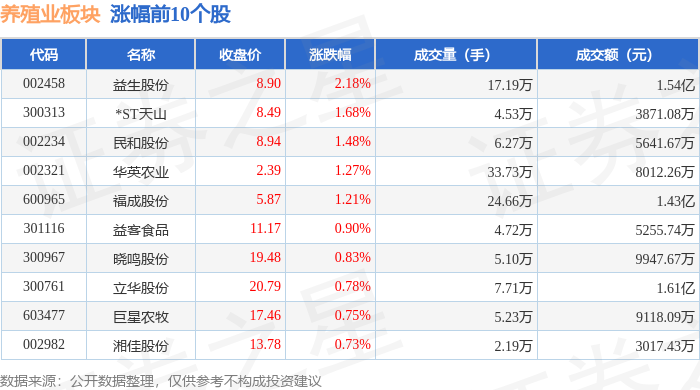
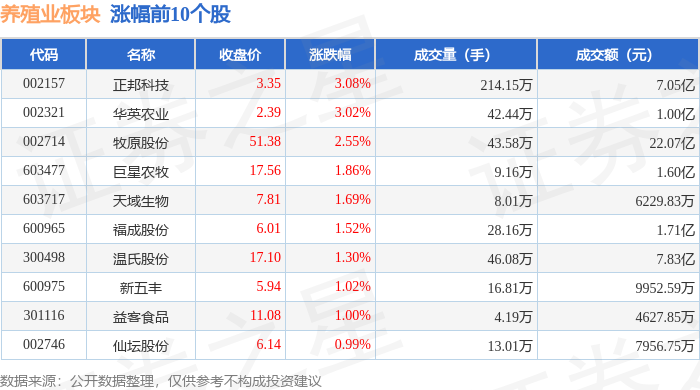
Group 1 - The aquaculture sector increased by 1.94% on January 6, with Zhengbang Technology leading the gains [1] - The Shanghai Composite Index closed at 4083.67, up 1.5%, while the Shenzhen Component Index closed at 14022.55, up 1.4% [1] - Key stocks in the aquaculture sector showed various performance metrics, with Zhengbang Technology closing at 3.35, up 3.08%, and trading volume of 2.14 million shares [1] Group 2 - The aquaculture sector experienced a net outflow of 41.28 million yuan from institutional funds, while retail investors saw a net inflow of 122 million yuan [2] - Major stocks like Zhengbang Technology and Juxing Agriculture had significant net inflows from retail investors, despite overall institutional and speculative fund outflows [3] - The trading data indicates varied performance among aquaculture stocks, with some experiencing positive net inflows while others faced outflows [3]


伊春 精准培育新农人 服务赋能新乡村
Xin Lang Cai Jing· 2026-01-05 22:49
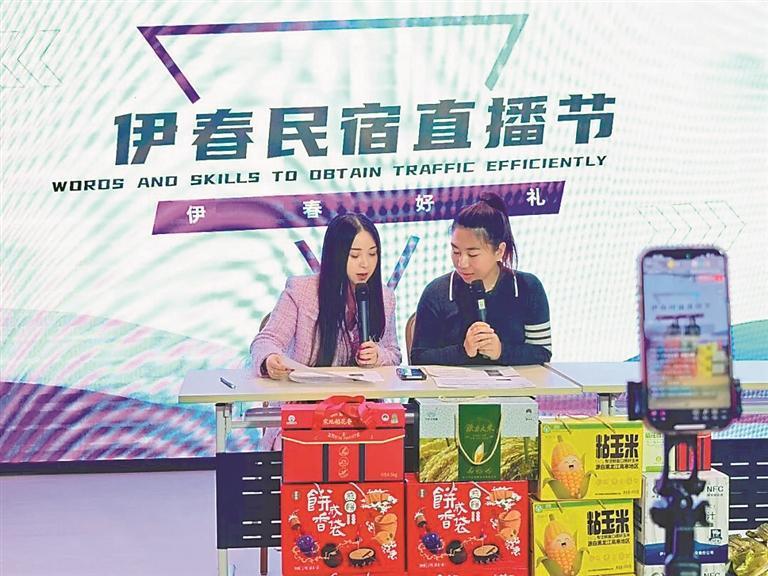
Core Viewpoint - The article highlights the innovative training programs in Yichun City aimed at enhancing the skills of farmers and promoting rural revitalization through targeted education and support systems [3][7]. Group 1: Training Programs - Yichun City has initiated high-quality farmer training programs focusing on brand positioning and online marketing for rural businesses, particularly in the homestay sector [3]. - The training covers various agricultural topics, including rice and corn yield improvement, standardized mushroom production, specialty beekeeping techniques, and rural homestay management, addressing key agricultural development areas and farmers' pain points [4]. - The training combines theoretical knowledge with practical experience, featuring experts from universities and local practitioners, ensuring that the content is relevant and applicable [4]. Group 2: Practical Learning Approach - The training extends beyond traditional classrooms to hands-on experiences in real production settings, allowing participants to learn about room arrangement, service etiquette, and promotional photography in homestay operations [5]. - This immersive and scenario-based teaching method enables participants to acquire knowledge and skills that are immediately applicable [5]. Group 3: Ongoing Support and Financial Assistance - Yichun City has established a "1+N" long-term tracking service mechanism, where one expert provides ongoing support to multiple trainees through platforms like WeChat, ensuring continuous technical guidance and information sharing [6]. - To address financial constraints faced by trainees, the local agricultural bureau has introduced financial services directly in training sessions, offering tailored credit solutions and explaining favorable loan products [6]. - Graduates of the training are increasingly becoming proactive knowledge disseminators, sharing their experiences and attracting more community members to learn new skills through social media platforms [6]. Group 4: Future Plans - The Yichun City Agricultural and Rural Bureau aims to expand the scale of training and optimize the service system to cultivate more high-quality farmers who are knowledgeable in agriculture, technology, and business management [7].
养殖产业链日报:震荡偏强-20260105
Guan Tong Qi Huo· 2026-01-05 11:12
Group 1: Report's Industry Investment Rating - The investment rating for the breeding industry chain in this report is "Oscillating Strongly" [1] Group 2: Report's Core View - The report analyzes the current situation of various products in the breeding industry chain, including soybeans, corn, eggs, and pigs, and provides corresponding market trends and investment suggestions [1][2] Group 3: Summary by Product Soybeans - Domestic soybean spot prices are stable and slightly stronger. Northeast prices are strong due to factors like good state - reserve auction results and farmer reluctance to sell. Market procurement is cautious, and the supply - demand sides are waiting to see the subsequent state - reserve release. High - quality beans in Shandong, Jiangsu, Anhui, and Henan are stable, with slow market sales and increased supply from other sources. Mid - term, it will maintain a wide - range oscillation. Attention should be paid to the market reaction after consecutive auctions of imported soybeans this week [1] Corn - Domestic corn spot prices oscillate weakly. With increased grain supply, factory quotes are slightly lower. The confirmed wheat auction and ongoing corn auctions have increased bearish sentiment. Attention should be paid to the opportunity to buy on dips after the phased supply pressure eases [1] Eggs - As of the end of November, the national laying - hen inventory was about 1.352 billion, a year - on - year decrease of 5.32%, and it is still decreasing. It is expected that the inventory will decline by 0.50% - 0.80% in the first quarter of 2026. Although the current inventory is still at a relatively high level, the proportion of medium - and large - sized eggs is high, and some small farmers are reducing production. A medium - and long - term supply contraction expectation is gradually forming. The market tried to rise today. It is not recommended to be overly bearish, and it is advisable to wait and see for now [2] Pigs - In October 2025, the inventory of breeding sows dropped to 39.9 million, still above the reasonable industry regulation target of 39 million, but with a clear downward trend. The speed and intensity of subsequent capacity reduction will determine the supply contraction range. If the capacity reduction accelerates, it is expected that the inventory of breeding sows will drop to around 37.5 - 38 million by the end of 2026. The price trend shows a pattern of being low in the front and high in the back, and there may be opportunities to buy on dips for far - month contracts [2]
养殖业板块1月5日跌0.51%,京基智农领跌,主力资金净流出6303.14万元
Zheng Xing Xing Ye Ri Bao· 2026-01-05 09:02
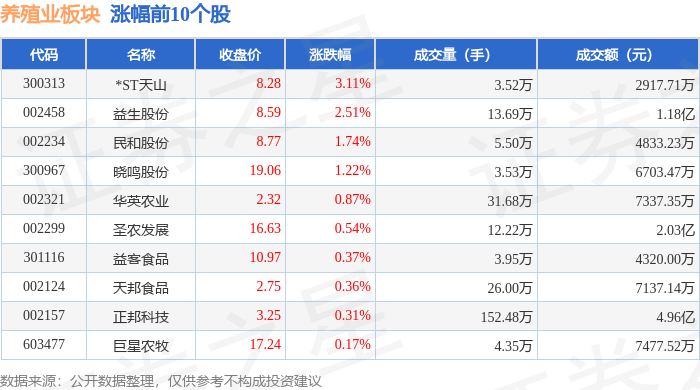
Group 1 - The aquaculture sector experienced a decline of 0.51% on January 5, with Jingji Zhino leading the drop [1] - The Shanghai Composite Index closed at 4023.42, up 1.38%, while the Shenzhen Component Index closed at 13828.63, up 2.24% [1] - Key stocks in the aquaculture sector showed varied performance, with *ST Tianshan rising by 3.11% and Jingji Zhino falling by 6.53% [1][2] Group 2 - The main funds in the aquaculture sector saw a net outflow of 63.03 million yuan, while retail investors had a net inflow of 114 million yuan [2] - Specific stock performances included Muyuan Foods with a net outflow of 51.16 million yuan from main funds and a net inflow of 49.15 million yuan from retail investors [3] - The stock of Shengnong Development had a net inflow of 21.49 million yuan from main funds, indicating some investor interest despite the overall sector decline [3]

长江期货养殖产业月报-20260105
Chang Jiang Qi Huo· 2026-01-05 06:53
1. Report Industry Investment Rating No relevant content provided. 2. Core Views of the Report - In the pig market, short - term price fluctuations intensify due to supply - demand games, while long - term prices are expected to gradually rise but with limited upside potential. For the egg industry, short - term prices may increase seasonally during the Spring Festival, but long - term supply pressure remains. In the corn market, short - term selling pressure needs to be digested, and long - term prices are supported at the bottom but with limited upward movement [5][61][100]. 3. Summary by Directory 3.1 Pig 3.1.1 Market Review - In December, pig prices first stabilized and then rose. Spot prices increased due to factors like the release of second - fattening and epidemic pigs, and terminal consumption growth. Futures prices also rebounded, with the 03 contract's premium increasing and the basis strengthening. After the New Year's Day stocking ended, slaughter volume declined, and spot prices stagnated and fell [7][10]. 3.1.2 Supply - The inventory of breeding sows is gradually being reduced but remains above the normal level. Pig production performance has improved, and the supply of pigs in the first quarter of 2026 is expected to be high. Pig inventory is slowly increasing, and the proportion of standard and large pigs is rising. The monthly average slaughter weight is at a high level in the same period [11][16][24]. 3.1.3 Demand - In December, the slaughter rate and volume of slaughterhouses increased. After the New Year's Day stocking ended, slaughter volume may decline, but it may increase again in January due to Spring Festival stocking. The frozen product inventory is at a high level, and its support for consumption has weakened, and it may suppress supply before and after the Spring Festival [34][38][41]. 3.1.4 Cost and Profit - Pig prices rebounded in December, and breeding losses narrowed. Feed and piglet prices fluctuated slightly, and the long - term fattening cost remained low [44]. 3.1.5 Policy - The government aims to guide the orderly exit of production capacity and stabilize prices. It requires the top 25 large enterprises to reduce 1 million breeding sows by the end of January, lower the weight, and prohibit second - fattening. The state mainly conducts reserve rotation [50]. 3.1.6 Driving Summary - Short - term: Price fluctuations intensify due to supply - demand games. Long - term: The price in the first half of the year is not optimistic, and the price in the second half of the year is expected to be strong, but the increase is limited [53][54]. 3.1.7 Valuation - Near - term contracts are undervalued, and far - term contracts are neutrally valued [55]. 3.1.8 Strategy - For near - term contracts, adopt a short - selling strategy when prices rebound. For far - term contracts, be cautious about a bullish outlook, and the industry can hedge at a profit [5]. 3.2 Egg 3.2.1 Market Review - In December, egg prices continued to fluctuate at a low level, and the futures price mainly declined, with a slight rebound at the end of the month. The current main contract has a slight premium over the spot, and the basis is at a low level in the same period [67]. 3.2.2 Supply - The number of newly opened - laying hens in January is average. The inventory of laying hens is slowly declining, but the overall supply pressure is still large. In the long - term, the number of newly opened - laying hens from February to May 2026 is expected to decrease, but the supply pressure relief needs time [61][63]. 3.2.3 Demand - In January, as the Spring Festival approaches, demand is expected to improve. The high cost - performance of eggs also drives substitution demand [63]. 3.2.4 Driving Summary - Short - term: Egg prices are expected to rise during the Spring Festival, but the increase is limited due to sufficient supply. Long - term: Supply pressure is expected to gradually ease, but it takes time, and attention should be paid to culling and external factors [91][92]. 3.2.5 Valuation - The current basis is low, and the overall valuation is high [94]. 3.2.6 Strategy - Do not short the market in the short - term. Wait for the spot price to rise less than expected and then hedge the 02 and 03 contracts after the Spring Festival [63]. 3.3 Corn 3.3.1 Market Review - In December, corn prices rose and fell alternately. The spot price had strong support at the bottom, and the futures price first fell and then rose. The current main contract has a discount to the spot, and the basis is at a high level in the same period [100][101][104]. 3.3.2 Supply - The national grain sales progress is 45%, and the supply in the producing areas has slowed down. The import of corn in November increased, and the inventory in the north and south ports changed. The 2025/2026 corn supply is expected to be in balance with demand, with limited upward price space [100][105][107]. 3.3.3 Demand - The high inventory of pigs and poultry supports the rigid demand for feed. However, if the corn price continues to rise, the demand for wheat as a substitute may increase. The deep - processing demand is limited due to low profits and high product inventory [100][115][126]. 3.3.4 Driving Summary - Short - term: There is still selling pressure to be released. Long - term: The cost has strong support, but the supply - demand pattern is relatively loose, limiting the upward space [100]. 3.3.5 Valuation - The futures price is at a relatively low level, and the basis is at a high level in the same period, with a neutral - low valuation [135]. 3.3.6 Strategy - Be cautious about chasing high in the short - term, and grain - holding entities can hedge when prices rebound. In the long - term, the demand will gradually be released, but the increase is limited [100].