
医药健康

Search documents
着力建设现代化产业体系
Jing Ji Ri Bao· 2025-10-03 22:11
Core Viewpoint - The modernization of the industrial system is emphasized as the material and technical foundation for a modern country, with a focus on developing the real economy to support the second centenary goal [1] Group 1: Traditional Industry Transformation - Traditional industries account for approximately 80% of key manufacturing metrics, serving as the backbone for economic growth and employment [2] - The "14th Five-Year Plan" has seen significant advancements in the green transformation of traditional industries, with a target of reducing energy consumption and carbon emissions by 15.51% and 5.74% respectively by June 2025 [2] - As of now, 134 national-level green factories and 40 green mines have been established, achieving an annual carbon reduction of 710,000 tons [2] Group 2: Intelligent and High-end Development - Policy guidance and market-driven initiatives are facilitating the intelligent transformation of traditional industries, with a focus on innovation and technology projects led by enterprises [3] - In 2022, 6,570 key projects in industrial equipment upgrades were completed, with investments totaling 441.8 billion yuan [3] - The integration of technology and business is driving traditional industries towards high-end development, with a 136% year-on-year increase in technology contract transactions in Henan province [3] Group 3: Emerging Industries Growth - Emerging industries are crucial for cultivating new productive forces, with a focus on deep integration of technological and industrial innovation [5] - The automotive industry, particularly in electric vehicles, has seen significant advancements, with production expected to reach 1.33 million units by August 2025, a 23% increase year-on-year [5] - The rise of intelligent manufacturing systems in companies like Li Auto showcases the shift towards data-driven production processes [5] Group 4: Future Industries Development - The development of future industries is being accelerated, with significant advancements in brain-machine interface technology and its applications in healthcare [8] - Various provinces are strategically positioning themselves in future industries, such as the industrial metaverse in Sichuan and artificial intelligence in Hunan [9] - The "14th Five-Year Plan" has led to the deployment of over 100 key tasks in future manufacturing, information, materials, energy, space, and health sectors [9]
十四五”收官,北京交出高质量“科创答卷
Bei Jing Shang Bao· 2025-09-29 23:41
Group 1: Core Achievements in Innovation - Beijing has established itself as a global innovation hub, ranking first in the "Nature Index" for eight consecutive years and leading in high-value invention patents with 159.8 per 10,000 people, which is 11 times the national average [1][2] - The city has achieved a technology contract transaction volume of 915.3 billion yuan, maintaining its leadership nationally, and has the highest number of national high-tech enterprises and specialized "little giant" companies [1][4] Group 2: Breakthroughs in Key Areas - Beijing is recognized as the "Artificial Intelligence Capital," with over 2,400 AI-related companies and a core industry scale of nearly 350 billion yuan, leading the nation [4] - Significant advancements in AI include the world's first native multimodal world model and the first general intelligent agent, along with breakthroughs in AI chip technology that enhance neural network training speed by ten times [3][4] Group 3: Talent and Education as Foundations - The talent pool in Beijing exceeds 8 million, with a talent density of over 70%, and nearly half of the national academicians are based in the city [5][6] - Educational institutions in Beijing have established a strong link between talent cultivation and innovation, with 220 new programs in urgent fields like AI and integrated circuits [6][7] Group 4: Research and Enterprise Collaboration - Beijing has built 130 national-level research platforms and has seen technology transfer contracts amounting to 8.306 billion yuan, facilitating the transition of research outcomes to production [7] - The city has over 1,475 municipal enterprise technology centers, with specialized enterprises exceeding 10,000 and total revenue surpassing 1 trillion yuan [7] Group 5: Reforms and International Cooperation - Beijing has implemented several pioneering reforms, including the establishment of an integrated education, technology, and talent leadership group, and has introduced policies to promote innovation [8][9] - The city has expanded its international cooperation, hosting numerous global innovation forums and establishing a headquarters for international technology organizations [9]
北京的科创答卷:人工智能企业超2400家
Bei Jing Shang Bao· 2025-09-29 15:41
Group 1 - In 2024, Beijing has over 2,400 AI-related companies, with a core industry scale of nearly 350 billion yuan, ranking first in the country [1][5] - The number of high-value invention patents per 10,000 people in Beijing reached 159.8, which is 11 times the national average, maintaining the top position nationwide [3][5] - The total transaction value of technology contracts exceeded 915.33 billion yuan, continuing to lead the nation [3][5] Group 2 - Beijing has been recognized as a global innovation hub, ranking first in the "Nature Index - Research Cities" for eight consecutive years, with 431 highly cited scientists [3][4] - The R&D expenditure intensity remains around 6%, with basic research funding accounting for approximately 16% [3][4] - The number of national high-tech enterprises and specialized "little giant" companies ranks first among cities in China [3][4] Group 3 - The city has established three trillion-level industrial clusters in new-generation information technology, technology services, and healthcare [5][6] - In 2024, the added value of high-tech industries in Beijing reached 1.49 trillion yuan, a 56.9% increase compared to 2020 [5][6] - The added value of the digital economy surpassed 2.2 trillion yuan, growing by 53.1% [5][6] Group 4 - Beijing's talent pool exceeds 8 million, with a talent density of over 70%, and nearly half of the national academicians are located in the city [6][7] - The city has established a collaborative mechanism for talent, education, and enterprises to support innovation [6][7] - Over the past three years, Beijing has added 220 urgently needed majors in AI and integrated circuits, aligning academic programs with industry needs [6][7] Group 5 - Beijing has built 1,475 municipal enterprise technology centers, covering high-tech industries comprehensively [8] - The city has successfully nurtured over 10,000 specialized and innovative enterprises, with total revenue exceeding 1 trillion yuan [8] - R&D investment in high-tech manufacturing industries increased from 21.19 billion yuan to 30.36 billion yuan from 2021 to 2023 [8] Group 6 - Beijing is implementing various reforms to enhance its innovation ecosystem, including the establishment of an integrated leadership group for education, technology, and talent [9][10] - The city has set up eight industry investment funds with a total scale of 100 billion yuan to stimulate innovation [9][10] - Beijing has expanded its international cooperation, establishing the first national headquarters cluster for international technology organizations [9][10]

“十四五”收官,北京交出高质量“科创答卷”
Bei Jing Shang Bao· 2025-09-29 09:56
Core Insights - Beijing has established itself as a global innovation hub during the "14th Five-Year Plan" period, showcasing significant achievements in scientific research and technological innovation [1][2][10] - The city has maintained a leading position in various metrics, including R&D investment intensity and high-value invention patents per capita, indicating robust innovation capabilities [1][4][5] Group 1: Breakthroughs in Core Areas - Beijing is recognized as the "Artificial Intelligence Capital," with ongoing development of new research institutions and groundbreaking AI technologies [4][5] - The city has over 2,400 AI-related companies, with a core industry scale nearing 350 billion yuan, leading the nation in both quantity and quality of AI models [5][6] - Significant advancements in commercial aerospace and healthcare sectors have been achieved, including the launch of the world's first liquid oxygen-methane rocket and the approval of the first stem cell therapy product [5][6] Group 2: Collaborative Foundations for Innovation - The talent pool in Beijing exceeds 8 million, with a high density of skilled professionals, including nearly half of the nation's academicians [6][7] - Educational institutions play a crucial role in nurturing talent, with a focus on high-demand fields such as AI and integrated circuits [7][8] - The city has established a strong link between academia and industry, promoting collaborative talent development through initiatives like the "dual mentor system" [8][9] Group 3: Reforms and International Cooperation - Beijing is at the forefront of reforming its innovation ecosystem, implementing policies that integrate education, technology, and talent development [10][11] - The city has expanded its international cooperation, establishing a hub for international technology organizations and hosting global innovation forums [11][12] - Future goals include becoming a significant source of scientific innovation and a leader in emerging industries, further enhancing Beijing's role in the global innovation landscape [11][12]
北京独角兽企业数量连续四年位列全球第三
Bei Jing Qing Nian Bao· 2025-09-28 18:20
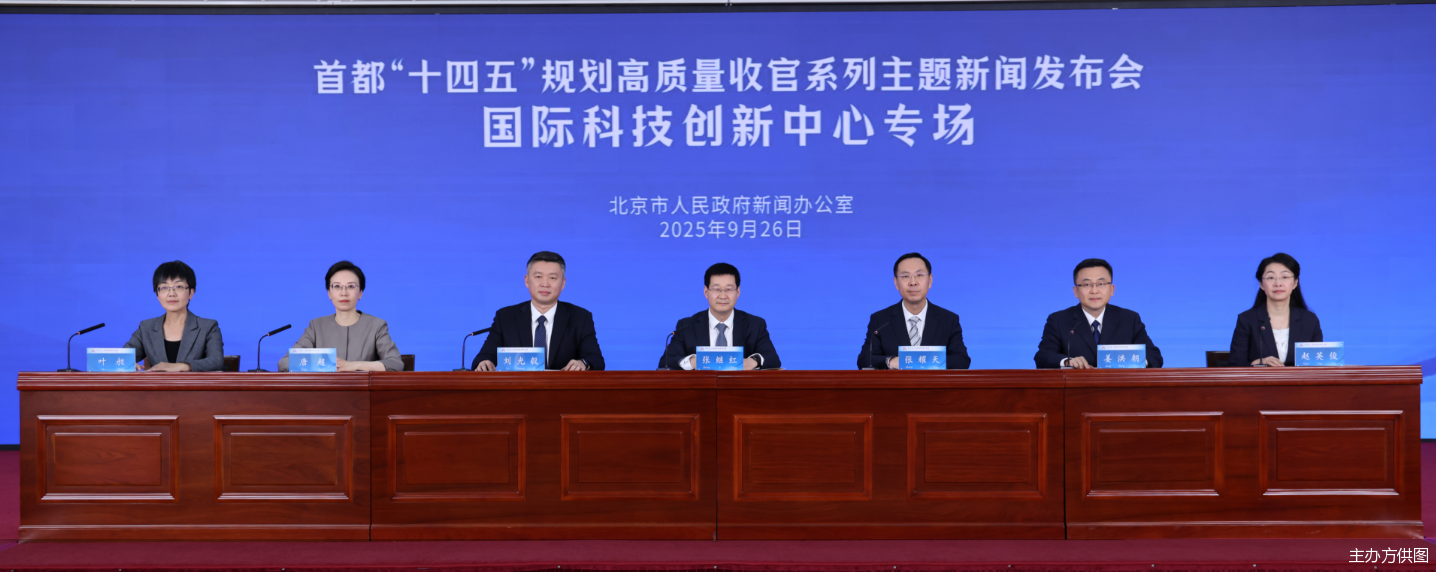
Group 1 - Beijing has achieved "five global leading" indicators and formed "five innovation leadership" areas, significantly enhancing its innovation capacity, competitiveness, and influence as a key hub in the global innovation network [1] - Beijing has ranked first in the global "Nature Index - Research Cities" for eight consecutive years, with 431 highly cited scientists, and has been third in the "International Science and Technology Innovation Center Index" for three years [1] - The city has maintained an R&D expenditure intensity of around 6%, with basic research funding accounting for approximately 16%, aligning with leading innovative countries [1] Group 2 - Beijing is focusing on deep integration of technological and industrial innovation, forming three trillion-level industries and seven hundred billion-level industry clusters, with a goal to become the "Artificial Intelligence First City" [2] - The city has made significant progress in building world-class technology parks, with the "Three Cities and One District" area contributing about one-third of the city's GDP while occupying less than 4% of the land [2] - Beijing is leading reforms in the technology system, with 24 major reform measures implemented in Zhongguancun, fostering an environment where over 300 tech companies are established daily [2] Group 3 - The city is enhancing its global influence in technology innovation, with major international events and initiatives, including the HICOOL Global Entrepreneur Summit and the International Science Park Association World Congress [3] - The technology contract transaction amount from Beijing to Tianjin and Hebei has increased from 34.7 billion yuan in 2020 to 84.37 billion yuan in 2024 [3]
滨城图强:以“三区联动”塑百强新城
Qi Lu Wan Bao Wang· 2025-09-28 06:47
Core Insights - The article highlights the successful development of Bincheng District, which ranked 88th in the national comprehensive strength index for small and medium-sized cities, attributed to strategic initiatives in high-tech industrial development, urban quality enhancement, and future planning around high-speed rail [1] Group 1: High-Tech Industrial Development - The establishment of the Bincheng High-Tech Industrial Development Zone, covering 14.99 square kilometers, has resolved the historical lack of high-standard industrial parks in the main urban area, facilitating a new strategic space for industrial economic growth [2] - The high-tech zone has attracted 17 major projects with a total investment of 23.02 billion, leading to a significant year-on-year increase of 37.2% in high-tech industrial output, surpassing the city average by 18.4 percentage points [2] Group 2: Urban Quality Enhancement - Bincheng District has initiated its largest urban quality improvement project since its establishment, planning to invest 18 billion over three years across 126 urban renewal projects, including the renovation of old neighborhoods and the construction of new housing [4][5] - The district's urban green space has expanded significantly, with 116 parks and 24 million square meters of urban greenery, achieving a forest coverage rate of 40%, enhancing the livability of the area [5] Group 3: High-Speed Rail Development - The construction of the Binzhou High-Speed Rail New City, covering 8.11 square kilometers, is underway, with the Binzhou Station designed to integrate local cultural elements and expected to be completed by 2026 [7] - The high-speed rail development is projected to attract over 30 billion in investments and is expected to transform Binzhou into a regional hub, significantly improving connectivity with major cities [8]
茅台股价被AI股超了?都说老股要完蛋!白云山竟在背后偷偷搞创新
Sou Hu Cai Jing· 2025-09-27 15:45
Core Viewpoint - The stock market is witnessing a clear divide between "old stocks" (traditional blue-chip companies) and "new stocks" (emerging tech companies), with the former, represented by Kweichow Moutai, experiencing significant declines while the latter, such as Cambricon, shows remarkable growth [1][3][5]. Group 1: Performance of "Old Stocks" - Kweichow Moutai, once a market leader, saw its stock price drop from a peak of 2627.88 yuan in 2021 to 1453.35 yuan by September 22, 2023, resulting in a market capitalization decrease from over 3 trillion yuan to 1.82 trillion yuan [3][5]. - Other traditional companies like Haier Smart Home reported positive performance, with a 10.2% year-on-year revenue growth and a 15.6% increase in net profit for the first half of the year [8][9]. Group 2: Performance of "New Stocks" - Cambricon's stock price surged by 105% in 2023, even surpassing Kweichow Moutai's price at one point, driven by increasing demand for domestic AI chips and accelerated domestic substitution [5][10]. - Despite the impressive growth of "new stocks," concerns exist regarding their high valuation and reliance on a limited number of clients, which poses operational risks [10][12]. Group 3: Innovation in Traditional Companies - White Cloud Mountain, categorized as an "old stock," is actively pursuing innovation in the pharmaceutical sector, including new drug development and digital transformation initiatives [12][13]. - The company's efforts demonstrate that traditional firms can revitalize themselves through innovation, maintaining their relevance in a rapidly changing market [13][17]. Group 4: Investment Strategies - Investors are encouraged to consider both "old stocks" and "new stocks," as each category has its advantages depending on market cycles [15][18]. - A diversified investment approach, allocating funds to both categories, can help mitigate market volatility and enhance overall returns [15][17].


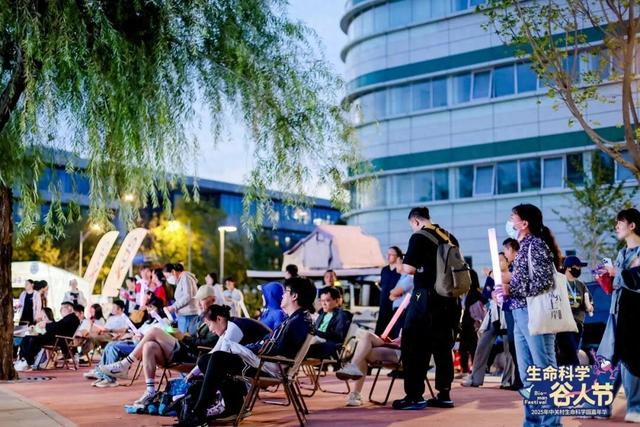
为产业社区注入新灵魂!2025中关村生命科学园嘉年华举办
Bei Jing Ri Bao Ke Hu Duan· 2025-09-27 09:24
Core Insights - The 2025 Zhongguancun Life Science Park Carnival successfully integrated various activities to enhance community engagement and showcase the life science industry [2][4][6] - The event aimed to create an "ideal industrial community" by blending leisure, nature, and cultural experiences with industrial spaces [4][8] Group 1 - The carnival featured three main areas: Quiet Hubei Bank, Medical Center, and Life Square, promoting full park interaction [2] - Activities included a mini triathlon, gourmet market, music party, expert lectures, and company exhibitions, attracting over a thousand participants from the life science sector and local residents [6] - The event allowed local residents to experience the charm of life sciences for the first time, enhancing community awareness and participation [6] Group 2 - The event's feedback will help align the brands within the Zhongguancun Life Science Park with the community's cultural and lifestyle needs [8] - The initiative aims to enhance the sense of belonging and creativity among talents, contributing to the development of a globally competitive pharmaceutical and health industry hub [8]

北京成为全球创新网络关键枢纽
Bei Jing Wan Bao· 2025-09-27 06:41
Group 1 - Beijing has significantly enhanced its innovation capacity, competitiveness, and influence, becoming a key hub in the global innovation network [1] - The city maintains a research and development expenditure intensity of around 6%, ranking among the top global innovation cities [1] - Beijing has been ranked first in the "Nature Index - Research Cities" for eight consecutive years and is third globally in the number of unicorn companies [1] Group 2 - The high-tech industry in Beijing is projected to reach a value of 1.49 trillion yuan in 2024, representing a 56.9% increase from 2020 [1] - The city has developed three trillion-yuan industry clusters: new generation information technology, healthcare, and technology services, along with seven hundred billion-yuan industry clusters [1] - Beijing has registered 159 large models in artificial intelligence, leading the nation in this area [1] Group 3 - The Beijing Medical Health Collaborative Innovation Three-Year Action Plan has been implemented, with the highest number of approved innovative medical devices in the country [2] - Beijing has established a complete industrial chain in commercial aerospace, including rocket launch, satellite manufacturing, and satellite application services [2] - The Zhongguancun area contributes about one-third of the city's GDP while occupying less than 4% of the land [2] Group 4 - Over 300 technology companies are established daily in Beijing, reflecting the effectiveness of the city's education and technology talent development [3] - Beijing ranks first in Asia and among the top globally in the "Global Entrepreneurship Ecosystem Report 2025" [3] - The city aims to become a global center for scientific innovation and a leading area for future industries during the "15th Five-Year Plan" [3]
北京百亿市级人工智能产业投资基金累计完成投决项目47个
Zhong Guo Jing Ying Bao· 2025-09-26 19:59
Core Viewpoint - During the "14th Five-Year Plan" period, Beijing has made significant progress in establishing itself as a global innovation hub, with a focus on integrating artificial intelligence across various sectors and substantial capital investment in technology [1][2][3]. Group 1: Key Achievements - Beijing has launched 1,105 key projects and tasks, ranking third globally in the number of unicorn companies for four consecutive years [1]. - The city has maintained a research and development (R&D) expenditure intensity of around 6%, with basic research funding accounting for approximately 16% [2]. - The number of high-value invention patents per 10,000 people is projected to reach 159.8 in 2024, doubling from 2020 and significantly exceeding the national average [2]. Group 2: Investment and Funding - A city-level artificial intelligence industry investment fund has been established with a scale of 10 billion yuan, completing 47 investment projects totaling 4.305 billion yuan, which has attracted hundreds of billions in social capital [1][3]. - The total revenue of the Zhongguancun Demonstration Zone reached 9.85 trillion yuan, accounting for about one-sixth of the total revenue of national high-tech zones [2]. Group 3: Industry Development - Beijing aims to become the "first city of artificial intelligence," with over 2,400 AI-related companies and a core industry scale of nearly 350 billion yuan by 2024 [3]. - The city has formed three trillion-level industries and seven hundred billion-level industry clusters, focusing on sectors like new-generation information technology and intelligent manufacturing [3]. Group 4: Policy and Support - The city has implemented special support policies for foreign-funded R&D centers, recognizing 279 such centers to date [5]. - A total of 50 billion yuan has been allocated for the Zhongguancun independent innovation special fund, with various measures to promote technology transfer in the Beijing-Tianjin-Hebei region [6].