船舶制造

Search documents
行进的海岸线 | 一条海岸线 带火一座城
Yang Guang Wang· 2025-10-04 07:22
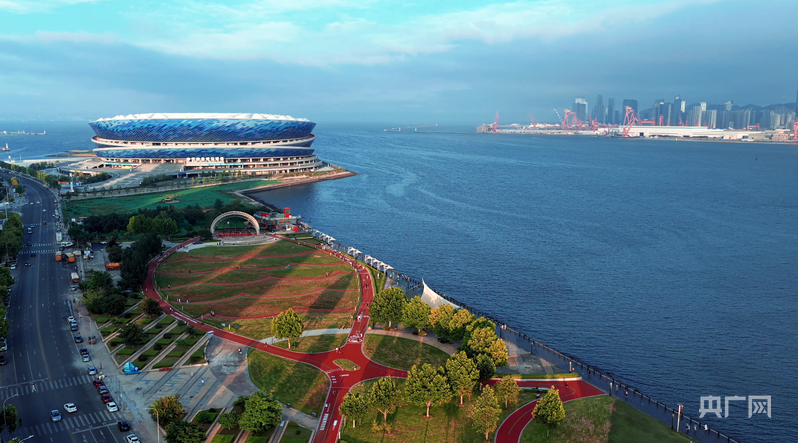
Core Viewpoint - The article highlights the transformation of Suoyu Bay into a vibrant recreational area, blending industrial heritage with modern leisure activities, showcasing the integration of culture and sports in urban development. Group 1: Infrastructure and Design - The Suoyu Bay running track is designed as an 800-meter long red rubber path, combining fitness and marine culture into a unique artistic feature [1][2] - The track's design allows runners to create GPS patterns resembling glowing fish, enhancing the running experience with cultural significance [2] Group 2: Urban Development and Tourism - Suoyu Bay has evolved from an energy transport hub to a popular coastal destination, reflecting urban renewal efforts that incorporate industrial remnants into leisure spaces [7] - The Suoyu Bay Sports Stadium, with a capacity of over 60,000, serves as a major venue for large events, contributing to the area's vibrancy [8] Group 3: Local Culture and Cuisine - The area around Suoyu Bay is bustling with local food vendors offering specialties like grilled beef and squid, attracting both residents and tourists [7] - The design of restaurants and viewing platforms enhances the experience of enjoying the scenic views of the sea and city [7] Group 4: Recreational Activities - The park features a 650-meter long photo spot, popular for capturing images of low-flying airplanes, adding a unique recreational element to the area [13] - The opening of the "Sea Tour Dalian" route connects East Port and Suoyu Bay, allowing visitors to appreciate the bay's beauty from the water [8]

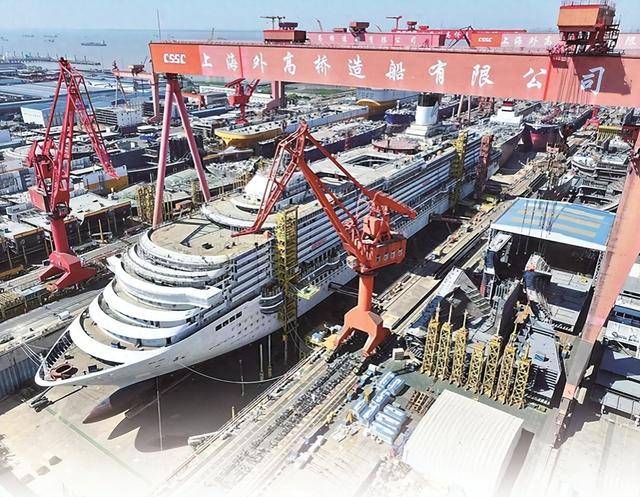
向祖国报告|“爱达·花城号”建设正酣:中国造船业向祖国呈递大型邮轮新答卷
Yang Guang Wang· 2025-10-03 11:40
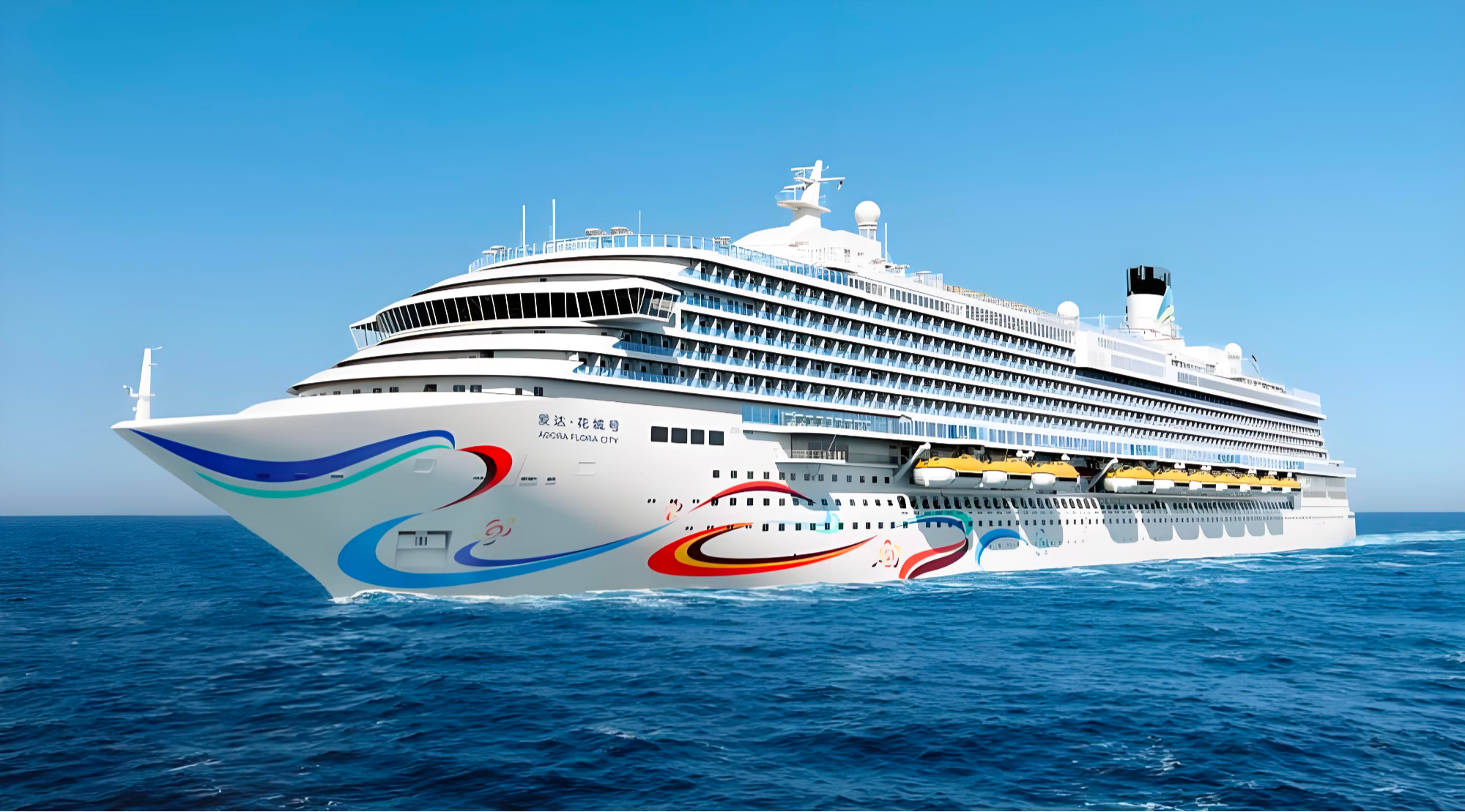
Core Viewpoint - The rapid construction and efficient progress of the second domestically produced large cruise ship "Aida Huacheng" signify a leap in China's cruise ship building technology and manufacturing capabilities, promoting industry upgrades and activating market vitality, making cruise travel more accessible to the public [11]. Group 1: Construction Progress and Efficiency - The second large cruise ship "Aida Huacheng" is nearing 85% completion, with plans for floating out in March 2024 and delivery by the end of 2026 [3][4]. - The ship's total length is 341 meters, with a gross tonnage of approximately 141,900 tons, which is an increase of 0.64 tons and 17.4 meters compared to the first ship, "Aida Modu" [3][4]. - The construction efficiency has improved by 20% due to innovative technologies and accumulated experience, despite the larger size of the ship [3][4]. Group 2: Technological Innovations - The use of a complete 3D model during the design phase has minimized modifications during construction, leading to a more streamlined process [4]. - Prefabricated cabin technology has significantly enhanced construction efficiency, reducing the installation time from 200 hours to approximately 50 hours for certain units [5][7]. - The overall interior construction cycle for "Aida Huacheng" is expected to be 8 months shorter than that of "Aida Modu," with plans to further compress the timeline by around 11 months [7]. Group 3: Talent Development and Local Capability - The shift from foreign to domestic supervision teams reflects China's growing self-sufficiency in cruise ship construction [8]. - The construction of the first large cruise ship has fostered the rapid development of young technical personnel, who are now integral to the second ship's construction [8]. Group 4: Market Trends and Consumer Behavior - The first large cruise ship "Aida Modu" has completed nearly 150 voyages since its commercial operation began on January 1, 2024, serving over 560,000 tourists [10]. - There is a growing trend of families choosing cruise travel, with bookings reflecting a strong preference for multi-generational travel experiences [10].

这一市场,已到爆发前夜→
Jing Ji Ri Bao· 2025-10-03 04:43
Core Insights - The development of new energy vessels is poised to become the next major trend in the shipping industry, following the surpassing of retail sales of new energy passenger vehicles over traditional fuel vehicles [1][3] - The rapid growth of new energy vessels presents new opportunities for the shipping industry and the green energy transition [1][3] Policy Framework - The top-level design for the new energy vessel market in China is becoming increasingly refined, with policies aimed at enhancing the autonomous design and construction capabilities of new energy vessels [3] - The National Development and Reform Commission has included pure electric vessels in the list of encouraged industries, and various government departments have issued guidelines and subsidies to promote the development of new energy vessels [3][7] Technological Advancements - Significant progress has been made in the research and development of new energy vessel technologies, with advancements in battery-powered vessels, liquefied natural gas vessels, and hydrogen fuel cell vessels [4] - The integration of new energy vessels with autonomous navigation and intelligent energy management systems is enhancing operational efficiency and market competitiveness [4] Application Potential - New energy vessels are demonstrating substantial potential in various sectors, including passenger transport, cargo shipping, and public service, with applications leading to reduced costs and emissions [6] - The inland shipping sector, characterized by high vessel density and fixed routes, presents a significant opportunity for the adoption of new energy vessels, which currently represent less than 1% of the inland fleet [6] Challenges and Solutions - Economic barriers, such as high costs of lithium batteries and hydrogen fuel cells, pose challenges to the widespread adoption of new energy vessels [7] - Addressing technological bottlenecks and improving supporting infrastructure, such as charging and hydrogen refueling stations, are critical for the growth of the new energy vessel market [7]
绿色智能船舶动力系统重大升级,712所新一代船用集装箱式移动电源批量交付
Jing Ji Guan Cha Bao· 2025-10-03 03:25
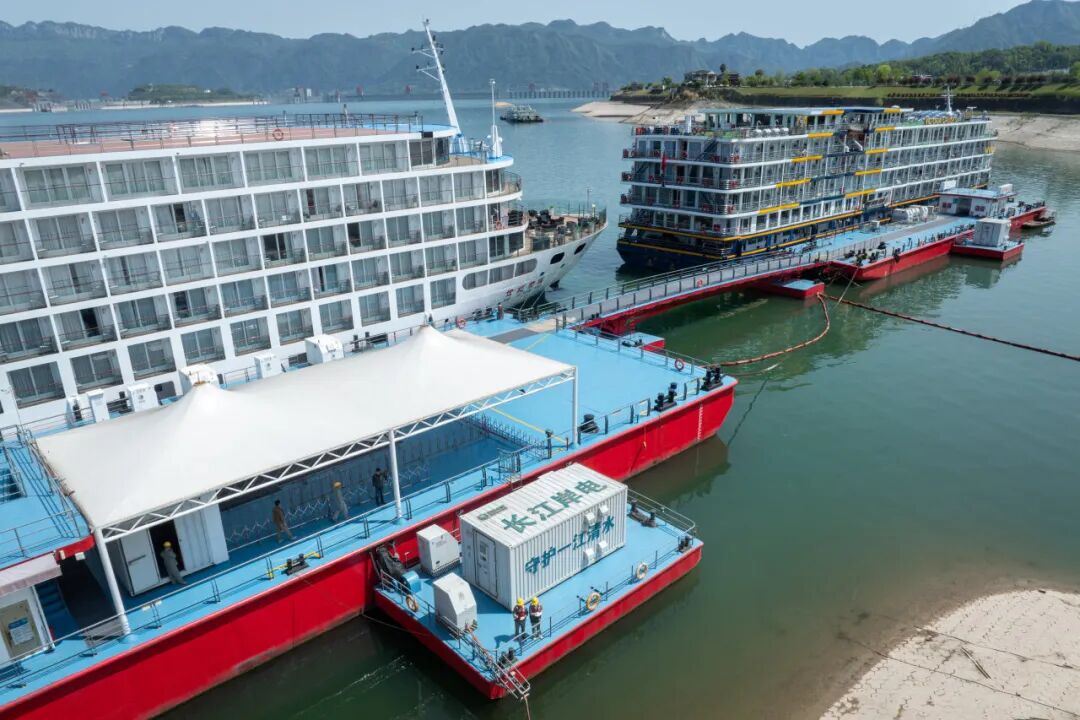
Core Viewpoint - The new generation of containerized mobile power systems developed by China Shipbuilding Group's 712 Institute has completed mass production and delivery, receiving positive feedback from shipowners after field acceptance tests on various projects [1] Group 1: Product Features - The WIMEP-ESS series integrates battery systems, power distribution control systems, temperature control systems, and fire protection systems within a standard 20-foot container, providing a comprehensive solution [1] - The system is designed for multi-scenario use, including "ship-to-shore-to-vehicle" applications, offering energy storage and charging/discharging capabilities to ensure continuous and stable power supply for vessels [1] - Features include rapid battery swapping through hoisting, innovative safety thermal management, standardized automatic plug-and-play devices, and a smart remote operation and maintenance platform [1] Group 2: Operational Efficiency - The new mobile power system significantly enhances operational efficiency for vessels and ports by enabling quick battery exchanges [1] - The design incorporates high safety, reliability, and environmental adaptability, making it suitable for various operational conditions [1]
扬州专业园区承载近半工业产出
Xin Hua Ri Bao· 2025-10-02 20:49
Core Insights - The signing and commencement of the Yizheng Shipbuilding Supporting Industry Park, with a total investment of approximately 5 billion yuan, is expected to produce nearly 20 ships annually and generate an annual output value of 10 billion yuan, reinforcing Yangzhou's position as one of Jiangsu's three major shipbuilding bases [1] - Yangzhou's "613" industrial system aims to attract precise projects and build industrial chains, with 43 specialized industrial parks contributing significantly to the city's industrial output and investment [1][2] Group 1: Specialized Industrial Parks - Yangzhou has adopted a stratified strategy for the construction of 43 specialized industrial parks, focusing on leading, emerging, and future industries, which has led to a balanced development across three types of parks [2] - The specialized industrial parks serve as core carriers for six major leading industries, including high-end equipment, new energy, and new materials, with significant projects already underway [2][3] Group 2: Emerging Industries - The parks are precisely aligned with 13 emerging industrial chains, aiming to create "segment champions," with notable successes in the low-altitude economy and microelectronics sectors [3] - The Yangzhou Data Industry Park has seen rapid growth, with 140 enterprises registered within six months and an 80% occupancy rate, indicating strong momentum in the new generation information technology sector [3] Group 3: Project and Industry Chain Synergy - The shift from quantity to quality in project attraction is emphasized, with targeted recruitment and industry chain supplementation to ensure alignment between projects and park positioning [4] - The introduction of upstream and downstream enterprises within parks has created a collaborative ecosystem, enhancing industrial concentration and efficiency [5] Group 4: Specialized Support Systems - A specialized support system has been established to enhance the capacity of industrial parks and attract high-end resources, which is crucial for the high-quality development of small and specialized parks [7] - Innovative models, such as the "front store, back factory" approach, have been implemented to integrate traditional manufacturing with new business growth opportunities [7] Group 5: High-Quality Development Goals - The construction of specialized industrial parks is seen as a primary avenue for Yangzhou to drive high-quality development and foster new productive forces, with a focus on enhancing industrial recognition, innovation activity, and economic contribution [8]

Forbes Daily: Elon Musk Briefly Hits $500 Billion
Forbes· 2025-10-02 12:03
分组1 - Jane Goodall, a renowned zoologist and animal rights activist, passed away at the age of 91, known for her groundbreaking discoveries about chimpanzees and her influence on women in science [1] - Elon Musk has reached a new milestone, becoming the first person to be worth $500 billion, with projections suggesting he could become the world's first trillionaire by 2033 [3] - The U.S. government shutdown has led to a rally in bitcoin and gold prices as investors seek safe havens, although such shutdowns are typically short-lived with limited economic impact [4] 分组2 - U.S. private sector employment fell more than expected in August, indicating a deceleration in the job market, with potential implications for the Federal Reserve's upcoming policy meeting [5] - Saronic, an autonomous speedboat startup, raised $600 million at a $4 billion valuation, aiming to revive the U.S. shipbuilding industry by mass-producing small, cheap, autonomous vessels [6] - Axsome Therapeutics, focused on brain disorders, reported a revenue of $495 million for the 12 months ending in June, a 70% increase from the previous year, although it remains unprofitable with a net loss of $247 million [12][13]


意大利船东弃日韩,中国一举拿下全球74%订单,80天造万吨油轮
Sou Hu Cai Jing· 2025-10-01 09:44
Core Insights - The Chinese shipbuilding industry is rapidly rising, breaking the long-standing dominance of Japan and South Korea in the global shipping market through technological innovation and a complete industrial chain [1][20][22] - China's shipbuilding capabilities have surpassed traditional powers, becoming a significant competitor in the global market, particularly in the construction of large oil tankers and high-end vessels [1][18] Group 1: Technological Advancements - The construction of an 11.4 million-ton oil tanker by Waigaoqiao Shipbuilding took only 80 days, significantly shorter than the 120 days or more typically required, showcasing a revolutionary change in shipbuilding processes [3][18] - The introduction of IoT technology at Waigaoqiao allows real-time interconnectivity of over 2,000 devices, enhancing production efficiency and precision while reducing waste [5][10] - The adoption of modular design and pre-outfitting techniques, inspired by high-speed rail management concepts, has shortened construction cycles by 30% [7][12] Group 2: Supply Chain and Resource Management - China's position as the largest steel producer enables shipbuilders to receive customized high-strength corrosion-resistant steel plates with significantly reduced delivery times, enhancing overall production efficiency [10][20] - The Yangtze River Delta's industrial cluster effect supports the shipbuilding industry, with 90% of key components available within 48 hours, ensuring a robust supply chain [10][20] Group 3: Market Dynamics and Competitive Landscape - By 2024, China is projected to capture 74.1% of global new ship orders and 63.1% of the order backlog, dominating 14 out of 18 mainstream ship types [18][22] - South Korea's market share has declined to 20%, while Japan's has fallen to 11%, marking the most severe downturn in 30 years due to China's rise [18][22] - The shift in global shipbuilding dynamics indicates a significant change in the competitive landscape, with China establishing a leading position in emerging fields such as new energy transport vessels and smart ships [14][16][22]
历史性突破!全球最大,成功下水
中国能源报· 2025-10-01 08:42
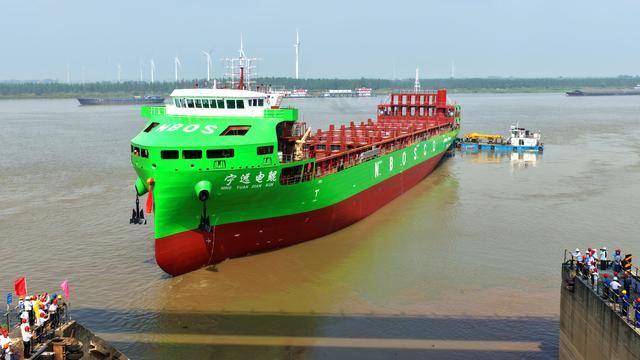
Core Viewpoint - The successful launch of the world's largest 10,000-ton pure electric intelligent sea vessel in Jiangxi marks a historic breakthrough for China's shipping industry, transitioning to a zero-emission, fully electric era in coastal container transportation [1]. Group 1: Vessel Specifications - The vessel measures 127.8 meters in length, 21.6 meters in width, and 10.5 meters in depth, featuring a dual-engine dual-propeller propulsion system with a maximum speed of 11.5 knots [3]. - It is designed to accommodate 740 standard 20-foot container slots and innovatively includes 10 box-type batteries as its power core, capable of charging via high-voltage shore power or quick battery swaps [3]. Group 2: Environmental Features - The vessel is equipped with a photovoltaic system to provide renewable energy support for its operations, achieving zero emissions throughout its operational and loading/unloading processes [3]. Group 3: Intelligent Systems - The vessel integrates advanced systems such as an intelligent integrated platform and smart engine room, enabling autonomous navigation in open waters with features like real-time situational awareness, all-weather visual perception, route planning, unmanned driving, and autonomous collision avoidance [4]. - It showcases a seamless blend of green, efficient, and intelligent technologies through its smart mode switching capabilities [4].
中国2025经济最强省排名:广东,江苏,山东,浙江,经济最活跃,GDP10万亿左右,排头兵
Sou Hu Cai Jing· 2025-10-01 02:15
Group 1: Economic Landscape of the "Trillion-Level" Provinces - In 2025, the economic landscape of China's "first-tier" provinces is defined by Guangdong (68,725.4 billion), Jiangsu (66,967.8 billion), Shandong (50,046 billion), and Zhejiang (45,004 billion), collectively accounting for over 60% of the national GDP [1] - The internal differentiation within the "trillion-level" provinces is significant, with Zhejiang and Shandong leading in growth rates at 6%, followed by Jiangsu at 5.9%, and Guangdong at 4.1%, indicating a transition from scale expansion to quality improvement in Guangdong [1] Group 2: Economic Drivers of Each Province - Guangdong's economy is driven by a service-oriented model, with the tertiary sector accounting for 65.3% of its GDP in Q1 2025, and modern services like digital services and fintech growing over 8% [4] - Jiangsu showcases its manufacturing strength with an 8.2% growth in industrial output in Q1 2025, supported by a balanced regional development strategy [5] - Shandong's industrial growth is highlighted by an 8.2% increase in industrial output, with significant contributions from new energy sectors, reflecting a successful transition of old and new economic drivers [6] - Zhejiang's economy is characterized by a strong private sector, with an 8.9% growth in industrial output in Q1 2025, driven by innovation in industries like drones and robotics [8] Group 3: Development Models and Regional Coordination - Jiangsu's approach to regional balance through coastal development has led to GDP growth rates exceeding 7% in coastal cities, providing a model for coordinated regional development [9] - Zhejiang's governance model emphasizes the role of private enterprises in policy-making, resulting in a 10.5% increase in private investment, particularly in the digital economy [9] - Shandong's transformation strategy includes policies for green upgrades in traditional industries, with a 2.3 percentage point decrease in high-energy-consuming industries' output share [11] Group 4: Challenges and Future Directions - Guangdong faces challenges in addressing the disparity in GDP per capita between the Pearl River Delta and other regions, necessitating the diffusion of innovation resources [12] - Jiangsu's underperformance in marine economy, with only 7.3% of GDP from marine production, highlights the need for enhanced coastal industry integration [12] - Shandong's reliance on high-energy industries, contributing 30% to industrial output, requires innovation to enhance value-added production [12] - Zhejiang must overcome limitations in its private sector, particularly in high-tech fields, to foster a more competitive industrial ecosystem [12] Group 5: Overall Value of the "Trillion-Level" Provinces - The collective economic strategies of Guangdong, Jiangsu, Shandong, and Zhejiang illustrate diverse pathways to high-quality development, emphasizing the balance between scale and quality, government and market, and efficiency and equity [15] - The success of these provinces is attributed to their adaptive economic ecosystems and social structures, which align with their respective resource endowments and governance models [15]
全球最大!万吨级纯电动智能海船在江西湖口成功下水
Sou Hu Cai Jing· 2025-09-30 10:07
Core Points - The launch of the "740TEU pure electric open-top container ship" marks a historic breakthrough in China's shipping industry, representing the world's largest and the first domestic 10,000-ton pure electric intelligent sea vessel, transitioning coastal container transport into a zero-emission, pure electric era [1][9] Group 1: Vessel Specifications - The vessel measures 127.8 meters in length, 21.6 meters in width, and 10.5 meters in depth, featuring a dual-engine dual-propeller propulsion system with a maximum speed of 11.5 knots [3] - It is equipped with 740 standard 20-foot container slots and innovatively includes 10 box-type batteries as the power core, capable of charging via high-voltage shore power or quick battery swaps [3] Group 2: Environmental and Energy Features - The ship is designed to achieve zero emissions throughout its operation and loading/unloading processes, supported by a photovoltaic system that provides renewable energy [3] Group 3: Intelligent Features - The vessel integrates advanced systems such as an intelligent integrated platform and smart engine room, enabling autonomous navigation in open waters with features like real-time situational awareness, all-weather navigation perception, route planning, unmanned driving, and autonomous collision avoidance [5] Group 4: Project Development - The successful launch of the first vessel indicates that the main hull has been fully connected, with the installation of key equipment like generators and propulsion motors nearing completion, leading into the mooring and navigation testing phase to ensure timely delivery [7] Group 5: Industry Impact - The completion of this milestone pure electric intelligent vessel not only showcases the innovative strength of China's shipbuilding industry but also sets a new benchmark for promoting green, zero-carbon, high-quality development in the shipping sector [9]