航天科技

Search documents
一封来自海南自贸港的信
Xin Lang Cai Jing· 2026-01-11 17:16
Group 1 - The core idea is that Hainan Island is undergoing significant transformation due to the development of a world-class free trade port, leading to increased international trade and improved living standards [1][2] - The introduction of low tax policies is attracting numerous enterprises to establish modern factories in Hainan, resulting in higher wages for local residents [1] - The availability of a diverse range of international products in local supermarkets indicates a shift towards a global shopping experience for consumers [1] Group 2 - Transportation infrastructure in Hainan is rapidly improving, with enhanced cross-sea travel and airport expansions making travel more convenient [2] - The development of high-tech industries, such as aerospace and biomedicine, is adding a technological dimension to the island's economy [2] - The emphasis on ecological preservation highlights the importance of maintaining Hainan's natural beauty while fostering economic growth [2]
视频丨神二十一乘组太空“出差”满70天 多项在轨训练有序开展
Xin Lang Cai Jing· 2026-01-11 03:47
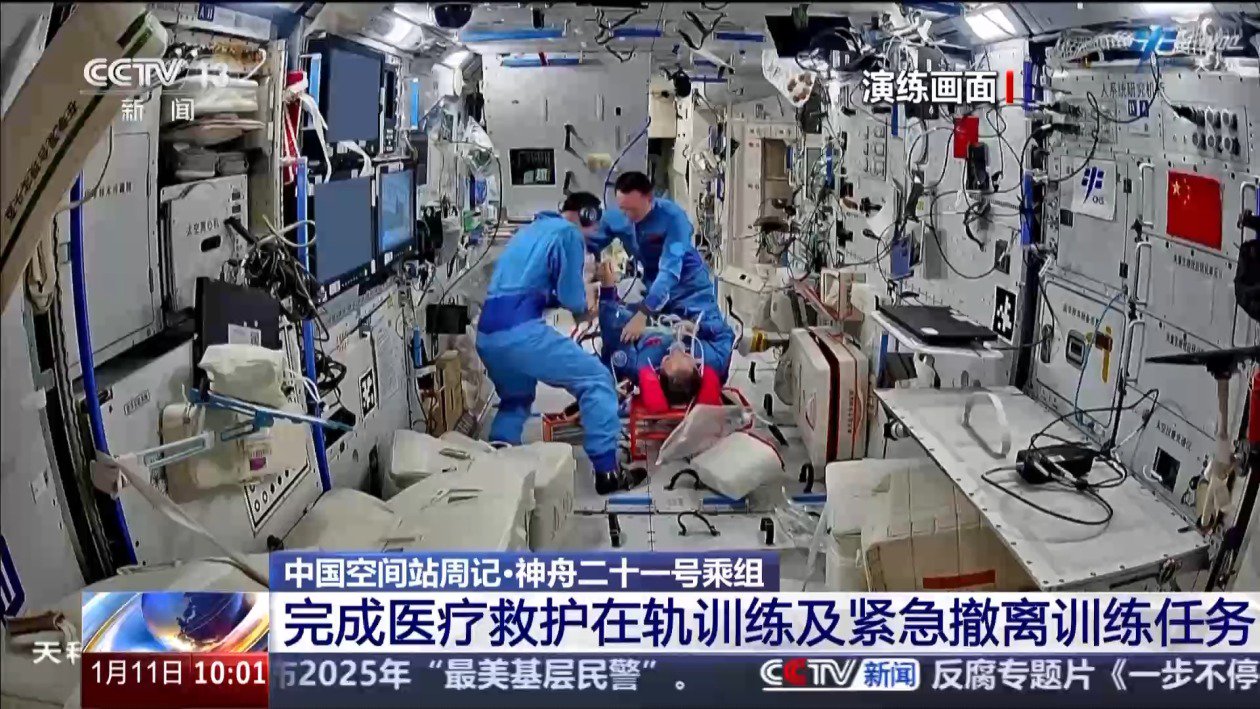
Core Viewpoint - The Shenzhou-21 astronauts have been working in orbit for over 70 days, continuing their busy schedule with various training and scientific experiments during the New Year holiday [1]. Group 1: In-Orbit Training - The astronauts conducted remote operation rendezvous docking training, utilizing translation and attitude control handles for speed and attitude control skills [4]. - Medical rescue training was completed, familiarizing the crew with rescue operations in microgravity, equipment locations, and operational procedures [4]. - Emergency evacuation training was performed under simulated fire conditions in the space station [4]. Group 2: Space Science Experiments - In the field of space medicine, the crew conducted experiments using EEG devices and VR glasses to explore brain control signal characteristics in microgravity [6]. - Research on intuitive physics in microgravity and space cooperation coding and regulation was also undertaken [6]. Group 3: Material Science Research - Progress was made in the electrochemical optical in-situ research of lithium-ion batteries, which is expected to provide important theoretical support for future space missions [8]. Group 4: Equipment Maintenance and Management - The crew completed various tasks including the replacement of burners in combustion science experiments, disassembly of fluid physics experiment modules, and maintenance of experimental equipment [10]. - Continuous inspection and maintenance of the space station platform and life support systems were carried out [12].

今日财经要闻TOP10|2026年1月10日
Xin Lang Cai Jing· 2026-01-10 12:25
1、沃尔玛将取代阿斯利康成为纳斯达克100指数成份股 3、美国联邦通信委员会批准SpaceX再部署7500颗星链卫星的计划 美国联邦通信委员会(FCC)当地时间周五宣布,已批准太空探索技术公司(SpaceX)新增部署 7500 颗第二代 "星链" 卫星的申请,助力该公司进一步拓展全球互联网服务业务。美国联邦通信委员会 表示,埃隆・马斯克旗下的太空探索技术公司(SpaceX)现已获准额外运行 7500 颗第二代 "星链" 卫 星,此举将使其全球在轨卫星总数达到 1.5 万颗。该委员会同时批准SpaceX对卫星进行技术升级,并允 许其使用五个频段开展运营;此外,委员会还豁免了此前限制卫星信号覆盖重叠、制约网络容量提升的 相关规定。该机构指出,新增卫星将为美国以外地区提供卫星直连蜂窝网络服务,并强化美国本土的网 络覆盖能力,不仅能支撑下一代移动通信服务,还可实现最高每秒 1 千兆比特的上网速率。 4、特朗普:呼吁信用卡利率上限为 10% 为期一年 特朗普在社交媒体发文:请注意,我们绝不会再让美国民众被信用卡公司"宰割",这些公司收取高 达20%至30%甚至更高的利率,而这种现象在瞌睡乔·拜登执政期间却无人制止。负担 ...
港股异动 | 金风科技(02208)盘中涨超14% 大和称对蓝箭航天潜在投资收益将支撑金风短期盈利表现
智通财经网· 2026-01-09 03:17
Group 1 - The core viewpoint of the article highlights that Goldwind Technology (02208) experienced a significant stock price increase, rising over 14% during trading and currently up 7.2% to HKD 17.28, with a trading volume of HKD 2.339 billion [1] - Blue Arrow Aerospace has submitted its prospectus to the Sci-Tech Innovation Board, revealing that Goldwind Technology's subsidiary, Jianghan Asset, holds a 4.14% stake in Blue Arrow Aerospace, making it the sixth largest shareholder [1] - Daiwa has upgraded Goldwind's H-share rating from "Hold" to "Outperform," citing potential investment returns that will support short-term profitability, alongside the proposed IPO of SpaceX, which may drive significant revaluation [1] Group 2 - The target price for Goldwind's H-shares has been raised from HKD 13 to HKD 17 [1]

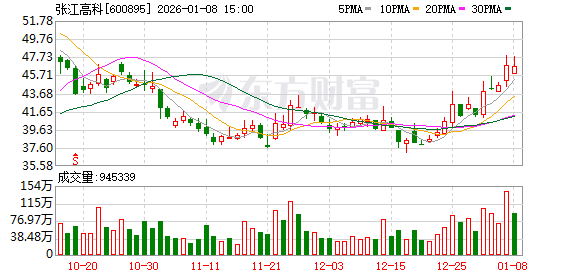
张江高科:公司通过参股基金张江燧锋基金投资了蓝箭航天空间科技股份有限公司1.5亿元
Zheng Quan Ri Bao· 2026-01-08 12:41
证券日报网讯 1月8日,张江高科在互动平台回答投资者提问时表示,公司通过参股基金张江燧锋基金 投资了蓝箭航天空间科技股份有限公司1.5亿元人民币,具体信息请详参考蓝箭股份官方渠道公告。 (文章来源:证券日报) ...

大和:升金风科技评级至“跑赢大市” 目标价上调至17港元
Zhi Tong Cai Jing· 2026-01-08 07:14
大和发布研报称,预期金风科技(002202)(02208)的潜在投资收益将支撑其短期盈利表现,并推动中 期估值重估,另外,公司未执行的股份回购计划亦可支持股价。该行将公司评级由"持有"上调至"跑赢 大市",H股目标价由13港元调升至17港元。 该行表示,蓝箭航天拟于今年在上交所创科板上市,其当前估值逾200亿元人民币,市场预期该公司上 市后估值或重估至1,000亿元人民币。该行认为,由于金风科技持有蓝箭航天股权,结合Space X拟议的 IPO,这些潜在催化剂或带动金风科技的市值显著重估。 ...
航天宏图涨停 13只科创板股涨超10%
Zheng Quan Shi Bao Wang· 2026-01-08 06:35
融资融券数据显示,该股最新(1月7日)两融余额为5.91亿元,其中,融资余额为5.91亿元,较上一个 交易日减少4569.72万元,降幅为7.18%;融券余额为73.31万元,较上一个交易日减少2.79万元,降幅为 3.67%。近10日两融余额合计增加7838.57万元,增幅为15.28%,其间融资余额增长15.26%,融券余额增 长36.54%。(数据宝) (文章来源:证券时报网) 资金面上,航天宏图上一交易日主力资金净流出3202.00万元,近5日净流出2012.77万元。 1月8日盘中科创板股航天宏图涨停,截至14:02,股价报38.11元,成交19.06亿元,换手率20.80%,振幅 21.76%。 科创板个股中,截至发稿上涨的共有446只,涨幅在10%以上的共有13只,除航天宏图之外,涨停的还 有航天南湖、必贝特-U等,下跌的有152只,跌幅较大的有嘉必优、开普云、德科立,分别下跌 12.91%、7.59%、6.81%。 ...

大行评级|大和:上调金风科技评级至“跑赢大市” 目标价上调至17港元
Ge Long Hui· 2026-01-08 04:45
大和发表研究报告指,预期金风科技的潜在投资收益将支撑其短期盈利表现,并推动中期估值重估,另 外,公司未执行的股份回购计划亦可支持股价。该行将公司评级由"持有"上调至"跑赢大市",H股目标 价由13港元调升至17港元。该行表示,蓝箭航天拟于今年在上交所创科板上市,其当前估值逾200亿 元,市场预期该公司上市后估值或重估至1000亿元。该行认为,由于金风科技持有蓝箭航天股权,结合 SpaceX拟议的IPO,这些潜在催化剂或带动金风科技的市值显著重估。 ...
应用成果持续涌现!中国空间站2025年“工作总结”出炉
Xin Lang Cai Jing· 2026-01-08 04:34
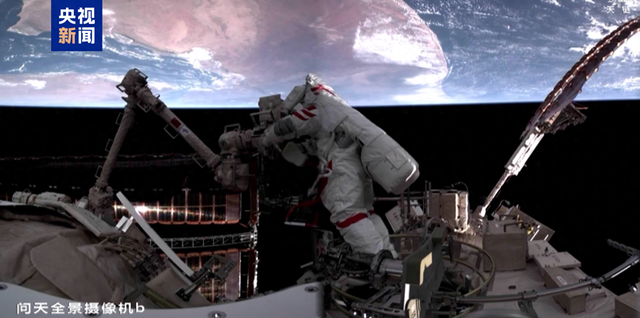
Core Viewpoint - The report highlights the significant advancements and achievements in China's space station program, emphasizing the successful implementation of various scientific research and application projects, and the ongoing commitment to promoting space science and technology development [3][9]. Group 1: Achievements in Space Research - A total of 33 representative scientific research and application achievements have been selected for display, reflecting China's capabilities and innovative spirit in the field of space technology [3]. - As of December 2025, 265 scientific and application projects have been deployed and implemented in three main areas: space life and human research, microgravity physical science, and new technologies and applications [6]. - In 2025, 86 new scientific and application projects were implemented in orbit, with approximately 1,179 kg of scientific materials sent to space and about 105 kg of scientific samples returned [8]. Group 2: Scientific Discoveries and Innovations - Significant progress includes the successful completion of China's first mouse space science experiment and the international first study on the combined space environment of sub-magnetic and microgravity [8]. - New findings include a novel magnesium ion binding mode of bacteriophage ATPase and a non-invasive intracranial pressure monitoring technique based on orbital B-scan measurements [8]. - The space station has also achieved groundbreaking results in the solidification mechanism of high-temperature refractory alloys and the formation mechanisms of different phases in multiphase iron-based magnetostrictive alloys [8]. Group 3: Future Directions and Goals - The Chinese space station will continue to conduct a series of space science research projects, actively promote scientific outreach and international cooperation, and integrate high-level research forces domestically and internationally [9]. - The ongoing efforts aim to significantly contribute to the development of a strong technological and aerospace nation, aligning with national strategic needs and scientific frontiers [9].
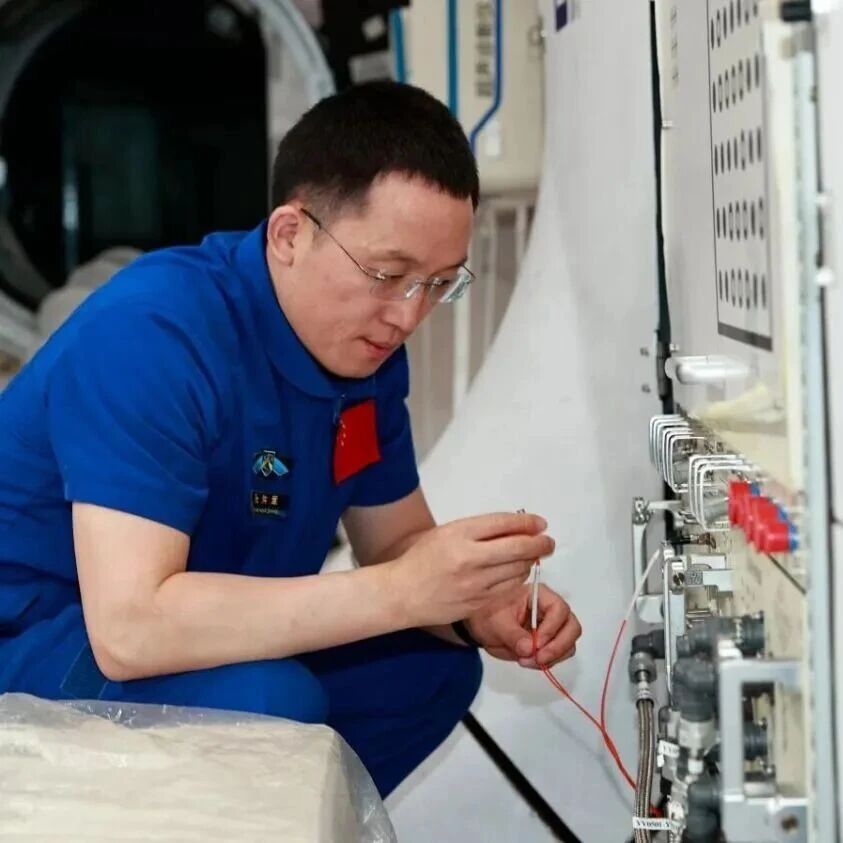
中国空间站开展锂离子电池在轨实验
中关村储能产业技术联盟· 2026-01-08 02:41
Group 1 - The project "In-situ Electrochemical Optical Research of Lithium-ion Batteries for Space Applications" has been initiated aboard the Chinese space station, with astronauts from the Shenzhou 21 mission conducting experiments [2] - Lithium-ion batteries are considered the "energy heart" of modern space missions due to their high energy density, long cycle life, and safety reliability [4] - The research focuses on the distribution of chemical substances within the electrolyte, which is a core factor determining battery power and lifespan [4] Group 2 - The unique microgravity environment of space allows for a clearer study of the internal processes of batteries, such as ion transport and insertion/extraction, which are difficult to isolate on Earth due to the intertwining of gravitational and electric fields [4] - The project aims to observe and analyze the impact of microgravity on key processes within the battery, providing scientific evidence to enhance the efficiency of spacecraft energy systems [5] - The experiment involves in-situ optical observation of lithium-ion batteries under microgravity, capturing the entire growth process of lithium dendrites and ensuring precise execution and monitoring of the experiments [4][5] Group 3 - The advancement of this experiment is expected to break through the cognitive bottleneck of the coupling effects between gravitational and electric fields, further developing electrochemical fundamental theories [5] - The findings will provide a basis for optimizing current on-orbit battery systems and designing the next generation of high-energy, high-safety space batteries [5]