自动驾驶

Search documents
小马智行盘前涨超3%!第四代自动驾驶卡车家族将于明年量产,并计划于2026年开始首批次营运
Ge Long Hui· 2025-11-20 09:58
Core Viewpoint - Pony.ai (PONY.US) has formed partnerships with SANY Heavy Truck and Dongfeng Liuzhou Motor to jointly develop a fourth-generation autonomous truck family, which is expected to significantly advance the technology and application of autonomous trucks in the industry [1] Group 1: Company Developments - Pony.ai's stock rose over 3% to $12.3 ahead of market opening [1] - The first two models will be based on the latest pure electric platforms from SANY Heavy Truck and Dongfeng Liuzhou Motor, targeting a production scale of around 1,000 units [1] - The series of models is planned to begin operations in 2026, marking a significant step towards large-scale unmanned commercial operations [1] Group 2: Industry Impact - The collaboration aims to drive the development and application of autonomous truck technology, facilitating a leap towards large-scale unmanned commercial operations in the industry [1]
美股异动丨文远知行盘前涨超4% Robotaxi拿下瑞士纯无人牌照
Ge Long Hui· 2025-11-20 09:47
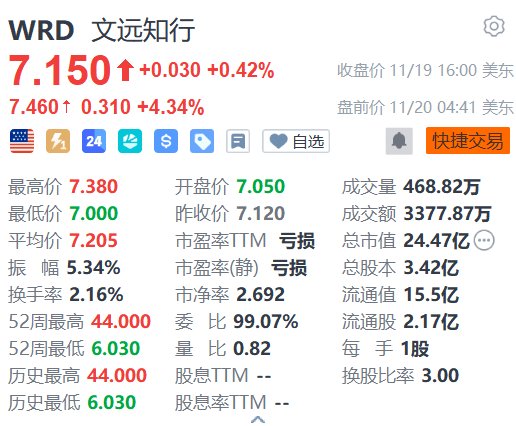
Core Viewpoint - WeRide has officially received a fully autonomous license for its Robotaxi from Switzerland's Federal Roads Office, marking a significant milestone in the company's global expansion strategy [1] Group 1: Company Achievements - WeRide's Robotaxi is now authorized to operate fully autonomously on public roads in the Furttal region of Zurich, making it the first such license issued in Switzerland [1] - The company is now the only technology firm globally to hold autonomous driving licenses in eight countries, including Switzerland, China, UAE, Saudi Arabia, Singapore, France, Belgium, and the United States [1] Group 2: Market Performance - WeRide's stock price increased by 4.34% to $7.46 in pre-market trading [1] - The company's market capitalization stands at $2.447 billion, with a total share count of 342 million [1]


八国通行,全球唯一!文远知行Robotaxi拿下瑞士纯无人牌照
Ge Long Hui· 2025-11-20 09:45
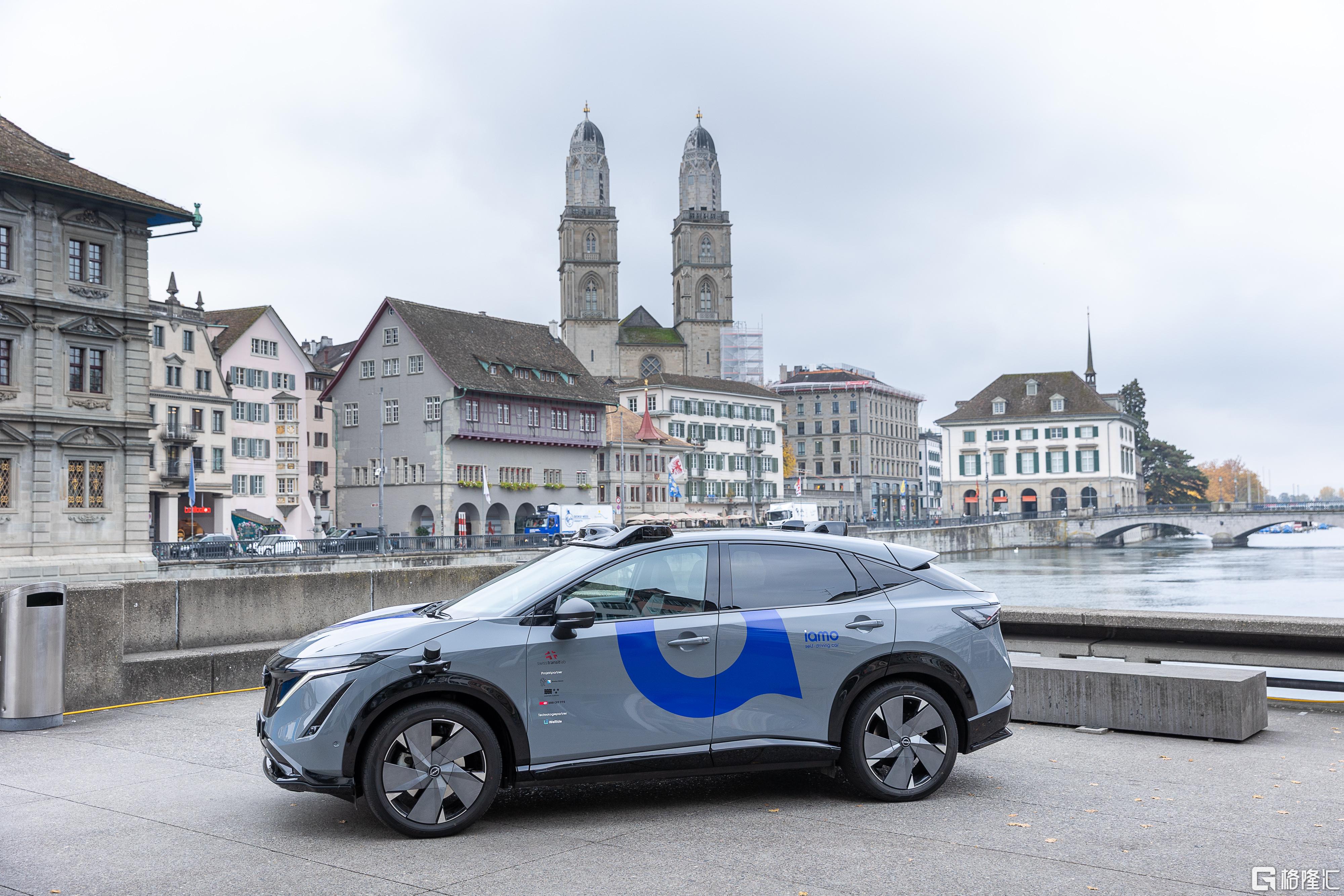
Core Insights - WeRide has officially received a fully autonomous license for its Robotaxi from Switzerland's Federal Roads Office, allowing it to operate on public roads in the Furttal region of Zurich, marking the first such license issued in Switzerland [1][4] - The company now holds autonomous driving licenses in eight countries, including Switzerland, China, UAE, Saudi Arabia, Singapore, France, Belgium, and the USA, representing a significant milestone in its global strategy [1] Group 1 - The WeRide Robotaxi will be part of the iamo (Intelligent Automated Mobility) pilot project, aimed at integrating autonomous vehicles into public transport systems to enhance local mobility and promote sustainable transport [4] - The operational area for the iamo project will cover approximately 110 kilometers with around 460 stops, and the vehicles can reach speeds of up to 80 kilometers per hour [4] Group 2 - Following extensive preparatory work, WeRide has partnered with a local driving school to conduct autonomous driving tests with safety personnel on board, covering various areas in Furttal [5] - The testing will occur under different traffic and weather conditions to ensure compliance with Swiss road regulations [5] Group 3 - After successful testing with the Federal Roads Office, WeRide plans to initiate fully autonomous driving tests monitored remotely by Eurobus, Switzerland's largest private bus operator [10] - The company aims to officially launch its Robotaxi service to the public in Switzerland by mid-2026, with plans to gradually incorporate Robobus into its fleet, creating a mixed fleet of autonomous vehicles [10] Group 4 - Starting June 2025, WeRide's Robobus will provide shuttle services for Zurich Airport employees between the headquarters and maintenance area [10] - In October 2025, WeRide will begin training for safety personnel and remote driving operations in preparation for the upcoming fully autonomous operations [10]
美股异动丨小马智行盘前涨超3%,第四代自动驾驶卡车家族将于明年量产
Ge Long Hui· 2025-11-20 09:40
Core Viewpoint - Pony.ai (PONY.US) has seen a pre-market increase of over 3%, reaching $12.3, following the announcement of a partnership with SANY Heavy Truck and Dongfeng Liuzhou Motor to develop a fourth-generation autonomous truck family [1] Group 1: Partnership and Collaboration - The collaboration involves the joint development of autonomous trucks based on SANY Heavy Truck and Dongfeng Liuzhou Motor's advanced pure electric platform models [1] - The first two models will be produced for a scale of approximately one thousand units, indicating a significant commitment to mass production [1] Group 2: Future Plans and Market Impact - The planned operational launch for the first batch of these autonomous trucks is set for 2026, marking a strategic timeline for the project [1] - This series of models aims to advance the development and application of autonomous truck technology, facilitating a leap towards large-scale unmanned commercial operations in the industry [1]
元戎启行周光:已量产交付20万辆,预计明年破百万目标
Bei Ke Cai Jing· 2025-11-20 09:33
Core Insights - Yuanrong Qixing showcased multiple models equipped with combined assisted driving solutions at the 2025 Guangzhou Auto Show, with CEO Zhou Guang announcing the delivery of 200,000 mass-produced vehicles featuring the urban NOA (Navigation Assisted Driving) system [1] - Since the launch of mass production models equipped with the Yuanrong Qixing urban NOA system in September 2024, the company has achieved a nearly 40% market share in the third-party urban NOA market within just over a year, delivering 10 models [1] Business Development - Yuanrong Qixing is accelerating the rollout of its Robotaxi business, having signed a strategic agreement with the Wuxi municipal government in October to establish a testing and R&D base, with plans to launch consumer-grade mass-produced Robotaxi models by the end of this year [1] - In 2026, Yuanrong Qixing will focus on three core businesses: mass-produced vehicle assisted driving, Robotaxi, and RoadAGI, aiming to expand its cooperative vehicle and customer system to achieve cumulative deliveries exceeding 1 million vehicles [1] - The Robotaxi business will be expedited for commercial rollout, aiming to create a replicable commercial Robotaxi system, while the RoadAGI business will continue to push for commercialization in key applications such as last-mile delivery [1]
文远知行-W午前涨超3% 近日获阿布扎比颁发无人驾驶运营许可证
Zhi Tong Cai Jing· 2025-11-20 04:23
Core Viewpoint - The recent announcement by the Abu Dhabi Department of Transport regarding the launch of Level 4 fully autonomous vehicle commercial operations marks a significant milestone for the company and the autonomous driving industry in the region [1][2]. Group 1: Company Developments - The company's stock price increased by 3.06%, reaching HKD 19.21, with a trading volume of HKD 11.08 million [1]. - The company is collaborating with Uber and local fleet operator Tawasul to launch its first project in Abu Dhabi, focusing on fully autonomous driving [1]. - The company has become the only entity globally to obtain autonomous driving licenses in seven countries, with operations spanning 11 countries and 30 cities [2]. Group 2: Financial Performance - The company's "Robotaxi" business reported revenue of CNY 50 million for FY25Q2, reflecting a substantial year-on-year growth of 836.7% [2]. - The fleet size of the company's Robotaxi service in Abu Dhabi has tripled since December 2024, indicating strong market expansion [2]. - The company is expected to see continued revenue growth driven by its Robotaxi operations in the Middle East, particularly in high-value markets like Abu Dhabi, Dubai, and Riyadh [2].
和港校自驾博士交流后的一些分享......
自动驾驶之心· 2025-11-20 00:05
Core Viewpoint - The article emphasizes the importance of building a comprehensive community for autonomous driving, providing resources, networking opportunities, and guidance for both newcomers and experienced professionals in the field [6][16][19]. Group 1: Community and Networking - The "Autonomous Driving Heart Knowledge Planet" community aims to create a platform for technical exchange and collaboration among members from renowned universities and leading companies in the autonomous driving sector [16][19]. - The community has grown to over 4,000 members and aims to reach nearly 10,000 within two years, facilitating discussions on technology trends and industry developments [6][7]. - Members can freely ask questions regarding career choices and research directions, receiving insights from industry experts [89][92]. Group 2: Learning Resources - The community offers a variety of learning materials, including video tutorials, technical routes, and Q&A sessions, covering over 40 technical directions in autonomous driving [9][11][16]. - Specific learning paths are provided for newcomers, including foundational courses and advanced topics in areas such as end-to-end driving, multi-sensor fusion, and 3D target detection [11][17][36]. - The community has compiled a comprehensive list of open-source projects and datasets relevant to autonomous driving, aiding members in their research and development efforts [32][34][36]. Group 3: Career Development - The community facilitates job referrals and connections with various autonomous driving companies, enhancing members' employment opportunities [11][19]. - Regular discussions with industry leaders are organized to explore career paths, job openings, and the latest trends in the autonomous driving field [8][19][92]. - Members are encouraged to engage in research collaborations and internships, particularly for those pursuing advanced degrees in related fields [3][6][16].
理想一篇中稿AAAI'26的LiDAR生成工作 - DriveLiDAR4D
自动驾驶之心· 2025-11-20 00:05
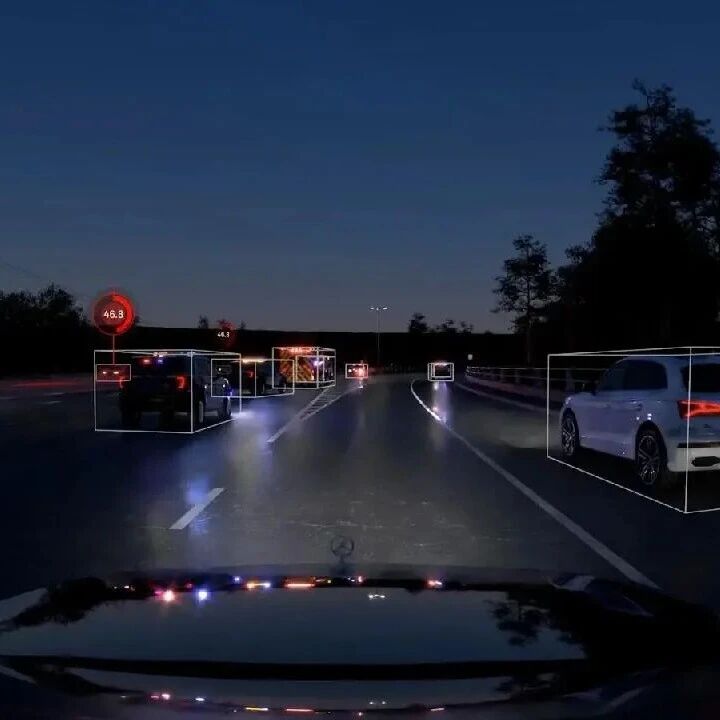
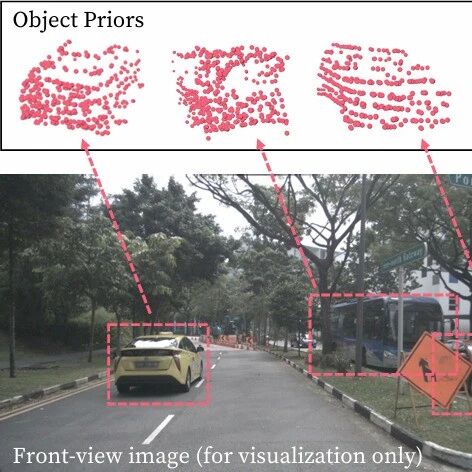
Core Viewpoint - The article discusses the development of DriveLiDAR4D, a novel LiDAR scene generation pipeline by Li Auto, which integrates multimodal conditions and an innovative temporal noise prediction model, LiDAR4DNet, to generate temporally consistent LiDAR scenes with controllable foreground objects and realistic backgrounds [2][8]. Background Review - Data is a fundamental element driving AI development, especially in autonomous driving, where high-quality data is crucial due to the data-intensive nature of deep learning models and the need to capture rare driving behaviors and unique road environments [3]. - Current LiDAR scene generation methods have made significant progress but still face limitations, such as the inability to generate temporally consistent scenes and accurately positioned foreground objects [3][7]. DriveLiDAR4D Contributions - DriveLiDAR4D is the first end-to-end method to achieve temporal generation of LiDAR scenes with full scene control capabilities, featuring two core characteristics: integration of multimodal conditions and a carefully designed noise prediction model [8][9]. - The method allows for precise control over foreground objects and background elements, addressing the shortcomings of existing techniques that primarily focus on unconditional generation [7][8]. Methodology - The pipeline involves extracting three types of multimodal conditions (road sketches, scene descriptions, and object priors) during the training phase, which are then used to predict and reconstruct noisy image sequences [9][18]. - The LiDAR4DNet model employs an equirectangular representation for efficient scene description and integrates spatial-temporal convolution and transformer modules to enhance feature learning and maintain temporal consistency [18][20]. Experimental Results - DriveLiDAR4D outperforms state-of-the-art methods in generating LiDAR scenes, achieving a FRD score of 743.13 and an FVD score of 16.96 on the nuScenes dataset, with improvements of 37.2% and 24.1% respectively over the previous best method, UniScene [2][22][26]. - The model demonstrates significant advancements in both foreground and background control, as well as in the generation of temporally consistent sequences [22][30]. Conclusion - The introduction of DriveLiDAR4D marks a significant step forward in LiDAR scene generation for autonomous driving, providing a robust framework that enhances the realism and controllability of generated scenes, which is essential for the development of safe autonomous systems [2][8].

跨越“仿真到实车”的鸿沟:如何构建端到端高置信度验证体系?
自动驾驶之心· 2025-11-20 00:05
Core Viewpoint - The article emphasizes the critical importance of simulation testing in the development of autonomous driving technologies, highlighting the need for high-confidence simulation platforms to ensure the reliability of algorithms and safety in real-world scenarios [2][3]. Group 1: Challenges in Simulation Technology Confidence - The three core challenges in achieving simulation confidence are sensor model bias, static scene distortion, and dynamic scene restoration errors [3][21]. - Sensor model bias arises from the simplification of complex physical processes, affecting the validity of simulation data [4][10]. - Static scene model bias impacts the reliability of perception and localization due to geometric, material, and lighting distortions [16][20]. Group 2: Sensor Model Bias - Camera model bias is primarily due to inaccuracies in modeling spectral, optical systems, and image signal processing (ISP) [5][8]. - LiDAR model bias stems from laser attenuation, multipath reflection, and return intensity modeling, which can distort point cloud data [10][11]. - Radar simulation faces challenges in both modeling and verification, particularly in accurately simulating radar cross-section (RCS) and multipath effects [12][15]. Group 3: Static Scene Model Bias - Geometric errors, such as millimeter-level deviations in road curvature and slope, can lead to significant issues in localization algorithms [17]. - Material errors arise from discrepancies between physical rendering parameters and real-world properties, while lighting errors can distort shadows and highlights, affecting visual feature-dependent algorithms [20][24]. Group 4: Dynamic Scene Restoration Bias - Dynamic scene challenges involve accurately reproducing spatiotemporal interactions, with errors arising from vehicle dynamics modeling and traffic flow reconstruction [21][22]. - Traffic flow and interaction behavior distortions can lead to significant discrepancies in the timing and nature of interactions between vehicles [23][24]. Group 5: High-Confidence Simulation Testing Pathways - To address the identified challenges, a layered and closed-loop verification system is proposed, ensuring fidelity from sensors to static and dynamic scenes [27][28]. - High-fidelity sensor modeling aims to minimize the gap between simulation data and real sensor outputs by adhering to physical rendering equations [29][30]. - Standardized verification processes are essential for ensuring consistency across different simulation platforms, including geometric, color, and photometric consistency assessments [31][33][48]. Group 6: Continuous Iterative Verification System - Building a high-confidence simulation for autonomous driving is a continuous, systematic engineering process that requires a deep understanding of error sources and the design of quantifiable validation metrics [62][63]. - The proposed framework aims to break down the abstract concept of "confidence" into specific, actionable engineering tasks, facilitating the gradual reduction of discrepancies between simulation and reality [63].

解决特斯拉「监督稀疏」难题,用世界模型放大自动驾驶的Scaling Law
具身智能之心· 2025-11-20 00:03
Core Insights - The article discusses the challenges faced by VLA models in autonomous driving, particularly the issue of "supervision deficit" due to sparse supervisory signals compared to high-dimensional visual input [3][7][8] - A new research paper titled "DriveVLA-W0: World Models Amplify Data Scaling Law in Autonomous Driving" proposes a solution by introducing world models to provide dense self-supervised signals, enhancing the model's learning capabilities [3][9][16] Group 1: Supervision Deficit - VLA models struggle with a "supervision deficit," where the input is dense visual information but the supervisory signals are sparse, leading to wasted representational capacity [7][8] - The research indicates that performance of VLA models saturates quickly with increased data under sparse supervision, diminishing the effects of Data Scaling Law [8][22] Group 2: Solution through World Models - The proposed solution involves using world models to generate dense self-supervised training tasks, such as predicting future images, which compels the model to learn the dynamics of the environment [10][14][15] - This approach provides richer learning signals compared to relying solely on sparse action supervision, effectively addressing the supervision deficit [15][16] Group 3: Amplification of Data Scaling Law - The core contribution of the research is the discovery that world models can significantly amplify the effects of Data Scaling Law, leading to better performance as data scales up [17][21] - Experimental results show that DriveVLA-W0 outperforms baseline models, with a notable performance improvement as data increases, particularly at scales from 700K to 70M frames [21][23] Group 4: Performance and Efficiency - DriveVLA-W0 is designed to be practical, addressing the high latency issues in VLA models by introducing a lightweight MoE "action expert" architecture, reducing inference latency to 63.1% of the baseline VLA [26][27] - The integration of world models resulted in a 20.4% reduction in collision rates at 70M frames, demonstrating a qualitative improvement beyond merely increasing action data [24][29]