低空经济

Search documents
代表建议统筹考虑产业全要素集聚,“争取唯一性产业相关组织落地上海”
第一财经· 2026-02-05 04:28
Core Viewpoint - The article emphasizes the importance of accelerating the construction of the "Five Centers" in Shanghai during the 14th Five-Year Plan period, highlighting the city's commitment to enhancing its urban capabilities and competitiveness [2]. Group 1: Development of the Five Centers - The Shanghai government report outlines support for industries such as smart connected vehicles, marine economy, low-altitude economy, aerospace, and satellite internet, aiming to cultivate distinctive digital industry clusters and enhance service sector quality [3]. - The report advocates for the synergistic development of the "Five Centers," promoting mutual support and efficient collaboration to amplify overall, platform, and radiation effects [4]. - A representative from the Shanghai Robotics Industry Technology Research Institute suggests that high-quality industrial development requires comprehensive support across the entire supply chain and resource allocation [4]. Group 2: Internationalization and Global Engagement - The article discusses the need for Shanghai to enhance its international presence by participating in the formulation of international rules and strengthening its voice on the global stage, particularly in supporting talent and projects that take on leadership roles in international organizations [5]. - The construction of Shanghai's international shipping center is transitioning from "basically completed" to "fully completed," yet it faces challenges in enhancing its soft power and optimizing the port business environment [6]. Group 3: Recommendations for Shipping and Trade - Suggestions include signing inter-port cooperation agreements with major international ports to promote green and digital shipping corridors, establishing dynamic optimization mechanisms for business content, and enhancing strategic cooperation among friendly ports [7]. - The article highlights the need for innovative port supervision models to support cross-border e-commerce and the integration of shipping trade with digital platforms, focusing on improving digital infrastructure and public service capabilities [8]. - To enhance shipping factor aggregation, the article recommends attracting quality shipping enterprises, supporting existing local companies, and implementing policies to draw back "convenient flag ships" and high-end shipping talents [8].


紧扣发展脉搏 精准建言献策
Xin Lang Cai Jing· 2026-02-04 23:41
Group 1 - The proposals reflect the aspirations for high-quality development and convey the voices of the people, focusing on the integration of AI with the real economy and enhancing urban quality [1] - A total of 501 proposals were received since the 12th session of the Municipal Political Consultative Conference, with 412 officially registered, and 207 proposals were actually assigned for handling [1] - The proposals aim to align with the central government's priorities and address the urgent needs of the public, emphasizing the importance of quality over quantity in proposal submissions [5] Group 2 - Suggestions for promoting the AI industry include enhancing application scenarios, industrial collaboration, and technical support, which have been positively received by relevant departments [2] - The development of smart connected vehicles and the establishment of a new high ground for the new energy vehicle industry have gained attention and support from municipal departments [2] - Proposals to improve cultural prosperity and tourism consumption have been incorporated into government measures, showcasing the integration of cultural and economic development [3] Group 3 - Proposals aimed at improving community services and urban infrastructure have led to the allocation of 10 million yuan for community embedded service facilities [3] - The focus on resource utilization from organic waste and enhancing urban quality reflects a commitment to sustainable development and community welfare [4] - The quality of proposals is emphasized as a lifeline for effective governance, with a focus on precise topic selection and comprehensive pre-review mechanisms [5][6] Group 4 - The reduction of proposal handling workload by 50% through the consolidation of similar proposals has improved efficiency for the responsible units [6] - The implementation of a comprehensive tracking service for proposal handling aims to enhance the effectiveness of the proposals and ensure satisfactory outcomes for the proposers [6][7] - The establishment of a regular visiting system to understand and address challenges in proposal handling is part of the efforts to improve service levels [7]
低空经济专家带来的公文包变轻了
Xin Lang Cai Jing· 2026-02-04 22:38
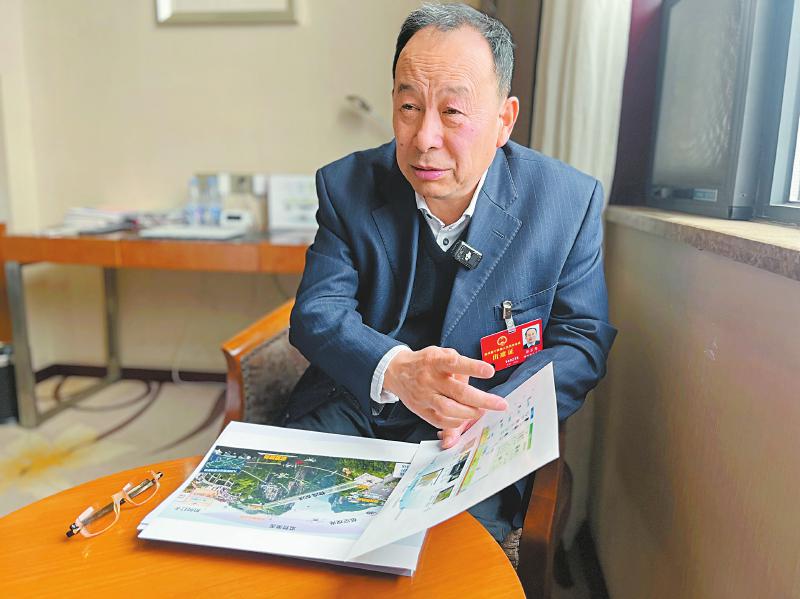
□蒋成林 郭超英 四川日报全媒体记者 祖明远 文/图 2月4日,再次见到省人大代表、四川九洲空管科技有限责任公司首席科学家张芷恩时,他正在收拾公文包。这不 是记者第一次在省两会会场见到他,但今年他的公文包里不再装着厚厚的建议稿和参考资料,而只有两张图纸。 这张A4纸标记着各种飞行器、空管装置,彼此间用箭头连接代表信息的流动。其中,大家熟悉的各类飞行器仅占 据了图片一角,而各类不常见的通信、导航、天气、反制等设备占据了大部分画面。对此,张芷恩有个形象比 喻:如果将各类低空产业创新应用比作孙悟空用毫毛吹出的"72变",那么四川在低空经济产业基础方面的"内 功"则是那一口"仙气"。 政府工作报告提到"打造低空产业创新、场景应用高地",如何在不同领域推动低空经济应用创新? "我们现在正迎来低空经济发展的最佳时期,而创新应用就是腾飞的'翅膀'。"张芷恩拿出第二张图,这是九洲集 团打造的"低空+文旅"一体化应用场景。有代表提问:应用场景的终极想象是什么?张芷恩放下图纸,想了一下回 答:"未来,也许低空飞行器会变成一种公共智能终端,就像信号塔、电线杆、路由器一样,通用集成的无人机在 空中飞行,采集到的各类数据可以实时提供给 ...
向“新”而行 上海两会热议未来产业新版图
Shang Hai Zheng Quan Bao· 2026-02-04 18:12
Core Viewpoint - Shanghai aims to seize global opportunities in the low-altitude economy, establishing itself as a comprehensive demonstration zone and an internationally influential "Sky City" to contribute to national low-altitude economic development [2] Group 1: Space Computing and Commercial Aerospace - The global space computing market is projected to reach $24.94 billion by 2026, with a compound annual growth rate (CAGR) of 15.08% from 2026 to 2035, indicating significant growth potential [4] - Shanghai is encouraged to accelerate research and industrial layout in space computing technologies, including radiation-resistant CPUs/GPUs and high-speed inter-satellite laser communication [5] - The commercial aerospace sector is expected to see a surge in activity, with the "Thousand Sails Constellation" launch expected to double in scale compared to the previous year [6] Group 2: Low-Altitude Economy - The low-altitude economy is viewed as a rapidly approaching growth area, with expectations for mass production of "air taxis" by 2027 [8] - Shanghai is advised to establish itself as a leading area for low-altitude economic development, providing a model for national growth and contributing to the overall industry [8] - Recommendations include accelerating local legislation to create a comprehensive regulatory framework for low-altitude flight management and infrastructure development [9]



四川省政协委员建言成渝地区双城经济圈发展能级提升
Zhong Guo Xin Wen Wang· 2026-02-04 14:36
中新网成都2月4日电(袁牟知博)四川省政府工作报告显示,"十四五"期间,成渝地区双城经济圈经济总 量超9万亿元,占全国比重升至6.5%左右,具有全国影响力的重要经济中心、科技创新中心、改革开放 新高地、高品质生活宜居地建设成势见效。"十五五"开局,川渝如何联动提升成渝地区双城经济圈发展 能级?正在成都举行的四川省两会上,多位四川省政协委员积极建言。 "提升成渝地区双城经济圈发展能级,需以双核引领为核心,走协同创新、开放赋能、产业集群、设施 互联、市场一体的路径。"四川省政协委员、九三学社四川省委会监督委员会副主任延华表示,在创新 体系共建方面,川渝应进一步强化成都与重庆在研发、转化、制造环节的分工协同,提升对全域的辐射 带动能力;在产业互补方面,重庆在新能源汽车等产业布局上优势明显,四川制造业基础雄厚,两地可 深化细分领域合作。 四川省政协委员、农工党四川省委会副主委、西南财经大学中国西部经济研究院院长毛中根从全局出 发,提出三大提升路径:一是加强基础设施建设,加快共建世界级机场群,统筹推进高铁、城际铁路建 设,打通成渝主轴走廊与沿江通道,构建内联外畅的现代化综合交通体系;二是推动经济扩量提质,以 科技创新驱 ...
上春“陕” 三秦大地“十五五”东风拂面
Xin Lang Cai Jing· 2026-02-04 14:19
转自:国际在线 2月4日是2026年的立春节气,二十四节气开启新一轮循环。对于正在擘画"十五五"蓝图的陕西而言,这个 节气被赋予了超越天时的深意。 陕西省第十四届人民代表大会第四次会议通过的政府工作报告指出,2026 年陕西计划实施640个省级重点项目,完成投资3500亿元以上;力争规模以上工业增加值年均增长6.5%左 右,数字经济核心产业增加值比重达到9.5%……在"十五五"的开局之春,这些数字恰如一份详尽的"春耕 手册"。 搭载赛福乐斯技术的AR眼镜样机图片来源西安高新区 西延高铁 摄影 尤艇 报告不仅强调"双极带动",还提出关中、陕北、陕南三大区域要在产业、生态、基础设施上加强协同。 关 中平原城市群构建一批跨区域创新联合体,形成梯次分布、链式配套、紧密协作的产业格局;陕北聚焦能 源产业高端化、多元化、低碳化发展,带动装备制造、特色农业、文化旅游等协同发展;陕南则坚定走绿 色循环发展之路,完善生态产品价值实现机制,培育壮大抽水蓄能、旅游康养、消费品制造等特色产业。 从梯度发展向协同共进转变,体现了发展理念的进步。而交通基础设施的完善则为区域协同提供了硬件支 撑。西安咸阳国际机场三期扩建工程全面建成后,年 ...

西安加速布局“新赛道” 培育新质生产力引领高质量发展
Zhong Guo Xin Wen Wang· 2026-02-04 14:18
Core Insights - Xi'an High-tech Zone has achieved steady economic growth since the 14th Five-Year Plan, with industrial output increasing from 203.5 billion to 421.1 billion, averaging a growth rate of 15% annually [1][2] Economic Performance - The industrial output of Xi'an High-tech Zone rose from 203.5 billion to 421.1 billion, with an annual growth rate of 15% [1] - The zone has ranked among the top ten in the national "High-Quality Development Top 100 Parks" for three consecutive years and is projected to be fifth in the national comprehensive evaluation of high-tech zones in 2024 [1] Technological Innovation - The zone has gathered advanced technologies, including femtosecond lasers and high-precision ground timing systems, and hosts the first national-level innovation platform in the new materials sector [2] - Over 6,000 national-level technology-based SMEs and high-tech enterprises have been cultivated, including 99 national-level specialized and innovative "little giant" enterprises [2] Industry Layout - Advanced manufacturing output has grown at an average rate of 15.6% during the 14th Five-Year Plan, with the digital economy's core industry scale surpassing 280 billion [2] - Emerging industries such as photonics, integrated circuits, new materials, and low-altitude economy are rapidly developing, with the photonics industry alone hosting 183 companies and generating over 20 billion in output [2] Key Sectors - The high-performance integrated circuit sector focuses on chip design and wafer manufacturing, leveraging leading companies like Samsung and ASE, and aims to create a world-class semiconductor industry cluster [2] - The high-end new materials sector, led by institutions like the Shaanxi Nonferrous Institute, aims to develop advanced rare metal materials and 3D printing materials [2] Low-altitude Economy - The low-altitude economy is centered around companies like Inno Aviation and Aerospace Power Research Institute, focusing on technologies such as turbofan engines and drone clusters [3] - The sector aims to establish a nationally influential low-altitude economic industrial cluster [3] High-end Medical Devices - The high-end medical device sector integrates technologies like 3D printing, photonics, and AI, collaborating with companies such as Juzhi Bio and Kangtuo Medical [3] - The goal is to create a comprehensive industrial base that facilitates the last mile of technology transfer [3] Support Measures - Five major support measures have been introduced to ensure the rapid growth of new tracks, including a dedicated mechanism for each track and annual funding of 100 million for future industries [3] - By 2028, the target for annual revenue growth in new tracks is set at 20%, aiming to strengthen technological breakthroughs and enterprise cultivation [3]
代表建议统筹考虑产业全要素集聚,“争取唯一性产业相关组织落地上海”
Di Yi Cai Jing· 2026-02-04 13:55
Group 1 - The core focus is on accelerating the construction of the "Five Centers" in Shanghai, which includes enhancing the city's international economic center capabilities and fostering the development of various industries such as smart connected new energy vehicles, marine economy, low-altitude economy, aerospace, and satellite internet [1][2] - The Shanghai government report emphasizes the importance of synergistic development among the "Five Centers" to enhance overall effects, platform effects, amplification effects, and radiation effects [1] - The representatives highlight the need for a comprehensive approach to industry development, including the integration of resources, platforms, and support systems to ensure high-quality industrial growth [2] Group 2 - The construction of Shanghai's international shipping center is transitioning from "basically completed" to "fully completed," but it still faces challenges in enhancing the business environment and the level of shipping element aggregation [3][4] - Suggestions include optimizing the port business environment by establishing international port cooperation agreements and promoting green and digital shipping corridors [4] - There is a focus on attracting high-quality shipping-related enterprises to Shanghai and implementing supportive policies to draw back "convenient flag ships" and high-end shipping talents [5]
交控科技:目前公司在低空经济领域多维度推进产品研发与技术深度应用
Zheng Quan Ri Bao· 2026-02-04 13:39
Core Viewpoint - The company is focusing on its core business in rail transit while actively responding to national strategies in the low-altitude economy sector [2] Group 1: Business Focus - The company's main business centers around rail transit [2] - The company is exploring the application of its technologies in low-altitude scenarios, leveraging its expertise in intelligent scheduling, safety protection, and system integration from the rail transit control field [2] Group 2: Product Development - The company is advancing product research and technology application in the low-altitude economy, aiming to build a "low-altitude operation platform + AI brain" core architecture [2] - The company has successfully empowered various practical business scenarios, including rail transit inspection, comprehensive government affairs, and river management, receiving widespread recognition and praise from users in these fields [2] Group 3: Technological Advancements - The company is increasing its efforts in developing applications for closed-space scenarios and specialized drone development [2] - The closed-space inspection drone developed by the company has completed core technology validation and is currently progressing with pilot application work [2]

打通产学研、构筑护城河,威海这样抢滩低空经济
Qi Lu Wan Bao· 2026-02-04 11:35
Core Insights - Weihai is redefining its airspace with strict regulations and significant investments in the low-altitude economy, aiming for a high-end, trustworthy industrial future [1][10] - The introduction of stringent regulations is seen as a foundation for attracting substantial investments, emphasizing public safety as the cornerstone of the low-altitude economy [2][5] - Compliance is viewed not as a cost but as a "technical moat" that enhances market competitiveness and drives innovation [5][6] Regulatory Environment - The implementation of the "Shandong Province Civil Unmanned Aerial Vehicle Public Safety Management Measures" on January 1, 2026, has established clear rules for drone operations, including real-name registration and defined no-fly zones [2] - Weihai's police department emphasizes that these regulations will lead to more comprehensive and standardized control, which is essential for maintaining public trust in the industry [2] Investment and Economic Strategy - The establishment of the 1 billion yuan investment project by EHang Intelligent in Weihai aims to target markets in Japan, South Korea, and emerging economies [1] - Weihai's strategy focuses on unique advantages in new materials and new energy, positioning itself as a key supplier in the high-end aircraft industry rather than a mere assembly center [6][7] Industry Development and Innovation - The establishment of the Shandong University Low Altitude Science and Engineering College marks a significant step in cultivating talent and innovation within the low-altitude economy [1][8] - The collaboration between academia and industry is being facilitated by local government initiatives, aiming to transform research into practical applications [8][9] Market Dynamics - The stringent regulations are expected to eliminate non-compliant businesses, thereby creating a more favorable market environment for compliant companies [5] - The focus on high-value sectors within the low-altitude economy is anticipated to yield significant employment and economic growth, with a projected input-output ratio of 1:10 for the general aviation industry [9]