半导体材料

Search documents
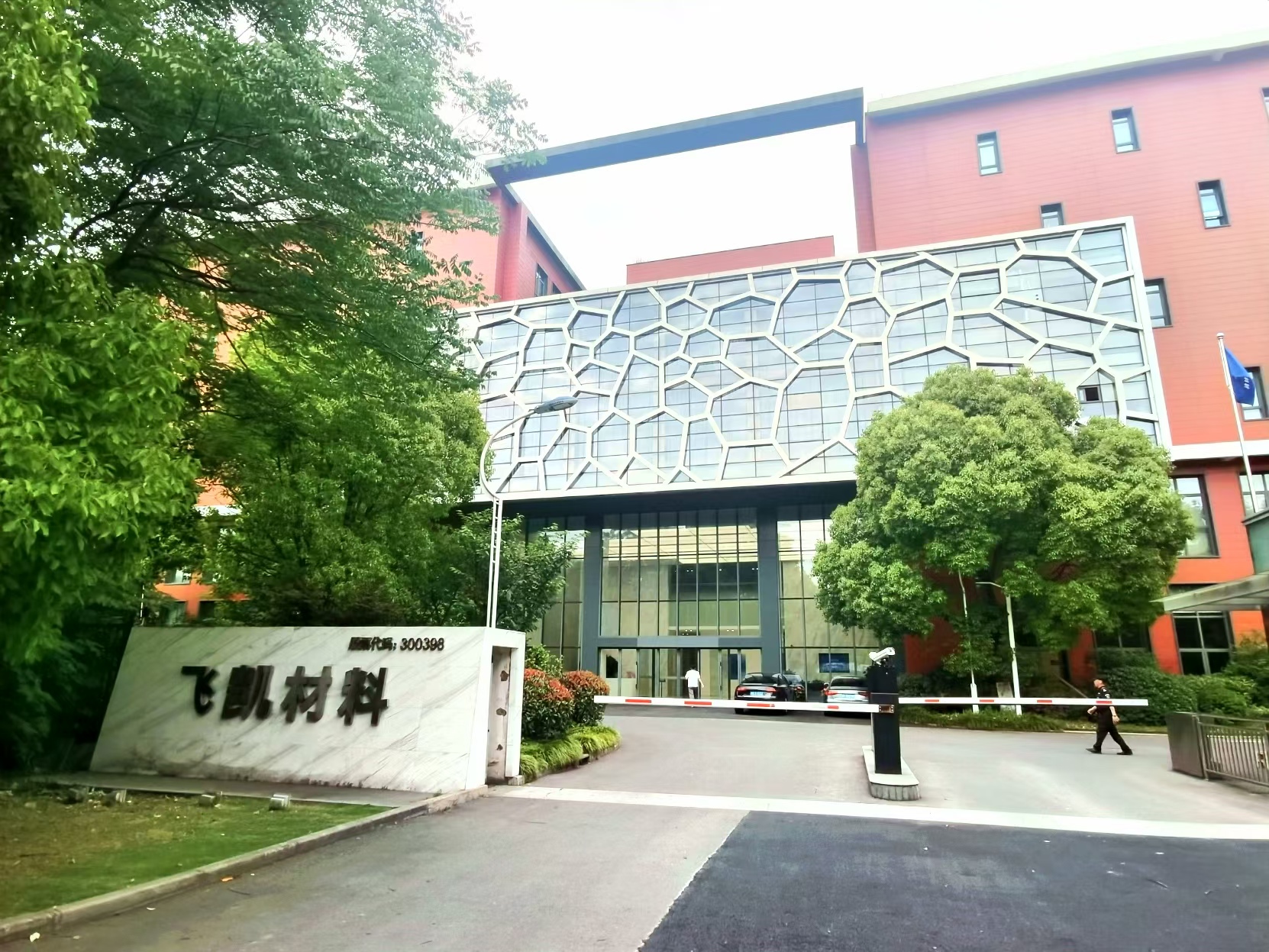
飞凯材料预计2025年净利润大增超42% 半导体材料业务受益AI算力需求爆发
Ju Chao Zi Xun· 2026-01-23 08:54
1月23日晚间,飞凯材料发布2025年度业绩预告。公司预计2025年实现归属于上市公司股东的净利润3.5亿元至4.55亿元,较上年同期大幅增长42.07%至 84.69%;扣除非经常性损益后的净利润预计同比增长35.58%至76.25%。 二是光纤光缆市场回暖,行业需求实现恢复性增长。 公司凭借优异的产品性能与长期稳定的客户合作,使其紫外固化材料作为光纤制造的关键配套材料, 销量随行业复苏同步增长,对营业收入形成积极贡献。 三是液晶材料市场份额持续扩大,并购协同效应初显。 2025年,公司TFT-LCD液晶材料市场份额进一步提升,同时将收购的捷恩智液晶材料(苏州)有限 公司及捷恩智新材料科技(苏州)有限公司纳入合并报表,显著增强了公司在中小尺寸面板领域的竞争力。新业务与现有大尺寸液晶材料业务形成良好协 同,有力推动了整体业绩增长。 四是资产优化与降本增效成果显著。 报告期内,公司通过出售台湾大瑞科技股份有限公司100%股权获得较高投资收益。此外,公司持续深化精细化运营与 成本管控,不断优化采销及生产流程,费用控制成效明显,为盈利水平提升奠定基础。 公告还指出,经初步测算,本报告期非经常性损益对净利润影响金额约 ...


飞凯材料:2025年净利同比预增42.07%~84.69%
Mei Ri Jing Ji Xin Wen· 2026-01-23 08:36
Core Viewpoint - Feikai Materials (300398) expects a net profit attributable to shareholders of 350 million to 455 million yuan in 2025, representing a year-on-year growth of 42.07% to 84.69% [1] Group 1: Profit Growth Drivers - The significant increase in net profit is primarily driven by the booming demand in the semiconductor materials business, leading to a notable performance improvement [1] - The optical fiber and cable market is experiencing a recovery, resulting in a rebound in industry demand [1] - The market share in liquid crystal materials continues to expand, with initial effects of merger synergies becoming apparent [1] - The company has achieved significant results in asset optimization and cost reduction [1]
电子行业双周报(2026、01、09-2026、01、22):日系Resonac上调覆铜板产品价格-20260123
Dongguan Securities· 2026-01-23 08:35
2026 年 1 月 23 日 陈伟光 S0340520060001 电话:0769-22119430 邮箱: chenweiguang@dgzq.com.cn 罗炜斌 S0340521020001 电话:0769-22110619 邮箱: luoweibin@dgzq.com.cn 资料来源:iFind,东莞证券研究所 超配(维持) 电子行业双周报(2026/01/09-2026/01/22) 行 业 日系 Resonac 上调覆铜板产品价格 投资要点: 本报告的风险等级为中高风险。 本报告的信息均来自已公开信息,关于信息的准确性与完整性,建议投资者谨慎判断,据此入市,风险自担。 请务必阅读末页声明。 电子行业 SAC 执业证书编号: 行情回顾及估值:申万电子板块近2周(01/09-01/22)累计上涨5.84%, 跑赢沪深300指数6.14个百分点,在申万行业中排名第6名;板块1月累 计上涨13.00%,跑赢沪深300指数10.98个百分点,在申万行业中排名第 4名;板块今年累计上涨13.00%,跑赢沪深300指数10.98个百分点,在 申万行业中排名第4名。估值方面,截至1月22日,SW电子板块PE T ...
磷化铟,火了
3 6 Ke· 2026-01-23 03:28
Core Insights - The future of computing power will be determined by optical transmission efficiency, highlighting the critical role of optical interconnect technology and the growing market enthusiasm for indium phosphide (InP) materials [1][2] - The global AI infrastructure spending is expected to exceed $1 trillion by 2026, driving the rapid iteration of data center optical modules to 800G/1.6T and beyond [1] - The demand for InP materials is surging due to their unique properties, with a significant supply-demand gap projected to persist until 2026 [1][9] Group 1: InP Material Advantages - InP exhibits over ten times the electron mobility of silicon, making it suitable for high-frequency and high-speed applications, particularly in optical communication at critical wavelengths [3][4] - InP's high thermal resistance and radiation tolerance are essential for AI servers and data centers operating in high-temperature environments [3] - InP is positioned as the core material for high-end long-distance communication, outperforming silicon and gallium arsenide in efficiency and adaptability [4] Group 2: Market Demand Drivers - The explosive growth of AI data centers is the primary driver for the increasing demand for InP, with 800G optical modules becoming standard [6] - The introduction of Co-Packaged Optics (CPO) technology is expected to significantly increase the demand density for InP substrates, with a projected market growth of 166 times by 2030 [7] - In addition to data centers, InP is penetrating advanced fields such as LiDAR, 5G/6G mobile communications, low Earth orbit satellite communications, and quantum computing [8] Group 3: Global Market Dynamics - The global InP industry is characterized by a high degree of oligopoly, with major players like Sumitomo Electric and AXT dominating over 95% of the market [9] - A significant supply-demand gap is anticipated, with a projected need for 2 million InP devices by 2025 against a production capacity of only 600,000 [9] - Major manufacturers are ramping up production capacity to address this gap, with AXT planning to double its capacity by 2026 [9][10] Group 4: Domestic Industry Developments - Chinese companies are accelerating efforts to break the foreign monopoly in the InP market, with several firms achieving significant milestones in production capacity and technology [10][11] - The domestic market is witnessing a collaborative push towards a full-chain upgrade in the InP industry, enhancing quality and efficiency [12] - Government policies are supporting the development of InP materials, including tax reductions and funding for research in high-purity indium production [12] Group 5: Future Outlook and Challenges - The InP industry is on the brink of a significant scale-up, driven by the urgent need for high-performance materials in AI and optical communication [18] - Despite the promising outlook, challenges such as low crystal growth yield and high costs remain, necessitating technological advancements and cost reductions [14][15] - Geopolitical factors and export controls are creating uncertainties in the global supply chain, impacting the InP industry's growth trajectory [16]



磷化铟,火了!
半导体行业观察· 2026-01-23 01:37
Core Viewpoint - The article emphasizes the critical role of indium phosphide (InP) in the future of computing power, particularly in the context of AI and high-speed optical communication, highlighting its unique properties that make it essential for advanced applications [1][19]. Group 1: Indium Phosphide's Unique Properties - InP exhibits over ten times the electron mobility of silicon, with a maximum of 1.2×10^4 cm²/V·s, making it suitable for high-frequency applications [2]. - It is particularly advantageous in the 1310nm and 1550nm wavelengths, which are optimal for fiber optic communication, due to its direct bandgap properties [2]. - InP's high thermal resistance and radiation tolerance are crucial for AI servers and data centers operating in high-temperature environments [2]. Group 2: Market Demand and Growth Drivers - The demand for InP is driven by the explosive growth of AI data centers, with the global AI infrastructure spending expected to exceed $1 trillion by 2026 [1]. - The need for 800G and 1.6T optical modules in AI data centers is creating a rigid demand for InP, as each 800G module requires 4-8 InP laser chips [5]. - AXT predicts that the demand for optical modules connecting server racks will nearly double by 2026, with the InP industry expected to maintain an annual growth rate of over 25% [6]. Group 3: Competitive Landscape and Supply Challenges - The global InP market is dominated by a few key players, with Sumitomo Electric holding a 60% market share and AXT capturing about 35% [10]. - By 2025, the demand for InP devices is projected to reach 2 million units, while production capacity is only 600,000 units, resulting in a 70% supply-demand gap [11]. - Major companies are expanding production capacity, with AXT planning to double its capacity by 2026 and Sumitomo Electric aiming for a 40% increase [11]. Group 4: Emerging Applications and Future Prospects - InP is penetrating various advanced fields, including lidar, 5G/6G mobile communications, low Earth orbit satellite communications, and quantum computing [8]. - The global market for CPO technology is expected to grow approximately 166 times by 2030, significantly boosting the demand for InP [7]. - The InP substrate market is projected to grow from $3 billion in 2022 to $6.4 billion by 2028, with a compound annual growth rate of 13.5% [8]. Group 5: Domestic Developments and Challenges - Domestic companies in China are accelerating efforts to break the foreign monopoly in the InP market, with several firms achieving significant advancements in production technology [12]. - The Chinese government is supporting the InP industry through policy initiatives, including lowering tariffs on key materials and promoting domestic production [12]. - Despite the rapid growth, the InP industry faces challenges related to production costs and technological complexities, particularly in crystal growth processes [15][16].

300111,因信披违规被立案、终止收购事项
Shang Hai Zheng Quan Bao· 2026-01-23 00:36
Core Viewpoint - The company Sunflower (300111) has terminated its acquisition of Zhanzhou Xipu Material Technology Co., Ltd. due to an investigation by the China Securities Regulatory Commission (CSRC) for suspected violations of information disclosure laws [1][4]. Group 1: Acquisition Details - On September 8, 2025, the company announced a major asset restructuring plan, intending to acquire the controlling stake in Xipu Material and 40% of Zhejiang Beid Pharmaceutical Co., Ltd. [2] - The company paid a deposit of 40 million yuan to Shanghai Xipu on September 10, 2025, as part of the acquisition process [2]. - The acquisition was expected to constitute a major asset restructuring and related party transaction, but not a restructuring listing [2]. Group 2: Regulatory Concerns - On December 26, 2025, the Shenzhen Stock Exchange's ChiNext management department issued a letter of concern regarding the operational status of Xipu Material, prompting the company to verify and respond [3][4]. - The ChiNext management raised four key questions regarding Xipu Material's production capacity, financial performance, potential competition issues, and the impact of a lawsuit against its actual controller [4]. Group 3: Termination of Acquisition - On January 14, 2026, the company received a notice of investigation from the CSRC, leading to the termination of the acquisition due to non-compliance with conditions for issuing shares to purchase assets [4]. - The company announced that the termination of the acquisition would not have a significant adverse impact on its operations [4]. Group 4: Refund of Deposit - According to the agreement, if the transaction is terminated, Shanghai Xipu is required to refund the deposit within five working days [5]. - The company sent a collection letter to Shanghai Xipu on January 15, 2026, requesting the refund, and both parties agreed to explore installment repayment or other feasible arrangements [5]. Group 5: Market Performance - As of January 22, the company's stock closed at 4.68 yuan per share, reflecting a 0.86% increase, with a total market capitalization of approximately 6.024 billion yuan [6].

宋清辉:地方国资控股上市公司意义重大,有助为区域经济发展赋能
Sou Hu Cai Jing· 2026-01-22 22:08
对于地方国资入股,著名经济学家宋清辉指出,国资入股后一方面可以解决相关公司的资金问题,另一方面也可以利用自身的资源来拓展公司业 务,同时为区域经济发展赋能。不过,如何平衡投资收益与产业培育,是地方国资需要考量的问题。 深圳商报·读创客户端记者 陈燕青 此次亚太药业实控权变更同样采取了"协议转让+定增"的方式。根据此前公告,公司原控股股东富邦集团及其一致行动人以每股8.26元的价格向星浩控股及 其一致行动人转让14.61%股权,总交易额达9亿元,这一转让价格较公司停牌前股价溢价达45.68%。与此同时,公司拟向星浩控股定增募资不超过7亿元, 发行完成后,星浩控股的持股比例和控股权将进一步巩固。 类似的案例还有华是科技,上述公司入主方均为PE创投机构,且采取"协议转让+定增"方式控股。 对此,北方一家券商投行高管分析称,"协议转让+定增确实是当前A股控制权交易的热门模式。一般来说,它通过两步操作实现控制权平稳转移:先协议转 让引入新股东,再定向增发让新股东巩固地位。该模式的优点在于,通过锁价定增提前锁定增发价格,降低收购成本,而分步进行可规避全面要约收购义 务,流程更简洁,效率更高。" 2025年上市公司控股权变 ...



建滔积层板现涨超5% 日本大厂调涨CCL价格三成 市场关注正交背板传闻
Zhi Tong Cai Jing· 2026-01-22 12:56
Group 1 - Resonac, a Japanese semiconductor materials manufacturer, announced a price increase of over 30% for copper foil substrates (CCL) and adhesive films used in printed circuit boards (PCBs) starting March 1 due to tight supply and soaring prices of raw materials like fiberglass cloth [1] - Market rumors suggest that NVIDIA's Rubin Ultra may abandon orthogonal backplanes in favor of copper cable solutions, but industry insiders indicate that the core positioning of orthogonal backplanes remains unchanged [1] - According to Guotai Junan Securities, since the second half of 2025, Jiantao has raised prices three times in August, October, and December, with another increase in December exceeding expectations, indicating a positive pricing cycle across the entire industry chain driven by AI demand [1] Group 2 - Jiantao's stock (01888) has seen an increase of over 5%, with a current price of 13.96 HKD and a trading volume of 81.7041 million HKD [2]
江化微4天4板!9时25分再度涨停,背后逻辑揭晓
Jin Rong Jie· 2026-01-22 01:46
Group 1 - The stock of Jianghua Microelectronics has experienced a continuous limit-up for four consecutive trading days, achieving a total of four limit-ups in four days [1] - On the latest trading day, the stock reached a limit-up at 9:25 AM with a transaction amount of 0.15 billion yuan, a limit order volume of 16.21 billion yuan, and a turnover rate of 0.13% [1] - The controlling shareholder of the company plans to transfer 23.96% of its shares, which will result in a change of the actual controller to the Shanghai State-owned Assets Supervision and Administration Commission [1] Group 2 - The semiconductor sector has seen an increase in overall activity, drawing market attention to related industry chain companies [1]
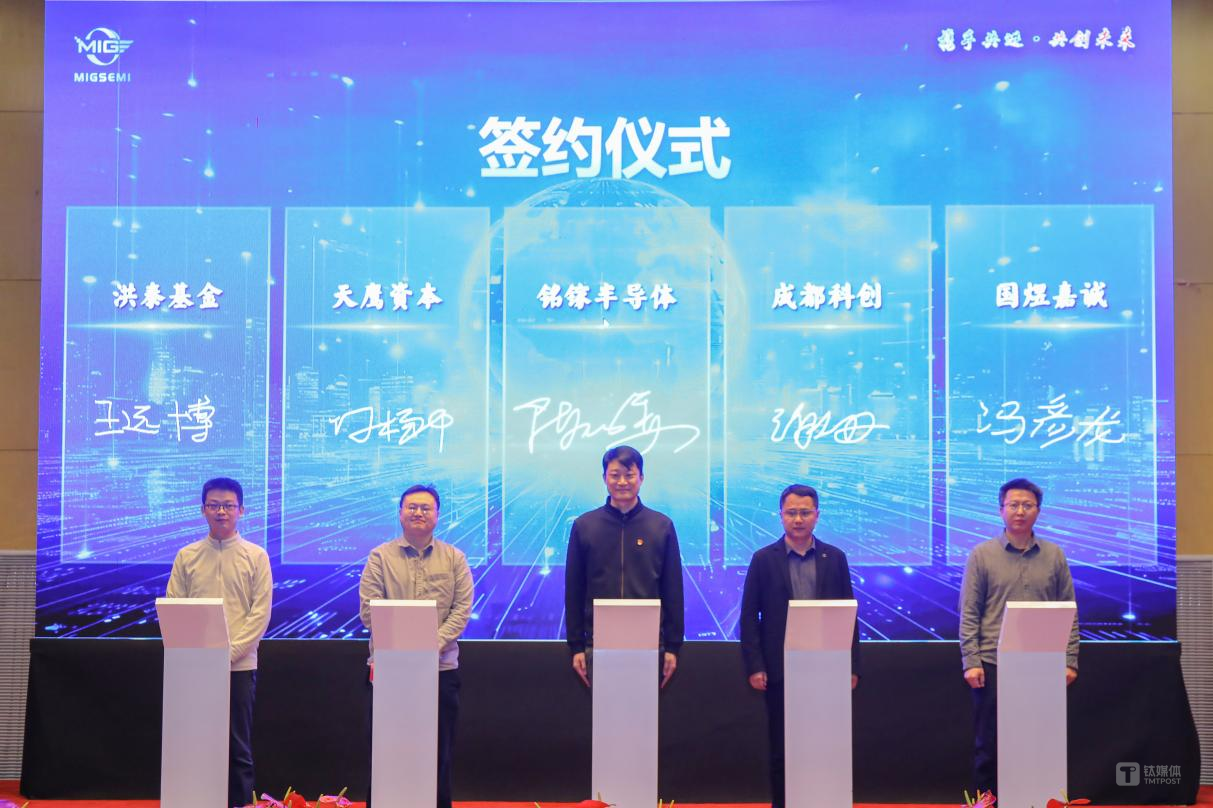
铭镓半导体再获近4亿元融资,将主要用于6英寸氧化镓衬底量产|融资速递
Xin Lang Cai Jing· 2026-01-21 14:27
Group 1 - Beijing Mingjia Semiconductor Co., Ltd. has completed an A++ round of equity financing, raising approximately 110 million yuan, with a post-financing valuation of 910 million yuan [1][3] - The financing will primarily be directed towards the research and development of gallium oxide substrates and capacity expansion, including the development and mass production of 6-inch gallium oxide substrates [3][4] - Mingjia Semiconductor plans to add 20 sets of pilot production line equipment for 4-6 inch substrates, aiming for an annual production capacity of 30,000 pieces once fully operational [3] Group 2 - The company is positioned as a leader in gallium oxide and is the only platform in Beijing focusing on wide bandgap semiconductors, aiming to cultivate the future industry of wide bandgap semiconductors in the region [3] - Mingjia Semiconductor is collaborating with universities and research institutions to accelerate the application of gallium oxide in sectors such as drones, artificial intelligence, new energy vehicles, and smart grids [3][4] - The global gallium oxide wafer substrate market is projected to reach 430 million USD by 2031, with a compound annual growth rate (CAGR) of 27.6% in the coming years [4]