家电零售

Search documents
今年双11,消费者在线下门店找回“安全感”
Sou Hu Cai Jing· 2025-11-11 03:17
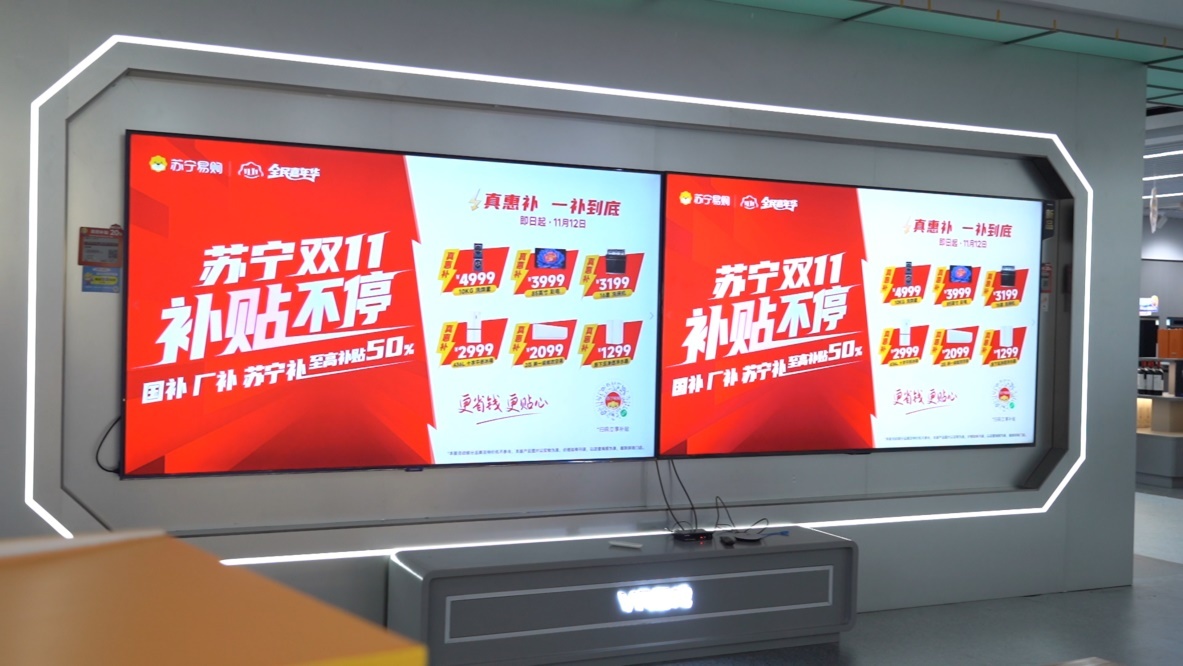
Core Insights - The article highlights a significant shift in consumer behavior during the Double 11 shopping festival, with a notable return to offline shopping due to a "trust crisis" in online pricing and promotions [1][2][8] - Suning.com is leading this trend by offering price guarantees and a more tangible shopping experience, which has resonated with consumers seeking certainty in their purchases [2][6] Group 1: Consumer Behavior - Many consumers are frustrated with online shopping experiences, citing instances of price discrepancies and feeling misled by promotional tactics [1] - A growing number of consumers prefer the immediacy and reliability of physical stores, where they can see and touch products before making a purchase [4][8] Group 2: Suning.com Strategies - Suning.com has implemented a strategy of "true benefits with fixed prices," ensuring that prices remain stable throughout the Double 11 period, which alleviates consumer anxiety regarding price fluctuations [2][6] - The company has reported that over 55% of its sales during this period are from AI-integrated home appliances, indicating a strong consumer interest in advanced technology [6] Group 3: Role of Offline Experience - The tactile experience of shopping in-store is becoming increasingly important as consumers seek to understand complex product features that are difficult to convey online [4][6] - Sales staff, now referred to as "home appliance stewards," are playing a crucial role in providing expert advice and building trust with consumers, enhancing the overall shopping experience [6][8] Group 4: Market Trends - The shift back to offline shopping is not a rejection of online retail but rather a maturation of consumer behavior, where online platforms are better suited for standard and fast-moving consumer goods [8] - High-value and experience-driven products are increasingly being purchased in physical stores, where consumers feel they receive more reliable information and assurance [8]


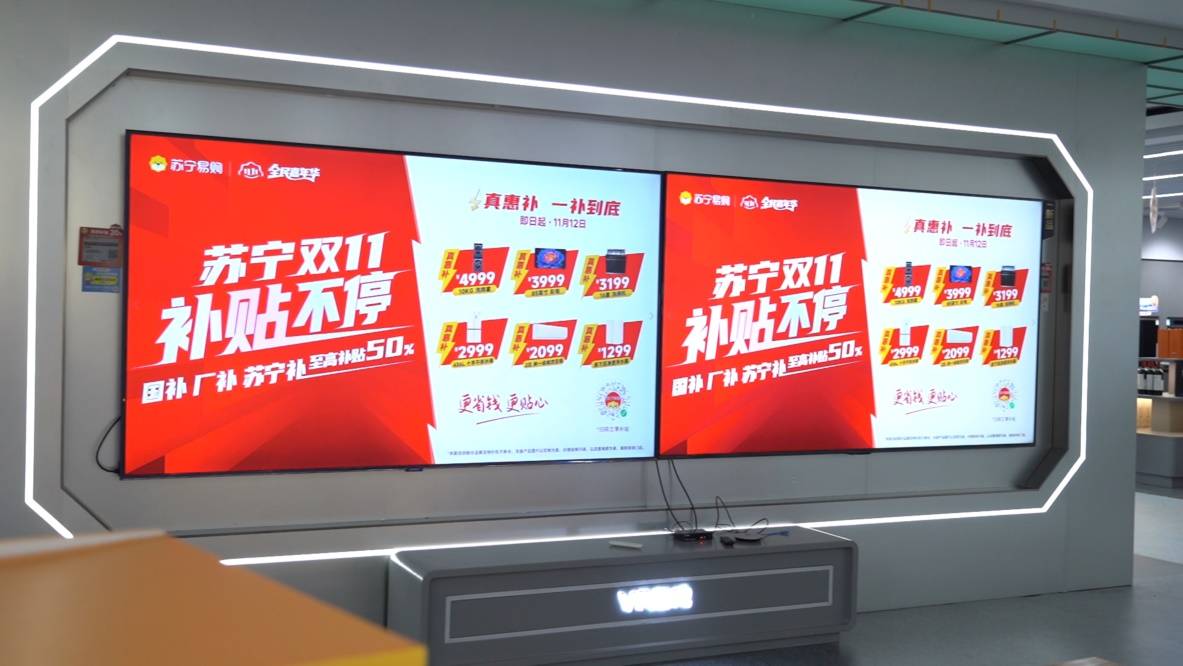
动作迅猛!电商巨头争相转战线下开店
Zheng Quan Shi Bao· 2025-11-11 00:12
Core Insights - The article discusses the aggressive offline expansion strategies of major e-commerce platforms, JD.com and Tmall, in reshaping China's home appliance retail market amid increasing consumer demand and government policies promoting trade-in programs [1][5]. Offline Expansion Strategies - JD.com has opened four new stores in a single month, while Tmall has established over 14,000 digital stores nationwide, indicating a significant push into offline retail [1][3]. - Tmall's strategy began with the rural Taobao project in 2014, transitioning to Tmall Supermarket in 2017, and has rapidly expanded into first- and second-tier cities in 2023 [3][10]. - JD MALL, launched in September 2021, focuses on major cities and has plans to open 26 stores by September 2025, emphasizing a self-operated model with over 200,000 products available [4][3]. Market Dynamics and Consumer Behavior - The online retail sector is facing a bottleneck in traffic growth, prompting platforms to seek new consumer bases offline [6]. - The e-commerce penetration rate is projected to decline from 27.6% in 2023 to 26.8% in 2024, with a stagnation at 25.0% from January to September 2025 [6]. - The shift in consumer focus from "what can be bought" to "what can be bought immediately" highlights the importance of speed, certainty, and convenience in purchasing decisions [8]. Supply Chain and Digitalization - To avoid pitfalls experienced by traditional appliance retailers like Gome and Suning, e-commerce giants are enhancing their supply chains and digital capabilities [10][11]. - JD MALL employs a direct sourcing model to reduce costs and improve price competitiveness, while Tmall focuses on refined operations and service enhancement [10][11]. - Digitalization is identified as a core competitive advantage for offline stores, with plans to integrate online and offline data for targeted marketing and inventory management [11]. Future Retail Trends - The future of retail is shifting towards enhancing service quality, reimagining offline experiences, and creating intangible value such as trust and loyalty [11]. - Retailers are encouraged to redefine their roles from mere sales platforms to service providers and community spaces, emphasizing the integration of online and offline experiences [11].
动作迅猛!电商巨头争相转战线下开店
证券时报· 2025-11-10 23:50
Core Viewpoint - The offline expansion of e-commerce giants JD and Tmall is reshaping the landscape of China's home appliance retail market, driven by the "trade-in" policy and upgraded consumer demand, but challenges remain in avoiding the pitfalls faced by traditional retailers [1][6]. Offline Layout: Two Rapid Paths - JD MALL opened four stores in a single month, while Tmall's digital stores have surpassed 14,000 nationwide, indicating a strong push into offline retail [1][3]. - Tmall's strategy began with rural areas and has now accelerated into first- and second-tier cities, while JD MALL started in core cities and is expanding rapidly [3][4]. Factors Driving Offline Expansion - E-commerce platforms face a bottleneck in online traffic, necessitating a search for new consumers offline [6]. - The e-commerce penetration rate is declining, with 2024's rate expected to drop to 26.8% from 27.6% in 2023, indicating a need for offline engagement [6]. - The "trade-in" policy has been enhanced, with a significant fund injection and an expansion of subsidized categories, making offline stores crucial for policy implementation [6]. User Competition Era - The home appliance market has entered a "user competition era," where a single channel cannot meet the full-cycle needs of consumers [7]. - The integration of online convenience and offline experience is becoming essential for retail success [7]. Supply Chain and Digitalization as Solutions - To avoid the mistakes of traditional retailers, e-commerce giants are upgrading their supply chains and focusing on digitalization [10][11]. - JD MALL employs a direct sourcing model to reduce costs and enhance price competitiveness, while Tmall focuses on refined operations and service improvement [10][11]. - Digitalization is seen as a core competitive advantage for offline stores, enabling better data integration and customer engagement [11]. Changing Consumer Behavior - Retail has shifted from merely acquiring online traffic to getting closer to consumers, emphasizing speed, certainty, and convenience in purchasing decisions [8].



从流量争夺到全域融合 电商巨头争相转战线下开店
Sou Hu Cai Jing· 2025-11-10 22:11
Core Insights - The article discusses the aggressive offline expansion strategies of major e-commerce platforms, JD and Tmall, in reshaping China's home appliance retail market amidst changing consumer demands and government policies [1][2]. Offline Expansion - JD has opened four new stores in a month, while Tmall has established over 14,000 digital stores nationwide, indicating a significant push into offline retail [1][2]. - Tmall's offline strategy began with the rural Taobao project in 2014, transitioning to Tmall Supermarket in 2017, and has recently accelerated its presence in first- and second-tier cities [2]. - JD MALL, launched in September 2021, focuses on major urban centers and has opened 26 stores by September 2025, emphasizing a self-operated model with over 200,000 products [2][3]. Market Drivers - The shift to offline retail is driven by a saturation of online traffic and the need to reach more consumers, alongside the government's "trade-in" policy which has been enhanced to include more product categories [4]. - E-commerce penetration rates have declined from 27.6% in 2023 to 26.8% in 2024, with a stagnation at 25.0% from January to September 2025, highlighting the necessity for platforms to explore offline channels [4]. Consumer Behavior - The article notes a shift in consumer preferences from merely being able to purchase items to wanting immediate availability, emphasizing speed, certainty, and convenience as key factors in purchasing decisions [6]. Supply Chain and Digitalization - To avoid pitfalls faced by traditional appliance retailers, JD and Tmall are enhancing their supply chains and digital capabilities. JD employs a direct sourcing model to reduce costs and improve price competitiveness [8]. - Tmall focuses on refining operations and enhancing service experiences through various initiatives aimed at strengthening supply chain capabilities [8]. - Digitalization is identified as a core competitive advantage for offline stores, with plans to integrate online and offline data for targeted marketing and inventory management [8]. Future Retail Trends - The future of retail competition is expected to shift from online market share to enhancing service quality, reimagining offline experiences, and creating intangible value such as trust and loyalty [9].
从流量争夺到全域融合电商巨头争相转战线下开店
Zheng Quan Shi Bao· 2025-11-10 18:32
Core Insights - The article discusses the aggressive offline expansion strategies of major e-commerce platforms, JD.com and Tmall, in reshaping China's home appliance retail market amid increasing consumer demand and government policies promoting trade-in programs [1][4][9] Offline Expansion - JD.com has opened four new stores in a single month, while Tmall has established over 14,000 digital stores nationwide, indicating a significant push into offline retail [1][2] - Tmall's strategy began with the rural Taobao project in 2014, transitioning to Tmall Supermarket in 2017, and has rapidly expanded into first- and second-tier cities in 2023 [2] - JD MALL, launched in September 2021, focuses on major cities and has plans to open 26 stores by September 2025, emphasizing a self-operated model with over 200,000 products available [2][3] Market Dynamics - The online retail sector is facing a bottleneck in traffic growth, prompting e-commerce platforms to seek new consumer bases offline [4] - The e-commerce penetration rate is projected to decline from 27.6% in 2023 to 26.8% in 2024, with a stagnation at 25.0% from January to September 2025 [4] - The "trade-in" policy has been enhanced, with a total of 300 billion yuan in long-term special treasury bonds allocated, expanding the subsidy categories from 8 to 12, including digital products [4] Consumer Behavior - The retail industry is shifting focus from merely acquiring online traffic to enhancing proximity to consumers, with speed, certainty, and convenience becoming key factors in purchasing decisions [6][9] - Consumers are increasingly valuing immediate availability over mere access to products, indicating a change in shopping habits [6] Supply Chain and Digitalization - To avoid pitfalls experienced by traditional home appliance retailers, JD and Tmall are enhancing their supply chains and digital capabilities [7][8] - JD MALL employs a direct sourcing model to reduce costs and improve price competitiveness, while Tmall focuses on operational efficiency and service enhancement [8] - Digitalization is identified as a core competitive advantage for offline stores, with plans to integrate online and offline data for targeted marketing and inventory management [8] Future Retail Landscape - The competition in retail is expected to shift from online market share to improving service quality, enhancing offline experiences, and creating intangible value such as trust and loyalty [9]
信贷支持、线上引流、小程序连接……银行这样深度促消费
Jing Ji Guan Cha Wang· 2025-11-10 15:03
Core Insights - The article highlights the role of banks, particularly China Construction Bank (CCB), in promoting consumption through innovative financial products and services, addressing various industry pain points and enhancing consumer experiences [2][10]. Group 1: Financial Support for Small Businesses - CCB introduced the "民宿贷" (Homestay Loan) as part of its "农商场景" (Agricultural Business Scene) loan products, specifically targeting homestay businesses, which has helped entrepreneurs like Xing Hailong recover from financial difficulties [3][4]. - As of September 2025, CCB has provided 4.5 million yuan in funding support to one-third of the merchants in Xiaowan Village, facilitating over 17,000 transactions worth more than 11 million yuan through its platform [4]. Group 2: Agricultural Sector Innovations - The article discusses the challenges faced by the blueberry industry in Chengjiang, Yunnan, including insufficient scale and brand recognition, which hinder its growth potential [5][6]. - CCB's "裕农快贷" (Quick Agricultural Loan) has enabled farmers to cover significant costs without collateral, with loans processed online and disbursed within three days, thus supporting agricultural development [6]. Group 3: Enhancing Consumer Experience - CCB has implemented a smart charging system for cold chain logistics in Kunming's Jinma Zhengchang Fruit Market, addressing previous inefficiencies and reducing management costs by 30% [7]. - The bank's "一部手机逛商圈" (One Mobile Phone to Explore Business Circles) platform has facilitated the distribution of government consumption vouchers, enhancing consumer access to various services and products [6][10]. Group 4: Consumer Financing and Promotions - CCB has actively participated in government consumption subsidy programs, distributing over 19.7 billion yuan in subsidies across 306 cities, which has stimulated consumption transactions exceeding 136.8 billion yuan [10][11]. - The bank's collaboration with retailers like JD.com has created a seamless experience for consumers, combining various promotional offers to alleviate the financial burden of purchasing large appliances [11][12].
今年“双11”,苏宁易购不争“彩头”要交“朋友”
Sou Hu Cai Jing· 2025-11-10 14:41
Core Insights - The annual "Double 11" shopping festival is expected to see a surge in sales for home appliances, digital products, and department store items, driven by favorable government policies and proactive preparations by retail giants [1] - Suning.com has initiated a "Home Appliance Benefit Day" starting from September 30, creating a 44-day shopping festival that connects the National Day and Double 11 events, enhancing consumer decision-making time and alleviating logistics pressure [1] Group 1: Store Strategy and Consumer Engagement - Suning.com has adopted a "big store" strategy, launching large-scale stores like Suning Max and Suning Pro in key urban areas to enhance consumer experience and meet the diverse needs of the younger generation [2][4] - The Suning Max stores provide immersive experiences by replicating home environments, allowing consumers to visualize products in realistic settings, which has led to significant sales increases [5] - Smaller store formats, such as Suning fun and Suning Home, have been introduced to cater to community needs and enhance consumer proximity, contributing to a transformative impact on Suning's performance [5] Group 2: Financial Performance and Pricing Strategy - In the first three quarters of the year, Suning.com reported revenue of 38.131 billion yuan, a year-on-year increase of 0.29%, and an operating profit of 615 million yuan, achieving profitability for six consecutive quarters despite industry challenges [6][8] - The "True Benefit Supplement" initiative during the National Day period offered significant discounts on various products, with some items priced at nearly half off, resulting in over 1 million pre-orders within 72 hours [6][8] Group 3: Value Creation and Customer Relationships - Suning.com emphasizes building long-term relationships with consumers by providing quality products and services, moving beyond mere transactions to create a community-oriented retail experience [9][10] - The company has engaged in various community activities and partnerships with major appliance brands to enhance consumer interaction and improve service quality, thereby fostering a more sustainable retail ecosystem [12][13] Group 4: Future Outlook - The retail industry is evolving, and Suning.com is adapting to these changes by focusing on modern technology and consumer experience, aiming to meet the growing demand for quality home appliances and services [14][15]
邯郸市详福家用电器有限公司成立 注册资本10万人民币
Sou Hu Cai Jing· 2025-11-07 22:43
天眼查App显示,近日,邯郸市详福家用电器有限公司成立,法定代表人为贾贝贝,注册资本10万人民 币,经营范围为一般项目:家用电器销售;日用家电零售;五金产品零售;电线、电缆经营;通讯设备销售; 计算机软硬件及辅助设备零售;电子产品销售;日用百货销售;日用品销售;家用电器安装服务;日用电器修 理(除依法须经批准的项目外,凭营业执照依法自主开展经营活动)。 ...
从抢首发到社交趴,Suning Max解锁双11逛店新方式
Zhong Jin Zai Xian· 2025-11-06 09:05
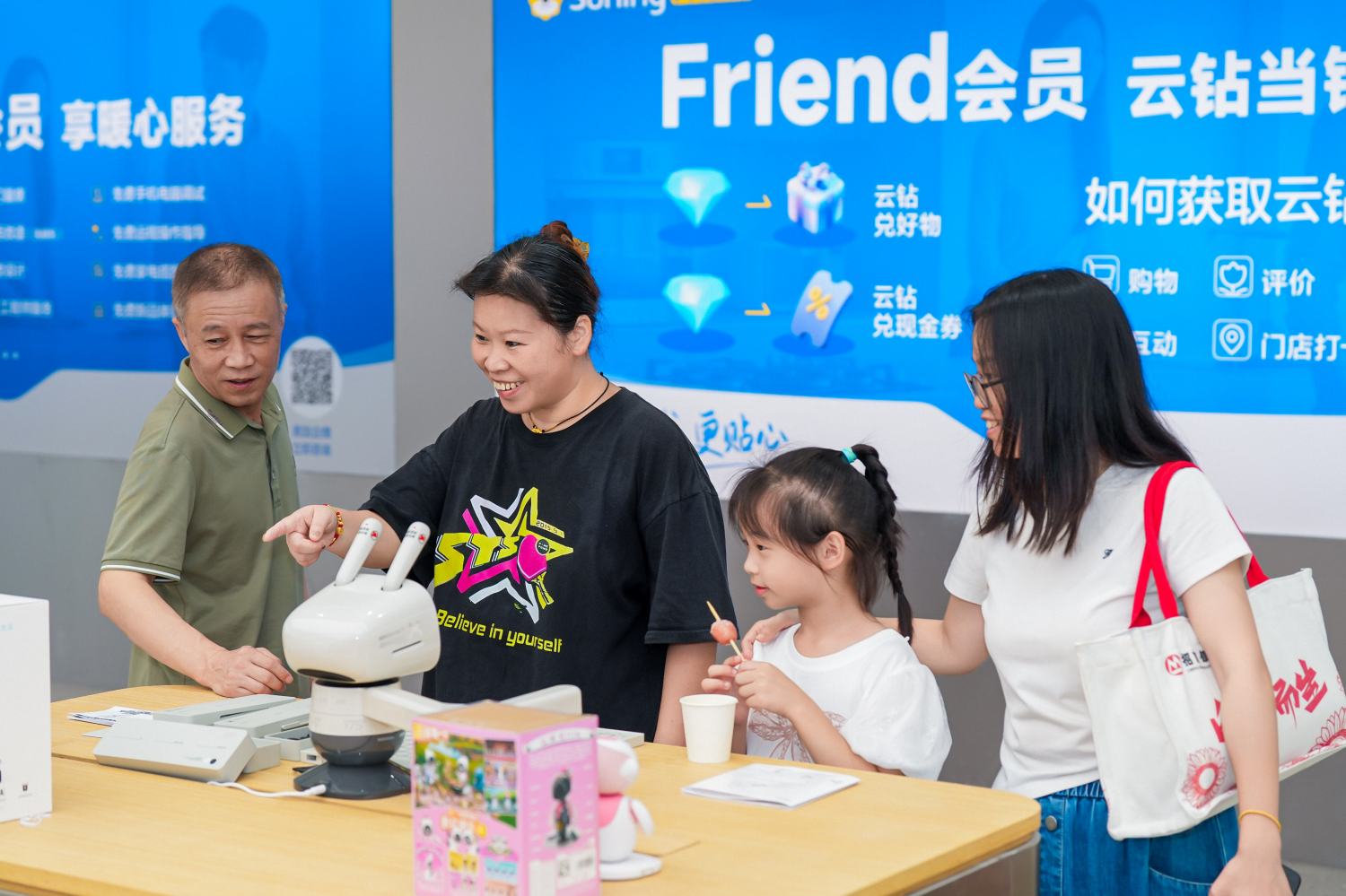
Core Insights - The Ministry of Commerce has released the "Urban Commercial Quality Improvement Action Plan," promoting the transformation of retail spaces from concept to practice, with a focus on "destination consumption" during this year's Double 11 shopping festival [1] - Suning Max has opened its first stores in Xiamen and Shenyang, aiming to create a new retail format that integrates into the urban commercial quality improvement process [1] Company Strategy - Suning Max positions itself as a "home appliance 3C launch center," featuring over 100 cutting-edge products, allowing consumers to experience new technology firsthand [1] - The company emphasizes creating "consumption destinations" through product launches, themed events, immersive experiences, and social interactions, moving beyond traditional retail models [1][6] Consumer Engagement - Suning Max focuses on providing emotional value through various events, such as "rap party nights" for Gen Z and nostalgic music nights for older generations, alongside over 300 offline activities during Double 11 [3] - The stores incorporate local cultural elements and create immersive spaces for relaxation and social interaction, enhancing the shopping experience [3][4] Social Interaction - The Shenyang store features a "community dining bar" for consumers to enjoy local cuisine, fostering social connections [4] - Suning Max includes a "Su Ning Friend" area that offers free coffee, snacks, and interest-based interactive classes, making shopping a part of daily life [4] Industry Trends - The retail industry in China is shifting from a focus on transactions to an emphasis on experiences, with Suning Max exemplifying this trend by transforming retail spaces into multifunctional lifestyle destinations [6] - The company aims to continuously upgrade its business model to attract consumers, contributing to the high-quality development of urban commerce [6]
AI渗透率超55%,苏宁易购引领双11家电消费趋势
Huan Qiu Wang· 2025-11-04 08:54
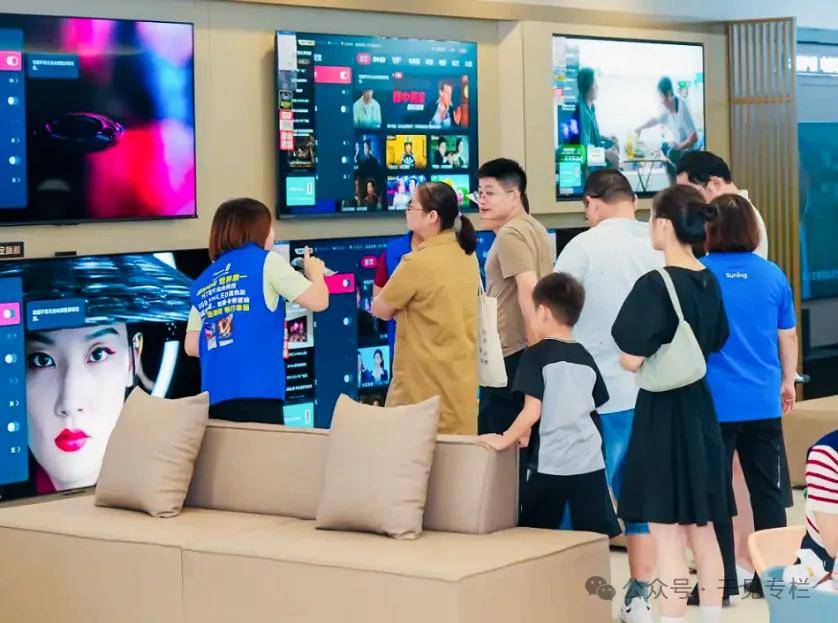
Group 1 - Su Ning Yi Gou is promoting a pricing strategy called "True Benefit, One Price, All the Way" for this year's Double 11, ensuring price stability across all products until the end of the event [1] - The company offers significant discounts on high-demand products, such as a 15-set washing and disinfection integrated dishwasher priced at 2999 yuan and a 75-inch 4K eye-protection TV at 2499 yuan, addressing consumer concerns about price fluctuations [1] - Consumers express satisfaction with the transparent pricing and product visibility in stores, indicating a preference for straightforward purchasing experiences without complex rules [1] Group 2 - As home appliance consumption upgrades towards "new quality," AI and health features are becoming mainstream, leading to a demand for hands-on experience with products [3] - Consumers prefer to physically interact with appliances to assess their functionality, such as the responsiveness of screens and voice recognition in noisy environments, rather than relying solely on online descriptions [3] - The role of offline sales staff is evolving into that of "household managers," providing expert knowledge and personalized service to enhance consumer trust and understanding of product needs [4] Group 3 - Su Ning Yi Gou's new store position, "Home Appliance Manager," offers one-on-one, comprehensive service, delivering reliable information in an accessible manner [4] - The integration of AI features in home appliances has led to over 55% of sales in this category, with large-screen products (85 inches and above) accounting for over 62% of sales [4] - Sales growth for products like multi-tub washing machines, self-cleaning air conditioners, and built-in refrigerators is significantly outpacing overall category growth, indicating a shift towards high-end products [4]