
AI医疗

Search documents
两连板后,商业航天概念股,突曝利空
Zheng Quan Shi Bao· 2026-01-09 00:30
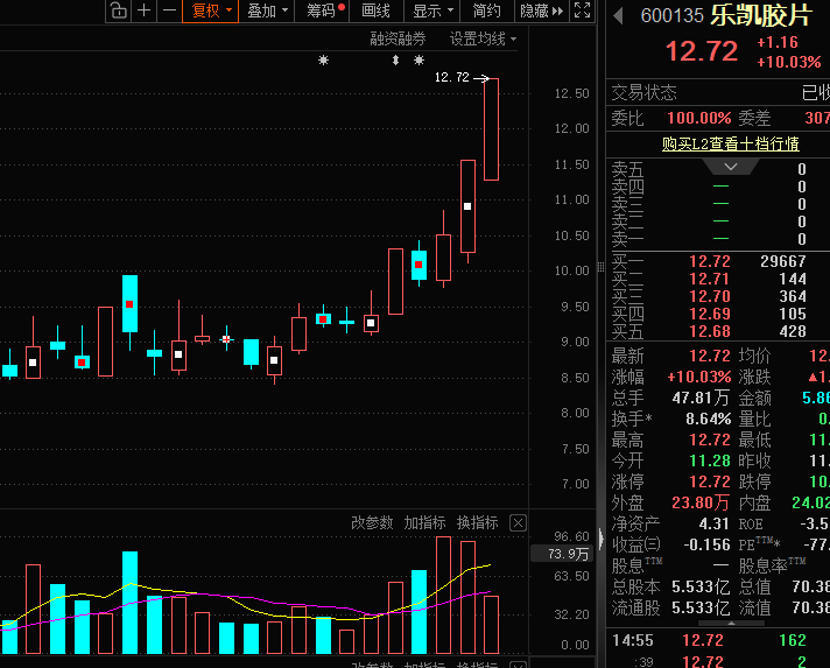
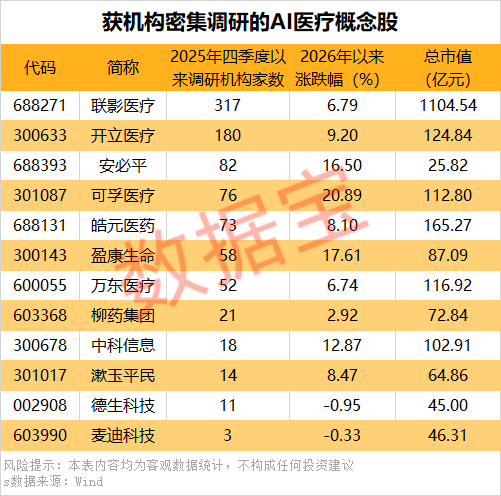
Group 1: Company Performance - LeKai Film reported a revenue of 960 million yuan and a net profit of -86 million yuan for the first three quarters of 2025, indicating a potential annual loss [1] - The company stated that its main business remains unchanged and that production activities are operating normally without significant external changes [1] - LeKai Film's stock has seen a significant increase of over 35% since December 31, 2025, primarily driven by speculation in the commercial aerospace sector [1] Group 2: Industry Developments - OpenAI launched the ChatGPT Health feature to address health-related inquiries, linking smart devices and planning diet and exercise, similar to Alibaba's Ant Aifuku [4][5] - The global AI healthcare market is projected to grow from approximately 26.65 billion USD in 2024 to about 505.59 billion USD by 2033, with a compound annual growth rate of 38.8% [8] - AI healthcare applications are expected to accelerate due to ongoing policy support and technological advancements, with significant investment opportunities emerging in the sector [7] Group 3: Institutional Interest - Over 30 AI healthcare-related stocks have been identified, with several companies actively engaging with investors regarding their AI healthcare strategies [9] - Notable companies like Lingying Medical and Kailing Medical have received substantial institutional attention, with Lingying Medical being surveyed by 317 institutions [12] - Financing activities have increased for companies such as Haoyuan Pharmaceutical and Shuyupingmin, with over 50 million yuan in additional funding since the fourth quarter of 2025 [12]

万亿级AI医疗市场 科技巨头接连出手 获机构密集调研的概念股出炉
Zheng Quan Shi Bao Wang· 2026-01-08 23:48
Group 1 - OpenAI launched the ChatGPT Health feature on January 8, which aims to provide health-related answers, connect smart devices, and plan diet and exercise, similar to Alibaba's "Ant Aifu" [1] - The ChatGPT Health feature is expected to be rolled out to users in the coming weeks, as over 230 million health-related inquiries are made weekly on the platform [1] - Ant Group's "Ant Aifu" has already connected with 5,000 hospitals and 300,000 real doctors for online consultations, achieving 30 million monthly active users and over 10 million daily inquiries within a month of its launch [1] Group 2 - AI healthcare is gaining significant policy attention, with plans to create over 100 typical application scenarios by 2027 as outlined in the "Implementation Plan for the Digital Transformation of the Pharmaceutical Industry" [2] - The "Implementation Opinions on Promoting and Regulating the Application of 'Artificial Intelligence + Healthcare'" set development goals for 2027 and 2030, focusing on key applications, safety regulation, and organizational support [2] - Beijing's health commission aims for widespread AI product application in healthcare institutions by 2027 to ensure safety and increase effective supply [2] Group 3 - According to Grand View Research, the global AI healthcare market is projected to reach approximately $26.65 billion (about 186.1 billion yuan) in 2024 and is expected to soar to around $505.59 billion (about 3.5 trillion yuan) by 2033, with a compound annual growth rate of 38.8% [3] Group 4 - Over 30 AI healthcare-related concept stocks have been identified, with companies like Chuangye Huikang and Desheng Technology actively engaging with investors about their AI healthcare strategies [4] - Companies are integrating AI into healthcare services, with Chuangye Huikang promoting its "Huikang Cloud Hub" and Desheng Technology implementing "seamless payment" solutions in major hospitals [4] Group 5 - Institutions are closely monitoring innovations in the "AI + healthcare" sector, with companies like Runda Medical and Yuyupingmin launching AI-driven tools for clinical support [5] - A total of 12 concept stocks have received institutional research attention since Q4 2025, with significant interest in companies like Union Medical and Kairui Medical [5][6] - Kairui Medical plans to launch three new AI-integrated ventilators and masks in 2026, which will analyze sleep states and identify sleep events accurately [5]
影响市场重大事件:蓝箭航天已与中国星网、垣信卫星签署合同,将提供批量发射服务;广州积极推动中科宇航液体火箭总装测试基地和星河动力火箭总装基地尽快落地
Mei Ri Jing Ji Xin Wen· 2026-01-08 22:28
Group 1: Launch Services and Satellite Projects - Blue Arrow Aerospace has signed contracts with China Star Network and Yuanxin Satellite to provide batch launch services, indicating promising commercial prospects [1] - The GW constellation, operated by China Star Network, plans to launch approximately 12,992 satellites, with 10% deployment expected within five years and full deployment by 2035; currently, 136 satellites are in orbit after 17 network launches [1] - The Qianfan constellation, operated by Yuanxin Satellite, aims to launch around 15,000 satellites, with 108 satellites currently in orbit after 6 network launches [1] Group 2: Guangzhou's Advanced Manufacturing Plans - Guangzhou has issued a plan to accelerate the construction of advanced manufacturing, focusing on reusable rocket technology and establishing testing bases for liquid rockets [2][3] - The city aims to become a global hub for commercial aerospace by 2035, fostering the growth of intelligent aircraft and key enterprises in the commercial aerospace sector [2] - Support will be provided for the development of satellite constellations like "Wuyang Series" and "Bay Area Smart Connectivity," promoting the entire commercial aerospace industry ecosystem [3] Group 3: AI and Healthcare Innovations - OpenAI has launched ChatGPT Health, a dedicated space for health-related conversations, which can connect to electronic medical records and health applications, tapping into the trillion-dollar AI healthcare market [4] - The global AI healthcare market is projected to grow from approximately $26.65 billion in 2024 to about $505.59 billion by 2033, with a compound annual growth rate of 38.8% [4] Group 4: Railway and Infrastructure Development - The National Railway Administration emphasized the need to accelerate railway planning and construction, focusing on green and low-carbon transitions [5][6] - Key areas of focus include reducing logistics costs, enhancing transportation service quality, and advancing the modernization of the railway industry [6] Group 5: Superconducting Materials Research - Guangzhou is advancing research on high-temperature superconducting materials for applications in controlled nuclear fusion, power transmission, and medical devices [9] - The city plans to establish a large-scale research platform for the preparation and characterization of superconducting materials [9] Group 6: Sodium-Ion Battery Standards - A new group standard for sodium-ion batteries for energy storage has been approved, detailing requirements for battery modules and clusters, effective from February 1, 2026 [10]

影响市场重大事件:蓝箭航天已与中国星网、垣信卫星签署合同 将提供批量发射服务
Mei Ri Jing Ji Xin Wen· 2026-01-08 22:28
Group 1: Launch Services and Satellite Projects - Blue Arrow Aerospace has signed contracts with China Star Network and Yuanxin Satellite to provide batch launch services, indicating promising commercial prospects [1] - The GW constellation, operated by China Star Network, plans to launch approximately 12,992 satellites, with 10% deployment expected within five years and full deployment by 2035; currently, 136 satellites are in orbit after 17 network launches [1] - The Qianfan constellation, operated by Yuanxin Satellite, aims to launch around 15,000 satellites, with 108 satellites currently in orbit after 6 network launches [1] Group 2: Guangzhou's Advanced Manufacturing Plans - Guangzhou has issued a plan to accelerate the construction of advanced manufacturing, focusing on reusable rocket technology and establishing testing bases for liquid rockets [2] - The city aims to become a global hub for commercial aerospace by 2035, enhancing its advantages in communication and navigation equipment manufacturing [3] - Support will be provided for the development of satellite constellations like "Wuyang Series" and "Bay Area Smart Connectivity," promoting the growth of the commercial aerospace industry [4] Group 3: AI and Healthcare Innovations - OpenAI has launched ChatGPT Health, a dedicated space for health-related conversations, which connects to electronic medical records and health applications, tapping into the trillion-dollar AI healthcare market [6] - The global AI healthcare market is projected to grow from approximately $26.65 billion in 2024 to about $505.59 billion by 2033, with a compound annual growth rate of 38.8% [6] Group 4: Superconducting Materials and Applications - Guangzhou is advancing research on high-temperature superconducting materials for applications in controlled nuclear fusion, power transmission, and medical devices [10] - The city plans to establish a large-scale research platform for the preparation and characterization of superconducting materials [10]
医渡科技开年“三连阳”,AI医疗概念股受政策催化走强
Sou Hu Cai Jing· 2026-01-08 17:49
Core Viewpoint - The Hong Kong stock market has shown significant strength in early 2026, particularly in the AI healthcare sector, with companies like Yidu Tech experiencing notable stock price increases due to positive market expectations and supportive policies [1][2]. Group 1: Company Performance - Yidu Tech achieved a three-day stock price increase from January 2 to January 6, 2026, with a closing price of 5.66 HKD on January 6, reflecting a cumulative rise of over 8% [1]. - The company has been recognized as one of the first partners in the Henan Province National Artificial Intelligence Application Pilot Base (medical field), further solidifying its core advantages in AI healthcare technology [1]. Group 2: Industry Trends - The AI healthcare sector is experiencing strong overall performance driven by favorable policies, including two recent initiatives from Beijing aimed at promoting AI applications in healthcare from 2026 to 2027 [1]. - The "Action Plan" released by Beijing outlines a vision for widespread application of AI technology across the entire healthcare process by 2027, enhancing the quality of medical services for the public [1]. - Institutions are optimistic about the growth potential of the AI healthcare industry, anticipating that the synergy between policy support and clinical demand will accelerate the implementation of AI healthcare technologies [2].
AI重构C端医疗
硬AI· 2026-01-08 04:24
Core Insights - The article discusses the emergence of AI in the healthcare sector, highlighting the significant demand for C-end AI medical services, which has been previously underestimated [4][12]. - It emphasizes the transformative impact of Ant Group's "Afu" and OpenAI's "ChatGPT Health" in addressing healthcare needs through advanced AI technologies [6][10]. Group 1: Ant Group's Afu - Ant Group's "Afu" saw its monthly active users double to 30 million within a month, with daily inquiries exceeding 10 million [7][14]. - The application integrates with major smart device brands, linking health data with online consultations and offline medical services, thus covering the entire health ecosystem [16]. - A significant 55% of Afu's users come from third-tier cities and below, indicating a strong demand for accessible healthcare solutions in underserved markets [17]. Group 2: OpenAI Health - OpenAI launched "ChatGPT Health" on January 7, 2026, creating a separate entry point for health-related inquiries to ensure user privacy and data security [19][20]. - The architecture of ChatGPT Health features a near-physical isolation of health data, ensuring that sensitive information remains confidential and is not used for training the main AI model [22][23]. - OpenAI collaborates with b.well Connected Health to address fragmented healthcare data, allowing users to access their medical records seamlessly [26]. Group 3: Market Dynamics and Future Outlook - The article notes a fundamental shift in the competitive landscape of healthcare information, moving from search engine reliance to conversational AI services [33]. - The value of offline healthcare services is being re-evaluated, with a focus on high-quality data becoming a key asset in the AI era [34]. - Trust is highlighted as a critical currency in the AI healthcare space, with OpenAI's privacy commitments potentially driving future monetization strategies [35][36].

速递|被低估的蓝海:人工智能赋能减重赛道的创新突破与发展潜能
GLP1减重宝典· 2026-01-07 14:50
Core Viewpoint - The article highlights the significant potential of AI in the weight loss industry, exemplified by the success of Simple Life, which has achieved substantial revenue growth and innovative engagement strategies in its offerings [2][11]. Group 1: Company Overview - Simple Life, based in London, recently completed a financing round of $35 million (approximately 250 million RMB) and reported an annual revenue of $100 million (approximately 700 million RMB), with a year-on-year growth of 64% [2]. - The company integrates scientific weight loss methods with AI, transforming the weight loss process into a gamified experience [5][11]. Group 2: Product Features - Simple Life's product includes a success points system that calculates "success scores" based on user behavior, allowing users to track their weight loss progress in a game-like manner [7]. - The platform offers gamified incentives, rewarding users for completing weight loss tasks with tangible rewards or virtual honors [7]. - An AI coach named Avo provides personalized advice on nutrition, exercise, and lifestyle adjustments, processing around 300,000 dietary records daily and conducting over 100,000 guidance conversations [9]. Group 3: Market Analysis - Despite the lucrative potential of AI in weight loss, there are few domestic competitors in China, with only a handful of companies receiving venture capital support in the past three years [13][14]. - The domestic weight management market is projected to reach 326 billion RMB by 2025, indicating a strong demand for effective weight loss solutions [16]. - The article suggests that the success of Simple Life in international markets signals a clear market demand, with over 500 million people in China classified as overweight or obese [15]. Group 4: Future Outlook - The article posits that the domestic AI weight loss market may see the emergence of new unicorn companies in the next three years, driven by the growing demand for innovative weight management solutions [17].

正股驱动下转债市场创10年新高
Zhong Guo Jin Rong Xin Xi Wang· 2026-01-07 00:21
转自:证券时报 在A股市场持续走强并刷新10年新高的同时,中证转债指数1月6日也攀升走高,创下自2015年6月以来 的逾10年高点。 中证转债指数近期表现不仅延续了自2025年以来的强势格局,更凸显其在权益市场波动中"进可攻、退 可守"的独特价值。 中证转债指数刷新逾10年高点 1月6日,在权益市场强势走高,并刷新10年新高的背景下,中证转债指数也大涨1.35%,报505.77点, 创2015年6月以来高点。 此次行情的核心催化剂是脑机接口行业的商业化突破。特斯拉CEO埃隆·马斯克于2025年12月31日宣 布,旗下脑机接口公司Neuralink将于2026年启动设备大规模生产,并推进几乎完全自动化的手术方案。 这一表态被市场视为脑机接口从实验室走向大众消费的关键转折点。与此同时,国内政策支持力度持续 加码:国家药监局近期召开脑机接口医疗器械工作推进会,明确将加快相关产品审评审批流程;上海等 地出台专项行动方案,提出到2027年推动5款以上侵入式、半侵入式产品完成临床试验。 除塞力转债外,嘉美转债、联创转债等亦表现亮眼。嘉美包装股价大涨带动嘉美转债在1月5日涨 10.94%后,1月6日再度上涨14.95%,2 ...

开展在即!请收下这份CES Digital Health参会指南
GLP1减重宝典· 2026-01-06 15:01
Group 1 - The core viewpoint of the article emphasizes the integration of AI in the healthcare sector, driven by the government's initiative to implement "Artificial Intelligence+" in key areas such as healthcare [32] - CES Digital Health is not a single exhibition area but a thematic thread that runs throughout the CES event, aiming to embed health topics naturally into consumer technology and personal behavior [6][8] - Attendees are encouraged to view Digital Health as a visiting route rather than a destination, with a recommended daily schedule that includes health-related meetings, selective exhibitor interactions, and health-themed social events [8][12] Group 2 - The Digital Health Summit consists of a series of health-related sessions that are highly interconnected, covering topics like AI, wearables, and health data, making it essential for investors and entrepreneurs to choose wisely which sessions to attend [9][11] - A practical screening criterion for sessions is to prioritize panels or fireside chats over keynote speeches, as panels often reveal real-world constraints and regulatory considerations that are crucial for assessing the viability of health tech solutions [11] - High-quality health discussions may not always be labeled under Digital Health but can be found in agendas related to AI, policy, and security, particularly those addressing privacy and data usage [12] Group 3 - The Digital Health Lounge and Mixer are valuable networking opportunities that are often underestimated, providing high-density information exchange among health professionals [15][19] - The Digital Health Lounge serves as a themed gathering space for health-related professionals, enhancing the likelihood of meaningful interactions [15] - The Digital Health Mixer is a social event organized by official partners, where significant investment and collaboration discussions often take place [15][19] Group 4 - When engaging with health-related exhibitors, four key questions should be prioritized to differentiate between concept products and those ready for market implementation [18] - These questions focus on product usage frequency, data continuity, system responsibilities, and clarity on regulatory boundaries, which can be assessed within a short interaction [18] - Before leaving CES, it is recommended to reflect on recurring product types, companies transitioning to long-term relationship designs, and unanswered questions from discussions, as these insights can hold greater investment value than individual products [21]

港股概念追踪|大厂纷纷涉足AI医疗 机构看好产业链成长空间(附概念股)
Zhi Tong Cai Jing· 2026-01-06 00:52
Group 1 - Huawei officially launched the Huawei AI Data Platform for the medical field on December 7, 2025, based on the OceanStor A800 storage, aiming to address the cost, quality, and accessibility challenges in healthcare [1] - Ant Group's C-end AI medical application "AQ" has been rebranded as "Ant Afu," completing a brand strategy upgrade, and signed a strategic cooperation agreement with Sichuan University West China Hospital to advance research and innovation in "AI + healthcare" [2] - Citic Securities reports that Ant Afu APP has three highlights: structured multimodal precise diagnosis capability, long-term health data accumulation enhancing user stickiness, and promising commercialization prospects within the Alibaba ecosystem [2] Group 2 - Citic Jin Invest notes that AI healthcare in China is progressing in policy, technology, products, and applications, with a shift from individual products to full-chain scenarios and from large hospitals to grassroots and individual applications [3] - The application value of AI in healthcare is significant across various fields, including enhancing medical device functions, interpreting test results, assisting clinical decision-making, and health management, making it a crucial innovation direction for healthcare enterprises and hospitals [3] - The AI healthcare market is expected to accelerate its application with ongoing policy and technological support, suggesting investment opportunities in the industry [3] Group 3 - Yidu Technology, a leading AI healthcare company, has been invited to the Henan Health Industry Development Conference and signed as a partner in the national AI application pilot base for healthcare [4] - iFlytek Medical Technology is recognized for its extensive coverage in the AI healthcare sector and is seen as a key player benefiting from policy incentives and national projects [4] - JD Health is consolidating its leading position in the pharmaceutical e-commerce sector through expanded insurance coverage, offline service development, and deepening AI healthcare applications [4] Group 4 - Alibaba Health is actively exploring AI applications in healthcare, focusing on optimizing e-commerce search, supply chain management, and enhancing efficiency for professional users with AI medical assistants [4] - Guosheng Tang is a leader in traditional Chinese medicine services, developing AI avatars and health assistants to advance AI healthcare [5] - Ping An Good Doctor's stock performance is attributed to advancements in AI healthcare and improved profit prospects, with expectations for growth driven by AI empowerment and the flourishing of commercial health insurance [5]