
自动驾驶

Search documents
小马智行跌4%创收盘价新低 上市募67亿港元首日破发
Zhong Guo Jing Ji Wang· 2025-11-13 09:07
Group 1 - The stock of Xiaoma Zhixing (02026.HK) closed at HKD 108.00, marking a decline of 3.915% and reaching a new low since its listing [1] - The company went public on November 6, 2025, with an opening drop of 10.79%, closing at HKD 126.10, down 9.28% [1] - The final offering price for the company's shares was HKD 139.00, raising a total of HKD 6.707 billion, with a net amount of HKD 6.454 billion [1] Group 2 - The total number of shares offered globally by Xiaoma Zhixing was 48,249,000, with 4,195,600 shares allocated for the Hong Kong offering and 44,053,400 shares for the international offering [1] - Key cornerstone investors received the following allocations: Eastspring Investments (Singapore) Limited - 1,117,800 shares, Ghisallo Fund Master Ltd - 2,794,600 shares, Athos Capital Limited - 1,397,300 shares, Hel Ved Master Fund - 838,400 shares, and Ocean Arete Limited - 558,900 shares [2]
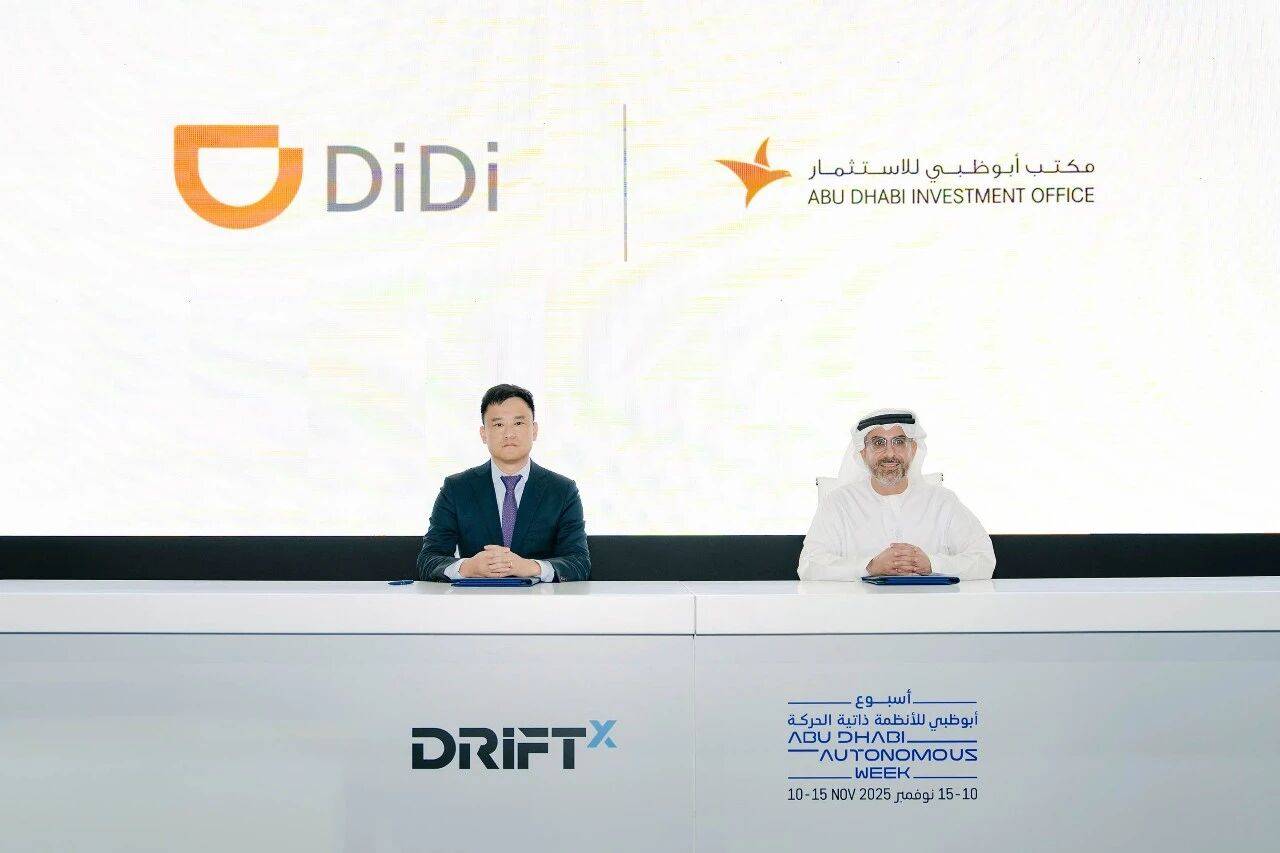
滴滴自动驾驶出海落子中东 将在阿布扎比开展技术合作与人才培养
Feng Huang Wang· 2025-11-13 08:49
Core Insights - Didi Autonomous Driving has announced a strategic partnership with the Abu Dhabi Investment Office (ADIO), marking its entry into the Middle East market [1] - The collaboration will focus on the application of autonomous driving technology, AI talent development, and ecosystem construction [1] Group 1: Strategic Partnership - Didi has joined the Abu Dhabi Smart and Autonomous Vehicle Industry Cluster (SAVI), which aims to establish a smart transportation hub in the Middle East and North Africa [1] - The SAVI cluster is supported by the local Department of Economic Development and the Investment Office, with plans to cover multi-dimensional R&D and commercialization of autonomous driving technologies [1] Group 2: Economic Impact - The SAVI cluster is projected to contribute 44 billion dirhams to Abu Dhabi's economy and create 40,000 jobs by 2045 [1] Group 3: Company Statements - Badr Al-Olama, Director General of the Abu Dhabi Investment Office, emphasized that this partnership is a crucial step in shaping the future transportation system [1] - Didi's Vice President Wang Yue stated that the Middle East market is a vital part of its global strategy, leveraging its experience in Level 4 autonomous driving to advance smart mobility solutions [1] - Didi's autonomous driving system has achieved over 1,900 days of continuous safe operation, with a new generation autonomous vehicle developed in collaboration with GAC Aion set for delivery by the end of the year [1]

滴滴自动驾驶宣布与阿布扎比投资办公室达成战略合作
Sou Hu Cai Jing· 2025-11-13 08:36
Core Insights - Didi Autonomous Driving has announced a strategic partnership with the Abu Dhabi Investment Office (ADIO) to support the development of smart mobility and sustainable transportation ecosystems in Abu Dhabi and the broader Middle East region [1][3] Group 1: Strategic Partnership - The partnership involves Didi joining the Abu Dhabi Smart and Autonomous Vehicle Industry Cluster (SAVI) to collaborate on innovation in autonomous driving technology, AI talent development, and ecosystem building [1][3] - The collaboration aims to establish Abu Dhabi as a leading hub for smart mobility and sustainable transportation [1][3] Group 2: Economic Impact - The SAVI cluster, initiated by the Abu Dhabi Department of Economic Development and ADIO, is expected to contribute 44 billion dirhams to Abu Dhabi's GDP and create 40,000 jobs by 2045 [3] Group 3: Company Positioning - Didi Autonomous Driving is recognized as a global leader in autonomous driving technology, and the partnership is seen as a key milestone in shaping the future of transportation in Abu Dhabi [3] - The Middle East is identified as a crucial part of Didi's global strategy, aligning with Abu Dhabi's goals for smart city development and sustainable growth [3] Group 4: Technological Advancements - Didi Autonomous Driving focuses on L4-level autonomous driving technology, leveraging advanced AI for research and product application [4] - The company has achieved over 1,900 days of safe operation and plans to deliver a new generation of autonomous vehicles in collaboration with GAC Aion by the end of the year [4]

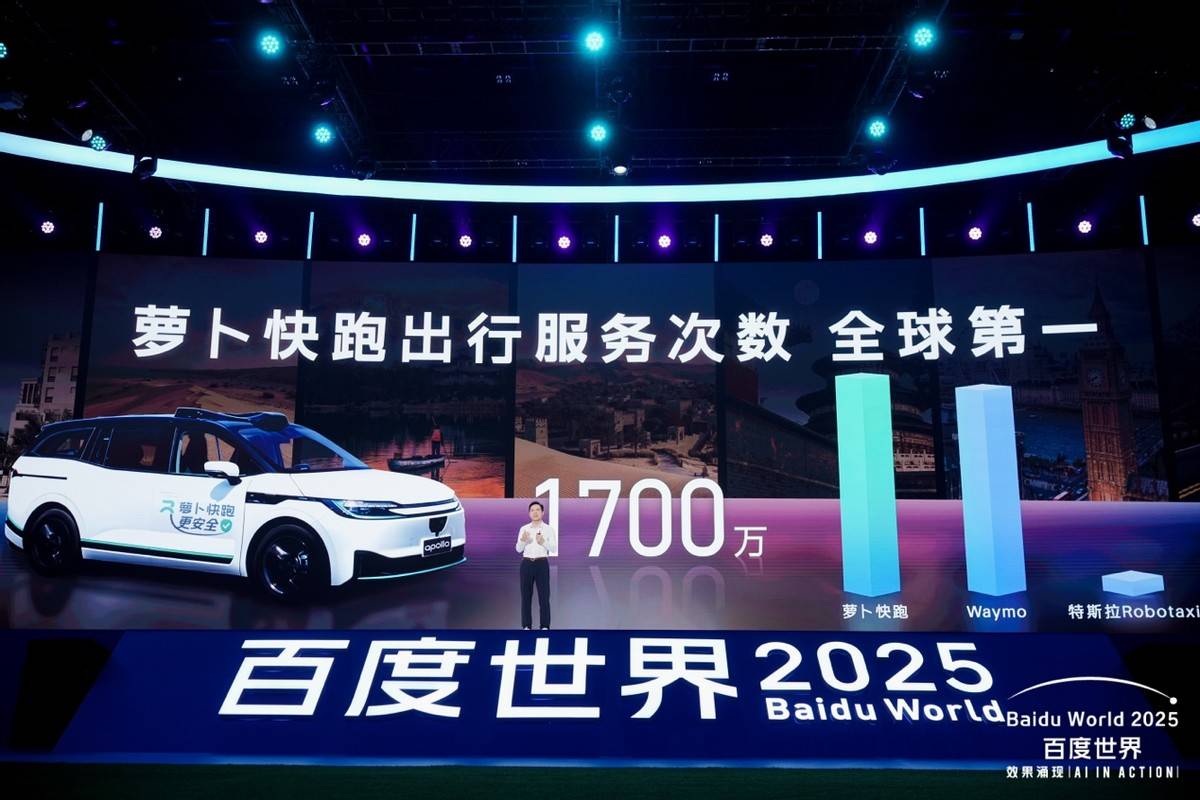
大国交通!中国无人车全球第一 萝卜快跑周全无人订单超25万 累计服务超1700万次
Sou Hu Cai Jing· 2025-11-13 08:25
据全球领先的投资机构ARK研究预测,到2030年,美国Robotaxi每英里成本有望降至约0.25美元。这一关键突破,将激发巨大的潜在出行需求,预计市场规 模将扩大5至7倍。其背后的逻辑在于,当出行成本降至"人人可负担"的水平,公众的出行选择逻辑将发生根本转变,大量曾被价格抑制的消费需求将得到释 放,用户会普遍倾向于选择更舒适、便捷的无人驾驶出行服务。 萝卜快跑在全球市场的领先,得益于国家在人工智能赋能实体经济、加速产业升级转型的一系列政策引导。早在2017年,科技部便前瞻布局,支持百度成为 国家科技重大专项"自动驾驶国家新一代人工智能开放创新平台";工信部则明确"单车智能+网联赋能"的战略路线,加速推进人工智能与传统汽车产业深度 融合、双向赋能。萝卜快跑订单量的持续突破与海外市场的快速拓展,不仅是企业商业成功的体现,更是国家科技创新战略前瞻布局与系统推进的成果彰 显,向世界贡献了人工智能发展的"中国方案"。 大会现场,李彦宏通过视频连线与阿布扎比团队实时互动,生动展示了萝卜快跑在当地的运营实况。全无人驾驶车辆正在阿布扎比街头有序行驶,这一场景 也印证了萝卜快跑在全球范围内的落地能力。 "从旧金山到洛杉矶,从 ...

滴滴自动驾驶宣布出海,首站落户中东阿布扎比
Xin Lang Ke Ji· 2025-11-13 08:01
Core Insights - Didi Autonomous Driving has announced a strategic partnership with the Abu Dhabi Investment Office (ADIO) to join the Smart and Autonomous Vehicle Industry Cluster (SAVI) in Abu Dhabi, focusing on innovation in autonomous driving technology, AI talent development, and ecosystem building [2][2][2] Group 1: Strategic Partnership - The collaboration aims to support Abu Dhabi in building a leading smart mobility and sustainable transportation ecosystem, with plans to expand cooperation across the broader Middle East region [2][2] - The SAVI industry cluster, initiated by the Abu Dhabi Department of Economic Development and ADIO, is positioned as a smart transportation hub in the Middle East and North Africa [2][2] Group 2: Economic Impact - ADIO projects that the SAVI industry cluster will contribute 44 billion dirhams to Abu Dhabi's GDP and create 40,000 jobs by 2045 [2][2] - The partnership is seen as a key milestone in shaping the future of transportation in Abu Dhabi, with expectations for Didi to drive the large-scale application of autonomous driving technology in the region [2][2] Group 3: Company Perspectives - Didi Autonomous Driving views the Middle East as a crucial part of its global strategy, aligning with Abu Dhabi's goals for smart city development and sustainable growth [2][2] - The company aims to leverage local partnerships to advance autonomous driving technology and enhance user experience in the Middle East [2][2]

滴滴自动驾驶宣布与阿布扎比投资办公室(ADIO)达成战略合作
Mei Ri Jing Ji Xin Wen· 2025-11-13 07:50
Core Viewpoint - Didi Autonomous Driving has announced a strategic partnership with the Abu Dhabi Investment Office (ADIO) to collaborate on autonomous driving technology innovation, AI talent development, and ecosystem construction in the Middle East region [1] Group 1 - Didi Autonomous Driving joins the Abu Dhabi Smart and Autonomous Vehicle Industry Cluster (SAVI) [1] - The collaboration will focus on open cooperation in various fields, including technology innovation and talent cultivation [1] - The partnership aims to gradually expand cooperation to a broader Middle Eastern region [1]
Robotaxi GXR新加坡开跑!文远知行携手Grab启动新加坡首测
Ge Long Hui· 2025-11-13 07:20
Core Insights - WeRide and Grab have received approval from Singapore's Land Transport Authority to conduct autonomous driving tests in Punggol, marking a significant step in their Ai.R project [1][2] - The Ai.R project aims to provide a public autonomous ride-hailing service, with plans to increase testing frequency by four times by the end of 2025 [1][2] - The initial phase of the project will involve 11 autonomous vehicles, including 10 Robotaxi GXR and 1 Robobus, with public service expected to begin in early 2026 [2] Group 1 - The Ai.R project is designed to offer autonomous transportation services to residents in Punggol, connecting them to key public facilities [2] - The autonomous vehicles will undergo rigorous testing to ensure reliability, including real-time analysis of road conditions and localized AI training [3] - The vehicles are equipped with advanced perception systems, enabling 360° awareness and obstacle detection even in adverse weather conditions [3] Group 2 - Training for safety operators is underway, with the first cohort consisting of former Grab drivers who are transitioning to this new role [4] - The safety operators will monitor vehicle performance in real-time during the testing and initial operational phases [4] - Feedback from safety operators will play a crucial role in optimizing the performance of the autonomous vehicles [4]


万马科技与百度阿波罗智能驾驶 “技术+市场”深度合作 打造无人驾驶商业化新方案
Quan Jing Wang· 2025-11-13 06:14
Core Viewpoint - The strategic partnership between Wanma Technology's subsidiary Youka Technology and Baidu's Apollo Intelligent Driving aims to leverage their respective strengths to enhance the Robotaxi ecosystem and expand their market presence globally [1][3]. Group 1: Strategic Cooperation - Youka Technology has signed a strategic cooperation agreement with Apollo Intelligent Driving to provide integrated high-level connected solutions, including cloud computing [1][2]. - The collaboration will focus on exploring the Robotaxi sector and developing a comprehensive "vehicle-road-cloud" integrated operational solution [1][4]. Group 2: Market Potential - The global Robotaxi market is projected to grow from $4.4 billion in 2025 to $188.9 billion by 2034, with a compound annual growth rate (CAGR) exceeding 50% [3]. - China is expected to become the largest market for Robotaxi, with a fleet size reaching 1.9 million vehicles by 2035, accounting for 25% of the global shared mobility vehicles [3]. Group 3: Technological Advancements - Youka Technology has achieved over 16 million connected vehicles, with more than 1 million connections overseas, utilizing advanced technologies such as 5G and AI [2]. - The partnership aims to enhance the reliability and responsiveness of Robotaxi services through improved network solutions [2][4]. Group 4: Industry Transformation - The collaboration signifies a shift from a single technology cooperation to a deep strategic binding of "global market + full-stack technology," which is expected to expand business boundaries and strengthen competitive advantages in the autonomous driving sector [3][4]. - The focus on key areas such as energy replenishment, intelligent computing, and smart cockpit development will drive the integrated development of the "vehicle-road-cloud" ecosystem [4]. Group 5: Future Outlook - The partnership represents a significant upgrade in Youka Technology's service capabilities and business model, moving towards a comprehensive "communication + positioning + computing + service" solution for Robotaxi [5]. - The ongoing collaboration is anticipated to reshape the company's valuation logic and open new growth opportunities in the intelligent mobility sector [4][5].
中国Robotaxi企业竞逐中东
Zhong Guo Jing Ying Bao· 2025-11-13 04:27
Core Insights - A competition for autonomous driving is emerging in Abu Dhabi, a key node in the "Belt and Road" initiative, with major Chinese Robotaxi companies launching projects there [1][2] - Abu Dhabi is becoming a significant arena for Chinese Robotaxi companies to showcase their technology and compete, benefiting from favorable commercial conditions compared to the domestic market [1][3] Group 1: Company Developments - Companies like WeRide, Loong, and Cao Cao Mobility are establishing operations in Abu Dhabi, with WeRide recently receiving approval for fully autonomous Robotaxi services [1][2] - Loong has initiated the largest scale of fully autonomous operations in Abu Dhabi, marking its first public-scale operation outside China [2] - Cao Cao Mobility is introducing a three-in-one Robotaxi solution, combining vehicle manufacturing, autonomous driving technology, and mobility services [2] Group 2: Market Conditions - Abu Dhabi's supportive policies for innovation provide a conducive environment for testing and operating Robotaxi services, reflecting international recognition of Chinese autonomous driving technology [3][5] - The local market's high tourist traffic and economic development create ideal conditions for Robotaxi applications [1][3] Group 3: Strategic Goals - The expansion of Chinese Robotaxi companies in Abu Dhabi aims to penetrate global markets, leveraging the region's operational flexibility to gather data and experience [5][6] - Companies are expected to scale their fleets significantly, with WeRide planning to expand to 1,000 vehicles by 2026 and potentially to tens of thousands by 2030 [6] Group 4: Challenges and Considerations - Companies face challenges such as local legal regulations, cultural differences, and data security when entering overseas markets [6][7] - The localization costs for mapping and adapting to local traffic regulations may significantly impact profit margins, potentially consuming 15%-20% of gross profits [7]
AutoGo与百度Apollo Go合作扩展自动驾驶车队
Shang Wu Bu Wang Zhan· 2025-11-13 03:21
Core Viewpoint - AutoGo partners with Baidu Apollo Go to expand its autonomous vehicle fleet in Abu Dhabi by hundreds of vehicles by 2026, aligning with Abu Dhabi's smart mobility strategy to enhance travel efficiency, reduce congestion and carbon emissions, and accelerate the development of an intelligent mobility ecosystem [1] Group 1 - AutoGo is an autonomous mobility service company based in the UAE [1] - The collaboration aims to implement Abu Dhabi's smart mobility strategy [1] - The expansion of the autonomous vehicle fleet is expected to occur by 2026 [1] Group 2 - The partnership focuses on improving travel efficiency and reducing congestion [1] - The initiative also aims to lower carbon emissions [1] - The project is part of a broader effort to build an intelligent mobility ecosystem in Abu Dhabi [1]