
医疗服务

Search documents
港股年内4只新股上市首日齐破发
Hua Er Jie Jian Wen· 2025-12-23 05:45
Core Viewpoint - Four newly listed companies on the Hong Kong stock market experienced a collective drop on their first trading day, marking a significant event in the market's recent history [1][2]. Group 1: Market Performance - On December 22, the closing prices of the four companies—Hua Chen Biotech, Ming Kee Hospital, Nanhua Futures, and Impression Da Hong Pao—fell by 29%, 49%, 24%, and 35% respectively on their debut [1]. - This event represents the first instance of four new stocks collectively breaking their issue price on the first day since 2025, with Ming Kee Hospital setting a new record for the largest drop on debut this year [2]. - As of the next trading day, the stocks continued to decline, with Ming Kee Hospital down 48%, Hua Chen Biotech down 42%, Impression Da Hong Pao down 38%, and Nanhua Futures down 23% from their issue prices [3]. Group 2: Market Conditions - The overall performance of the Hong Kong stock market has been under pressure, with the Hang Seng Technology Index dropping nearly 17% since October, and a maximum drawdown of 19% [3]. - The number of IPOs in the Hong Kong market has surged, with 49 new listings in the fourth quarter alone, representing a more than 90% increase from the previous quarter, exacerbating the supply-demand imbalance [3]. Group 3: Company Fundamentals - Hua Chen Biotech, as an innovative pharmaceutical company, has not yet achieved significant revenue, reporting nearly zero income for the first three quarters of 2025 [4]. - Ming Kee Hospital, despite owning multiple hospitals, reported a net loss of 53 million yuan in the first half of 2025, a decrease of nearly 25% year-on-year [4]. - Overall, the first-day drop rate for new IPOs in the Hong Kong market is approximately 29%, with 31 new stocks experiencing a drop this year, a decrease of 7 percentage points compared to 2024 [4]. Group 4: Future Outlook - Nearly half of the 31 new stocks that broke their issue price this year did so in the fourth quarter, raising concerns about a potential wave of IPO failures in 2026 [5]. - By December 22, 2025, 45 new stocks had fallen below their issue price, accounting for over 40% of the total new listings for the year [6]. - Deloitte forecasts that the Hong Kong IPO market will maintain a high frequency in 2026, with an expected 160 new listings and a fundraising target of 300 billion HKD [6]. Group 5: Investment Strategy - Huatai Securities emphasizes the importance of selecting high-quality stocks for new listings, noting that the overall attractiveness of IPOs in Hong Kong has diminished since 2016, with high returns often coming from a small number of high-potential stocks [7].
港股异动 | 昭衍新药(06127)涨超5% 上游实验猴供给端紧张 公允价值变动有望贡献利润
智通财经网· 2025-12-23 02:52
Core Viewpoint - The stock of Zhaoyan New Drug (06127) has risen over 5%, currently trading at 22.38 HKD with a transaction volume of 116 million HKD, driven by a recovery in demand for preclinical CRO clients and a tight supply of experimental monkeys [1] Group 1: Market Dynamics - Demand for preclinical CRO services is recovering, particularly for new technology platforms such as large molecules (multi-antibodies, ADC), small nucleic acids, peptides, and cell gene therapies, which require macaques for safety evaluation tests [1] - The price of experimental macaques has increased significantly, with 3-5 year old macaques now priced at 140,000 RMB each, indicating a supply-demand imbalance in the market [1] Group 2: Financial Implications - According to estimates from Founder Securities, if the average price of experimental macaques is accounted for at 84,900 RMB each in 2024 and increases to 140,000 RMB by Q4 2025, the estimated new fair value contribution for Zhaoyan New Drug in 2025 could be approximately 220 million RMB, based on a known supply of 23,200 macaques and an estimated output rate of 17% [1]

昭衍新药涨超5% 上游实验猴供给端紧张 公允价值变动有望贡献利润
Zhi Tong Cai Jing· 2025-12-23 02:51
Core Viewpoint - The stock of Zhaoyan New Drug (603127) has increased by over 5%, currently trading at 22.38 HKD with a transaction volume of 116 million HKD, indicating a positive market response to recent developments in the preclinical CRO sector [1] Group 1: Market Demand and Supply Dynamics - There is a recovery in demand from preclinical CRO clients, while the supply of experimental monkeys is tight, leading to increased prices [1] - The price of the food crab monkey, essential for safety evaluation tests in drug development, has risen to 140,000 RMB per monkey, reflecting a supply-demand imbalance [1] Group 2: Impact on Drug Development - New technology platforms such as large molecules (multi-antibodies, ADC), small nucleic acids, peptides, and cell gene therapies require food crab monkeys for safety evaluation, highlighting the importance of this resource in innovative drug development [1] - The increase in monkey prices will directly contribute to profit through fair value changes, supporting the recovery of domestic innovative drug research and development [1] Group 3: Financial Projections - According to estimates from Founder Securities, if the average price of experimental monkeys is accounted for at 84,900 RMB in 2024 and increases to 140,000 RMB by Q4 2025, the estimated new fair value addition for Zhaoyan New Drug in 2025 could be approximately 220 million RMB, based on a known population of 23,200 monkeys [1]
港股生物医药IPO热潮背后:从华芢生物与明基医院破发看资本的理性回归
Xin Lang Zheng Quan· 2025-12-23 02:31
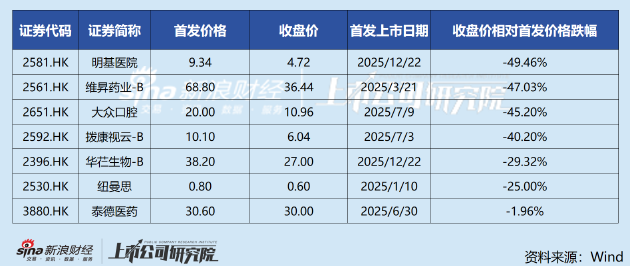
Group 1 - Four new stocks were listed on December 22, 2025, including two from the healthcare sector: Huashan Bio and Mingji Hospital [1] - Huashan Bio experienced a significant increase of over 30% in dark market trading prior to its public offering, with a subscription ratio reaching nearly 792 times and over 500 billion HKD in frozen funds [1] - Despite initial excitement, both Huashan Bio and Mingji Hospital saw their stock prices drop significantly upon listing, with Huashan Bio falling over 11% and Mingji Hospital dropping more than 30% [1] Group 2 - Huashan Bio is positioned as the first PDGF stock in Hong Kong, targeting a blue ocean market for wound healing with seven PDGF candidate drugs, including Pro-101-1, which is noted for its rapid clinical development [1][2] - The potential market size for PDGF drugs in burn treatment is only about 6.66 million RMB by 2033, and the diabetic foot ulcer market is highly competitive with existing treatment options [2] - Huashan Bio lacks commercialized products, revenue, and profit, categorizing it as a "three-no company" [1][2] Group 3 - Mingji Hospital is the largest private profit-making hospital group in East China, with over 2 million outpatient visits in 2024 and the highest revenue per bed among similar hospitals in the country [3] - However, Mingji Hospital's revenue has stagnated, with a 1.1% decline in 2024 and a further 1.34% drop in the first half of 2025, alongside a significant decrease in net profit from 167 million RMB in 2023 to 109 million RMB in 2024 [3] - The static P/E ratio for Mingji Hospital in 2024 is estimated to be between 25x and 31x, which is significantly higher than the average for the Hong Kong healthcare sector [3] Group 4 - Early investors, such as CDH Medical Services Limited, exited before the IPO, indicating cautious expectations regarding the company's value [4] - CDH invested 100 million USD in 2014 and sold its shares for 195 million USD in 2023, realizing a profit of 95 million USD [4] - The cases of Huashan Bio and Mingji Hospital reflect a broader trend of market sentiment diverging from asset fundamentals, with recent IPOs in the Hong Kong biotech sector being driven by external liquidity and market corrections [4][5] Group 5 - As of early 2025, 24 biotech companies have successfully listed on the Hong Kong stock market, with 7 currently trading below their IPO prices [5] - Notable declines include Mingji Hospital, which has seen a drop of 49.46% from its IPO price of 9.34 HKD to a closing price of 4.72 HKD [6]

聊城:以日间医疗模式赋能肿瘤精准诊疗
Qi Lu Wan Bao· 2025-12-23 01:42
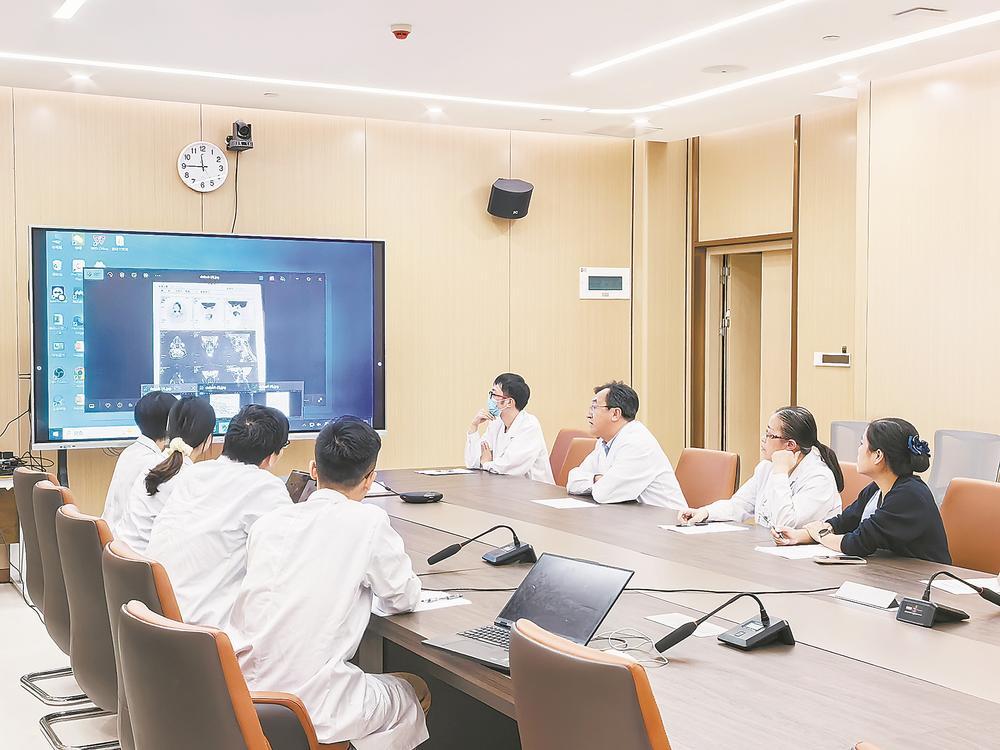
Core Insights - The article highlights the innovative daytime medical service model implemented in Liaocheng, which significantly improves the treatment experience for cancer patients by allowing them to receive care without lengthy hospital stays [1][2][3] Group 1: Service Model Innovation - Liaocheng has established a daytime radiotherapy and chemotherapy center, set to be operational by July 2024, focusing on optimizing medical resource allocation and enhancing patient experience [1] - The center employs a "four-in-one" service framework that includes process re-engineering, multidisciplinary collaboration, smart empowerment, and humanistic care to provide efficient and precise treatment [1][2] Group 2: Process Optimization - The city has integrated diagnostic and treatment processes, allowing patients to move from outpatient consultation to treatment planning in an average of just one working day [2] - The use of a unified appointment and intelligent scheduling system has reduced the average time patients spend in the hospital by over 2 hours per visit, achieving a "treat and go" model [1][2] Group 3: Multidisciplinary Collaboration - A multidisciplinary team, including specialists in radiation therapy, traditional Chinese medicine, nutrition, and psychology, collaborates to create personalized care plans for patients, ensuring a comprehensive management approach [2] - This integrated care model forms a closed-loop system of "treatment-rehabilitation-support," enhancing the overall patient experience [2] Group 4: Quality and Safety Measures - The city has incorporated daytime medical services into a unified quality control system, establishing mechanisms for quality checks and traceability throughout the treatment process [2] - Initiatives such as patient care stations and a 24-hour online communication platform have been implemented to ensure timely responses and support for patients [2] Group 5: Impact and Future Plans - Since its launch, the model has served thousands of cancer patients, achieving a treatment completion rate of over 95% and increasing bed turnover rates in related departments by over 30% [2] - The successful implementation of this model is being expanded to county-level healthcare facilities, enhancing regional cancer prevention and treatment capabilities [2][3] - Future plans include further development of daytime surgeries and chemotherapy, aiming to create a more efficient, precise, and patient-centered healthcare network [3]
惨烈!今天,港交所上市4只新股,全崩了!
Xin Lang Cai Jing· 2025-12-22 23:43
Group 1 - Four newly listed stocks in the Hong Kong market experienced significant declines on their debut, with drops of 49.46%, 29.32%, 24.17%, and 35.28% respectively, marking a record low for first-day performance in 2025 [1][8] - Among these, Ming Kee Hospital saw the largest drop, nearly halving its value, which is attributed to its high issuance price-to-earnings (PE) ratio of approximately 29.8 times, significantly above the industry average of about 17 times [5][10] - Impression Da Hong Pao, despite being oversubscribed by 3,397 times, still faced a drop of over 35% on its first day, indicating a decline in its shareholder profits [5][14] Group 2 - The collective failure of these new stocks is linked to tightening market liquidity, with southbound capital inflows significantly reduced in December and average daily trading volume on the Hong Kong Stock Exchange falling below HKD 200 billion [4][12] - Concerns regarding the valuation and fundamental performance of the new stocks have emerged, particularly for Ming Kee Hospital, which has seen a profit decrease of 34.95% year-on-year for 2024 [5][11] - The new IPO pricing mechanism introduced by the Hong Kong Stock Exchange in August, which allows a minimum public subscription ratio of 10%, has been criticized for potentially exacerbating the situation for companies with high valuations and low institutional interest [6][12] Group 3 - The Hong Kong IPO market has cooled significantly since November, with a 50% first-day drop rate among newly listed stocks, compared to 30.23% in the first half of the year and 35.71% for the entire year of 2024 [7][12] - Analysts suggest that the misalignment between primary market pricing and secondary market risk appetite, along with a heavy reliance on southbound capital, has made new stocks particularly vulnerable to sell-offs [13] - The recent performance of these four new stocks serves as a warning to investors that the era of easy profits from IPOs may be over, emphasizing the importance of fundamental quality and reasonable pricing in determining future performance [13]

东南亚指数双周报第14期:马来领涨,越南走弱-20251223
Haitong Securities International· 2025-12-22 23:35
Performance Overview - Southeast Asia ETF rose by 1.59%, with Malaysia leading the gains while Vietnam weakened[37] - The Southeast Asia Technology ETF dropped by 4.76%, underperforming the broader Southeast Asia ETF by 6.36 percentage points[37] Country-Specific Performance - iShares MSCI Indonesia ETF fell by 0.42%, underperforming by 2.02 percentage points, indicating a stable market with mixed macro growth expectations[38] - iShares MSCI Singapore ETF decreased by 0.81%, underperforming by 2.40 percentage points, reflecting cautious market sentiment due to diverging business confidence[38] - iShares MSCI Thailand ETF increased by 0.44%, underperforming by 1.16 percentage points, amid limited monetary easing effects and structural growth challenges[38] - iShares MSCI Malaysia ETF rose by 3.73%, outperforming by 2.14 percentage points, supported by local currency appreciation and external capital inflows[38] - Global X MSCI Vietnam ETF dropped by 1.00%, underperforming by 2.59 percentage points, as market sentiment reversed due to concerns over domestic debt risks[38] Market Risks - Key risks include macroeconomic downturns and geopolitical uncertainties, which could impact market performance[36]
让医疗服务更高效更暖心
Xin Lang Cai Jing· 2025-12-22 23:27
Core Viewpoint - The article emphasizes the ongoing pursuit of health by the public and the continuous improvement of the medical experience, highlighting the need for reforms in the healthcare system to address disparities in service quality across regions and demographics [1][2]. Group 1: Technological Advancements - The healthcare sector should focus on making technology accessible to the public by overcoming critical technological barriers, allowing high-quality medical services, drugs, and equipment to be available at more affordable prices [1]. - Emerging tools such as "AI + healthcare" and "5G + remote services" are expected to help expand and distribute quality medical resources, enabling the public to access advanced medical services closer to home [1]. - The use of big data and internet technology should be enhanced to streamline processes, making healthcare services as convenient as online shopping for patients [1]. Group 2: Patient-Centric Service Optimization - There is a need to continuously optimize medical services by embedding a "patient-centered" philosophy throughout all healthcare service stages [2]. - Hospital management should enhance the patient experience by establishing specialized centers and multi-disease outpatient services, moving away from a fragmented treatment approach [2]. - Improving the humanistic aspect of healthcare is crucial, with initiatives like building elderly-friendly and child-friendly hospitals to create a warm and comfortable environment for various patient demographics [2].
家门口就医 从“有”到“优”的福建实践
Xin Lang Cai Jing· 2025-12-22 23:27
Core Viewpoint - The article emphasizes the advancements in healthcare services in Fujian, particularly focusing on high-level hospitals and specialized medical centers, aiming to provide top-tier medical treatment locally and enhance patient satisfaction [5][9]. Group 1: Heavy Ion Therapy - The first heavy ion therapy device in Fujian is operational at the Fujian Medical University Affiliated Union Hospital, providing cutting-edge cancer treatment [6]. - Heavy ion therapy utilizes carbon ions accelerated to 40%-70% of the speed of light, creating a "Bragg peak" effect that allows for precise targeting of tumor cells while minimizing damage to surrounding healthy tissue [6][7]. - Patients report minimal discomfort during treatment, with some able to rest during the procedure, highlighting the efficiency and patient-friendly nature of this advanced therapy [6]. Group 2: Multidisciplinary Treatment Approach - The hospital is integrating various specialties to create a multidisciplinary treatment model, which is crucial for managing complex medical cases [9][11]. - A case study illustrates the successful collaboration among cardiology, neurology, and surgery teams to treat a patient with multiple severe conditions, showcasing the effectiveness of this approach [10][11]. - The hospital's heart center has restructured its teams into specialized groups to enhance patient care and streamline treatment processes [12]. Group 3: Remote Surgery Innovations - The first cross-province remote robotic surgery was successfully performed, demonstrating the potential of telemedicine to provide high-quality care regardless of location [13]. - This technology allows local doctors to assist in surgeries performed by experts from distant locations, enhancing their skills and improving patient outcomes [14]. - The integration of remote surgery aligns with national healthcare policies aimed at optimizing medical resources and improving access to care for patients in rural areas [16].
喜娜AI速递:昨夜今晨财经热点要闻|2025年12月23日
Xin Lang Cai Jing· 2025-12-22 22:43
Group 1 - International gold and silver prices reached historical highs, with spot gold at $4,412.62 per ounce, up 1.33% in a day, and silver showing an annual increase of over 139% [2][7] - Four main factors driving the rise in gold prices include the depreciation of the dollar due to the interest rate cut cycle, expectations of further rate cuts by the Federal Reserve, the appeal of gold as a hedge against inflation, and increased demand for gold as a risk hedge amid international tensions [2][7] - The Hong Kong Stock Exchange saw four new stocks debut and all experienced price declines, indicating a cooling market for new listings [2][7] Group 2 - The former Bank of Japan official warned that aggressive fiscal stimulus could lead to interest rate hikes exceeding expectations, with potential increases of up to three times to 1.5% [2][7] - The Japanese inflation rate has exceeded the central bank's 2% target for nearly four years, with companies passing costs onto consumers [2][7] Group 3 - The control of Xusheng Group is set to change, with Guangzhou Industrial Control Group and its associates acquiring shares to hold a total of 27.05%, making the Guangzhou Municipal Government the actual controller [3][8] - Xusheng Group is focusing on precision aluminum alloy components and expanding into energy storage and robotics [3][8] Group 4 - The Hainan Free Trade Zone concept saw a surge, with 29 stocks rising and 22 hitting the daily limit, driven by themes like autonomous driving and a rebound in technology stocks [3][9] - The market is reacting positively to the full closure of the Hainan Free Trade Port, with a booming duty-free consumption market in Sanya [3][9] Group 5 - The computing power industry is seeing multiple companies announce capital increases and acquisitions, indicating active market movements [3][9] - Notable announcements include Yongding's subsidiary seeking to introduce investors through capital expansion and Lingyi's plan to acquire a 35% stake in Limin Da for 875 million yuan [3][9] Group 6 - Over 66,000 individuals faced liquidation in the cryptocurrency market as global interest rate cuts influenced market dynamics [4][10] - The People's Bank of China announced a one-time credit repair policy to assist individuals in restoring their credit status [4][10] Group 7 - Major institutions have differing views on the A-share market outlook, with some predicting a cross-year rally and others focusing on structural activity in the market [5][10] - Citic Securities highlights factors supporting the appreciation of the renminbi, while Everbright Securities notes the potential for a cross-year market rally [5][10] Group 8 - Elon Musk became the first person in history to surpass a net worth of $700 billion, with his wealth increasing to $749 billion due to the restoration of Tesla stock options valued at $139 billion [5][10] - The wealth gap between Musk and the second richest individual is nearly $500 billion [5][10]


