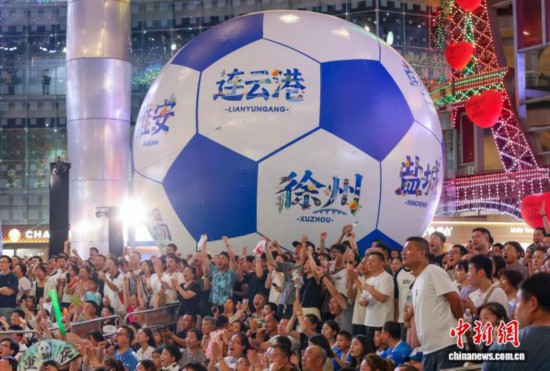
体育用品制造

Search documents
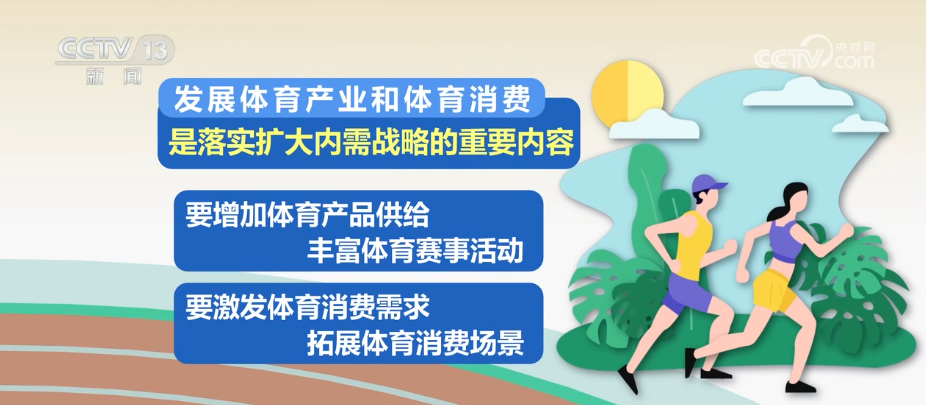
多维度解读·增速超10% 体育产业成国民经济中极具活力增长极
Yang Shi Wang· 2025-08-24 02:46
Core Viewpoint - The Chinese government is focusing on unlocking the potential of sports consumption and promoting high-quality development in the sports industry, emphasizing the need to cultivate new growth points and build a modern sports industry system [1][5]. Industry Growth - China's sports industry has seen an average annual growth rate of over 10% in the past five years, with significant developments in event economy, outdoor industry, and ice and snow economy, indicating substantial sports consumption potential [4]. - The sports industry is considered a crucial part of the strategy to expand domestic demand, with a focus on increasing the supply of sports products and enriching sports events [5][7]. Market Dynamics - The sports industry can directly stimulate economic growth and foster deep integration with manufacturing, services, culture, tourism, and health sectors, leading to new business models and optimizing industrial structure [5][7]. - The sports goods manufacturing industry is a vital foundation of the sports industry, with a growing and innovative product system catering to various groups and scenarios [7][11]. Product Development - China has developed a comprehensive product system for ice and snow equipment, covering all needs from individual to venue, and showcasing Chinese-made sports equipment at the 2024 Paris Olympics [9]. - The sports goods manufacturing sector comprises over 63,000 production units, with an annual output value exceeding 1 trillion yuan, accounting for 40% of the total sports industry scale [11]. Export and Competitiveness - In 2024, China's sports goods export is projected to reach nearly $28.4 billion, reflecting a year-on-year growth of 6.8%, enhancing international competitiveness and influence [11]. Event Economy - The rapid development of sports events, such as marathons, has significantly expanded the market for running shoes and apparel, indicating a growing trend in sports consumption driven by events [16][17]. - Regional cooperation in hosting events is seen as a key trend for developing the sports industry and creating regional brand events [19].

信隆健康2025年中报简析:增收不增利
Zheng Quan Zhi Xing· 2025-08-23 22:27
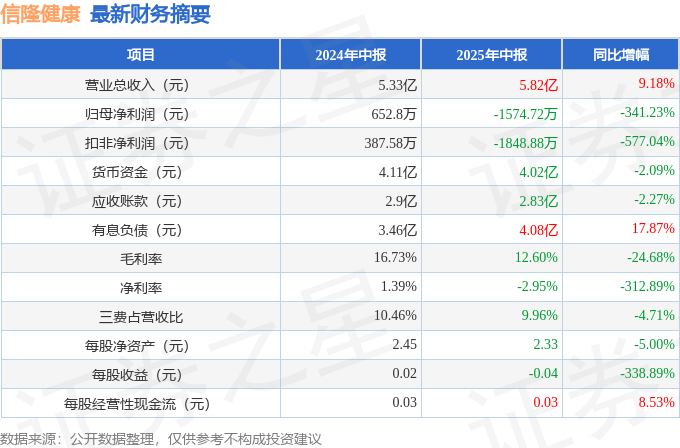
Core Insights - Xilong Health (002105) reported a revenue increase but a significant decline in net profit for the first half of 2025, indicating challenges in profitability despite higher sales [1] Financial Performance Summary - Total revenue for the first half of 2025 reached 582 million yuan, a year-on-year increase of 9.18% compared to 533 million yuan in 2024 [1] - The net profit attributable to shareholders was -15.75 million yuan, a decline of 341.23% from a profit of 0.65 million yuan in the previous year [1] - The gross margin decreased to 12.6%, down 24.68% from 16.73% in 2024, while the net margin fell to -2.95%, a drop of 312.89% from 1.39% [1] - Total expenses (selling, administrative, and financial) amounted to 57.94 million yuan, accounting for 9.96% of revenue, a decrease of 4.71% year-on-year [1] Key Financial Metrics - Earnings per share (EPS) was -0.04 yuan, a decrease of 338.89% from 0.02 yuan in 2024 [1] - The company's net asset value per share was 2.33 yuan, down 5.0% from 2.45 yuan [1] - Operating cash flow per share remained stable at 0.03 yuan, reflecting an increase of 8.53% year-on-year [1] Significant Changes in Financial Items - Construction in progress increased by 101.58% due to higher investments in the Vietnam Xinyou Phase II factory [3] - Lease liabilities decreased by 33.05% as rent payments were made on time [3] - Accounts receivable financing rose by 104.08% due to an increase in bank acceptance bills received at the end of the reporting period [3] - Operating costs increased by 14.59% primarily due to rising aluminum prices [3] - Financial expenses surged by 138.68% due to increased exchange losses from the depreciation of the US dollar [3] Business Evaluation - The company's historical return on invested capital (ROIC) median over the past decade is 4.19%, indicating weak investment returns [4] - The company has reported losses in 2 out of 18 annual reports since its listing, suggesting a fragile business model [4] - The interest-bearing asset-liability ratio has reached 24.82%, highlighting concerns regarding the company's debt situation [4]

信隆健康(002105.SZ):上半年净亏损1574.72万元
Ge Long Hui A P P· 2025-08-22 13:02
格隆汇8月22日丨信隆健康(002105.SZ)公布2025年半年度报告,上半年公司实现营业收入5.82亿元,同 比增长9.18%;归属于上市公司股东的净利润-1574.72万元;归属于上市公司股东的扣除非经常性损益 的净利润-1848.88万元;基本每股收益-0.043元。 ...
资讯日报-20250822
Guoxin Securities Hongkong· 2025-08-22 05:13
Market Overview - The Hang Seng Index closed at 25,105, down 0.24% for the day and 0.65% for the week, but up 25.15% year-to-date[3] - The Hang Seng Tech Index fell 0.77% to 5,499, with a year-to-date increase of 23.06%[3] - The S&P 500 index decreased by 0.40% to 6,370, with a year-to-date rise of 8.31%[3] Sector Performance - Telecom equipment, cryptocurrency, and film sectors showed strong gains, while new consumption, new energy vehicles, and gold sectors were sluggish[9] - Internet healthcare stocks performed well, with Dingdang Health rising over 23% and Ping An Good Doctor increasing by over 11%[9] - Infrastructure stocks were active, with Renhe Technology and Taisheng Group both rising over 7%[9] Economic Indicators - The global stablecoin market has reached $271 billion, with potential growth to $770 billion by the end of 2027, driven by payment sector expansion[9] - The U.S. labor market shows signs of weakness, leading to an 80% probability of a Fed rate cut in September, although this expectation is facing challenges[9] Corporate Earnings - Walmart's Q2 revenue was $177.4 billion, exceeding expectations, but adjusted EPS of $0.68 fell short of the forecast of $0.74, marking the first miss in three years[12] - Kuaishou's Q2 revenue grew by 13.1% year-on-year to 35 billion yuan, with adjusted net profit increasing by 20.1%[14]
三柏硕2025年中报简析:净利润同比下降55.28%,公司应收账款体量较大
Zheng Quan Zhi Xing· 2025-08-21 22:32
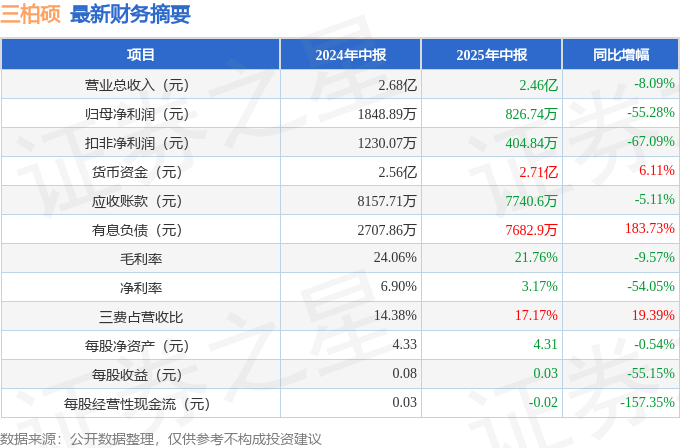
Core Insights - The company Sanbai Shuo (001300) reported a total revenue of 246 million yuan for the first half of 2025, representing a year-on-year decline of 8.09% [1] - The net profit attributable to shareholders was 8.27 million yuan, down 55.28% year-on-year [1] - The second quarter revenue was 108 million yuan, a decrease of 2.0% year-on-year, with a net profit of 1.74 million yuan, down 72.21% [1] Financial Performance - The gross margin was 21.76%, a decrease of 9.57% year-on-year, while the net margin was 3.17%, down 54.05% [1] - Total sales, administrative, and financial expenses amounted to 42.32 million yuan, accounting for 17.17% of revenue, an increase of 19.39% year-on-year [1] - Earnings per share were 0.03 yuan, a decline of 55.15% year-on-year, and the net operating cash flow per share was -0.02 yuan, down 157.35% [1] Changes in Financial Items - Accounts receivable decreased by 39.36% due to the collection of overdue receivables [2] - Right-of-use assets increased by 3655.95% due to new leased factory premises [2] - Short-term borrowings rose by 632.78% as a result of increased bank loans [2] - Financial expenses increased by 80.95% due to higher exchange losses and bank fees [2] - Income tax expenses decreased by 470.05% due to a reduction in total profit [2] Cash Flow Analysis - The net increase in cash and cash equivalents rose by 119.73% due to increases in accounts payable and borrowings [3] - The net cash flow from operating activities decreased by 157.35% due to an increase in accounts payable [2] Business Evaluation - The company's return on invested capital (ROIC) was 1.28%, indicating weak capital returns, with a historical median ROIC of 19.57% since its listing [4] - The net profit margin last year was 4.04%, suggesting low added value for products or services [4] - The company has a healthy cash asset position, indicating good debt repayment capability [4] Operational Insights - The company's performance relies heavily on research and marketing efforts, necessitating a deeper investigation into the underlying drivers of these efforts [4] - The accounts receivable situation is concerning, with accounts receivable reaching 347.59% of net profit [4]
今年前7个月拉动全省进出口增长1.4个百分点民企外贸成绩单背后的三重“密码”
Xin Hua Ri Bao· 2025-08-20 23:13
Group 1: Import and Export Performance - In the first seven months of this year, Jiangsu's private enterprises achieved an import and export volume of 1.47 trillion yuan, contributing 1.4 percentage points to the province's overall trade growth [1] - Private enterprises are recognized as a "vanguard" in exploring international markets and seizing overseas orders, demonstrating strong resilience and vitality in foreign trade [1] Group 2: Structural Optimization and Innovation - Jiangsu's private foreign trade enterprises are enhancing their export resilience through structural optimization, focusing on the transition to technology-intensive and green products [2] - Companies like Kangli Elevator are integrating advanced technology into their products, such as smart elevators that provide personalized services and safety features [2] - Nantong Kaixuan Sports Goods Co., Ltd. has been innovating with new materials to enhance international competitiveness, achieving over 9 million yuan in exports in the first five months of the year [2] Group 3: Green Economy and Low-Carbon Initiatives - Private enterprises are increasingly entering the "low-carbon" market, with companies like Wuxi Quanyu Electronics reporting significant growth in lithium battery exports to Europe and South America [3] - Wuxi Kaiyuan Household Products Co., Ltd. has focused on the Japanese market, benefiting from reduced tariffs under RCEP, leading to a 10% year-on-year increase in exports [3] Group 4: Flexibility and Market Responsiveness - The ability of private enterprises to quickly adapt to changes in overseas markets has led to successful ventures in niche markets, such as inflatable swimming pools and outdoor sports products [4][5] - Companies like Suzhou Fuxijia Food Co., Ltd. have successfully exported innovative products to Germany, leveraging unique production techniques to capture overseas market interest [5] Group 5: Policy Support and Competitive Advantages - A series of supportive policies and services have facilitated the steady growth of private foreign trade enterprises, with customs authorities providing guidance and assistance [6][7] - The implementation of proactive disclosure policies by customs has helped companies avoid penalties and reduce costs, enhancing their competitive edge [7] - Jiangsu's private enterprises are benefiting from tax reductions and credit advantages, leading to improved order response times and increased export volumes [8]
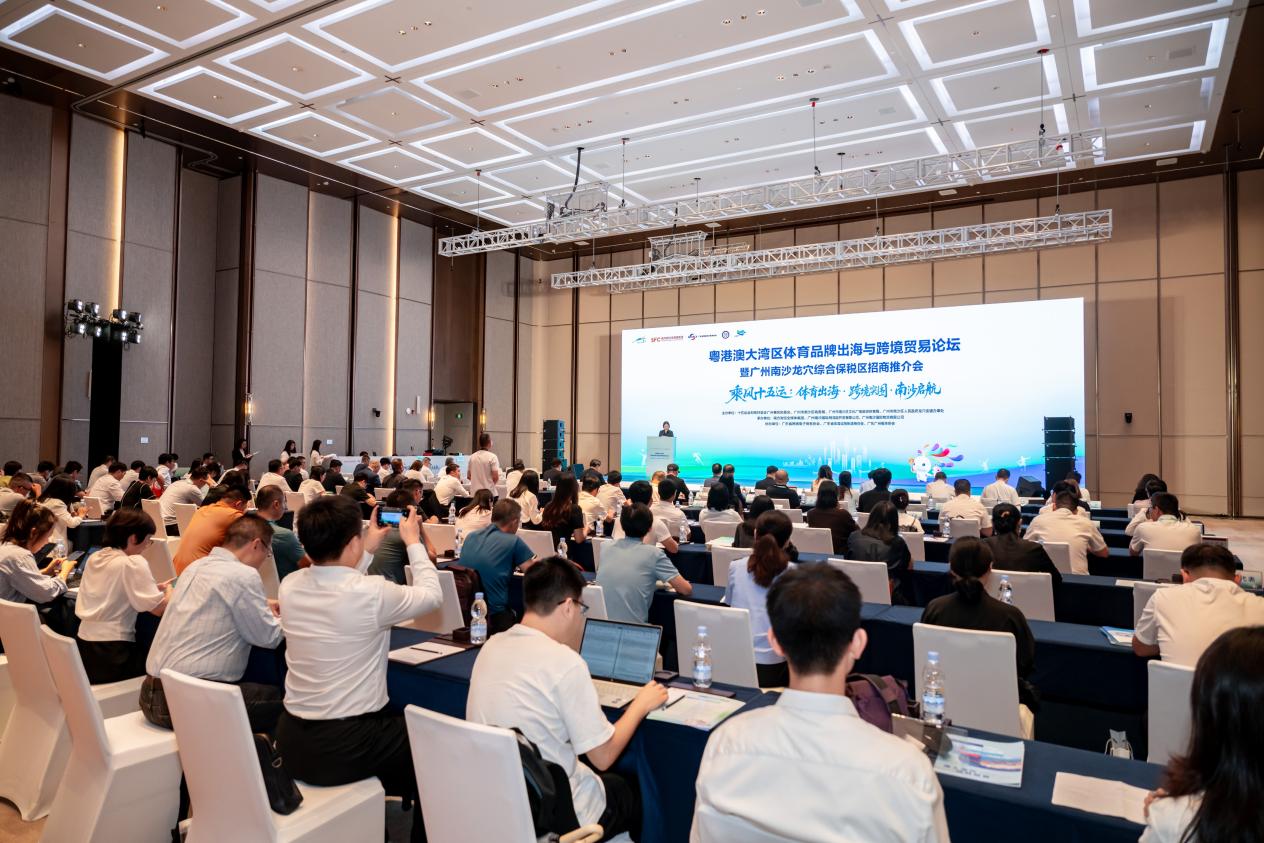
政策+通道+服务赋能 南沙龙穴搭台领航大湾区体育产业跨境突围
2 1 Shi Ji Jing Ji Bao Dao· 2025-08-20 15:21
Core Insights - The 15th National Games, hosted jointly by Guangdong, Hong Kong, and Macau, serves as a significant catalyst for the development of the sports industry in the Greater Bay Area, linking it to global markets [1] - The event emphasizes the importance of cross-border trade and the internationalization of sports brands, aiming to inject new vitality into the region's economic development [1] Group 1: Event Overview - The Guangdong-Hong Kong-Macau Greater Bay Area Sports Brand Going Global and Cross-Border Trade Exchange Conference was held on August 20, focusing on strategies for sports brands to expand internationally [1][2] - The conference attracted representatives from government, business, and academia to discuss the internationalization of the sports industry and its role in regional economic growth [1][2] Group 2: Infrastructure and Policy Support - Nansha District has implemented a "Five Ports Linkage" development strategy, enhancing the synergy between ports, shipping, trade, industry, and finance, with Nansha Port becoming the largest comprehensive port in South China [2] - The Nansha Comprehensive Bonded Zone offers dual policy benefits from both the Free Trade Zone and the bonded zone, significantly reducing import/export costs and improving customs efficiency for sports products [2][3] Group 3: Market Opportunities and Strategies - Nansha is promoting the integration of sports event IP with cross-border e-commerce, facilitating the global reach of traditional sports culture and innovative sports products [3] - The conference highlighted the importance of leveraging the advantages of the bonded zone and free trade zone to empower the cross-border development of the sports industry [5] Group 4: Academic and Industry Insights - Experts discussed the collaboration between Guangdong's sports industry and Hong Kong-Macau in event operations and sports goods manufacturing, aiming to create a global sports industry base [6] - Strategies for entering the African market were proposed, emphasizing the potential for cross-border e-commerce in addressing the region's sports industry needs [6] Group 5: Practical Experiences and Solutions - Leading companies shared insights on digital transformation, flexible supply chain construction, and cross-border payment optimization, addressing challenges faced by sports brands in international markets [7] - A roundtable discussion focused on how bonded zone policies can lower costs for companies going global and innovate cross-border e-commerce models [7] Group 6: Conclusion - The event established a platform for cross-industry exchange, reinforcing Nansha's position as a hub for sports brands going global, contributing to the integration of the Greater Bay Area into global value chains [10]
运河观察|百天“苏超”激活江苏消费经济新引擎
Sou Hu Cai Jing· 2025-08-20 14:25
Group 1: Core Insights - The "Su Super" league has significantly boosted consumer spending in Jiangsu, generating 38 billion yuan in economic activity [2] - The league has become a focal point for local businesses, driving foot traffic and sales in various sectors [3][4] - The event has transformed into a powerful economic engine, enhancing both consumption and industrial upgrades across Jiangsu [9] Group 2: Consumer Impact - Local businesses have leveraged the "Su Super" event to attract customers, with promotions linked to ticket holders leading to increased sales [3] - The number of visitors to live viewing events reached 7.15 million, a 13.03% increase year-on-year, with sales exceeding 4.04 billion yuan, up 10.22% [4] - The event has created a vibrant ecosystem of "core venues + all-region consumption," stimulating local economies [4] Group 3: Industrial Upgrades - The surge in football-related activities has activated Jiangsu's manufacturing sector, particularly in football production and logistics [5] - Companies like Suqian Jingcheng Sports Goods Co. are seeing increased domestic demand for football equipment, with an annual production of 2 million footballs, 80% of which are exported [5] - Technological advancements in sports infrastructure, such as the development of environmentally friendly artificial turf, are being driven by the demand generated from the league [6] Group 4: Broader Economic Effects - The "Su Super" league has influenced various local markets, with cities like Suzhou leading in air conditioning and fans, while Xuzhou excels in barbecue supplies [8] - The event has expanded its influence beyond sports, integrating with local commerce through initiatives like the "Su Goods Carnival" and online consumption platforms [8] - The league has also facilitated international engagement by inviting foreign executives to matches, enhancing the city's global profile [8]

三柏硕(001300.SZ):上半年净利润826.74万元 同比下降55.28%
Ge Long Hui A P P· 2025-08-20 12:21
Group 1 - The company Sanbai Shuo (001300.SZ) reported a revenue of 246 million yuan for the first half of 2025, representing a year-on-year decrease of 8.09% [1] - The net profit attributable to shareholders of the listed company was 8.27 million yuan, down 55.28% year-on-year [1] - The net profit attributable to shareholders after deducting non-recurring gains and losses was 4.05 million yuan, a decline of 67.09% year-on-year [1] - The basic earnings per share were 0.0340 yuan [1]
百天“苏超”为江苏消费经济注入强劲动能
Zhong Guo Xin Wen Wang· 2025-08-20 01:00
Group 1: Economic Impact of "Su Super" - The "Su Super" season has significantly boosted Jiangsu's consumption economy, generating 38 billion yuan in multi-scenario consumption across the province [1] - During the period from August 15 to August 17, the total customer flow in Nanjing reached 7.1483 million, a year-on-year increase of 13.03%, with total sales exceeding 4.044 billion yuan, up 10.22% [4] Group 2: Consumer Engagement and Local Business Growth - Local businesses have capitalized on the influx of visitors, with small shops seeing increased sales; for example, a duck shop in Nanjing reported a surge in sales due to promotional offers linked to "Su Super" tickets [3] - A cultural and creative company in Nanjing reported selling over 10,000 units of its official merchandise in July alone, indicating a strong consumer response to the event [3] Group 3: Industrial Upgrades and Manufacturing - The "Su Super" event has stimulated the local manufacturing sector, particularly in football production, with cities like Nantong leading in football receipt volumes [6] - Companies specializing in sports equipment, such as a manufacturer of artificial turf, are experiencing increased demand for high-quality sports facilities due to the rising popularity of football [7] Group 4: Broader Economic Ecosystem - The event has created a multi-layered economic ecosystem, integrating core venues with widespread consumption, enhancing the overall economic landscape of Jiangsu [4][9] - Various sectors, including cooling products and food services, have seen increased activity, with specific cities leading in categories such as air conditioning and barbecue supplies [6][9]