
科研

Search documents
“何享健青年科学家”第二期项目正式启动 公益助力科研进步 服务科技强国建设
Ren Min Ri Bao· 2025-11-13 22:00
何享健科学基金是美的集团创始人何享健先生于2023年5月个人出资30亿元人民币设立的公益性基金, 致力于支持科学研究和技术创新,为推动人类社会可持续发展贡献力量。 优化评审章程 护航科学基金事业长期发展 何享健先生长期投身公益事业,此前已在基础教育、乡村全面振兴、养老健康等领域资助超100万人 次。此次设立30亿元科学基金,瞄准"国家急需、世界前沿"的基础研究领域,是其公益实践从"民生保 障"向"科技根源性突破"的升级延伸。 作为基金的重点项目之一,"何享健青年科学家"项目由佛山市顺德区美泽科学发展中心承办,旨在鼓励 和支持处于职业生涯早期,在科学探索、技术突破、工程实践领域从事创新应用研究及交叉应用研究的 青年科学家,其取得的重大研究突破与成果应用于医学与生命科学、能源环境与气候变化等科学领域, 以解决人类社会未来面临的挑战。 托举科研梦想 赋能基础研究与应用突破 "何享健青年科学家"首期项目自2024年启动以来,吸引了来自全国的优秀青年科学家参与。2025年10月 25日,"何享健青年科学家"首期项目揭晓仪式及学术研讨会在广东省佛山市顺德区成功举办。20名深耕 医学与生命科学、能源环境与气候变化领域的青年 ...
华人学者本周发表了14篇Nature论文
生物世界· 2025-11-13 04:21
Core Insights - The article highlights the publication of 30 research papers in the prestigious journal Nature, with a significant contribution from Chinese scholars, indicating a strong presence in cutting-edge research [2][4][6]. Group 1: Research Contributions - On November 10, a paper titled "Flexible perovskite/silicon tandem solar cells with 33.6% efficiency" was published, showcasing advancements in solar cell technology [2]. - Another paper on the same day discussed "Flexible perovskite/silicon tandem solar cell with a dual buffer layer," further enhancing the understanding of solar cell efficiency [4]. - On November 11, a study titled "High performance tandem perovskite LEDs through interlayer photon recycling" was released, focusing on improving LED performance [6]. - A paper on comprehensive echocardiogram evaluation using AI was also published on November 11, indicating advancements in medical imaging technology [8]. - On November 12, a study titled "Cytosolic Acetyl-Coenzyme A is a signalling metabolite to control mitophagy" was published, contributing to the understanding of cellular metabolism [15]. Group 2: Notable Collaborations - The collaboration between teams from Westlake University and Kiryl D. Piatkevich resulted in a paper on "iPEX enables micrometre-resolution deep spatial proteomics via tissue expansion," highlighting interdisciplinary research efforts [13]. - A joint effort from Fudan University and other institutions led to a paper on "Silicon solar cells with hybrid back contacts," showcasing collaborative advancements in solar technology [22]. - The publication of "Photoinduced twist and untwist of moiré superlattices" by Stanford University researchers indicates ongoing research in material science [24].


“手到擒来”的微观“快递员”
Ren Min Ri Bao Hai Wai Ban· 2025-11-13 02:25
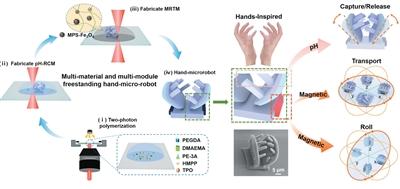
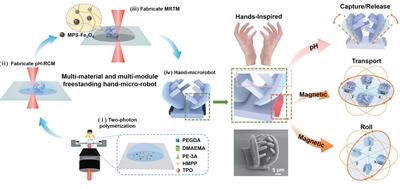
Core Insights - The article discusses the development of a 3D micro-nano robot by the Institute of Physics and Chemistry, Chinese Academy of Sciences, which can perform precise tasks in the microscopic world, paving the way for future advancements in precision medicine [1][7]. Group 1: Micro-Nano Robot Overview - Micro-nano robots are intelligent miniature machines that operate at the micro to nano scale, capable of movement, rotation, and manipulation of tiny particles or cells, thus enabling human interaction in the microscopic realm [2]. - The new design overcomes limitations of existing micro-nano robots, which often use single material systems and struggle with multi-step operations in complex environments [2][5]. Group 2: Design and Functionality - The micro-nano robot features a hand-like design that allows for flexible observation and manipulation of target particles, enhancing its operational capabilities [2]. - It is constructed using femtosecond laser direct writing technology, which allows for high-precision fabrication of various micro-nano structures with different functionalities [5]. Group 3: Operational Mechanism - The robot operates by responding to changes in pH levels in its environment, with its "hands" opening and closing like a flower in response to acidic or alkaline conditions [6]. - It can transport and release particles or cells with a maximum speed of 65.56 micrometers per second, demonstrating agility in navigating obstacles [6]. Group 4: Potential Applications - The micro-nano robot has significant potential in precision medicine, such as drug delivery and cellular manipulation, and could serve as an invisible assistant to doctors [7]. - Beyond medical applications, it can also be utilized in environmental remediation and micro-manufacturing, such as removing specific pollutants from water environments [7].
操控原子 “按需造物”的时代来了?
Ke Ji Ri Bao· 2025-11-12 23:54
Core Viewpoint - The article discusses the significance of atomic-level manufacturing in advancing technology and enhancing national competitiveness, highlighting the establishment of the NANO-X facility as a pivotal step in this field [2][4]. Group 1: Overview of NANO-X - NANO-X is described as the world's largest, most efficient, and highly shared vacuum interconnection experimental facility, integrating over 50 large scientific research devices [1]. - The facility aims to explore cutting-edge technology in atomic-level manufacturing, which involves precise manipulation of atoms to create materials and devices with specific functions [3]. Group 2: Importance of Atomic-Level Manufacturing - Atomic-level manufacturing is seen as a transformative technology that can create unprecedented new states of matter, materials, and devices, applicable in critical fields such as integrated circuits, quantum computing, and artificial intelligence [4]. - The current research in this area has progressed from single-atom manipulation to the manipulation of hundreds of thousands of atoms, indicating significant advancements in the field [4]. Group 3: Challenges and Requirements - There are substantial gaps between scientific research in atomic manipulation and the manufacturing of atomic-level devices, necessitating comprehensive scientific infrastructure to address common scientific issues [5]. - The need for ultra-high vacuum environments is emphasized to eliminate external contamination that could adversely affect the performance of atomic-level materials and devices [5][6]. Group 4: Research Focus Areas - The NANO-X facility focuses on three key scientific issues: the creation of atomic-level materials, precise processing of atomic-level devices, and high-resolution dynamic characterization of manufacturing processes [6]. - The goal is to achieve accurate manufacturing, precision processing, and clear observation of atomic-level production [6]. Group 5: Role of Artificial Intelligence - AI is positioned as a crucial enabler in the creation of new materials and device simulations, with plans to establish a comprehensive open-source database for single-atom catalysts and intelligent models [7]. - The integration of AI with high-throughput computing and experimental results is expected to address core questions in new material creation, enhancing the efficiency and effectiveness of the research [7].
“手到擒来”的微观“快递员”(科技瞭望)
Ren Min Ri Bao Hai Wai Ban· 2025-11-12 23:10
Core Viewpoint - The article discusses the development of a 3D micro-nano robot by the Institute of Physics, Chinese Academy of Sciences, which can perform precise tasks in the microscopic world, paving the way for advancements in precision medicine [1][2]. Group 1: Micro-Nano Robot Overview - Micro-nano robots are intelligent miniature machines that can perform tasks such as movement, rotation, and the manipulation of small particles or cells, offering significant potential in fields like precision medicine, environmental remediation, and micro-manufacturing [2]. - The new design overcomes limitations of existing micro-nano robots, which often use single material systems and struggle with multi-stimulus control in complex environments [2][5]. Group 2: Design and Functionality - The robot is designed in the shape of a hand, allowing for flexible observation and manipulation of target particles, with a structure that opens and closes to enhance functionality [2][5]. - It utilizes femtosecond laser direct writing technology to create various micro-nano structures from different materials, enabling each part to have distinct functions [5]. Group 3: Operational Mechanism - The robot operates by responding to changes in pH levels in its environment, allowing its "hand" to open or close automatically, similar to a human hand reacting to heat [6]. - It can navigate around obstacles and accurately locate target particles or cells, successfully performing tasks such as grabbing and releasing under specific environmental conditions [6]. Group 4: Performance and Reliability - Experimental results show that the robot can successfully manipulate polystyrene microspheres and human kidney cancer cells, achieving a maximum speed of 65.56 micrometers per second while maintaining reliable performance after multiple cycles of pH changes [6][7]. - The robot's design addresses the limitations of traditional micro-nano robots, enabling more complex operations in the microscopic realm [7]. Group 5: Future Applications - The micro-nano robot has potential applications in medicine, such as targeted drug delivery and minimally invasive surgeries, as well as in environmental cleanup and micro-manufacturing [7]. - It could serve as a micro-operation platform for cell sorting, injection, and mechanical studies, contributing to advancements in both medical and scientific research [7].
一图了解非营利性科研机构自用房产土地免征房产税、城镇土地使用税政策
蓝色柳林财税室· 2025-11-12 13:22
Core Viewpoint - The article discusses the definition, recognition standards, and tax benefits for non-profit research institutions in China, emphasizing their role in promoting scientific progress without profit motives [2][4][5]. Group 1: Definition and Recognition - Non-profit research institutions aim to promote technological advancement and primarily engage in applied basic research or provide public services [2]. - The recognition standards for non-profit research institutions will be established by the Ministry of Science and Technology in conjunction with the Ministry of Finance, the National Development and Reform Commission, and the State Administration of Taxation [4]. - These institutions must submit a written declaration to the relevant science administrative department, undergo approval and registration, and be marked as "non-profit research institution" in their registration [5]. Group 2: Tax Policies - Non-profit research institutions are exempt from property tax and urban land use tax for their self-used properties and land [8]. - The application for tax exemption must adhere to the recognition standards set by the relevant authorities [8]. - The tax obligations for property tax and urban land use tax arise at specified times, and institutions must declare within the designated tax period [9]. Group 3: Heating Enterprises Tax Exemption - The Ministry of Finance and the State Administration of Taxation announced that heating enterprises providing heating services to residents are exempt from value-added tax on heating fee income [21]. - The exemption applies to heating fee income received directly from residents or through other units, and it must be accounted for separately [21]. - For heating enterprises, the exemption from property tax and urban land use tax applies to the properties and land used for supplying heat to residents [23].

中英科技创新合作联委会:国际合作对于应对全球严峻挑战至关重要
Zhong Guo Xin Wen Wang· 2025-11-12 02:26
Core Points - The joint statement from the 11th China-UK Science and Technology Cooperation Joint Committee emphasizes the importance of international collaboration, particularly between major scientific nations like China and the UK, in addressing global challenges such as climate change and aging populations [1][2] - The meeting highlighted the achievements in science and technology cooperation since the establishment of diplomatic relations and outlined key areas for future collaboration, including climate change, environmental science, health, and agricultural research [1][2] Summary by Sections - **International Cooperation**: The statement underscores that cooperation between major scientific nations is crucial for tackling global challenges, with a focus on joint research and innovation to improve livelihoods and drive economic growth [1] - **Meeting Overview**: The meeting was co-hosted by China's Ministry of Science and Technology and the UK's Department for Science, Innovation and Technology, with both parties expressing commitment to deepen scientific cooperation [1] - **Priority Areas for Future Research**: The joint committee identified climate change, planetary science, health, and food research as priority areas for future joint research efforts, aiming to leverage the partnership to yield significant outcomes [1][2] - **Research Cooperation Principles**: Both parties agreed that research cooperation should adhere to principles of security and mutual benefit, ensuring shared access to research outcomes while respecting intellectual property and data management laws [2] - **Upcoming Initiatives**: Prior to the meeting, several workshops were held to discuss topics such as research data, intellectual property, and climate studies, with a focus on sustainable cities and the relationship between climate and health [2]

科学家开发出新型静电除霜技术
Ke Ji Ri Bao· 2025-11-12 00:25
发表在新一期《微尺度·方法》上的论文称,美国弗吉尼亚理工大学研究团队利用冰自身的物理特性, 开发出一种新型静电除霜技术,通过在冰霜上方施加高电压,使冰晶在静电力作用下脱离表面,实现低 能耗、环保的除霜方式。 随着冰霜晶体的生长,水分子会整齐排列成冰晶格。但有时水分子会"站错队",这些微小的错误会在霜 层中形成"离子缺陷",即局部带有正电或负电的区域。 实验显示,即使不施加电压,仅悬挂铜板也能去除约15%的霜。施加120伏电压后,去霜率提升至 40%,550伏时可达50%,说明电压提升能显著增强静电除霜效果。然而,当电压继续升高时,去霜率 却意外下降——1100伏时去霜率降至30%,5500伏仅有20%。分析认为,高电压下霜层的电荷可能向基 底泄漏,导致除霜效率下降。 为解决这一问题,团队采用绝缘玻璃和超疏水基底进行实验。结果显示,在超疏水表面施加高电压时, 去霜效果显著提升,最高可去除75%的霜。 (文章来源:科技日报) 如果在霜层上方放置带正电的电极板,霜中的负离子缺陷会被吸引上移,而正离子缺陷则被排斥向下, 从而使霜层高度极化,产生强烈的静电吸引力。如果这种吸引力足够大,冰晶就会断裂并"跳"向电极。 基于 ...
我市2025年度国家和省自然科学基金项目创佳绩 彰显基础研究创新实力和潜能
Zhen Jiang Ri Bao· 2025-11-11 23:30
Group 1 - The city has achieved significant results in the approval of National Natural Science Foundation projects, with 230 projects announced, an 8% increase compared to the previous year, and funding of 93.72 million yuan, a 5.3% growth [1] - The Provincial Natural Science Foundation projects also saw success, with 108 projects approved and funding of 30.25 million yuan, ranking third in the number of projects and fourth in funding within the province, indicating a robust development in basic research [1] - The projects are primarily concentrated in Jiangsu University (154 projects), Jiangsu University of Science and Technology (74 projects), and Jiangsu Agricultural and Forestry Vocational Technical College (2 projects), reflecting the city's enhanced research capabilities and innovation levels [1] Group 2 - The city has organized the application for three key laboratory restructuring projects, which were approved by the Provincial Science and Technology Committee, ranking among the top in the province [2] - The successful approval of the Jiangsu Province Concept Verification Center in the field of deep-sea new energy equipment marks a breakthrough for the city at this platform level, providing strong support for original innovation and achievement transformation [2]
促民间投资发展“13条”发布,多位权威专家解读
Zheng Quan Shi Bao· 2025-11-11 07:33
Core Points - The State Council has issued measures to stimulate private investment, addressing key issues such as market access, fair competition, and service optimization, with 13 specific initiatives aimed at stabilizing employment, enterprises, markets, and expectations [1][2] - The measures aim to eliminate barriers to private investment, encouraging participation in key sectors traditionally dominated by state capital, particularly in urban infrastructure projects [2][3] - The initiatives extend to low-altitude economy infrastructure and service market access, as well as major scientific research infrastructure, reflecting a comprehensive approach to opening investment opportunities [3] Investment and Financing Focus - The measures focus on addressing the "investment" and "financing" concerns of private investors, ensuring legal rights in various sectors and supporting the establishment of significant pilot platforms [4] - On the investment side, the measures propose increased central budget support for qualifying private investment projects and the use of new policy financial tools to enhance project capital [4][5] - On the financing side, the measures emphasize the implementation of inclusive credit policies and support for technology-driven enterprises, including the issuance of real estate investment trusts (REITs) [4][6] Economic Impact - Private capital contributes to half of fixed asset investment and provides over 80% of urban employment, indicating that stimulating private investment is crucial for economic growth and industrial transformation [7] - The active participation of private capital is expected to expand overall investment scale and effectively boost short-term economic growth, playing a vital role in supply-side structural reform [7] - The measures signify the government's commitment to deepening reforms and supporting the development of the private economy, facilitating its involvement in infrastructure and new industries [7]