铁路

Search documents
阿贝尔接棒,“后巴菲特时代”伯克希尔巨轮驶向何方
2 1 Shi Ji Jing Ji Bao Dao· 2026-01-06 08:39
Core Viewpoint - The transition from Warren Buffett to Greg Abel marks the end of an era for Berkshire Hathaway, with Abel set to lead the company into a new chapter while maintaining its investment philosophy and operational strategies [1][2][12]. Group 1: Leadership Transition - Greg Abel, at 63, is poised to succeed the 95-year-old Buffett as CEO by 2026, indicating a significant leadership change for Berkshire Hathaway [1][3]. - Buffett has praised Abel's management style, noting it is more effective than his own, particularly in overseeing Berkshire's diverse subsidiaries [5][10]. - The upcoming annual meeting in May 2026 will be the first without Buffett on stage, symbolizing the shift in leadership [6]. Group 2: Performance Metrics - From 1964 to 2024, Berkshire Hathaway achieved a total return of 5,502,284%, significantly outperforming the S&P 500's 39,054% during the same period [1]. - The annualized compound return for Berkshire from 1965 to 2024 stands at 19.9%, compared to the S&P 500's 10.4% [1]. Group 3: Abel's Management Style - Abel is recognized for his hands-on management approach, contrasting with Buffett's more laissez-faire style, and is expected to implement a more flexible and accountable management structure [10][12]. - Under Abel's leadership, Berkshire's manufacturing, service, and retail sectors have seen operational profit margins improve from 4.9% in 2017 to 7.6% in 2023 [9]. Group 4: Investment Strategy and Challenges - Berkshire Hathaway's investment portfolio, valued at $283.2 billion as of September 30, 2025, remains a focal point, with uncertainty about who will manage this substantial asset [5][11]. - The company has a record cash reserve of $381.7 billion, raising questions about future investment strategies and the potential for dividend payments, which have historically been absent [14][15]. Group 5: Market Reactions and Future Outlook - Following the announcement of Buffett's retirement, Berkshire's stock experienced a notable decline, reflecting investor concerns about the transition [12][13]. - Analysts have mixed views on Abel's ability to maintain Berkshire's performance, with some expressing optimism about potential investment activities while others caution about the challenges of sustaining growth in a larger organization [12][13].

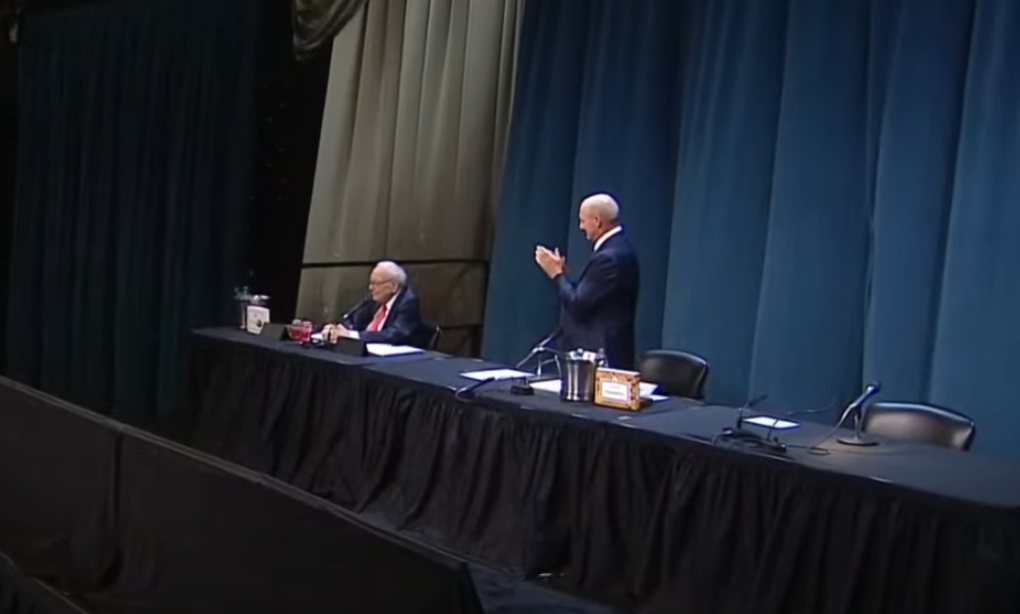
21深度|阿贝尔接棒,“后巴菲特时代”伯克希尔巨轮驶向何方
2 1 Shi Ji Jing Ji Bao Dao· 2026-01-06 08:38
Core Viewpoint - The transition from Warren Buffett to Greg Abel marks a significant shift in Berkshire Hathaway's leadership, with Abel expected to maintain the company's legacy while establishing his own path in investment management [1][2][3]. Group 1: Leadership Transition - Greg Abel, at 63, is set to succeed 95-year-old Warren Buffett as CEO of Berkshire Hathaway by 2026, marking the beginning of the "Abel era" [1]. - Buffett's tenure from 1965 to 2024 saw Berkshire achieve a total return of 5,502,284%, significantly outperforming the S&P 500's 39,054% [1]. - Abel is recognized for his effective management style, which is more hands-on compared to Buffett's approach, focusing on accountability and performance [8][9]. Group 2: Investment Performance - Berkshire's stock portfolio, valued at $283.2 billion as of September 30, 2025, includes major holdings like Apple and American Express, but the management of this portfolio under Abel remains to be clarified [3][9]. - The company has experienced a decline in stock price following Buffett's retirement announcement, with a notable drop of over 10% [9][10]. - Analysts predict that Abel's management style may lead to a more flexible approach, potentially enhancing performance and investor confidence [8][10]. Group 3: Company Strategy - Berkshire Hathaway has maintained a policy of not paying dividends, opting instead to reinvest profits for long-term growth, a strategy that has historically yielded high returns [11][12]. - The company currently holds a record cash reserve of $381.7 billion, raising questions about how this capital will be utilized under Abel's leadership [10][12]. - There is speculation that if Abel cannot effectively deploy the cash reserves, pressure may mount for dividend payments or stock buybacks, although Buffett's influence may mitigate this in the short term [10][12].
看 壮丽四川奋进之路
Si Chuan Ri Bao· 2026-01-06 07:00
Core Viewpoint - The "Magnificent Seventy Years, Striding into a New Era" exhibition in Sichuan celebrates the 70th anniversary of the founding of the People's Republic of China, showcasing the province's significant achievements across various sectors over the past seven decades [13]. Economic Development - The exhibition features impressive models such as the Chengdu Tianfu International Airport and the Yaxi Expressway, highlighting Sichuan's rapid infrastructure development [13]. - Sichuan's GDP has dramatically increased from 2 billion to 4 trillion yuan over the past 70 years, indicating substantial economic growth [13]. - The exhibition includes a large model of the high-temperature superconducting maglev train developed by Southwest Jiaotong University, showcasing advancements in transportation technology [13]. Social Progress - The exhibition displays a range of historical items, from black-and-white televisions to modern 5G emergency vehicles, illustrating the evolution of daily life in Sichuan [14][15]. - A model of the poverty alleviation project in Yanyuan County is presented, demonstrating the impact of these initiatives on local communities [15]. - The contrast between photos of Chengdu from 2015 and 2018 highlights the improvements in air quality and urban development [15]. Cultural Prosperity - The exhibition celebrates Sichuan's rich cultural heritage, featuring artifacts from the Sanxingdui civilization and popular contemporary works like "Langya Bang" and "Three Lives Three Worlds, Ten Miles of Peach Blossoms" [16]. - The number of bookstores in Chengdu has reached 3,463, ranking second in the country, reflecting the city's vibrant literary culture [16]. - Sichuan is recognized for its intangible cultural heritage, with 139 items listed as national-level cultural treasures [16]. Exhibition Design - The exhibition spans over 20,000 square meters, with the provincial comprehensive hall alone exceeding 10,000 square meters, designed to accommodate a vast array of exhibits [21]. - The use of red color throughout the exhibition enhances the festive atmosphere in line with the National Day celebrations [22]. - The design incorporates curves and circular elements to create a more engaging visitor experience, symbolizing growth and prosperity in Sichuan [23].
交通运输行业:元旦出行高景气,航空量价齐升强化信心
GF SECURITIES· 2026-01-05 06:45
Investment Rating - The industry investment rating is "Buy" [4] Core Insights - The New Year holiday travel showed strong growth, with a total of 803 million people traveling across regions from December 31, 2025, to January 3, 2026, averaging 201 million people per day, a year-on-year increase of 19.75%. The total passenger transport volume reached 209 million, with a daily average of 52 million, up 31.1% year-on-year [4][7] - The aviation sector experienced both volume and price increases, with daily flight numbers averaging 14,900 during the holiday, a 2.9% increase compared to 2025 and a 13.2% increase compared to 2019. The average ticket price for domestic economy class reached 684.6 CNY, showing a year-on-year increase of 9.8% [4][9] - The railway and waterway transport sectors outperformed the market, with year-on-year growth rates of 54.5% and 32.7%, respectively, during the holiday period [4][7] Summary by Sections Holiday Travel Data - Total national passenger transport volume reached 20,943.4 million, with a year-on-year growth of 31.1% [7] - Railway passenger transport volume was 6,476.9 million, with a year-on-year growth of 54.5% [7] - Road passenger transport volume was 13,374 million, with a year-on-year growth of 23.2% [7] - Waterway passenger transport volume was 287.4 million, with a year-on-year growth of 32.7% [7] - Civil aviation passenger transport volume was 805.1 million, with a year-on-year growth of 13.1% [7] Investment Recommendations - The report recommends focusing on airlines with stable volume growth and improving prices, specifically mentioning Hainan Airlines, China National Aviation Holding, and Spring Airlines [4] - In the railway sector, it highlights the growth potential of Guangzhou-Shenzhen Railway and Beijing-Shanghai High-Speed Railway due to increased capacity and network effects [4]




巴菲特退休留下3800亿美元“巨款”,伯克希尔下一步棋备受关注
Feng Huang Wang· 2026-01-05 03:36
Core Insights - The transition of leadership from Warren Buffett to Greg Abel marks the end of an era for Berkshire Hathaway, with Buffett having generated approximately 6,100,000% total return for shareholders since 1965 and leaving behind a record cash reserve of $380 billion [1] Group 1: Leadership Transition - Greg Abel is set to take over Berkshire Hathaway as Warren Buffett steps back from frontline management, raising questions about how the company will manage its substantial cash reserves in the context of the AI boom [1] - Analysts suggest that Abel's biggest challenge will be to find a wise method to allocate Berkshire's growing cash reserves, with potential strategies including stock buybacks, acquisitions, or special dividends [2][3] Group 2: Cash Management Strategies - There is a growing sentiment among shareholders that Berkshire's cash holdings are excessive, with calls for a shift from a focus on stock selection to dividend payments now that Buffett has retired [2] - Analysts from Glenview Trust and Boyar Research emphasize the need for Berkshire to invest its cash effectively or face pressure to start issuing dividends [2] Group 3: Operational Changes - Abel, who has extensive experience in energy and industrial operations, is expected to leverage his background to enhance Berkshire's business segments, particularly in light of emerging demands driven by AI [3] - There is speculation that Abel may adopt a more direct management approach, potentially streamlining operations and improving profitability by reducing redundancies and merging departments [3] Group 4: Lasting Influence of Buffett - Despite Buffett's retirement, his influence on Berkshire's operational philosophy and investment strategies is expected to persist, as his insights continue to resonate with investors [4]
财经观察:造假丑闻频出,“日本制造”被什么绊住脚步?
Huan Qiu Shi Bao· 2026-01-04 22:53
Core Viewpoint - The article highlights the ongoing issues of data falsification in Japanese manufacturing, particularly focusing on Kawasaki Heavy Industries, which has been found to have falsified fuel efficiency data for submarine engines over a span of more than 30 years, raising concerns about the integrity of Japan's manufacturing reputation [1][2][3]. Group 1: Company-Specific Issues - Kawasaki Heavy Industries has been penalized with a two-and-a-half-month "designation suspension" by the Japanese Ministry of Defense, preventing the company from participating in competitive bidding from December 26, 2025, to March 11, 2026 [1]. - The falsification of fuel efficiency data has been ongoing since 1988, affecting 66 engines used in 33 submarines, which has raised questions about the quality control processes within the company [1][2]. - This incident is part of a broader pattern of quality issues within Kawasaki Heavy Industries, including previous scandals related to railway safety and air conditioning equipment [2]. Group 2: Industry-Wide Concerns - The article discusses a series of data falsification incidents across various sectors in Japan, including the automotive and railway industries, indicating a systemic issue rather than isolated cases [2][3]. - The Japanese automotive industry has faced scrutiny, with major manufacturers like Toyota and Honda found to have engaged in improper practices during the certification process for 38 vehicle models [2]. - The railway sector has also been implicated, with multiple companies found to have altered safety data following a serious incident involving a freight train derailment [3]. Group 3: Underlying Causes - Experts attribute the rise in falsification incidents to a fundamental shift in management practices within Japanese companies, moving away from quality-centric approaches to prioritizing profit maximization [4][5]. - The reliance on temporary workers has weakened the commitment to quality, as these employees often lack a sense of belonging and responsibility [5]. - Insufficient investment in research and development has also been identified as a critical factor, as companies have become conservative in their spending post-economic bubble, opting for short-term gains over long-term innovation [5][6]. Group 4: Implications for Trust and Reputation - The frequent scandals are eroding consumer trust in "Made in Japan" products, which were once synonymous with high quality and reliability [6][7]. - The article suggests that the current economic environment has forced companies into a dilemma between maintaining high standards and controlling costs, leading some to resort to deceptive practices [7]. - The Japanese government is beginning to strengthen regulatory oversight in response to these issues, but experts emphasize the need for a cultural shift within organizations to address the root causes of the problem [7].
2026,房地产要下猛药了!辽宁新年第一会今日召开!|栋察楼市早报(1.4)
Sou Hu Cai Jing· 2026-01-04 17:06
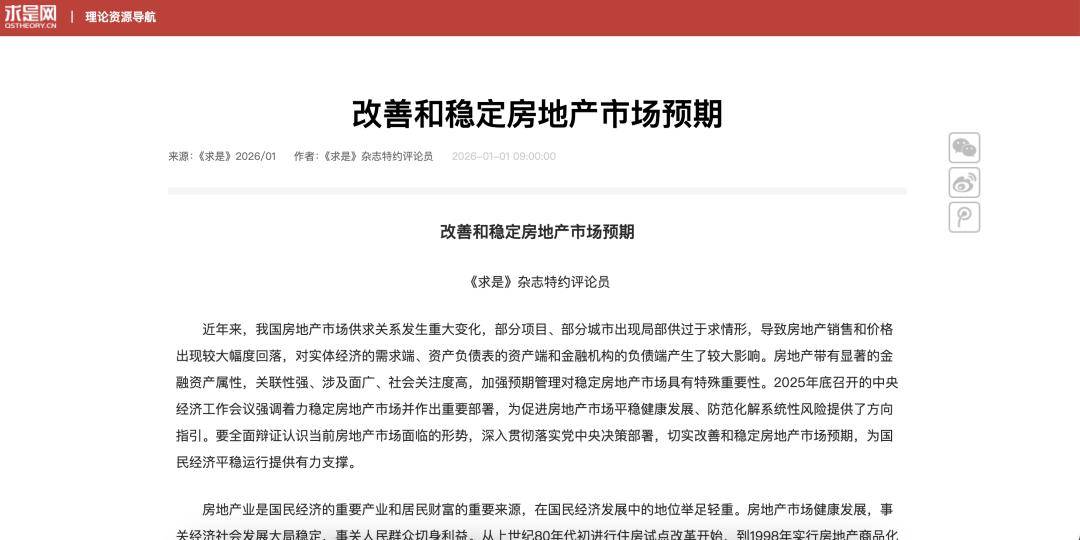
Market Insights - The article emphasizes that in 2026, significant measures will be taken to stabilize the real estate market, moving away from incremental policies to more decisive actions [6][10][12] - The commentary from the authoritative publication indicates a major shift in the government's stance on real estate, recognizing its financial attributes and importance to the national economy [3][6] Policy Changes - The article outlines three key points that reflect a reversal of negative perceptions about the real estate sector: acknowledgment of real estate as a financial asset, its role in the national economy, and the need for effective management of market expectations [5][6] - The government recognizes that housing is the most significant asset for ordinary families, and further declines in housing prices could impact social stability [9] Financial Implications - The article mentions that the concentration of household wealth in real estate ranges from 59.1% to 77.2%, significantly higher than the 20% in financial assets [7] - It is anticipated that interest rates on housing loans will decrease, with the latest rates potentially dropping to 3.05% for first-time homebuyers [18][19] Economic Initiatives - The article discusses the launch of a consumption subsidy program in Liaoning, with over 12 million yuan allocated on the first day, aimed at stimulating consumer spending through various categories including home appliances and vehicles [28][29] - The program is expected to benefit over 20,000 consumers, with a total subsidy fund of 1,223 million yuan on the first day [28] Digital Currency Developments - Starting January 1, 2026, digital yuan wallets will earn interest, marking a transition from a cash-based system to a deposit currency model [33][34] - This change is expected to enhance user engagement with digital yuan and expand its application scenarios, solidifying China's leadership in central bank digital currency initiatives [34][41]
贵州省人民政府办公厅印发《贵州省扩大民间投资三年行动方案》
Xin Lang Cai Jing· 2026-01-04 14:56
Core Viewpoint - The Guizhou Provincial Government has issued a three-year action plan to expand private investment, aiming to enhance confidence and stimulate high-quality development in the province's private investment sector [1]. Group 1: Work Objectives - The plan aims to optimize the environment for private investment, expand market access, eliminate investment barriers, and enhance project construction and policy support [2]. - By 2027, the growth rate of private investment is expected to exceed the overall fixed asset investment growth rate, with private investment accounting for approximately 42% of total fixed asset investment [2]. Group 2: Key Tasks - Strengthening industrial private investment by focusing on six major industrial clusters and three characteristic industries, while supporting private enterprises in participating in significant state-owned manufacturing projects [3]. - Expanding private investment in characteristic advantageous industries, including textiles, pharmaceuticals, and agriculture, while promoting tourism projects [3]. - Stabilizing private investment in real estate by facilitating financing mechanisms and supporting private real estate enterprises in various financing methods [3]. - Encouraging private investment in infrastructure projects with reasonable equity participation and supporting renewable energy projects [3]. - Promoting private enterprises' involvement in the "Digital Guizhou" initiative and encouraging investment in digital infrastructure [3][4]. Group 3: Policy Measures - Cleaning up market access barriers and ensuring compliance with bidding regulations to facilitate private enterprise participation [4]. - Implementing a new mechanism for government and social capital cooperation (PPP) to clarify private capital participation requirements [4]. - Increasing procurement shares for small and medium-sized enterprises in government projects [4]. - Enhancing investment service efficiency by streamlining project approval processes [4]. - Promoting key private investment projects and providing financial support for eligible projects [5].
巴菲特“交棒”首日!股价跑输大盘,伯克希尔帝国迎来阿贝尔时代
Jin Rong Jie· 2026-01-04 06:42
Core Viewpoint - Warren Buffett expressed strong long-term confidence in Berkshire Hathaway, stating it has a better chance of enduring for a century than any other company he knows [1] Group 1: Leadership Transition - Warren Buffett officially stepped down as CEO of Berkshire Hathaway on January 1, 2023, after 60 years in the role, with Greg Abel taking over [1] - Buffett praised Abel's efficiency, claiming he could accomplish in a week what Buffett might take a month to do, and expressed willingness to entrust his personal funds to Abel over any top investment advisor [1] - Buffett will continue as chairman but will reduce public appearances, indicating that "everything will not change much" [1] Group 2: Market Reaction - Since Buffett announced his retirement plans in May 2025, Berkshire's stock has underperformed the market, with a 1.41% drop on January 2, 2023, compared to a 0.19% rise in the S&P 500 [2] - Investors have expressed concerns about Abel's ability to maintain Buffett's investment style and manage the complex business portfolio while sustaining the company's valuation premium [2] Group 3: Company Performance - Under Buffett's leadership, Berkshire Hathaway transformed from a struggling textile company to a trillion-dollar conglomerate with diverse operations in insurance, railroads, energy, and manufacturing [2] - As of September 30, 2025, the company had a record cash reserve of $381.6 billion [2] - From 1964 to 2024, Berkshire's annualized compound return was approximately 19.9%, nearly double the S&P 500's 10.4% during the same period [2] Group 4: Analyst Insights - Analysts suggest that given Berkshire's vast operations with nearly 400,000 employees across numerous subsidiaries, it is natural for Abel to make some operational adjustments, and adopting a more traditional management approach may be wise [2]
巴菲特正式退休,从114美元起步的他究竟赚了多少钱?
Sou Hu Cai Jing· 2026-01-04 05:11
Core Insights - Warren Buffett, at the age of 95, officially retires as CEO of Berkshire Hathaway on January 1, 2026, passing the leadership to Greg Abel, marking the end of an era in investment history [2] - Buffett's investment philosophy and strategies have significantly influenced global capital markets, with a focus on value investing and long-term wealth accumulation [2][12] Investment Journey - Buffett's investment journey began at age 11 with a $114.75 investment in Cities Service preferred stock, igniting his passion for the capital markets [2] - By age 16, his investment portfolio had grown to approximately $53,000 in today's terms, and he became a millionaire by age 32 and a billionaire by age 56, demonstrating a deep understanding of compound interest and market dynamics [3] Berkshire Hathaway's Transformation - In 1965, Buffett took control of Berkshire Hathaway, initially a struggling textile company, and transformed it into a diversified holding company, acquiring insurance firms, manufacturing companies, and consumer brands [3] - Since 1964, Berkshire Hathaway's A-class stock price has surged from about $19 to over $600,000 by the end of 2025, outperforming the S&P 500 by more than 140 times [3][5] Investment Performance - A $10,000 investment in Berkshire in 1965 would have grown to $550 million by 2025, while the same amount in the S&P 500 would be approximately $3.9 million, showcasing Berkshire's exceptional long-term returns [5] - As of 2025, Berkshire's market capitalization exceeded $1 trillion, making it the 11th largest publicly traded company globally, with a diverse portfolio including BNSF Railway, GEICO, and significant stakes in Apple and other major corporations [5][6] Key Investments - Buffett's investment in Apple, which began in 2016, has become Berkshire's largest holding, with approximately 900 million shares valued at over $65 billion, reflecting a 500% increase since the initial purchase [6] - Other significant investments include Coca-Cola, Bank of America, and American Express, which have also yielded substantial returns, embodying Buffett's value investing philosophy [6] Crisis Management - During the 2008-2009 financial crisis, Buffett made strategic investments in major companies like Goldman Sachs and General Electric, earning over $10 billion from these transactions and reinforcing his reputation as a stabilizing force in turbulent times [8] Philanthropy and Legacy - Buffett's personal net worth is approximately $150 billion, but he has pledged to donate 99% of his wealth, having already contributed over $60 billion to various charitable causes [9] - His investment principles, such as the circle of competence, margin of safety, and long-term holding, continue to influence investors worldwide, emphasizing the importance of understanding and patience in investing [11][12]