
黄金交易

Search documents
黄金税收新政下的水贝黄金市场
3 6 Ke· 2025-11-11 08:15
Core Viewpoint - The recent gold tax policy in China is causing significant disruptions in the gold industry, leading to a slowdown in transactions and increased costs for downstream enterprises, particularly in the jewelry sector [1][2][5]. Tax Policy Impact - The new tax policy, effective from November 1, 2025, classifies gold transactions into "investment" and "non-investment" categories, imposing higher tax burdens on non-investment uses [1][3]. - The tax burden for non-investment gold enterprises has increased, with input tax deductions dropping from 13% to 6%, effectively raising gold procurement costs by approximately 70,000 yuan per kilogram [3][5]. Market Reactions - Following the announcement of the new tax policy, the Shenzhen Shui Bei market has seen a notable decline in trading activity, with many businesses adopting a wait-and-see approach until further operational details are clarified [1][6]. - Prices for gold bars and jewelry have risen across the board, with retail prices for gold jewelry increasing by 60 to 70 yuan per gram [7][8]. Industry Restructuring - The new regulations are expected to lead to a restructuring of the gold industry, with smaller businesses facing increased operational costs and potential exit from the market, while larger brands may maintain their competitive edge due to brand loyalty [7][8]. - Analysts predict that the tax changes will drive a consolidation in the industry, with a shift towards more transparent and regulated market practices [4][8]. Shift to On-Exchange Trading - The tax policy is likely to encourage a shift from off-exchange to on-exchange trading, as on-exchange transactions are exempt from value-added tax, making them more attractive for investors [9][10]. - The new regulations aim to reduce illegal trading and speculation, promoting a more structured and transparent market environment [10][11]. Long-term Outlook - While short-term profit margins for jewelry enterprises may be squeezed, the long-term outlook suggests that leading companies with exchange membership will benefit from the new tax structure, enhancing their market position [8][11]. - The overall trend indicates a potential increase in demand for investment-grade gold products, such as ETFs and standardized gold bars, as investors seek to navigate the changing tax landscape [9][11].
西方突然反应过来,各国纷纷行动,越来越多的黄金运往中国保管!
Sou Hu Cai Jing· 2025-11-11 00:45
当柬埔寨将其黄金储备存放在中国,这不仅是资产配置的变化,更是国际金融格局重构的重要信号 近期,柬埔寨决定将其部分黄金储备存放在深圳保税区金库的消息,在国际金融圈内引发广泛关注。这 一看似普通的资产配置调整,实际上反映了全球央行对资产安全性和流动性的重新考量,以及国际金融 体系正在发生的深刻变化。 全球央行购金潮持续升温 根据最新数据显示,全球央行连续第三个季度保持强劲的购金态势 值得注意的是,新兴市场央行在此轮购金潮中表现尤为积极。除柬埔寨外,泰国、老挝等国也在近期调 整了黄金储备的存放策略。这种集中性的调整,反映出新兴市场国家对国际金融安全环境的重新评估。 世界黄金协会最新调查显示,超过95%的受访央行预计未来12个月内全球黄金储备将继续增加 金融安全成为核心考量 2022年地缘政治事件后,国际社会对金融资产安全性的关注度显著提升 一位不愿具名的国际金融专家表示:"当前各国央行在配置黄金储备时,不仅考虑收益率,更注重资产 的安全性和可及性。这种转变标志着国际金融思维的根本性变化。" 在此背景下,中国市场的稳定性与开放性吸引了众多新兴经济体的关注。上海黄金交易所已成为全球最 大的实物黄金交易市场之一,其完善的 ...


金价创两周高点 受美联储降息预期和经济放缓担忧影响
Xin Lang Cai Jing· 2025-11-10 10:34
Group 1 - Gold prices surged to a two-week high, driven by expectations of a Federal Reserve rate cut in December and concerns over global economic growth due to weak economic data [1][2] - Spot gold rose by 1.8% to $4,070.99 per ounce, marking the highest level since October 27, while December futures increased by 1.8% to $4,079.70 per ounce [1] - The chief market analyst at KCM Trade noted that despite the Fed downplaying the likelihood of a rate cut, traders are still pursuing gold due to the potential for a rate reduction [1] Group 2 - Recent data indicated a decline in U.S. employment in October, attributed to government and retail sector challenges, alongside a surge in layoffs driven by cost-cutting and AI adoption [1] - A survey revealed that consumer confidence in the U.S. fell to its lowest level in nearly three and a half years in early November, amid concerns over the longest government shutdown in history [1] - The SPDR Gold Trust GLD saw an increase in gold holdings from 1,040.35 tons to 1,042.06 tons, reflecting a 0.16% rise [3]
上海黄金交易所:取消东方金钰的会员资格
Zheng Quan Shi Bao Wang· 2025-11-10 07:39
人民财讯11月10日电,上海黄金交易所今日在官网公告称,因东方金钰股份有限公司长期未履行会员基 本义务、经营不善且存在严重法律风险,根据《上海黄金交易所会员管理办法》和《上海黄金交易所违 规处理办法》等相关规定,经上海黄金交易所理事会审议同意,决定取消其会员资格。 转自:证券时报 ...
各国开始行动,黄金储备运往中国保管,带头的国家已经出现了
Sou Hu Cai Jing· 2025-11-09 08:45
Core Viewpoint - Several countries are considering storing their gold reserves with China, with Cambodia being the fastest to act, planning to store part of its gold reserves in a vault in Shenzhen, China [1][3]. Group 1: Cambodia's Gold Reserves - The Cambodian government plans to store some of its gold reserves, approximately 54 tons, in a vault in Shenzhen, which is registered with the Shanghai Gold Exchange [1]. - Currently, Cambodia's gold reserves are distributed across various locations, with about 12.4 tons held by Prince Norodom Sihanouk in the Swiss National Bank and the remainder in the Bank of England and the National Bank of Cambodia [1]. Group 2: Global Financial Context - The decision to store gold in China is influenced by the increasing use of financial sanctions by Western countries, particularly the U.S., which has led many nations to seek more diversified and secure asset reserves [3][9]. - Gold is viewed as a stable hard currency, and countries are adjusting their foreign exchange reserves to mitigate risks associated with potential confiscation by foreign powers [5]. Group 3: China's Role in Global Gold Storage - China is actively promoting Shanghai as a new global gold trading center and is encouraging other countries to store their gold reserves in its bonded warehouses [5]. - Cambodia's choice to store gold in Shenzhen, rather than Hong Kong, reflects geographical convenience and a high level of trust between Cambodia and China [7]. Group 4: Implications for Global Financial System - Cambodia's decision may encourage other ASEAN countries to consider storing their gold reserves in China, contributing to a shift towards a more independent global financial system [6][9]. - This action signals a potential transformation in the global financial landscape, as more countries seek to diversify their asset reserves away from Western financial centers [9].
柬埔寨将黄金存中国有何深意?全球金融版图正悄然改写
Sou Hu Cai Jing· 2025-11-08 05:45
清晨的深圳前海保税区,一辆印有柬埔寨央行标志的运金车缓缓驶入特殊监管区。这批新购入的金条将被存入上海黄金交易所注册的保税金库,成为首 批"落户"中国的他国官方黄金储备。这个看似寻常的资产托管动作,实则是全球金融信任坐标的一次关键位移——当54吨柬埔寨黄金选择深圳而非伦敦、纽 约时,背后折射的是美元体系松动的历史性信号。 黄金迁徙潮:从西方保险柜到东方新枢纽 二战后的金融秩序曾让各国形成路径依赖:近70%的官方黄金储备集中在伦敦、纽约和苏黎世。这种格局正被地缘政治风险撕开裂口。2022年俄乌冲突后, 全球央行连续三年每年增持黄金超1000吨(世界黄金协会数据)。柬埔寨央行持有的54吨黄金占其外储25%,此次将新购黄金存入中国,采取的是"增量试 探"策略——既保留欧美存量储备,又在亚洲开辟新支点。 人民币的黄金支点:重构贸易结算生态 中柬180亿美元的年贸易额(2024年数据)是黄金合作的底层逻辑。当金条存放在深圳,柬埔寨进口中国商品可跳过美元中转:上海金交所国际板支持离岸 人民币直接兑换黄金,跨境黄金租赁业务则让实物黄金转化为流动性。这种"贸易-结算-储备"三位一体模式,正在复制到泰国、老挝等东盟国家。 深圳保 ...

柬埔寨带头把黄金运往东大!美元霸权又一根基要被刨了!
Sou Hu Cai Jing· 2025-11-07 23:07
Core Viewpoint - The global influence of the Chinese yuan is accelerating, with China leveraging gold as a key pivot to challenge the long-standing dominance of the US dollar in the global financial landscape, indicating the onset of a significant financial shift [1] Group 1: Cambodia's Gold Storage Initiative - Cambodia is set to become one of the first countries to store gold in China, marking a significant step in China's ambition to establish itself as a global gold hub [3] - The Cambodian central bank currently holds approximately 54 tons of gold, which constitutes a quarter of its $260 billion foreign exchange reserves, highlighting the importance of gold in its asset allocation [3] - Multiple countries have expressed interest in storing gold in China, indicating a strategic shift away from traditional gold centers like London [3][5] Group 2: Motivations Behind Cambodia's Decision - The decision aligns with the global trend of de-dollarization, as countries seek to reduce their dependence on the US dollar amid risks associated with dollar dominance, such as exchange rate volatility and unilateral sanctions [5] - Cambodia views storing gold in China as a safer option due to China's stable domestic environment, robust financial security systems, and non-interference in other countries' internal affairs [6] - The growing economic ties between China and ASEAN, coupled with China's military strength, present new opportunities for Cambodia as the global economic center shifts towards China [7] Group 3: Implications for Global Financial Order - This development signifies a transition towards a multi-polar financial order, moving away from dollar dominance, with gold playing a central role in this transformation [8] - The establishment of gold storage in Shenzhen creates a new "Eastern hub" in the international gold trading ecosystem, enhancing the yuan's position in global commodity markets [8] - The ongoing efforts to build a global gold custody center reflect a long-term strategy to reshape financial competition, focusing on gold as a connector for a more resilient and equitable cooperation system [8][9]
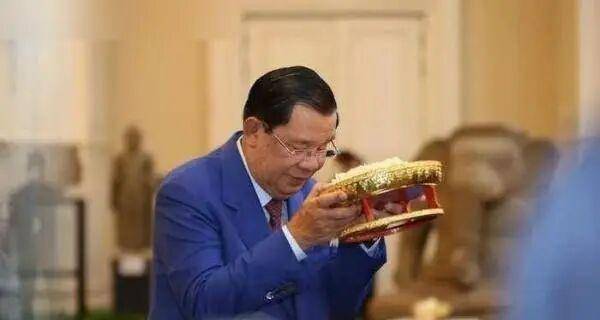
友国战略抉择,数十吨黄金运往深圳!更多国家排队,形势悄然大变
Sou Hu Cai Jing· 2025-11-07 12:14
Core Viewpoint - Cambodia's decision to store part of its gold reserves in China signifies a strategic shift towards the Chinese financial system, reflecting a growing trust in China's financial security and a move away from reliance on the Western dollar system [1][3][10] Group 1: Cambodia's Gold Reserves - Cambodia's central bank is moving newly acquired gold reserves to China while keeping its existing stock intact, indicating a cautious yet strategic approach [3] - The country holds 56 tons of gold, which constitutes a quarter of its foreign exchange reserves, highlighting the importance of this decision for national financial security [3] Group 2: Trust in China's Financial System - Storing gold in China is seen as a dual insurance strategy, protecting against potential asset freezes by the West and aligning with China's rising financial influence [3][5] - China's gold market is recognized for its large scale, strong liquidity, and robust legal framework, making it an attractive option for other nations [5][7] Group 3: De-dollarization Movement - Cambodia's actions represent a tangible step in the global trend of "de-dollarization," as it moves gold to China without formal announcements or meetings, demonstrating a practical approach to reducing dependence on the dollar [5][9] - Other countries in Southeast Asia, Africa, and the Middle East are observing Cambodia's move, with some already exploring China's gold storage systems [5][9] Group 4: Shift in Global Financial Dynamics - The transfer of gold to China signals a potential reconfiguration of global financial dynamics, where gold trading, pricing, and storage may no longer be solely reliant on Western systems [9] - As more countries consider moving their reserves to China, the international status of the renminbi is likely to rise, reflecting a shift in financial trust from the West to the East [7][9]

税收监管新规下的黄金市场新格局
Qi Huo Ri Bao· 2025-11-07 01:17
Core Viewpoint - The recent tax policy adjustment in China's gold market aims to enhance tax regulation and management, addressing issues of tax evasion and arbitrage in the context of a sustained "gold buying frenzy" [1][8]. Tax Policy Mechanism - The new policy introduces a dual classification of gold usage: "investment purposes" and "non-investment purposes," with specific tax implications for each category [2]. - For investment gold, a "special invoice blocking mechanism" is established to prevent tax deductions from being passed down the supply chain, effectively closing loopholes for tax evasion [2]. - Non-investment gold will have a fixed deduction rate of 6%, ensuring a tax base while allowing reasonable deductions for industrial enterprises [3]. Market Impact - The new tax policy is expected to reshape investment flows and channel choices in the gold market, favoring transactions through exchanges due to lower tax burdens compared to non-exchange channels [4][5]. - Ordinary investors may increasingly prefer exchange channels for large investments, while also considering virtual trading options like gold ETFs and futures to balance convenience and tax advantages [5]. Compliance and Risk Management - The policy imposes stringent compliance requirements on exchange members, necessitating precise internal accounting and usage declarations for physical gold deliveries [6]. - A strict record-keeping system is mandated, requiring members to maintain detailed documentation of gold purchases and sales for tax verification [6][7]. - The policy includes severe penalties for non-compliance, emphasizing the importance of tax compliance for market participants [7]. Future Outlook - The new tax policy is seen as a significant step towards tax fairness, risk prevention, and market standardization, enhancing China's gold market's international competitiveness and pricing power [8].
从洗钱到走私,黄金市场灰色链条有多野?纸黄金提现难只冰山一角
Sou Hu Cai Jing· 2025-11-06 13:02
Core Viewpoint - The article discusses the complexities and regulatory challenges surrounding gold trading in China, particularly focusing on the limitations of physical gold withdrawals from paper gold accounts and the implications for money laundering and smuggling activities [1][14]. Regulatory Environment - The restriction on physical gold withdrawals is partially due to tax considerations, but the primary reason is to maintain control over gold trading and prevent market chaos [2][4]. - The government aims to prevent a "gold run" similar to bank runs, where excessive demand for physical gold could lead to market panic due to insufficient inventory [6][14]. Money Laundering and Smuggling - Gold has become a popular tool for money laundering and fraud, as its high value and liquidity make it easy for criminals to convert illicit funds into gold and then cash [7][9]. - The rise of smuggling activities is attributed to the disparity in gold prices and regulations between China and other countries, leading to a lucrative black market for gold [11][13]. Market Implications - Recent policies limiting gold withdrawals coincide with a drop in gold prices, suggesting a strategic move to stabilize the market and prevent speculative trading [14][18]. - While these regulations may pose short-term challenges for gold traders, the long-term value of gold as a hedge against inflation and a stable asset remains intact [18][20]. Investment Considerations - Investors are advised to navigate the gold market cautiously, focusing on legitimate channels and maintaining a balanced approach to asset allocation [20].
