
服务贸易

Search documents
强化国际话语权 服务贸易新标准发布
Bei Jing Shang Bao· 2025-09-12 13:09
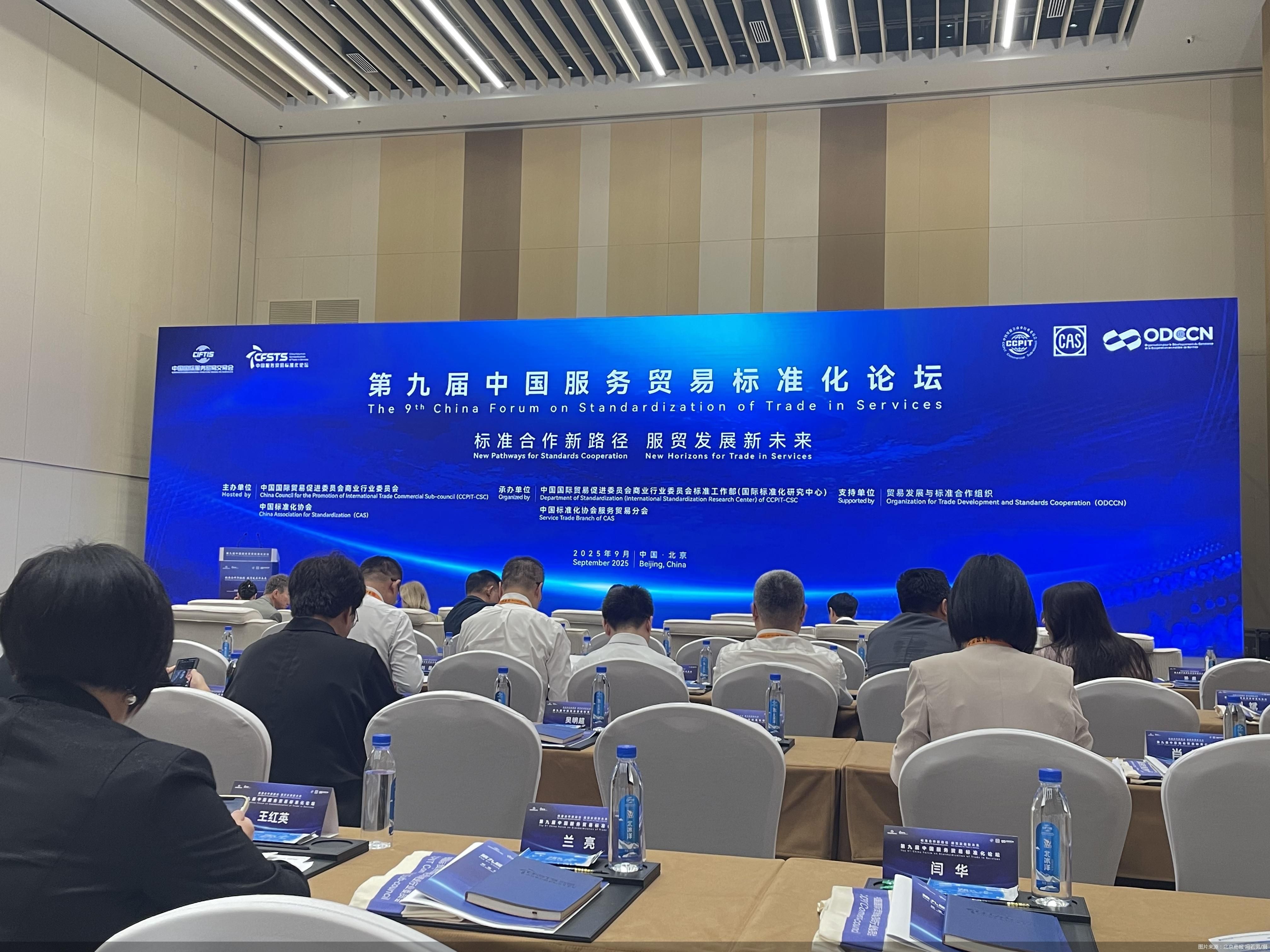
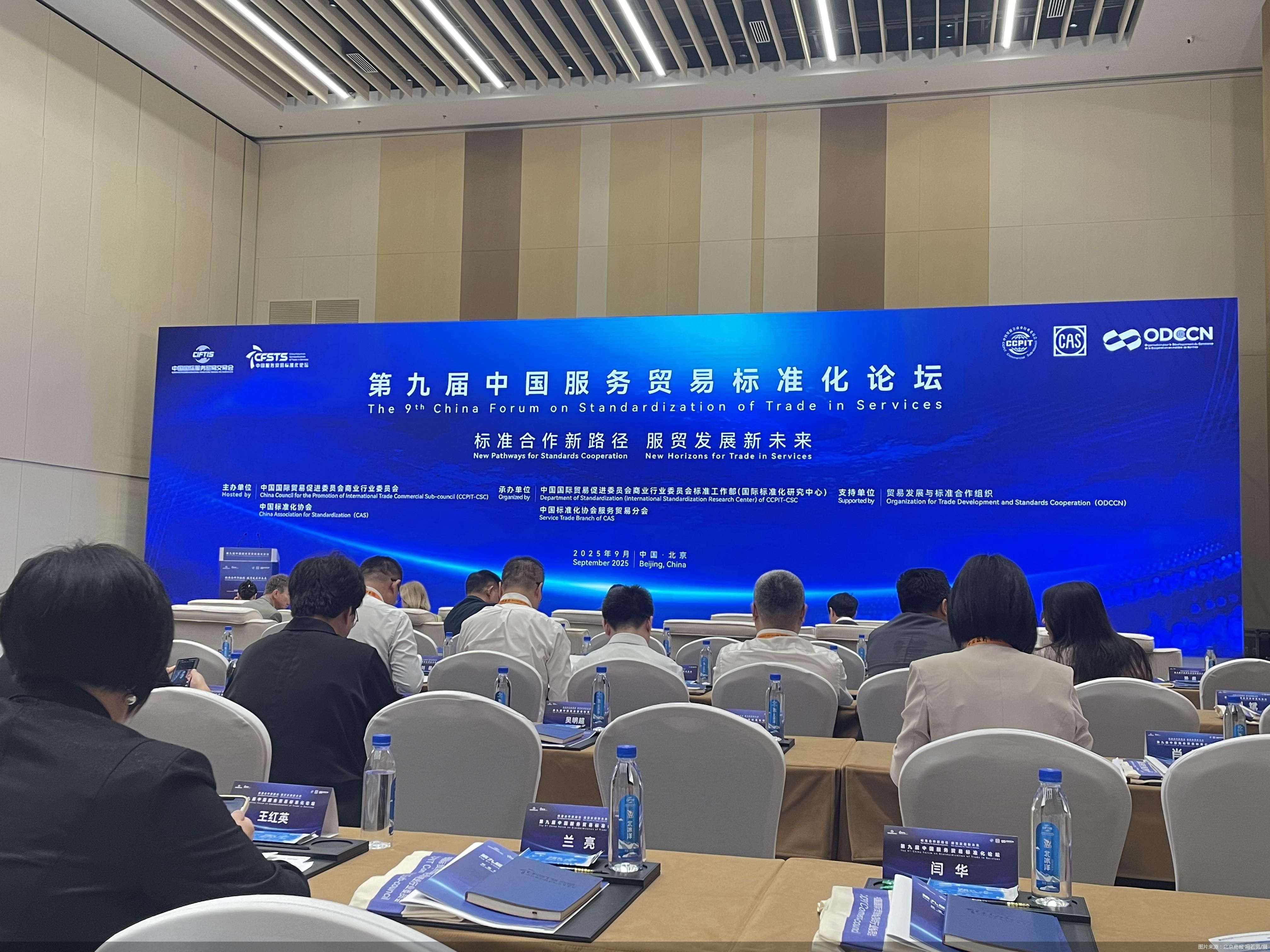
Core Viewpoint - The rapid development of international service trade has made standardization in the service industry a crucial area for international economic cooperation, highlighted by the recent International Service Trade Standardization Forum held on September 12, themed "New Pathways for Standard Cooperation, New Future for Service Trade" [1] Group 1: Importance of Standardization - The forum aims to establish compliance support platforms for Chinese enterprises to navigate international market rules, thereby enhancing China's international voice in service trade standardization [4] - Standardization is increasingly recognized as essential for improving competitiveness and sustainable development as Chinese enterprises expand globally [5] - The complexity of the current global environment necessitates exploring new pathways for standard cooperation to address the evolving challenges in service trade [5] Group 2: Current Trends and Challenges - China's service trade is experiencing a transformation period, with new technologies and business models emerging, which raises the demand for higher adaptability and resilience in standardization [5] - The global service trade market is projected to reach over $1 trillion in 2024, with China being the second-largest service trade nation, showing a 13.2% year-on-year growth, surpassing the global average growth rate of 4.2% [7] - Despite the growth, discrepancies between domestic and international standards create "invisible barriers" that hinder the free flow of products across borders [7] Group 3: Initiatives and Developments - The forum announced the launch of 19 new group standards, including guidelines for digital trade and cross-border e-commerce logistics, aimed at enhancing standardization in key sectors [8] - The establishment of various technical committees will facilitate the development of diversified standards in cultural and creative industries, promoting participation in international standard formulation [8] - The transition from being a "follower" to a "standard setter" is evident, with the release of the 2025 "Service Trade Standardization China Case," showcasing ten selected standard projects [9] Group 4: Future Directions - China's participation in international standard organizations is increasing, with a significant number of new technical committees related to service trade being established, indicating a growing influence in this area [10] - The consensus among experts emphasizes that standards are not only institutional support for service trade but also a vital link for innovation, cooperation, and inclusivity [11] - Future efforts will focus on deepening standard cooperation, enhancing standard supply and promotion, and increasing the participation of small and medium-sized enterprises in global service trade [11]

2025服贸会|强化国际话语权 服务贸易新标准发布
Bei Jing Shang Bao· 2025-09-12 12:58
Core Viewpoint - The rapid development of international service trade has made standardization in the service industry a crucial area for international economic cooperation, highlighted by the recent International Service Trade Standardization Forum held on September 12, 2023, under the theme "New Pathways for Standard Cooperation, New Future for Service Trade" [1] Group 1: Forum Objectives and Initiatives - The forum aims to establish a compliance support platform for Chinese enterprises to navigate international market rules, enhancing China's international voice in service trade standardization [3] - A series of industry standards were released, and international platforms and projects were initiated to support the globalization of Chinese enterprises [3][8] Group 2: Challenges and Adaptation - The increasing complexity of the global market and emerging technologies pose new challenges for standardization in service trade, necessitating higher adaptability and resilience from China's service trade sector [4] - The Ministry of Commerce plans to strengthen inter-departmental collaboration and promote standardization in emerging industries to meet these challenges [4] Group 3: Importance of Standardization - Standardization is recognized as a universal language that enhances service facilitation, productivity, and reduces transaction costs, thereby providing a stable institutional guarantee for enterprises to engage in global cooperation [5][6] - The lack of unified global standards creates "invisible barriers" that hinder enterprises' international expansion, making the push for service trade standardization essential [6] Group 4: Growth and Competitiveness - China's service trade scale is projected to exceed $1 trillion in 2024, ranking second globally with a year-on-year growth of 13.2%, outpacing the global average growth rate of 4.2% [7] - Despite the growth, discrepancies between domestic and international service standards create challenges for free trade, highlighting the need for unified technical specifications [7] Group 5: New Standards and Initiatives - The forum announced the launch of 19 group standards, including guidelines for digital trade and cross-border e-commerce logistics, aimed at enhancing standardization in key sectors [8] - The establishment of technical committees for standardization in various sectors, including cultural and creative products, is part of the effort to provide diverse standards and participate in international standard development [8] Group 6: Transition from Follower to Leader - China's standardization process is evolving from being a "follower" to a "creator," with the release of the 2025 "Service Trade Standardization China Case" showcasing ten selected standards [9] - Active participation in international standard organizations is enhancing China's influence in service trade standardization [10] Group 7: Future Directions - Experts emphasize that standardization is not only a support system for service trade development but also a key link for innovation, cooperation, and inclusivity [11] - Future efforts will focus on deepening standard cooperation, enhancing standard supply and promotion, and increasing participation from small and medium-sized enterprises to drive high-quality global service trade development [11]
【西街观察】服贸焕新,长期资本的风向标
Bei Jing Shang Bao· 2025-09-12 11:33
Core Insights - The 2025 Service Trade Fair, themed "Digital Intelligence Leading, Service Trade Renewing," marks 13 years of innovation and transformation in China's service industry and trade [1] - The fair serves as a new anchor for linking financial capital and a long-term capital barometer, showcasing advanced technology applications and new digital empowerment [1] - The event features nearly 2,000 exhibitors, including around 500 Fortune 500 companies, with over 20% international participation, establishing itself as a global platform for capital flow [1] Group 1 - The fair highlights nine key exhibition topics, including telecommunications, computer and information services, health services, and financial services, which are also hot investment areas in the capital market [1] - Innovative products showcased include the world's first 3D-printed polymer fatigue-resistant absorbable vascular scaffold and a professional optical quantum computer, demonstrating the innovation strength and development potential of service trade [2] - Long-term capital is essential for funding intensive and knowledge-intensive service trade enterprises, supporting new business models and innovation [2] Group 2 - The fair reflects a dual engagement between service trade and long-term capital, emphasizing the importance of understanding future industry trends for successful investments [3][4] - High-frequency terms like "AI+", digitalization, and green low-carbon initiatives reveal deep trends in future industry development, driving commercial value creation [3] - The event showcases the mutual empowerment of long-term capital and technology, highlighting the need for sustained investment in emerging industries facing high funding and R&D challenges [2][3]
2025服贸会|数字化驱动 服务贸易成全球经济发展新引擎
Bei Jing Shang Bao· 2025-09-12 09:50
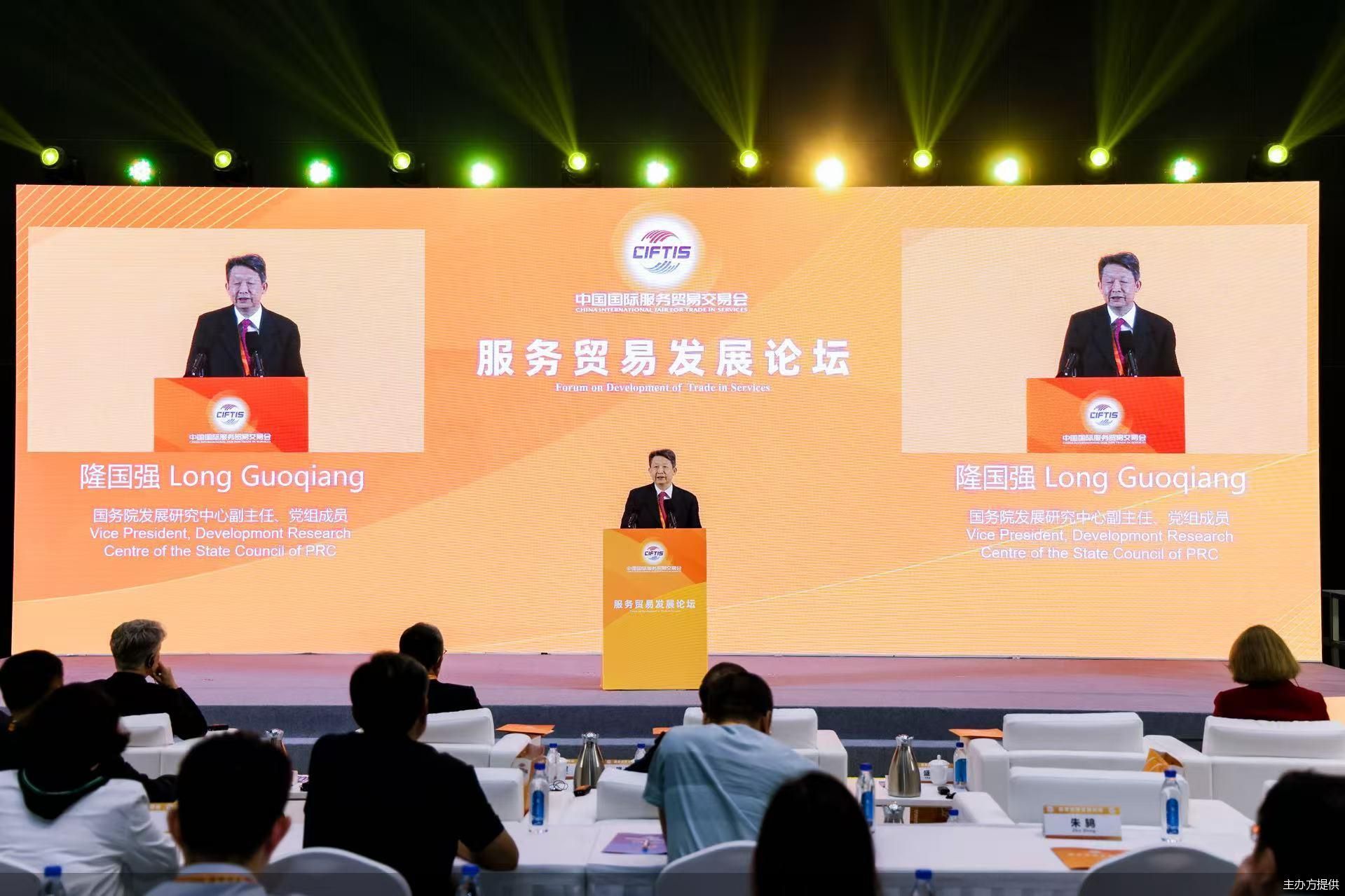
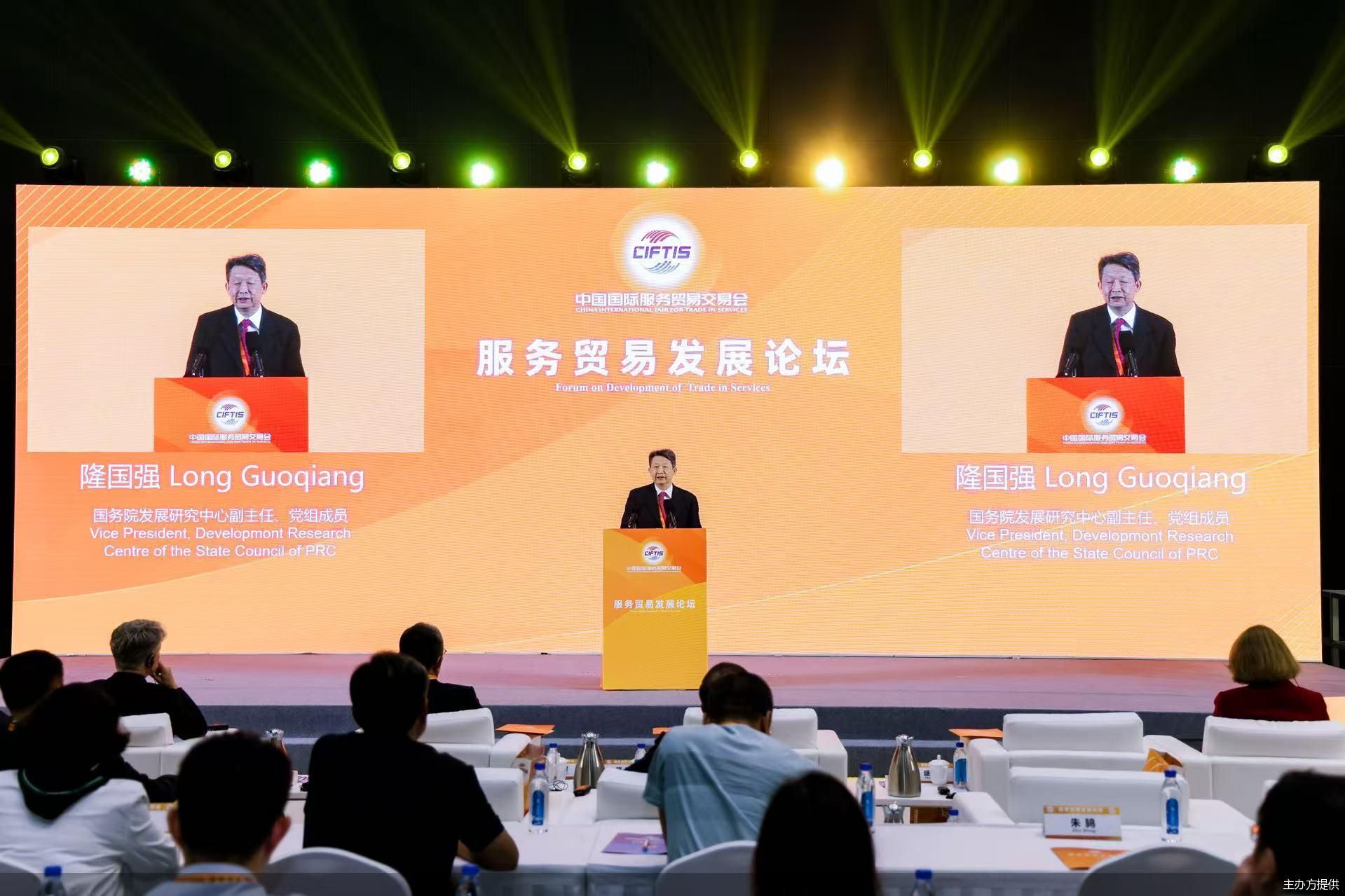
Core Viewpoint - The recent Service Trade Development Forum highlighted the importance of service trade in global trade, emphasizing the role of digitalization and artificial intelligence in driving new growth opportunities for service trade in China [1][3][4]. Group 1: Trends in Service Trade - Service trade is increasingly significant in global trade dynamics, with its position continuing to strengthen [3][4]. - Digitalization is identified as a new driving force for the development of service trade, enhancing the tradability of services [4][5]. - Rapid advancements in artificial intelligence technology are expected to open new avenues for service trade development [3][4]. Group 2: China's Service Trade Development - China's service trade has entered a new phase of high-quality development, with an average annual growth rate of 6.7% since 2012, significantly outpacing goods trade [4]. - In 2024, China's total service trade is projected to exceed $1 trillion for the first time, marking a historic high and positioning China as the second-largest service trade economy globally [4]. - The Chinese government aims to leverage high-level openness to promote high-quality service trade development, emphasizing collaboration with global markets [4][5]. Group 3: Regional Focus and Initiatives - Beijing is set to achieve a record service trade scale of 1.17 trillion yuan in 2024, accounting for over 20% of its foreign trade, reflecting a trend of quality and quantity improvement [5]. - The city plans to harness digital technologies such as artificial intelligence and big data to drive the digital transformation of service trade [5][6]. Group 4: Business Environment and Innovation - Establishing a first-class business environment is crucial for promoting high-quality service trade development, necessitating internationalization and openness [6]. - The Asian Development Bank emphasizes the role of the service sector as a key driver of innovation and productivity in China's economy, advocating for expanded foreign investment and regulatory optimization [7].
数字化驱动 服务贸易成全球经济发展新引擎
Bei Jing Shang Bao· 2025-09-12 09:49
Core Viewpoint - The recent Service Trade Development Forum highlighted the importance of service trade in global trade, emphasizing the role of digitalization and artificial intelligence in driving new opportunities for growth in this sector [1][3][4]. Group 1: Trends in Service Trade - Service trade is increasingly significant in global trade dynamics, with a notable annual growth rate of 6.7% since 2012, outpacing goods trade growth by 1.7 times [4]. - Digitalization is identified as a new driving force for service trade development, enhancing the tradability of services [4][5]. - Rapid advancements in artificial intelligence technology are expected to open new avenues for service trade [3][4]. Group 2: China's Service Trade Development - China's service trade is projected to exceed $1 trillion for the first time in 2024, marking a historic high and positioning the country as the second-largest service trade economy globally [4]. - The Chinese government aims to leverage high-level openness to promote high-quality service trade development, emphasizing collaboration with global markets [4][5]. - Beijing's service trade is set to reach a record high of 1.17 trillion yuan in 2024, accounting for over 20% of its foreign trade [5]. Group 3: Policy and Environment - Establishing a first-class business environment is crucial for promoting high-quality service trade, necessitating a focus on institutional openness and international collaboration [6]. - The Asian Development Bank highlights the service sector's role as a key driver of innovation and productivity in China's economy, advocating for expanded foreign investment and regulatory optimization [7].
中国服务贸易高质量发展 知识密集型服务出口占比超过一半
Yang Shi Xin Wen· 2025-09-12 06:27
商务部副部长 盛秋平:中国服务贸易发展也进入了高质量发展的阶段。2012年以来,服务进出口年均 增速达到6.7%,是货物贸易年均增速的1.7倍。特别是人工智能发展进入快车道,技术和产业优势持续 赋能中小企业参与全球竞争,中国知识密集型服务出口占服务出口的比重从38.5%提高到52.2%。 服务贸易发展论坛与会嘉宾表示,人工智能技术的快速进步和应用,将会为未来的服务贸易发展开启一 个新的蓝海。 国务院发展研究中心副主任 隆国强:过去我们讲数字化,未来可能讲智能化,所以WTO去年底发布了 一个报告说,如果在2040年前普遍采用人工智能的技术,服务贸易的增长速度可以达到18个百分点。 2025年服贸会服务贸易发展论坛11日在北京首钢园区举办,论坛主题为"制度型开放·服贸新生态——引 领全球合作新动能",论坛发布了《中国服务贸易发展报告2024》。 《报告》认为,面对复杂严峻的国内外形势,中国持续推进高水平对外开放,2024年实现服务贸易规模 再创新高,为外贸稳规模优结构、助力经济回升向好作出积极贡献。 2024年,中国服务进出口规模首次突破万亿美元,位居全球第二,旅行等传统服务贸易表现亮眼,"中 国游"市场呈现出强 ...
(经济观察)外企为何看重在华打“服务牌”?
Zhong Guo Xin Wen Wang· 2025-09-12 05:34
Group 1 - Increasing interest from foreign enterprises in "China Services" as a key opportunity for future expansion in the market [1][2] - The 2024 forecast indicates that China's service trade will exceed $1 trillion for the first time, with a 8% year-on-year growth in the first half of this year [2] - The shift from "Made in China" to "Created in China" is prompting foreign companies to establish independent R&D centers in China for personalized and agile innovation [2] Group 2 - The rapid development of digital technology, especially in AI, is creating new growth opportunities and attracting foreign enterprises to accelerate their investments [3] - AstraZeneca has established six strategic R&D centers globally, with two located in China, focusing on cutting-edge biology and AI capabilities [3] - China's open institutional environment enhances the attractiveness of "China Services," driven by digitalization, intelligence, and green transformation [3][4] Group 3 - A series of institutional reforms, including the establishment of a negative list for cross-border service trade and the expansion of pilot openings in various sectors, are improving the liberalization and facilitation of service trade in China [4] - The Chinese government plans to further increase policy support for service trade during the 14th Five-Year Plan period, aiming to reduce restrictive measures in the service consumption sector [4] - A more transparent and stable policy environment is expected to provide foreign enterprises with confidence to deepen their engagement in the Chinese service market [4]
2025年服贸会:开放再拓宽 合作正当时
Zhong Guo Qing Nian Bao· 2025-09-12 03:50
Core Viewpoint - The China International Service Trade Fair (CIFTIS) serves as a significant platform for enhancing global service trade cooperation, showcasing innovations in various sectors, and promoting China's commitment to high-level opening-up and participation in global service trade [3][4][5]. Group 1: Event Overview - The 2025 CIFTIS opened in Beijing with the theme "Digital Intelligence Leading, Service Trade Renewed," focusing on digitalization, intelligence, and sustainability in service trade [3]. - The event attracted participation from 54 countries and 21 international organizations, with nearly 2,000 enterprises, including around 500 Fortune 500 companies [4]. - Australia was the guest of honor for the first time, bringing the largest delegation of 60 institutions and enterprises [4]. Group 2: Economic Significance - The fair is seen as a response to unilateralism and global trade disruptions, providing a platform for countries to seek new business opportunities [4][5]. - CIFTIS is positioned as a "safe haven" for service trade, allowing companies to bypass traditional trade barriers through cross-border service cooperation [5]. - China's service trade is experiencing steady growth, with a total import and export value of 45,781.6 billion yuan from January to July, marking an 8.2% year-on-year increase [6]. Group 3: Future Outlook - The future of China's service trade is expected to focus on modern service sectors such as finance, education, and intellectual property, which will become new growth points [6][7]. - Knowledge-intensive service trade is projected to continue growing, with a 6.8% increase in imports and exports in the first seven months of the year [6]. - The fair signals China's intention to become a key player in the digital and intelligent transformation of global service trade [6].
中经评论:开放中国为世界带来更多机遇
Jing Ji Ri Bao· 2025-09-12 00:09
Group 1 - The core viewpoint emphasizes China's unwavering commitment to high-level openness, regardless of external changes, aiming to create a market-oriented, law-based, and international business environment [2] - China is actively expanding its negative list for foreign investment access and has eliminated restrictions in the manufacturing sector, while also increasing pilot programs in telecommunications, healthcare, and education [2] - The country is providing zero-tariff treatment on 100% of products for all least developed countries that have diplomatic relations with China [2] Group 2 - The growth potential is highlighted by the emergence of new driving forces such as digital economy, green economy, and technological innovation, which are becoming mainstream in trade and investment cooperation [3] - Major exhibitions showcase innovations in digital technology, green low-carbon solutions, smart manufacturing, and new energy, with over 190 new products and achievements launched [3] - China's large market size, complete industrial support system, and diverse application scenarios are transforming scale advantages into quality and efficiency advantages through technological innovation and industrial upgrades [3] Group 3 - China's economy is a significant engine for global growth, characterized by its stability, high growth, openness, and interconnectedness with the world economy [4] - China has become a key trading partner for 157 countries and regions, leading in goods trade and ranking second in service trade, consumption, and imports [4] - The contribution of China to global economic growth has remained stable at around 30%, with many international institutions raising their growth forecasts for China [4]
推进全球服务贸易开放创新合作
Jing Ji Ri Bao· 2025-09-12 00:02
Core Viewpoint - The 2025 China International Service Trade Fair emphasizes China's commitment to promoting global service trade cooperation and innovation, aiming to enhance the open world economy and contribute to building a community with a shared future for mankind [1] Group 1: Overview of Service Trade - Service trade, defined as the cross-border exchange of services, includes 12 major sectors as per the World Trade Organization, such as business services, telecommunications, financial services, and tourism [2] - There are four modes of international service trade: cross-border delivery, consumption abroad, commercial presence, and movement of natural persons, with the first three categorized as "cross-border service trade" [3] Group 2: Development of China's Service Trade - China's service trade has significantly developed since the reform and opening up, with total service trade imports and exports increasing from $4.7 billion in 1982 to $1,056.5 billion in 2024, outpacing the growth of goods trade [4] - From 2002 to 2024, service exports rose from $39.4 billion to $445.9 billion, while imports increased from $46.1 billion to $610.6 billion, indicating a robust growth trajectory [4] Group 3: Structural Optimization of Service Trade - The share of service trade in total foreign trade rose from 13.2% in 2014 to 14.6% in 2024, with service imports growing by 41% and exports by 103.5% during the same period [5] - Knowledge-intensive service exports have surged, with significant growth in personal cultural and entertainment services and telecommunications, with respective increases of 39.3% and 12.2% [5] Group 4: Policy and Innovation in Service Trade - The Chinese government has implemented policies to enhance service trade, including the release of opinions aimed at promoting high-quality service trade development [6] - In the first half of the year, service trade reached $507.7 billion, a year-on-year increase of 8%, with notable growth in travel services, which saw a 68.7% increase in exports [6] Group 5: Knowledge-Intensive Services - Knowledge-intensive services, characterized by high technology and human capital, have seen steady growth, with imports and exports rising from 232.6 billion yuan in 2021 to 289.7 billion yuan in 2024, averaging a 6% annual growth [8] - The export of knowledge-intensive services has become a significant driver of structural upgrade in China's service trade [8] Group 6: Travel Services Growth - Travel services have emerged as the fastest-growing sector in China's service trade, with imports and exports surpassing 2 trillion yuan in 2024, accounting for 27.3% of total service trade [13] - The growth in travel services is supported by favorable policies such as visa facilitation and improved travel infrastructure, leading to a 12.3% increase in travel service trade in the first half of the year [13][14] Group 7: Future Directions - To enhance international competitiveness in travel services, China aims to innovate in key areas, leveraging digitalization and smart technologies to reshape the travel service value chain [17] - The focus will be on integrating traditional culture and regional characteristics into tourism products and services to enhance the overall travel experience [17]