
石油与天然气

Search documents
美国能源巨头在越南发现巨型石油储量,越南成最大赢家还是棋子?
Sou Hu Cai Jing· 2026-01-11 15:22
Group 1 - The discovery of 430 million barrels of oil equivalent at the Hai Su Wang oil field by Murphy Oil is a significant geological success, providing a critical lifeline for Vietnam's energy security as its oil production is projected to plummet from 365,000 barrels per day in 2005 to less than 120,000 barrels per day by 2025 [1][3] - Murphy Oil's involvement represents a "technical takeover" of Vietnam's energy supply chain, as the state-owned Vietnam National Oil and Gas Group has reached its limits in upstream exploration capabilities, with rising water cut in existing fields and production costs nearing the breakeven point of Brent crude [3] - The urgency of Vietnam's energy needs is highlighted by its reliance on high-priced crude oil purchases from international markets before Murphy Oil's new wells come online, which will strain its foreign exchange reserves and exacerbate fiscal deficits [5] Group 2 - The infrastructure in the Kien Giang Basin is outdated and has not been maintained, raising concerns about the reliability of pipelines and platforms, which could lead to significant costs for Vietnam to develop the discovered reserves [5] - The geopolitical implications of Murphy Oil's drilling in the South China Sea are significant, as any shifts in regional political dynamics could render the discovered oil reserves as stranded assets, impacting their economic viability [5][7] - The process from discovery to production in deepwater oil and gas development typically takes 5 to 7 years, which means Vietnam's immediate energy gap needs to be addressed without delay [3]

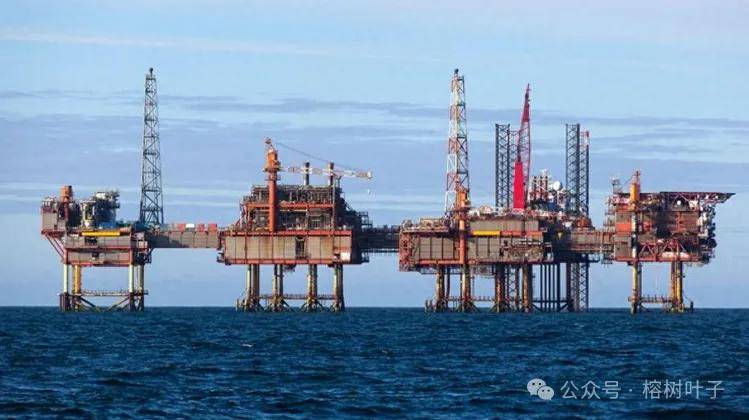
油价一夜下跌!今天1月10日调整后,全国加油站92、95汽油最新售价
Sou Hu Cai Jing· 2026-01-10 22:40
Core Viewpoint - The oil prices have remained stable this week, with 92-octane gasoline priced around 6.69 yuan per liter and 95-octane gasoline below 7.21 yuan, reflecting a significant decrease from previous highs [1][2] Price Trends - In 2025, gasoline and diesel prices dropped by over 900 yuan per ton, resulting in savings of approximately 0.7 to 0.8 yuan per liter [1] - The first price adjustment of 2026 was initially expected to increase prices, but instead, it remained unchanged, with a slight increase of 45 yuan per ton noted [1] - The current price adjustment cycle began on January 7 and is expected to conclude on January 20, with a current decrease rate of -1.60% in crude oil prices, potentially leading to a further drop of 80 yuan per ton [1][2] Regional Price Variations - Gasoline prices vary significantly across regions, with 95-octane gasoline priced at 7.14 yuan in Beijing and up to 7.31 yuan in Guangxi, while some areas in the northwest are cheaper, such as Shaanxi at 6.97 yuan [2] - The price for 98-octane gasoline also shows considerable disparity, ranging from 7.72 yuan in Gansu to 9.29 yuan in Guangdong [3] Pricing Mechanism - The pricing mechanism for oil adjustments is based on a ten-working-day cycle, referencing the average prices of Brent, WTI, and Dubai crude oil, with adjustments triggered by fluctuations exceeding 50 yuan per ton [3] - The market sentiment can shift rapidly based on news of increased supply, affecting domestic prices despite the global economic recovery not significantly boosting industrial oil demand [3][6] Future Expectations - The likelihood of a price decrease on January 20 is high, with potential savings of three to four yuan for a full tank, which can accumulate to significant annual savings for frequent drivers [5] - Current global supply remains ample, keeping prices under pressure, and unless a major geopolitical event occurs, prices are expected to continue on a downward trend [6]
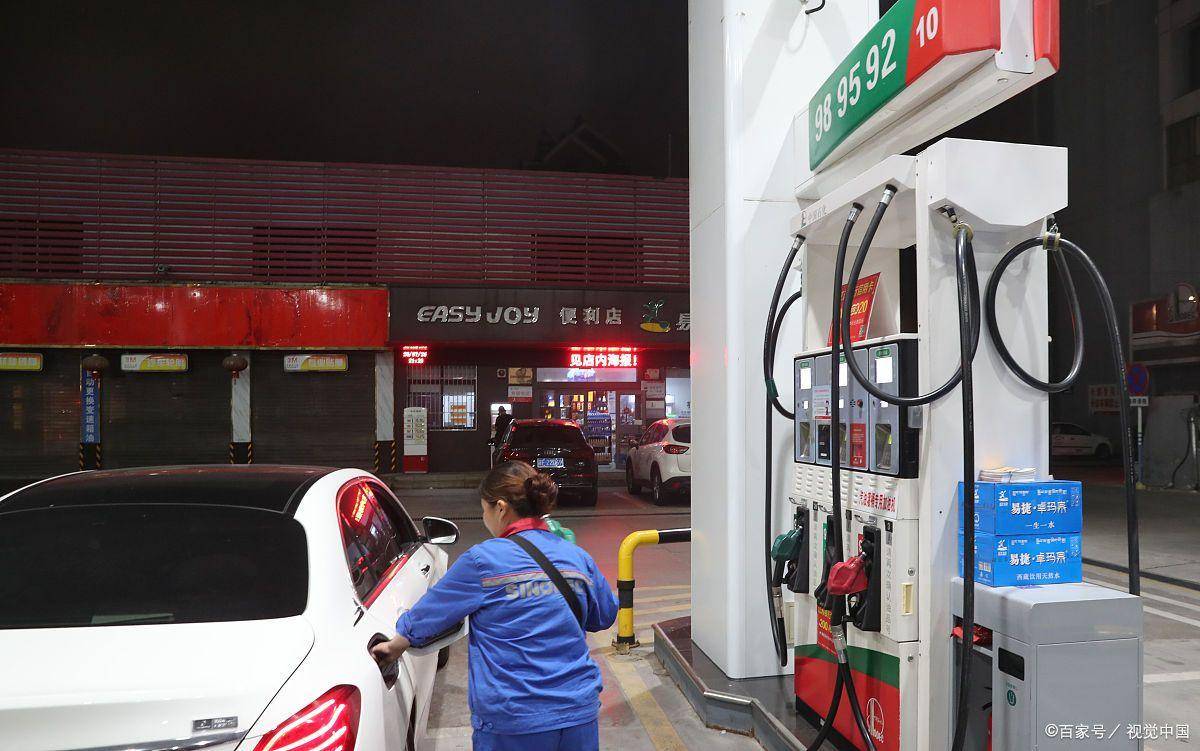
美国如何逆袭,摆脱中东实现石油自由?页岩油能成为中国的未来?
Sou Hu Cai Jing· 2026-01-10 04:29
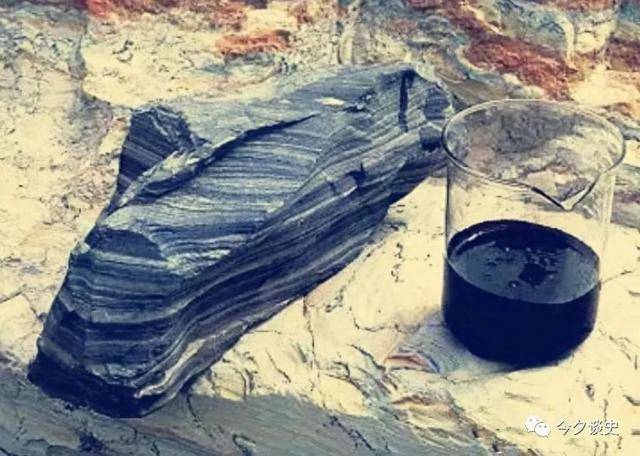
Core Viewpoint - Oil remains a crucial energy source globally, with ongoing efforts to develop alternative energies like solar and electric power not yet yielding ideal results [1] Group 1: Shale Oil Overview - Shale oil has emerged as a new energy source, with the U.S. claiming it can reduce dependence on Middle Eastern oil [3] - China has also discovered significant shale oil reserves, which could alleviate its oil supply issues if conditions are favorable [3] - Countries rich in oil resources benefit significantly, while those lacking must exert considerable effort to secure oil [3] Group 2: Characteristics and Distribution of Shale Oil - Shale oil is a unique energy source found in the gaps of shale layers, including interlayers of mud shale, and is primarily concentrated in the U.S., China, Canada, and Italy among others [6] - The extraction of shale oil is challenging due to its high density and low permeability, requiring specialized techniques for extraction [8] Group 3: U.S. Shale Oil Development - Since 2018, U.S. crude oil exports have surged to over 13 million barrels per day, with more than half being shale oil, positioning the U.S. as the world's largest oil exporter [10] - The commercialization of shale oil in the U.S. has altered domestic supply and demand dynamics and has led the way in global energy development [12] Group 4: Historical Development of U.S. Shale Oil - Prior to 1999, U.S. shale oil production was minimal, with only 27 tons per day, but recognition of its importance grew post-2000 [14] - The discovery of horizontal drilling and hydraulic fracturing techniques in 2005 significantly boosted shale oil production, with output surpassing 1 million tons by 2007 [16] - By 2017, U.S. shale oil production had reached a considerable scale, driven by technological advancements and abundant reserves [18] Group 5: Economic and Environmental Considerations - Shale oil's lower extraction costs compared to traditional oil make it a significant factor in oil price dynamics [12] - Despite its advantages, shale oil has limitations, with global reserves only accounting for 4% of total oil reserves, and extraction costs varying widely based on geological conditions [20] - Environmental concerns arise from shale oil extraction, including potential water contamination and seismic activity due to hydraulic fracturing [20] Group 6: China's Shale Oil Potential and Challenges - China ranks third globally in shale oil reserves, following the U.S. and Russia, with the potential to reduce production costs and reliance on international oil prices [20] - However, China's geological conditions complicate extraction, with shale oil located deeper and requiring more advanced technology and significant initial investment [20] - The need for substantial freshwater resources for shale oil extraction poses a challenge, especially in densely populated areas, raising concerns about water safety and environmental impact [20] - Current conditions suggest that large-scale shale oil extraction in China is not optimal, and a focus on research and development is recommended to ensure sustainable practices and future advancements [20]
中国海洋石油(00883.HK):1月9日南向资金减持376.36万股
Sou Hu Cai Jing· 2026-01-09 19:25
Core Viewpoint - Southbound funds reduced their holdings in China National Offshore Oil Corporation (CNOOC) by 3.76 million shares on January 9, while experiencing a net increase of 34.43 million shares over the last five trading days [1] Group 1: Southbound Fund Activity - In the last 20 trading days, southbound funds have reduced their holdings on 11 days, with a total net reduction of 26.96 million shares [1] - Currently, southbound funds hold 10.242 billion shares of CNOOC, accounting for 21.54% of the company's total issued ordinary shares [1] Group 2: Company Overview - CNOOC is primarily engaged in the exploration, development, production, and sales of crude oil and natural gas [1] - The company operates through three segments: exploration and production, trading, and business segment, which includes management and research and development [1] - The exploration and production segment focuses on upstream oil activities, including conventional oil and gas, shale oil and gas, oil sands, and other unconventional oil and gas [1]


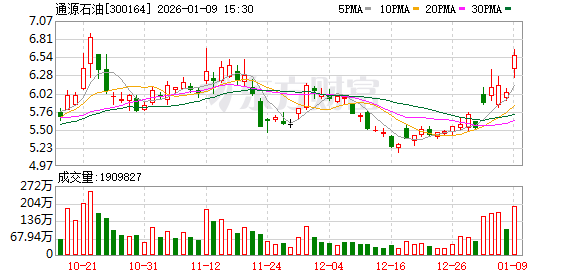
通源石油:雪佛龙是公司北美子公司的重要客户
Zheng Quan Ri Bao· 2026-01-09 12:12
Group 1 - The core viewpoint of the article highlights that Tongyuan Petroleum considers Chevron as a significant client for its North American subsidiary, indicating a strong business relationship [2] - In the first half of 2025, the revenue from the North American business is projected to account for 78% of the company's total revenue, showcasing the importance of this market segment [2]


经导财评 | 新一轮国企改革正从“物理整合”迈向“化学融合”
Da Zhong Ri Bao· 2026-01-09 09:48
Core Viewpoint - The merger between Sinopec and China National Aviation Fuel marks the beginning of a new round of state-owned enterprise reform, focusing on energy security, competitiveness, and green development [1][2]. Group 1: Energy Security - The merger aims to strengthen national energy security, as aviation fuel is critical for the aviation industry, which is projected to see demand rise to 75 million tons by 2040 [1]. - The integration of Sinopec's refining capacity and China National Aviation Fuel's supply chain capabilities will reduce costs and create a controlled supply system for stable aviation operations [1]. Group 2: International Competitiveness - The restructuring is a key move for industrial upgrading, as the global aviation fuel market is dominated by integrated giants like Shell and BP, which have strong supply chain coordination [1]. - The new entity will combine the world's largest refining capacity with Asia's largest aviation fuel service network, enhancing its competitiveness against international players [1]. Group 3: Green Transition - The merger strategically positions the companies in the sustainable aviation fuel (SAF) market, which is expected to reach a trillion-dollar scale globally [2]. - Sinopec is the first in Asia to commercialize SAF production, and the collaboration with China National Aviation Fuel will create a comprehensive SAF ecosystem from research and development to supply [2]. Group 4: Broader Reform Implications - This merger signals a shift in state-owned enterprise reform from "physical integration" to "chemical fusion," indicating faster consolidations in sectors like equipment manufacturing and energy [2]. - The ongoing reforms will enhance core capabilities in strategic emerging industries, allowing state-owned capital to establish competitive advantages in key areas [2].

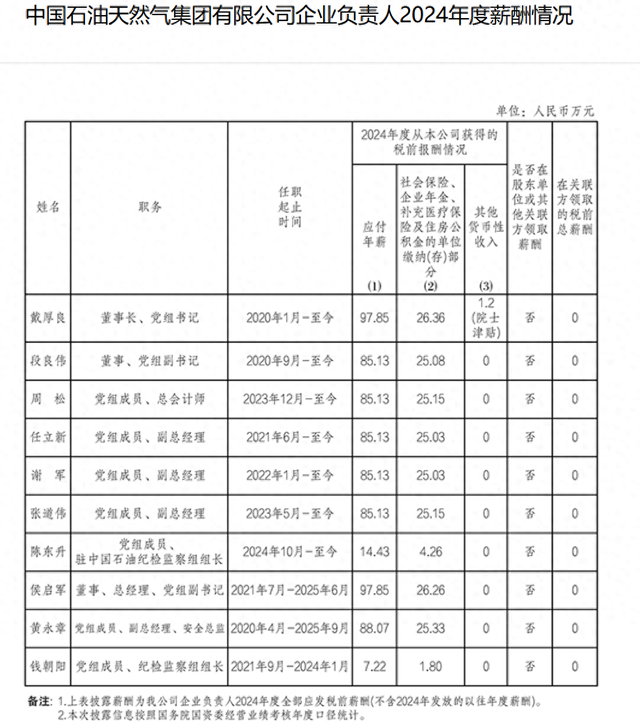
多家能源央企负责人2024年薪酬披露
Xin Lang Cai Jing· 2026-01-09 06:20
Summary of Key Points Core Viewpoint The recent disclosures from several major energy state-owned enterprises in China regarding the 2024 annual compensation of their executives reveal significant salary figures, reflecting the financial health and strategic priorities of these companies in the energy sector. Group 1: China National Petroleum Corporation (CNPC) - The chairman, Dai Houliang, received a pre-tax salary of 97.85 million RMB, with additional benefits totaling 26.36 million RMB [2] - Other executives, such as Duan Liangwei and Zhou Song, received pre-tax salaries of 85.13 million RMB, with similar additional benefits [2] - The total compensation for various executives includes social insurance, enterprise annuities, and supplementary medical insurance [2] Group 2: China Petroleum and Chemical Corporation (Sinopec) - Chairman Ma Qiansheng's pre-tax salary is reported at 93.55 million RMB, with additional benefits of 23.76 million RMB [3] - Other executives, including Zhang Shaofeng and Li Yonglin, received pre-tax salaries around 83 million RMB, with additional benefits in the range of 23 million RMB [3] - The compensation structure includes social insurance and other monetary income [3] Group 3: China National Offshore Oil Corporation (CNOOC) - Chairman Wang Dongjin's pre-tax salary is 96.69 million RMB, with additional benefits of 26.48 million RMB [5] - Other executives, such as Zhou Xinhai and Wang Rujia, received salaries between 80 million and 86 million RMB, with corresponding benefits [5] - The compensation details include social insurance and housing fund contributions [5] Group 4: China National Petroleum and Natural Gas Pipeline Group - Chairman Rong Wei's pre-tax salary is 87.29 million RMB, with additional benefits of 23.51 million RMB [7] - Other executives received salaries ranging from 6.55 million to 80.02 million RMB, with similar benefits [7] - The compensation includes social insurance and other monetary income [7] Group 5: China Huadian Corporation - Chairman Jiang Yi's pre-tax salary is reported at 96.11 million RMB, with additional benefits of 31.04 million RMB [12] - Other executives, including Ye Xiangdong and Zu Bin, received salaries around 86 million RMB, with substantial additional benefits [12] - The compensation structure includes social insurance and other monetary income [12] Group 6: China Huaneng Group - Chairman Wen Shugang's pre-tax salary is 96.17 million RMB, with additional benefits of 27 million RMB [9] - Other executives received salaries ranging from 40 million to 89 million RMB, with corresponding benefits [9] - The compensation includes social insurance and other monetary income [9] Group 7: China Datang Corporation - Chairman Zhong Yong's pre-tax salary is 92.21 million RMB, with additional benefits of 28.32 million RMB [11] - Other executives received salaries ranging from 6.9 million to 82.99 million RMB, with similar benefits [11] - The compensation structure includes social insurance and other monetary income [11] Group 8: China Longyuan Power Group - Chairman Liu Weiping's pre-tax salary is 61.15 million RMB, with additional benefits of 18.07 million RMB [15] - Other executives received salaries ranging from 45 million to 82 million RMB, with corresponding benefits [15] - The compensation includes social insurance and other monetary income [15] Group 9: Harbin Electric Corporation - Chairman Cao Zhishou's pre-tax salary is 79.11 million RMB, with additional benefits of 20.04 million RMB [17] - Other executives received salaries ranging from 17.80 million to 79.11 million RMB, with similar benefits [17] - The compensation structure includes social insurance and other monetary income [17]

中国石化股价涨8.4%,国联基金旗下1只基金重仓,持有3.7万股浮盈赚取1.89万元
Xin Lang Cai Jing· 2026-01-09 01:43
Group 1 - China Petroleum & Chemical Corporation (Sinopec) shares rose by 8.4%, reaching 6.58 CNY per share, with a trading volume of 378 million CNY and a turnover rate of 0.06%, resulting in a total market capitalization of 795.69 billion CNY [1] - Sinopec's main business activities include oil and gas exploration and production, pipeline transportation, refining, petrochemicals, and the import/export of various chemical products. The revenue composition is as follows: gasoline 27.87%, diesel 19.05%, crude oil 13.21%, and other categories [1] Group 2 - Guolian Fund has one fund heavily invested in Sinopec, specifically Guolian Jinghui Mixed A (013190), which reduced its holdings by 3,000 shares in the third quarter, now holding 37,000 shares, accounting for 0.32% of the fund's net value, ranking as the seventh largest holding [2] - Guolian Jinghui Mixed A has a total asset size of 60.70 million CNY, with a year-to-date return of 0.15%, ranking 8290 out of 8827 in its category, and a one-year return of 2.36%, ranking 7621 out of 8084 [2]
中国海洋石油(00883.HK):1月8日南向资金增持182.48万股
Sou Hu Cai Jing· 2026-01-08 19:23
Group 1 - The core viewpoint of the article highlights that southbound funds have increased their holdings in China National Offshore Oil Corporation (CNOOC) by 1.82 million shares on January 8, with a total net increase of 35.2 million shares over the past five trading days [1] - Over the last 20 trading days, southbound funds have reduced their holdings in CNOOC on 10 occasions, resulting in a cumulative net reduction of 7.25 million shares [1] - As of now, southbound funds hold 10.246 billion shares of CNOOC, accounting for 21.55% of the company's total issued ordinary shares [1] Group 2 - CNOOC is primarily engaged in the exploration, development, production, and sales of crude oil and natural gas [1] - The company operates through three segments: exploration and production, trading, and business segment, which includes headquarters management, financial management, and research and development [1] - CNOOC conducts its business in both domestic and international markets [1]
Northern Technologies International (NTIC) - 2026 Q1 - Earnings Call Transcript
2026-01-08 15:00
Financial Data and Key Metrics Changes - For the first quarter of fiscal 2026, total consolidated net sales increased by 9.2% to a record $23.3 million compared to the same period last year [5] - Net income for the first quarter was $238,000 or $0.03 per diluted share, down from $561,000 or $0.06 per diluted share in the prior year [12] - Non-GAAP adjusted income was $344,000 or $0.04 per diluted share, compared to $667,000 or $0.07 per diluted share in the previous year [12] Business Line Data and Key Metrics Changes - Zerust Oil & Gas net sales increased by 58.1% to $2.4 million, marking a record for the first quarter [7] - Zerust Industrial net sales rose by 6.9%, while Natur-Tec product net sales increased by 2.2% [5] - Natur-Tec sales reached a record $6 million, representing a 2.2% year-over-year increase and a 16.5% increase from the previous quarter [9] Market Data and Key Metrics Changes - NTIC China saw a 23.5% increase in net sales year-over-year to $4.9 million, indicating strong demand in the region [6] - Joint venture sales increased by 2.9% year-over-year to $24.5 million, despite a mid-single-digit decline in the German joint venture [5] Company Strategy and Development Direction - The company is focused on improving profitability by flattening operating expenses and driving sales in higher-margin segments [4] - Strategic investments made over the past three years are expected to yield benefits in global operations and support future growth [4] - NTIC aims to enhance operations in China, viewing it as a significant market for industrial and bioplastic segments [6] Management's Comments on Operating Environment and Future Outlook - Management expressed optimism about the start of fiscal 2026, expecting higher year-over-year sales and profitability as trends support growth [4] - The company anticipates that economic recovery from government stimulus packages in Europe will positively impact joint venture operating income [6] - Management highlighted the importance of maintaining strategic investments for long-term growth rather than cutting expenses [19] Other Important Information - As of November 30, 2025, working capital was $19.4 million, with outstanding debt slightly reduced to $12 million [13][14] - The board declared a quarterly cash dividend of $0.01 per common share, payable on November 12, 2025 [15] Q&A Session Summary Question: What are some levers to improve profitability? - Management indicated that driving sales growth will increase gross margin, which will positively impact operating profit [17] Question: Are there opportunities for cost-cutting? - Management noted that while there are some opportunities, the focus is on allowing revenues to catch up to previous expense increases rather than cutting expenses [19] Question: Are there other major oil and gas opportunities? - Management confirmed ongoing discussions with other oil companies globally, expecting business growth beyond the current major contract in Brazil [23]
