计算机硬件

Search documents
在F1技术心脏地带,看见中国科技驶入世界体系
Di Yi Cai Jing· 2025-11-21 10:46
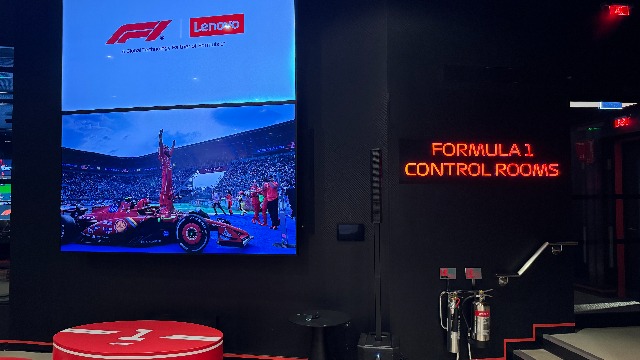
Core Insights - Chinese technology companies are increasingly participating in the global operations of top-tier events like Formula 1 (F1), moving from brand exposure to deep infrastructure collaboration [1][4][10] Group 1: Participation of Chinese Technology in F1 - Lenovo has become an official partner of F1 since 2022 and will upgrade to "Global Technology Partner" in 2025, marking a significant milestone as the first Chinese tech company at this level [1][4] - The collaboration between Lenovo and F1 showcases how Chinese technology is integrating into the global industrial chain, emphasizing a shift towards foundational technological contributions [1][4] Group 2: Technical Collaboration and Infrastructure - The F1 Media and Technology Center (MTC) processes data from various race tracks, with Lenovo's hardware playing a crucial role in real-time content production, including workstations and display systems [3][4] - F1's IT Director highlighted the importance of stability and computing power in high-pressure environments, with approximately 650TB of data processed each race weekend [3][9] Group 3: Engineering Challenges and Solutions - F1 equipment must withstand extreme conditions, requiring high reliability and performance standards, which Lenovo addresses through a close product iteration mechanism [6][7] - The collaboration is characterized by a partnership approach rather than a traditional supplier relationship, focusing on joint problem-solving and system construction [7][10] Group 4: Data Processing and AI Integration - The MTC operates with around 150 personnel and utilizes hundreds of processing cores and high-speed storage to manage the growing data demands of each race [9][10] - The introduction of AI in event operations necessitates enhanced computing capabilities, with Lenovo's systems being integral to this evolution [9][10] Group 5: Market Growth and Future Prospects - F1 recognizes China as a significant growth market, especially with the return of the Chinese Grand Prix, indicating a mutual benefit in technology application and audience engagement [10] - The partnership between Chinese tech firms and global events like F1 is reshaping the infrastructure of sports globalization, with ongoing exploration of AI-assisted content production [10]


采购规模和供应链管理能力具备显著优势! 华泰维持联想集团买入评级
Ge Long Hui· 2025-11-21 04:19
Core Insights - Lenovo Group reported a revenue of $20.452 billion for 2QFY26, representing a year-over-year growth of 14.6% [1] - Non-HKFRS net profit reached $512 million, up 25.2% year-over-year, while net profit attributable to shareholders declined by 5.1% to $340 million [1] - The company maintains a "Buy" rating with a target price of HKD 14, citing strong competitive advantages in shipment volume and supply chain management [1] IDG Segment - The Intelligent Devices Group (IDG) saw a revenue increase of 11.8% year-over-year, with an operating profit margin of 60% [1] - Lenovo's global PC market share rose by 1.8 percentage points year-over-year to 25.6%, leading the second-place competitor by 5.7 percentage points [1] - AI-driven PC revenue grew by 17% year-over-year, with AI PC penetration increasing by 16 percentage points to account for 33% of total PC shipments [1] ISG Segment - The Infrastructure Solutions Group (ISG) reported a revenue increase of 23.7% year-over-year, driven by demand for cloud and enterprise infrastructure [2] - AI server business experienced high double-digit revenue growth, with Neptune liquid cooling technology revenue soaring by 154% year-over-year [2] - Despite a $32.04 million operating loss, the operating profit margin improved by 0.3 percentage points year-over-year, indicating stabilization [2] SSG Segment - The Solutions and Services Group (SSG) achieved an 18.3% year-over-year revenue growth, marking the 18th consecutive quarter of double-digit growth [3] - Operating profit margin exceeded 22%, reflecting a 2.3 percentage point year-over-year increase [3] - Projects and solutions, along with operational services, accounted for 60% of SSG's overall revenue, showing a 1 percentage point increase year-over-year [3]
中金力挺联想:Q2业绩超预期 维持14.8港元目标价
智通财经网· 2025-11-21 03:47
9.4%,联想增速高于行业,PC 出货量同比增长 17.3%,龙头优势持续扩大,市占率达到 25.5%,主要 得益于 AI PC 加速渗透和全球化供应链布局下的效率优势。根据公司官微,联想在全球 Windows AI PC 市场份额为 31.1%,稳居全球第一;具有 五大 AI 特征的 AI PC 产品在中国内地笔记本中的出货占比达到30%。展望后市,上游存储供应紧张、 涨价压力下,公司拥有灵活的供应链管理、与关键元器件供应商长期合作关系,也建立了灵活的价格调 整机制,具备较强的风险吸收能力,公司对 2026下半财年 PC 收入实现双位数同比增长保有信心。 AI 基础设施业务强劲增长,运营利润亏损进一步收窄。2QFY26 ISG 收入同比增长 23.7%至 40.87 亿美 元,运营利润率为0.78%,同、环比提升 0.3ppt、1.2ppt,减亏明显。其中,云基础设施业务营收创下同 期历史新高,AI 服务器收入实现高双位数增长,订单储备强劲;企业基础设施业务则针对大企业和中 小企业客户的不同业务模式持续转型。 估值方面,维持 FY2026/27 盈利预测基本不变。基于 non-HKFRS 净利润口径,当前股 ...
联想AI收入占比达三成,杨元庆:AI不存在泡沫
2 1 Shi Ji Jing Ji Bao Dao· 2025-11-20 10:10
Core Viewpoint - Lenovo Group reported strong financial results for Q2 of FY2025/26, with revenue of 146.4 billion yuan, a 15% year-on-year increase, and net profit of 3.66 billion yuan, a 25% increase, indicating that profit growth outpaced revenue growth [1] - The company disclosed that AI business now accounts for 30% of its revenue, up 13 percentage points year-on-year, signaling a shift from traditional PC manufacturing to becoming a full-stack AI solution provider [2][3] Financial Performance - Lenovo's revenue for the Intelligent Devices Group (IDG) reached 108.1 billion yuan, a 12% year-on-year increase, with a global PC market share exceeding 25% for the first time in history [3] - The Solutions and Services Group (SSG) revenue grew nearly 20% year-on-year, with an operating profit margin exceeding 22%, marking 18 consecutive quarters of double-digit growth [10] AI Business Insights - The 30% revenue contribution from AI indicates that for every 100 yuan in products or services sold, 30 yuan directly benefits from AI technology, including AI PCs and related consulting services [2] - Lenovo's AI PCs have a 30% shipment share in the Chinese market and a 31.1% share in the global Windows AI PC market, positioning the company as a leader in this segment [3] Market Trends - The global PC market is expected to grow by 5% to 10% by 2026, driven by the adoption of AI PCs and the end of the Windows update cycle [4] - The demand for AI servers is shifting from public cloud servers for large model training to local inference, as enterprises seek to establish private clouds for data security and low latency [5] Supply Chain Management - Lenovo has signed optimal contracts with core component suppliers to ensure sufficient supply for the upcoming year, aiming to maintain stable gross margins despite cost fluctuations [8] - The company anticipates that the current price increase cycle for high-performance storage chips may continue into next year due to rising demand from AI servers [6][7] Strategic Positioning - Lenovo's hybrid AI strategy targets both cloud service providers and enterprise customers, differentiating itself from competitors focused solely on public cloud services [5] - The company is transitioning from one-time hardware sales to long-term service subscriptions, capitalizing on the growing demand for AI deployment and maintenance services [10]

联想的AI再造与估值革命
格隆汇APP· 2025-11-20 09:14
Core Viewpoint - Lenovo Group is transitioning from a traditional PC manufacturer to a significant player in the AI industry, with its AI business now accounting for 30% of total revenue, indicating a strategic shift towards AI services and infrastructure [3][5][29]. Group 1: Business Transformation - Lenovo's market share in the PC sector has reached 25.5%, but this focus has overshadowed its growing non-PC business, which has contributed to significant revenue and profit growth [2][6]. - The company is implementing a hybrid AI strategy, positioning itself as a leading provider of edge AI solutions, catering to both B2B and B2C markets [5][13]. - The shift from hardware sales to AI service offerings is fundamental to Lenovo's business model transformation, aiming to create a comprehensive AI ecosystem [14][23]. Group 2: Financial Performance - Over the past three fiscal years, the proportion of non-PC business in total revenue has steadily increased, indicating a shift towards AI-related infrastructure and services [25]. - The Infrastructure Solutions Group (ISG) and Solutions Services Group (SSG) are driving revenue growth, with ISG experiencing a 24% year-on-year increase and SSG maintaining a profit margin exceeding 22% [26][27]. - Lenovo's AI-driven revenue growth has shown explosive potential, with AI PC revenue increasing by 197% and AI server revenue growing by over 150% [27][28]. Group 3: Market Positioning - Lenovo's hybrid AI strategy allows it to integrate AI capabilities across various devices, making it a key player in the AI ecosystem [12][20]. - The company aims to control the AI terminal market, positioning itself as a critical entry point for AI applications, similar to how Apple and Microsoft controlled their respective ecosystems [20][21]. - By embedding AI capabilities into its devices, Lenovo seeks to create a personalized AI experience for users, enhancing its competitive edge in the market [12][30].
联想董事长杨元庆:明年全球PC市场5%到10%的增长是可以期待的
Xin Lang Ke Ji· 2025-11-20 04:07
新浪科技讯 11月20日上午消息,联想集团公布截至2025年9月30日的2025/26财年第二财季业绩:当季营 收同比增长15%至1464亿元人民币,创下财季历史新高。经调整后的净利润同比增长25%,达36.6亿元 人民币。 在业绩发布会的提问环节,联想集团董事长兼CEO杨元庆表示,全球基于Windows10的 PC的更新还没 有完全结束,预计至少还要延续几个季度。 杨元庆认为,"除此之外,支撑PC市场增长更重要的因素还有人工智能。由于这两个因素的促进,我们 对明年全球PC市场的增长还是非常乐观的。从市场看,明年可能5%~10%的增长是可以期待的。" 责任编辑:江钰涵 ...
联想杨元庆:PC市场5%到10%的增长可以期待
Xin Lang Cai Jing· 2025-11-20 03:39
Core Viewpoint - Lenovo's Chairman and CEO Yang Yuanqing expressed confidence in the PC market's growth, attributing it to the transition to Windows 10 and the rise of AI PCs, expecting a growth rate of 5% to 10% in the PC market and maintaining a double-digit growth outlook for the year [1] Group 1 - The transition to Windows 10 is expected to continue driving device updates for several more quarters [1] - AI PCs are considered a significant factor supporting growth in the PC market [1] - Lenovo is confident in achieving double-digit growth for the fiscal year [1]
为企业而生 鸿蒙电脑企业版及新一代鸿蒙电脑即将发布
Huan Qiu Wang· 2025-11-19 13:21
Core Insights - Huawei's HarmonyOS is accelerating its commercial deployment, with the launch of the Harmony computer enterprise version and the upcoming release of the Huawei Qingtian HM740 [1][5]. Group 1: Product Development - The Harmony computer has achieved full-chain autonomy, addressing the urgent need for self-controllable and secure office equipment among government and enterprise clients [2][10]. - The Harmony computer enterprise version is now open for beta testing to more government and enterprise clients, indicating a strategic move towards broader market adoption [5][10]. Group 2: Market Positioning - Huawei's actions are part of a strategic layout to build a complete ecosystem around commercial scenarios, shifting from single device procurement to comprehensive solutions for enterprise clients [4][10]. - The focus on system security, ecological compatibility, and scenario adaptation represents a shift in the competitive landscape of the commercial PC market, moving from hardware-centric competition to value-driven services [9][10]. Group 3: Technological Innovations - The Harmony computer enterprise version, built on HarmonyOS 6, offers a smart, efficient, and secure system experience, enabling enterprises to deploy customized AI models while ensuring information security [7][10]. - Innovative features such as zero-touch deployment and enterprise digital dual-space functionality address key pain points for enterprise clients, enhancing IT operations and data security [9][10]. Group 4: Industry Impact - Huawei aims to reshape the commercial PC market by elevating the competition to higher dimensions, focusing on core needs such as security, efficiency, and operational convenience [9][10]. - The transition from "device sales" to "value services" reflects Huawei's deep understanding of the diverse needs of different industries, leveraging its mature ecosystem to provide end-to-end commercial solutions [9][10].
超微电脑(SMCI.US)推出基于英伟达架构的AI工厂集群解决方案 以简化大规模部署
智通财经网· 2025-11-19 07:05
Core Insights - Supermicro Computer (SMCI.US) has launched a new AI factory cluster solution that integrates a series of AI-optimized systems, NVIDIA software stack, and Nvidia Spectrum-X Ethernet, aimed at simplifying the AI development process from concept to production at any scale [1] Company Developments - The AI factory cluster solution from Supermicro offers configurations in small, medium, and large sizes, with node counts ranging from 4 to 32 and GPU counts from 32 to 256 [1] - Supermicro has begun accepting orders for these AI clusters [1] Industry Collaborations - NVIDIA announced a similar partnership with Dell Technologies (DELL.US) on the same day [1] - Arm (ARM.US) revealed an expansion of its collaboration with NVIDIA to integrate the NVLink Fusion ecosystem into its Neoverse platform [1]


这一轮存储芯片暴涨或帮助苹果、联想扩大份额
阿尔法工场研究院· 2025-11-19 00:07
Core Viewpoint - The "super cycle" of storage chip prices is likely to persist for some time, driven by the increasing demand for high-bandwidth memory from AI accelerators like NVIDIA's H100, leading to significant price increases in DRAM and NAND chips [4][20]. Supply Chain Dynamics - The demand surge for high-performance SSDs and high-end memory from AI data centers has led manufacturers to prioritize production for higher-margin products, resulting in a squeeze on supply for mid-range DDR and client SSDs, thus pushing up prices [7]. - By 2025, the global DRAM market revenue is expected to exceed $200 billion, with HBM contributing over half of the profit growth despite accounting for less than 30% of the market [7]. - The average bill of materials (BOM) for laptops typically sees DRAM and NAND accounting for 10-20% of costs, meaning a 20% increase in storage costs could raise BOM by $30-50, potentially eroding 3-6 percentage points of gross margin if manufacturers cannot pass on costs [7][8]. Impact on PC Manufacturers - Consumer-oriented manufacturers like Dell, HP, and Acer are particularly vulnerable to rising storage costs due to their high reliance on the consumer market, where price sensitivity is extreme [8]. - According to Morgan Stanley, Dell and HP are the most sensitive to storage price increases, with expected declines in PC gross margins of 2-4 percentage points in FY2026 [8]. - Lenovo and Apple are viewed as potential beneficiaries of the storage price uptrend due to their strong customer bases and supply chain management capabilities [4][5]. Resilience of Lenovo and Apple - Lenovo's high proportion of enterprise customers (over 65%) allows for better cost transfer capabilities compared to competitors reliant on consumer sales [12]. - Lenovo's market share exceeds 25%, providing significant leverage in supply chain negotiations, while its long-term contracts with enterprise clients help stabilize pricing [11][12]. - Apple maintains strong control over its supply chain through long-term contracts with suppliers, allowing it to secure favorable pricing and prioritize its production needs [16][17]. Long-term Outlook - The current surge in storage chip prices is reshaping the cost structure of the PC industry, with Lenovo and Apple positioned to weather the storm better than their competitors [10][19]. - The ongoing "super cycle" may accelerate market share differentiation among PC manufacturers, potentially benefiting Lenovo and Apple in the long run [20].