
银行

Search documents
中银香港(02388) - 2025 H2 - 电话会议演示
2026-03-30 09:00
2025 Annual Results March 30, 2026 Disclaimer This presentation and subsequent discussions may contain forward-looking statements that involve risks and uncertainties. These statements are generally indicated by the use of forward-looking terminology such as believe, expect, anticipate, estimate, plan, project, target, may or will, or may be expressed as being the results of actions that may or are expected to occur in the future. You should not place undue reliance on these forward-looking statements, whic ...

招商银行:2025年报点评营收增速转正,轻资本业务优势凸显-20260330
Huachuang Securities· 2026-03-30 08:50
Investment Rating - The report maintains a "Recommend" rating for China Merchants Bank (600036) with a target price of 53.87 CNY / 66.90 HKD, based on a projected price-to-book (PB) ratio of 1.15 for 2026 [4][8]. Core Insights - The bank's revenue growth has turned positive, with a reported revenue of 337.53 billion CNY for 2025, reflecting a slight increase of 0.01% year-on-year. The net profit attributable to shareholders reached 150.18 billion CNY, up 1.21% year-on-year [2][8]. - The bank's asset quality remains stable, with a non-performing loan (NPL) ratio holding steady at 0.94% and a provision coverage ratio decreasing to 392% [2][8]. - Wealth management business has shown significant growth, with a 31.3% year-on-year increase in revenue for this segment, contributing to a 16.3% growth in total income for the fourth quarter of 2025 [8]. Financial Performance Summary - Total revenue for 2025 is projected at 337.53 billion CNY, with expected growth rates of 2.87%, 5.69%, and 4.59% for 2026, 2027, and 2028 respectively [9]. - Net profit attributable to shareholders is forecasted to be 150.18 billion CNY in 2025, with growth rates of 1.93%, 4.91%, and 5.65% for the subsequent years [9]. - The bank's earnings per share (EPS) is expected to increase from 5.89 CNY in 2025 to 6.66 CNY by 2028 [11]. Asset Quality and Risk Indicators - The NPL ratio is projected to slightly decrease to 0.91% in 2026 and further to 0.86% in 2028, indicating a stable asset quality outlook [12]. - The provision coverage ratio is expected to decline to 311.04% by 2028, reflecting a strong risk mitigation capacity [12]. - The bank's overall risk indicators remain stable, with a focus on maintaining a healthy balance between asset growth and risk management [8][12].

可转债周报:正股与估值均有修复,上周转债跑赢权益-20260330
Dong Fang Jin Cheng· 2026-03-30 08:43
Report Industry Investment Rating - Not provided in the report Core Viewpoints - The policy expands the scope of the "light - asset, high - R & D investment" recognition criteria, highlighting the adaptability and precision of the capital market in supporting technological innovation and promoting the high - quality development of listed companies [1][2] - In the secondary market, last week, the equity market continued to decline, while the convertible bond market rebounded and became more active, outperforming the equity market. In the future, the convertible bond market is expected to fluctuate and consolidate, and the opportunity for a trend - based rebound depends on the improvement of the geopolitical situation [1][3][6] - In the primary market, there was no new convertible bond issuance last week, and some bonds were listed or delisted. As of last Friday, the convertible bond market's stock scale decreased, and some bonds were awaiting issuance [1][29] Policy Tracking - On March 27, the Shanghai and Shenzhen Stock Exchanges issued the "Recognition Criteria for Light - Asset and High - R & D Investment", expanding the application scope of the criteria to the main - board companies of the two markets, adjusting the "high - R & D investment" criteria for the GEM, and keeping the criteria for the STAR Market unchanged [2] - The specific "light - asset" recognition criterion for A - share main - board listed companies is that the proportion of physical assets to total assets is not higher than 20%, and the "high - R & D investment" criteria are also clearly defined. The R & D investment ratio floor for the GEM's "high - R & D investment" criteria was adjusted from 3% to 5% [4] Secondary Market Equity Market - Last week, major equity market indices declined. Overseas, the repeated situation of the US - Iran war led to significant fluctuations in the global capital market. Domestically, the high growth of industrial enterprise profits in the first two months was affected by the Spring Festival date and PPI recovery [3] - The US - Iran war continued to suppress market sentiment, but the market became less sensitive to subsequent risks. Small - cap stocks and previously deeply - fallen sectors rebounded, and the market entered a period of shock consolidation with a shrinking trading volume [3] Convertible Bond Market - Last week, major convertible bond market indices rose, with an average daily trading volume of 7.1383 billion yuan, an increase of 0.4383 billion yuan from the previous week. The convertible bond market outperformed the equity market [6] - Structurally, the small - cap style in the convertible bond market performed better. The median price of the convertible bond market rose, and the valuation rebounded. The trading turnover rate increased, indicating higher activity [7] - In terms of industries, most convertible bonds in various industries rebounded. The convertible bonds in the steel and pharmaceutical biology industries led with an average increase of over 2%, while those in the household appliances industry declined by 0.63% on average. Most industry valuations also rebounded [7] - Looking forward to the future, in April, international geopolitical conflicts and the uncertainty of small - cap stocks during the earnings disclosure period will disrupt the convertible bond market. In the short term, it will fluctuate and consolidate. When there is a large - scale sell - off due to risk aversion, it may present a left - side layout window [8] Individual Bonds - Last week, most convertible bonds in the market rose. The innovation - drug concept and lithium - mining industry chain drove some bonds up, while some active themes and their corresponding convertible bonds declined significantly [9] Price and Valuation - The arithmetic average price of convertible bonds in the whole market was 151.12 yuan, and the median was 134.91 yuan, up 2.34 yuan and 1.59 yuan respectively from the previous week. The arithmetic average and median of the conversion premium rate increased by 2.47 pcts and 2.22 pcts respectively [21] - The arithmetic average and median of the pure - bond premium rate increased by 2.20 pcts and 1.48 pcts respectively. The pure - bond premium rate of some bonds with specific pure - bond values and credit ratings also increased [21] Primary Market Issuance and Listing - There was no convertible bond issuance last week. Xianghe Convertible Bond was listed, with a 57.3% daily limit on the first day and a gain of over 44% in the first week. As of last Friday, its conversion premium rate reached 80.31% [29] - As of last Friday, the stock scale of the convertible bond market was 523.519 billion yuan, a decrease of 33.665 billion yuan from the beginning of the year and 4.875 billion yuan from the previous week [29] - Four convertible bonds were approved by the CSRC and awaiting issuance, with a total of 6.428 billion yuan, and twelve were approved by the issuance review committee, with a total of 11.892 billion yuan [1][30] Clause Tracking - Four convertible bonds announced a downward revision of the conversion price, and two announced early redemption. Some bonds were about to trigger the conditions for the downward revision of the conversion price or early redemption [32] - Fourteen convertible bonds had a conversion ratio of over 5%, two less than the previous week. Some of them had already announced early redemption or were about to trigger the strong - redemption clause, and one was about to expire and delist [32]
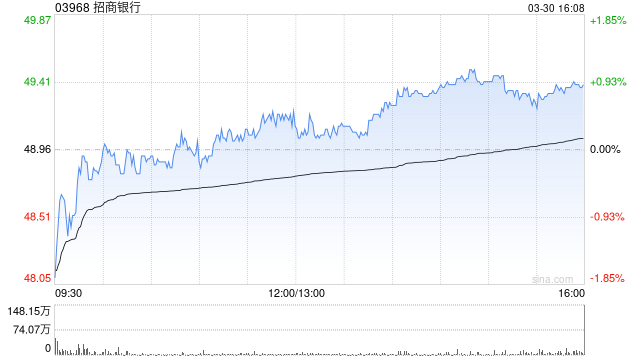
美银证券:降招商银行目标价至49.8港元 重申“跑输大市”评级
Xin Lang Cai Jing· 2026-03-30 08:38
Group 1 - The core viewpoint of the report is that Bank of America Securities maintains its profit forecasts for China Merchants Bank (03968, 600036.SH) for 2026 and 2027, while lowering the target prices to HKD 49.8 and RMB 43.28 from HKD 50.52 and RMB 45.49 respectively, reiterating a "underperform" rating and favoring state-owned banks with higher dividend yields [1][5] Group 2 - The net profit before preferred dividends for China Merchants Bank last year was RMB 150.2 billion, representing a year-on-year increase of 1.2%, in line with previous guidance [1][5] - The pre-provision profit decreased by 1.6% year-on-year [1][5] - The return on equity (ROE) fell by 1.0 percentage points to 13.4% year-on-year [1][5] - The Common Equity Tier 1 (CET1) capital ratio decreased by 97 basis points to 14.16% year-on-year [1][5] - The dividend payout ratio remained at 35.3%, with the annual dividend per share increasing by 0.8% to RMB 2.016 [1][5] - The estimated dividend yields for the H-shares and A-shares of China Merchants Bank are 4.7% and 5.1% respectively [1][5]

聊聊对中证红利和沪深300指数历史表现差异的一些思考
雪球· 2026-03-30 08:23
Core Viewpoint - The article discusses the evolution of the China Securities Dividend Index and the CSI 300 Index from 2005 to the present, highlighting three distinct phases of their performance and the underlying reasons for their divergence [5][24]. Group 1: 2005-2013: Same Rise and Fall - During this period, both the China Securities Dividend Index and the CSI 300 Index exhibited high correlation, moving in tandem with minimal differences in returns [7][12]. - The similarity in performance was attributed to the close composition and industry structure of both indices, primarily dominated by traditional sectors such as finance and real estate [8][10]. - The weighted methodology of the China Securities Dividend Index was market capitalization-based, leading to a concentration in large-cap stocks from these sectors, which mirrored the CSI 300's composition [8][10]. Group 2: 2014-2018: Beginning of Divergence - The performance of the two indices began to diverge, with the China Securities Dividend Index's returns starting to differ significantly from those of the CSI 300 [14][18]. - This change was primarily due to a modification in the weighting methodology of the China Securities Dividend Index from market capitalization to dividend yield, resulting in a shift towards a more balanced representation of both large and small-cap stocks [16][18]. - The industry composition remained similar, but the focus on dividend yield allowed for a more diversified approach, leading to noticeable differences in performance [18][23]. Group 3: 2019-Present: Diverging Trends - Since 2019, the performance of the two indices has shown significant divergence, with annual return differences exceeding 15% in most years [21][24]. - The CSI 300 Index has incorporated more "new economy" sectors, leading to a transformation from a traditional large-cap value index to one that reflects a broader industry balance [23][24]. - In contrast, the China Securities Dividend Index has maintained its traditional value-oriented approach, resulting in distinct risk-return profiles for the two indices [23][24].

野村:即便“停火”也不等于“正常化”,2026全球将比预期更“滞胀”
华尔街见闻· 2026-03-30 08:16
Core Viewpoint - The article emphasizes that while a "ceasefire deal" may be reached quickly, the normalization of energy trade is crucial for the market to truly reflect a return to pre-war conditions. The delay between the ceasefire and normalization could make the investment environment in 2026 more challenging than previously anticipated [1]. Group 1: Market Dynamics - The narrative around the U.S.-Iran ceasefire negotiations is forming, but investors should focus on the normalization of energy trade as a key variable [1]. - The report concludes that investors may have to operate under more "stagflationary" conditions in 2026, with inflation and interest rates slightly higher than previously assumed, while economic growth and stock valuations may be relatively suppressed [1]. - The market has begun to incorporate a "more stagflationary" world into pricing, with rising interest rate expectations from central banks due to persistent inflation [2][3]. Group 2: Central Bank Policies - Due to sticky inflation, interest rate hike expectations are increasing across major economies, with the market pricing in three rate hikes in the UK, two in Europe, and 0.5 in the U.S. this year [3]. - There is skepticism about the need for aggressive rate hikes if oil prices merely stabilize at high levels, indicating potential policy errors by central banks [5]. Group 3: Investment Strategies - The consensus among investors is to buy U.S. Treasuries with a steepening yield curve and to short the U.S. dollar [6]. - The steepening of the yield curve is expected as a ceasefire would lower short-term interest rate expectations while inflation expectations and term premiums rise, pushing long-term rates higher [6]. - The dollar is anticipated to decline as the risk premium associated with the U.S. market diminishes post-ceasefire, compounded by uncertainties surrounding the upcoming Federal Reserve leadership change [6][8]. Group 4: Sector Performance - The macro environment shift will lead to significant micro-sector reshuffling, with sectors previously underperforming during the conflict, such as consumer goods and capital goods, likely to lead in the recovery phase [10]. - If credit contraction can be avoided, bank stocks are expected to outperform the market post-ceasefire, while capital goods and consumer-related stocks will regain momentum as energy trade normalizes [11]. Group 5: Japan's Economic Outlook - For Japan, the ceasefire alone is insufficient; the normalization of energy trade is critical due to the country's heavy reliance on energy imports [13]. - The Bank of Japan faces challenges in achieving neutral policy rates, leading to concerns about its lagging behind the yield curve, which will likely push long-term rates higher [14]. - The outlook for Japanese equities and the yen has been downgraded due to pessimistic expectations regarding stagflation in the long tail period [15].

金融工程定期:资产配置月报(2026年4月)
KAIYUAN SECURITIES· 2026-03-30 08:15
Investment Rating - The report maintains a positive outlook on short-term bonds, undervalued convertible bonds, and gold assets [2][10][22]. Core Insights - The report predicts an increase in the level factor, steepening of the slope factor, and convexity of the curvature factor in the bond market, recommending the holding of 1-year short-duration bonds [10]. - As of March 27, 2026, the "hundred-yuan conversion premium rate" stands at 41.71%, indicating a low relative value for convertible bonds compared to their underlying stocks [13][15]. - The expected return on gold for the next year is projected to be 33%, with a historical absolute return of 62% based on TIPS yield strategies [22][24]. Summary by Sections Multi-Asset Allocation Viewpoints - The report advocates for a bullish stance on short-duration bonds, undervalued convertible bonds, and gold assets [2]. - The bond duration timing perspective suggests holding 1-year short-duration bonds due to predicted market movements [10][12]. Stock and Bond Allocation Viewpoints - The report is bearish on equity assets, with the latest equity position at 4.21% [26][31]. - The stock-bond rotation strategy has shown a negative return of -0.44% for March, with an average equity position of 4.72% and a bond position of 95.28% [31][33]. Industry Rotation Insights - The report recommends a bullish outlook on the banking, pharmaceutical, electrical equipment, media, textile, and commercial sectors [4][41]. - The growth style is favored over value style, with a higher score for growth sectors [41]. - The ETF rotation strategy includes specific ETFs for banking, healthcare, electrical equipment, and media, with recent performance showing an excess return of 1.14% compared to the average industry return [50][46].
东兴证券晨报-20260330
Dongxing Securities· 2026-03-30 08:09
Core Insights - The report highlights the significant growth potential in the magnesium alloy industry, driven by increasing demand in high-end applications such as electric vehicles and robotics, with a projected CAGR of 29% from 2025 to 2028 [7][10][12] - The report also emphasizes the favorable price dynamics of magnesium compared to aluminum, with the magnesium-aluminum price ratio dropping to a five-year low of 0.66, indicating a 74% decline since 2021 [8][12] - The demand for magnesium alloys is expected to expand significantly across various sectors, including automotive, robotics, construction, and hydrogen storage, with specific forecasts indicating a rise in global magnesium alloy demand from 650,000 tons in 2025 to 1.39 million tons by 2028 [9][10][12] Company Insights - Hantian Technology, a silicon carbide wafer provider, recently went public in Hong Kong, with its stock price surging over 42% on the first day, achieving a market capitalization exceeding HKD 46.2 billion, marking the largest IPO in Xiamen this year [4] - Jiangfeng Electronics reported a revenue of CNY 4.605 billion for 2025, reflecting a year-on-year growth of 27.75%, with net profit increasing by 20.15% to CNY 481 million, driven by rising demand in the semiconductor sector [15][16] - Tesla's TERAFAB project aims to produce over 1 terawatt of computing power annually, indicating a significant increase in demand for high-performance chips as the humanoid robot industry scales up [4] Industry Insights - The report discusses the ongoing transformation in the financial sector, with the People's Bank of China emphasizing the importance of financial stability and risk management, which is crucial for maintaining overall economic health [6] - The logistics and express delivery industry is experiencing a shift towards quality over quantity, with major players like SF Express showing significant growth in revenue per package, indicating a positive trend in pricing strategies amid a competitive landscape [21] - The semiconductor materials market is expected to see a significant increase in demand, with projections indicating that the global sputtering target market could exceed CNY 25.11 billion by 2027, driven by rising production in the semiconductor industry [17][18]
美元债双周报(26年第13周):从降息到加息:美债陷入熊陡格局-20260330
Guoxin Securities· 2026-03-30 08:01
Report Industry Investment Rating - The investment rating for the industry is "Underperform the Market" [1][4] Core Viewpoints - The U.S. Treasury market is caught in a fierce game between geopolitical risk premiums and data dependence. The market's pricing logic has reversed from narrowing rate - cut expectations to a panic about rate hikes. The interest rate futures market has completely ruled out the possibility of rate cuts this year and started to price in the probability of one rate hike by the Fed in 2026 [1] - Under the dual pressure of inflation return and geopolitical risks, the yields of U.S. Treasuries have risen across the board, and the global bond market has declined in resonance. The U.S. Treasury yield curve shows a bear - steepening characteristic, and the market volatility has increased significantly [2] - Facing the resurgence of core inflation pressure, the Fed may have to abandon the plan of rate cuts this year and may even restart rate hikes in extreme cases. The market expects the Fed to maintain high interest rates for a longer time than previously expected [2] - In the future, the market situation will highly depend on the evolution of the Middle East geopolitical conflict and the trend of inflation data. It is recommended to adopt a dumbbell - shaped defensive strategy [3] Summary by Relevant Catalogs U.S. Treasury Benchmark Interest Rate - The yields of 2 - year and 10 - year U.S. Treasuries, the U.S. Treasury yield curve, the bid - to - cover ratios of U.S. Treasuries of various maturities, the winning bid rates of 2 - 30 - year U.S. Treasury issuances, the monthly issuance volume of U.S. Treasuries, and the implied rate - hike/rate - cut expectations in the federal funds rate futures market are presented in relevant figures [8][11][17] U.S. Macroeconomic and Liquidity - Figures show the year - on - year inflation trend in the U.S., the annual cumulative fiscal deficit of the U.S. federal government (fiscal year), the U.S. economic surprise index, the U.S. ISM PMI, the U.S. consumer confidence index, the U.S. financial conditions index, the growth rate of U.S. housing rents, the number of U.S. unemployment benefit claimants, the year - on - year growth rate of U.S. hourly wages, the U.S. non - farm payroll data, the year - on - year growth rates of new housing approvals, starts, and sales in the U.S. real estate market, the year - on - year growth rate of U.S. personal consumption expenditure, the U.S. break - even inflation rate, and the MOVE index of U.S. Treasury volatility and the VIX fear index [8][24][37] Exchange Rate - Figures show the one - year trend and recent changes of non - U.S. currencies, the Sino - U.S. sovereign bond yield spread, the relationship between the U.S. dollar index and the 10 - year U.S. Treasury yield, the relationship between the U.S. dollar index and the RMB index, and the change in the one - year lock - in cost of the U.S. dollar against the RMB [8][48][56] Chinese - Issued U.S. Dollar Bonds - Figures show the return trends of Chinese - issued U.S. dollar bonds since 2023 (by level and by industry), the yield and spread trends of investment - grade and high - yield Chinese - issued U.S. dollar bonds, and the returns in the past two weeks (by level and by industry) [8][66][71] Rating Actions - In the past two weeks, the three major international rating agencies have taken 11 rating actions on Chinese - issued U.S. dollar bond issuers, including 5 rating cancellations, 4 rating upgrades, and 2 initial ratings [73][74]
3月第4周立体投资策略周报:资金面扰动仍在,市场情绪回落-20260330
Guoxin Securities· 2026-03-30 08:00
Group 1: Market Overview - In the fourth week of March, a total net outflow of 35.5 billion was observed in the market, compared to a net outflow of 34.6 billion in the previous week [1][7] - The financing balance decreased by 24 billion, while public fund issuance increased by 21 billion, and ETF net redemption was 5.7 billion [1][7] - Northbound capital is estimated to have a net outflow of 10.5 billion [1][7] Group 2: Short-term and Long-term Sentiment Indicators - Short-term sentiment indicators are at a medium-high level since 2005, with the recent weekly turnover rate (annualized) at 488%, positioned at the 82nd percentile historically [2][12] - The recent weekly financing transaction ratio is 8.95%, currently at the 56th percentile historically [2][12] - Long-term sentiment indicators are at a medium-low level since 2005, with the recent A-share risk premium at 2.63%, positioned at the 42nd percentile historically [2][14] - The recent weekly dividend yield of the 300 index (excluding finance) compared to the ten-year government bond yield is 1.24, currently at the 5th percentile historically [2][14] Group 3: Industry Performance - The top three industries by transaction volume percentage in the past week were power equipment (99%), communication (98%), and semiconductors (96%) [2][14] - The industries with the lowest transaction volume percentages were real estate (0%), commercial trade (1%), and liquor (1%) [2][14] - The highest financing transaction ratio industries were machinery equipment (83%), power equipment (77%), and communication (69%), while the lowest were real estate (8%), steel (9%), and banking (10%) [2][14]