
汽车制造业

Search documents
北汽蓝谷: 对外担保管理办法
Zheng Quan Zhi Xing· 2025-09-05 12:20
Core Viewpoint - The company has established a comprehensive framework for external guarantees to protect investors' rights and mitigate risks associated with such guarantees, in compliance with relevant laws and regulations [1][2][3]. Group 1: General Provisions - The company aims to safeguard investors' rights and regulate external guarantee behaviors to prevent and reduce risks [1]. - The external guarantees include guarantees, asset pledges, and other forms provided by the company and its subsidiaries [2]. - The total amount of external guarantees includes those provided to controlling subsidiaries and is subject to board or shareholder approval [2][3]. Group 2: Review of Guarantee Objects - The company can provide guarantees to entities with independent legal status that meet specific criteria, such as mutual guarantee needs or significant business relationships [3]. - Necessary measures must be taken to verify the credit status of the guaranteed party before providing guarantees [3][4]. Group 3: Approval Procedures and Authority - External guarantees must be approved by the board of directors, with certain guarantees requiring shareholder approval if they exceed specified thresholds [4][5]. - The board of directors has the authority to approve guarantees within the limits set by the company's articles of association [5][6]. Group 4: Risk Management - The financial management department is responsible for the management of guarantee contracts, including approval, registration, and cancellation [10][11]. - Continuous monitoring of the guaranteed party's financial status is required, and any significant changes must be reported to the board [11][12]. Group 5: Information Disclosure - The company must fulfill its information disclosure obligations regarding external guarantees in accordance with relevant regulations [13][14]. - All departments involved in guarantee matters are responsible for timely reporting to the board secretary [14]. Group 6: Accountability and Penalties - The company must take corrective actions for any violations related to guarantees and hold responsible parties accountable [15][16]. - Directors and senior management are required to exercise caution and control over the risks associated with external guarantees [15][16].

北汽蓝谷: 对外投资管理办法
Zheng Quan Zhi Xing· 2025-09-05 12:20
Core Viewpoint - The company has established a comprehensive framework for external investment activities to enhance internal control, mitigate risks, and improve investment efficiency [1][2]. Investment Principles - All external investments must comply with national laws and regulations, align with the company's long-term development strategy, and aim for sustainable growth with expected returns [2][5]. - External investments are primarily managed by the company's headquarters, with subsidiaries requiring prior approval for their investment activities [2][5]. Decision-Making Structure - The company's investment decision-making bodies include the shareholders' meeting, board of directors, and the manager's office, each operating within their respective authority [8][9]. - The manager is responsible for organizing, implementing, and monitoring investment projects, reporting to the board of directors [9][10]. Approval Process - Investment decisions must be approved by the manager's office for projects not exceeding specific thresholds, while larger investments require board and shareholder approval [11][12]. - The company must disclose financial reports and evaluations for significant investments, ensuring transparency and compliance with regulatory standards [13][14]. Risk Management - The company emphasizes risk management and the safety of fund operations in its investment activities [6][7]. - Investment management departments are tasked with daily oversight of projects, ensuring timely reporting of any irregularities [20][21]. Information Disclosure - The company is obligated to disclose investment activities in accordance with relevant laws and regulations, ensuring transparency to stakeholders [27][28]. Implementation and Amendments - The investment guidelines will take effect upon approval by the shareholders' meeting and will be subject to future amendments as necessary [30][31].
北汽蓝谷: 关联交易管理办法
Zheng Quan Zhi Xing· 2025-09-05 12:20
Core Points - The article outlines the management of related party transactions for Beijing Automotive Blue Valley New Energy Technology Co., Ltd, emphasizing the need for fairness, transparency, and compliance with relevant laws and regulations [1][2][3] Group 1: General Principles - The company aims to standardize the management of related party transactions to protect the interests of all shareholders and ensure compliance with laws such as the Company Law and Securities Law of the People's Republic of China [1][2] - Related party transactions must adhere to principles of honesty, benefit to company development, fairness, voluntary nature, and avoidance of conflicts of interest in voting [4][5] Group 2: Definition and Types of Related Party Transactions - Related party transactions are defined as the transfer of resources or obligations between the company, its subsidiaries, and related parties, including both daily and non-daily transactions [3][5] - Daily related party transactions include purchasing raw materials, selling products, providing or receiving services, and other transactions related to daily operations [5] - Non-daily related party transactions encompass asset purchases or sales, external investments, financial assistance, guarantees, and other significant transactions outside of daily operations [5][8] Group 3: Reporting and Approval Procedures - Company directors, senior management, and shareholders holding more than 5% of shares must report related party relationships and transactions to the board of directors [6][13] - Daily related party transactions exceeding certain thresholds must be submitted for board or shareholder approval and disclosed accordingly [9][10] - Non-daily related party transactions that meet specified financial thresholds require approval from independent directors and must be disclosed to shareholders [13][14] Group 4: Management Responsibilities - The financial management department is responsible for managing daily related party transactions, while the capital operation department oversees non-daily transactions [20][21] - The legal compliance department reviews related party contracts to mitigate legal risks [21] - The board of directors must ensure that related directors abstain from voting on transactions to maintain objectivity [30][31] Group 5: Pricing and Fairness - Related party transactions must be conducted at fair market prices, and any significant changes in transaction terms require re-approval [26][27] - Independent directors can seek external financial advice to assess the fairness of transaction pricing [28]
双林股份: 内部控制管理制度(2025年9月)
Zheng Quan Zhi Xing· 2025-09-05 12:19
Core Viewpoint - The internal control management system of Shuanglin Co., Ltd. aims to enhance the company's operational standards and protect investors' rights by adhering to relevant laws and regulations [1][2]. Summary by Sections General Principles - The internal control system is established to ensure compliance with laws, improve operational efficiency, safeguard assets, and ensure accurate information disclosure [1]. - The board of directors is responsible for the formulation and effective execution of the internal control system [1]. Framework and Execution of Internal Control - The internal control encompasses environmental control, business control, accounting system control, electronic information system control, information transmission control, and internal audit control [1][2]. - The internal control system includes elements such as internal environment, goal setting, risk identification, risk assessment, risk response, control activities, and information communication [2][3]. Key Control Activities - The internal control system covers all business processes, including sales, procurement, production, research and development, fixed asset management, fund management, financing, investment, related party transactions, financial reporting, information disclosure, and human resource management [4][5][6]. - The company emphasizes the importance of internal audit and continuous monitoring to ensure the effectiveness of the internal control system [19][20]. Management Control of Subsidiaries - The company establishes control policies for its subsidiaries, ensuring they adhere to the internal control system and report significant business and financial matters to the board [17][18]. - The management control includes oversight of major financial and operational matters, requiring subsidiaries to report significant decisions and transactions [17][18]. Internal Control of Related Transactions - The company follows principles of honesty, equality, and fairness in related party transactions, ensuring that such transactions do not harm the interests of the company and its shareholders [22][23]. - Approval processes for related transactions are clearly defined, requiring independent directors' prior consent [22][23]. External Guarantee Control - The company implements strict controls over external guarantees, ensuring compliance with legal and regulatory requirements [31][32]. - The board must carefully evaluate the financial and operational status of the guaranteed parties before approving guarantees [32][33]. Use of Raised Funds Control - The company mandates strict management of raised funds, including storage, approval, usage, and supervision [41][42]. - Regular tracking of project progress and fund usage is required to ensure compliance with the intended purposes outlined in the prospectus [44][45]. Major Investment Control - The company adheres to principles of legality, prudence, and effectiveness in major investments, requiring thorough evaluation and monitoring of investment projects [50][51]. - A dedicated team is responsible for assessing the feasibility and risks associated with major investments [51][52]. Information Disclosure Control - The company ensures compliance with disclosure regulations, maintaining transparency in reporting significant information that may impact stock prices [57][58]. - A strict internal confidentiality policy is enforced to protect sensitive information before public disclosure [59][60]. Internal Audit and Evaluation - An internal audit department is established to oversee the implementation of the internal control system and ensure the accuracy of financial information [63][64]. - Regular audits are conducted to evaluate the effectiveness of internal controls, with findings reported to the audit committee [66][67].

北汽蓝谷: 公司章程
Zheng Quan Zhi Xing· 2025-09-05 12:19
General Provisions - The company aims to protect the legal rights of shareholders, employees, and creditors while regulating its organization and behavior according to relevant laws and regulations [2] - The company was established as a joint-stock company in Chengdu, Sichuan Province, approved by the local government [2] - The company was registered on October 6, 1992, with a unified social credit code [2] Company Structure - The registered capital of the company is RMB 5,573,503,169 [3] - The company is a permanent joint-stock company, with the chairman acting as the legal representative [3][4] - Shareholders are liable for the company's debts only to the extent of their subscribed shares, while the company is liable for its debts with all its assets [4] Business Objectives and Scope - The company's business objective is to be market and customer-oriented, focusing on innovation, technology, and environmental protection [5] - The business scope includes research, design, sales of automobiles and parts, technical services, advertising, and import/export activities [5] Shares - The company's shares are issued in the form of stocks, with equal rights for each share of the same category [6] - The total number of shares is 5,573,503,169, all of which are ordinary shares [6][7] - The company can increase capital through various methods, including issuing shares to unspecified or specific objects and distributing bonus shares [7] Shareholder Rights and Responsibilities - Shareholders have rights to dividends, attend meetings, supervise management, and transfer their shares [12] - Shareholders must comply with laws and the company's articles of association, and they cannot withdraw their capital except as legally permitted [41] Shareholder Meetings - The company holds annual and temporary shareholder meetings, with specific procedures for calling and conducting these meetings [20][21] - Shareholder meetings require a quorum and must follow legal and procedural requirements for decision-making [81][82] Board of Directors - The board of directors is responsible for managing the company and must report to the shareholders [47] - Directors are elected by shareholders and are accountable for their actions [47][48] Auditing and Compliance - The company must maintain transparency and comply with auditing requirements, ensuring that financial activities are reported accurately [19] - Shareholders can request legal action against directors or management for violations of laws or the company's articles of association [14][15]
美国拟重启美墨加贸易协定谈判
Guo Ji Jin Rong Bao· 2025-09-05 09:56
Group 1 - The U.S. Trade Representative (USTR) will initiate public consultation for the USMCA in the coming weeks, marking the first formal step towards renegotiation [1] - The consultation process must be completed by October 4, 2023, as mandated by the law governing the agreement [1] - The USMCA includes a mandatory six-year review clause, with the first trilateral review meeting scheduled for no later than July 1, 2026 [1] Group 2 - The USMCA is considered a significant trade achievement of the Trump administration, replacing NAFTA, which was criticized for causing job losses in the U.S. [2] - Tariffs imposed by the Trump administration on Canada and Mexico have undermined the effectiveness of the USMCA, particularly affecting the automotive, steel, aluminum, and lumber industries [2] Group 3 - The tariffs serve to increase leverage for the U.S. in the renegotiation process, disrupting North America's complex supply chains, especially in the automotive sector [3] - Recent discussions between U.S. Secretary of State Rubio and Mexican President Claudia Sheinbaum focused on cross-border security, which is seen as a prerequisite for USMCA renegotiation [3] - Mexico is highly sensitive to the negotiation outcomes, as 80% of its exports go to the U.S., and the U.S. has extended tariffs on Mexican goods for an additional 90 days [3] Group 4 - The U.S. has criticized Mexico's policies in energy, telecommunications, agriculture, and intellectual property, highlighting issues such as state-owned enterprise bias and lack of fair competition [4] - Mexico's Economy Minister Marcelo Ebrard acknowledged that the upcoming reviews and negotiations will be challenging but emphasized the need for cooperation among the three countries to maintain North America's competitiveness [4]
北汽新能源取得一种OTA升级方法和装置专利
Jin Rong Jie· 2025-09-05 08:25
国家知识产权局信息显示,北京新能源汽车股份有限公司取得一项名为"一种OTA升级方法和装置"的专 利,授权公告号CN114675862B,申请日期为2022年04月。 声明:市场有风险,投资需谨慎。本文为AI基于第三方数据生成,仅供参考,不构成个人投资建议。 天眼查资料显示,北京新能源汽车股份有限公司,成立于2009年,位于北京市,是一家以从事汽车制造 业为主的企业。企业注册资本1506029.573万人民币。通过天眼查大数据分析,北京新能源汽车股份有 限公司共对外投资了29家企业,参与招投标项目1261次,财产线索方面有商标信息676条,专利信息 5000条,此外企业还拥有行政许可95个。 ...
赛力斯上半年营收降4.1%销量降15.8% 净利增81%
Zhong Guo Jing Ji Wang· 2025-09-05 06:59
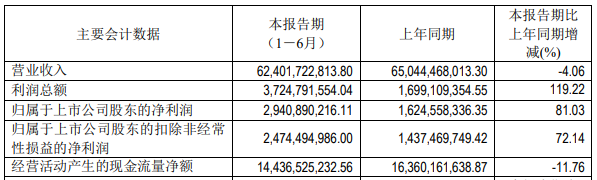
Core Viewpoint - The company reported a decline in revenue but a significant increase in net profit for the first half of 2025, indicating a shift in profitability despite lower sales figures [1][2]. Financial Performance - The company achieved an operating revenue of 62.40 billion, a decrease of 4.06% year-on-year [2]. - The net profit attributable to shareholders was 2.94 billion, reflecting an increase of 81.03% compared to the previous year [1][2]. - The net profit after deducting non-recurring gains and losses was 2.47 billion, up 72.14% year-on-year [1][2]. - The net cash flow from operating activities was 14.44 billion, down 11.76% from the previous year [1][2]. Sales and Production Data - The total automobile sales for the first half of 2025 were 198,600 units, a decline of 15.77% year-on-year [3][5]. - The cumulative sales of new energy vehicles were 172,108 units, down 14.35% year-on-year [3][5]. - The company's own vehicle sales reached 152,239 units, a decrease of 16.63% compared to the same period last year [3][5]. Revenue Drivers - The decline in operating revenue was primarily attributed to a decrease in automobile sales and changes in the product sales structure [1][2].


“智驾”有望重塑车险市场
Zhong Guo Jing Ji Wang· 2025-09-05 03:26
Core Insights - The rise of intelligent assisted driving technology is becoming a core competitive advantage for automotive companies, with BYD's "Tianshen Eye" system set to rival Tesla's FSD, aiming for implementation in all models priced above 100,000 RMB by 2025, indicating a significant market shift towards economic models [1] - The Swiss Re report highlights that while the Chinese auto insurance market has stabilized, emerging risks and claims trends present both challenges and opportunities, particularly with the rise of intelligent assisted driving vehicles potentially reducing accident frequency and reshaping the insurance landscape [1] Market Trends - The Chinese auto insurance market has seen fluctuations in premium growth, with a compound annual growth rate of 8.2% from 2014 to 2019, but a decline of 5.7% in 2021, leading to a combined cost ratio of 101% in the same year, marking the first underwriting loss since 2015 [2] - The market is expected to recover, with a projected compound annual growth rate of 5.5% in premiums from 2022 to 2024, aligning with a vehicle ownership growth rate of 5.2%, and a combined cost ratio improving to 98.1% [2] Emerging Risks - Significant claims trends include natural disasters causing claims to spike, with losses from major events potentially reaching nearly 1% of market premiums, posing profitability challenges for insurers already facing thin margins [3] - The insurance industry is also grappling with stable claims inflation rates for vehicle damage and third-party liability, while the short-term impact of electric vehicles (EVs) on claims costs remains a concern, as EVs currently have higher payout costs compared to traditional vehicles [3] Electric Vehicle Insurance Landscape - China is projected to dominate the global EV market, with EV sales expected to account for 70% of global sales by 2024, and the penetration rate of new EV sales in China reaching 48%, translating to approximately 13 million units sold [4] - The insurance premium for EVs is anticipated to reach 140.9 billion RMB by 2024, representing 15.4% of total auto insurance premiums, with expectations to rise to 37% by 2030 [4] - The average combined cost ratio for EV insurance is projected to be around 107% in 2024, with underwriting losses estimated at 5.7 billion RMB, driven by high claims rates among certain models [4][5] Collaboration and Product Development - The high risk premium for EV insurance is attributed to factors such as the high cost of battery components, the need for driver adaptation to different driving characteristics, and a higher representation of riskier demographics among EV drivers [5] - The emergence of intelligent assisted driving technology offers opportunities for insurers to design new products, such as intelligent driving liability insurance, which will cover losses due to system defects, with expected rapid growth starting in late 2024 [6] - China's automotive export surge, projected to exceed Japan with 6.4 million units and 117 billion USD in export value, necessitates tailored insurance products for exporters, fostering a robust insurance ecosystem to support international trade [6]
2025年1-7月汽车制造业企业有20353个,同比增长4.88%
Chan Ye Xin Xi Wang· 2025-09-05 01:23
Group 1 - The core viewpoint of the article highlights the growth in the number of automotive manufacturing enterprises in China, which reached 20,353 by July 2025, representing an increase of 947 enterprises or a year-on-year growth of 4.88% [1][1][1] - The automotive manufacturing enterprises accounted for 3.91% of the total industrial enterprises in China [1][1][1] Group 2 - The report referenced is the "2025-2031 China Automotive Manufacturing Industry Market Panorama Survey and Investment Prospect Analysis Report" published by Zhiyan Consulting [1][1] - The data regarding the number of automotive manufacturing enterprises is sourced from the National Bureau of Statistics and organized by Zhiyan Consulting [1][1]
